Pancreatitis in Cats: Symptoms, Treatment, and Recovery
A cat with pancreatitis may simply seem quiet and stop eating. Learn the signs that need attention, what treatment involves, and how to track food, comfort, and recovery.

BVMS MRCVS
Medically reviewed by Dr. Pippa Elliott, BVMS MRCVS · Last reviewed

This article contains affiliate links. Webvet may earn a commission when you buy through them, at no extra cost to you.
Pancreatitis in cats is inflammation of the pancreas, an organ involved in digestion and blood-sugar regulation. It can cause poor appetite, lethargy, dehydration, and pain, sometimes without dramatic vomiting. A cat who stops eating or becomes unusually withdrawn needs prompt veterinary advice. Collapse, severe weakness, difficulty breathing, or rapid deterioration requires urgent care.
Treatment focuses on pain relief, nausea control, fluids, and nutritional support. Some cats recover with outpatient care; others need hospitalization. The useful questions are how sick this cat is, which other conditions are involved, and what the treatment and feeding plan should achieve next.
 Sponsored
Not sure whether your cat needs a clinic visit?
Talk it through with a licensed vet at Dutch over video, often the same day. They can recommend treatment and prescribe it when it's appropriate.
Use code Pets60
Plans start at $12/month · covers up to 5 pets
- Licensed vets in most states
- Rx for 150+ conditions
- 4.7 on Trustpilot
Pancreatitis symptoms in cats and when to call the vet
- 1Poor appetite, quiet behavior, and possible abdominal pain can be significant even when your cat is not vomiting.
- 2Contact your veterinarian promptly when your cat stops eating, repeatedly vomits, or seems unwell. Seek urgent care for collapse, profound weakness, breathing difficulty, or rapid worsening.
- 3Do not withhold food for days, force-feed, or give human pain medicine. Ask the clinic how to maintain nutrition safely while the cause is investigated.
Look for a change from your cat's usual behavior: food left untouched, less interest in interaction, hiding, a hunched posture, or reduced activity. These signs are nonspecific. They can justify an examination but cannot tell you that the pancreas is responsible. Vomiting or diarrhea may occur, but their absence does not rule pancreatitis out.
For planned veterinary visits, keep a familiar, correctly sized carrier ready. The Frisco Travel Safety Dog & Cat Carrier is one option if its medium dimensions suit your cat. Introduce it while the cat is comfortable and use familiar bedding when appropriate. A prepared carrier makes transport easier; shopping for equipment should never delay a needed visit.

Keep a suitable carrier ready for clinic visits. Check the medium dimensions against your cat's size and introduce it calmly between appointments.
Webvet may earn a commission when you click through to Chewy, at no extra cost to you.
Sudden difficulty using the back legs is not a reliable pancreatitis sign. It needs urgent assessment in its own right, especially with pain or collapse. Similarly, blood in vomit or stool, jaundice, or a swollen abdomen deserves a direct report to the clinic rather than being dismissed as an expected digestive symptom.

Are cats in pain with pancreatitis?
They can be, although cats may conceal abdominal pain rather than cry or react obviously. Hiding, reluctance to move, changed posture, and reduced interaction are useful observations to report. Do not press the abdomen to test for pain. Veterinary pain assessment and pain relief are part of treatment even when the main thing you notice is that the cat will not eat.
What is the red flag for pancreatitis?
There is no single sign that specifically identifies pancreatitis. A cat refusing food, becoming very lethargic, or repeatedly vomiting needs prompt assessment for pancreatitis and other illnesses. Collapse, marked weakness, breathing difficulty, or rapid deterioration makes the situation urgent. Tell the clinic when food intake changed and what the cat has actually eaten; waiting for unmistakable abdominal pain can delay care.
If this is an older cat, the old cat not eating guide explains why appetite loss warrants investigation. Bring a list of medication, supplements, and any recent illness. Mention changes in thirst, urination, stool, weight, and vomiting rather than deciding in advance which ones fit pancreatitis.
Why feline pancreatitis happens
The pancreas makes digestive enzymes and hormones, including insulin. Pancreatitis involves inflammation and pancreatic tissue injury; acute disease begins suddenly, while chronic disease can persist or recur. The intensity of the signs does not reliably tell you which form is present. A veterinarian may also investigate intestinal disease, liver or bile-duct inflammation, and diabetes.
Record food intake as part of that history. Offering a measured portion in a washable bowl such as the OurPets Durapet Premium Stainless Steel Bowl, Small makes leftovers easier to compare with the amount served. The linked bowl holds 0.75 cups; the amount your cat should eat comes from the care plan, not the bowl's capacity.
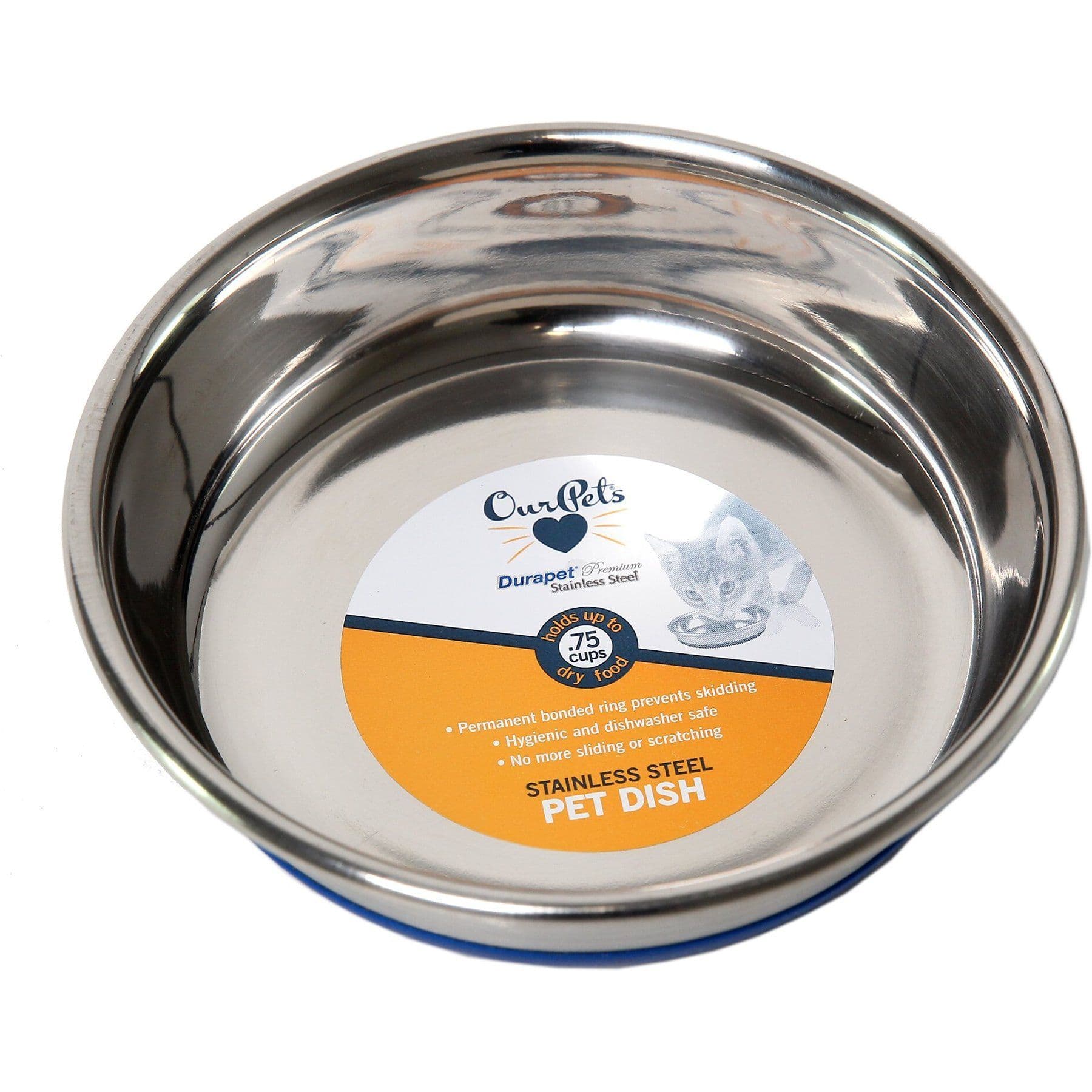
Offer measured portions in a washable stainless bowl. The linked small bowl holds 0.75 cups; follow your cat's prescribed feeding amount.
Webvet may earn a commission when you click through to Chewy, at no extra cost to you.
How does an indoor cat get pancreatitis?
Indoor cats can develop pancreatitis because most cases do not have a clearly identified external trigger. Staying indoors does not prevent spontaneous inflammation or the intestinal, liver, or metabolic disorders that may occur alongside it. An indoor lifestyle is still relevant history, but it cannot rule out the disease. The workup should follow the cat's clinical findings rather than assumptions about outdoor exposure. In a diabetic cat, reduced appetite, vomiting, or lethargy warrants prompt advice because pancreatitis and problems with diabetes control can overlap. Follow the clinic's sick-day instructions rather than independently changing insulin.
What is the #1 cause of pancreatitis?
In cats, the underlying cause is usually unidentified, often called idiopathic pancreatitis. It is not accurate to present a fatty meal as the established leading cause simply because that explanation is familiar from dogs. Trauma, certain infections, and concurrent illnesses can be relevant in particular cases. Tell the veterinarian about recent events, but do not assume you caused the illness by one feeding decision.
When inflammation affects the pancreas, intestine, and biliary system together, the term triaditis may be used. This is one reason a cat may need a broader treatment plan than medication aimed only at the pancreas. Ask which concurrent conditions are confirmed, which are suspected, and how each changes the investigation or care plan.
Stress alone is not an established explanation for a cat's pancreatitis. A stressful event can coincide with reduced intake or other illness, but a timeline does not prove causation. Low-grade or “smoldering” pancreatitis describes a less obvious, often chronic problem; it can still affect appetite and comfort and does not mean treatment is unnecessary.
How pancreatitis is diagnosed
Diagnosis combines the history, examination, laboratory findings, and imaging. Routine blood tests can identify dehydration, electrolyte changes, or problems involving other organs, but those findings are not specific to pancreatitis. Normal routine results do not automatically rule it out. Cornell's feline pancreatitis guidance explains why several sources of evidence are considered together.
Feline pancreatic lipase immunoreactivity, or fPLI, measures a pancreas-associated marker in blood. SNAP fPL is a rapid screening test; Spec fPL is a laboratory measurement that provides more detail. Results need clinical interpretation: mild or chronic disease can be missed, and a test result is not a complete description of severity or the whole cause of appetite loss.
Abdominal ultrasound can show changes in the pancreas and surrounding tissue, and can also investigate other abdominal disease. Its usefulness depends partly on the disease and the examination. X-rays may help look for another cause, such as an intestinal obstruction, but do not usually provide a specific pancreatitis diagnosis. Tissue biopsy can add information in selected cases, although its invasiveness means it is not routine for every sick cat.
What gets mistaken for pancreatitis?
Kidney disease, intestinal disease, liver or biliary disease, and an intestinal blockage can produce overlapping appetite and digestive signs. Some conditions occur alongside pancreatitis instead of replacing it as the explanation. This is why the veterinarian may recommend several tests even after a pancreatic marker is abnormal. The goal is to identify the problems that need treatment, not merely attach one name to vomiting.
For example, pancreatitis with kidney disease or kidney failure changes fluid, electrolyte, and feeding decisions. The team must consider both conditions together. Enlarged abdominal lymph nodes on ultrasound are also nonspecific: inflammation and cancer are among the possibilities. Pancreatitis and pancreatic cancer are different diagnoses, and neither can be confirmed from a symptom list or the word “mass” alone. Ask whether follow-up imaging or sampling would change treatment.
Useful questions after the workup include:
- Which findings support pancreatitis, and how certain is the diagnosis?
- Is another disease contributing to the appetite loss or dehydration?
- Does my cat need hospitalization or can the current needs be met at home?
- Which findings will be reassessed, and when?
SponsoredVet care that's always there
Unlimited video calls and messaging with licensed vets for less than a typical vet visit. One membership covers up to five pets.
Use code Pets60
Plans start at $12/month · covers up to 5 pets
- Licensed vets in most states
- Rx for 150+ conditions
- 4.7 on Trustpilot
Treatment: pain relief, fluids, and nutritional support
Use this recovery checklist to agree on the treatment goals and follow-up plan before discharge.
| Recovery observation and next step | What to record | What the care plan should specify |
|---|---|---|
| Food eaten | Amount offered and consumed at each meal | Daily nutritional support target and when inadequate intake needs a call |
| Vomiting or nausea | Time, frequency, and relationship to food or medicine | What to do if food or medication is not retained |
| Hydration and urination | Drinking opportunities, observed drinking, and litter-box changes | Whether fluid treatment is needed and who should provide it |
| Comfort and activity | Hiding, posture, interaction, and movement | Pain relief schedule and changes requiring reassessment |
| Medication tolerance | Doses given, missed, or vomited and unexpected changes | Who to contact before altering the dose or substituting medicine |
| Follow-up findings | Weight trend and the clinic's examination or test results | Recheck date, expected progress, and the next decision |
Treatment is tailored to the cat's condition. The main priorities are correcting dehydration, controlling nausea, providing pain relief, and restoring adequate nutrition. A mildly affected cat may receive outpatient treatment with close follow-up. A severely ill cat may need intravenous fluids, electrolyte monitoring, assisted feeding, and hospital observation. A fountain or extra wet food cannot replace prescribed fluid therapy when dehydration is significant.
Once a recovering cat is stable and eating voluntarily, a timed feeder may help deliver the agreed small-meal schedule. The Cat Mate C500 Digital 5 Meal Automatic Feeder is one option. Follow its food-storage and cleaning instructions, and check actual consumption after each meal. An opened compartment does not establish that a sick cat ate enough, and a feeder does not replace assisted nutrition when that is needed.
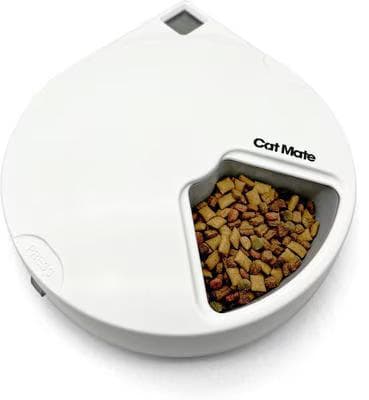
A timed feeder can support an agreed meal schedule for a stable cat eating voluntarily. Follow food-storage instructions and check actual consumption.
Webvet may earn a commission when you click through to Chewy, at no extra cost to you.
What helps calm down pancreatitis?
Appropriate veterinary treatment addresses the processes that make the cat feel ill: pain, nausea, dehydration, and inadequate intake. There is no household remedy that reliably settles pancreatic inflammation. Follow the prescribed medicines and feeding plan, keep the cat's resting area quiet, and report a poor response promptly. Do not give human painkillers, leftover antibiotics, or a supplement in place of reassessment.
Anti-nausea medicines, called antiemetics, can be appropriate even without visible vomiting because nausea may suppress appetite. Cornell describes maropitant as one option. Pain relief, or analgesia, may include prescribed buprenorphine. Drug choice and dose depend on the cat; do not substitute an over-the-counter human painkiller. Appetite stimulants such as mirtazapine may help, but continued refusal of food still needs attention.
Enteral nutrition means feeding through the digestive tract, either by eating or through a feeding tube. When voluntary intake is inadequate, a tube can provide nutrition while treatment continues. It is not proof that recovery is impossible. Obtain a written daily calorie or food-amount target and a specific threshold for calling if the cat falls short; an appetite stimulant alone does not supply those calories.
Medicine instructions to confirm
- Confirm the name, strength, dose, route, and next administration time.
- Ask what to do if the dose is vomited, missed, or cannot be given safely.
- Record the intended benefit and the changes that should trigger a call.
- Confirm the recheck plan before leaving the clinic.
Antibiotics are not automatically required for pancreatitis itself; a suspected or confirmed concurrent infection can change that decision. Steroids and other medicines may be used for particular concurrent conditions. Pancreatic enzyme supplements treat a different problem, exocrine pancreatic insufficiency, when diagnosed. Do not add them simply because the word pancreas appears in the diagnosis.
Supplements, home remedies, and treatment costs
Digestive enzymes are not a routine way to switch off pancreatic inflammation. Vitamin B12, or cobalamin, has a different role: the ACVIM consensus statement supports supplementation when a deficiency is documented. Ask whether testing and B12 injections or another prescribed form are appropriate; neither replaces fluids, pain control, or feeding support.
Trying to treat pancreatitis naturally with CBD oil, slippery elm, or other home remedies should not delay care. These are not established substitutes for the treatment priorities above. A probiotic may be considered for a separate intestinal problem, but there is no established “best probiotic” that treats feline pancreatitis itself. Give the veterinarian the exact product and ingredients before adding any supplement.
Treatment costs depend on the workup, severity, hospitalization, and follow-up. A California or Texas location alone cannot supply a meaningful price for this cat. Request an itemized estimate for tests, medicines, fluids, assisted feeding, hospital days, and rechecks, with a plan for how the estimate may change. Ask the treating clinic and insurer directly about payment and coverage; an online average is not a quote.
Feeding a cat during recovery
Early nutritional support matters. Prolonged food deprivation can contribute to hepatic lipidosis, a serious liver complication, so “resting the pancreas” by fasting a cat at home is not a safe default. Ask what to offer now, how much the cat needs, and what to do if that amount is not eaten. A few licks of gravy are not necessarily adequate intake. For a cat who needs to gain weight after illness, ask for a calorie target, gradual adjustment, and weight-recheck schedule. Increasing rich treats without measuring the complete diet can miss the actual nutritional deficit.
Keep fresh water available in accessible places. For a cat who prefers moving water, a Petlibro Stainless Steel Dog & Cat Fountain, 101-oz offers another drinking option. Clean it as directed and check that the cat uses it. Do not interpret access to a large reservoir as evidence that dehydration has resolved; prescribed fluids and follow-up may still be necessary.
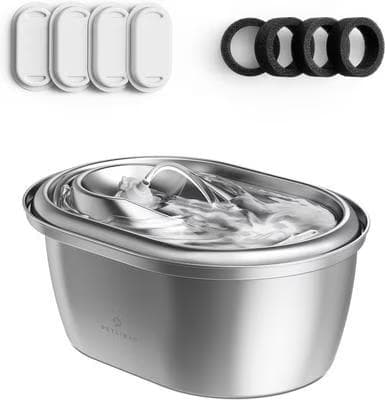
Add a drinking option for a cat who likes moving water. Clean the fountain regularly; it cannot replace prescribed treatment for dehydration.
Webvet may earn a commission when you click through to Chewy, at no extra cost to you.

What not to feed a cat with pancreatitis?
Avoid improvised restrictive diets, supplements, and repeated food changes without veterinary direction. Plain chicken or tuna alone is not a complete long-term diet. Do not automatically impose a canine very-low-fat diet: the ACVIM feline pancreatitis consensus supports early feeding and individualized diet selection, and does not establish dietary fat restriction as universally necessary for cats. Another illness may still require a particular diet, so ask which priority applies to your cat.
The practical plan should specify the food, daily amount, meal schedule, and threshold for calling the clinic. If food is offered through a tube, obtain hands-on instruction for that tube and written guidance for flushing, medicine administration, feeding, and problems. Do not force food or water into a resisting cat's mouth. Contact the team when intake is inadequate rather than escalating force.
Choosing food without relying on a brand name
Fancy Feast, Royal Canin, Hill's, and Ziwi Peak each include different formulas; the brand alone cannot tell you whether a food fits your cat's needs. Check the exact recipe with the veterinarian, including whether it is complete and balanced, acceptable to the cat, and appropriate for any kidney or intestinal disease. A familiar complete food the cat will eat may be more useful than repeatedly buying supposed pancreatitis foods while intake remains poor.
- Bone broth can contribute moisture but is not a complete diet. Check ingredients with the clinic rather than using seasoned household broth as a meal replacement.
- Peanut butter and coconut oil are not pancreatic treatments and do not provide balanced feline nutrition. Avoid adding them as a remedy.
- Chicken, tuna, and other tempting extras should not displace the prescribed daily nutrition plan.
Some cats drink more because of dehydration or a concurrent condition; others drink little because they feel ill or obtain moisture from food. Excessive drinking is not specific to pancreatitis, and drinking water does not guarantee adequate hydration. Report a clear change in thirst or urination, particularly when diabetes or kidney disease is also being investigated.
Small meals, a quiet feeding place, and attention to food preference may help a cat who is ready to eat. The guide to getting a cat to eat provides broader appetite support, but its suggestions should fit the treating veterinarian's plan. If intestinal disease is also present, discuss feeding a cat with IBD rather than treating all digestive illness as the same dietary problem.
Use measured observations:
- Write down what was offered and what remained, including treats or food from another pet's bowl.
- Note vomiting after meals and whether medicines were retained.
- Report continued refusal promptly using the clinic's agreed contact threshold.
- Follow wet-food storage instructions; a timed feeder does not make perishable food safe indefinitely.
A practical home recovery checklist
Recovery is more than stopping the vomiting. The discharge plan should explain what improvement in food eaten, comfort, hydration, and activity is expected, and what findings require a call. Use the treatment-goals table above with the instructions written for your cat.
Keep food, water, litter, and resting places easy to reach. A quiet room may help when other animals compete for food, but continue checking the cat directly. Checklists and cameras cannot assess dehydration or abdominal pain as a veterinarian can. Ask the clinic whether home fluid administration is appropriate and obtain training if it is prescribed; do not improvise the amount or technique.
The cat drinking-water guide explains how food moisture affects apparent drinking. A cat eating wet food may drink less from a bowl, but that alone does not show whether hydration is adequate during illness. Bring the combined intake history to the recheck.
Before the first night at home
- The next medication and feeding times.
- The minimum acceptable intake for this cat and when to call.
- Which symptoms require immediate return to hospital.
- The regular and after-hours contact numbers.
- Who will review progress if the cat is not improving as expected.
Recovery, recurrence, and prognosis

Recovery time varies with severity, the duration of poor intake, response to treatment, and concurrent disease. A cat discharged from hospital may still need medication, feeding support, and rechecks. Ask what should improve over the next day or two and what would count as an inadequate response. There is no fixed day when every cat should be back to normal.
Mild to moderate pancreatitis often has a favorable outcome with appropriate care, while severe acute disease can be fatal. Persistent dehydration, inability to maintain nutrition, shock, or major concurrent illness changes the outlook. The clinical team can update the prognosis as the response becomes clearer. A test number or online survival percentage cannot substitute for that assessment.
When pancreatitis returns
If your cat keeps getting pancreatitis, chronic or recurrent disease may require ongoing investigation and management of associated illness. Report renewed appetite loss, weight loss, vomiting, or reduced activity rather than automatically restarting leftover medication. The new episode may have a different cause or require a different level of support.
Treating chronic pancreatitis means adjusting nausea and pain management, maintaining adequate nutrition, and addressing concurrent disease over time. Ask for the signs that should trigger an earlier recheck and which medicines are ongoing versus reserved for a flare. Symptoms may improve before the whole care plan is complete; there is no universal answer to how long pancreatitis lasts or a guaranteed permanent cure for recurrent disease.
Long-term complications and comfort
Severe or repeated pancreatic injury can sometimes contribute to diabetes or, less commonly, exocrine pancreatic insufficiency. These are separate diagnoses with their own treatment needs. VCA's pancreatitis overview discusses these possible long-term complications. Ask what monitoring is appropriate rather than assuming every recovered cat will develop them.
“End-stage pancreatitis” is not a reliable diagnosis an owner can assign from a list of signs. If the cat continues to suffer despite treatment, discuss comfort, organ complications, the likelihood of improvement, and realistic options with the veterinarian. Considering euthanasia, sometimes called putting a cat to sleep, depends on whether distress can be relieved and an acceptable quality of life restored. The diagnosis alone, a fixed number of episodes, or a few days of illness cannot determine that decision.
Pancreatitis questions
Frequently Asked Questions
Can a cat recover from pancreatitis?
Yes. Many cats with mild or moderate disease recover with appropriate treatment, including pain and nausea control, hydration, and adequate nutrition. Clinical severity and concurrent illness influence the outcome, and severe acute pancreatitis can be life-threatening. Improvement in appetite is encouraging but should be considered with comfort, hydration, and the planned recheck. Recurrence remains possible even after an earlier episode resolves.
What is the life expectancy of a cat with pancreatitis?
There is no single life-expectancy figure for this diagnosis. A cat who recovers from a mild episode may do well, while a severely ill cat may have an uncertain short-term outlook. Individual prognosis depends on response to treatment and other disease; chronic recurrence can require ongoing care. Ask the veterinarian to distinguish the immediate recovery outlook from the longer-term management plan.
Does pancreatitis spread between cats?
Pancreatitis itself is inflammation and does not ordinarily spread between cats through sharing a home or food bowl. The underlying cause is usually unidentified, but a suspected infectious or concurrent disease may create separate precautions. If more than one cat becomes ill, tell the veterinarian rather than assuming each has pancreatitis. Follow any testing or separation advice based on the actual suspected cause.
Veterinarian · BVMS MRCVS
Dr. Pippa Elliott, BVMS, MRCVS, is a veterinarian with nearly 30 years of experience in companion animal practice. Dr. Elliott earned her Bachelor of Veterinary Medicine and Surgery from the University of Glasgow. She was also designated a Member of the Royal College of Veterinary Surgeons. Married with 2 grown-up kids, Dr. Elliott has a naughty Puggle named Poggle, 3 cats and a bearded dragon.
Related reading

IMHA in Cats: Signs, Causes, Treatment, and Survival

Aspergillosis in Dogs: Nasal and Systemic Forms, Signs, and Treatment

Cryptococcosis in Cats: Nose Swelling, Diagnosis, and Treatment
