How to Get a Cat to Eat: 10 Vet-Backed Techniques (and When It Is an Emergency)
Learn how to get a cat to eat with 10 vet-backed tempting techniques for picky, stressed, sick, and senior cats, plus the exact timeline that tells you when a skipped meal has become a medical emergency.

BVMS MRCVS
Medically reviewed by Dr. Pippa Elliott, BVMS MRCVS · Last reviewed

This article contains affiliate links. Webvet may earn a commission when you buy through them, at no extra cost to you.

Figuring out how to get a cat to eat can feel urgent and frustrating, especially when your cat sniffs the bowl, walks away, and leaves you guessing. The good news: many healthy cats can be coaxed back to the bowl with simple, vet-backed tactics like warming the food, changing the texture, and boosting the aroma. The critical caveat: a cat that has truly stopped eating is on a clock, not just being fussy.
This is because of a condition called feline hepatic lipidosis (fatty liver), which is associated with a period of poor appetite lasting a few days to several weeks and is the most common cause of liver disease in cats. That single fact reframes everything below. Every tempting technique in this guide is a bridge to veterinary care, not a substitute for it. If your cat has refused food for more than two days, you should consult your veterinarian immediately.
How to get a cat to eat: 10 vet-backed techniques
If you want to know how to get a cat to eat its food today, start with the levers cats actually respond to. Cats are famously particular eaters: moist and canned foods are generally more palatable to cats than dry food, and environmental factors like noise, heavy traffic, other animals, dirty bowls, or a nearby litter box can all deter a cat from eating. Warmth and strong aroma matter too: when a cat is off its food, vets advise heating food to about body temperature and offering odorous, highly palatable options. So most of these techniques work by making food smell more appealing and by removing whatever is putting the cat off.
Here is the short list of what to try, in order. Each is expanded in the sections below.
- Warm the food to just below body temperature to release aroma.
- Switch the texture (pate, chunks in gravy, minced, or dry) to find a favorite.
- Add a strong-smelling topper like tuna water, plain chicken broth, or a lickable treat.
- Hand-feed or finger-feed a small amount to spark interest.
- Offer smaller, fresher portions more often instead of one large bowl.
- Move the bowl to a calm, quiet spot away from the litter box.
- Use a wide, shallow dish to avoid whisker fatigue.
- Reduce stress in the environment (noise, other pets, changes).
- Go back to a food your cat loved before it went off its meals.
- Ask your vet about appetite stimulants if home tactics fail within a day.
These are the same core moves vets and shelters lean on. But before you spend two days experimenting, answer one question first.
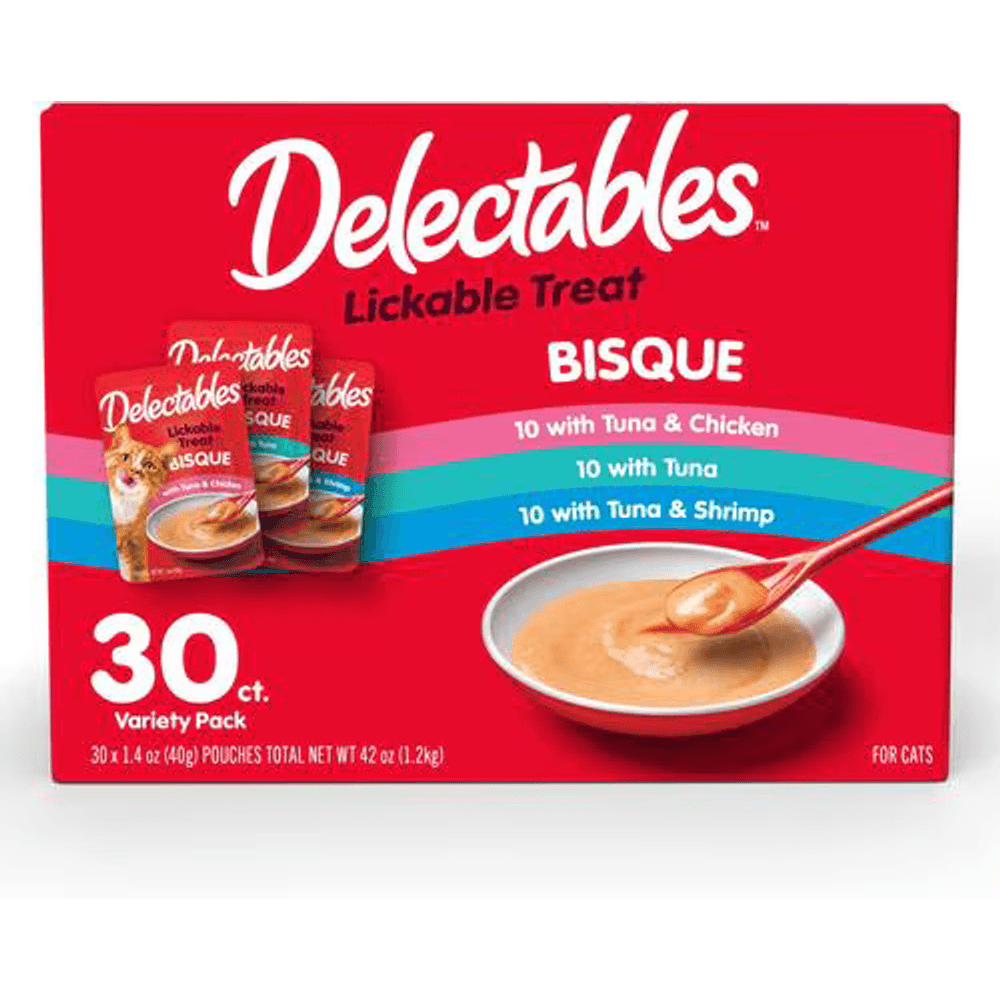
A soupy, lickable bisque treat that tempts a cat who has gone off solid food. The high-moisture, aromatic texture is easy to lap up and hard for a picky or recovering cat to resist, and it sneaks in extra hydration.
Webvet may earn a commission when you click through to Chewy, at no extra cost to you.
First, how long has your cat not eaten? (the emergency line)
Answer-first: a cat should not go without food for more than about 24 to 48 hours before you involve a vet. If your cat has refused food for more than two days, consult your veterinarian immediately. Sudden appetite loss is particularly dangerous in overweight or obese cats, because the liver cannot process the fat their body starts to mobilize, which drives hepatic lipidosis.
So when people ask how long can a cat refuse to eat, the honest answer is: far less time than most owners assume. This is not a "cat not eating or drinking for 3 days, let's see if it passes" situation. The question when a cat stops eating how long before they die does not have a comforting fixed number, and waiting to find out is exactly the risk. The clock is driven by liver damage that can begin within days.
Use this timeline to decide your next move.
| Time without food | Cat's other signs | What to do |
|---|---|---|
| Skipped 1 meal | Bright, active, drinking | Watch. Try tempting techniques below. |
| 12-24 hours | Otherwise acting normal | Try tactics actively. Call vet if no improvement. |
| 24-48 hours | Any cat | Call your vet the same day. |
| 48-72 hours+ | Any cat | Urgent or emergency vet visit. |
| Any duration | Not drinking, lethargic, hiding, vomiting, or overweight/diabetic/senior | Emergency vet visit now. |
If your cat will not eat and will not drink, that is more serious, not less. Learning how to get a cat to eat and drink still starts with tempting food and water, but a cat refusing both needs veterinary assessment quickly, since dehydration compounds the fatty-liver risk.
Why won't your cat eat in the first place? That question, the underlying causes and diagnostics, is covered in depth on our companion guide. See why a cat is not eating for the full list of medical and behavioral causes. If your cat is not eating but still drinking water, not eating and not drinking, or not eating but acting normal, those symptom-specific guides will help you read the situation. This article stays focused on technique: how to actually get food into a cat.
Make the food irresistible: warm it, change the texture, boost the aroma

Answer-first: to make food irresistible, warm it slightly, switch the texture, and add aroma. When a cat has gone off its food, vets recommend warming it to about body temperature and offering odorous, highly palatable food, and moist or canned foods are generally more palatable to cats than dry, so these levers do most of the work.
Warm the food. Warmth releases aroma, and aroma is a major driver of feline appetite. Warm wet food to roughly body temperature (never hot) by adding a splash of warm water and stirring, or microwaving for a few seconds and mixing thoroughly to remove hot spots. This is often the fastest fix when a cat is sniffing food but not eating.
Change the texture. If you want how to get a cat to eat wet food or how to get a cat to eat canned food, do not assume all wet food is equal to your cat. Offer pate, then chunks in gravy, then a minced or shredded style. For how to get a cat to eat pate specifically, try mashing it smoother and thinning it with warm water into a lickable consistency. If your cat only wants crunch, how to get a cat to eat dry food can mean warming the kibble slightly or moistening it with a little warm broth.
Boost the aroma. Beyond warming, sprinkle a strong-smelling topper (details in the next section) or press a small amount of food onto the roof of the mouth or a paw so the cat tastes it and triggers grooming and interest.
A cat sniffing food but not eating, or a cat that seems hungry but won't eat, is often telling you the food is not appealing enough yet, or that something physical (nausea, dental pain, loss of smell) is in the way. Try the levers above first. If two or three attempts fail across a day, that is a signal to call the vet rather than keep experimenting.
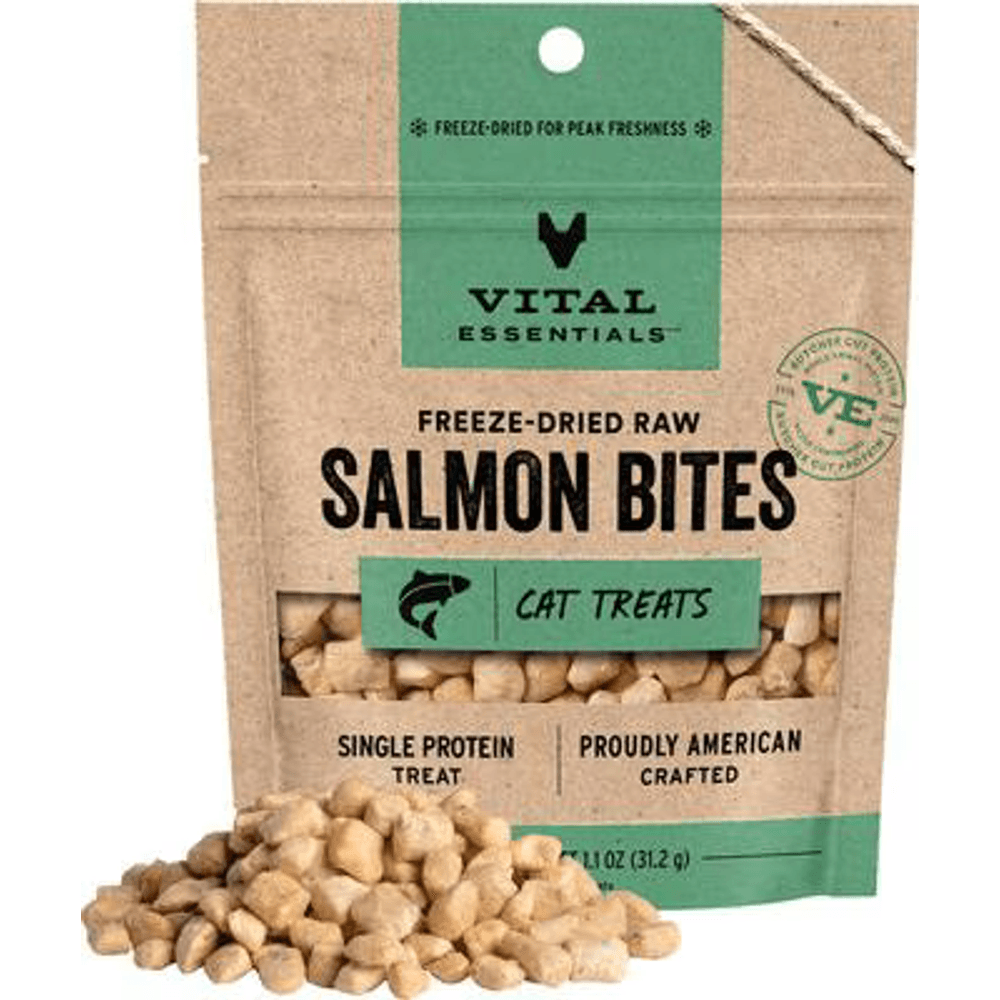
Single-ingredient freeze-dried raw salmon treats with an intense aroma that can tempt a cat who has gone off her food to start eating again.
Webvet may earn a commission when you click through to Chewy, at no extra cost to you.
Tempting foods and toppers that reliably work

Answer-first: the most reliable toppers are tuna water, plain unsalted chicken broth, a small amount of the cat's favorite wet food, and lickable cat treats. These add aroma and moisture without replacing a balanced diet.
If you are wondering what to feed a sick cat that won't eat, or how to tempt a fussy one, this is a solid toolkit:
- Tuna water: the water from a can of tuna packed in water (not oil, not brine), drizzled over food. Powerful smell, tiny calories.
- Plain chicken broth: unsalted, onion-free, and garlic-free only. Warm it slightly.
- A spoon of favorite wet food mixed into the current food.
- Lickable or squeezable cat treats offered by hand, then near the bowl.
- A pinch of a favorite dry treat crushed on top of wet food.
For how to get a cat to eat treats, use them as a starter, not the meal. Offer one by hand to spark interest, then guide the cat to the actual food. A cat that will eat treats but not meals is a common pattern (covered more in the picky-eater section below).
You may see how to get a cat to eat pumpkin suggested for digestion. A small spoon of plain, unsweetened pumpkin (not pie filling) can be mixed in, but pumpkin is a mild fiber aid, not an appetite cure. It will not fix a cat that has genuinely stopped eating.
Two hard rules that protect your cat:
 $65 · no membership
Have a health question about your cat?
A licensed vet can assess your cat over video and prescribe online when it's appropriate.
 Talk to a vet
- Licensed vets
- All 50 states
- same-day Rx
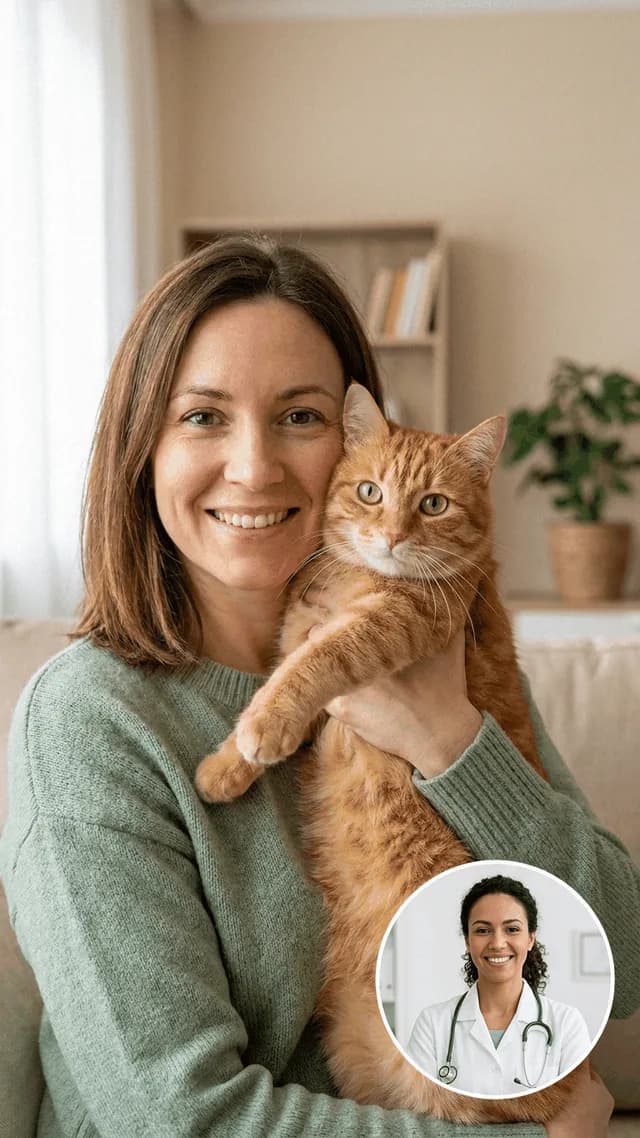
Webvet may earn a commission if you book.
Getting a picky or fussy cat to eat

Answer-first: to get a picky cat to eat, offer variety in small fresh amounts, warm the food, and remove pressure. A genuinely picky cat is usually well and simply choosy, but "picky" can also mask early illness, so keep the emergency timeline in mind.
Food puzzles turn mealtime into a game, which often re-engages picky eaters who ignore a plain bowl. Our guide to cat puzzle feeders explains the types and how to introduce one.
Here is the practical playbook for how to get a picky cat to eat, a fussy cat, or a finicky cat:
- Test textures systematically. As with wet food above, run through pate, gravy, and minced formats to learn the preference. This is the core of how to get a picky cat to eat wet food and how to get a fussy cat to eat wet food.
- Serve small and fresh. Cats often reject food that has sat out and gone stale or cold. Offer a small portion, refresh it, and do not leave a crusted bowl down all day.
- Warm every serving. A picky cat that ignored cold pate will frequently eat the same food warmed.
- Reduce the audience. Stand back. Some cats will not eat while watched or crowded by other pets.
- Do not free-feed treats. A very common trap is the cat not eating food but eats treats. If the cat fills up on treats, meals lose their appeal. Cut treats back so real food competes.
For how to get a picky cat to eat canned food or dry food, the same rules apply: small, fresh, warm, and calm. One caution: do not switch diets abruptly for a well cat just because it seems bored. Sudden food changes can cause GI upset. If you must change food, do it gradually over 7 to 10 days.
Getting a stressed, scared, or newly adopted cat to eat

Answer-first: a stressed or new cat eats best when it feels safe, so give it a quiet, low-traffic feeding spot and time to decompress. Stress-related appetite loss is common and often resolves once the cat settles, but the 24-48 hour rule still applies.
Predictable, quiet mealtimes help anxious cats settle. If your schedule is the obstacle, read whether automatic feeders are a good idea for cats before relying on one.
If you are asking how to get a stressed cat to eat, how to get a scared cat to eat, or how to get a new cat to eat, the environment matters more than the food:
- Create a secluded feeding station. Put the bowl in a quiet corner, away from the litter box, loud appliances, and foot traffic.
- Use a wide, shallow dish so whiskers do not touch the sides (whisker fatigue is real for some cats).
- Give a hiding spot nearby. A scared cat may only eat when it can retreat quickly. Leave food near a covered bed or box.
- Keep a predictable routine. Feed at the same times and places. Predictability lowers stress.
- Minimize competition. In multi-cat homes, feed the nervous cat separately.
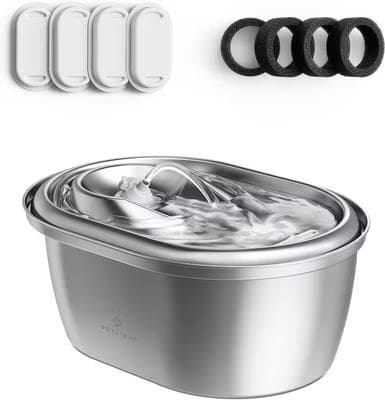
304 food-grade stainless steel pet water fountain, 101 oz. The circulating, filtered water encourages cats to drink more, which supports urinary tract and kidney health.
Webvet may earn a commission when you click through to Chewy, at no extra cost to you.
What is the 3-3-3 rule for cats?
The 3-3-3 rule is a rescue guideline for newly adopted cats: expect roughly 3 days to decompress, 3 weeks to settle into a routine, and 3 months to feel fully at home. During the first 3 days, a scared new cat may hide and eat little. Offer food in the quiet space and do not force interaction. However, "settling in" is never a license to ignore the emergency timeline: even a new cat that eats nothing for 48 hours needs a vet, because a frightened cat can still develop hepatic lipidosis.
Getting a sick or recovering cat to eat (illness, post-surgery, no appetite)
Answer-first: for a sick or recovering cat, warm, strong-smelling, easy-to-lick food works best, but appetite loss in an ill cat should be flagged to your vet quickly. A sick cat that will not eat is exactly the scenario the fatty-liver warning is about.
Tracking exactly how much a recovering cat eats matters. A feeder with portion control can help you measure intake precisely: see our best automatic cat feeder picks.
If you are searching how to get a sick cat to eat, how to get a cat to eat when sick, how to get a cat to eat after surgery, or how to get a cat with no appetite to eat, use gentle, high-aroma tactics:
- Warm, soft, lickable food. Thin pate or a recovery-style wet diet, warmed, is easiest to eat when a cat feels rough.
- Loss of smell tempting. Illnesses that clog the nose (like an upper respiratory infection) blunt smell, and cats that cannot smell often will not eat. Warming food and using pungent toppers helps. Upper-respiratory causes are their own topic, so treat the infection with your vet rather than managing it as an appetite problem here.
- Small, frequent offerings. A few licks every couple of hours can add up when a big meal is overwhelming.
- Hand-feeding. Some recovering cats will accept food from a finger or spoon before they will approach a bowl.
For home remedies for sick cats not eating, keep expectations realistic: warming, toppers, and calm are legitimate aids, but they do not treat the underlying illness. A cat that stays off food after being sick, after surgery, or that is getting weaker needs veterinary care, not more home experiments. If your cat is also sluggish or withdrawn, our guide on the cat that is not eating and lethargic explains why that combination raises the urgency.
Senior and condition-specific cats: kidney disease, liver disease, diabetes, cancer
Answer-first: for senior and chronically ill cats, prioritize any calories your cat will accept in the short term and coordinate the long-term diet with your vet. Appetite loss in these cats is often a symptom of the underlying disease, so tempting tactics are supportive, not curative.
Older cats and cats with chronic conditions need a slightly different mindset. If you want how to get a senior cat to eat, start with the universal levers (warm, aromatic, small, frequent), then layer in condition-aware care:
- Kidney disease: Cats with chronic kidney disease often feel nauseous and go off food. For how to get a cat with kidney disease to eat or kidney failure to eat, warming food and toppers help short term, but nausea control and a prescription renal diet are vet decisions. Do not switch to or from a therapeutic diet without guidance.
- Liver disease: In how to get a cat with liver disease to eat, getting calories in is urgent, because inappetence worsens liver problems, which is the whole hepatic-lipidosis concern. This group frequently needs assisted feeding and vet-directed nutrition fast.
- Diabetes: A diabetic cat that stops eating is a red flag, especially around insulin timing. Contact your vet before your next insulin dose if a diabetic cat will not eat, because feeding and insulin must stay coordinated.
- Cancer and pancreatitis and IBD: For how to get a cat with cancer to eat, pancreatitis to eat, or IBD to eat, comfort-focused tempting plus vet-prescribed anti-nausea medication and appetite stimulants is the realistic path. Palatability matters most here: offer whatever safe food your cat will actually accept.
Because senior appetite loss can signal serious disease, the deeper causes for older cats belong in our dedicated guide. See old cat not eating for age-specific causes and next steps. The bottom line for every cat in this section: coordinate with your vet, because the diet is part of the treatment.

Lickable cat treats with real chicken, made to support comfort and tranquility. 12 single-serve 0.5-oz tubes.
Webvet may earn a commission when you click through to Chewy, at no extra cost to you.
Appetite stimulants and assisted feeding: what a vet can do
Answer-first: when home tactics fail, vets have real tools, including appetite-stimulant medications and, if needed, tube feeding. Recognized veterinary appetite stimulants include mirtazapine, cyproheptadine, and capromorelin, and assisted (tube) feeding can bridge a cat that will not eat voluntarily.
So if you are asking how can I stimulate my cat's appetite at home, the honest answer is that home options are limited to warming, aroma, toppers, calm, and hand-feeding. The pharmaceutical appetite stimulants are prescription-only and vet-dosed. This is not a DIY step.
For how do I feed my cat that won't eat when it truly refuses, vets can escalate:
| Approach | What it is | Who directs it |
|---|---|---|
| Appetite stimulants | Mirtazapine, cyproheptadine, capromorelin | Vet prescription and dosing |
| Anti-nausea medication | Reduces nausea so the cat wants food | Vet prescription |
| Syringe/assisted feeding | Slow delivery of liquid or slurry food | Only under vet guidance |
| Feeding tube | Bypasses the mouth to deliver full nutrition | Vet-placed and managed |
A note on syringe feeding a cat that won't eat and liquid food for sick cats: syringe or force-feeding carries a real aspiration risk (food entering the airway and lungs), and it can stress an already fragile cat. Do this only under veterinary guidance, with the correct technique, food consistency, and volume. When a cat needs meaningful nutrition it cannot take by mouth, a vet-placed feeding tube is usually safer and more effective than repeated home syringe feeding.
Getting a cat to swallow a pill is a separate skill. If your search was really about how to get a cat to eat a pill, tablet, medicine, or a chewable pill, that is a medication-administration task, not an appetite problem, and it deserves its own step-by-step method (pill pockets, proper positioning, and vet-approved technique). We cover pilling separately rather than here.
When to stop DIY and call the vet (hepatic lipidosis warning)

This is the load-bearing section. Answer-first: stop home experiments and call the vet when your cat has eaten nothing for about 24 hours, or sooner if any warning sign is present. The reason is not caution for its own sake, it is hepatic lipidosis, the most common cause of liver disease in cats, which develops during a period of poor appetite and is especially dangerous in overweight cats.
Put plainly: a cat that stops eating starts breaking down body fat for energy, and a cat's liver can be overwhelmed by that fat, which shuts down appetite further in a dangerous loop. That is why more than two days of refused food warrants an immediate vet visit, and why overweight, diabetic, and senior cats have even less margin.
Call the vet the same day if your cat:
- Has eaten nothing for 24 hours (or you are unsure and it may be longer).
- Is refusing both food and water. Learning how to get a sick cat to eat and drink matters, but a cat refusing both needs prompt care.
- Is lethargic, hiding, weak, or "my cat is not eating or drinking and very weak."
- Is vomiting, drooling, or shows yellowing of the eyes, gums, or ears.
- Is overweight, diabetic, pregnant, very young, or senior.
How do you treat a cat that is not eating? Medically, treatment means finding and fixing the underlying cause (dental disease, kidney disease, nausea, infection, pain, and so on), controlling nausea, and getting calories in, often with appetite stimulants or assisted feeding. That diagnostic and treatment work is the vet's job. Your job at home is to try the safe tempting techniques, watch the clock, and not let "waiting it out" become the plan. Every technique in this article is a bridge to that veterinary care, never a replacement for it.
Quick comparison: which technique for which cat
| Cat's situation | First moves | Escalate to vet when |
|---|---|---|
| Healthy but picky | Warm food, vary texture, cut treats | No eating in 24-48 hrs |
| Stressed or newly adopted | Quiet feeding spot, routine, hiding place | No eating in 48 hrs |
| Sick or post-surgery | Warm lickable food, small frequent offers | Still off food, or getting weaker |
| Senior or chronic disease | Any accepted calories, coordinate diet | Promptly; diet is part of treatment |
| Diabetic | Tempt, then contact vet before next insulin | Same day, before insulin |
| Refusing food and water | Tempt briefly | Emergency now |
- 1A cat should not go without food for more than 24 to 48 hours before you involve a vet; refusing food for more than two days warrants an immediate visit.
- 2Most healthy cats respond to warming food to body temperature, switching texture, and adding strong-smelling toppers like tuna water or plain unsalted chicken broth.
- 3The real danger is hepatic lipidosis (fatty liver), the most common feline liver disease, which is especially dangerous in overweight, diabetic, and senior cats.
- 4Never give acetaminophen (Tylenol) to a cat under any circumstances; it is toxic and poisoning can be fatal.
- 5Appetite stimulants (mirtazapine, cyproheptadine, capromorelin) and assisted feeding are vet-directed; syringe feeding at home carries aspiration risk and should only be done under veterinary guidance.
Frequently asked questions
How do I feed my cat that won't eat?
Start with safe home tactics: warm the food, switch textures, add a strong topper like tuna water or plain chicken broth, and offer small amounts by hand. If your cat still refuses, your vet can prescribe appetite stimulants such as mirtazapine, cyproheptadine, or capromorelin, and use assisted feeding when needed. Do not rely on syringe feeding at home without vet guidance, because of aspiration risk.
What is the 3-3-3 rule for cats?
The 3-3-3 rule describes a new cat's adjustment: about 3 days to decompress, 3 weeks to learn the routine, and 3 months to feel fully at home. A frightened new cat may eat little in the first days, so offer food in a quiet, safe space. Still, if a new cat eats nothing for 48 hours, contact your vet, since stress does not remove the risk of fatty liver.
How can I stimulate my cat's appetite?
At home, warm the food to release aroma, add pungent toppers, keep meals small, fresh, and frequent, and feed in a calm spot. Vets recommend heating food to about body temperature and offering odorous, highly palatable options for a cat that is off its food, and moist or canned food is usually more palatable to cats than dry, so these levers help. Beyond that, true appetite stimulants are prescription medications your vet must dose, so if home tactics fail within a day, call your vet.
How do you treat a cat that is not eating?
Treatment means diagnosing and fixing the underlying cause, controlling nausea, and restoring calorie intake, sometimes with appetite stimulants or a feeding tube. Home tempting can help a mildly-off but otherwise well cat, but more than two days without food warrants an immediate vet visit. The safest treatment plan pairs your tempting efforts with prompt veterinary assessment.
How long can a cat refuse to eat?
Not long safely: aim to involve a vet by 24 to 48 hours of no food. Refusing food for more than two days warrants immediate veterinary attention, and the danger is higher in overweight cats. The threat is hepatic lipidosis, the most common feline liver disease, which develops over a period of poor appetite. Any duration is concerning if the cat is also not drinking, weak, or hiding.
What is the silent killer of cats?
The phrase silent killer is commonly used for chronic kidney disease, which develops quietly and often shows up first as appetite loss, weight loss, and increased drinking or urination in older cats. Because it is slow and easy to miss, appetite changes in a senior cat should always be checked by a vet. Our old-cat-not-eating guide covers age-specific next steps.
What is the one meat to never feed a cat?
There is no single magic bad meat, but the safest answer is to never feed raw or spoiled meat, and to avoid meats seasoned with onion or garlic, which are toxic to cats. Raw and undercooked pork carries parasite and bacterial risk, so it is a frequent never-feed pick. Also never use any meat to hide human medication, because acetaminophen (Tylenol) is toxic to cats and should never be given under any circumstances; cats are especially sensitive to it and poisoning can be fatal.
Why won't my cat eat even though it seems hungry?
A cat that seems hungry but won't eat is often blocked by something physical: nausea, dental pain, a stuffy nose that dulls its sense of smell, or food that is stale or unappealing. Try warming the food and adding aroma first. If the behavior persists beyond a day, get a vet check, since hungry but not eating often points to an underlying problem.
$65 · no membershipHave a health question about your cat?
A licensed vet can assess your cat over video and prescribe online when it's appropriate.
Talk to a vet- Licensed vets
- All 50 states
- same-day Rx
Webvet may earn a commission if you book.

Editor
The Webvet Editorial Team is the in-house group of pet-care editors and writers behind Webvet, operated by Smart Pet Collective. The team researches, writes, and maintains Webvet's pet health, behavior, and medication content. Every article follows a defined editorial process: research from reputable veterinary and scientific sources, careful drafting, mandatory review of medical content by a credentialed veterinarian, and dated publication. Health and medication articles are medically reviewed by a licensed veterinary professional before they go live and are kept current over time.
Veterinarian · BVMS MRCVS
Dr. Pippa Elliott, BVMS, MRCVS, is a veterinarian with nearly 30 years of experience in companion animal practice. Dr. Elliott earned her Bachelor of Veterinary Medicine and Surgery from the University of Glasgow. She was also designated a Member of the Royal College of Veterinary Surgeons. Married with 2 grown-up kids, Dr. Elliott has a naughty Puggle named Poggle, 3 cats and a bearded dragon.


