Cat Not Eating but Drinking Water: Causes, Emergency Signs, and What to Do
A cat not eating but drinking water can signal a 24-48 hour emergency (hepatic lipidosis). Learn the causes, red-flag symptoms, and vet-approved ways to get your cat eating again safely.

BVMS MRCVS
Medically reviewed by Dr. Pippa Elliott, BVMS MRCVS · Last reviewed

This article contains affiliate links. Webvet may earn a commission when you buy through them, at no extra cost to you.
If your cat is not eating but drinking water, treat it as a real warning sign, not a wait-and-see moment. A cat that keeps lapping at the water bowl but turns away from food is telling you something is wrong, and the clock is already running. Cats are built differently from dogs and people: when a cat stops eating, its body starts mobilizing fat that its liver cannot process fast enough, which can set off a potentially fatal liver condition after only a few days without food. The fact that your cat is still drinking is not proof it is fine. This guide walks through what "cat not eating but drinking water" really means, when it becomes an emergency, the seven most common causes, and exactly what to do right now while you arrange veterinary care.

Cat Not Eating but Drinking Water: What It Means (and Why It's Urgent)
When a cat is not eating but drinking water, it usually means your cat still feels thirsty (or is thirsty because of illness) but something is making food unappealing, painful, or impossible to face. Appetite loss in cats, called anorexia in veterinary terms, is not a diagnosis on its own. It is a nonspecific signal that points to a wide range of underlying problems, from dental pain to nausea to serious systemic disease, according to the Merck Veterinary Manual.
Here is the part owners most often miss. Because your cat drinking water but not eating still looks "half normal," it is easy to feel reassured and give it another day. That instinct is exactly backwards for cats. A cat that continues drinking can still be sliding toward a dangerous fatty-liver crisis, because water intake does nothing to prevent the metabolic problem that starts when calories stop coming in.
So when people ask why is my cat not eating but drinking water, the honest answer is: it could be something as fixable as a sore tooth or as serious as kidney disease, and you cannot tell which from the drinking alone. That is why the safest framing for my cat is not eating but drinking water is to act early rather than watch and wait.
- 1A cat not eating but drinking water is a symptom, not a diagnosis.
- 2Still drinking is NOT proof your cat is okay.
- 3The window to act safely is measured in hours to a couple of days, not weeks.
Emergency First: When a Cat Not Eating Becomes a 24-48 Hour Crisis

The single most important thing to understand about a cat that will not eat is the hepatic lipidosis danger window. Hepatic lipidosis, also called fatty liver disease, is the most common severe liver disease in cats. It develops when a cat stops eating and the body floods the liver with mobilized fat faster than the liver can handle, overwhelming it. It is potentially fatal and requires aggressive nutritional support to reverse, according to the Merck Veterinary Manual. The condition is associated with a period of poor appetite that can be as short as a few days, which is why even a brief hunger strike in a cat is not something to ignore, per the Merck Veterinary Manual's cat-owner liver guide.
When should I worry about a cat not eating? Use this simple rule:
- Any cat that has not eaten for 24 hours should be watched closely and called in to the vet.
- Any cat with no food for 24 to 48 hours needs to be seen, especially if it is overweight, older, or also lethargic.
- A cat that is not eating AND lethargic, weak, hiding, or vomiting should be seen the same day, not tomorrow.
Overweight cats are at higher risk because their bodies have more stored fat to flood the liver with once they stop eating, and the incidence of hepatic lipidosis is much higher in obese cats, per the Cornell Feline Health Center. A primary problem that causes anorexia or food deprivation is what sets the stage for hepatic lipidosis in an overconditioned cat, according to the Merck Veterinary Manual.
If your cat is lethargic, not eating but drinking water, or your cat is sick, not eating but drinking water, the lethargy is the tiebreaker. Appetite loss with lethargy means "go now," not "give it another day," because a cat combining those two signs is far more likely to have something serious brewing. Appetite loss on its own is a common clinical sign of many systemic diseases, per the Merck Veterinary Manual, so pairing it with a second warning sign like lethargy is what pushes a wait-and-see situation into a same-day vet visit.
How to tell if a cat's body is shutting down. Watch for a cluster of signs together rather than one alone: total refusal of food and often water, profound weakness or inability to stand, hiding in odd places, very low body temperature (cool ears and paws), labored or open-mouth breathing, unresponsiveness, and sometimes a drop in normal grooming and litter-box use. These are emergency signs. A cat showing them needs immediate veterinary care, not home remedies.
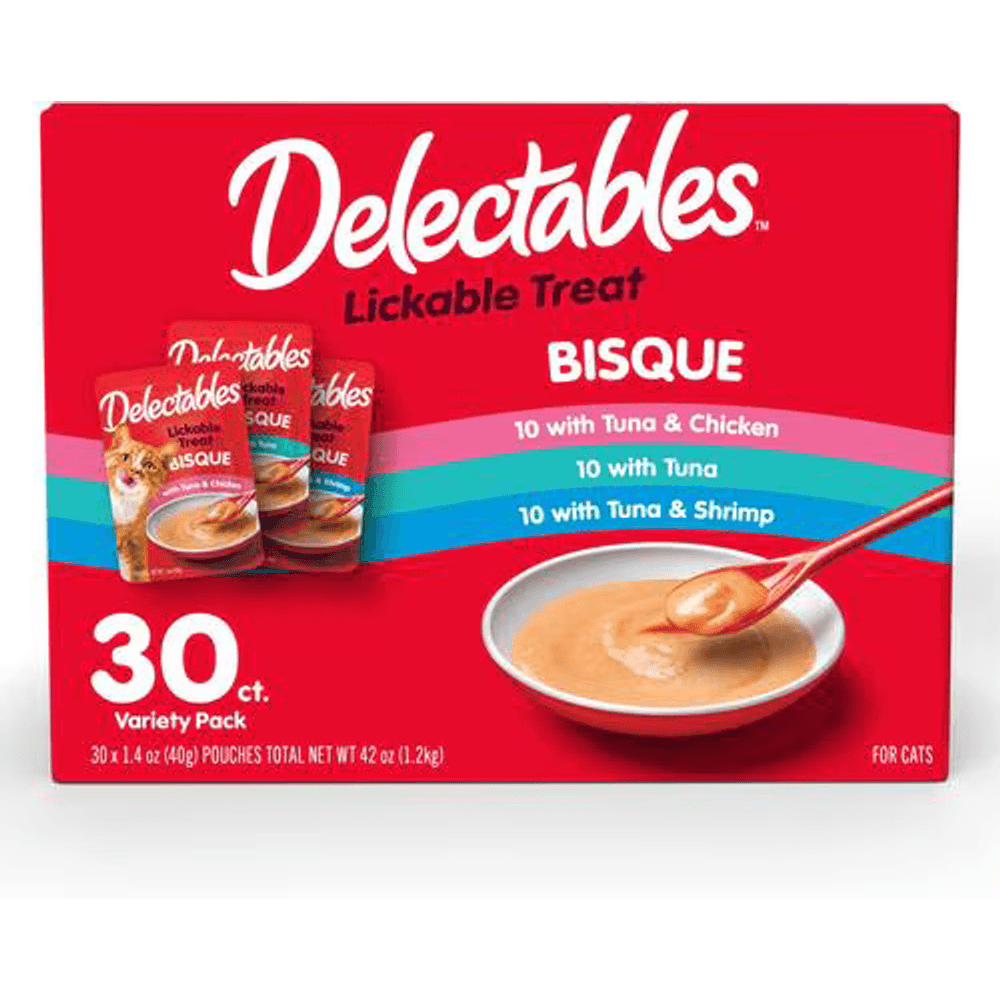
A soupy, lickable bisque treat that tempts a cat who has gone off solid food. The high-moisture, aromatic texture is easy to lap up and hard for a picky or recovering cat to resist, and it sneaks in extra hydration.
Webvet may earn a commission when you click through to Chewy, at no extra cost to you.
Why Your Cat Is Drinking Water but Refusing Food: 7 Common Causes

When a cat is not eating food but drinking water, the reasons usually fall into a handful of categories. Below is a quick-reference table, followed by a closer look at the ones that matter most.
| Cause | Why the cat still drinks but won't eat | Typical extra clues | Urgency |
|---|---|---|---|
| Dental / mouth pain | Chewing hurts, but lapping water doesn't | Drooling, pawing at mouth, dropping food, bad breath | See vet soon |
| Nausea / GI upset | Feels queasy, food is repulsive, water soothes | Lip-licking, vomiting, hiding, diarrhea | Same day if vomiting |
| Kidney disease | Thirst is driven by the disease; nausea kills appetite | More drinking and urinating, weight loss | See vet soon |
| Hyperthyroidism / diabetes | Metabolic disease drives thirst; appetite altered | Weight loss, restlessness or lethargy | See vet soon |
| Pancreatitis / systemic illness | Pain and nausea suppress appetite | Lethargy, hunching, vomiting | Same day |
| Stress / anxiety / change | Fear suppresses appetite; drinking continues | New home, new pet, hiding, recent change | Monitor, see vet if >24-48h |
| Food aversion / pickiness | Dislikes the food, not truly sick | Eats treats, sniffs and walks away, acts normal | Monitor, still see vet if persists |
A few patterns worth naming, because owners search for them specifically:
- Cat sniffing food but not eating: the cat investigates the bowl, then walks away. This can be nausea, dental pain, or a food aversion. If it lasts beyond a day, it is not "just being picky."
- Cat not eating food but eats treats: a cat that refuses meals but takes a favorite treat is often dealing with nausea or a food aversion rather than complete anorexia, but it is still under-eating and still on the clock.
- Cat not eating but purring: purring is not always contentment. Cats also purr when stressed, in pain, or unwell, so a purring cat that won't eat is not automatically fine.
- Why is my cat not eating but acting normal: a cat that seems bright and playful but won't eat can still be in the early stage of a real problem. We keep the deep version of that scenario in the sibling guide cat not eating but acting normal; the short version here is that "drinking and acting normal but still not eating" is still a reason to see a vet if it passes 24 to 48 hours.

Single-ingredient freeze-dried raw salmon treats with an intense aroma that can tempt a cat who has gone off her food to start eating again.
Webvet may earn a commission when you click through to Chewy, at no extra cost to you.
Dental Pain and Mouth Problems (the #1 Overlooked Reason)

Dental disease is one of the most common and most overlooked reasons a cat won't eat but drinks water. It is genuinely widespread: studies report that between 50 and 90 percent of cats older than four years of age have some form of dental disease, and dental disease in cats often causes a cat to stop eating, according to the Cornell Feline Health Center. Oral pain from periodontal (gum) disease, tooth resorption, or stomatitis creates a very specific pattern: the cat is genuinely hungry, approaches the bowl, drinks water without trouble, but flinches away from chewing because it hurts.
Signs that point toward a mouth problem in a sick cat that won't eat but drinks water:
- Dropping food after picking it up, or chewing on only one side.
- Drooling, sometimes tinged with blood.
- Pawing at the mouth or shaking the head.
- Bad breath (halitosis) that is worse than usual.
- Preferring soft or wet food and abandoning dry kibble.
Dental pain is very treatable, but it needs a veterinary oral exam and often dental X-rays, because tooth resorption and stomatitis are painful and invisible from the outside. You cannot fix this at home. Softening food is a stopgap while you get seen, not a cure.
 $65 · no membership
Have a health question about your cat?
A licensed vet can assess your cat over video and prescribe online when it's appropriate.
 Talk to a vet
- Licensed vets
- All 50 states
- same-day Rx
Webvet may earn a commission if you book.
Nausea, Stomach Upset, and GI Issues
Nausea is a powerful appetite killer. A queasy cat will often keep drinking (or sit hunched by the water bowl) while refusing food entirely, which is exactly the cat sick, not eating but drinking water picture. Gastrointestinal upset, dietary indiscretion, inflammatory bowel disease, and pancreatitis all suppress appetite through nausea and pain, and appetite loss is a recognized nonspecific sign of GI and systemic disease, per the Merck Veterinary Manual.
Watch for these companion signs:
- Lip-licking, drooling, or swallowing repeatedly (nausea signals).
- Hunched posture or tense belly (abdominal pain).
- Hiding more than usual.
Two GI-adjacent scenarios need special handling:
- Cat not eating but drinking water and throwing up: vomiting plus appetite loss raises the urgency, especially if your cat cannot keep water down. This overlaps our dedicated vomiting content, so for the full breakdown of causes and what to do, see the cat throwing up guide; the key point here is that a vomiting cat that also won't eat should be seen the same day.
- Cat not eating or pooping but drinking water: a cat that stops both eating and passing stool may have a GI slowdown, a blockage, or constipation, all of which need veterinary evaluation rather than home laxatives.
A note on cat has diarrhea and not eating but drinking water: diarrhea plus refusal to eat speeds up fluid loss. Keep water available, do not withhold it, and get your cat seen promptly, because dehydration compounds quickly.
Systemic Illness: Kidney Disease, Liver Problems, Diabetes, and Hyperthyroidism
This is the category that makes the "drinking but not eating" combination especially worth taking seriously. Several serious diseases produce exactly this pattern: they increase thirst while wrecking appetite.
Chronic kidney disease (CKD). Increased thirst and increased urination (polydipsia and polyuria) alongside weight loss and reduced appetite are classic early signs of chronic kidney disease in cats, which is a leading cause of illness in older cats. This is the textbook "drinking more but eating less" pattern, and early diagnosis through bloodwork and urinalysis improves outcomes, according to the Cornell Feline Health Center.
What are the very first signs of kidney failure in cats? The earliest signals are often subtle: drinking noticeably more water, urinating larger amounts, gradual weight loss, and a slowly fading appetite, per the Cornell Feline Health Center. If you are watching your cat drink a lot of water but not eat, kidney disease belongs high on the list, especially in a mature or senior cat.
Hyperthyroidism and diabetes. Both of these endocrine diseases classically cause increased thirst and water intake. A hyperthyroid cat may drink and even eat more yet still lose weight; the most common clinical signs of hyperthyroidism are weight loss, increased appetite, and increased thirst and urination, and it mostly affects middle-aged and older cats, according to the Cornell Feline Health Center. Diabetes shows a similar water-driven picture: the two signs owners most often notice are weight loss despite a good appetite and increased thirst and urination, per the Cornell Feline Health Center. A diabetic cat not eating but drinking water is a red flag, because a diabetic cat that stops eating can slide toward a dangerous metabolic emergency and needs prompt veterinary attention.
What is the silent killer of cats? Chronic kidney disease is frequently called a silent killer, a lay nickname that reflects how quietly it can progress. It is one of the most prevalent diseases in older cats, and in the early stages it is very common for cats to show no obvious clinical signs, because the body compensates for the falling kidney function, according to the Cornell Feline Health Center. The earliest clues tend to be the increased thirst and slow appetite decline described above, appearing before more obvious illness does. That is why a cat not eating but drinking lots of water deserves a vet visit and bloodwork rather than a wait.
The takeaway for all of these systemic diseases is the same: they are managed, not guessed at. Diagnosis needs blood and urine testing. This article explains why these conditions cause the drinking-but-not-eating pattern; it is not a treatment protocol for any of them.
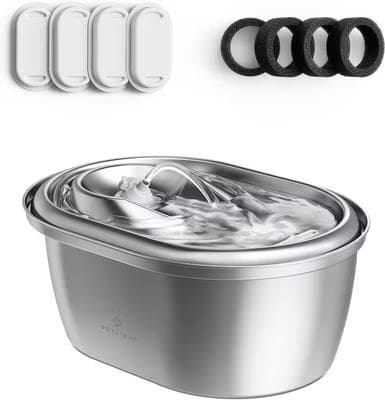
304 food-grade stainless steel pet water fountain, 101 oz. The circulating, filtered water encourages cats to drink more, which supports urinary tract and kidney health.
Webvet may earn a commission when you click through to Chewy, at no extra cost to you.
Stress, Anxiety, and Environmental Change
Not every cause is a disease. Cats are exquisitely sensitive to change, and stress can shut down appetite while a cat keeps drinking. A move, a new baby, a new pet, remodeling, boarding, a new food location, or even a rearranged room can all do it. This is the more hopeful end of the spectrum, but it still has a time limit.
What is the 3-3-3 rule for cats? It is a rough guide to how a newly adopted or rehomed cat adjusts: roughly 3 days to decompress and feel safe (often hiding and eating little), about 3 weeks to settle into a routine and start showing personality, and around 3 months to feel fully at home and bonded. During the first few days, reduced appetite from stress can be normal, but the same 24 to 48 hour food rule still applies. Stress does not make hepatic lipidosis less dangerous, so a stressed cat that eats nothing at all for a day or two still needs to be seen.
A cat not eating but drinking water but acting normal in the middle of a big change may simply be stressed. Support it with a quiet space, familiar bedding, a calm feeding spot away from other pets, and its usual food. If it has not eaten anything within 24 to 48 hours, stop assuming it is "just stress" and call your vet.

Lickable cat treats with real chicken, made to support comfort and tranquility. 12 single-serve 0.5-oz tubes.
Webvet may earn a commission when you click through to Chewy, at no extra cost to you.
When It's Your Older or Senior Cat

An old cat not eating but drinking water deserves extra attention, because the diseases that cause this pattern (kidney disease, hyperthyroidism, diabetes, dental disease, and cancer) all become more common with age. Increased thirst is such a hallmark of these conditions that a senior cat not eating but drinking water should be assumed to have a medical reason until a vet proves otherwise.
If you have an elderly cat not eating but drinking water and sleeping a lot, the combination of appetite loss, increased thirst, and extra sleeping is a classic screen-for-illness picture in older cats, and it warrants bloodwork and a urinalysis. Do not chalk it up to "just old age."
Because senior appetite loss has its own full workup, we keep the complete senior deep-dive in the sibling guide old cat not eating. Read that for the age-specific diagnostics and management; the lens here is simply that in a senior cat, drinking-but-not-eating skews toward real disease and toward getting seen sooner rather than later.
What to Do Right Now: Vet-Approved Ways to Get a Cat to Eat

What to do if a cat refuses to eat: the honest first step is to decide whether this is an emergency. If your cat has gone more than 24 to 48 hours without food, or shows any red-flag sign below, skip the home tricks and call the vet. If you are inside that window and your cat is otherwise bright, these gentle enticements can help while you arrange to be seen. Think of them as a bridge to care, not a replacement for it.
Vet-informed cat not eating but drinking water home remedies to try:
- Warm the food. Gently warming wet food (to just below body temperature) releases aroma and often tempts a reluctant cat. Never serve it hot.
- Offer strong-smelling foods. Fragrant options like plain warmed wet food, or a topper of tuna water (not brine-heavy tuna in oil) can wake up a fading appetite.
- Switch textures. If your cat refuses kibble, try wet or vice versa. A cat with a sore mouth will often accept soft food when it refuses to crunch.
- Hand-feed or finger-feed. A little food offered by hand, or a small smear on a paw or lip, can restart interest.
- Reduce stress at the bowl. Move food to a quiet spot, away from other pets, loud appliances, and the litter box.
- Keep it fresh and small. Offer small, fresh portions frequently rather than one large bowl that sits out and goes stale.
- Do not withhold water. Keep water freely available at all times.
For the full technique deep-dive (syringe feeding done safely, appetite stimulants, high-calorie recovery diets, and step-by-step coaxing), see the sibling guide how to get a cat to eat. This section is the safe short list; that guide is the manual.
When to Call the Vet (Red-Flag Symptom Checklist)

Some situations are not "try warm food first." They are "go now." Call your veterinarian or an emergency clinic the same day if your cat shows any of the following:
- No food for more than 24 to 48 hours, regardless of how normal it otherwise seems.
- Lethargy, weakness, hiding, or collapse. A cat not eating and lethargic but drinking water should be seen the same day.
- Vomiting, especially if your cat cannot keep water down.
- Labored or open-mouth breathing.
- Jaundice: yellow tint to the gums, skin, or the whites of the eyes (a sign of liver trouble, including hepatic lipidosis).
- Straining in the litter box with little or no urine, crying in the box, or frequent trips producing nothing. In a male cat especially, this can signal a life-threatening urinary blockage. This is a separate emergency that we do not treat in this guide; it needs immediate care, and you can read more in our upcoming feline urinary content. Do not wait on this one.
- A known diabetic that stops eating.
- Any cat that is very weak or that is not eating AND not drinking.
What do cats do right before they pass away? In their final decline, very sick cats often stop eating and drinking entirely, become extremely weak and withdrawn, hide, lose interest in surroundings, may have a lower body temperature and slow or labored breathing, and stop grooming. These are signs of a body shutting down and are a reason for immediate, compassionate veterinary care, whether that means emergency treatment or humane end-of-life support. Do not interpret "still drinking" as a guarantee your cat is not seriously ill.
If your cat is showing lethargy alongside the appetite loss, our sibling guide cat not eating and lethargic goes deeper on that specific combination. And for the big-picture overview of every appetite-loss scenario, start at our hub, cat not eating.
The Bottom Line
A cat not eating but drinking water is a call to action, not a reason to relax. Still drinking does not rule out a serious problem, and the fatty-liver danger window means you should think in terms of 24 to 48 hours, not days or weeks. Use gentle enticements only inside that window and only in an otherwise-bright cat, and treat lethargy, vomiting, jaundice, weakness, or litter-box straining as same-day emergencies. When in doubt, call your vet. With cats, acting early is almost always the safer choice.
Frequently Asked Questions
Why is my cat not eating anything but drinking water?
It usually means your cat is still thirsty but something is making food unappealing, painful, or impossible to face. Common reasons include dental pain, nausea, kidney disease, hyperthyroidism, diabetes, stress, or a food aversion. Appetite loss (anorexia) is a nonspecific sign of many underlying problems, so drinking alone does not tell you which. If your cat has not eaten for 24 to 48 hours, or is also lethargic or vomiting, see a vet.
How to tell if a cat's body is shutting down?
Look for a cluster of signs together: total refusal of food and often water, profound weakness or inability to stand, hiding, a low body temperature (cool ears and paws), labored or open-mouth breathing, unresponsiveness, and stopping normal grooming. These are emergency signs. A cat showing them needs immediate veterinary care, not home remedies. Do not assume that a cat still drinking is safe.
When should I worry about a cat not eating?
Worry at 24 hours and act by 24 to 48 hours. Any cat that skips food for more than a day should be seen, and it is more urgent if the cat is overweight, older, or also lethargic, weak, hiding, or vomiting. Cats can develop hepatic lipidosis (fatty liver) after only a few days without food, so this is not a wait-and-see situation.
What to do if a cat refuses to eat?
First decide if it is an emergency: if your cat has gone more than 24 to 48 hours without food or shows red-flag signs, call the vet instead of trying home tricks. If your cat is otherwise bright and inside that window, gently warm wet food to release aroma, offer strong-smelling foods, switch textures, hand-feed small amounts, and reduce stress at the bowl. Keep water available, never force-feed, and never give human medications or appetite stimulants unless a vet prescribes them.
What are the very first signs of kidney failure in cats?
The earliest signs are often subtle: drinking noticeably more water, urinating larger amounts, gradual weight loss, and a slowly fading appetite. This drinking-more-but-eating-less pattern is classic for early chronic kidney disease, especially in older cats. Because early diagnosis through bloodwork and urinalysis improves outcomes, a cat drinking a lot but eating little should be checked by a vet.
What is the 3-3-3 rule for cats?
It is a rough guide to how a newly adopted or rehomed cat adjusts: about 3 days to decompress and feel safe (often hiding and eating little), roughly 3 weeks to settle into a routine and show personality, and around 3 months to feel fully at home. Reduced appetite from stress can be normal in the first few days, but the 24 to 48 hour food rule still applies, so a cat eating nothing at all for a day or two still needs a vet.
What do cats do right before they pass away?
In their final decline, very sick cats often stop eating and drinking entirely, become extremely weak and withdrawn, hide, lose interest in their surroundings, may have a lower body temperature and slow or labored breathing, and stop grooming. These are signs of a body shutting down and warrant immediate, compassionate veterinary care, whether that means emergency treatment or humane end-of-life support. Do not treat still drinking as proof your cat is not seriously ill.
What is the silent killer of cats?
Chronic kidney disease is often called a silent killer because it advances quietly for a long time, with the earliest clues being increased thirst and a slow decline in appetite before more obvious illness appears. That is exactly why a cat drinking lots of water but not eating should get a vet visit and bloodwork rather than a wait-and-see approach, since early detection improves outcomes.
$65 · no membershipHave a health question about your cat?
A licensed vet can assess your cat over video and prescribe online when it's appropriate.
Talk to a vet- Licensed vets
- All 50 states
- same-day Rx
Webvet may earn a commission if you book.

Editor
The Webvet Editorial Team is the in-house group of pet-care editors and writers behind Webvet, operated by Smart Pet Collective. The team researches, writes, and maintains Webvet's pet health, behavior, and medication content. Every article follows a defined editorial process: research from reputable veterinary and scientific sources, careful drafting, mandatory review of medical content by a credentialed veterinarian, and dated publication. Health and medication articles are medically reviewed by a licensed veterinary professional before they go live and are kept current over time.
Veterinarian · BVMS MRCVS
Dr. Pippa Elliott, BVMS, MRCVS, is a veterinarian with nearly 30 years of experience in companion animal practice. Dr. Elliott earned her Bachelor of Veterinary Medicine and Surgery from the University of Glasgow. She was also designated a Member of the Royal College of Veterinary Surgeons. Married with 2 grown-up kids, Dr. Elliott has a naughty Puggle named Poggle, 3 cats and a bearded dragon.


