Cat Not Eating or Drinking? Why It's an Emergency and What to Do
A cat refusing both food and water is a genuine emergency, not pickiness. Learn the danger windows, the hepatic lipidosis clock, red-flag symptoms, and exactly when to get to the vet.

BVMS MRCVS
Medically reviewed by Dr. Pippa Elliott, BVMS MRCVS · Last reviewed

This article contains affiliate links. Webvet may earn a commission when you buy through them, at no extra cost to you.
A cat not eating or drinking is one of the few home situations that should move you straight from "let's wait and see" to "let's call the vet." A single skipped meal from a fussy cat is usually nothing. But a cat that refuses both food and water is a different problem entirely, because it puts your cat on a fast track to dehydration and a dangerous liver condition called hepatic lipidosis. This is the highest-urgency version of appetite loss, and the clock genuinely matters.
This vet-reviewed guide walks through how long a cat can safely go without food or water, why the combination is so dangerous, the medical causes behind it, the red-flag symptoms that mean go now, and exactly what you can do at home while you arrange to be seen. If your cat is also vomiting, hiding, weak, or straining in the litter box with no result, skip ahead to the emergency warning-sign checklist first.
Is a cat not eating or drinking an emergency? (start here)
Yes. A cat that is not eating or drinking should be treated as a medical emergency, especially once the combined refusal passes roughly 24 hours in an adult and about 12 hours in a kitten or senior cat. The reason is not the missed calories on any single day. It is that appetite loss in cats can quickly trigger a secondary, life-threatening liver problem, and that cats dehydrate fast when nothing is going in.
Appetite loss, called anorexia in veterinary terms, is a clinical sign of disease, not a diagnosis on its own. According to VCA Animal Hospitals, a cat that stops eating may be signaling dental disease, kidney disease, gastrointestinal disease, pancreatitis, infection, or cancer, and refusal to eat can itself set off dangerous secondary liver disease. In other words, the refusal is both a symptom to investigate and a hazard in its own right.
The dual refusal, food and water together, is what makes this scenario urgent rather than merely concerning. As VCA Animal Hospitals explains, the domestic cat descended from wild desert cats whose water requirements were largely met by the prey they ate, so many cats do not drink enough on their own and lean on moisture in their food. That means a cat that quits eating is already sliding toward dehydration even before it stops drinking. When both stop, the margin for safe waiting shrinks quickly.
What to do if your cat is not eating or drinking, in order:
- Confirm it is a true fast, not just a change you missed (new food, a hidden second bowl, a stressor). Note the last time you actually saw your cat eat or drink.
- Check for any red-flag symptom in the checklist below. Any one of them means call now, not tomorrow.
- Call your veterinarian or an emergency clinic and describe the timeline plainly. Ask to be seen.
- While you arrange the visit, you may gently offer tempting food and water (covered later). Never force-feed or force water.
This page focuses specifically on the dual-refusal, highest-urgency case. If your cat is refusing food but still lapping water, or eating a little but drinking heavily, those are different patterns covered by our sibling guides on a cat not eating but drinking water and the broader pillar on a cat not eating.

Single-ingredient freeze-dried raw salmon treats with an intense aroma that can tempt a cat who has gone off her food to start eating again.
Webvet may earn a commission when you click through to Chewy, at no extra cost to you.
How long can a cat go without food or water?

A healthy adult cat can typically tolerate up to about 24 hours without food before you should involve your vet, but the safe window for water is shorter, roughly 12 to 24 hours. Kittens, senior cats, pregnant cats, and any cat that is already sick have a much smaller margin, closer to 12 hours. These are practical action thresholds, not survival estimates, and you should not test them.
The single most important reason not to "give it another day" is hepatic lipidosis. The Merck Veterinary Manual notes that this fatty-liver condition is associated with a period of poor appetite ranging from a few days to several weeks, and that it occurs especially in obese cats. The Cornell Feline Health Center is blunter about the stakes: the condition is likely to be fatal if it is not treated promptly, and its incidence is much higher in obese cats. The reassuring flip side, per Merck, is that the outlook is good when the diagnosis is made early and treatment starts promptly. That is why a two-day or three-day fast is never something to ride out at home: the danger is real, but so is the payoff for acting fast.
Practical time windows
| Situation | When to act |
|---|---|
| Adult cat, no food | Call the vet by 24 hours of a complete fast |
| Kitten or senior cat, no food | Call the vet by 12 hours |
| Any cat, no water | Urgent within 12 to 24 hours |
| Cat not eating or drinking for 2 days | Do not wait. Treat as an emergency. |
| Cat not eating or drinking for 3 days | Emergency now. Hepatic lipidosis risk is real. |
| Any duration plus a red-flag sign | Go immediately |
"When a cat stops eating, how long before they die?" and "how many days can a cat go without eating or drinking before it dies?" are among the most searched versions of this question, and the honest answer is that it varies enormously with age, weight, body condition, and the underlying illness. There is no safe number of days to aim for. The point of the windows above is the opposite: to get your cat evaluated long before survival is ever in question. If your cat has already gone two or three days, that is an emergency-clinic conversation today.
Hydration is the shorter fuse. VCA Animal Hospitals notes that a lot of cats simply do not drink enough water, a trait tied to their desert ancestry, and the Cornell Feline Health Center confirms that moist food is a meaningful contributor here, calling canned cat food (at least 75 percent moisture) a good dietary source of water. So a cat that has stopped eating is drawing down its hydration reserve even if it takes an occasional sip. When drinking also stops, dehydration can advance faster than owners expect.
Why won't my cat eat or drink? Medical causes

Most cats that refuse both food and water are telling you something hurts, something is blocked, or an organ is struggling. Appetite loss is a shared final symptom of a long list of conditions, which is exactly why a cat that will not eat or drink needs a veterinary exam rather than guesswork at home.
Per VCA Animal Hospitals, common categories behind feline anorexia include:
- Dental and oral pain. Fractured teeth, resorptive lesions, gum disease, or mouth ulcers make eating and even drinking hurt. A cat may approach the bowl, then back away.
- Kidney disease. Common in older cats and a frequent driver of nausea and appetite loss.
- Gastrointestinal disease. Inflammatory bowel disease, foreign bodies, and blockages can shut down appetite fast.
- Infection or other systemic disease. From dental abscesses to organ dysfunction such as diabetes, feeling sick suppresses appetite.
- Cancer. Cancers of all types can present first as weight loss and refusal to eat.
One more cause worth naming on its own is pancreatitis, which VCA does not list on its anorexia page but covers in its own resource: per VCA Animal Hospitals, common clinical signs of feline pancreatitis include decreased appetite, nausea, vomiting, lethargy, and abdominal pain, and the intense pain often has to be controlled with prescription analgesics. In practice, a painful pancreas is a well-recognized reason a cat will stop eating.
A few disease-context searches deserve a direct word:
- Cat with cancer not eating or drinking. Appetite loss is common in cats with cancer and can come from the disease itself, from pain, or from treatment. This is a quality-of-life conversation to have with your veterinary team, not something to manage alone at home. Keep the vet in the loop.
- Diabetic cat not eating or drinking. In a known diabetic, food refusal is a red flag because it changes how insulin should be handled. Call your vet before the next insulin dose rather than guessing. Do not "just skip" or "just give" a dose without guidance.
- Cat not eating or drinking with normal blood work. Normal bloodwork is reassuring but does not rule everything out. Pain, dental disease, early GI problems, and some cancers can hide behind normal panels. If your cat still will not eat, imaging or a dental exam may be the next step.
Because the causes are so varied and several are painful or dangerous, do not try to diagnose at home. Every one of these possibilities ends in the same recommendation: get your cat seen. For a deeper look at appetite loss on its own, see our pillar guide on a cat not eating.
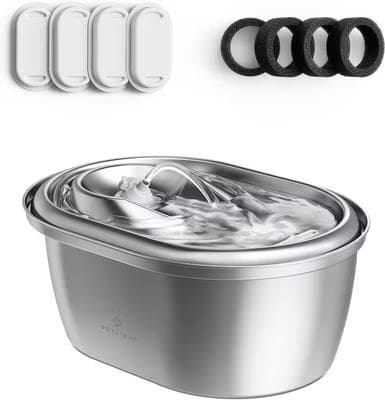
304 food-grade stainless steel pet water fountain, 101 oz. The circulating, filtered water encourages cats to drink more, which supports urinary tract and kidney health.
Webvet may earn a commission when you click through to Chewy, at no extra cost to you.
 $65 · no membership
Have a health question about your cat?
A licensed vet can assess your cat over video and prescribe online when it's appropriate.
 Talk to a vet
- Licensed vets
- All 50 states
- same-day Rx
Webvet may earn a commission if you book.
Hepatic lipidosis (fatty liver): why the clock matters

Hepatic lipidosis, also called feline fatty liver disease, is the condition that turns a few missed meals into a genuine emergency. It is the reason vets treat feline anorexia with more urgency than they would in a dog.
Here is the mechanism in plain terms. When a cat stops eating, its body starts breaking down stored fat for energy and sending it to the liver. The Cornell Feline Health Center explains that in the anorexic cat, excessive amounts of fat move to the liver from storage areas throughout the body to make up for the fat that would normally come from food. The liver becomes clogged with fat and its function falters. Cornell is direct about the danger: the condition is likely to be fatal if it is not treated promptly, which is why it requires urgent veterinary care. The Merck Veterinary Manual frames the timeline as a period of poor appetite lasting anywhere from a few days to several weeks, so the window in which this develops is not fixed. The encouraging news, again per Merck, is that the outlook is good when the problem is caught early and treated right away.
Overweight cats are at the highest risk. Both Cornell and Merck flag that hepatic lipidosis occurs disproportionately in obese cats, which have more fat stores to mobilize the moment they stop eating. That is a cruel twist: a chunky cat that "could stand to skip a few meals" is actually the most vulnerable, not the least.
Warning signs that a fast may already be tipping into serious illness include:
- A cat not eating or drinking and very weak or collapsing
- A low body temperature (a cat that feels cold to the touch, seeks warmth, or is limp)
- Labored or open-mouthed breathing
- Jaundice, meaning yellowing of the gums, the whites of the eyes, or the skin inside the ears
- Continued vomiting or drooling
Any of these means stop reading and get to a veterinarian now. Because hepatic lipidosis is defined by the fast itself, the single most protective thing you can do is not let a cat's refusal to eat drag on. The treatment is intensive and vet-directed, often involving fluids and assisted feeding through a tube, and outcomes are far better when it is caught early.
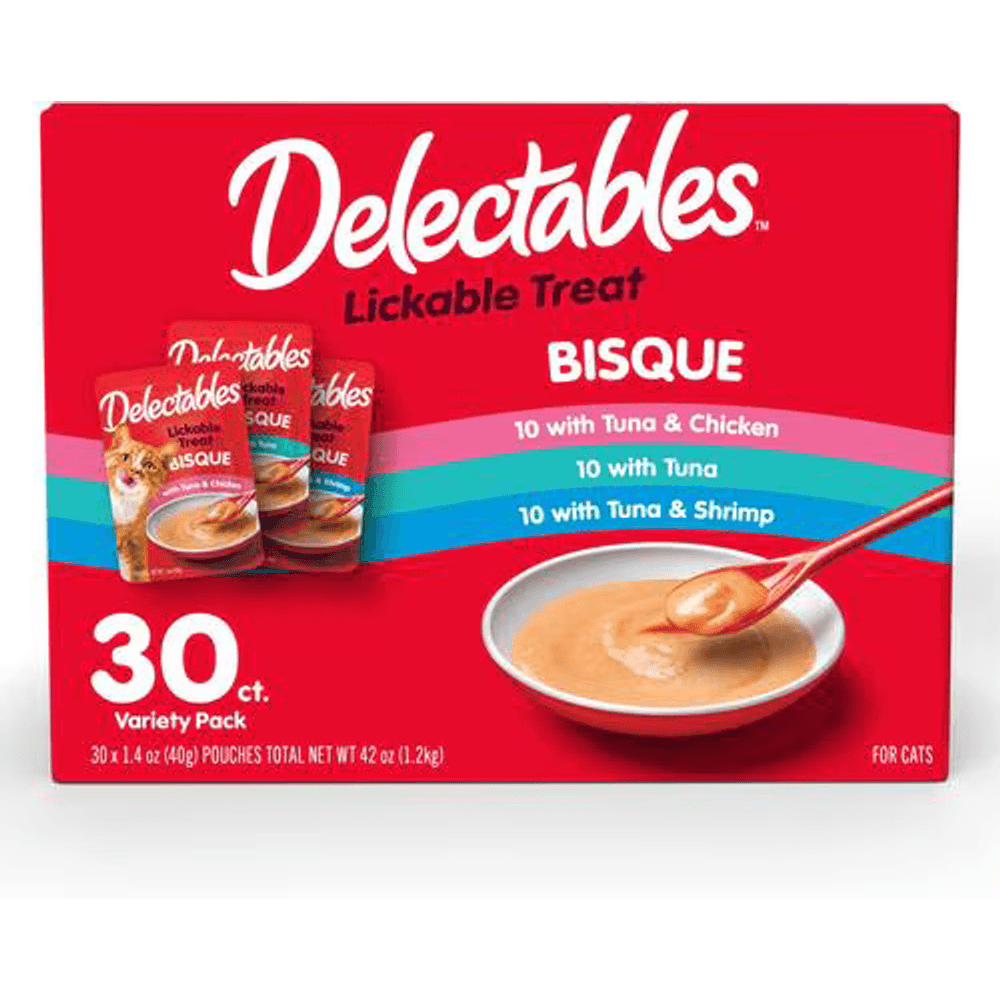
A soupy, lickable bisque treat that tempts a cat who has gone off solid food. The high-moisture, aromatic texture is easy to lap up and hard for a picky or recovering cat to resist, and it sneaks in extra hydration.
Webvet may earn a commission when you click through to Chewy, at no extra cost to you.
When it comes with other symptoms (vomiting, lethargy, hiding, drooling)
When a cat stops eating and drinking alongside other symptoms, those extra signs help gauge urgency, and several of them push this firmly into emergency territory. A cat that is quietly off its food is worrying; a cat that is off its food AND showing any of the signs below needs care sooner.
Lethargy and weakness. A lethargic cat not eating or drinking, sleeping all day, or barely responding is a serious combination. Profound lethargy with food refusal can reflect pain, dehydration, or advancing illness. Deeper coverage of that specific pattern lives in our sibling guide on a cat not eating and lethargic; if your cat is weak or unresponsive, do not wait to read, call.
Hiding. Cats instinctively hide when they feel unwell. A cat hiding and not eating or drinking is often a cat trying to withdraw because it feels sick or is in pain. Take hiding plus food refusal seriously rather than assuming your cat just wants quiet.
Drooling or licking the lips. A cat drooling and not eating, or repeatedly licking its lips, frequently points to nausea, dental or oral pain, or something stuck in the mouth. It is a strong hint that eating hurts.
Vomiting. This is where we hand off. If your cat is throwing up and not eating or drinking, vomiting bile, or bringing up white foam, that pattern has its own workup and home-care considerations. We do not duplicate the vomiting playbook here; see our dedicated resource on a cat throwing up. What matters for this page is simple: repeated vomiting combined with total food and water refusal is an emergency-clinic situation, not a wait-and-see one.
The through-line across all of these is that added symptoms raise urgency, never lower it. A cat that is hiding, drooling, weak, or vomiting on top of refusing food and water should be seen the same day.
Situational triggers: after moving, surgery, anesthesia, or a new home
Some appetite dips have an obvious situational trigger, and while those can be a little less alarming, the dual refusal of both food and water still has its own time limits. A known trigger does not cancel the 24-hour rule for adults or the 12-hour rule for kittens and seniors.
After moving or in a new home. Stress genuinely suppresses feline appetite. A cat not eating after moving, or a newly adopted cat not eating or drinking, is common in the first day or so as the cat adjusts to unfamiliar smells and space. Give a quiet room, familiar bedding, and the same food. But a new cat not eating or drinking at all past about 24 hours still needs a call, because stress and hidden illness can look identical from the outside.
After surgery, spay, or anesthesia. Grogginess and mild nausea after anesthesia can blunt appetite for a short time, and this often improves within a day. A cat not eating after surgery or a spay for a few hours is expected; a cat still refusing all food and water the day after, or one that seems painful, needs to go back to the clinic that did the procedure.
On pain medication. Some post-op pain medicines, including buprenorphine, can reduce appetite as a side effect. If your cat is on a prescribed pain medication and will not eat or drink, call the prescribing clinic; they can advise on whether to adjust the plan. Do not stop or change a medication on your own.
After a vet visit or in hot weather. A brief post-vet sulk is common. Heat can reduce appetite too, but hot weather also raises dehydration risk, so a cat refusing water in the heat should be watched closely and cooled down.
The 3-3-3 rule is a useful adjustment framework for new cats (roughly 3 days to decompress, 3 weeks to settle, 3 months to feel at home), and mild shyness around food fits that timeline. But the 3-3-3 rule is about behavior and comfort. It is not a license to let a cat go days without food or water. If a new cat is truly consuming nothing, the medical time windows override the settling-in timeline. See our pillar on a cat not eating for more on stress-related appetite loss.

Lickable cat treats with real chicken, made to support comfort and tranquility. 12 single-serve 0.5-oz tubes.
Webvet may earn a commission when you click through to Chewy, at no extra cost to you.
Kittens, senior cats, and pregnant cats
Age and life stage shrink the safe window. Kittens, senior cats, and pregnant cats have far less reserve than a healthy young adult and should be seen within about 12 hours of refusing food and water.
Kittens. Young kittens have tiny energy and hydration reserves and can crash quickly. A young cat or kitten not eating or drinking should never be given the full 24 hours; treat it as urgent within about 12 hours, sooner if the kitten is weak, cold, or limp.
Senior and elderly cats. An old cat not eating or drinking is both more likely to have a serious underlying disease (kidney disease and cancer rise with age) and less able to tolerate a fast. Take appetite loss in an older cat seriously and early. For the senior-specific angle, including chronic disease and quality-of-life considerations, see our sibling guide on an old cat not eating.
Pregnant and nursing cats. A pregnant cat not eating or drinking, or a nursing mother that stops eating, is a same-day veterinary concern. She is feeding herself and her kittens, so refusal risks both. Do not wait it out.
If your senior cat is refusing food but otherwise seems bright and normal, that pattern is covered separately in our guide on a cat not eating but acting normal. Even there, a complete refusal of both food and water still warrants a call.
What to do right now: hydrating and tempting a cat while you reach the vet

While you are arranging a veterinary visit, you can gently try to tempt your cat to eat and drink, but home enticement is a bridge to care, never a substitute for it. The goal is to get a little in while you get your cat seen, not to fix the problem yourself.
Safe things to try while you wait:
- Warm the food. Gently warming wet food releases aroma and can spark interest. Cats eat with their nose first.
- Offer aromatic, high-value options. A spoonful of the water from a can of tuna or plain, unseasoned, low-sodium broth can encourage licking and add fluid.
- Add water to wet food. Moistening wet food is a low-stress way to sneak in fluid, consistent with Cornell Feline Health Center guidance that canned food, at least 75 percent moisture, is a good dietary source of water for cats.
- Make water more appealing. A clean bowl, fresh water, a wide dish that avoids whisker fatigue, or a pet water fountain can all help a cat that is only mildly reluctant.
- Reduce stress. Offer food in a quiet, low-traffic spot away from other pets.
What NOT to do, ever, at home:
- Do not force-feed or push food into your cat's mouth. It causes stress and can lead to aspiration. Assisted feeding is a vet-directed procedure.
- Do not syringe or force water down your cat's throat for the same reason.
- Do not give human medications (no acetaminophen, ibuprofen, or aspirin). Many are toxic to cats.
- Do not treat home tempting as the plan. If your cat eats a bite, that is a bonus, not a green light to cancel the vet.
For the full, non-emergency playbook on rebuilding a cat's appetite and coaxing a reluctant eater over days and weeks, see our dedicated sibling guide on how to get a cat to eat. That guide owns the tempting-and-hydrating techniques in depth; this page keeps it brief on purpose, because the dual-refusal situation is about getting to the vet, not managing at home.
When to go to the emergency vet (warning-sign checklist)

Certain signs mean go to an emergency vet now, not in the morning. If your cat shows any single item on this list, stop trying home remedies and get to a clinic.
Treat the following as go-now signals in a cat that is not eating or drinking:
- Yellow gums, yellow eyes, or yellow skin (jaundice), a sign of serious liver trouble
- Labored, rapid, or open-mouthed breathing
- Collapse, extreme weakness, or unresponsiveness
- Repeated vomiting, especially with total food and water refusal
- Straining in the litter box with little or no urine, especially in a male cat, which can mean a urinary blockage (a true emergency, often fatal within hours if untreated)
- A cat not eating, drinking, or using the litter box at all, or not eating, drinking, or going to the bathroom, which signals nothing is moving through the body
- Low body temperature or a cat that feels cold and limp
- Seizures or disorientation
- A known diabetic that will not eat (call before the next insulin dose)
- 1A cat refusing both food and water is an emergency, not pickiness: call the vet by 24 hours for an adult, 12 hours for a kitten or senior.
- 2The real danger is hepatic lipidosis (fatty liver), which can be fatal if untreated but has a good outlook when caught early; overweight cats are at highest risk.
- 3Jaundice, labored breathing, collapse, repeated vomiting, or straining in the litter box with no urine all mean go to an emergency vet now.
- 4At home you may gently tempt with warmed food, broth, and a fresh water bowl, but never force-feed or syringe water, and never treat tempting as a substitute for the vet.
Frequently asked questions
How to tell when a cat's body is shutting down?
Signs a cat may be in serious decline include profound weakness or collapse, hiding and withdrawal, a low body temperature (feeling cold to the touch), labored or irregular breathing, refusal of all food and water, and loss of interest in surroundings. These signs overlap heavily with treatable emergencies, so they are a reason to get to a vet immediately, not to assume the worst. Only a veterinarian can tell you whether your cat is truly at end of life or facing a reversible crisis.
How many days can a cat go without eating or drinking before it dies?
There is no safe number, and it varies widely with the cat's age, weight, and underlying illness. What matters far more is that a cat not eating can develop hepatic lipidosis, which the Merck Veterinary Manual ties to a period of poor appetite lasting anywhere from a few days to several weeks, and which the Cornell Feline Health Center says is likely to be fatal if it is not treated promptly. Do not wait to see how long your cat lasts: call the vet by 24 hours for an adult, or 12 hours for a kitten or senior, and treat two to three days of refusal as an emergency now.
What are the very first signs of kidney failure in cats?
Early kidney disease in cats often shows up as increased thirst and urination, gradual weight loss, reduced appetite, and lethargy, and it is common in older cats. Because a cat not eating can be one of many signals of kidney disease among other illnesses (per VCA Animal Hospitals), any suspected kidney issue needs bloodwork and a urine test to confirm. If you suspect kidney trouble, ask your vet for a workup rather than judging from symptoms at home.
How do you hydrate a cat that won't drink?
While you arrange a vet visit, you can encourage fluids gently: offer fresh water in a clean, wide bowl or a pet fountain, add water or low-sodium plain broth to wet food, and warm the food to boost aroma. Moist food helps because the Cornell Feline Health Center calls canned cat food, at least 75 percent moisture, a good dietary source of water. Never force water into a cat's mouth with a syringe, as it risks aspiration. If your cat truly will not take in fluids, it likely needs veterinary fluids under the skin or IV, so call the clinic.
What do cats do right before they pass away?
A cat that is genuinely near the end of life may hide or withdraw, stop eating and drinking, become very weak or unable to stand, have a lowered body temperature, and breathe irregularly. These same signs, however, appear in reversible emergencies like a urinary blockage or hepatic lipidosis, so they should prompt an urgent vet call, not resignation. Let a veterinarian confirm what is happening and discuss comfort and options with you.
What is the 3-3-3 rule for cats?
The 3-3-3 rule is a rough guide to how a newly adopted cat adjusts: about 3 days to decompress, 3 weeks to start settling in, and 3 months to feel fully at home. Mild shyness and a reduced appetite in the first few days can fit this pattern. It is not a medical timeline, though: a new cat that consumes no food or water at all past about 24 hours still needs veterinary attention, because stress and hidden illness look the same from the outside.
$65 · no membershipHave a health question about your cat?
A licensed vet can assess your cat over video and prescribe online when it's appropriate.
Talk to a vet- Licensed vets
- All 50 states
- same-day Rx
Webvet may earn a commission if you book.

Editor
The Webvet Editorial Team is the in-house group of pet-care editors and writers behind Webvet, operated by Smart Pet Collective. The team researches, writes, and maintains Webvet's pet health, behavior, and medication content. Every article follows a defined editorial process: research from reputable veterinary and scientific sources, careful drafting, mandatory review of medical content by a credentialed veterinarian, and dated publication. Health and medication articles are medically reviewed by a licensed veterinary professional before they go live and are kept current over time.
Veterinarian · BVMS MRCVS
Dr. Pippa Elliott, BVMS, MRCVS, is a veterinarian with nearly 30 years of experience in companion animal practice. Dr. Elliott earned her Bachelor of Veterinary Medicine and Surgery from the University of Glasgow. She was also designated a Member of the Royal College of Veterinary Surgeons. Married with 2 grown-up kids, Dr. Elliott has a naughty Puggle named Poggle, 3 cats and a bearded dragon.


