Bloat in Dogs (GDV): Symptoms, Timeline, Breeds at Risk, and Treatment
Bloat in dogs, or gastric dilatation-volvulus, is a stomach that fills with gas and twists, cutting off blood flow within hours. Here are the first symptoms, the timeline, the breeds most at risk, and what treatment and prevention involve.

BVMS MRCVS
Medically reviewed by Dr. Pippa Elliott, BVMS MRCVS · Last reviewed

This article contains affiliate links. Webvet may earn a commission when you buy through them, at no extra cost to you.
Bloat in dogs is a stomach that fills with gas and, in its most dangerous form, gastric dilatation-volvulus (GDV), twists on itself and cuts off its own blood supply. Texas A&M College of Veterinary Medicine warns that GDV can become fatal in as little as four to six hours.
The fastest tell for bloat in dogs is unproductive retching with a swelling belly: the dog tries to vomit, nothing comes up, and the abdomen gets bigger. If you see that, drive to an emergency vet now. No home remedy treats GDV.
- 1Bloat is gas filling the stomach; GDV is that gas-filled stomach twisting on itself. Knowing what GDV is and how it differs from simple gas bloat matters, but only an X-ray can tell them apart.
- 2Unproductive retching with a swelling belly is the hallmark sign of bloat in dogs, often with restlessness and drooling.
- 3GDV can become fatal in as little as four to six hours, so every suspected case is an emergency.
- 4Large, deep-chested breeds such as the Great Dane carry the highest risk, but any dog can bloat.
- 5Emergency surgery with gastropexy is the treatment, and no medication or home remedy cures GDV.
 Sponsored
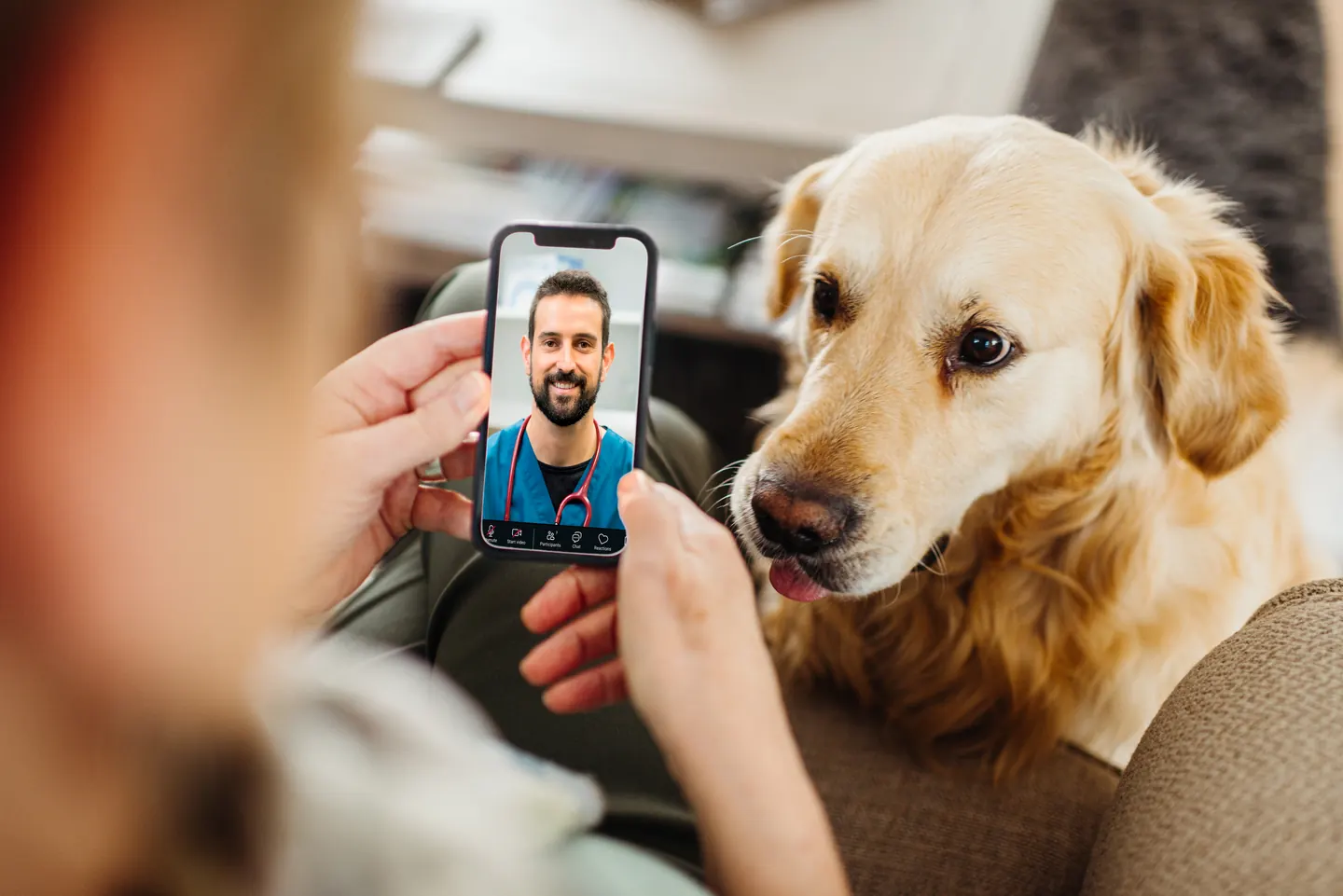
Want a vet's take on your dog's upset stomach?
Talk to a licensed vet at Dutch over video, often the same day. They can recommend treatment and prescribe it when it's appropriate.
Use code Pets60
Plans start at $12/month · covers up to 5 pets
- Licensed vets in most states
- Rx for 150+ conditions
- 4.7 on Trustpilot
What Is Bloat in Dogs?
Bloat in dogs is gas distension of the stomach that can progress to a life-threatening twist called gastric dilatation-volvulus (GDV). VCA Animal Hospitals explains that in the early stage the stomach fills with gas, a simple gastric dilatation, and that GDV occurs when the huge, gas-filled stomach twists upon itself.
The Merck Veterinary Manual defines GDV as distention of the stomach with rotation on its mesenteric axis. Merck adds that the move from dilation to volvulus sets the dog up for hypovolemic shock, a collapse in circulating blood volume.
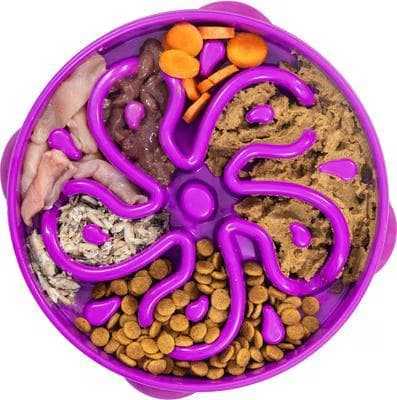
A maze-style bowl that makes a fast eater work around ridges for each mouthful of kibble.
Webvet may earn a commission when you click through to Chewy, at no extra cost to you.
What about a dog that looks bloated and gassy after a big meal? VCA notes that simple food bloat and GDV often look identical on exam, and X-rays are needed to see whether the stomach has twisted. "Is my dog fat or bloated" cannot be settled at home when the belly swells quickly.
Size and build shape the risk, but neither rules bloat out:
- Bloat is most common in big dogs: UF states GDV mostly affects large deep-chested dogs, and a large breed such as the Bernese Mountain Dog fits that build, though no source we reviewed gives a Bernese Mountain Dog figure.
- VCA states that any dog can bloat, including small breeds, so a Chihuahua, Dachshund, French Bulldog, or English Bulldog with a suddenly bloated belly and panting still needs a vet.
If your dog's stomach looks bloated but there is no retching, our guides to dog upset stomach and why a dog's stomach makes noises cover milder causes. There is no bloat kit for dogs that replaces an emergency visit.
Bloat vs torsion: simple bloat or GDV?
Simple or mild bloat is a stomach stretched with gas; torsion, or GDV, is that stomach twisted. A dog bloated from eating too much has food bloat, which can still progress to GDV, so the same warning signs apply.
Simple gas may pass on its own, but GDV never goes away by itself, and VCA notes the two can look identical. Bloat feels like discomfort to the dog: a hard, tight belly, pacing, and failed attempts to vomit.
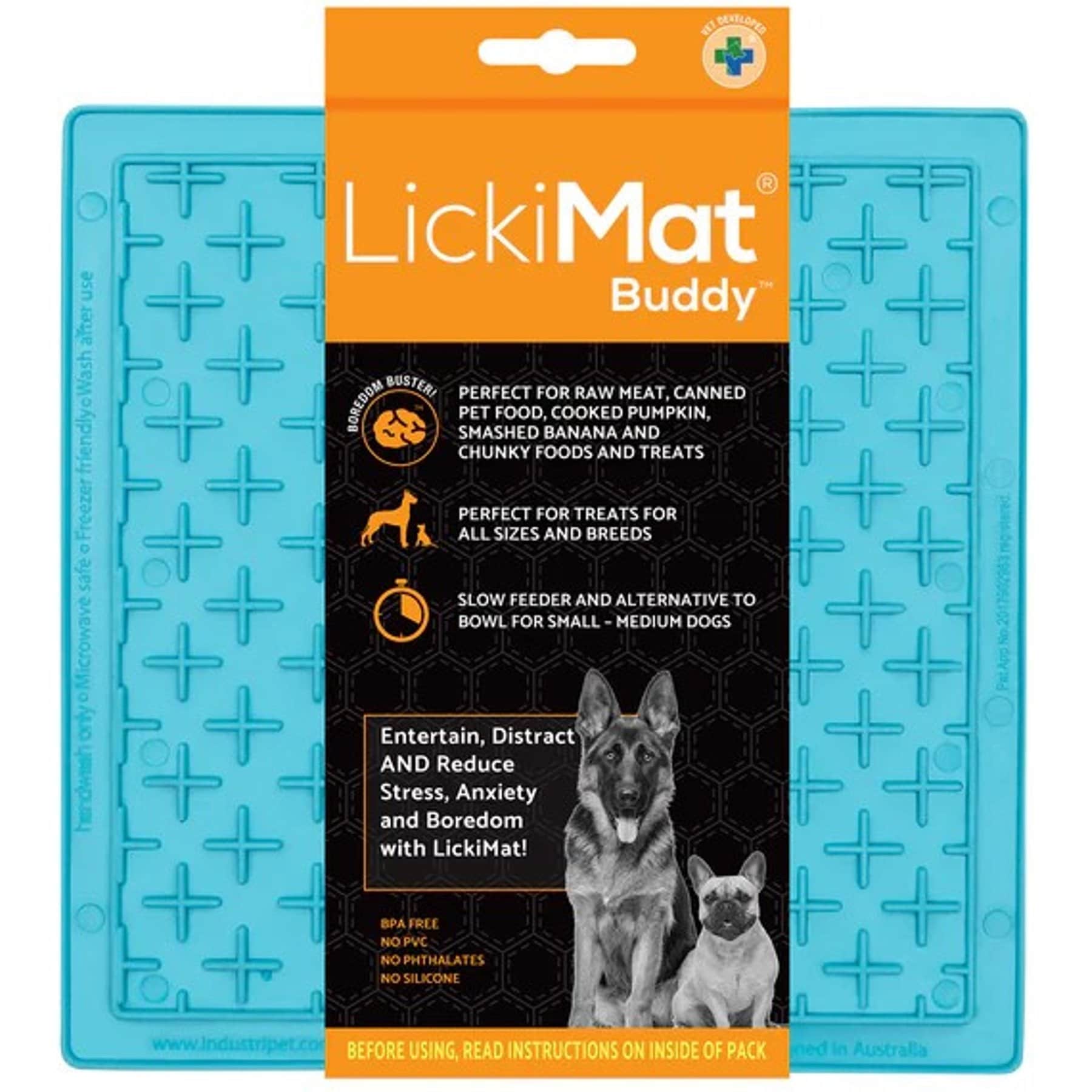
A textured lick mat for wet food or spreadable treats that turns a quick snack into slow licking.
Webvet may earn a commission when you click through to Chewy, at no extra cost to you.
How do you check for bloat at home? You can spot the signs, but you cannot detect a twist. Look for:
- A belly that is swelling, hard, or tight, most often on the left side
- Unproductive retching
- Restlessness and drooling
Photos cannot diagnose bloat; only an X-ray can. No source we reviewed gives a typical time of day when bloat happens, beyond VCA's warning about exercise after a large meal, and none gives a standard recovery time frame after treatment.
Symptoms of Bloat in Dogs
The most common symptoms of bloat in dogs are unproductive retching, restlessness, and a swollen or painful abdomen. The University of Florida Small Animal Hospital names those three as the signs it sees most often in deep-chested dogs.
What bloat looks like in dogs, according to Merck, VCA, and Texas A&M:
- Unproductive retching: gagging or trying to vomit with little or nothing coming up
- Abdominal distension, most obvious on the left side behind the ribs (VCA)
- A belly that sounds hollow and drum-like when tapped behind the last rib (VCA)
- Hypersalivation or heavy drooling (Merck)
- Restlessness, pacing, or an inability to settle (Merck, UF)
- Trouble breathing and, later, collapse or shock (VCA, Texas A&M)

What are 5 signs of bloating?
VCA lists five signs of bloat in dogs: a distressed or restless dog, profuse salivation, trouble breathing, unproductive retching, and collapse. A dog showing even the first two alongside a distended belly needs an emergency vet, because collapse is a late sign of shock rather than an early warning.
Early signs in a puppy or a German Shepherd are the same as in any dog. A puppy that looks bloated but is acting normal, eating, and passing stool is less worrying than one that retches, yet only an exam and X-ray separate simple bloat from GDV. Call your vet rather than waiting.
Owners also ask about the praying or sphinx position, stomach gurgling, bloat at night, a bloated dog that still wants to play, and very bloated dogs with no other symptoms. No source we reviewed lists those as defining signs. An extremely bloated, hard, swollen stomach is the sign that matters, French Bulldog included.
What Causes Bloat in Dogs?
The exact cause of bloat in dogs is not established, but chest shape, genetics, and eating habits all raise risk. VCA states that the cause remains unknown, and that exercise after a large meal or after drinking a large amount of water may increase risk.
Merck lists these associated factors:
- A deep, narrow chest, which it calls a proven genetic risk factor
- Once-daily feeding and dry kibble only
- Eating fast
- Lean body condition, stress, and fearful behavior
VCA adds family history and middle to older age. A 2020 review in Genes by Piras and colleagues adds increased body weight and stomach ligament laxity. So zoomies, a walk, or exercise right after eating are reasonable things to avoid, but they are not proven triggers on their own.
A Dog Aging Project study of 47,444 dogs found no increased GDV odds with anxiety, diet type, or meals per day, which conflicts with the Merck and VCA lists. No source we reviewed links GDV to seizures, and no source gives a fixed window for how long after eating bloat occurs.
What is food bloat in dogs?
Food bloat is a stomach stretched by a large meal rather than a twisted one. That is how many dogs get bloat in the first place: VCA describes early bloat as simple gastric dilatation.
No source we reviewed says how long food bloat lasts or confirms that it resolves itself safely, and food bloat is managed differently from GDV only after an X-ray rules out a twist.
 Sponsored
Vet care that's always there
Unlimited video calls and messaging with licensed vets for less than a typical vet visit. One membership covers up to five pets.
Use code Pets60
Plans start at $12/month · covers up to 5 pets
- Licensed vets in most states
- Rx for 150+ conditions
- 4.7 on Trustpilot
Which Dog Breeds Are Most at Risk of Bloat?
Large, deep-chested dog breeds are most at risk of bloat, with the Great Dane at the top of every list. UF states GDV mostly affects large deep-chested dogs, and VCA estimates that dogs over 100 pounds have about a 20% lifetime risk.
A 1994 study of 1,934 cases by Glickman and colleagues found these breeds had the highest odds of GDV:
- Great Dane (odds ratio 10.0)
- Weimaraner (4.6)
- Saint Bernard (4.2)
- Gordon Setter (4.1)
- Irish Setter (3.5)

Which dog breeds are most prone to bloat?
The dog breeds most prone to bloat are the Great Dane, Weimaraner, Saint Bernard, Gordon Setter, and Irish Setter. VCA adds the Standard Poodle, Basset Hound, Doberman, and Old English Sheepdog, and Merck adds the German Shepherd. The Dog Aging Project found Poodles had the highest occurrence and that weight over 40 kg raised odds.
How common is bloat in Great Danes? Sources differ. VCA Canada estimates 40% of Great Danes develop GDV in their lifetime, while Piras 2020 cites 14.0% prevalence, with Akitas at 9.2% and Dogue de Bordeaux at 7.2%. Across breeds, Piras reports lifetime risk ranging from 3.9% to 36.7%.
How common is bloat in golden retrievers?
No published figure exists for golden retriever bloat risk. Golden retrievers can get bloat, as any dog can, but were not among the highest-risk breeds in the 1994 Glickman study and were not part of the 11-breed JAVMA 2000 cohort. Treat a retching golden with a swollen belly as an emergency regardless.
For Boxer and Pitbull owners, the same holds: no breed-specific figure was found in the sources, so judge risk by size, chest depth, family history, and age. Bloat in older dogs is more likely, since VCA lists middle to older age as a risk factor.
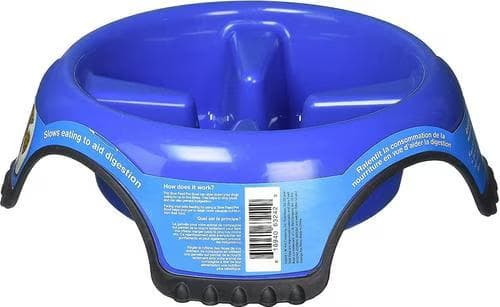
A non-skid slow feed bowl with deep interior indentations, sized for large-breed meals.
Webvet may earn a commission when you click through to Chewy, at no extra cost to you.
Small dogs and puppies can get bloat too. VCA states that any dog can bloat, so a Chihuahua, Dachshund, French Bulldog, toy poodle, miniature schnauzer, Corgi, or Beagle is not exempt, and neither is a Labrador or Husky. No breed-specific figure exists for these dogs in the sources we reviewed.
Big dogs carry more risk, but the early stages of bloat look the same in every breed, as the timeline below shows.
A puppy that is bloated and drinking a lot of water after a meal fits VCA's feeding-habit warning about large water intake, but a tense belly plus retching is the emergency sign. A fat puppy has a soft, steady belly; a bloated puppy has a belly that swells, tightens, and comes with retching.
Is bloat in dogs genetic?
Is bloat genetic or hereditary? Merck calls genetics, including a deep, narrow rib cage, a proven risk factor, and VCA and Piras 2020 list family history. Bloat is rare overall: the Dog Aging Project put lifetime prevalence at 0.23% across US companion dogs, far below the risk in giant breeds.
Owners of high-risk breeds often build meal routines around these factors, and those habits are covered in the prevention section below.
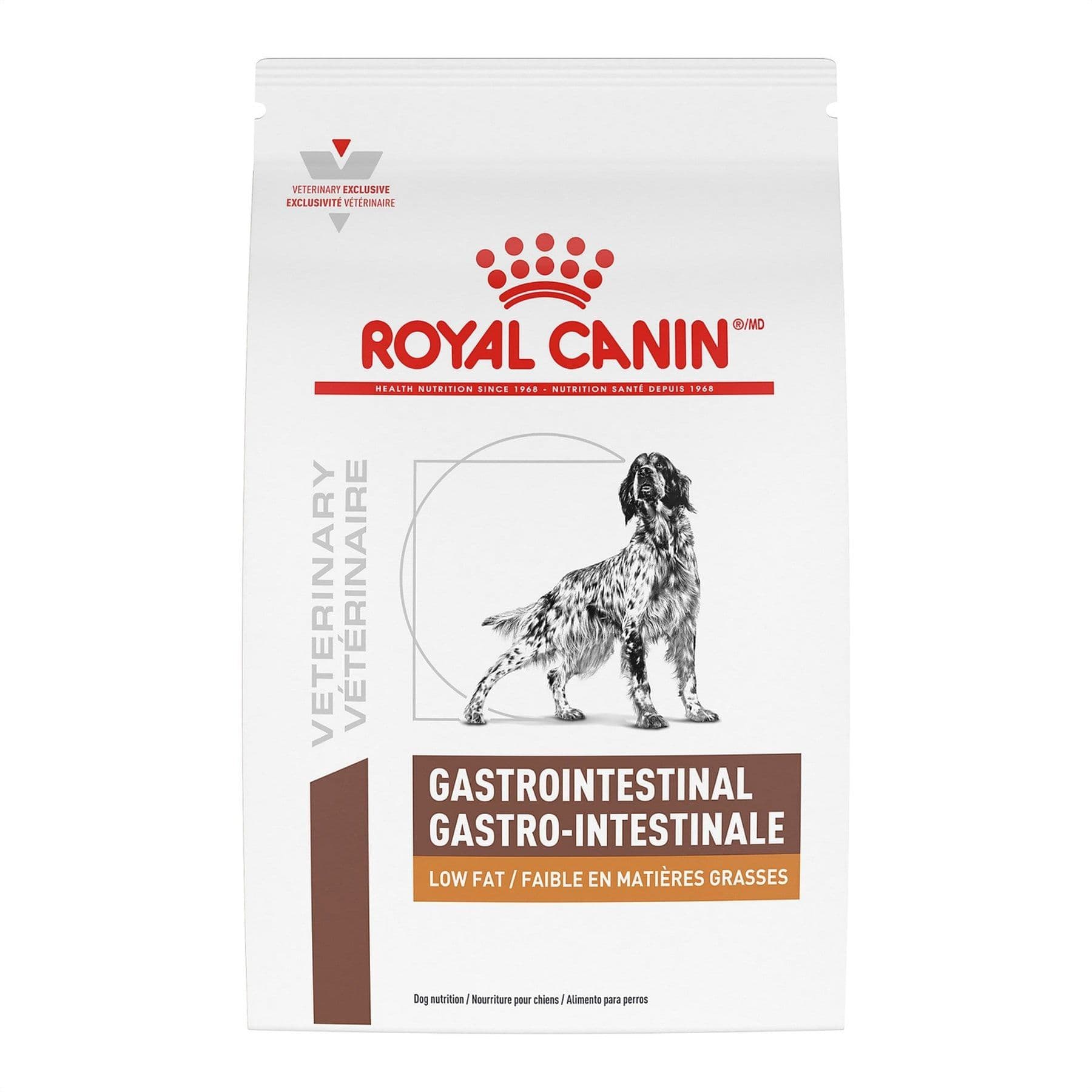
A veterinary fat-restricted dry dog food, sold through vets, for dogs whose vet prescribes it.
Webvet may earn a commission when you click through to Chewy, at no extra cost to you.
Bloat in Dogs Timeline: How Fast It Progresses
Bloat in dogs can progress from first signs to fatal shock within hours, and no source can say how quickly in a given dog. Texas A&M says GDV can become fatal in as little as four to six hours, and VCA says veterinary attention is needed within minutes to a few hours.
VCA explains that the gas-filled stomach presses on the large abdominal veins, compromising circulation and causing systemic shock. Merck notes that signs lasting more than 6 hours before examination raise the risk of death, and Texas A&M reports survival under 30% when treatment is late versus about 70% when treated early.
No primary source publishes a minute-by-minute bloat timeline. The bloat in dogs timeline table below organizes what Merck, VCA, UF, and Texas A&M describe into approximate stages, so you can match what you see to what to do.
| Time since onset (approximate) | What the dog shows | What to do |
|---|---|---|
| First minutes | Restlessness, pacing, drooling, unproductive retching | Leave for the emergency vet now and call ahead |
| Within the first hours | Swelling belly, most obvious on the left, drum-like when tapped | Keep driving; do not try home remedies or a stomach tube |
| 4 to 6 hours | Trouble breathing, weakness, signs of shock | GDV can be fatal by now; emergency stabilization is needed at once |
| More than 6 hours | Collapse | Merck links this delay to higher risk of death; survival falls sharply |
| After treatment | Recovery in hospital | Ask about gastropexy, which drops recurrence below 5% |
Is bloat in dogs fatal? It can be, even with treatment. How long does bloat surgery take, and how long does recovery last? No source we reviewed gives a standard surgery time or recovery length, so ask the treating hospital.
How Is Bloat Diagnosed?
Bloat is diagnosed with an abdominal X-ray, which shows whether the stomach has twisted. UF states that a simple abdominal radiograph usually confirms or rules out the condition, and Merck states that radiographs distinguish simple dilation from GDV.
A physical exam alone is not enough, because VCA notes that simple dilatation and GDV often look identical on exam. Merck adds a second trap: successfully passing a stomach tube does not rule out volvulus. For what imaging costs, see our guide to dog X-ray and ultrasound cost.
What is mistaken for bloat in dogs?
No source we reviewed lists the conditions most often mistaken for bloat in dogs. Owners may read retching as ordinary vomiting, which is why our guides to dog vomiting and diarrhea and gastroenteritis in dogs stress the difference: a dog that brings food up is different from one that retches and produces nothing.
How do vets recognize bloat?
Vets recognize bloat by the signs owners report, an exam, and the X-ray. VCA describes left-side swelling and a hollow, drum-like sound when the belly is tapped behind the last rib.
No source we reviewed covers gum color, hiccups, or chronic bloat. A bloated dog that is thirsty and drinking a lot, keeps peeing, or is still pooping (or not pooping) is not in the clear: the sources do not treat any of those as rule-outs for GDV. Bloat is dangerous until an X-ray says otherwise.
Treatment for Bloat in Dogs
Bloat in dogs is treated with emergency stabilization, stomach decompression, and surgery with gastropexy. Merck states that correcting low blood volume with rapid IV fluids is the first priority, and VCA adds emergency medications for shock.
The treatment steps, per Merck and VCA:
- IV fluids and medications to treat shock
- Decompression of the stomach with an orogastric tube or trocarization (a needle through the body wall)
- Surgery once the dog is stabilized, to reposition the stomach and remove any dead tissue
- Gastropexy, which tacks the stomach to the body wall so it cannot twist again

Is bloat treatable in dogs without surgery? Not reliably. Merck reports that decompression without surgery has an extremely high recurrence rate. Piras 2020 reports GDV recurs in up to 80% of dogs without gastropexy and under 5% with it, and VCA puts recurrence as high as 75%.
Is there a cure for bloat in dogs? GDV is treated, not cured, and never without surgery. Gastropexy is the tacking surgery, and Texas A&M states no medication cures GDV, so there is no natural or at-home cure.
Survival depends on time and shock, and published mortality figures differ:
- VCA: 10% to 45% mortality, even in uncomplicated cases
- Merck: about 25% to 30%
- AKC Canine Health Foundation, citing a Tufts study: 36% of GDV dogs did not survive, often because of cost or poor prognosis
Feeding a dog after bloat surgery follows the surgeon's discharge plan, and no source we reviewed sets one universal post-surgery diet. If your vet prescribes a fat-restricted veterinary food, Royal Canin markets one for dogs that need that kind of diet.
For a sense of overall emergency charges beyond the surgery itself, see our breakdown of emergency vet cost.
How to Prevent Bloat in Dogs
The most effective way to prevent bloat in dogs from turning deadly is prophylactic gastropexy, combined with feeding habits that lower risk. VCA calls gastropexy the most effective prevention, with a caveat: it prevents twisting, not dilatation.
Merck says many surgeons recommend prophylactic gastropexy for at-risk breeds, and it can be done at spay or neuter. VCA Canada says it is most often recommended for Great Danes. Texas A&M is clear that GDV cannot reliably be prevented, so feeding changes only reduce risk.

How to minimize bloat in dogs?
To minimize bloat in dogs, Merck recommends these steps for high-risk breeds:
- Feed multiple small meals instead of one large meal a day
- Restrict exercise around meals
- Lower stress at mealtime
- Avoid elevated or raised bowls
A slow feeder such as the JW Pet Skid Stop Non-Skid Plastic Slow Feeder Dog Bowl, 6-cup or the Outward Hound Fun Feeder Interactive Dog Bowl slows a fast eater, and Merck lists fast eating as an associated factor. No veterinary source we reviewed shows that a slow-feeder bowl prevents GDV.
Water bloat is a common worry when a dog drinks too much water too fast. VCA says drinking a large amount of water and then exercising may raise risk, but no source gives a safe amount, and none shows that adding water to dog food prevents bloat.
If your dog drinks lots of water and then vomits, see our guide to dog drinking water and vomiting.
When to See a Vet
See a vet immediately for any suspected bloat in dogs; Texas A&M states that any suspected GDV needs veterinary care right away and that owners should not wait to see if the dog improves.
Can bloat in dogs fix itself? Simple gas may pass, but GDV does not resolve on its own, and you cannot tell the two apart at home. VCA calls GDV an immediate emergency that needs veterinary intervention and describes passing a stomach tube as a veterinary step, not an owner task.
How to clear a bloated stomach?
You cannot safely clear a bloated stomach in a dog at home. A vet decompresses it with an orogastric tube or a needle after stabilizing the dog with IV fluids. If your dog is burping, retching, or has a tight belly, the way to relieve bloat is an emergency vet visit.
What relieves bloating fast in dogs naturally?
No natural remedy relieves bloat in dogs, and no source we reviewed supports one. Simethicone, Mylanta and other antacids, hydrogen peroxide, baking soda, vinegar, and other gas relief or home remedies for a bloated stomach do not treat GDV, and Texas A&M states there is no home treatment.
Burping or farting does not mean the danger has passed, and senior dogs are no exception. If your dog also seems weak or flat, our guide to lethargy in dogs explains other causes, but retching plus swelling means go now.
Bloat in Dogs FAQs
Frequently Asked Questions
What is the first symptom of bloat in dogs?
The first symptom of bloat in dogs is usually unproductive retching: the dog tries to vomit and nothing comes up. UF calls it the hallmark early sign, often with restlessness and a distended belly, which VCA notes is most obvious on the left side.
What if my dog is bloated but acting fine?
A dog that looks bloated but is acting fine may have simple food bloat, but no source gives a safe way to tell it apart from GDV at home. VCA notes the two look alike even on a vet's exam, so call your vet and watch for retching, drooling, or restlessness, which mean go now.
How long can a dog live with bloat?
A dog with GDV may have only hours. Texas A&M says it can become fatal in as little as four to six hours, and no source gives a survival time for untreated dogs, so treat every case as an emergency.
What is the survival rate for bloat surgery in dogs?
Most dogs survive bloat surgery when treated quickly. UF reports survival over 80% with fast treatment, Texas A&M reports about 70% when treated early and under 30% when late, and MedVet says survival often exceeds 80% to 90% when no part of the stomach has to be removed.
How much does bloat surgery cost for dogs?
Texas A&M estimates GDV emergency surgery costs $2,000 to $5,000 on average. No source we reviewed gives a price for elective gastropexy on its own, so ask your vet for an estimate at spay or neuter.

Editor
The Webvet Editorial Team is the in-house group of pet-care editors and writers behind Webvet, operated by Smart Pet Collective. The team researches, writes, and maintains Webvet's pet health, behavior, and medication content. Every article follows a defined editorial process: research from reputable veterinary and scientific sources, careful drafting, mandatory review of medical content by a credentialed veterinarian, and dated publication. Health and medication articles are medically reviewed by a licensed veterinary professional before they go live and are kept current over time.
Veterinarian · BVMS MRCVS
Dr. Pippa Elliott, BVMS, MRCVS, is a veterinarian with nearly 30 years of experience in companion animal practice. Dr. Elliott earned her Bachelor of Veterinary Medicine and Surgery from the University of Glasgow. She was also designated a Member of the Royal College of Veterinary Surgeons. Married with 2 grown-up kids, Dr. Elliott has a naughty Puggle named Poggle, 3 cats and a bearded dragon.
Related reading

Gastroenteritis in Cats: Symptoms, Causes, Treatment, and When to See a Vet

Gastroenteritis in Dogs: Symptoms, Causes, Treatment, and Recovery Time

Hemorrhagic Gastroenteritis in Dogs (HGE): Symptoms, Causes, Treatment, and Survival
