Home Remedies for Dog Itchy Skin: What Works, What to Skip, and When to Call the Vet
Some home steps can calm an itchy dog while you sort out the cause, and some popular remedies make skin worse. Here is what is safe to try tonight, what to skip, and the signs that mean the itch needs a vet instead.

BVMS MRCVS
Medically reviewed by Dr. Pippa Elliott, BVMS MRCVS · Last reviewed

This article contains affiliate links. Webvet may earn a commission when you buy through them, at no extra cost to you.
The safest home remedies for dog itchy skin are simple: a lukewarm colloidal oatmeal bath, rinsing allergens off after walks, steady flea control, and a cone to stop the scratching. Skip vinegar on broken skin, essential oils such as tea tree, and human creams, which can irritate skin or harm a dog that licks them.
Itching, which vets call pruritus, is a sign rather than a diagnosis, according to the Merck Veterinary Manual, so home care eases the symptom, not the cause. Mild itch on unbroken skin is fine to start treating at home. Raw or bleeding skin, oozing sores, a bad smell, or a dog that seems sick needs a veterinarian soon.

 Sponsored
Want a vet's take on your dog's skin or coat?
Talk to a licensed vet at Dutch over video, often the same day. They can recommend treatment and prescribe it when it's appropriate.
Use code Pets60
Plans start at $12/month · covers up to 5 pets
- Licensed vets in most states
- Rx for 150+ conditions
- 4.7 on Trustpilot
Home remedies for dog itchy skin: what is safe to try today
- 1Knowing which home remedies are safe to try first keeps you from making the skin worse: flea control, a lukewarm colloidal oatmeal bath, regular allergen rinses, and a cone come before anything from the kitchen.
- 2For how to give a soothing oatmeal bath: use cool or lukewarm water, work a dog colloidal oatmeal shampoo down to the skin, leave it on 10 to 15 minutes, then rinse well.
- 3Skip apple cider vinegar on broken skin, essential oils including tea tree, and human lotions or creams.
- 4Omega-3 fish oil can help long-term itch, but it takes about 6 weeks to 2 months to show an effect.
- 5Raw or oozing skin, odor, hair loss, or a dog that is lethargic or off food needs a vet.
A home remedy eases the itch but does not treat its cause. Merck lists parasites, infections, and allergies as the most common causes of itching in dogs, and Veterinary Partner notes that itch returns once treatment stops unless the cause is diagnosed. The common causes of canine pruritus are worth knowing first.
For a dog with itchy but unbroken skin, these first steps are safe to try today:
- Check flea control first. Veterinary Partner reports that fleas turn out to contribute to the itch in at least 50% of itchy pets examined, and calls diligent flea control the least expensive way to control itch. Flea allergy dermatitis explains how a flea allergy drives the scratching.
- Bathe in cool or lukewarm water, never hot, with a colloidal oatmeal shampoo made for dogs.
- Rinse allergens off after walks. Washing allergens out of the fur may reduce allergen exposure, according to Veterinary Partner, and a quick rinse or wipe-down after walks extends that between full baths.
- Stop the scratching. VCA Animal Hospitals puts stopping self-trauma first when treating a hot spot, and a cone, also called an Elizabethan collar, is its first option.
- Keep everything on the skin lick-safe. VCA advises keeping dogs from licking and swallowing creams and lotions, which can contain ingredients that are harmful if swallowed.
Because an allergic dog may need a bath every week, the shampoo matters. A gentle formula made for dogs, ideally soap-free when the skin is dry as well as itchy, keeps a regular routine comfortable.
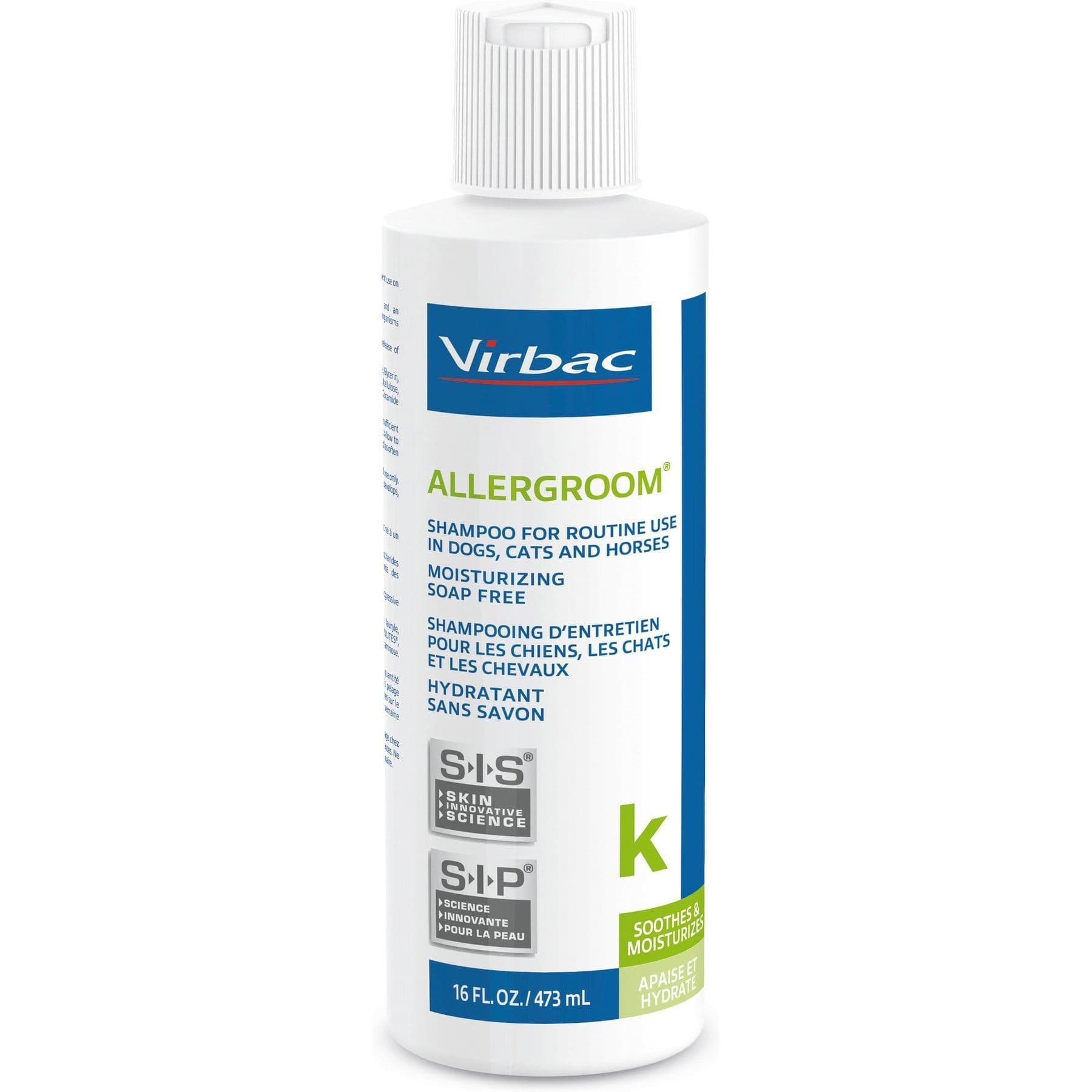
A gentle, soap-free pet shampoo for normal-to-dry skin that the listing says is suitable for frequent use.
Webvet may earn a commission when you click through to Chewy, at no extra cost to you.
Each popular home remedy falls into one of three groups: safe to try, ask your vet first, or skip. Where no veterinary source has studied a remedy for itchy dog skin, it goes in the ask-your-vet group, because unknown is not the same as safe.
| Remedy | Verdict | Why | Check with your vet first when |
|---|---|---|---|
| Lukewarm colloidal oatmeal bath | Safe to try | Anti-itch and soothing (VCA); hot water can worsen itch | The skin is raw, oozing, or redder after bathing |
| Regular baths to rinse off allergens | Safe to try | Lowers allergen load (Merck); tepid water soothes (Veterinary Partner) | Itch returns within a day or two of every bath |
| Monthly flea control for every pet | Safe to try | Fleas add to itch in at least half of itchy pets examined (Veterinary Partner) | The dog keeps itching despite consistent flea control |
| Cone or soft recovery collar | Safe to try | Stopping self-trauma is the first step in treating hot spots (VCA) | The skin is already raw or bleeding |
| Pet pramoxine spray on a small spot | Safe to try | A numbing agent that eases itch for less than 24 hours (VCA) | Allergy testing is planned within two weeks |
| Omega-3 fish oil | Ask your vet first | Long-term help only, after about 6 weeks to 2 months (Veterinary Partner, Merck) | Always, because the amount depends on body weight |
| Over-the-counter hydrocortisone cream | Ask your vet first | Low-potency steroid; swallowed cream can upset the stomach (VCA) | Always, and especially for very small dogs |
| Witch hazel, even alcohol-free | Ask your vet first | No veterinary source supports it for itchy dog skin | Before any use, since it will be licked |
| Chamomile tea rinse | Ask your vet first | No veterinary evidence that it eases itch in dogs | Before any use |
| Baking soda paste | Ask your vet first | No veterinary evidence that it eases itch in dogs | Before any use |
| Plain yogurt | Ask your vet first | No veterinary evidence that it eases itchy skin, fed or applied | Before any use |
| Coconut oil | Ask your vet first | No veterinary support for itch; not the same as omega-3 supplements (Veterinary Partner) | Before adding it to food or skin |
| Apple cider vinegar | Skip on broken skin | No veterinary source supports it for itch, and no safe home dilution is published | Only if your vet diagnoses yeast and suggests a vinegar rinse |
| Essential oils, including tea tree | Skip | Toxic to dogs through skin contact and licking (VCA, Merck) | Never apply; call your vet after any exposure |
| Human lotions and creams | Skip | Licked-off moisturizers can cause vomiting and diarrhea (VCA) | Before any human medicine, often toxic to dogs (VCA) |
Coconut oil is often suggested for both the food bowl and the skin, yet no veterinary source backs it for itch. Veterinary Partner says dietary oils such as coconut, olive, or corn oil are not analogous to omega-3 fatty acid supplements. Fish oil is the supplement with veterinary support, and it works over weeks.
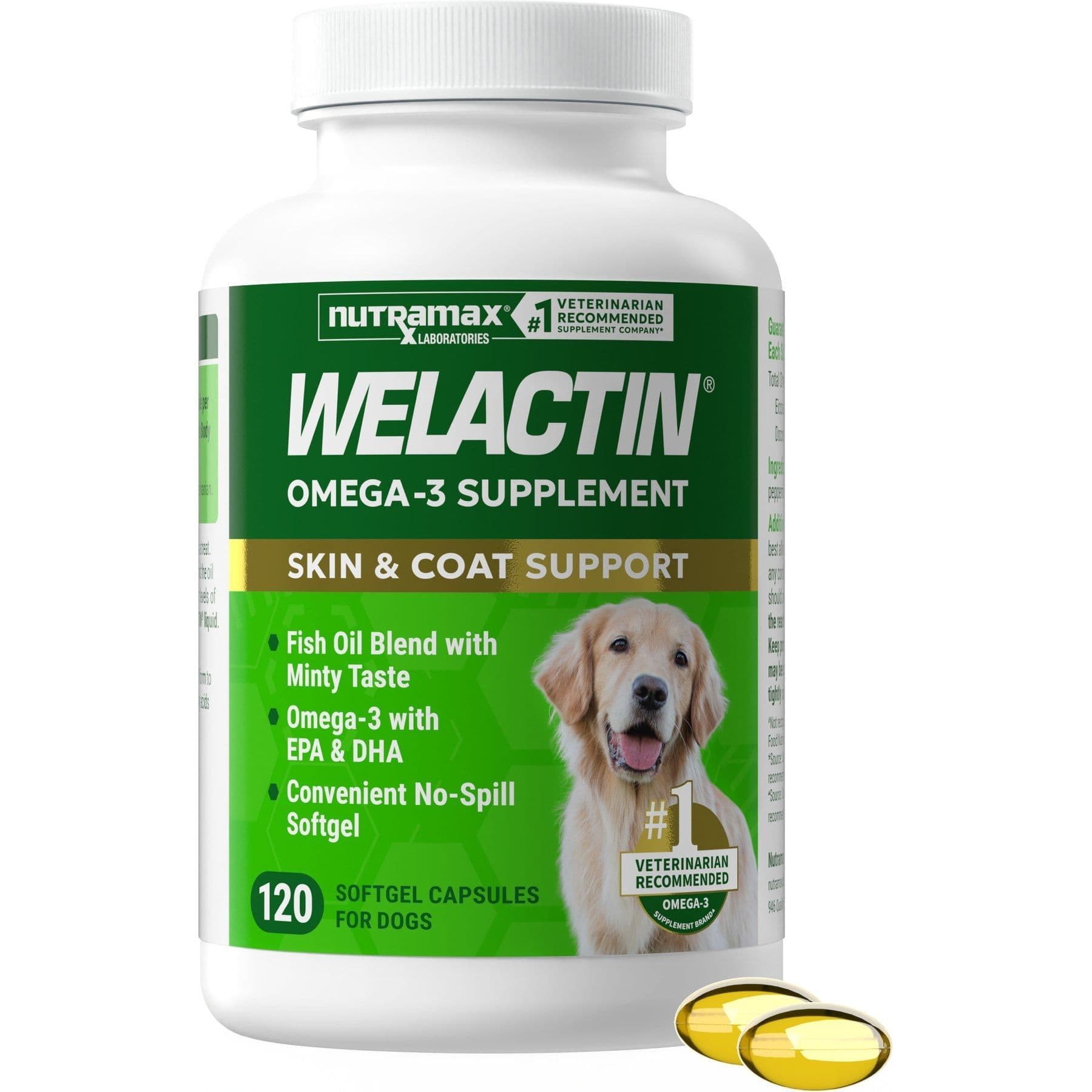
Fish oil softgels that supply EPA and DHA omega-3s from wild-caught, cold-water fish to support skin and coat health.
Webvet may earn a commission when you click through to Chewy, at no extra cost to you.
Chamomile rinses, baking soda paste, plain yogurt, and witch hazel also lack veterinary evidence for itchy skin. That does not mean each one is harmful, but no one can promise they help, and VCA's rule for anything applied to the skin still holds: keep the dog from licking it off.
Expect short relief windows from topical home care. Veterinary Partner puts the relief from colloidal oatmeal at about one to three days, while VCA says colloidal oatmeal products are short acting and stop working within 24 hours. Either way, oatmeal brings relief for itchy dog skin, not a cure.

What are some home remedies for itchy skin?
For dogs, the home remedies with veterinary backing are a lukewarm colloidal oatmeal bath, regular baths to wash out allergens, consistent flea control, a cone or soft collar to stop scratching, and a pet pramoxine or oatmeal spray on a small spot. Leave out vinegar on broken skin, essential oils, and human creams.
Adjust the basics to what the skin looks like:
- Dry and flaky: lukewarm water, a mild dog shampoo, and no human body lotion. Dry skin on dogs covers flaky coats in more depth.
- Red and inflamed: cool water and no scratching; anything that stings or smells strong stays off red skin.
- One spot chewed over and over: a cone or soft collar to break the cycle while the skin settles.
- Itchy all over: a full colloidal oatmeal bath rather than a spot spray.
To stop a dog from itching one spot raw, a physical barrier is the most direct fix, and VCA lists the cone first among its options.
Inflatable collars are a cushioned alternative for some dogs. The ZenPet ZenCollar Inflatable Recovery Dog & Cat Collar, Medium, listed at $21.99 on Chewy when we checked in October 2026, is a pillow-style collar that the listing says allows 180 degrees of vision.
Oatmeal baths, cool rinses, and gentle bathing routines
Bathing does two jobs for an itchy dog: it soothes the skin and washes allergens out of the coat. Veterinary Partner suggests weekly baths and notes that tepid water is soothing to itchy skin, and the Merck Veterinary Manual recommends weekly to biweekly baths for dogs with atopic dermatitis because bathing lowers the allergen load.
Colloidal oatmeal is the bath ingredient veterinary references describe for itch. VCA calls it an anti-inflammatory, anti-itching, and softening agent made from oat grains, used for surface skin problems in dogs and cats. It comes in shampoos, creme rinses, and leave-on sprays, and Veterinary Partner notes that creme rinses are meant to give longer-lasting relief.
How to give a soothing oatmeal bath at home:
- Wet the coat with cool or lukewarm water. Veterinary Partner notes that hot water can increase itching.
- Work a colloidal oatmeal shampoo made for dogs down to the skin, not just along the back, and include the armpits, groin, and the spaces between the toes.
- Leave the lather on for 10 to 15 minutes before rinsing, the contact time in Veterinary Partner's dermatology bathing guidance.
- Keep the dog lathered, massaged, and warm during the wait; the Merck Veterinary Manual cautions that a dog should never be left standing in the tub shivering.
- Rinse thoroughly with cool or lukewarm water until no lather remains.
- Check the skin afterward. If it looks redder, itchier, or more irritated, rinse the product off well with water and tell your veterinarian.
Sources differ on how long the lather needs and how often to bathe:
- Veterinary Partner: at least 10 to 15 minutes of contact, with ten minutes as the minimum for any medicated shampoo, since rinsing early wastes the benefit; weekly baths to cut allergen exposure.
- Merck Veterinary Manual: three to five minutes of contact is effective within a prescribed medicated-shampoo routine; weekly to biweekly baths for allergic dogs, with three baths a week reserved for a regimen a vet has prescribed.
Aiming for ten minutes of contact and a weekly bath at home fits both sets of guidance. For more product choices, see oatmeal shampoo for dogs and dog shampoo for itchy skin.

Use a shampoo made for dogs. VCA explains that human shampoo disrupts the skin's acid mantle and the renewal of that protective barrier, setting pets up for skin problems, though it also says a gentle baby shampoo can be used occasionally in a pinch.
For the oatmeal bath itself, Nature's Specialties Colloidal Oatmeal Medicated Dog Shampoo Concentrate, 16-fl oz bottle lists oat grain derivative, aloe vera, panthenol, and vitamins A, D, and E, and was listed at $25.30 on Chewy when we checked in October 2026. As a concentrate, it is diluted before use following the bottle's directions.
 Sponsored
Vet care that's always there
Unlimited video calls and messaging with licensed vets for less than a typical vet visit. One membership covers up to five pets.
Use code Pets60
Plans start at $12/month · covers up to 5 pets
- Licensed vets in most states
- Rx for 150+ conditions
- 4.7 on Trustpilot
Sprays, creams, and topical soothers that are safe for dogs
Assume anything put on a dog's skin will be licked. VCA advises keeping dogs from licking and swallowing creams, ointments, and lotions, and Merck notes that animals groom off topical products and may vomit afterward, so ointments, gels, and sprays are best used sparingly. Lick-safety is the first test for any anti-itch spray or cream.
The topical products most likely to be safe if a dog licks a little share these traits:
- Made for dogs, with dogs named on the label, rather than borrowed from the human medicine cabinet.
- Free of essential oils, including tea tree, which can poison dogs through the skin as well as by mouth.
- Used on a small area, sparingly.
- Given time to work before the dog can reach it: VCA's guidance is to block licking for 20 to 30 minutes after hydrocortisone and at least 30 minutes after pramoxine or a colloidal oatmeal spray.
- Watched afterward, since Merck warns that topical agents can cause irritant or allergic contact dermatitis.
Pramoxine is a numbing ingredient used in pet anti-itch sprays and shampoos. VCA describes it as a topical anesthetic that temporarily reduces pain and itching in dogs and cats. It is short acting and stops working within 24 hours, so an itch spray for dogs is a spot treatment between baths, not an all-day fix.
Two label details matter. VCA notes that pramoxine use may be extra-label depending on species and jurisdiction, and it recommends a two-week break from pramoxine before intradermal allergy testing, so mention any spray you use if your vet plans that test.
Some pet pramoxine sprays pair the numbing agent with colloidal oatmeal, combining a short numbing effect with oatmeal's soothing one.
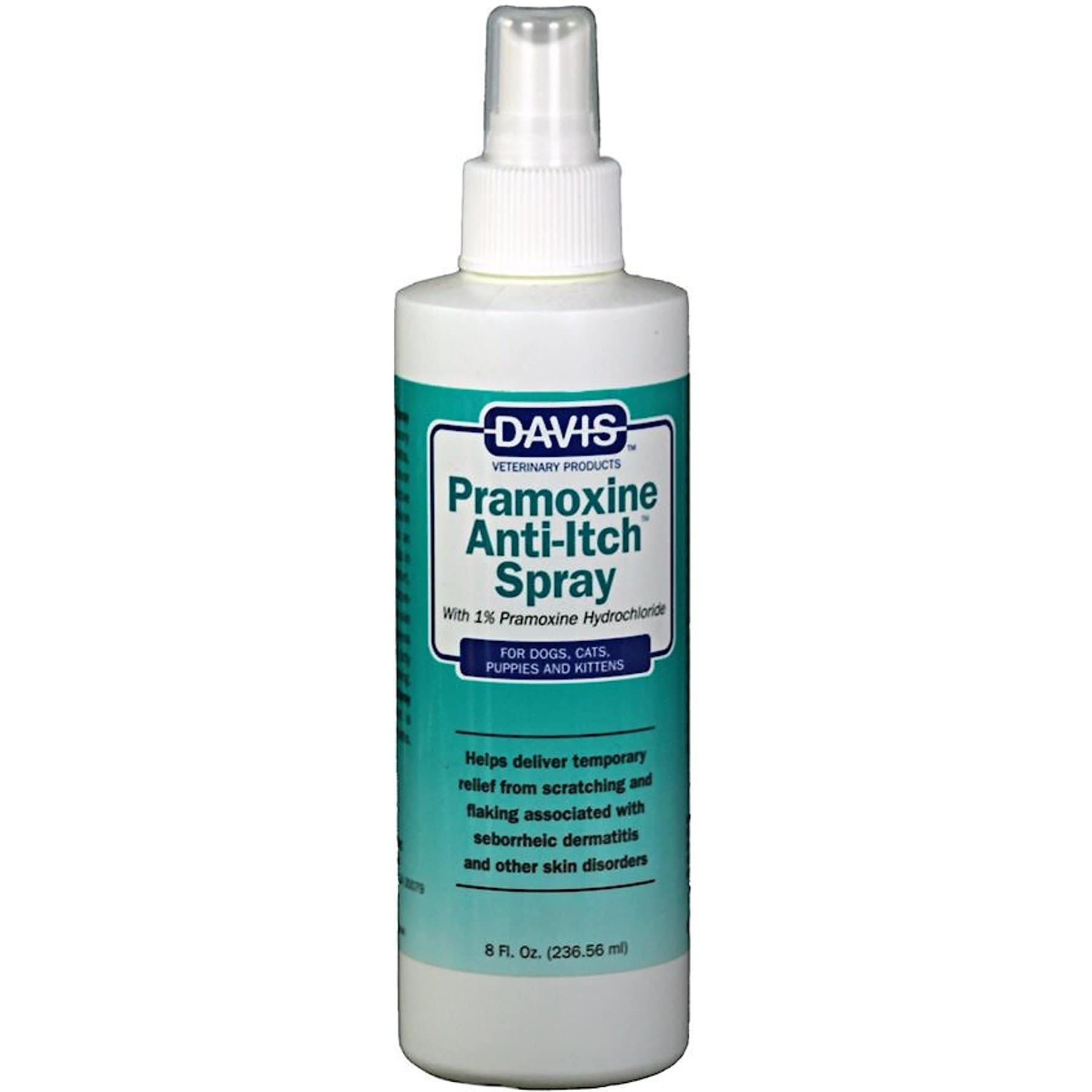
A pramoxine spray with colloidal oatmeal for temporary relief on a localized itchy spot between baths.
Webvet may earn a commission when you click through to Chewy, at no extra cost to you.
Hydrocortisone is the familiar drugstore itch cream. VCA describes topical hydrocortisone as a low-potency steroid for inflammation or itchiness that should start working within 1 to 2 hours, and Merck says topical steroids suit acute flares and localized lesions best.
The catch with a dog itch cream is swallowing. VCA says over-the-counter versions usually contain little steroid, but a sensitive dog that licks some off can develop stomach upset, panting, or increased thirst and urination, and it advises consulting your vet before using steroid creams. Veterinary Partner adds that absorbed steroid matters mainly in very small dogs.

Alcohol-free witch hazel is often suggested for itchy dogs, but no veterinary source supports witch hazel for this, so it belongs with the ask-your-vet remedies. An alcohol-free label describes what the bottle leaves out; it does not mean the product was made or tested for dogs.
What to use on a dog's irritated skin?
On mildly irritated, unbroken skin, use cool water, a dog colloidal oatmeal shampoo or leave-on spray, or a pet pramoxine spray on a small spot, then block licking for 30 minutes. Veterinary Partner notes that a hot spot that is small, not painful, caught early, and uncomplicated may be started at home.
Sources split on covering the spot. Veterinary Partner says not to bandage a hot spot because the area needs to breathe, while Merck says topical ointments and sprays are best used under a bandage for specific diseases. Your vet can say which suits your dog's spot.
How can I make an anti-itch spray for my dog?
No veterinary source offers a recipe for a homemade anti-itch spray for dogs, and common recipe ingredients, such as apple cider vinegar, witch hazel, and essential oils, either lack veterinary support or are toxic to dogs. The closest safe option is plain cool water or a colloidal oatmeal spray made for dogs.
VCA's directions for oatmeal sprays are to leave them on to dry without rinsing and to keep the dog from scratching or grooming the area for at least 30 minutes.
Between baths, wiping the paws, legs, and belly after walks carries the same allergen-removal idea as a bath without a full wash. Choose pet wipes free of alcohol and essential oils, since whatever stays on the coat will likely be licked.
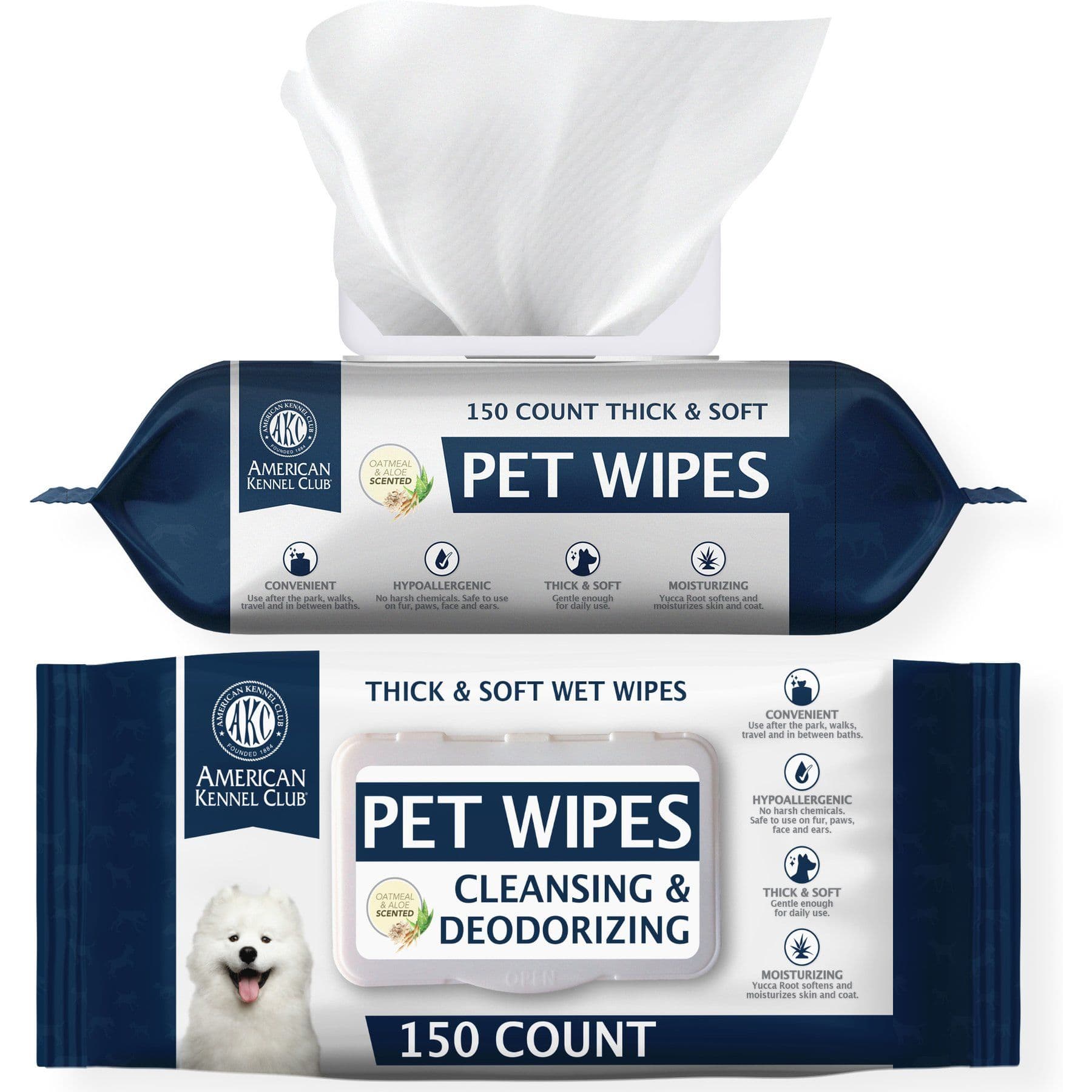
Alcohol-free, paraben-free wipes with aloe vera that clean the skin and coat between baths.
Webvet may earn a commission when you click through to Chewy, at no extra cost to you.
Supplements and skin-barrier support: omega-3s and what the evidence shows
Omega-3 fatty acids are the dog supplements for itchy skin with veterinary support, but they work slowly. Veterinary Partner treats omega-3 supplements as medications: they may let a dog postpone steroids or need a lower dose, and it takes a good 6 weeks to build up enough omega-3s to see a difference.
Veterinary Partner also notes that omega-3s need a couple of months of supplementation to work into cell membranes significantly. The Merck Veterinary Manual calls essential fatty acids rarely effective as the only anti-itch treatment and unsuitable for acute flares, though possibly helpful long term; its allergy guidance puts the wait at up to 2 months.
What omega-3 supplements can realistically do for an itchy dog:
- Support long-term control of allergic itch alongside other care, rather than replace it.
- Possibly reduce how much steroid a dog needs, according to Veterinary Partner.
- Show an effect only after about 6 weeks to 2 months, depending on the source.
- Do nothing for tonight's itch or a sudden flare.
When comparing fish oil softgels, liquids, or a chewable treat for a dog with itchy skin, look for EPA and DHA on the label: Merck's treatment table names high-quality fish oil containing both. Merck lists the amount by body weight, so your vet should set the dose.

Nutramax Welactin Omega-3 Fish Oil Liquid Softgels Skin & Coat Supplement for Dogs, 240 count is one example: its listing says the softgels supply EPA and DHA from wild-caught, cold-water fish, and it was listed at $49.98 on Chewy when we checked in October 2026.
Topical products can support the skin barrier too. Veterinary Partner describes phytosphingosine, found in some pet skin-care products, as moisturizing and anti-inflammatory, partly by fortifying the skin barrier. Omega-3 fatty acids for dogs covers the supplement side in more detail.
Home remedies to skip: vinegar on broken skin, essential oils, and human creams
Some popular remedies irritate broken skin or harm a dog that licks them. Merck warns that topical agents can cause irritant or allergic contact dermatitis, and Veterinary Partner advises rinsing off any product that makes the skin redder or itchier. As a precaution, nothing goes on scratched-open skin unless a vet chose it.
- Apple cider vinegar on broken or raw skin. No veterinary source supports it for itchy skin, and no safe home strength has been published.
- Essential oils, including tea tree. They can poison dogs through skin contact as well as licking.
- Human lotions and moisturizers. VCA says dogs tend to lick off whatever is applied to the coat, and swallowed moisturizers can cause drooling, vomiting, and diarrhea.
- Human medicines on a hot spot. VCA advises checking with your vet before using any medication made for people, since many are toxic to dogs.
- Human hydrocortisone without a vet's okay. Low potency or not, it is a steroid a dog may swallow.
Apple cider vinegar shows up in many itch recipes, but no veterinary source supports it for itchy dog skin. Veterinary Partner mentions vinegar and water mixtures only as a spot treatment for diagnosed yeast dermatitis, and notes the dog will smell of vinegar. Yeast infection in dogs covers that condition.
Keep vinegar off scratched or raw skin as a precaution: no safe home dilution has been published, and any topical agent can cause an irritant reaction, as Merck notes.
Tea tree oil has been the most commonly reported essential oil poisoning in pets, according to the Merck Veterinary Manual. Merck explains that essential oils are absorbed quickly through the gut, skin, lungs, and mucous membranes, that higher concentrations carry greater risk, and that tea tree is among the oils that can harm the liver.
Signs can start within minutes to hours and most often include vomiting, lethargy, drooling, wobbly walking, and loss of appetite, per Merck. VCA adds that a few licks or a small amount on the skin could be harmful, and that a vet should approve any essential oil or herbal product first.
When itchy skin needs a vet instead of a home remedy
Home care is for mild itch on intact skin. Veterinary Partner notes that a dog who suddenly gets itchier has usually developed a skin infection from scratching and chewing, not a new allergy, and infection is a job for a veterinarian. Watch for these signs the itch needs a vet:
- Red, inflamed skin, hair loss, or scabs, which VCA says can come with itching and lead to a skin infection called pyoderma.
- Raw or bleeding skin from scratching or chewing.
- Hair loss, scaling, odor, or fluid discharge, which Merck says often accompany skin infections.
- A moist, red, oozing patch, which Veterinary Partner describes as a hot spot, a superficial bacterial skin infection.
- Fever, refusing food, lethargy, or depression along with a skin problem, signs Veterinary Partner links to a deeper skin infection called cellulitis.
- Itch that is back within a day or two of every oatmeal bath.
- Itch that continues even though the dog and every pet it lives with are on the monthly, year-round flea control that Veterinary Partner recommends for itchy pets.
- New bumps, pimples, or crusts in the itchy area; bumps on dog skin covers the common types.

Infection signs are urgent. Veterinary Partner stresses seeking your veterinarian's help as quickly as possible if a wound may be infected, so a skin problem with fever, lethargy, or a refused meal should be seen the same day. Raw or bleeding patches also need a vet rather than another home remedy.
Allergies can lead to hair loss too, since VCA notes that itchy dogs may develop hair loss and scabs, and hair loss in dogs covers the other causes.
What the vet checks and prescribes when home care is not enough
A vet works through itch causes in order. Merck says parasites, including mites and fleas, are the first cause a veterinarian will try to exclude, followed by infections, and that atopic dermatitis is diagnosed from clinical signs, history, and ruling out other causes of itch. The work-up can include:
- Skin checks for fleas and mites.
- Checks for bacterial or yeast skin infection.
- A food elimination trial. Veterinary Partner says a prescription or home-cooked diet is fed for several weeks with no other foods or treats, since no reliable skin or blood test diagnoses food allergy, and the Merck Veterinary Manual says the trial diet may run up to 3 months.
- Allergy testing for environmental allergies, with a two-week pause in pramoxine use before intradermal testing, per VCA.
What is the fastest acting dog itch relief?
The fastest relief comes from prescription medicine. Veterinary Partner says it is hard to match corticosteroids, such as prednisone, for reliable, rapid relief of itch and inflammation, and Merck describes oclacitinib as working within 24 hours. At home, a cool bath or a pet pramoxine spray gives brief relief until the appointment.
The main prescription options differ in speed and long-term fit:
- Corticosteroids. Merck calls them the most effective drugs for managing itch but says they cannot be used safely for long-term management because of adverse effects.
- Oclacitinib (Apoquel). A prescription drug labeled for allergic and atopic itch in dogs at least 12 months old. In the field study on its DailyMed label, 86.4% of treated dogs versus 42.5% on placebo had a set drop in owner-rated itch after one week.
- Apoquel cautions. The label says it modulates the immune system and is not for dogs with serious infections, and Merck lists stomach and intestinal signs as its most common side effect.
- Lokivetmab (Cytopoint). An injection. Veterinary Partner says relief usually begins about 8 hours after the shot and lasts at least 4 weeks in over 80% of dogs; Zoetis, its maker, says relief starts within one day and lasts 4 to 8 weeks; Merck lists onset at 1 to 3 days and notes no age restrictions.
- Cyclosporine. Merck calls it a highly effective nonsteroidal drug for allergic itch. Veterinary Partner says it needs a good four to eight weeks, which makes it a poor fit for sudden flares, while Merck's figure for maximal benefit is up to 30 days.
- Antihistamines. Veterinary Partner puts the chance that any one antihistamine works at about 15%, though trying several in turn often finds one; Merck says evidence-based reviews do not support them for itch, while its allergy guidance allows a supporting role in chronic disease.
- Allergy shots. Merck's owner guidance says improvement may take 6 months, and a year of treatment may be needed to judge them.
All of these require a veterinarian. Apoquel is prescription-only: Chewy's pharmacy, like any pharmacy, fills it only with a veterinary prescription, and dog allergy medicine covers these drugs in more detail.
Home care keeps a role alongside prescriptions. Merck calls bathing often the most effective way to reduce allergen exposure, and Veterinary Partner notes omega-3s may lower the steroid dose a dog needs, so oatmeal baths and fish oil can continue as part of the vet's plan.
Home remedies for dog itchy skin questions
Frequently Asked Questions
Is witch hazel safe for a dog's itchy skin?
There is no veterinary evidence either way, because no veterinary source has evaluated witch hazel for itchy skin in dogs. If you want to try an alcohol-free product, check with your vet first and prevent licking afterward, since VCA advises keeping dogs from swallowing anything applied to their skin. A colloidal oatmeal spray made for dogs has veterinary guidance behind it instead.
What can I put on my dog's dry, itchy skin at home?
A lukewarm bath with a colloidal oatmeal shampoo made for dogs is the place to start, followed by a moisturizing pet rinse or spray if the coat stays dry; phytosphingosine is one moisturizing ingredient Veterinary Partner describes. Avoid human body lotion. VCA points out that dry skin can signal fleas, mange mites, thyroid disease, or allergies, so dryness that persists deserves an exam.
How can I stop my dog from itching tonight?
Start with a cool or lukewarm rinse, never hot water, then fit a cone or soft recovery collar so the dog cannot chew or scratch overnight. VCA says most dogs accept an Elizabethan collar within a few hours, especially with rewards. A pet pramoxine spray can numb a small spot for a short time. Any raw, bleeding, or oozing patch needs a vet.
Are over-the-counter anti-itch creams safe for dogs?
Drugstore hydrocortisone creams usually contain little steroid, and Veterinary Partner says absorbed topical steroid matters mainly in very small dogs. The bigger risk is swallowing: VCA lists stomach upset, panting, and extra thirst and urination in steroid-sensitive dogs. Ask your vet first, use a thin layer on a small spot, and keep the cream from being licked for 20 to 30 minutes.
Do supplements help a dog with itchy skin?
Omega-3 fish oil can help over the long term, not overnight. Veterinary Partner says a good 6 weeks of supplementation is needed to see a difference, and Merck says essential fatty acids can take up to 2 months and are rarely enough on their own. Give a vet-dosed omega-3 supplement at least that many weeks before deciding whether it works.

Editor
The Webvet Editorial Team is the in-house group of pet-care editors and writers behind Webvet, operated by Smart Pet Collective. The team researches, writes, and maintains Webvet's pet health, behavior, and medication content. Every article follows a defined editorial process: research from reputable veterinary and scientific sources, careful drafting, mandatory review of medical content by a credentialed veterinarian, and dated publication. Health and medication articles are medically reviewed by a licensed veterinary professional before they go live and are kept current over time.
Veterinarian · BVMS MRCVS
Dr. Pippa Elliott, BVMS, MRCVS, is a veterinarian with nearly 30 years of experience in companion animal practice. Dr. Elliott earned her Bachelor of Veterinary Medicine and Surgery from the University of Glasgow. She was also designated a Member of the Royal College of Veterinary Surgeons. Married with 2 grown-up kids, Dr. Elliott has a naughty Puggle named Poggle, 3 cats and a bearded dragon.
Related reading

Stud Tail in Cats: Causes, Treatment, and Grooming That Helps

Eosinophilic Granuloma Complex in Cats: Rodent Ulcers, Plaques, and Treatment

Miliary Dermatitis in Cats: Causes, Treatment, and Flea Control
