Stud Tail in Dogs: Tail Gland Hyperplasia Signs, Causes, and Treatment
Stud tail is an overactive oil gland on the top of a dog's tail that leaves a greasy, thinning patch near the base. This guide covers the signs, which dogs get it, how vets treat it, and when a sore or swollen tail base needs a visit.

BVMS MRCVS
Medically reviewed by Dr. Pippa Elliott, BVMS MRCVS · Last reviewed

This article contains affiliate links. Webvet may earn a commission when you buy through them, at no extra cost to you.
What stud tail in dogs is: the greasy patch at the top of the tail and whether it needs a vet
Stud tail in dogs is an overactive tail gland. The oil glands on the top of the tail, near its base, enlarge and leave a greasy, thinning patch. VCA Animal Hospitals calls it tail gland hyperplasia and says intact males are affected most often, though any dog can develop it.
Is stud tail in dogs urgent? Usually not. VCA describes a mild case as mainly a cosmetic bald spot, and a greasy patch that does not hurt can be kept clean with degreasing baths at home. A red, swollen, painful, or oozing tail base shows signs of secondary infection and needs a vet.
- 1Stud tail is tail gland hyperplasia: enlarged oil glands that grease the fur and thin the hair on top of the tail.
- 2Knowing where the tail gland sits on a dog helps: on the top side of the tail, a few centimeters from where it meets the back.
- 3As for why intact males get it most, the usual trigger is an excess of androgen hormones such as testosterone.
- 4A greasy, painless patch is mostly cosmetic and is managed with degreasing shampoo baths.
- 5Redness, swelling, pain, pus, or a new lump at the tail base calls for a vet visit.
When the glands enlarge, VCA explains, they press on the hair follicles and cause hair loss. The extra oil plugs follicles, greases the fur, and scales the skin, and inflammation and secondary infection can follow. These sebaceous (oil) glands also go by the name supracaudal gland, meaning the gland above the tail.
For the plain greasy patch, VCA's advice is to keep the area clean with degreasing shampoos that contain benzoyl peroxide, salicylic acid, or other anti-seborrheic ingredients, used as needed. Mildly affected dogs may need nothing more.
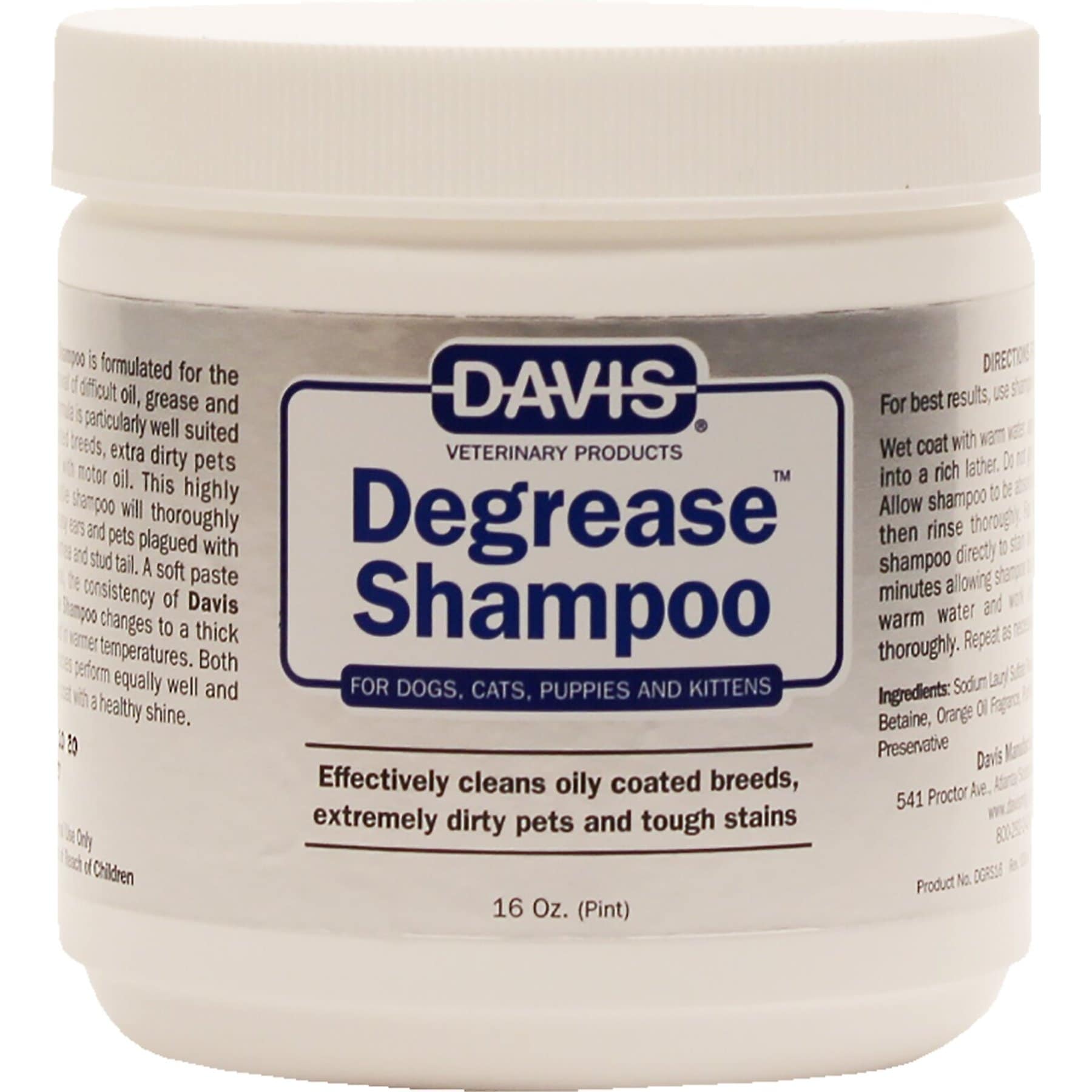
A concentrated degreasing shampoo for oily coats whose listing names stud tail and oily seborrhea among its uses.
Webvet may earn a commission when you click through to Chewy, at no extra cost to you.
What the tail base shows usually points to the right next step:
- A greasy, thinning patch with no pain: usually cosmetic and handled with degreasing baths.
- Blackheads, crusts, or scaly, darker skin: a more developed case, worth a vet exam to confirm it and plan shampoo therapy.
- Redness, swelling, discharge, or draining tracts: signs of infection, which need a vet.
- A separate lump or nodule: a vet needs to sample it, because a gland tumor there can only be identified under the microscope.

 Sponsored
Want a vet's take on your dog's skin or coat?
Talk to a licensed vet at Dutch over video, often the same day. They can recommend treatment and prescribe it when it's appropriate.
Use code Pets60
Plans start at $12/month · covers up to 5 pets
- Licensed vets in most states
- Rx for 150+ conditions
- 4.7 on Trustpilot
Stud tail signs: grease, hair loss, blackheads, and how it differs from fleas
Stud tail signs build in stages, and they center on the gland patch on top of the tail. If you are comparing your dog with pictures of stud tail in dogs online, VCA's description of each stage is the clearest checklist:
- Mild: an area of hair loss over the glands, with greasy fur around it.
- More severe: scaly skin, crusts, comedones (blackheads), and darker pigment in the skin.
- Long-standing: skin that looks thickened and bumpy.
- Variable: itch, which can make a dog rub and chew at the area.

Blackheads matter because they shape the shampoo choice. The Merck Veterinary Manual notes that the follicular flushing action of benzoyl peroxide makes it helpful for dogs with numerous comedones.
Photos taken during treatment can look worse before they look better. Merck's owner guide to seborrhea says keratolytic shampoos often increase visible scaling in the first 14 days, because loosened scales catch in the coat, and continued bathing clears them.
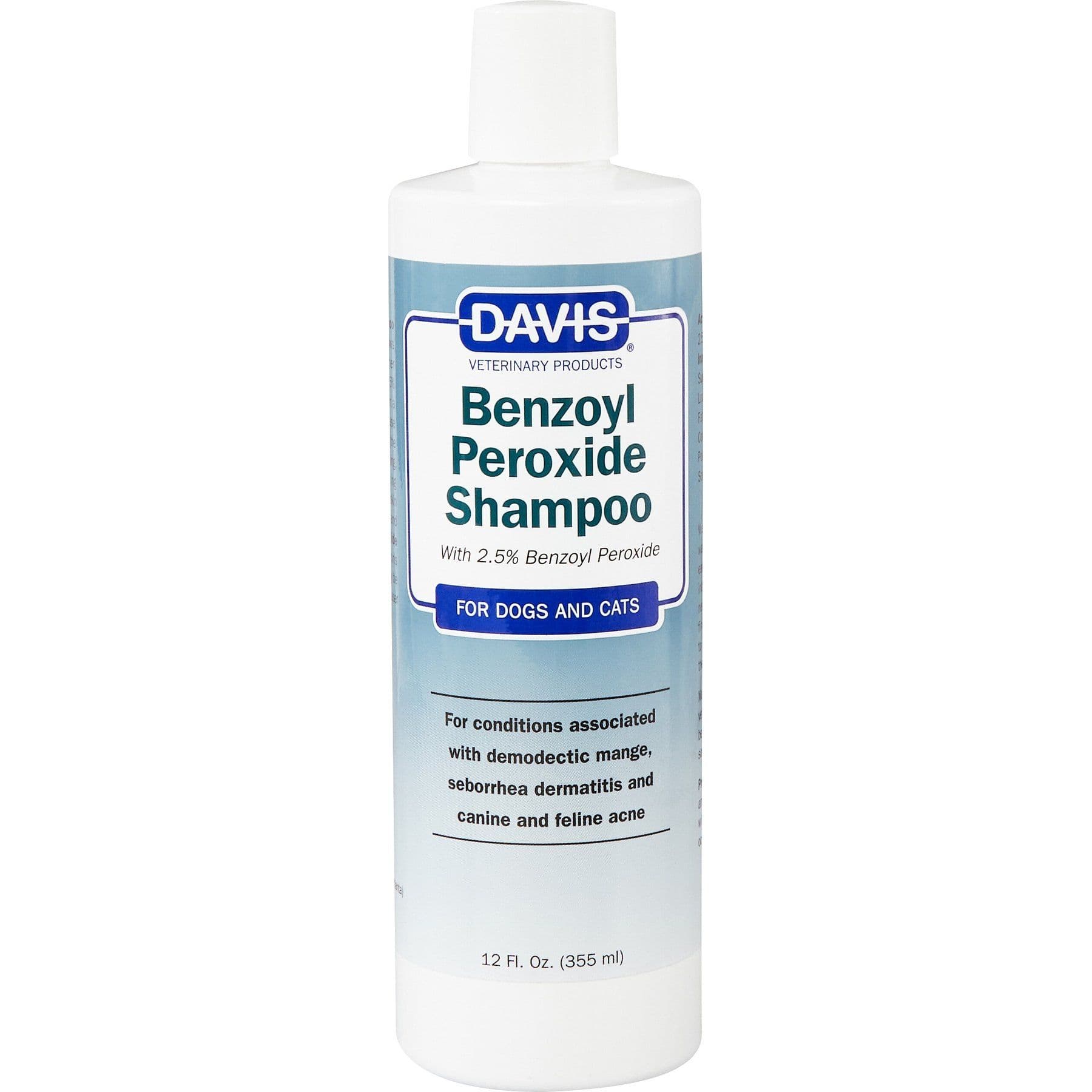
A 2.5% benzoyl peroxide shampoo in a moisturizing base that helps open and flush plugged hair follicles.
Webvet may earn a commission when you click through to Chewy, at no extra cost to you.
Fleas deserve a close look, because flea allergy also targets the tail base. VCA describes flea allergy as itching and hair loss most often from the middle of the back to the tail base and down the rear legs, the so-called flea triangle. Clues that point to fleas rather than stud tail:
- Strong itch. Merck says substantial itch points toward allergies and itchy parasites such as fleas, while the itch of stud tail is variable.
- Hair loss that spreads past one patch into the back, the tail base, and the rear legs.
- An itchy dog with no fleas in sight. Fleas stay on dogs only for the minutes to hours they feed, VCA says, and a single bite can keep an allergic dog itchy for several days.
WebVet's guide to flea allergy dermatitis in dogs covers that condition in full, and thinning hair in other places points to a broader cause that hair loss in dogs walks through.
What causes stud tail: the tail gland, hormones, and which dogs get it
VCA names the most common cause plainly: an excess of androgen sex hormones, including testosterone. That hormone link is why intact males are affected most often. Other causes VCA lists include:
- Testicular tumors
- Other hormone-secreting tumors
- Cushing's disease, in which the adrenal glands overproduce certain hormones
- Seborrhea, either a primary disorder with a genetic basis or secondary to allergic skin disease, hypothyroidism, or chronic yeast or bacterial skin infection
- Obesity or other conditions that lead to poor grooming, which make the oil buildup worse
Merck's owner guide adds that the most common underlying causes of seborrhea in dogs are hormonal disorders and allergies. So an allergic dog can end up with a greasy tail base through secondary seborrhea, with no testosterone excess involved.
Neutered dogs are not immune. VCA says stud tail can occur in any dog, even one that has been spayed or neutered, so a neutered dog with a greasy tail base still needs the other causes considered.
What is a stud tail in female dogs?
It is the same condition: enlarged oil glands on top of the tail. VCA says intact males are affected most often, but any dog can develop it, spayed females included, and no published figure gives a rate by sex. In a female, a vet looks at causes such as seborrhea, hypothyroidism, or Cushing's disease.
VCA names no breed predisposition for stud tail, and no published breed figure exists. Here is what is known for the breeds owners ask about:
- Whippets and Greyhounds: no breed-specific stud tail risk is recorded for either.
- Bull Terriers (often called English Bull Terriers) and Boston Terriers: no recorded predisposition either.
- Labrador Retrievers: they appear on Merck's list of breeds more prone to primary seborrhea, one possible cause of stud tail, but that is a seborrhea risk, not a stud tail figure.
Cats get a version of it too. In cats, VCA says poor grooming is often implicated as a primary cause, so a swollen or greasy tail base in a cat has a different starting point; stud tail in cats covers it.
 Sponsored
Vet care that's always there
Unlimited video calls and messaging with licensed vets for less than a typical vet visit. One membership covers up to five pets.
Use code Pets60
Plans start at $12/month · covers up to 5 pets
- Licensed vets in most states
- Rx for 150+ conditions
- 4.7 on Trustpilot
How a vet diagnoses stud tail and rules out allergies, infection, or a tumor
A vet usually diagnoses stud tail from how the tail looks, VCA says, and checks intact males for testicular tumors. Further tests sort out what else could be happening at the tail base:
- Skin cytology to look for yeast and bacteria
- A sample from any crust or draining tract to identify the bacteria present
- A skin scraping to rule out mites
- A fungal culture to rule out ringworm
- Bloodwork, including blood counts, chemistry, and thyroid and adrenal function, to look for an underlying condition
- Hormone testing plus X-ray or ultrasound to look for a hormone-producing tumor when no other cause turns up
- A biopsy, which can confirm stud tail but is rarely necessary
To rule out fleas or allergies, a vet also reads the pattern and the itch. Intense itch, or hair loss spreading through the flea triangle, points toward flea allergy or another allergic skin disease, while a mostly painless greasy patch over the gland fits stud tail. To rule out a tumor, appearance is not enough.

Broader cancer questions, from what a cancerous lump looks like to how vets tell malignant from benign and how often lumps turn out to be cancer, are covered in WebVet's lump on dog guide; VCA advises having any new lump checked and watching for sudden changes in size, texture, color, sensitivity, hair loss, or discharge.
What does a bump on a dog's tail mean?
A bump at the base of the tail can be thickened stud tail skin, a pus-filled infection, or a growth from the tail-base hepatoid glands, modified sebaceous glands that only dogs have. VCA describes three tumor types: benign adenomas, cancerous adenocarcinomas, and borderline epitheliomas. Telling them apart takes a needle sample or biopsy examined under a microscope.
Benign perianal adenomas usually appear as one or more small, round, pink, hairless nodules that grow slowly to under 1 inch (2.5 cm), mostly around the anus but sometimes under the tail. Adenocarcinomas look similar but typically grow faster and can reach 4 inches (10 cm).
Testosterone promotes these tumors, so VCA says they are much more common in unneutered males and rare in neutered ones; perianal adenoma in dogs covers them in depth. For lumps and swellings elsewhere on the body, see bumps on dog skin and hygroma in dogs.
Stud tail treatment: what the vet does, then degreasing baths at home
Treatment for stud tail in dogs follows what is happening in the skin. A mild, uninfected patch needs only regular degreasing shampoo. There is no single fix, and a lasting cure depends on the cause: VCA calls the prognosis generally good, especially when that cause is identified and eliminated.
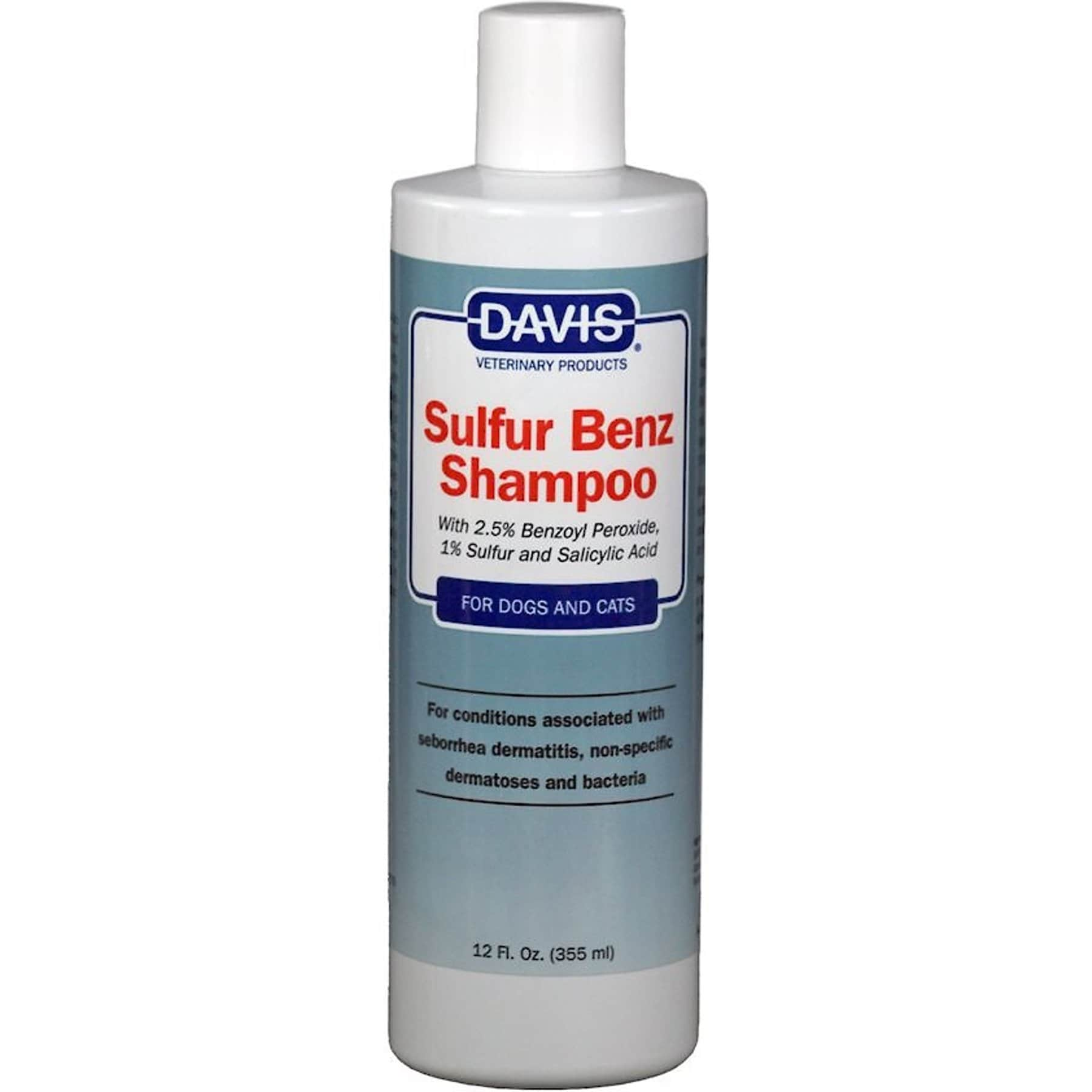
Pairs 2.5% micronized benzoyl peroxide with sulfur and salicylic acid for skin that needs a degreasing, keratolytic wash.
Webvet may earn a commission when you click through to Chewy, at no extra cost to you.
How to treat stud tails in dogs?
Keep a plain greasy patch clean with degreasing shampoo. For infection, VCA lists antibiotic creams or ointment for mild cases and prescription oral antibiotics for severe ones, ideally chosen by culture. Heavy inflammation may need prescribed corticosteroids, a dog that chews the tail needs an e-collar, and intact males may be neutered.
Vet treatment, according to VCA, depends on what the exam finds:
- Antibiotic creams or ointment for mild infection, and oral antibiotics, which need a veterinary prescription, for more severe infection, ideally chosen from a bacterial culture
- Topical or oral corticosteroids such as prednisone, prescribed when inflammation is significant
- An e-collar for a dog that chews the tail, because repeated trauma will not allow healing
- Castration for intact males
- Surgical removal of affected skin if it is not too extensive, with amputation rarely necessary and reserved for severe, painful cases that do not respond
Neutering becomes part of the plan when the dog is an intact male. VCA says improvement can typically be seen within two months of castration. If castration is not an option, or it does not help enough, surgery to remove the affected skin can be considered.
When cytology or culture confirms an infection, the shampoo plan changes:
- Yeast on greasy skin: VCA describes a degreasing shampoo with selenium sulfide or benzoyl peroxide first, then an antifungal shampoo containing chlorhexidine, miconazole, or ketoconazole.
- Bacterial infection on greasy skin: Merck recommends a shampoo with chlorhexidine, salicylic acid, or benzoyl peroxide, and notes that an antiseptic mousse, spray, or wipe may help too.
Antiseptic shampoos of this kind treat a confirmed infection; they do not replace routine degreasing.
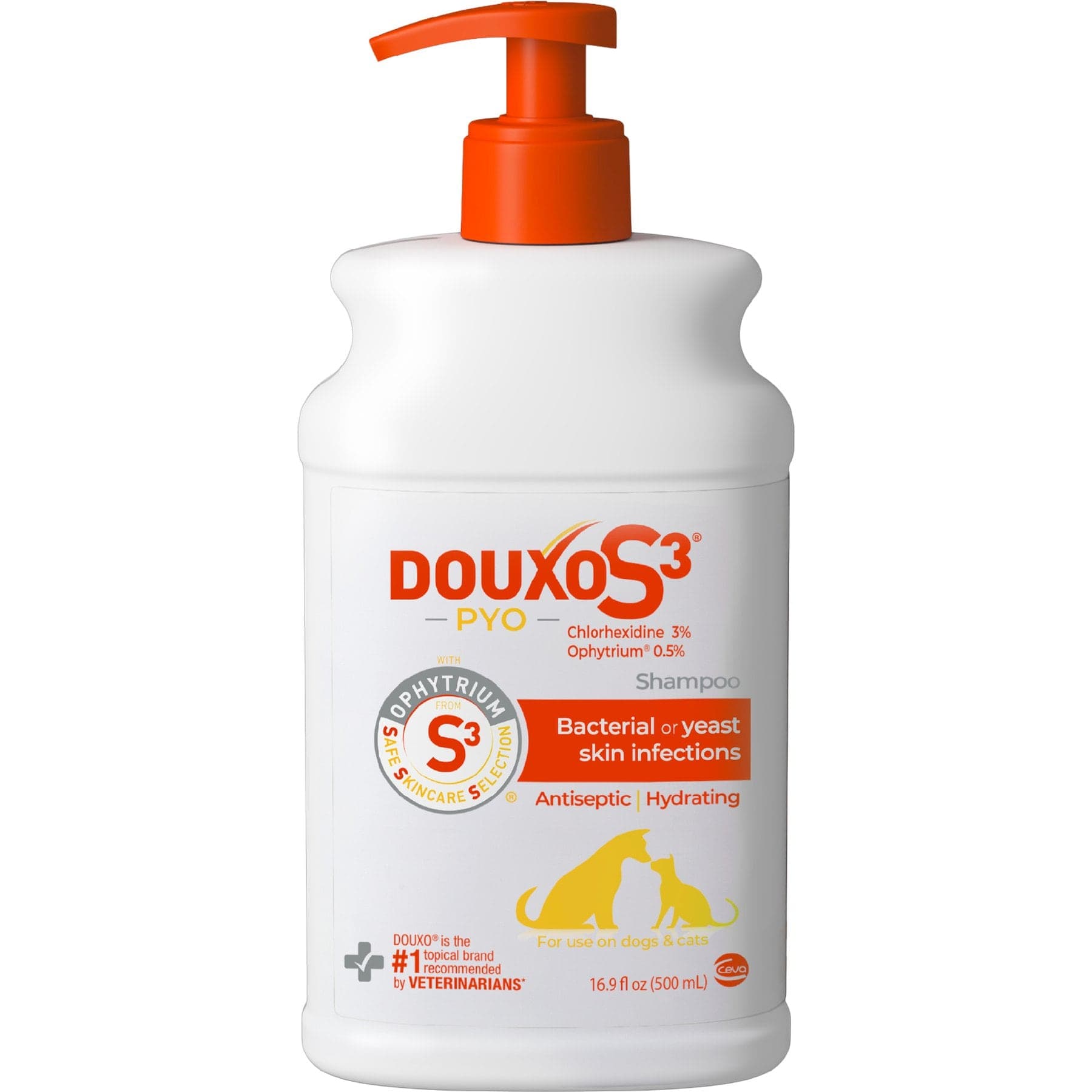
A chlorhexidine shampoo with antibacterial and antifungal ingredients for dogs and cats with skin infections.
Webvet may earn a commission when you click through to Chewy, at no extra cost to you.
Give any routine a fair trial. VCA says skin conditions typically improve within the first few weeks of using a medicated shampoo, and Merck says medicated shampoos help control seborrhea and speed the skin's return to a normal state.
Each finding at the tail base points to a different mix of home degreasing care and vet treatment, with its own point to recheck:
| What you find at the tail base | Home care | Vet step | Recheck |
|---|---|---|---|
| Greasy patch and thinning hair, no pain | Degreasing shampoo bath as needed, rinsed out fully | Often none for a mild cosmetic patch | If it spreads, starts to itch, or worsens with bathing |
| Blackheads, scaly skin, crusts, or darker skin | Benzoyl peroxide shampoo on the vet's schedule, then a moisturizing conditioner | Exam to confirm stud tail and plan shampoo therapy | Expect extra flaking in the first 14 days and improvement within a few weeks |
| Itch and hair loss spreading down the back and rear legs | Check for fleas; not seeing any does not rule them out | Workup for flea allergy, mites, and other allergies | As the vet directs |
| Redness, swelling, pain, pus, or draining tracts | No squeezing; an e-collar if the dog chews | Cytology or culture, then antibiotic cream, ointment, or prescription oral antibiotics, plus steroids if prescribed | Skin infection courses run at least 3 weeks, preferably 4 |
| A distinct lump or nodule | No home treatment | Needle sample or biopsy examined under a microscope | Prompt check for bleeding, oozing, or a fast size change |
| Intact male whose stud tail keeps returning | Keep up the degreasing routine | Testicular check; castration can be considered | Improvement typically within two months of castration |
| Lethargy or fever with a sore tail base | None at home | Prompt vet visit | As the vet directs |

At home, degreasing shampoo routines do most of the work. Whether you use a benzoyl peroxide wash such as Davis Benzoyl Peroxide Dog & Cat Shampoo, 12-fl oz bottle or another product your vet suggests, VCA's medicated bathing guidance follows the same steps:
- Bathe on the schedule your vet sets; medicated baths are often weekly.
- Work the shampoo thoroughly into the wet coat over the tail base.
- Set a timer for 10 minutes, or the contact time your vet prescribed.
- Rinse thoroughly, since residual shampoo should not be left on the skin.
- Follow benzoyl peroxide with a moisturizing conditioner, and use it only a few weeks at a time, because VCA warns it can be extremely drying.
- Keep the dog away from colored bedding and carpets during treatment, because benzoyl peroxide can bleach fabrics and may lighten the coat.
Infected stud tail: signs it is time for a vet visit
VCA notes that the oil and plugged follicles of stud tail can lead to inflammation and secondary infection. Signs of a secondary infection, and other changes that call for a vet visit, include:
- Redness, swelling, or discharge at the tail base
- Draining tracts in the skin
- Red, raised bumps with a white, pus-filled center, the typical look of bacterial skin infection described by VCA (see pyoderma in dogs pictures)
- Pain, crusting, odor, or blood and pus, which Merck lists among the signs of deep skin infection, along with ulcers, scabs, and blisters
- Constant rubbing or chewing at the tail
- Lethargy, fever, or swollen lymph nodes alongside the skin change, a pattern Merck links to deep skin infection
- A lump that bleeds, oozes, or changes size quickly, which VCA says should be checked promptly
No veterinary source describes a plain greasy stud tail as an emergency, so that alone can wait for a routine appointment. Infection and growths are different: they need a diagnosis and, often, prescription treatment. A raw, sore patch near the tail can also be something else, such as hot spots on dogs.
Infection treatment takes patience. Merck says antibiotics for skin infection should run at least 3 weeks and preferably 4, and deep or recurrent infections typically need 8 to 12 weeks or longer. VCA adds that recurring infection can complicate stud tail, and Merck lists inappropriate antibiotic treatment among the most common causes of recurrence.
Home remedies for stud tail: what helps, what to skip, and keeping it from coming back
Home treatment for stud tail in dogs suits the mild, greasy, painless patch, and the remedy with veterinary backing is a degreasing shampoo. Merck says benzoyl peroxide shampoos provide strong degreasing along with antibacterial and follicular flushing action, but because they degrease so strongly they can also be irritating and drying.
No veterinary source names one best shampoo for stud tail. The useful question is which type fits what you see:
- Plain grease and clumped fur: a degreasing bath such as Davis Degrease Dog & Cat Shampoo, 16-fl oz bottle, a concentrated shampoo whose listing names oily seborrhea and stud tail among its uses. It was listed at $13.25 on Chewy when we checked in October 2026.
- Blackheads and scaling: a benzoyl peroxide formula. Davis Sulfur Benz Dog & Cat Shampoo, 12-fl oz bottle pairs 2.5% micronized benzoyl peroxide with micronized sulfur and salicylic acid, and was listed at $10.65 on Chewy when we checked in October 2026.
- A confirmed bacterial or yeast infection: the antiseptic or antifungal shampoo your vet chooses. Malaseb Chlorhexidine & Miconazole Fragrance-Free Dogs, Cats & Horses Shampoo, 8-fl oz bottle combines chlorhexidine and miconazole, and Chewy lists it as a prescription shampoo, so it needs your vet's authorization.
Human acne washes are worth skipping. VCA notes that human benzoyl peroxide products come in 2.5% to 10% strengths and that veterinary formulations are more suitable for dogs.
Apple cider vinegar and other kitchen remedies have no veterinary backing for stud tail. No Merck or VCA guidance recommends vinegar, witch hazel, or homemade anti-itch sprays for a greasy tail gland, and broken, sore, or oozing skin needs a diagnosis rather than a home rinse.

Keeping stud tail from coming back is mostly a matter of routine:
- Stay with the bath schedule. VCA says ongoing shampooing and topical care keep most cases in check when the underlying cause cannot be removed.
- Clean between baths. Pet MD Chlorhexidine Dog & Cat Wipes, 100 Count are listed for cleansing irritated or itchy skin between baths, at $19.99 on Chewy when we checked in October 2026.
- Keep your dog lean, since obesity and conditions that interfere with grooming make oil buildup worse.
- Treat the underlying cause your vet identifies, such as allergies or hypothyroidism, because controlling it aids treatment.
- Give benzoyl peroxide a break after a few weeks, and follow each wash with a conditioner.
Medicated bathing has its own technique, and medicated dog shampoo covers choosing and using one. If the tail base keeps getting worse with bathing, VCA says to contact your vet.
Stud tail in dogs questions
Frequently Asked Questions
Does neutering cure stud tail in dogs?
Neutering can help, but it is not a guaranteed cure. Because excess testosterone is the most common trigger, VCA says castration can be considered for intact males, with improvement typically within two months. It does not protect every dog: stud tail also occurs in neutered and spayed dogs, and no published cure rate exists.
Is stud tail contagious to other dogs?
No veterinary source describes stud tail as contagious. VCA explains it as an enlarged tail gland driven by hormones, hormone-secreting tumors, Cushing's disease, or seborrhea, none of which passes between dogs. VCA also says yeast, one possible secondary infection, is not contagious. Fleas and mites can mimic it, so a vet checks for them.
Does apple cider vinegar help stud tail?
There is no veterinary evidence that it does. Neither Merck nor VCA recommends apple cider vinegar for stud tail, and their guidance ties the condition to hormones and seborrhea rather than anything a rinse corrects. When the tail base shows irritation, redness, or broken skin, a vet check for infection comes before any home rinse.
Will the hair grow back after stud tail?
It can, but no published figure gives a hair regrowth timeline in weeks for stud tail. The hair thins because enlarged glands press on the follicles, so regrowth depends on controlling the gland. VCA says improvement after castration typically shows within two months, and Merck notes hair regrowth lags behind other healing in skin infections.
Can stud tail come back after treatment?
Yes, it can recur, especially when the underlying cause stays in place. VCA calls the prognosis generally good when that cause is found and eliminated. If it cannot be removed, a maintenance bath routine is the long-term plan, and because recurring infection can be a complication, new redness or discharge deserves a prompt recheck.

Editor
The Webvet Editorial Team is the in-house group of pet-care editors and writers behind Webvet, operated by Smart Pet Collective. The team researches, writes, and maintains Webvet's pet health, behavior, and medication content. Every article follows a defined editorial process: research from reputable veterinary and scientific sources, careful drafting, mandatory review of medical content by a credentialed veterinarian, and dated publication. Health and medication articles are medically reviewed by a licensed veterinary professional before they go live and are kept current over time.
Veterinarian · BVMS MRCVS
Dr. Pippa Elliott, BVMS, MRCVS, is a veterinarian with nearly 30 years of experience in companion animal practice. Dr. Elliott earned her Bachelor of Veterinary Medicine and Surgery from the University of Glasgow. She was also designated a Member of the Royal College of Veterinary Surgeons. Married with 2 grown-up kids, Dr. Elliott has a naughty Puggle named Poggle, 3 cats and a bearded dragon.
Related reading

Stud Tail in Cats: Causes, Treatment, and Grooming That Helps

Eosinophilic Granuloma Complex in Cats: Rodent Ulcers, Plaques, and Treatment

Miliary Dermatitis in Cats: Causes, Treatment, and Flea Control
