Hygroma in Dogs: Elbow Swelling Causes, Treatment, and Prevention
A hygroma is a soft, fluid-filled swelling that forms over a bony pressure point, most often the elbow of a large dog. This guide covers why it happens, how a vet confirms it, home padding, and the signs that mean drainage or surgery.

BVMS MRCVS
Medically reviewed by Dr. Pippa Elliott, BVMS MRCVS · Last reviewed

This article contains affiliate links. Webvet may earn a commission when you buy through them, at no extra cost to you.
A hygroma in dogs is a soft, fluid-filled swelling under the skin over a bony pressure point, most often the point of the elbow in a large or giant breed. Most hygromas are painless and are managed with padding and soft bedding. A swelling that turns hot, red, painful, or starts draining needs a vet visit.
The veterinary view of hygroma in dogs is reassuring on one point: VCA Animal Hospitals states that hygromas are not tumors. They form in response to repeated trauma over a bony prominence, which is why the elbow, the point a heavy dog lands on each time it lies down, is the most common site.
 Sponsored
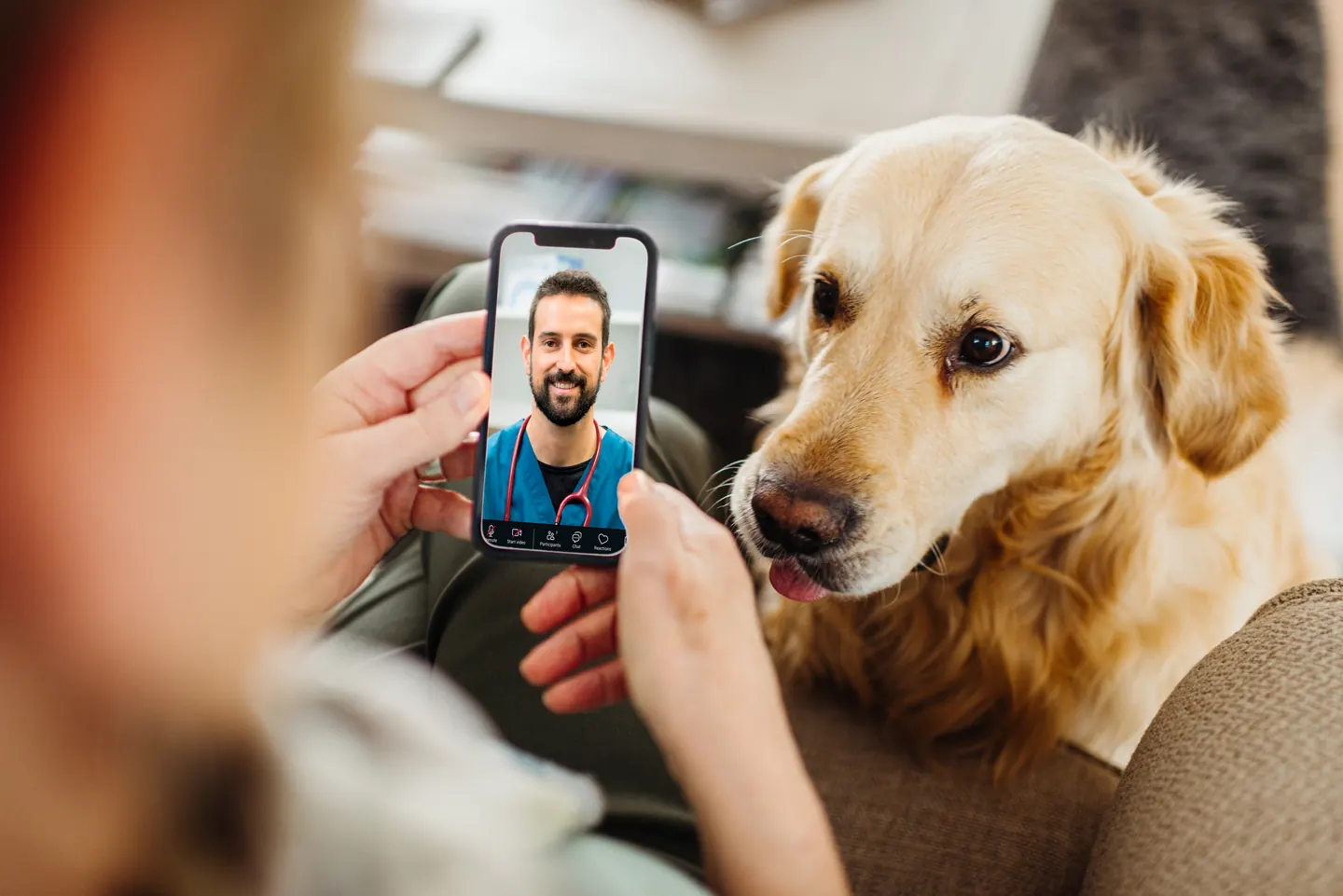
Want a vet's take on your dog's skin or coat?
Talk to a licensed vet at Dutch over video, often the same day. They can recommend treatment and prescribe it when it's appropriate.
Use code Pets60
Plans start at $12/month · covers up to 5 pets
- Licensed vets in most states
- Rx for 150+ conditions
- 4.7 on Trustpilot
What a hygroma in dogs is: the soft elbow swelling and whether it needs a vet today
- 1What a hygroma is under the skin: a pocket of clear, yellow to red fluid walled off by fibrous tissue over a bony point, usually the elbow.
- 2Why large dogs on hard floors get them: body weight presses the elbow into a hard surface every time the dog lies down, and the damaged tissue never gets a chance to heal.
- 3Most hygromas are painless, and soft bedding plus padding over the pressure point is the first treatment.
- 4A hygroma that is painful, ulcerated, draining, or bleeding needs a veterinarian the same day.
What is a hygroma?
A hygroma is a fluid-filled sac that develops over bony prominences and pressure points, especially in large breeds, according to the Merck Veterinary Manual's owner guide. Its other name, false bursa, fits well: a bursa is a natural cushioning sac, while a hygroma is an acquired one the body builds in response to pressure.
The professional definition in the Merck Veterinary Manual adds detail: a sac of fibrous tissue with no true lining, filled with serous fluid that is clear and yellow to red. The classic site is the olecranon, the bony point of the elbow, and the hock (tarsus) is the other site Merck names.

A new elbow hygroma is usually small, soft, and fairly mobile under the skin, and VCA notes that some never grow large enough to notice. One that keeps taking pressure can enlarge and turn hard to the touch. Veterinary Partner stresses recognizing a hygroma early so it never becomes complicated.
The University of Tennessee College of Veterinary Medicine says small, painless hygromas with unbroken skin usually need no medical treatment, because the swelling is the body's protective response to pressure. The everyday job for an owner is taking that pressure off the elbow with soft bedding and padding.
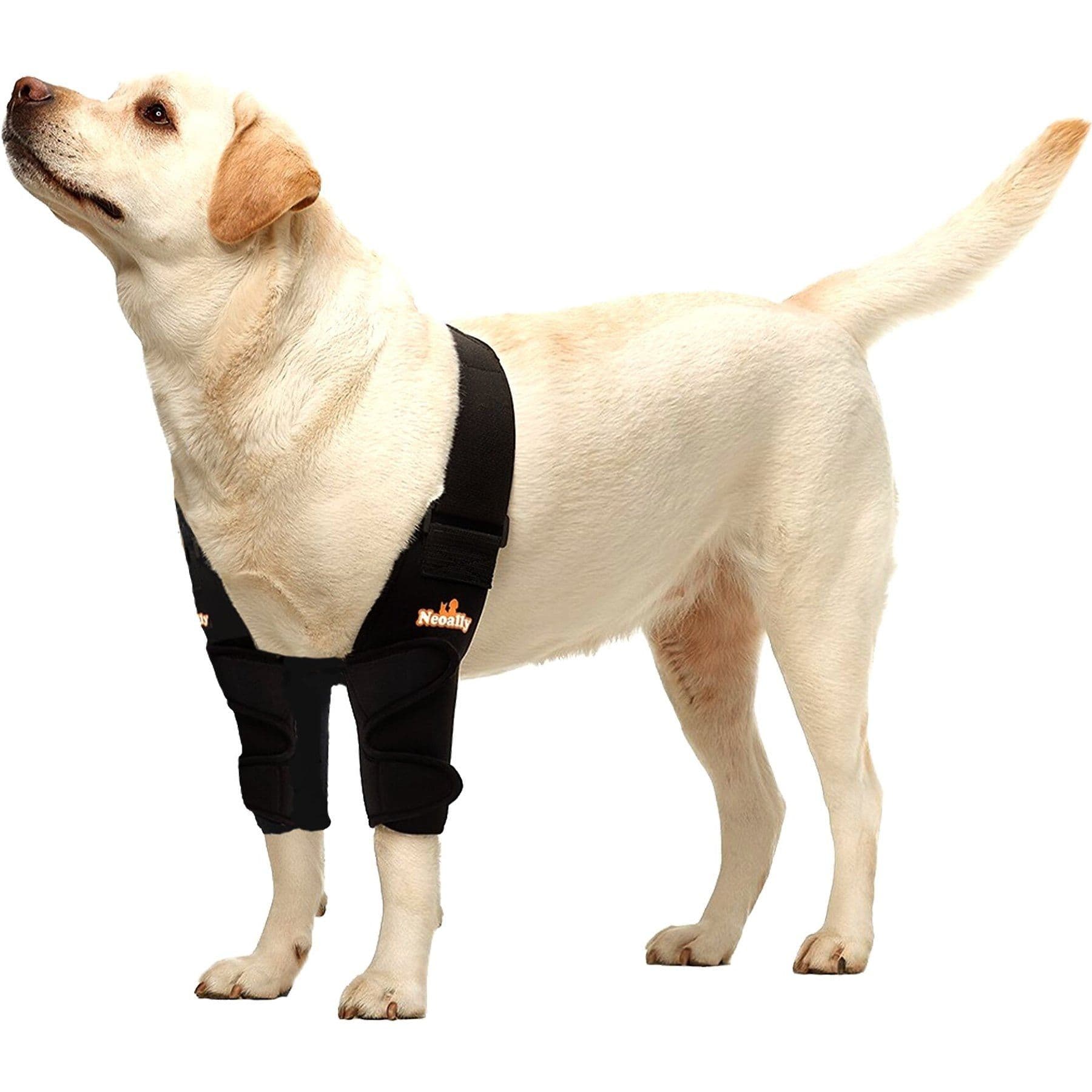
Elbow brace for both front legs whose listing names hygroma and protection from elbow calluses and pressure sores.
Webvet may earn a commission when you click through to Chewy, at no extra cost to you.
Location is the first clue. A soft swelling right on the point of the elbow fits the hygroma pattern, while a lump in the loose skin of the belly or flank does not. For lumps away from bony points, WebVet's guides to bumps on dog skin and dog skin tags cover the common look-alikes.
Whether today is a vet day depends on what the swelling is doing. The University of Tennessee team says a hygroma becomes concerning when it is painful, ulcerated, or infected, and Veterinary Partner advises seeing a veterinarian promptly about any swelling you are unsure of:
- Book a routine appointment: a new, soft, painless swelling on the point of the elbow, so your vet can confirm it is a hygroma and set a padding plan.
- Book a prompt visit: a swelling that keeps growing, turns firm, or comes back after it had settled.
- Go the same day: a swelling that is painful, hot, ulcerated, leaking fluid, or bleeding, or a dog that starts limping on that leg.
Why dogs get hygromas: pressure points, hard floors, and the dogs most at risk
What causes hygroma in dogs is simple mechanics: a heavy dog dropping onto a hard floor puts its weight through a few bony points, again and again.
Why do dogs get hygromas?
Dogs get hygromas from repeated trauma to the skin over a bony point, usually from lying on hard surfaces. Merck's owner guide explains that the repeated pressure causes inflammation, which leads to a dense-walled, fluid-filled cavity. Veterinary Partner adds that the area cannot heal because the damage repeats every time the dog rests on its elbows.
Merck's professional chapter describes the sequence. Each impact sets off inflammation, and the body forms a callus plus a pocket of serous fluid to cushion the spot. Because the trauma keeps coming, healing never finishes, and a dense fibrous capsule eventually walls off the fluid. That capsule is the swelling an owner feels.
Merck ties the repeated trauma to two situations: trouble moving normally, and long hours lying on hard surfaces. Both elbows take that load, so hygromas can appear on both front legs at once, as in a 1-year-old Saint Bernard described in the Journal of Small Animal Practice.
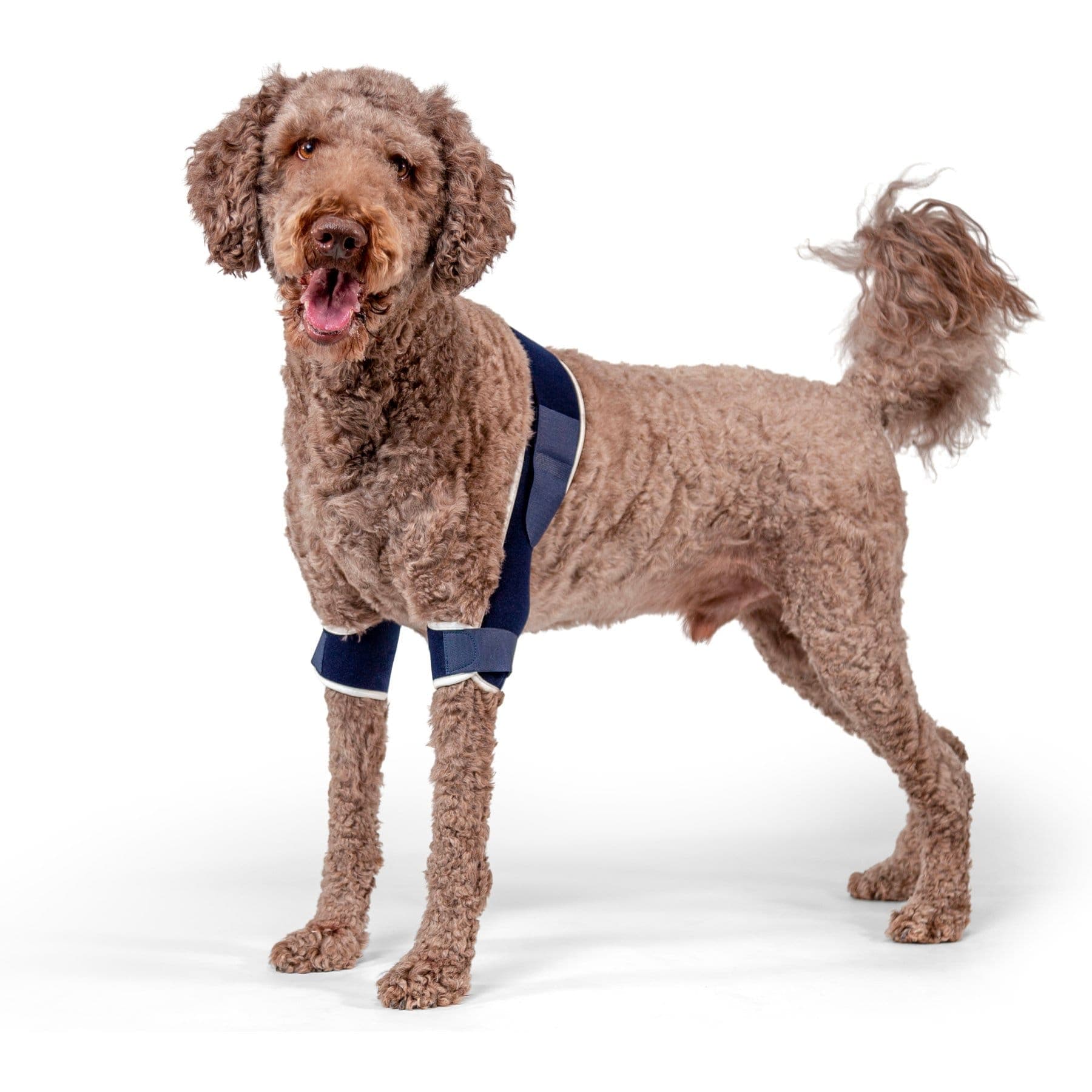
Adjustable double elbow brace with two spare pads; the listing describes elbow compression and holding dressings after surgery.
Webvet may earn a commission when you click through to Chewy, at no extra cost to you.
The elbow is not the only pressure point. These are the sites the veterinary sources name, plus the other bony spots where a soft swelling follows the same pattern:
- Elbow (olecranon): the most common site in every source.
- Sit bones of the pelvis: Veterinary Partner calls this the second most likely site. An ischial hygroma sits under the tail, where the dog's weight rests when it sits.
- Hock (tarsus): the joint partway down the back leg, and the classic site for a hygroma on a dog's back leg.
- Shoulder, hip, and wrist: VCA says a hygroma can form over any bone that sticks out, so a soft swelling over the point of the shoulder, the hip, or the carpal bones of the wrist fits the pattern in a dog that lies on that spot.
- Neck: not a spot a dog rests its weight on, so a swelling there does not fit the pressure-point pattern and needs a vet to identify it.

Merck and VCA agree on the dogs most at risk, and the pattern explains why large dogs on hard floors get them:
- Large and giant breeds: Merck names the Irish Wolfhound, German Shepherd Dog, Great Dane, Mastiff, Newfoundland, and Saint Bernard.
- Adolescents: the typical age of onset is 6 to 18 months, according to Merck.
- Older dogs with arthritis: Merck singles out elbow osteoarthritis, and VCA says older arthritic dogs commonly develop hygromas.
- Sedentary dogs: VCA says more time lying down means more time with pressure on the same spot.
- Overweight dogs: VCA says extra weight greatly increases the risk of trauma over bony prominences.
- Dogs that struggle to get up or walk: impaired movement is one of the two routes to repeated trauma that Merck describes.
Rottweilers, Bernese Mountain Dogs, and Labradors are not on Merck's named list, but the list gives examples rather than limits. VCA says any large or giant breed of any age is at risk if it rests and sleeps on hard surfaces, so a Rottweiler, Bernese Mountain Dog, or heavy Labrador sleeping on tile fits the profile.
How a vet diagnoses a hygroma and rules out other elbow lumps
How a vet tells a hygroma from other lumps is usually straightforward. Merck says the diagnosis is typically based on a physical exam that finds a soft, fluctuant (squishy, fluid-filled), painless swelling over a pressure point. X-rays or ultrasound can help confirm that the swelling sits outside the elbow joint rather than inside it.
What is a large fluid-filled lump on a dog?
On the point of the elbow or another bony pressure point, a large fluid-filled lump is most often a hygroma. Merck still lists other possibilities, including a true cyst, a callus, a skin infection, and benign or malignant tumors, so a vet should confirm it. WebVet's guide to a lump on a dog covers swellings elsewhere.
These are the look-alikes a vet rules out, drawn from Merck's list of differential diagnoses and VCA's abscess guidance:
- True cyst: a sac with its own lining, unlike the unlined false bursa of a hygroma.
- Callus: thickened skin over the elbow without a fluid pocket underneath.
- Infectious dermatitis: infected, inflamed skin over the area.
- Abscess: VCA's abscess guidance says an abscess usually appears suddenly as a painful swelling that can be firm or compressible like a water balloon, while a hygroma forms slowly and is typically painless. WebVet's guide to a dog abscess covers that problem in depth.
- Benign or malignant tumor: the Merck Veterinary Manual's skin tumor guide says skin tumors are so varied that identifying them should be left to a veterinarian.
A swelling under the tail deserves the same care. A hygroma over the sit bones is possible, but that area has its own look-alikes, from perianal adenomas around the anus to stud tail on the top of the tail, and a vet can tell them apart.
When a swelling is not typical, the vet may sample it with fine-needle aspiration. VCA's guide to fine needle aspiration describes a sterile fine needle on an empty syringe, with the plunger pulled back to draw cells in for cytology. VCA calls it the most frequently used cytology technique, typically used for lumps and bumps.

For a hygroma, the sample is the clear, yellow to red fluid inside. Your vet weighs the value of sampling against the risk, because Veterinary Partner cautions that any time a hygroma is pierced, infection can be introduced.
Sampling is not always conclusive. VCA says cytology is not always diagnostic, although even unclear results usually help, and the next step is histology, a small piece of tissue examined under the microscope. Merck recommends a skin biopsy for hygromas that look atypical or do not respond to conservative treatment.
If you are comparing your dog's elbow with pictures of hygromas online, the typical hygroma matches Merck's description: soft, fluctuant, and painless, right over the point of the elbow or hock. Hygromas are not tumors, but some lumps that look similar are, so these features call for a vet visit rather than waiting:
- Rapid growth, since Merck notes that a rapidly growing tumor is more likely to be malignant than one that develops slowly
- A hairless or discolored patch, a rash, or a sore that does not heal on or near the lump
- A lump that sits away from any bony pressure point
- Pain, heat, discharge, or limping, which point toward infection
 Sponsored
Vet care that's always there
Unlimited video calls and messaging with licensed vets for less than a typical vet visit. One membership covers up to five pets.
Use code Pets60
Plans start at $12/month · covers up to 5 pets
- Licensed vets in most states
- Rx for 150+ conditions
- 4.7 on Trustpilot
Hygroma treatment: what the vet does, then padding and care at home
Canine hygroma treatment escalates with the stage of the swelling. Merck is frank that there is no ideal treatment that resolves elbow hygromas, so the goal at every stage is to stop the pressure that built it. Soft bedding and padding handle most new swellings; drainage or surgery is kept for large, infected, or ulcerated ones.
| Stage | What it looks like | Vet step | Home care | Recheck |
|---|---|---|---|---|
| New, small hygroma | Soft, painless, movable swelling on the point of the elbow, skin unbroken | Exam to confirm it is a hygroma; usually no medical treatment | Soft bedding, padding over the elbow, covered hard floors | Vet check if it grows, or has not settled after 2 to 3 weeks of soft bedding |
| Large or recurring hygroma | Bigger swelling that may feel hard, or one that returns after settling | Exam, possibly X-rays, ultrasound, or sampling; drainage or removal discussed if it limits the dog | Strict padding and soft bedding, weight control | On the schedule your vet sets, sooner if it grows quickly |
| Infected, ulcerated, or draining hygroma | Painful or tender, open sore, leaking fluid or pus, limping | Same-day visit; culture, antibiotics, flushing and drainage, possible surgery | No squeezing or home draining; follow the vet's bandage plan | As your vet directs, often daily bandage changes while drains are in |
| After drainage or surgery | Drains, bandage, or splint in place | Drain and bandage management; splint after extensive surgery | Bandage changes as instructed, protection from licking, padded bedding | Drained hygromas should resolve in a couple of weeks; extensive surgery takes about a month to heal |
For a small, early hygroma, Merck lists two vet options: specialized bandaging, or draining the fluid with a sterile needle, each followed by corrective housing. Soft bedding works well for some dogs, and Merck adds that dogs that lie only on hard surfaces can wear padding over their pressure points to prevent further trauma.
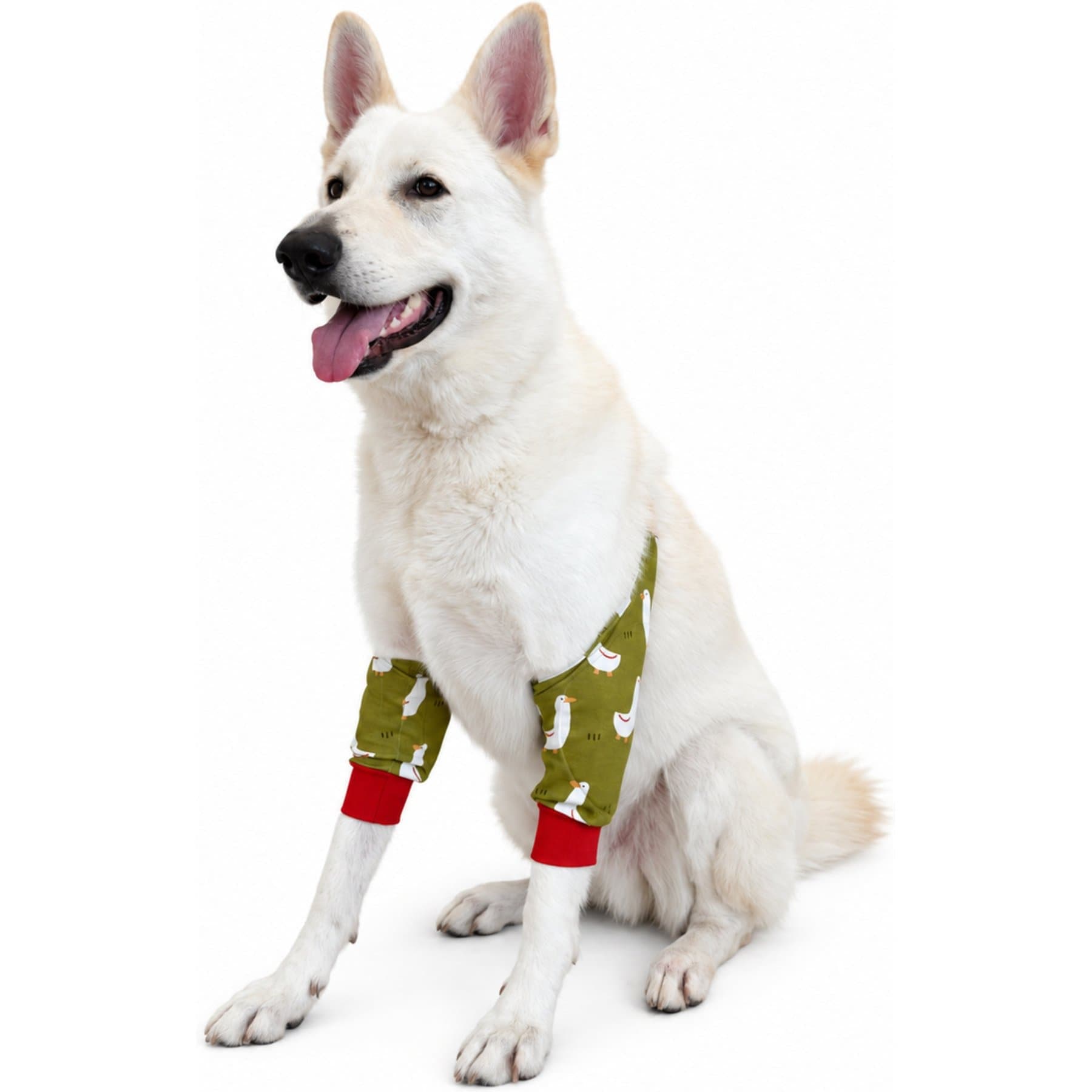
A pair of padded front-leg elbow sleeves made to cushion the elbows while a dog rests or moves around on hard floors.
Webvet may earn a commission when you click through to Chewy, at no extra cost to you.
Veterinary sources split on the needle. Veterinary Partner advises against tapping off the fluid, because each time a hygroma is pierced, infection can be introduced. A 1975 report in the Journal of the American Veterinary Medical Association also advised against aspiration with corticosteroid injection. Your vet will weigh which approach suits your dog.
Medicine for a dog hygroma plays a narrow role. Merck advises against injecting corticosteroids into a hygroma, because infection has been reported as a complication. Antibiotics are for infected hygromas, and Merck says bacterial culture and susceptibility testing should come before they are chosen.
Benadryl (diphenhydramine) is not a hygroma treatment, because the swelling is a pressure-built fluid pocket rather than an allergic reaction, and VCA notes that its use in animals is extra-label; WebVet's guide to antihistamines for dogs covers the swellings antihistamines can help.

Knowing when drainage or surgery is needed comes down to what the hygroma is doing to the dog. The sources point to these triggers:
- It has grown to an unwieldy size or become infected, which VCA says calls for antibiotics and possibly surgical removal.
- It restricts the dog in daily life or is infected, painful, or ulcerated, which a 2023 case series in Tierärztliche Praxis Kleintiere says should be treated surgically with drainage or total excision.
- It is severely overgrown, chronically draining, or covered by a large sore, which Veterinary Partner says needs more extensive surgery.
Dog hygroma drainage is the middle path between padding and full removal. Merck describes draining and flushing chronic hygromas and placing Penrose drains, soft rubber tubes that let fluid escape, and notes that closed-suction drains have also been reported to help.
The 1975 JAVMA report found that a simple drainage procedure worked in 18 hygromas. With rubber drains in place, Veterinary Partner says bandages should be changed daily, and the hygroma should resolve after a couple of weeks.
Every procedure depends on what happens at home afterward. The University of Tennessee team calls surgery a last resort that only succeeds if the repetitive trauma is eliminated. VCA calls padded bedding the first step in treating a hygroma, and says egg-shell foam or memory foam beds may provide the best padding.
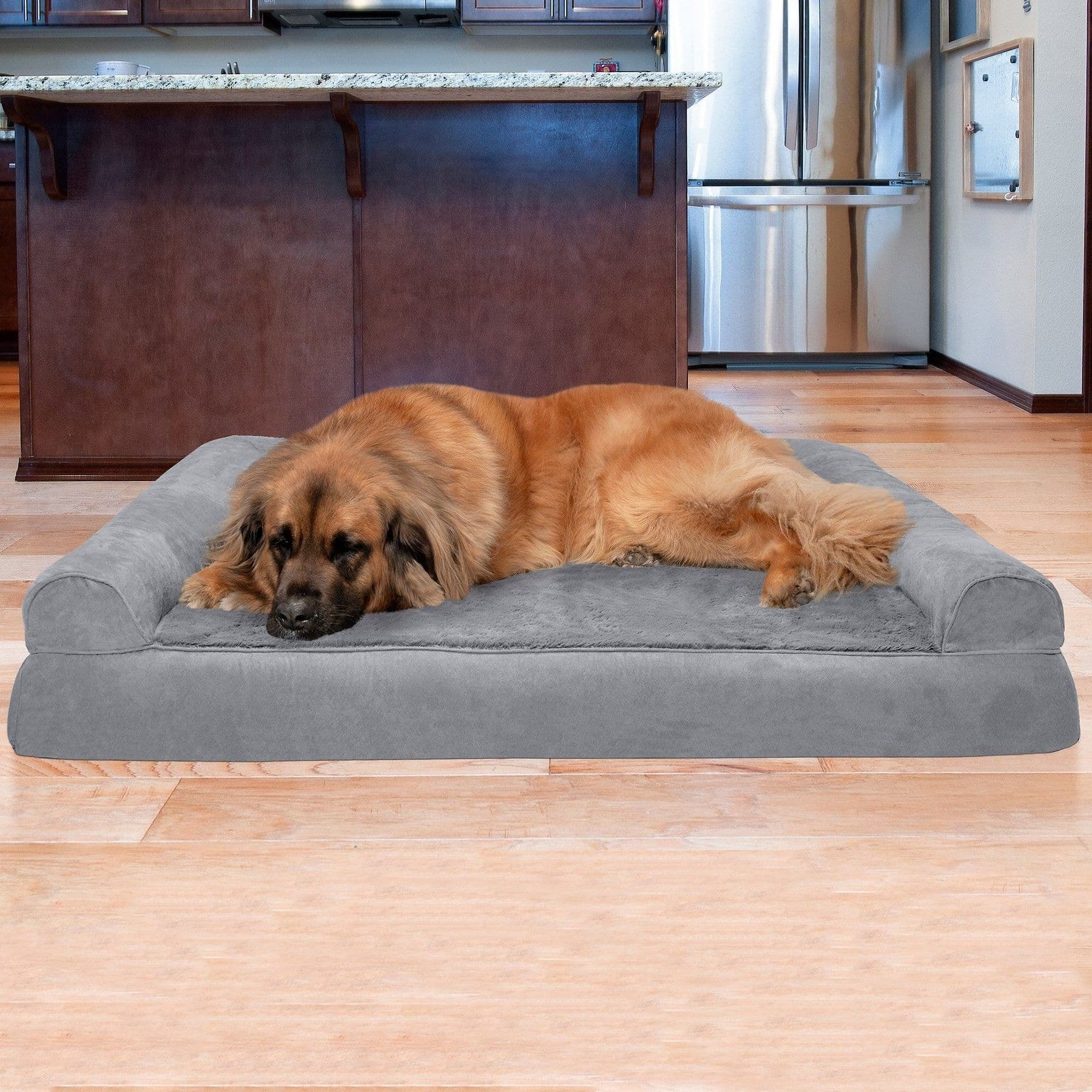
Sofa-style dog bed with an egg crate foam mattress that the listing says cushions pressure points.
Webvet may earn a commission when you click through to Chewy, at no extra cost to you.
Dog hygroma removal is the biggest step. Merck says complete excision of all affected tissue is ideal for larger or chronic hygromas, but the rate of complications, including the repair coming apart (dehiscence), is high. The 1975 JAVMA report recommended against excision, and the 2023 paper notes long rehabilitation times after hygroma surgery in dogs.
Surgery is not a cure on its own. VCA says it does not address the underlying cause, so protecting the area afterward is critical, and no published figure says how often hygromas come back after drainage or removal. Two small reports describe other options worth asking your vet about:
- Closed-suction drain: in the Journal of Small Animal Practice case, the Saint Bernard's largest hygroma was kept collapsed with a closed-suction drain for three weeks alongside soft bedding, with no recurrence over 18 months of checks. That is one dog, not a success rate.
- Shockwave therapy: the 2023 series treated 4 hygromas in 3 dogs with 3 to 6 sessions of extracorporeal shockwaves, usually weekly, and all regressed with no complications. Four hygromas are far too few to prove it works.
How to treat an elbow hygroma in dogs after drainage or surgery is mostly about protecting the site while it heals:
- Bandages and drains: change or check them exactly as your vet directs. Veterinary Partner describes daily bandage changes while drains are in.
- A splint after bigger surgery: Veterinary Partner says a splint is likely needed to pad and immobilize the leg, and healing takes a month or so. WebVet's guide to dog wound healing stages explains what normal progress looks like.
- No licking at the site: if your vet wants the area protected, a cone keeps the dog's mouth off it. WebVet's dog cone guide compares styles, and the Kuoser Soft Cone Adjustable Recovery Dog Elizabethan Collar/E-Collar, Black, Large is a soft option with a cotton inner layer and a clear, waterproof upper layer, listed at $33.99 on Chewy when we checked in October 2026.
- Padding afterward: the pressure that built the hygroma has not gone away, so soft bedding and elbow protection stay part of the routine.
Infected, ruptured, or bleeding hygromas: when to see the vet
Is a hygroma in dogs dangerous? An uncomplicated one usually is not. Merck separates uncomplicated hygromas from complicated ones with ulceration or infection, and warns that a long-standing hygroma can develop severe inflammation, ulcers, infections, abscesses, granulomas, and fistulas. Severe lesions can turn into decubital ulcers, open pressure sores in the skin.
An infected hygroma is a different problem. VCA says infected hygromas are painful and must be dealt with aggressively, and Veterinary Partner says an infected hygroma becomes tender and needs surgical drainage. Merck's own example is a dog elbow with deep skin infection, draining tracts, and chronic inflammation that began as a hygroma.
The signs that a hygroma is infected or complicated, any of which calls for a same-day vet visit:
- Pain or tenderness when the swelling is touched, in a lump that used to be painless
- Heat and redness, the marks of the severe inflammation Merck describes
- Ulcerated skin or an open sore over the swelling
- A draining or leaking hygroma, with fluid, pus, or blood coming through the skin
- Bleeding from the surface, or a hygroma that has burst
- Limping on that leg, or a dog licking the hygroma constantly
- Fever, which VCA notes often comes with an abscess even after it has ruptured and drained
If a ruptured hygroma is bleeding, Veterinary Partner's wound first aid guidance keeps the steps short:
- Stop the bleeding with direct pressure.
- Do not clean the wound unless a veterinarian tells you to.
- Cover it with a saline-soaked compress.
- Head for the clinic. Veterinary Partner's bleeding first aid guidance says to seek veterinary attention immediately after the bleeding stops, or on the way.
At the clinic, an infected hygroma is flushed and drained, and Veterinary Partner says there is no choice once infection is present. Merck recommends bacterial culture and susceptibility testing before antibiotics are chosen. A severely damaged, chronically draining hygroma may then need more extensive surgery and a splint.
Waiting makes this harder. VCA warns that delayed or inadequate abscess treatment can lead to chronically draining tracts in the tissue, or even to organ system problems. Once the vet has treated the area, WebVet's guide to dog wound care covers keeping it clean and protected at home.
Elbow pads, sleeves, and bedding: choosing hygroma protection at home
Padding with soft bedding at home is the first step VCA names, and for most uncomplicated hygromas it is the whole plan. Veterinary Partner says changing the dog's bedding generally solves the problem, though sometimes elbow pads or bandages have to be made or bought. Merck's owner guide calls padding over pressure points important.
VCA says commercially available elbow pads are designed to protect hygromas and keep them from growing or becoming infected and painful. Pads are sized to the dog, then adjusted for fit, and most dogs tolerate them easily. No published comparison of pad, sleeve, or brace brands exists, so fit and coverage matter more than the label.

When choosing dog hygroma elbow pads, sleeves, or braces, check for:
- A cushion over the point of the elbow: the olecranon is where the pressure lands, so the padding has to sit right there, not just wrap the leg.
- A sized, adjustable fit: measure the dog as the listing directs, because a pad that slides off the elbow while the dog lies down protects nothing.
- Both front legs when both elbows are affected: several protectors come as a pair or a two-leg design.
- Washable materials: the pad is worn every day against the skin.
Here is how the elbow protectors on Chewy compare on those points, based on each listing:
- JUSTLIVE NEST Adjustable Elbow Protector Padded Cushion Dog Sleeve-Wrap, XX-Large: a pair of padded front-leg sleeves made for callused, sensitive, or bald elbows, with adjustable shoulder straps, quick-release buckles, and machine-washable fabric. Listed at $48.99 on Chewy when we checked in October 2026.
- NeoAlly Elbow Protector Dog & Cat Support Brace, Both Legs, Large: a two-leg brace in breathable compression fabric whose listing names hygroma and protection from elbow calluses and pressure sores. Listed at $79.95 on Chewy when we checked in October 2026.
- Balto Soft Plus Dog Double Elbow Brace, Large: an adjustable double brace with two spare pads, described for elbow pain from injury or illness and for holding dressings after surgery, rather than specifically for hygromas. Listed at $95 on Chewy when we checked in October 2026.
How long padding takes varies. Veterinary Partner says that once a dog lies on softer, more pliant materials, an uncomplicated hygroma is likely to resolve over two to three weeks as the inflamed tissue scars down. The University of Tennessee team is more cautious: small hygromas often persist unless the cause is addressed.
The natural treatment vets describe for an elbow hygroma is mechanical: soft bedding, padding over the point of the elbow, and covered floors where the dog rests. No veterinary source supports a cream, supplement, or herbal home remedy for shrinking a hygroma, so to treat one at home naturally, remove the pressure.
Padding belongs on closed, painless skin. If the hygroma is open, leaking, or sore, a vet needs to treat it before any pad, sleeve, or brace goes on.
Preventing hygromas: bedding, body weight, and starting young
To prevent a hygroma, keep a heavy dog off hard surfaces and keep it lean. VCA's prevention advice centers on padded bedding, a healthy body weight, and covered floors in the spots where the dog likes to relax.
Starting young matters. Merck gives the typical age of onset as adolescence, so a hygroma in a puppy or a young adult of a large or giant breed is not unusual. A padded bed from the first weeks at home helps protect a growing Great Dane, Mastiff, or Newfoundland before the first swelling forms.
A prevention routine for large and giant breeds:
- A padded bed in every resting spot: VCA says egg-shell foam or memory foam beds may provide the best padding. The FurHaven Plush & Suede Orthopedic Sofa Cat & Dog Bed, Gray, Jumbo Plus, which its listing says uses egg crate foam, is one option in a size for big dogs, listed at $117.99 on Chewy when we checked in October 2026.
- Covered floors: VCA suggests interlocking foam tiles, like the ones in fitness clubs and day cares, in the places the dog likes to relax.
- A lean body weight: VCA says large and giant breeds should not be allowed to become overweight or obese, because extra weight greatly increases trauma over bony prominences.
- Care for arthritis and mobility problems: the University of Tennessee team lists addressing underlying orthopedic or medical issues as part of management, so arthritis care with your vet is part of prevention for older dogs.
- Regular elbow checks: feel the point of each elbow during grooming, so a new swelling is caught while it is still small and soft.
Hygroma in dogs questions
Frequently Asked Questions
Can a hygroma in a dog go away on its own?
Rarely without a change at home. A small, uncomplicated hygroma can settle once the pressure stops; Veterinary Partner puts that at about two to three weeks of lying on softer surfaces. Without soft bedding and padding, the University of Tennessee team says small hygromas often stay.
Do elbow pads help a dog with a hygroma?
Yes, as protection rather than a cure. VCA says commercial elbow pads exist specifically to shield a hygroma so it does not grow, get infected, or become painful, and Merck says padding over pressure points prevents further trauma. Pads take pressure off the elbow but do not drain an existing swelling.
Is a hygroma painful for a dog?
Usually not. Merck describes the typical hygroma as a painless swelling, and VCA says hygromas are typically not painful. That changes if it becomes infected: VCA says an infected hygroma is painful, so new tenderness, limping, or a dog that will not let you touch the elbow means a same-day vet visit.
Can a puppy get a hygroma?
Yes. Hygromas typically first appear in adolescence, between 6 and 18 months of age, according to Merck, which shows an 8-month-old Great Dane with hygromas as an example. Any young large breed or giant breed dog that sleeps on hard floors is at risk, so padded bedding is worth setting up from the start.
What happens if a dog's hygroma bursts?
A burst hygroma becomes an open wound over a spot that already heals poorly, with a real risk of infection. Veterinary Partner notes that once a hygroma is opened, the area may be unable to heal. Use direct pressure if it bleeds, leave cleaning to your vet unless told otherwise, and get your dog seen the same day.

Editor
The Webvet Editorial Team is the in-house group of pet-care editors and writers behind Webvet, operated by Smart Pet Collective. The team researches, writes, and maintains Webvet's pet health, behavior, and medication content. Every article follows a defined editorial process: research from reputable veterinary and scientific sources, careful drafting, mandatory review of medical content by a credentialed veterinarian, and dated publication. Health and medication articles are medically reviewed by a licensed veterinary professional before they go live and are kept current over time.
Veterinarian · BVMS MRCVS
Dr. Pippa Elliott, BVMS, MRCVS, is a veterinarian with nearly 30 years of experience in companion animal practice. Dr. Elliott earned her Bachelor of Veterinary Medicine and Surgery from the University of Glasgow. She was also designated a Member of the Royal College of Veterinary Surgeons. Married with 2 grown-up kids, Dr. Elliott has a naughty Puggle named Poggle, 3 cats and a bearded dragon.
Related reading

Stud Tail in Cats: Causes, Treatment, and Grooming That Helps

Eosinophilic Granuloma Complex in Cats: Rodent Ulcers, Plaques, and Treatment

Miliary Dermatitis in Cats: Causes, Treatment, and Flea Control
