Why Does My Dog Keep Licking His Butt? Anal Glands, Worms, Allergies, and When to Worry
A dog that keeps licking his butt usually has full or irritated anal glands, itchy skin from fleas or allergies, or worms. This guide explains each cause, the warning signs that need a vet today, and what helps at home.

BVMS MRCVS
Medically reviewed by Dr. Pippa Elliott, BVMS MRCVS · Last reviewed

This article contains affiliate links. Webvet may earn a commission when you buy through them, at no extra cost to you.
Why your dog keeps licking his butt, and whether today is a vet day
A dog licking butt and tail-base fur briefly after a bathroom trip, a quick clean and then on to something else, is usually just grooming. When a dog keeps licking his butt, the usual reasons are full or irritated anal glands, itchy skin from fleas or allergies, or worms such as tapeworm, and soft stool can keep the whole area irritated.
Most rear-end licking problems are uncomfortable rather than dangerous, but some cannot wait. Swelling beside the anus, blood or pus, a lump, snapping when the tail is touched, fever, or refusing food means calling your vet as soon as possible. Licking that keeps coming back without those signs still deserves a booked appointment.
- 1Knowing when rear-end licking is normal comes down to pattern: a quick clean is grooming, while licking that keeps returning signals a problem.
- 2Treat anal gland trouble as the top cause to rule out, since Merck calls anal sac disease the most common disease of a dog's anal region.
- 3Fleas, allergies, tapeworm, and soft stool are the next places to look.
- 4Swelling, blood or pus, a lump beside the anus, or obvious pain means calling your vet as soon as possible.

Why does my dog lick his butt?
A dog licks his butt because something there itches, hurts, or feels full. The Merck Veterinary Manual calls anal sac disease the most common disease of a dog's anal region, so the glands come first. The University of Minnesota dermatology handbook warns that licking and scooting are not specific to gland disease, so other causes stay on the list.
The causes worth ruling out when your dog keeps licking:
- Full, plugged, or infected anal sacs
- Flea bites, especially in a dog with flea allergy
- Environmental or food allergies that make the skin itch
- Tapeworm segments irritating the skin around the anus
- Soft stool or diarrhea that dirties the area and stops the sacs emptying
- Less often, perianal fistulas, skin fold problems, growths, or licking as a compulsive habit
Dogs do lick their bum while grooming. VCA Animal Hospitals makes the point with a leg: grooming includes licking it, but repeated or compulsive licking can cause sores like those in lick granuloma in dogs. No veterinary source sets a normal number of licks, so judge how often, how long, and what comes with it.
Healthy anal sacs empty as stool passes and presses on them, which is why stool firmness matters so much for a dog that keeps licking. Fiber-based anal gland chews are built around that idea: firmer stool, better emptying.
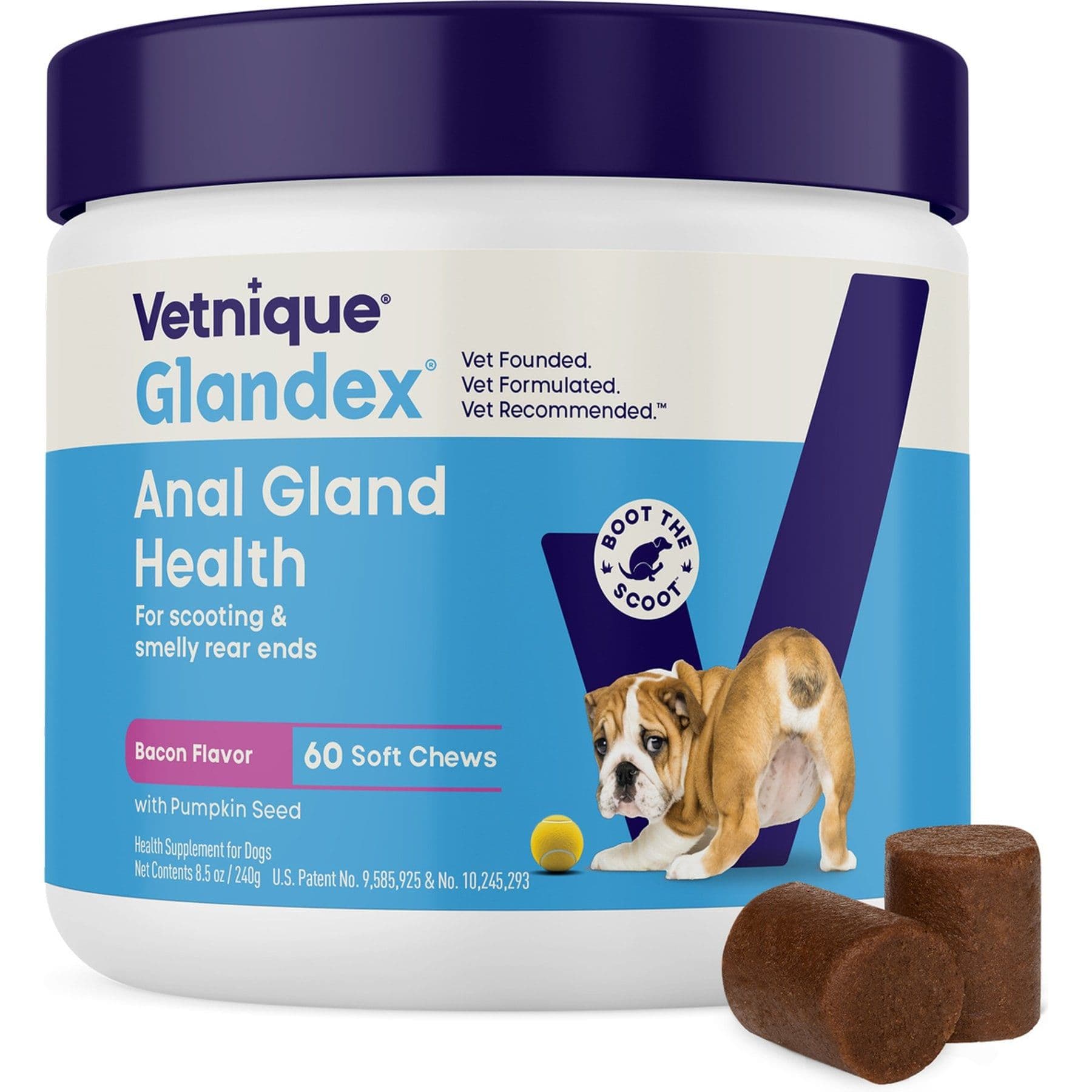
Soft chew with a fiber blend meant to firm stools so the anal glands can empty, plus probiotics and digestive enzymes.
Webvet may earn a commission when you click through to Chewy, at no extra cost to you.
Scooting is the classic partner sign. VCA Animal Hospitals says the first sign of anal sac disease is often scooting or dragging the rear along the ground, with licking or biting that frequently lands at the base of the tail rather than the anus itself. The guide to dog scooting covers that sign on its own.
 Sponsored
Have a health question about your dog?
Talk to a licensed vet at Dutch over video or message, including nights and weekends.
Use code Pets60
Plans start at $12/month · covers up to 5 pets
- Licensed vets in most states
- Rx for 150+ conditions
- 4.7 on Trustpilot
Anal gland problems: the most common reason for butt licking
The anal sacs are two small pouches on either side of the anus, at roughly the four and eight o'clock positions, according to VCA. The overview of dog anal glands explains their normal job. For a licking dog, what matters is whether the sacs empty well, because when they do not, licking, biting, and scooting follow.

VCA says the sacs frequently become impacted, or plugged, usually because the ducts are inflamed. Anal sac impaction is the most familiar version of the problem, and Merck names the three a vet confirms on exam as impaction, infection, and abscess. The guide to impacted anal glands in dogs walks through the plugged stage in detail.
Merck and VCA name the main reasons the sacs stop emptying:
- The sacs are not squeezed out during defecation
- Poor muscle tone in overweight dogs, and VCA adds that overweight dogs tend to have chronic anal sac problems
- The glands produce too much secretion
- Stool consistency changes, including both diarrhea and constipation
Because firm stool does the squeezing, Merck notes that a vet may recommend supplemental fiber to increase fecal bulk, which helps the sacs compress and empty. A fiber powder sprinkled on food is one simple way to add it at mealtime.
Small dogs carry more risk. The Merck Veterinary Manual professional version says small-breed dogs are predisposed to impaction and sacculitis. A UK VetCompass study in Veterinary Record found higher odds than in crossbreds for Cavalier King Charles spaniels, King Charles spaniels, Cockapoos, Shih Tzus, Bichon Frises, and Cocker spaniels.
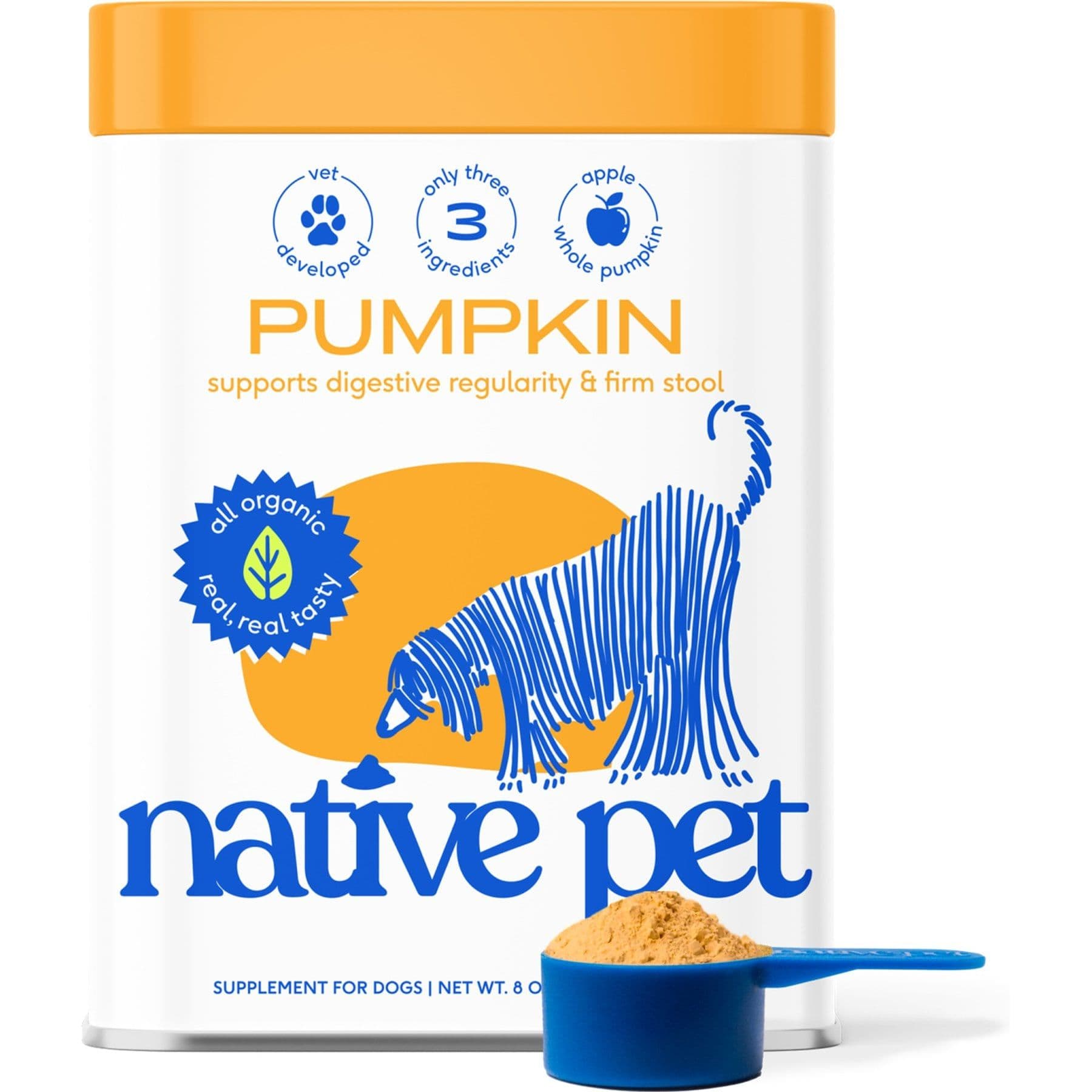
High-fiber pumpkin and pumpkin seed powder you sprinkle on food to support normal digestion and firm stools.
Webvet may earn a commission when you click through to Chewy, at no extra cost to you.
Large breeds are less clear-cut. The same UK study found reduced odds in Labrador Retrievers and German Shepherd Dogs, while a 2022 study in Animals lists both breeds among those earlier research flagged as predisposed. The sources disagree, so a big dog's size alone does not rule the glands out.
What the numbers say about how common and how stubborn gland trouble is:
- The UK study of 104,212 dogs put the one-year prevalence of anal sac disorders at 4.40 percent
- A Dutch veterinarian questionnaire estimated 15.7 percent, a survey estimate rather than a measured rate
- The Minnesota handbook reports impaction returning in 19 to 80 percent of dogs within 3 days to 3 weeks after expression
Left alone, an infected sac can fill with pus. VCA describes the resulting abscess as a painful, red, hot swelling on one or both sides of the anus that may burst and release greenish-yellow or bloody pus through the skin. That stage needs a vet as soon as possible.
Worms, fleas, and allergies behind an itchy rear end
Tapeworm is the worm to think of when licking comes with rice-like specks. VCA Animal Hospitals says the segments look like grains of rice or cucumber seeds, about 1/2 inch (12 mm) long and 1/8 inch (3 mm) wide, and that dogs occasionally scoot to calm the irritation they cause.
Fleas and tapeworms travel together. A dog picks up the common tapeworm by swallowing a flea carrying tapeworm larvae, and VCA warns that reinfection can happen in as little as two weeks in a flea-infested home. Treatment and prevention are covered in tapeworms in dogs.
The reassuring part is that tapeworms do not normally cause serious health problems in adult dogs, according to VCA. Puppies are the exception: a heavy infestation can cause stunted growth, anemia, and intestinal blockages.

Flea allergy dermatitis is the other flea problem. VCA Animal Hospitals says a sensitive dog does not need a heavy infestation to itch, since a single bite can cause itching for several days. Itch and hair loss cluster from the middle of the back to the tail base and down the rear legs, the flea triangle.
Allergies that have nothing to do with fleas matter too. VCA Animal Hospitals says food allergy in dogs usually shows up as itchy skin, paws, or ears, or as digestive upset such as vomiting or diarrhea.
The Minnesota handbook names several conditions that produce the same licking and scooting as gland disease:
- Atopic dermatitis, the environmental allergy
- Food allergy
- Perivulvar dermatitis, inflamed skin around the vulva in female dogs, covered in dog licking private area
- Tail fold dermatitis
- Psychogenic anal licking, a behavior-driven habit
- Perianal fistulas
Veterinary Partner adds a practical rule: if the sacs are empty and scooting continues, the vet should pursue another cause, such as itchy skin, tapeworms, or even lower back pain.
Why is my dog chewing the base of their tail?
Chewing at the base of the tail usually points to the anal sacs or fleas. VCA says dogs with anal sac disease often bite at the tail base rather than the anus, and VCA's flea control guidance notes flea-sensitive dogs scab and lose hair especially there. Allergies come next. Less often, VCA says, tail chewing is a compulsive behavior that can cause severe damage.
 Sponsored
Vet care that's always there
Unlimited video calls and messaging with licensed vets for less than a typical vet visit. One membership covers up to five pets.
Use code Pets60
Plans start at $12/month · covers up to 5 pets
- Licensed vets in most states
- Rx for 150+ conditions
- 4.7 on Trustpilot
Diarrhea, soft stool, and diet: how the stool changes the licking
Firm stool presses the sacs as it passes and soft stool does not, which is why VCA lists diarrhea and constipation as changes that can lead to anal sac disease. The Dutch study found diarrhea and skin problems raised the risk, and the Minnesota handbook counts stool quality, diet type, and body condition among the factors involved.
Call your vet about the stool itself when:
- Liquid or semi-liquid stools continue for more than two days, the point at which VCA Animal Hospitals says to consult your veterinarian
- Diarrhea is severe or bloody, or your dog seems ill overall, which VCA says calls for medical attention as soon as possible
Constipation can also be a result rather than a cause. Merck's professional manual notes that diseased sacs can make defecation painful, with straining that may lead to constipation, one of the same stool changes VCA links to anal sac disease in the first place.
Soft stool also coats the skin. Writing about perianal fistulas, Merck notes that fecal material and anal sac secretions contaminating the hair follicles and glands around the anus can cause tissue damage and long-term inflammation. Vets call that inflamed skin perianal dermatitis, and every loose stool adds fresh residue to it.
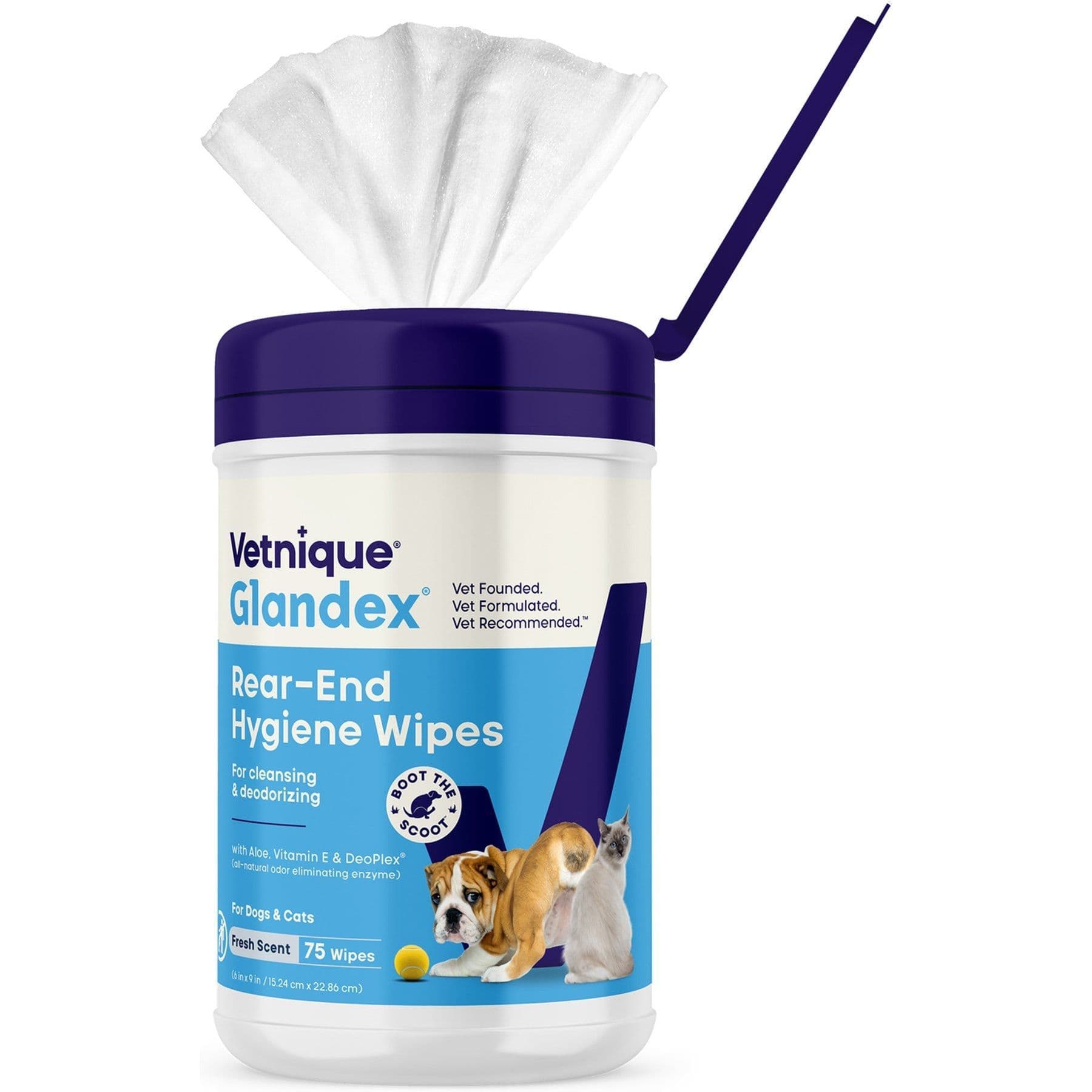
Aloe and vitamin E wipes made to gently clean and deodorize the anal area after gland expression.
Webvet may earn a commission when you click through to Chewy, at no extra cost to you.
Dietary fiber is the main stool lever. Veterinary Partner calls a switch to a high-fiber diet a non-invasive change that helps some patients, because bulkier stool empties the sacs better as it passes. No published figure says how much fiber to add or what share of dogs improve. The options are compared in anal gland supplements for dogs.
Fiber chews made for anal gland support are an alternative to changing the whole diet. Nutramax Filaquin Anal Gland & Digestive Health Peanut Butter Flavored Soft Chew Supplement for Dogs, 90 count blends yeast extract, apple fiber, yeast culture, and psyllium husk fiber, which Chewy's listing says supply soluble and insoluble fiber for normal stool consistency.
Protecting the skin while the stool settles
Licking adds damage of its own. VCA notes that when a dog licks repeatedly or compulsively, sores can develop, so keeping the tongue off skin already inflamed by stool gives it a chance to settle while the cause is treated. A soft cone does that without blocking the dog's view.
Diet type matters too. Because VCA lists diarrhea among the signs of food allergy, a dog whose loose stool and rear-end itch arrive together may need a diet chosen around the allergy rather than simply more fiber.
When butt licking will not stop: signs that need a vet visit
A dog licking his butt a lot is reporting that something itches, aches, or feels full. Merck's professional manual lists scooting, licking, and biting at the anal area, along with painful defecation, as signs of anal sac disease, so excessive licking aimed at the anus points first to the glands.
A dog that won't stop licking his butt is often in pain. VCA says anal sac disease is very painful, and even normally gentle dogs may snap or growl when the tail or anus is touched, so a dog constantly licking and guarding his rear is likely sore. If the licking spreads to paws, legs, or flanks, the broader causes are covered in dog excessive licking.
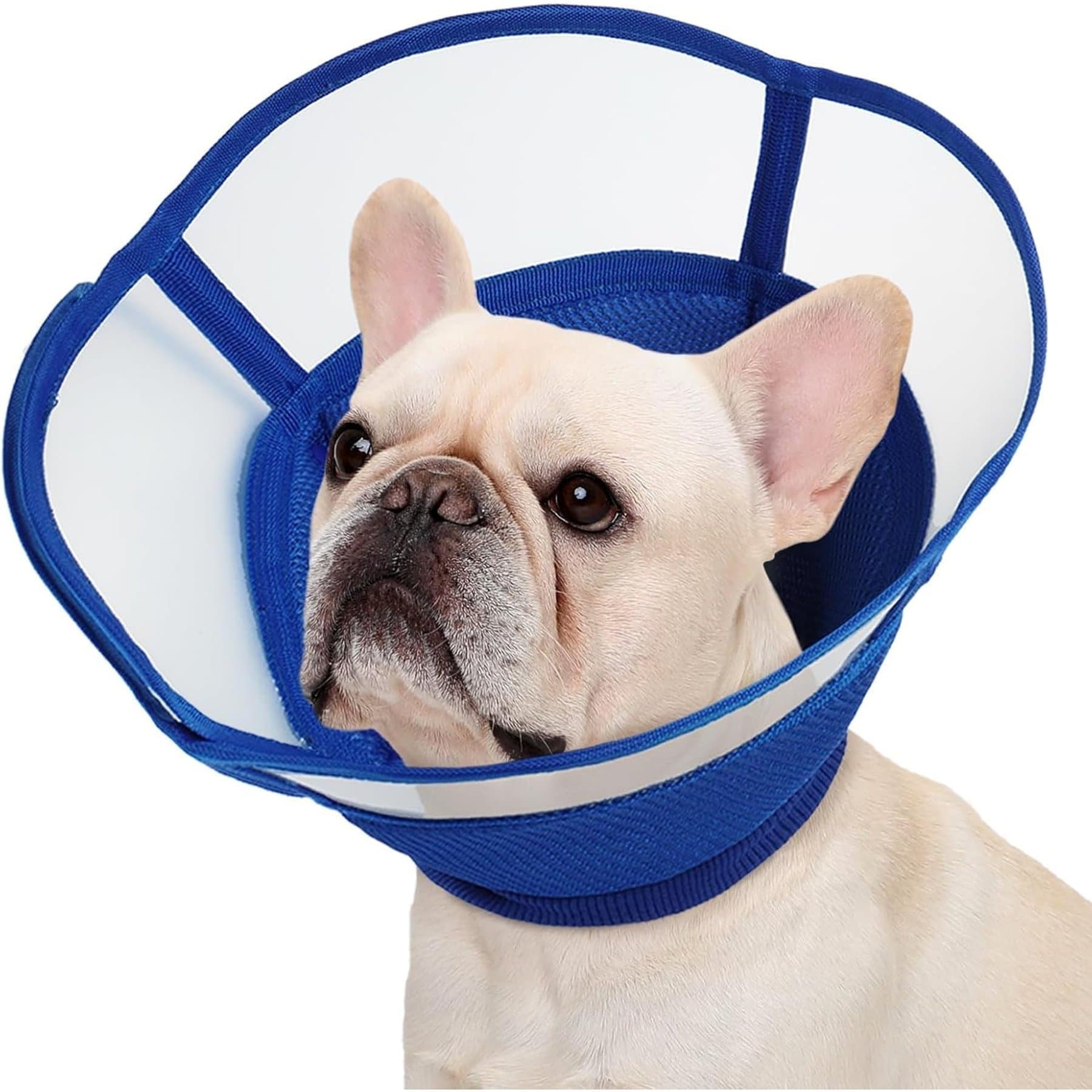
Adjustable soft cone with a clear upper layer that helps keep a dog from licking or biting a wound.
Webvet may earn a commission when you click through to Chewy, at no extra cost to you.
Use the companion sign as a rear-end licking triage: match the sign to its likely cause and vet urgency, then take the first step listed.
| Companion sign | Likely cause | Vet urgency | First step |
|---|---|---|---|
| Scooting, licking or biting at the tail base | Full or impacted anal sacs | Book a regular visit | Ask the vet to check and empty the sacs |
| Rice-like segments on the stool | Tapeworm, picked up from swallowed fleas | Regular visit, sooner for a puppy | Tell the vet what you saw and treat fleas on every pet |
| Scabs and hair loss at the tail base, fleas seen | Flea allergy dermatitis | Regular visit | Start strict flea control for all pets |
| Itchy paws, ears, or skin elsewhere | Environmental or food allergy | Regular visit | Ask about an elimination diet trial |
| Soft stool or diarrhea | Sacs not emptying, skin irritated by stool | Call if liquid stool lasts more than two days | Keep the area clean and ask about fiber |
| Bloody or severe diarrhea, dog seems ill | A cause that may be serious | As soon as possible | Call the vet |
| Red, hot, painful swelling beside the anus | Anal sac abscess | As soon as possible | Call the vet and stop the licking |
| Pus or blood oozing beside the anus | Ruptured abscess, often mistaken for rectal bleeding | As soon as possible | Call the vet |
| Straining to poop with blood in the stool | Perianal fistula, especially in German Shepherds | Prompt visit | Book an exam |
| Swelling or a lump beside the anus in an older dog | Anal sac tumor among the possibilities | Prompt visit | Book an exam |
When should I be concerned about my dog licking?
Be concerned when licking at the bum becomes constant, returns within days of a gland expression, or leaves the skin red, raw, or sore. Call your vet as soon as possible, rather than booking a routine appointment, when the licking comes with any of these:
- Swelling, blood, or pus beside the anus
- Straining to pass stool
- Fever, lethargy, or loss of appetite
Veterinary Partner lists these signs of an anal gland abscess:
- Biting at the tail and anal area, sometimes with wounds
- Matted hair around the anus
- Reluctance to sit or to poop, constipation, or anal discharge
- Crying, whimpering, or other signs of pain
- Being withdrawn and lethargic, or not wanting to eat
- Swelling and redness around the anus
Veterinary Partner says an abscess is not a medical emergency but needs a vet appointment as soon as possible. A ruptured abscess is painful, messy, and smelly and is often mistaken for rectal bleeding, and the Minnesota handbook adds that affected dogs are often feverish and lethargic. The full picture is in anal gland abscess in dogs.
Straining and blood in the stool raise a different concern. VCA Animal Hospitals says that as a perianal fistula progresses, the dog usually strains to defecate and passes blood in the feces. Most affected dogs are German Shepherds, though the figures differ: VCA cites about 80 percent in one study, and Veterinary Partner says 85 percent. See perianal fistula in dogs.
In older dogs, VCA notes that anal sac cancer (adenocarcinoma) can mimic infection, with swelling beside the anus, dragging the back end, and excessive licking. Still, Veterinary Partner says scooting much more commonly means full or inflamed glands than cancer. Related guides cover perianal adenoma in dogs and perineal hernia in dogs.
How a vet finds the cause: gland check, stool test, and skin exam
The exam usually starts at the glands. Merck's professional manual says impaction, infection, or abscess is confirmed by a digital rectal exam, and the vet can express the sacs at the same time. The Dutch study goes further, concluding that diagnosis should rest on clinical signs and the rectal exam because judging the sac contents is not reliable.
The Minnesota handbook gives the contents more weight, describing impacted sacs as typically holding clay- or black-colored, dry or pasty material with little odor. Expressing the glands releases that material, and how to express dog anal glands describes what comes out.

Beyond the glands, the vet checks the other usual suspects:
- Stool: consistency, recent diarrhea, and any rice-like segments. VCA says most tapeworm cases come to light when an owner sees segments on the stool or in vomit and mentions it
- Skin and coat: fleas, scabs at the tail base, and itch in the flea triangle. VCA says flea allergy signs are often classic, so formal allergy testing is needed only in some cases
- Diet: if food allergy is suspected, VCA calls a hypoallergenic elimination diet trial of 8 to 12 weeks the most accurate way to diagnose it
- A lump or mass: Merck says a suspected anal sac tumor calls for checks for spread and a blood calcium test
Treatment and home care for a dog licking his butt
Treatment follows the cause. For impacted sacs, VCA says the vet expresses them and flushes out hardened material, sometimes infusing anti-inflammatory and antibiotic medication; because this can be painful, sedation may be needed. Infected sacs are expressed and treated with oral antibiotics and pain relief, and VCA says most dogs respond well.
For abscesses, Merck's professional manual says hot compresses every 8 to 12 hours for 15 to 20 minutes each are beneficial, and VCA notes a ruptured abscess may need gentle, regular cleaning until it heals. Use compresses only on your vet's instructions. VCA adds that sacs causing repeated episodes despite treatment can be removed surgically.
VCA says tapeworms are treated with a deworming medication your vet gives as a tablet or injection, and that flea control should continue for 3 to 6 months for every pet in the house after an infestation. Because one bite can set off days of itching, VCA calls strict flea control essential for flea allergy dermatitis.
For the itch of flea allergy dermatitis, VCA lists oclacitinib (Apoquel) and lokivetmab (Cytopoint) as alternatives to steroids. Both are prescription medications your vet decides on, and Apoquel is sold through Chewy's pharmacy only with a veterinary prescription.

What can I put on a dog's itchy bum?
No veterinary source recommends an over-the-counter cream or ointment for a dog's itchy bum; vets treat the cause instead. What helps safely is keeping the area clean, using a cone if the licking continues, and applying warm compresses only when your vet recommends them. Anything medicated should come from your vet.
What helps safely at home:
- Gentle cleaning after each bowel movement, especially when stool is soft
- Watching for scooting to restart, which Veterinary Partner treats as the dog's signal that the sacs are full and it is time to bring him in
- More dietary fiber once the glands are confirmed as the issue
- Weight control, since VCA says overweight dogs tend to have chronic anal sac problems
For cleaning, Vetnique Labs Glandex Boot the Scoot Rear End Anal Gland Cleaning & Deodorizing Hygienic Dog & Cat Wipes, 75 count are aloe and vitamin E wipes that Chewy's listing describes as soft enough for daily use. They are a hygiene product, not a treatment for gland disease.
For licking, the Kuoser Soft Cone Adjustable Recovery Dog Elizabethan Collar/E-Collar, Blue, Medium is an adjustable soft cone with a cotton inner layer and a clear upper layer, listed at $20.99 on Chewy when we checked in October 2026. The listing advises measuring your dog for fit.
When the problem is infected skin around the tail or rear, antiseptic cleaning may be part of the plan. Douxo S3 PYO Antiseptic Antifungal Chlorhexidine Dog & Cat Wipes 30 count are wipes that Chewy's listing describes for infected skin areas that need antiseptic cleaning. They are not made for full anal glands or general itch.
Dog licking butt questions
Frequently Asked Questions
Is it normal for a dog to lick his bum?
A quick lick is normal grooming. Dogs clean themselves with their tongues, and VCA describes licking as a concern when it becomes repeated or compulsive enough to cause sores. If the licking is brief and the skin looks healthy, there is nothing to treat; frequent or lingering licking deserves a closer look.
Why is my dog licking his anus so much?
Most often because the anal glands are full, plugged, or inflamed. Merck lists licking, biting, and scooting at the anal area as signs of anal sac disease, and VCA says impaction usually results from inflammation of the gland ducts. Itchy skin, fleas, tapeworm, and soft stool are the next causes to rule out.
Why does my female dog keep licking her butt?
Female dogs have anal glands too, so the same gland, flea, and allergy causes apply. The licking may also target the vulva. VCA Animal Hospitals lists licking the vaginal area, urinating more often, and scooting as common signs of vaginitis, with urinary tract infections and urine or fecal contamination of the vulva among its causes.
What should I do if my dog will not stop licking his butt?
Book a visit with your veterinarian and stop the licking meanwhile. Veterinary Partner says the first step for any pet with a scooting history is checking the anal sacs, and VCA advises a cone collar for a dog licking a healing rear-end wound. Note any swelling, blood, segments, or stool changes to report.
Can worms make a dog lick its bum?
Yes, tapeworm can. VCA says tapeworm segments, which look like grains of rice, irritate the area enough that some dogs scoot, and owners usually spot them on the stool. Anal sac disease is still the most common problem of a dog's rear end, according to Merck, so it is worth checking for both.

Editor
The Webvet Editorial Team is the in-house group of pet-care editors and writers behind Webvet, operated by Smart Pet Collective. The team researches, writes, and maintains Webvet's pet health, behavior, and medication content. Every article follows a defined editorial process: research from reputable veterinary and scientific sources, careful drafting, mandatory review of medical content by a credentialed veterinarian, and dated publication. Health and medication articles are medically reviewed by a licensed veterinary professional before they go live and are kept current over time.
Veterinarian · BVMS MRCVS
Dr. Pippa Elliott, BVMS, MRCVS, is a veterinarian with nearly 30 years of experience in companion animal practice. Dr. Elliott earned her Bachelor of Veterinary Medicine and Surgery from the University of Glasgow. She was also designated a Member of the Royal College of Veterinary Surgeons. Married with 2 grown-up kids, Dr. Elliott has a naughty Puggle named Poggle, 3 cats and a bearded dragon.
Related reading

Perineal Hernia in Dogs: Signs, Surgery, and Recovery

Perianal Adenoma in Dogs: Signs, Surgery, and Outlook

Perianal Fistula in Dogs: Symptoms, Treatment, and Long-Term Outlook
