Excessive Licking in Dogs: Why It Starts and How to Stop It
Excessive licking in dogs usually points to itchy skin, pain, nausea, or stress rather than a bad habit. This guide helps you read where and when your dog licks, spot the signs that need a vet, and break the cycle safely at home.

BVMS MRCVS
Medically reviewed by Dr. Pippa Elliott, BVMS MRCVS · Last reviewed

This article contains affiliate links. Webvet may earn a commission when you buy through them, at no extra cost to you.
Dog excessive licking is usually a symptom, not a bad habit. It most often traces back to itchy skin, pain, nausea, or anxiety, and where the dog licks is the best clue: its own skin points to itch or pain, while licking floors, furniture, or the air with repeated swallowing can point to stomach trouble.
Licking by itself is seldom an emergency. It becomes a vet visit when it comes with vomiting, broken or oozing skin, or a sudden change in a dog that never licked much before, and a licked red patch can spread within hours.

 Sponsored
Want a vet's take on your dog's skin or coat?
Talk to a licensed vet at Dutch over video, often the same day. They can recommend treatment and prescribe it when it's appropriate.
Use code Pets60
Plans start at $12/month · covers up to 5 pets
- Licensed vets in most states
- Rx for 150+ conditions
- 4.7 on Trustpilot
Excessive licking in dogs: what counts as too much and whether today is a vet day

- 1Normal grooming versus excessive licking comes down to impact: licking that crowds out eating, play, or sleep, or leaves red or broken skin, is too much.
- 2For licking aimed at the dog's own body, treat itchy skin as the most common medical cause, usually from allergies, fleas, or skin infection.
- 3Sudden licking can point to pain, nausea, or a new itch, so health problems are checked before behavior.
- 4Licking floors, objects, or the air with repeated swallowing can signal stomach or gut trouble.
- 5Licking with vomiting, broken or oozing skin, or a sudden change needs a vet; until then, interrupt gently and protect the skin.
Dogs groom themselves by licking, and some licking every day is normal. VCA Animal Hospitals notes that a dog normally licks a leg while grooming, but a dog licking itself repeatedly or compulsively in one spot can develop sores.
The Merck Veterinary Manual adds a time test: problem licking happens far more often, or for far longer, than normal. A dog licking himself all the time at that level has little time left for eating, play, or rest.
What is considered excessive licking for a dog?
No published figure sets a number of minutes or licks that makes licking excessive. The Merck Veterinary Manual judges it by effect, treating licking as compulsive once it interferes with normal function or carries on after the original trigger is gone. Licking is excessive when it:
- crowds out eating, play, rest, or time with the family
- leaves thinning hair, red skin, saliva staining, or sores
- continues after the spot has become painful, which VCA describes as a compulsive pattern
- is hard to interrupt, or the dog keeps licking for long stretches most days
A dog constantly licking and chewing the same spot does damage fast. VCA lists obsessive licking and chewing of painful areas, to the point of hair loss and damaged skin, among the signs of pain. That is why vets often block access with a cone or a softer collar while the cause is treated.
Dogs like to lick their coat, their paws, and their people. Licking aimed at you is a training question covered in how to prevent unwanted dog licking, and if a female dog is licking herself a lot around the vulva, or a male dog around the penis, see why a dog keeps licking its private area.
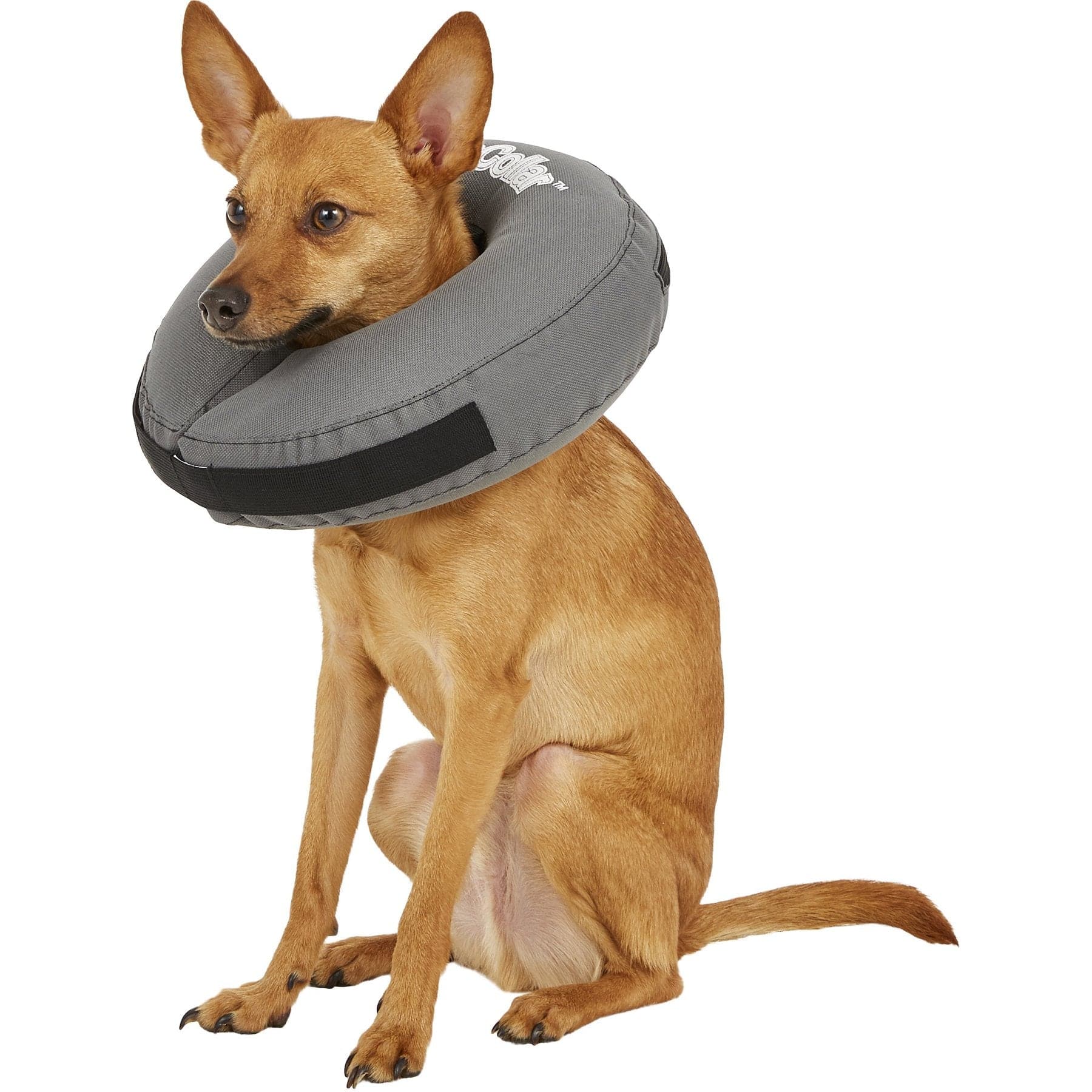
Inflatable cone alternative that keeps a dog from reaching licked rashes or hot spots while leaving its face and vision clear.
Webvet may earn a commission when you click through to Chewy, at no extra cost to you.
Otherwise, the meaning of excessive licking depends on where it lands. The Merck Veterinary Manual groups licking and gulping with other mouth-related signs and lists excessive skin licking among self-directed injuries, a split that matches what owners see:
- Own skin, paws, belly, or legs: itch first, then pain.
- Floors, furniture, objects, or the air, often with swallowing: these can mean nausea or gut trouble.
- Sudden onset in a dog that rarely licked: check for a health problem first.
- Mostly at night or when left alone: itch, pain, stress, or an age-related change.
Why is my dog suddenly obsessively licking?
A sudden change calls for a health check before anything else. The Merck Veterinary Manual tells vets to rule out medical causes before calling licking a behavior problem, and it singles out pain as an important risk factor. Itchy skin from fleas or an allergy flare, or nausea from a stomach upset, can also set it off.
Whether today is a vet day depends on what comes with the licking. VCA advises immediate care when vomiting comes with fever, lethargy, diarrhea, or blood, or when a dog may have swallowed something stuck or toxic. A spreading red patch needs a prompt look; licking with no other signs can wait for a regular appointment.
Medical causes of excessive licking: allergies, skin infection, and pain
Itch is the most direct reason a dog licks its own skin. The Merck Veterinary Manual describes a dog with pruritus, the medical word for itch, as one that excessively scratches, bites, or licks its skin, with parasites, infections, and allergies as the most common causes. More on those is in why a dog is so itchy.
Belly, armpits, and paws: allergic itch
Pruritus is the characteristic sign of atopic dermatitis, an allergic skin disease, and the Merck Veterinary Manual lists the paws, face, ears, front-leg bends, armpits, and belly as the areas most often affected. For a dog licking its belly or stomach raw, a soft recovery suit is one of the cone alternatives VCA lists.
A dog itching and licking around its belly button or armpits fits the same allergic pattern. VCA adds that atopic dogs rub their face, lick their feet, and scratch their armpits and groin; foot licking has its own guide, why a dog keeps licking its paws.
Fleas and food are the other common allergy triggers. The Merck Veterinary Manual describes flea allergy itch in dogs as moderate to severe, showing up as licking, chewing, biting, rubbing, or scooting, with self-trauma that can lead to hot spots. Merck also calls food allergy an important cause of itch.
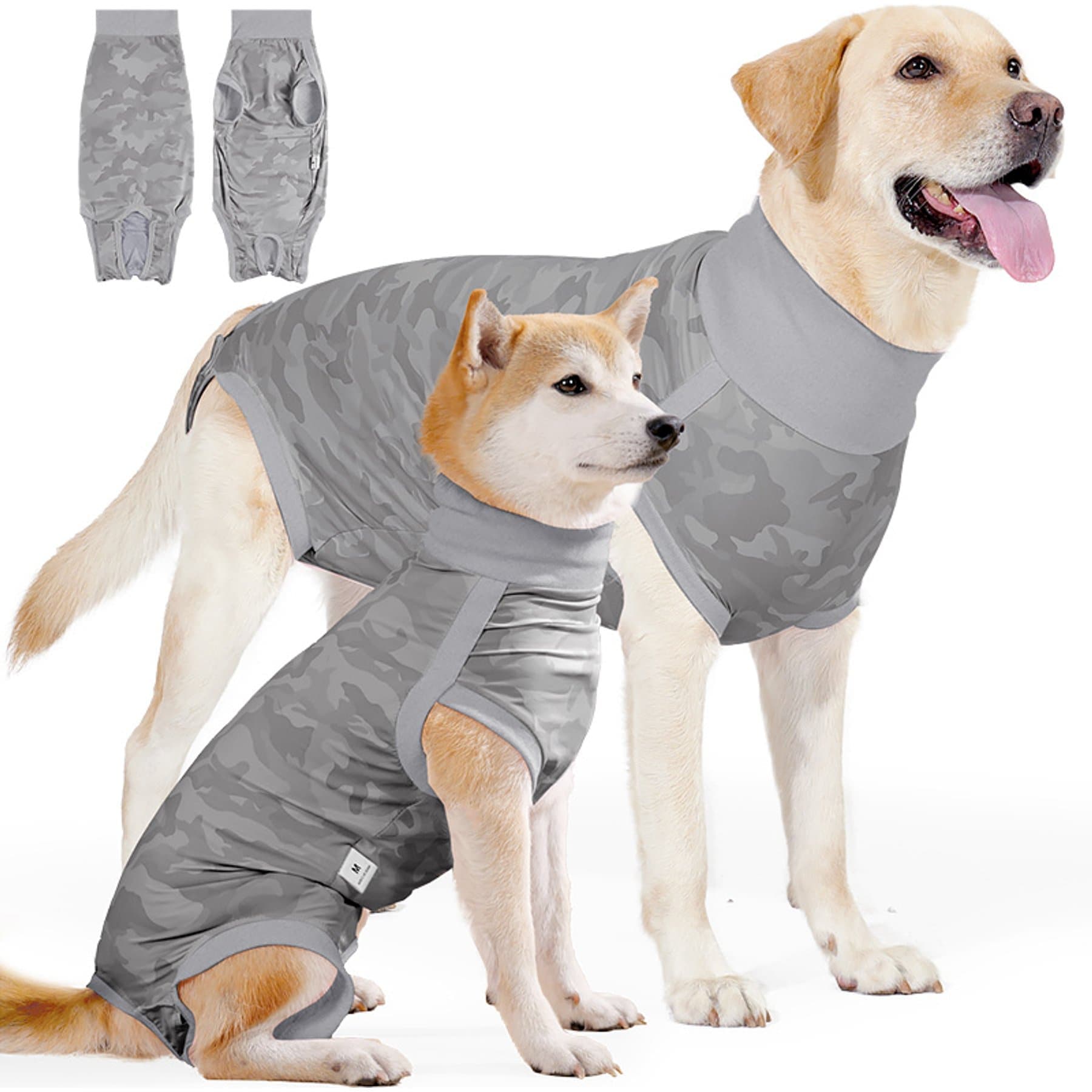
Soft, breathable recovery suit with an adjustable Velcro closure that covers sensitive skin as an alternative to a cone.
Webvet may earn a commission when you click through to Chewy, at no extra cost to you.
Sources disagree on when atopic itch usually begins: the Merck Veterinary Manual gives 6 months to 3 years, while VCA says signs typically start between 2 and 6 years of age. Either way, a young adult dog with new excessive licking and scratching is a strong candidate for an allergy work-up.
Licking a leg or joint: pain
Pain is the other big medical driver, and it is easy to miss. VCA notes that dogs lick or chew degenerating joints much like people rub a sore knee, sometimes creating hot spots. VCA also names arthritis and a previous fracture as triggers for limb licking, and once the area is inflamed, dogs lick even more.
That makes a dog licking one leg excessively, or an old dog constantly licking its legs, a pain question before a behavior one. Repeated licking of the lower legs can damage the skin and even the bone underneath, a condition VCA calls acral lick dermatitis, covered in lick granuloma in dogs.
Licking aimed at the rear end often traces to the anal glands. VCA explains that infected or impacted anal glands are painful, and dogs lick around the rectum enough to cause hot spots under or on top of the tail. That pattern is covered in why a dog keeps licking its butt.
Do dogs with Cushing's lick a lot?
Not as a typical sign. VCA lists increased appetite, thirst, and urination as the most common signs of Cushing's disease, with lethargy and a poor coat also common; licking is not on that list. The Merck Veterinary Manual does include hyperadrenocorticism, the medical name for Cushing's, among the conditions to consider in a dog that licks surfaces.
VCA adds that Cushing's often brings thin skin, chronic skin infections, and poor skin healing, and infection is one of the most common causes of itch. A diabetic dog with excessive licking gets the same work-up, including the baseline bloodwork and urinalysis Merck recommends.
Licked raw: hot spots and skin infection
Skin licked raw keeps itself going. VCA explains that licking a sore spot irritates nerve endings in the skin, which triggers more itching and more licking, a lick-itch-lick cycle behind hot spots.
Severely itchy atopic dogs can do real damage to their skin, VCA notes, and Merck's owner guide links licking of the feet and face to yeast and bacterial infection. Whether the licking started with an allergy flare, a sore joint, or right after grooming, skin that has been licked raw tends to show:
- abrasions or scratches
- reddish-brown saliva staining in the fur
- red, inflamed skin from chronic licking
- a wet, oozing patch, which may be a hot spot
Broken skin then invites infection. The Merck Veterinary Manual notes that secondary Staphylococcus and Malassezia (yeast) infections are common in atopic dogs and often worsen the signs, and VCA says pyoderma often develops in the abrasions scratching leaves. A dog licking his leg raw, or himself raw anywhere, may need treatment for both.
Atopic dermatitis is lifelong, the Merck Veterinary Manual notes. Vets may prescribe oclacitinib (Apoquel) for flares and long-term control; its DailyMed label limits it to dogs at least 12 months old. Merck lists GI upset as its most common side effect and rules it out for dogs with serious infections or cancer.
Apoquel is prescription-only, filled through Chewy's pharmacy with a veterinary prescription. Merck puts its onset for itch control within 24 hours, while the manufacturer says relief can start in as little as 4 hours. It treats allergic itch, not licking from pain or stress.
 Sponsored
Vet care that's always there
Unlimited video calls and messaging with licensed vets for less than a typical vet visit. One membership covers up to five pets.
Use code Pets60
Plans start at $12/month · covers up to 5 pets
- Licensed vets in most states
- Rx for 150+ conditions
- 4.7 on Trustpilot
Behavioral causes: boredom, anxiety, and compulsive licking
When the skin, joints, and gut check out, boredom and stress move up the list. VCA puts it plainly: instead of biting their fingernails, bored dogs lick spots that are easy to reach. VCA also suggests that self-injurious licking may arise when a dog's physical, cognitive, or social enrichment falls short.
Stress licking follows a different path. VCA describes licking that starts as a self-soothing displacement behavior during chronic stress or recurring emotional conflict, then grows until the dog finds it hard to stop. Anxious dogs also lick their lips, which the Merck Veterinary Manual lists among the displacement signs of acute fear and anxiety.
Merck adds that canine compulsive disorder can begin as a displacement behavior when a dog is frustrated, conflicted, or highly aroused, and it names these possible starting points for anxiety licking and other compulsive habits:
- an unpredictable daily routine
- changes in the home or surroundings
- unpredictable consequences for the dog's behavior
- too few outlets for normal dog behavior
- chronic or recurring anxiety
Age changes the reading. Puppies are held to the same test as adults, but allergic itch can start young: Merck's onset range for atopic dermatitis begins at 6 months. In a senior or old dog, new licking deserves a health check first, since joint pain and cognitive change both become more common with age.
Licking mostly at night or when a dog is left alone fits the self-soothing pattern, though itch and pain can look the same.
What breeds of dogs lick a lot?
No breed is singled out for licking in general, but veterinary references name breeds for specific licking problems. The Merck Veterinary Manual says Labrador Retrievers are more prone to excessive licking of the lower front legs, and VCA notes a possible genetic tendency toward compulsive behaviors.
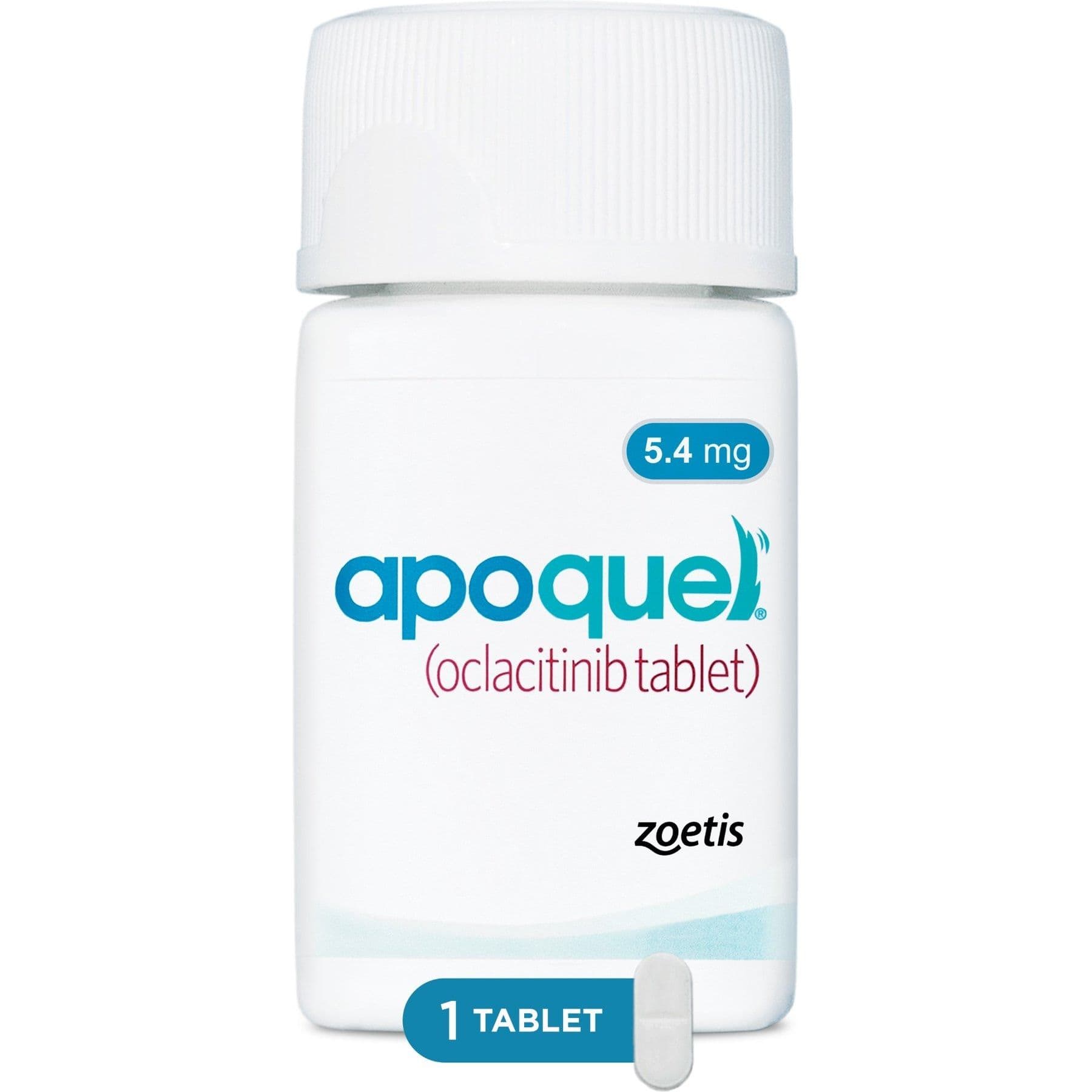
Prescription oclacitinib tablets a vet may prescribe for allergic itch in dogs 12 months and older; filled with a vet prescription.
Webvet may earn a commission when you click through to Chewy, at no extra cost to you.
VCA lists Doberman Pinschers, Great Danes, German Shepherds, Labrador and Golden Retrievers, and Irish Setters as the large breeds most affected by acral lick dermatitis. Boxers are not on either list, so a Boxer with excessive licking is assessed the same way as any other dog.
What is compulsive licking?
Compulsive licking is licking that has come loose from its original purpose. The Merck Veterinary Manual defines compulsive disorders as repetitive grooming, ingestive, or movement behaviors that happen out of context and at excessive frequency or duration, sometimes with little control over starting or stopping.
VCA lists licking surfaces, air snapping, pacing, and sucking objects among the compulsive behaviors seen in dogs. Because painful, neurologic, and skin conditions can look the same, a vet calls licking compulsive only after ruling those out.

For boredom and behavior-driven licking, VCA's first-line plan is training and behavior modification, more exercise, and environmental enrichment. Food puzzles are an easy place to start, because they give a dog something to lick that is not its own skin.
Licking floors, objects, and the air: nausea, gut trouble, and other hidden causes
A dog that constantly licks the floor, carpet, couch, furniture, bed, a blanket, walls, or window glass is showing what vets call excessive licking of surfaces. VCA lists it among compulsive behaviors, but a gut problem often sits underneath, so a dog licking everything excessively deserves a check of both skin and gut.
In a Universite de Montreal veterinary study, 14 of 20 dogs with excessive licking of surfaces had a diagnosed gastrointestinal disorder. The problems found included:
- eosinophilic or lymphoplasmacytic infiltration of the GI tract
- delayed gastric emptying
- irritable bowel syndrome
- chronic pancreatitis
- a foreign body in the stomach
- giardiasis
The follow-up results are encouraging: licking frequency or duration improved by more than half in 56% of the licking dogs, and the licking stopped entirely in half of them. Their behavior otherwise, including anxiety, did not differ from that of comparison dogs.
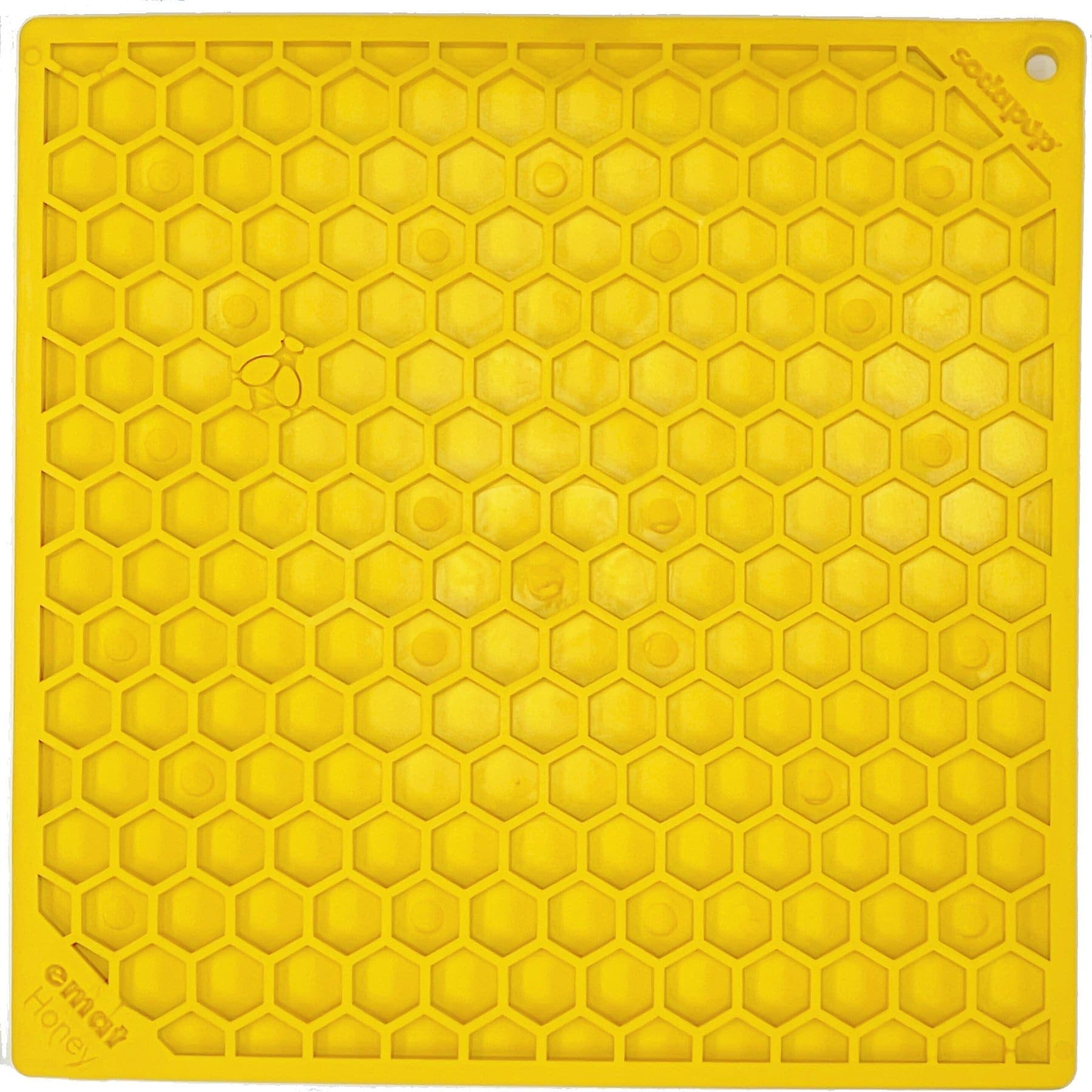
Honeycomb lick mat to spread with wet food or soft treats, or freeze, as a long-lasting distraction for a bored dog.
Webvet may earn a commission when you click through to Chewy, at no extra cost to you.
The Merck Veterinary Manual points vets the same way, listing these causes to consider for licking, swallowing, and jaw snapping (sometimes called fly biting):
- gastric ulcers
- inflammatory bowel disease
- food insensitivity
- the hormone disorders hyperadrenocorticism (Cushing's) and hypoadrenocorticism

Licking the air, gulping, and repeated swallowing can signal nausea. VCA describes a nausea stage before vomiting in which a dog seems restless, licks its lips, salivates, and swallows over and over. Bouts that owners call hiccups with licking, or a dog that licks the air a lot, can fit the same pattern.
A dog that keeps licking its nose a lot, often along with its lips, shows the same mouth-focused signs; nausea and anxiety are both possible, as explained in why a dog keeps licking his lips.
Dogs that lick urine, their own pee or another dog's, are harder to read. If the habit is new, mention it to the vet with any change in thirst or peeing, since Cushing's disease raises water intake and urination.
When excessive licking needs a vet visit

Where and when dogs lick points to the likely cause, and the likely cause sets the vet urgency. VCA advises bringing changes such as obsessive licking to your veterinarian's attention, since they can indicate pain.
| Where and when the dog licks | Likely cause | Vet urgency | First step at home |
|---|---|---|---|
| Own skin: belly, armpits, paws, or face, with scratching | Allergic itch, such as atopic dermatitis, flea allergy, or food allergy | Book a visit soon; sooner if the skin breaks | Check for fleas and block access to the itchy spot |
| A red, wet, or oozing patch anywhere on the body | Hot spot or skin infection | Prompt visit, ideally the same day, because hot spots spread fast | Cover the area with a cone or suit and apply nothing without vet advice |
| One leg, one joint, or an old injury, often in an older dog | Pain such as arthritis, or acral lick dermatitis | Prompt visit, sooner if a sore will not heal | Note which leg and when the licking happens |
| Floors, carpet, furniture, walls, or objects | Gastrointestinal disease, such as inflammatory bowel disease or pancreatitis | Prompt visit | Note meals, stool changes, and any vomiting |
| The air, with lip licking, gulping, swallowing, or drooling | Nausea or gut disease; a vet also rules out neurologic causes | Immediately if vomiting comes with lethargy, fever, diarrhea, or blood; otherwise a prompt visit | Note when episodes happen and how long they last |
| Sudden onset in a dog that rarely licked | Pain, nausea, or a new itch | Prompt visit | Look over the skin and note any other change |
| Mostly at night or when left alone | Itch, pain, stress, or cognitive change in a senior dog | Book a visit; sooner if other changes appear | Add daily exercise and a food puzzle |
| Short sessions, healthy skin, no other signs | Normal grooming or mild boredom | No visit needed unless it increases | More exercise, play, and enrichment |
Seek veterinary care immediately when licking comes with:
- vomiting with fever, lethargy, loss of appetite, belly pain, diarrhea, dehydration, or blood in the vomit
- a chance the dog swallowed something that could be stuck or is toxic
Book a prompt visit for:
- sudden licking in a dog that rarely licked, including sudden excessive licking at night
- a red, wet patch, since VCA notes a hot spot can grow from a pinpoint of redness to a raw, pancake-sized lesion in a single workday
- a licked leg sore that does not heal; the Merck Veterinary Manual notes deep pyoderma can be present in acral lick dermatitis
- repeated licking of floors, objects, the nose, or the air, especially with swallowing
- a senior dog suddenly licking everything excessively, with other changes in sleep, activity, or awareness
Licking or snapping at the air can look like a seizure. Merck ties jaw snapping and licking to gut disease, while VCA notes that neurologic disease can mimic compulsive disorders. Only a vet can tell which it is, so describe each episode in detail.
Licking can be a sign of illness elsewhere, so note what comes with it. Drooling points toward nausea, since VCA says a nauseated dog's salivary glands go into overdrive, and panting is a common Cushing's sign. Bad breath, coughing, diarrhea, or licking right after eating are also worth reporting.
When licking comes before throwing up, nausea is the likely shared cause rather than the licking making the dog vomit, though a dog that licks and eats non-food items can swallow something that gets stuck.
How a vet finds the cause of excessive licking
A vet starts by ruling out health problems; Merck calls a compulsive disorder a diagnosis of exclusion. Notes on where, when, and how long the dog licks, plus any vomiting, stool changes, or limping, give the exam a head start. The work-up usually includes:
- A parasite check for fleas and mites, the first causes Merck says vets seek to exclude in an itchy dog.
- Skin tests such as skin scraping, trichography (hair examination), fungal culture, allergy testing, or biopsy.
- An elimination diet trial of up to 3 months; Merck calls the trial, followed by a controlled food challenge, the only reliable way to prove food allergy.
- A CBC, serum chemistry, and urinalysis to screen for kidney, liver, and metabolic disease.
- X-rays, ultrasound, or MRI when pain may be the trigger; VCA notes X-rays are often recommended because painful, neurologic, and skin conditions can mimic a compulsive disorder.
- A gut work-up for dogs that lick surfaces or the air.
Atopic dermatitis is also a diagnosis of exclusion, VCA notes. The process can take weeks to months, but it aims treatment at the real cause instead of the licking alone.
How to stop excessive licking: vet treatment and home care

Stopping excessive licking takes two tracks: treat the cause, and protect the skin while it heals. For a hot spot, VCA calls stopping the self-mutilation the first step and says continued treatment of the underlying cause should prevent future hot spots.
What to give a dog for excessive licking depends on the cause, and anything medicinal comes from the vet:
- Allergic itch: prescription itch control such as oclacitinib, plus flea control or a food trial; options are compared in dog allergy medicine.
- Hot spots and skin infection: topical or oral steroids, such as prednisone, and antihistamines to reduce itching, according to VCA.
- Pain or gut disease: treatment of the specific problem the work-up finds.
- Boredom, anxiety, or compulsive licking: training, behavior modification, exercise, and enrichment, sometimes with fluoxetine (Reconcile), clomipramine (Clomicalm), or amitriptyline (Elavil). Veterinary fluoxetine is approved in the US for separation anxiety, and Merck notes it is commonly used extra-label for compulsive behavior.
Licking from itch, pain, or gut disease often eases once that problem is treated. Compulsive licking can be reduced but rarely resolves fully, Merck notes, and VCA says it often needs life-long monitoring.
Will Benadryl help my dog stop licking?
Sometimes a little, and only with your vet's approval. VCA notes that diphenhydramine (Benadryl) use for allergic reactions in dogs is off label or extra label.
The evidence is mixed: Merck's owner guide says current research does not support antihistamines for itch relief in dogs, while its professional edition rates them helpful for mild itch as part of combination therapy. Benadryl cannot fix licking caused by pain, nausea, or anxiety.
Anti-lick gear depends on which body part needs protecting, as VCA points out. Muzzles are not among the cone alternatives VCA lists, so ask your vet before using one. The main options:
- Elizabethan collar: the classic plastic cone, worn until the skin fully heals, from a few days to a few weeks; its edge must reach slightly past the tip of the muzzle. Fit tips are in the dog cone guide.
- Soft or inflatable collar: often better tolerated, and an inflatable style such as the ZenPet ZenCollar Inflatable Recovery Dog & Cat Collar, Medium leaves the face clear, per its listing, though some dogs maneuver around soft collars.
- Hind-leg sleeve: for a licked back leg only. The Kuoser Hind Leg Sleeve Dog Recovery Suit, Green, Large, listed at $35.99 on Chewy when we checked in October 2026, covers the rear legs, not the front legs or paws.
- Recovery suit: covers the belly, chest, and flanks, and VCA says it should not be too tight, since healing skin needs oxygen.
How to stop a dog constantly licking?
When a dog won't stop licking, treat the cause with your vet, protect damaged skin, and give a dog licking non-stop something better to do. Skip punishment: VCA says not to scold a dog for repetitive licking, because the dog is not doing it on purpose. Safe ways to interrupt the licking at home:
- Gently interrupt and redirect the dog to play or chewing, as the Merck Veterinary Manual suggests.
- Offer a food puzzle or a new toy; the SodaPup Emat Honeycomb Dog Lick Mat, Large can be spread with soft treats or wet food, or frozen, per its listing.
- Give plenty of aerobic exercise, which VCA says all dogs need.
- Bathe an allergic dog often: VCA reports research showing frequent bathing may reduce the allergens absorbed through the skin. TropiClean OxyMed Medicated Anti-Itch Dog Shampoo, 20-fl oz bottle, listed at $18.99 on Chewy when we checked in October 2026, exfoliates with alpha and beta hydroxy acids, per its listing; use it on intact skin only.
- Keep the cone, collar, or suit on at night and whenever no one is watching, so dogs that lick themselves while you sleep stay protected.
- If a dog will not stop licking the floor, the air, its nose, or everything in reach despite these steps, suspect a gut problem before boredom; treatment starts with the vet finding that cause.
What is a natural remedy to stop a dog from licking?
Home remedies such as apple cider vinegar, herbal sprays, or essential oils have no veterinary support for stopping licking, and VCA warns against herbal preparations or tea tree oil on an open wound without vet direction. The natural steps that help are behavioral: exercise, food puzzles, play, and calm redirection, alongside treating the cause.
Excessive licking in dogs questions
Frequently Asked Questions
Why does my dog lick so much at night?
At night, the usual suspects are itch, pain, and, in older dogs, a disrupted sleep cycle. Flea and allergic itch does not pause at bedtime, VCA notes that pain changes sleeping patterns, and VCA links sleeping more by day and pacing at night to cognitive dysfunction in seniors.
Can a dog lick its skin raw?
Yes. Constant licking can break the skin and start a hot spot, which VCA describes as a red, inflamed lesion that appears quickly, oozes, and may contain pus. Merck classes hot spots as a surface pyoderma, a bacterial skin infection, so a raw patch usually needs the vet.
Is excessive licking a sign of pain in dogs?
It can be. VCA lists licking obsessively at painful areas among the signs of pain, and aging brings osteoarthritis, a painful joint inflammation, so an older dog with arthritis may lick over a sore joint. A study of veterinary behaviorists' patients cited by Merck found signs of pain in 28% to 82% of them.
Does licking and swallowing mean my dog feels sick?
Often, yes. Licking with repeated swallowing or gulping is one of the nausea signs VCA describes, and when it keeps returning, a gastrointestinal cause is likely: most surface-licking dogs in the Montreal study had a gut disorder. A pattern that repeats most days deserves a vet visit.
Why is my senior dog suddenly licking so much?
New licking in a senior dog calls for a health check first. Joint pain is one possibility and cognitive dysfunction another: VCA lists less interest in play, resting more, and pacing among its signs, and says experts recommend yearly cognitive screening from age 7.

Editor
The Webvet Editorial Team is the in-house group of pet-care editors and writers behind Webvet, operated by Smart Pet Collective. The team researches, writes, and maintains Webvet's pet health, behavior, and medication content. Every article follows a defined editorial process: research from reputable veterinary and scientific sources, careful drafting, mandatory review of medical content by a credentialed veterinarian, and dated publication. Health and medication articles are medically reviewed by a licensed veterinary professional before they go live and are kept current over time.
Veterinarian · BVMS MRCVS
Dr. Pippa Elliott, BVMS, MRCVS, is a veterinarian with nearly 30 years of experience in companion animal practice. Dr. Elliott earned her Bachelor of Veterinary Medicine and Surgery from the University of Glasgow. She was also designated a Member of the Royal College of Veterinary Surgeons. Married with 2 grown-up kids, Dr. Elliott has a naughty Puggle named Poggle, 3 cats and a bearded dragon.
Related reading

Stud Tail in Cats: Causes, Treatment, and Grooming That Helps

Eosinophilic Granuloma Complex in Cats: Rodent Ulcers, Plaques, and Treatment

Miliary Dermatitis in Cats: Causes, Treatment, and Flea Control
