Why Does My Dog Keep Licking His Lips?
A dog may lick his lips around food, during stress or when feeling unwell. Compare the timing, body language and accompanying symptoms, then learn what to record and when veterinary care is needed.

BVMS MRCVS
Medically reviewed by Dr. Pippa Elliott, BVMS MRCVS · Last reviewed

This article contains affiliate links. Webvet may earn a commission when you buy through them, at no extra cost to you.
Why does my dog keep licking his lips? A brief lick around food or after a drink can be normal. Repeated lip licking can also accompany nausea, mouth pain or stress. The clue is what happens alongside it: drooling, repeated swallowing, appetite changes, a tense posture or an obvious trigger makes the behavior more useful to interpret.
You do not need to identify the disease at home. First check whether your dog is breathing comfortably, alert and able to swallow. Then notice the timing and accompanying signs. A short video and a clear description help your veterinarian much more than trying several remedies to see which one stops the licking.
Why does my dog keep licking his lips? Start with context
A tongue flick is a movement, not a diagnosis. Dogs lick their lips when anticipating food, clearing moisture or responding to something around them. The same movement can happen when they feel queasy or uncomfortable. Counting licks alone cannot tell those situations apart, and there is no universal number of licks that separates normal behavior from illness.
Compare this episode with your dog's usual habits. A dog that briefly licks after dinner, drinks normally and settles comfortably gives you different information from a dog that wakes repeatedly to gulp, pace and lick. A new pattern matters even when you cannot see a problem in the mouth.
- 1Use context, body language and accompanying signs to interpret lip licking.
- 2Drooling, repeated swallowing, pain or appetite changes warrant closer attention.
- 3Record a video when safe; do not force the mouth open or delay urgent care to film.
Timing and accompanying signs: a decision aid
Use the table to compare context and accompanying signs before assuming lip licking means reflux or anxiety. These are common patterns, not a ranking of likely diagnoses. More than one cause can be present: a dog can feel anxious about being handled because the mouth hurts, or become worried in the car and also experience motion sickness.
| Timing or situation | Accompanying signs | What to record | Next action |
|---|---|---|---|
| Briefly before or after food | Loose posture, normal eating, then settles | Whether the behavior ends with the food context | Observe the usual pattern |
| During petting, close contact or a new situation | Head turns, yawning, body tension, moving away | What happened immediately before the lick | Stop the interaction and give space |
| Repeatedly with gulping or drool | Nausea, grass eating, vomiting or reduced appetite | Meals, possible exposures and other symptoms | Contact the vet if persistent or the dog seems unwell |
| While chewing or after picking up an object | Pawing at the mouth, dropping food, blood or pain | What was chewed and when symptoms began | Seek veterinary assessment; do not probe the mouth |
| At night or without an obvious trigger | Restlessness, dry mouth, appetite or behavior changes | Awake versus asleep, medication timing and duration | Arrange assessment for a new or recurring pattern |
| With failed attempts to vomit, collapse or breathing difficulty | Marked distress or a swollen abdomen | Tell the emergency team what happened | Seek emergency care immediately |
Ordinary habits and changes worth noticing
Lip licking near food often reflects anticipation or clearing the lips afterward. Some dogs also briefly lick their nose when investigating a smell. If the dog remains relaxed, eats and drinks comfortably, and returns to usual activities, one isolated episode does not require treatment.
An internet label such as “mlem” simply describes a visible tongue movement. It cannot tell you whether a particular dog is comfortable. Watch the whole animal: eyes, posture, breathing and willingness to interact are more informative than whether the tongue reaches the upper or lower lip.
For a dog whose mouth has been checked and who already accepts painless brushing, routine oral care is worth maintaining. Virbac C.E.T. Enzymatic Dog & Cat Poultry Toothpaste is a pet toothpaste option for that established routine. It is not a way to test whether a new bout of lip licking comes from dental pain.
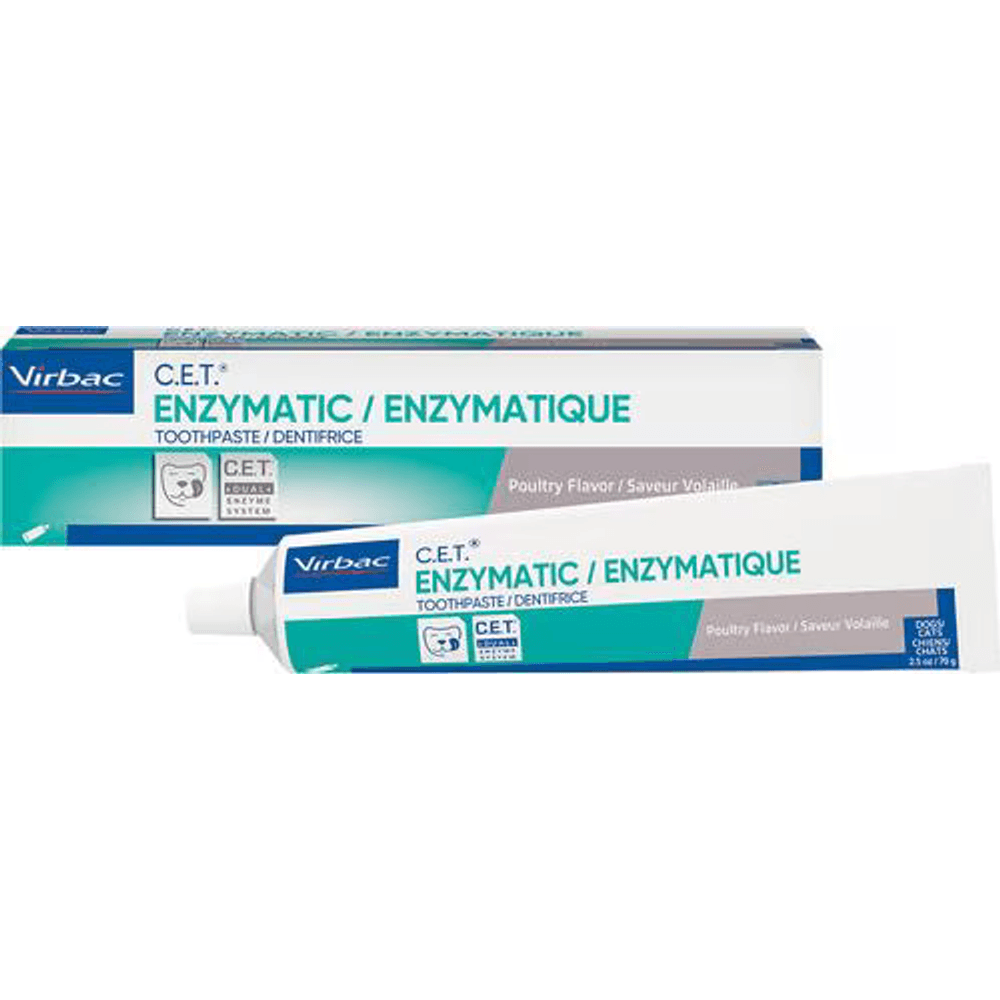
Pet toothpaste for an established, comfortable brushing routine after the mouth has been assessed. Choose the poultry flavor only if it suits your dog.
Webvet may earn a commission when you click through to Chewy, at no extra cost to you.
Changes in a senior dog
New lip licking in an older dog should not be dismissed as age. Dental problems, nausea, medication effects and other illnesses can become more relevant as a dog gets older. A senior dog that also roams at night, seems disoriented or changes its sleep pattern needs an assessment that considers both physical health and cognitive change.
Keep observations concrete. “He is getting old and acting odd” leaves the veterinarian guessing. “He wakes after midnight, paces, licks and swallows for several minutes, then refuses breakfast” describes a pattern that can guide the appointment. Note whether these episodes began before or after a medication or diet change.
Bring the following details together rather than assuming they share one cause:
- New bad breath, difficulty chewing or food falling from the mouth.
- Vomiting, diarrhea, thirst changes or weight loss.
- Restlessness, confusion, disturbed sleep or a change in social contact.
- Recently started medicines, supplements or altered doses.
Other movements that can look similar
Lip smacking, licking the air, gulping, hiccups and brief facial twitches can be difficult to describe. A dog may make a wet smacking sound while clearing saliva, whereas a cough or retch involves the chest and throat. Do not rely on the sound alone to decide that the problem is digestive.
If the head jerks forward, the lip quivers or repeated chewing movements occur with a vacant expression, film briefly from a safe distance and seek veterinary advice. Focal seizure activity is one possible explanation for unusual repetitive facial movements, but a video does not establish that diagnosis. Do not put your fingers near the teeth during an episode.
Dogs that lick the lips and paws, rub the face or shake the head may have skin, ear or oral discomfort. Sneezing can add another clue, particularly when there are mouth symptoms, but it does not prove an allergy. These combinations deserve a whole-dog examination instead of treatment aimed only at the lips.
Check for mouth discomfort without forcing the mouth open
Mouth pain can produce licking, drooling and unusual swallowing. Dental disease, an injured tooth, an ulcer or foreign material caught in the mouth can be responsible. A dog may continue to eat despite discomfort, so finishing dinner does not reliably exclude an oral problem.
Look first at what you can observe without touching. Notice chewing on one side, dropping kibble, rubbing the face or hesitating over a favorite food. Smell changes and visible saliva stains are useful history, but none can tell you how deep a dental problem extends.

Normal brushing belongs to a comfortable mouth
For dogs that have been cleared for routine brushing, select a brush that lets you reach comfortably without prying the jaw open. The Virbac C.E.T. Dual-Ended Dog & Cat Toothbrush offers two head sizes and soft bristles. The suitable end is the one that fits the dog and allows gentle contact, not necessarily the larger end that seems faster.
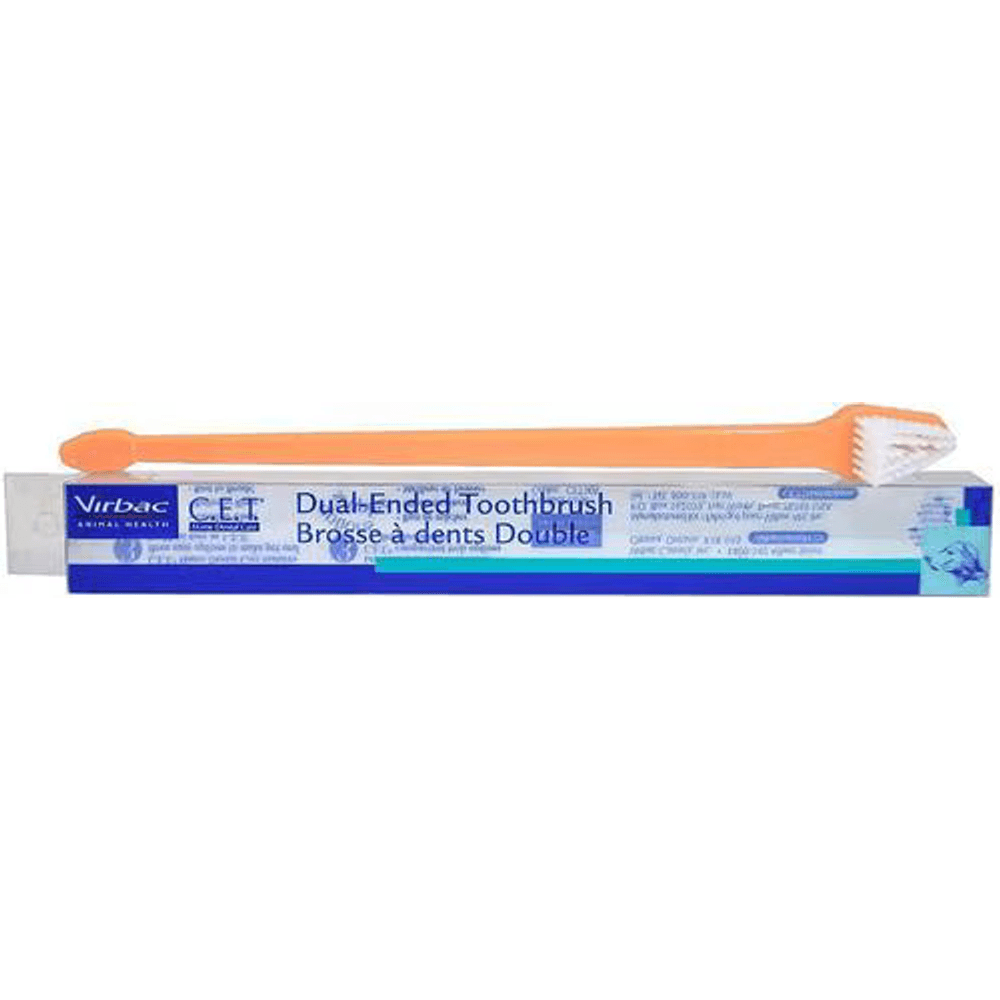
Two brush-head sizes and soft bristles for routine dental care. Use the end that fits comfortably after dental pain has been ruled out.
Webvet may earn a commission when you click through to Chewy, at no extra cost to you.
Build a calm routine in short steps. Let the dog become familiar with the pet toothpaste, then briefly touch the outside tooth surfaces as instructed by the veterinary team. Keep sessions predictable and stop before the dog begins struggling. A tool that is easy for the owner to hold still needs to be comfortable for the dog.
Routine brushing helps preventive care; it cannot remove a lodged object, repair a broken tooth or treat disease under the gumline. If a dog that normally accepts brushing suddenly pulls away, stop and arrange an examination. The change in tolerance is itself useful information, not a reason to restrain the dog more firmly.
What you can safely notice
If your dog is calm, pain-free and accustomed to having the lips lifted, a brief look at the front teeth and gums may show something worth reporting. Otherwise, let the clinic examine the mouth. Dogs in pain can bite even when they have never bitten before.
Signs to mention include:
- Red or bleeding gums, a visibly damaged tooth or unusual swelling.
- Bad breath that is new or noticeably worse.
- Pawing at the muzzle or crying when chewing.
- Sudden symptoms after chewing a stick, bone, toy or plant material.
- Blood in saliva or reluctance to drink.
Do not sweep a finger through the mouth, reach toward the throat or pull on string or an embedded object. An apparently small object may extend farther than you can see. Trying to remove it can injure the dog, push material deeper or cause a bite.
A normal-looking mouth does not finish the investigation
Clean front teeth do not show what is happening behind the last molars, under the tongue or below the gumline. A painful dog may also prevent a complete awake examination. The veterinarian may recommend sedation, a dental examination under anesthesia or imaging, depending on the suspected problem.
This is why dog dental health involves more than visible tartar. VCA's veterinary guidance on dental disease explains that disease beneath the gumline can require professional evaluation and treatment. A flavored toothpaste is for maintenance after the veterinary team confirms the mouth is comfortable enough for it.
Avoid offering a hard chew to see whether the dog can manage it. That is not a pain test, and a motivated dog may attempt to chew despite discomfort. Tell the clinic whether softer food is easier and ask what to offer while waiting for the appointment.
Dry mouth and repeated tongue movements
A dry-feeling mouth can make a dog lick or smack the lips. Heat, panting, hydration changes, medication and oral disease are among the considerations the veterinarian may review. Keep fresh water available to an alert dog that swallows normally, but do not syringe water into the mouth or force drinking.
If your dog seems weak, repeatedly vomits or cannot drink comfortably, a bowl of water is not enough to resolve the concern. The underlying cause and hydration status need assessment. Mention any new medicine, including an over-the-counter product, and whether thirst or urination changed at the same time.
You can help by recording whether the mouth seems dry only on waking or throughout the day, whether the dog was panting, and whether normal drinking settles the licking. Do not stop a prescribed medicine without instructions; ask the prescriber whether the timing or side-effect history is relevant.
 $65 · no membership
Have a health question about your dog?
A licensed vet can assess your dog over video and prescribe online when it's appropriate.
 Talk to a vet
- Licensed vets
- All 50 states
- same-day Rx
Webvet may earn a commission if you book.
Lip licking with drooling, swallowing or vomiting
Lip licking with repeated swallowing, gulping or extra saliva can accompany nausea. Some dogs also eat grass, burp, turn away from food or become restless. Those signs tell you the dog may feel sick, but they do not identify why. A gastrointestinal problem is one possibility; illness elsewhere in the body can also cause nausea.
In her veterinary discussion of lip licking, Dr. Julie Buzby describes the overlap between nausea, oral discomfort and abnormal swallowing. The useful distinction for an owner is whether the episode is brief and resolves or forms part of a persistent, painful or worsening pattern.
After eating: residue, speed or a recurring problem
A few licks after eating may clear food from the lips. Repeated lip licking and gulping well after the meal, especially with discomfort or regurgitation, deserve more attention. Record what was eaten, the amount, eating speed and how soon the episode followed the meal.
Do not decide that every episode after food is acid reflux. Acid reflux in dogs is one possible explanation, but similar signs can occur with other digestive or esophageal problems. A pattern can help the vet choose investigations; it does not replace them.

Swallowing, regurgitation and vomiting are different clues
Repeated swallowing may be a response to excess saliva or discomfort. Regurgitation usually brings material up relatively passively, while vomiting generally includes active retching and abdominal effort. Owners do not always see the beginning of an episode, so it is fine to describe what you actually witnessed rather than assigning a label.
Useful observations include whether the material was food, water, foam or blood; whether the abdomen visibly contracted; and how long it had been since eating. A video can help the clinic distinguish movements that are difficult to explain over the phone.
- Repeated vomiting or inability to keep water down warrants prompt veterinary advice.
- Pain, a swollen abdomen or attempts to vomit without producing anything needs urgent assessment.
- Trouble swallowing, coughing with drinking or a possible lodged object also needs veterinary input.
If the problem includes drinking water and vomiting, tell the vet how quickly the water comes back up and whether the dog can retain any fluids. Do not repeatedly encourage large drinks as a home test. The vet can tell you how to manage food and water while arranging care.
Grass eating, burping and hiccups
Grass eating does not reliably diagnose an upset stomach, and it is not a treatment to encourage. If your dog suddenly eats grass frantically while licking and gulping, prevent access to treated lawns or irritating plant material and call the clinic about the whole pattern. The urgency comes from accompanying distress, vomiting or other illness, rather than grass eating alone.
Burping can occur around meals, and hiccups may be brief and harmless. But repeated throat movements, head jerks or coughing should not be written off as hiccups simply because they sound similar. Record the movement from the side so the veterinary team can see the mouth, neck and chest together.
Consider the difference between these descriptions:
- “One short bout after gulping dinner, then normal play and rest.”
- “Several bouts while pacing, followed by refusing food.”
- “Repeated attempts to bring something up, with a tense or swollen abdomen.”
The last pattern needs immediate attention. Do not wait to compare it with online cough or hiccup videos.
A meal record that answers the vet's questions
For recurring episodes after food, record the normal routine before changing it. Include meal size, treats, chews, access to other pets' bowls and whether the dog exercises or lies down soon afterward. The point is to establish what actually happens, not to find one food ingredient to blame from a single episode.
For example, “licks after dinner” leaves several possibilities open. “Finishes the normal kibble portion in under a minute, burps, then gulps while walking around for ten minutes” gives the clinic a clearer starting point. This is an example of useful reporting, not proof that fast eating caused the symptoms or that a slow feeder will resolve them.
Record the following meal normally unless the vet directs a change. If the dog becomes ill, do not keep feeding to reproduce the pattern. A food diary is useful only when the dog remains comfortable enough for the routine and no urgent signs are present.
- Write down food changes with dates, including a new bag or flavor.
- Include supplements, dental treats and anything used to hide tablets.
- Note whether another household member offered extra food.
- Tell the vet if the dog could have scavenged outside your view.
Avoid drawing conclusions from a day when several things changed. The episode may stop by chance or recur for a reason unrelated to the new bowl. Your veterinarian can decide whether a controlled diet change, a feeding adjustment or medical investigation is the most useful next step.
A feeding change after assessment
If the veterinarian has established that rapid eating is the relevant issue and your dog is otherwise well, a suitable slow feeder may help change the meal routine. The Outward Hound Fun Feeder Interactive Dog Feeder uses ridges and grooves to spread out access to food. Choose a size and shape your dog can use comfortably, and supervise the first meals.
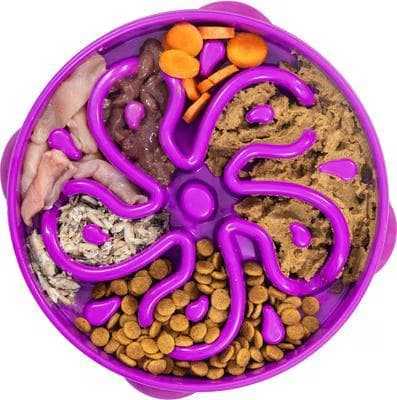
Ridges and grooves spread access to a meal when rapid eating is the established issue. Supervise use and choose a comfortable size.
Webvet may earn a commission when you click through to Chewy, at no extra cost to you.
A slow feeder is not treatment for nausea, swallowing difficulty or pneumonia risk, and it does not prove that lip licking was caused by eating speed. Stop using it if it frustrates the dog, causes frantic biting at the bowl or makes food harder to reach. Keep the normal measured meal amount rather than adding food to fill every groove.
Wash the grooves thoroughly after use, especially with wet food, and check that the dog can reach the meal without pressing the muzzle awkwardly into the bowl. Keep the feeding location calm and separate from competing pets. A dog rushing because another animal approaches may need a change in the feeding environment as well as, or instead of, a different bowl. Report whether the agreed change improves comfortable eating.
Exposure history changes the next step
If lip licking begins after access to rubbish, chemicals, medicines or an unfamiliar food, tell the veterinarian exactly what might have been swallowed. Save the packaging and estimate the time and amount if you can do so safely. An exposure history may matter before vomiting or other obvious signs develop.
Do not induce vomiting, offer a home antidote or give human antacids without veterinary instructions. The appropriate response depends on the substance and the dog's condition. Trembling, marked drooling, weakness or abnormal behavior after a possible exposure makes prompt professional advice especially important.
Lip licking during touch, travel or stress
Lip licking can be part of a dog's response to unease, particularly outside a food context. VCA's behavior guidance includes lip licking and exaggerated yawning among subtle stress signals. Interpret them alongside posture and the situation, rather than assuming one lick always means fear.
A dog may turn the head away, lower the body, show more of the whites of the eyes, pant or move back. The dog does not have to growl for the interaction to be uncomfortable. Responding at this stage gives the animal a chance to settle before the behavior escalates.

Petting: pause and let the dog choose
If your dog licks and yawns while you pet them, briefly stop touching and give them space. A dog that approaches with a loose body and seeks further contact is giving different information from one that turns away or leaves. This is a practical way to make the interaction easier, not a diagnostic test for anxiety.
Avoid reaching over the head, hugging tightly or keeping the dog still for a child or visitor to stroke. Ask visitors to wait for the dog to approach. If the response occurs when a particular body area is touched, mention that to the vet because pain can also change handling tolerance.
For a dog that is well enough to take food and has a trainer-guided plan, keep rewards easy to reach. The Frisco Dog Training Treat Pouch Bag has a magnetic closure and a clip for carrying treats. Use familiar, appropriate rewards within the plan, and let the dog choose a comfortable distance from the situation.
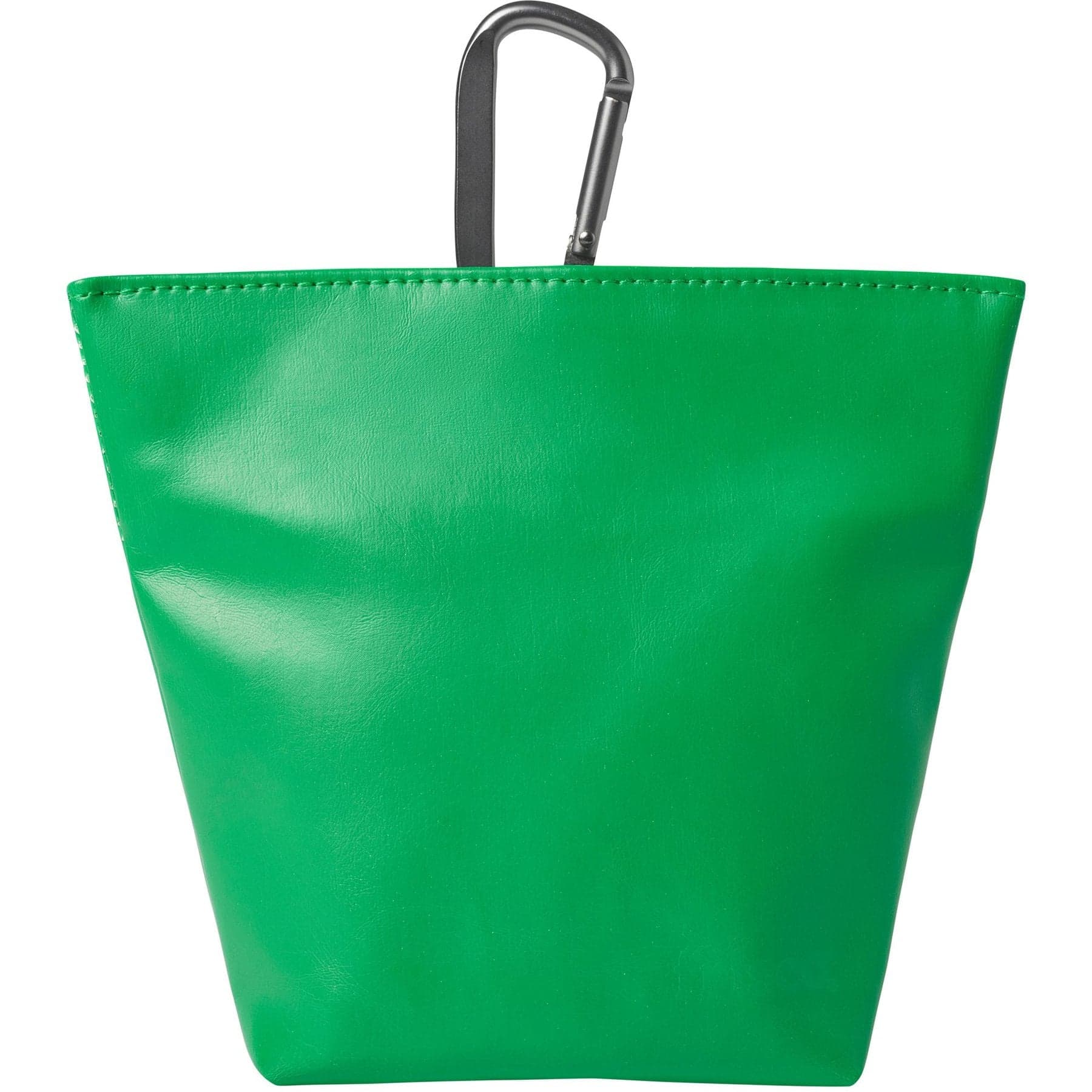
Keep familiar rewards accessible during a trainer-guided plan. The magnetic closure and clip make carrying treats convenient.
Webvet may earn a commission when you click through to Chewy, at no extra cost to you.
A treat pouch organizes rewards; it does not treat anxiety. Avoid using food to lure a worried dog closer than they want to go, or to make a nauseated dog eat. If the dog cannot comfortably engage, increase distance, end the interaction and discuss the pattern with a qualified professional.
Travel can involve stress and motion sickness together
Note whether licking starts when the harness appears, on approaching the car, after the engine starts or only once the vehicle moves. That sequence gives the vet useful clues. An anxious dog may react before travel begins, while movement-related sickness may become clearer once the car is underway, but overlap is common.
Prepare for a veterinary conversation with these details:
- Whether the dog drools, vomits or refuses food during or after travel.
- Whether licking also occurs in a parked car.
- Whether short, familiar journeys differ from long trips.
- Which travel setup and any prescribed medication were used.
Do not force repeated car journeys to make the dog “get used to it.” Ask about a gradual training plan and whether medical treatment for motion sickness is appropriate. Keep restraint safe, maintain a comfortable temperature and avoid improvising human travel-sickness medication.
Panting, shaking and head shaking need context too
Panting and licking can appear together with stress, heat, pain or illness. A cool, quiet setting may help you see whether a dog settles, but persistent panting at rest is not automatically behavioral. Weakness, disorientation or difficulty breathing calls for urgent veterinary help.
Shaking the whole body is different from repeatedly shaking the head. The latter may point toward ear or mouth irritation, especially with scratching or facial rubbing. Trembling during a frightening event can be emotional, but trembling with vomiting, weakness or possible toxin exposure changes the urgency.
Do not punish licking, yawning or moving away. These observations are useful communication. Focus on reducing the trigger and identifying pain or illness, rather than trying to suppress the visible behavior with a correction or a distracting toy.
When a behavior assessment helps
Seek advice when fear regularly limits walks, visitors, grooming or veterinary care. The vet can first look for a physical contributor and then recommend a qualified reward-based trainer or veterinary behaviorist. A tailored plan may include changes to handling, the environment, training and, in some cases, prescribed medication.
Repetitive licking without an obvious trigger also deserves assessment before it is labeled compulsive. Oral disease, nausea and neurological events can resemble a behavioral habit. A compulsive-disorder diagnosis requires more than observing that a dog repeats an action or is difficult to distract once.
Keep a record of what reliably helps: more distance, stopping touch, leaving a noisy room or settling after a meal. That information makes the plan specific to your dog. It does not prove that every episode has the same cause.
Turn an observation into a gentler interaction
Suppose the dog licks during greetings at the door, then turns away when a visitor reaches down. The first useful change is to give the dog room and ask the visitor to stop reaching. Do not require the dog to sit beside the visitor and accept touch simply because the person is offering treats.
Compare that with a dog who licks while waiting for dinner, has a soft body and walks comfortably to the bowl. The movement may look similar in a close-up, but the setting and the dog's choices are different. This is why a single still photograph rarely tells the full story of body language.
For a household with children, make the human rules simple:
- A resting or retreating dog gets space.
- Adults supervise rather than asking a child to interpret every subtle tongue flick.
- The dog has an accessible quiet area where children do not follow or reach over a barrier.
If the dog repeatedly reacts when touched on the same side of the face or body, move the question back to health as well as behavior. A training plan cannot make an aching tooth comfortable. Record the location and circumstances, stop the triggering contact and arrange an examination rather than practicing through the response.
What to record and when to call the vet
For an otherwise comfortable dog, a short observation record can turn a vague concern into a useful history. Record the episode when it happens rather than trying to reconstruct several days from memory. If more than one person cares for the dog, use the same note so the clinic receives one coherent timeline.
Start with timing and duration, then add what happened before and after. “Licked lips for about two minutes after waking, swallowed several times, then ate breakfast normally” is more useful than “licking again.” An estimate is fine; there is no need to watch the dog continuously or count every lick.
Make a useful video
Film from a comfortable distance with the face, neck and chest visible. Include normal sound if possible. A close-up of the tongue alone can hide body posture, retching movements or breathing effort that helps the vet interpret the episode.
- Do not provoke an episode by touching a painful area or repeating a frightening situation.
- Do not delay emergency care to obtain a better recording.
- Keep hands away from the mouth during jerking or seizure-like movements.
- Save the original clip and note its time relative to food, medication or travel.
Tell the veterinary team whether the dog responds normally to their name during the event and what happens afterward. Avoid repeatedly startling the dog to test responsiveness. If the behavior stops when you reach for the phone, describe that honestly rather than trying to recreate it.

A compact appointment record
Before calling, collect the details that could change the plan:
- Onset: sudden today, gradually increasing, or recurring over several weeks.
- Setting: meals, sleep, handling, travel, exercise or no apparent trigger.
- Associated signs: appetite, drinking, stool, vomiting, drooling, breathing and energy.
- Mouth clues: chewing changes, bad breath, drooping saliva, swelling or possible foreign material.
- Exposures: new foods, rubbish, plants, household products and all medications.
- Recovery: whether the dog becomes completely normal between episodes.
Give the clinic your dog's age and relevant medical history, including previous digestive, dental or neurological problems. If a prescribed medicine is involved, provide the name and dose on the label. The vet can decide whether an examination, dental workup, blood tests, imaging or another investigation is appropriate.
What the veterinarian may investigate
The first examination often separates problems that overlap from an owner's viewpoint. The vet may assess the mouth and teeth, hydration, abdomen, breathing and neurological responses. Your history helps determine whether dental investigation, digestive testing or a behavior consultation should take priority.
Tests are selected for the suspected cause, not simply because lip licking is present. Blood tests may help investigate systemic illness when nausea, weight change or altered thirst accompanies the behavior. Imaging may be appropriate for suspected foreign material or a digestive problem. An oral examination under sedation or anesthesia may be necessary when an awake view is incomplete.
Ask what a proposed test is intended to answer and what would change after the result. For example, finding a damaged tooth leads to a different plan from identifying recurrent regurgitation. This makes it easier to understand why another dog's antacid prescription or training exercise may not fit your dog.
- Ask which possibilities are most supported by the examination.
- Clarify whether the proposed treatment addresses a confirmed cause or is a monitored trial.
- Agree on what improvement should look like and when it should happen.
- Confirm the next step if the licking continues despite the plan.
A monitored treatment trial still needs follow-up. Improvement may be informative, but it should be judged alongside appetite, comfort and other signs. If only the visible licking becomes less frequent while the dog remains unwell, tell the veterinarian rather than treating the trial as a success.
When the symptom is absent at the appointment
Dogs often behave differently in a clinic than at home. An episode stopping during the drive or examination does not make the history irrelevant. Show the original video and explain whether this has happened before. The clinic can combine that information with the examination and decide whether further monitoring or testing is appropriate.
Likewise, do not assume that licking at the clinic proves the home episodes are caused by stress. The appointment adds a new context. A dog can be worried in the consultation room and still have a separate medical reason for licking after dinner or waking at night.
If the vet recommends a short observation period, ask for a defined follow-up point. Keep the record brief enough to maintain: episode time, circumstances, duration and accompanying signs. A page of repeated “licked again” entries is less useful than a few well-described episodes that show what changed.

Decide how urgently to seek help
An occasional lick with an obvious food context and an otherwise normal dog can usually be observed. Arrange a veterinary appointment for a new persistent or recurring pattern, especially if it interferes with eating, drinking, sleeping or normal activities. There is no reason to wait for the dog to stop eating completely before asking for help.
Contact the clinic promptly for repeated vomiting, marked drooling, mouth pain, blood in saliva, lethargy or suspected foreign material. If your dog is already under treatment, report a new pattern rather than assuming it is an expected part of recovery.
What to do while arranging non-emergency care
Keep the environment calm and prevent access to rubbish, chews or suspected triggers. Allow an alert dog that swallows comfortably access to fresh water unless the veterinarian gives different instructions. Ask the clinic about food if vomiting, regurgitation or swallowing difficulty is part of the problem.
Avoid starting several supplements, changing the diet and adding a mouth product together. Apart from their potential to be unsuitable, simultaneous changes obscure the original pattern. Tell the vet what has already been given, even if it was a household product or a leftover medicine.
If the clinic recommends observation, ask what would change that advice and when to check back. A plan might specify a return call for recurrence, a change in appetite or a particular accompanying sign. Follow the dog's overall condition rather than treating a temporary pause in licking as proof that the problem has resolved.
Checking that the plan is working
Choose the outcome that matters for the suspected cause. With a painful mouth, easier chewing and restored comfort matter alongside reduced licking. With a digestive problem, appetite, swallowing and vomiting history matter. With a stress plan, the dog should be more comfortable and able to make relaxed choices, not merely quieter while remaining tense.
Tell the clinic about practical barriers early. A dog may refuse a prescribed medicine, become distressed during handling or be unable to use a suggested feeding setup. Those are reasons to adjust the plan with the team. They are not failures by the owner, and they should not be hidden by recording a dose or exercise as completed when it was not.
Dog lip-licking questions
Frequently Asked Questions
When should I worry about lip licking?
Be concerned when it is new, persistent or accompanied by drooling, abnormal swallowing, mouth discomfort, vomiting, reduced appetite or unusual tiredness. A brief lick around food is a different situation. Seek emergency help for breathing difficulty, collapse, severe distress or repeated unsuccessful attempts to vomit. Otherwise, a video and a symptom timeline can help your veterinarian judge the next step.
Why does my dog keep licking his lips like there's something stuck in their mouth?
Foreign material is one possibility, but dental pain, excess saliva and nausea can create similar licking and gulping movements. Do not force the jaws apart or sweep your fingers into the mouth. Arrange veterinary assessment, particularly if the signs started after chewing something or include pawing, drooling or trouble swallowing. A normal glance at the front teeth does not rule out a hidden object.
Do dogs lick their lips when in pain?
They can, especially with discomfort in the mouth, but lip licking is not a reliable pain test by itself. A dog may also lick when nauseated, anticipating food or uneasy. Look for changes in chewing, appetite, posture and willingness to be touched. Report the pattern to your veterinarian rather than pressing on an area repeatedly to see whether it hurts.
What does it mean if a dog constantly licks their lips?
Constant or frequently recurring lip licking means the behavior needs context and, if it is new or unexplained, an assessment. Possible reasons include nausea, oral disease, stress and repetitive behavioral or neurological problems. Keep a record of timing and accompanying signs. Do not assume it is a harmless habit just because the dog still eats or can briefly be distracted.
Do dogs lick their lips when sick?
Yes, lip licking can accompany sickness, particularly nausea, and it may occur with drooling, gulping, vomiting or a reduced appetite. It does not identify the underlying illness, and some sick dogs do not lick their lips at all. Use the dog's overall condition to judge urgency and contact the veterinarian when the pattern persists or other symptoms appear.
Why is my dog smacking its lips and having a dry mouth at night?
Possible explanations include panting, hydration changes, medication effects or oral discomfort; recurring digestive or behavioral problems may also disturb nighttime rest. Note whether the dog is awake, thirsty, restless or swallowing repeatedly. Provide fresh water if swallowing is normal, and arrange an assessment for a new or recurring pattern rather than assuming it is reflux or simply old age.
Do dogs lick their lips when something feels good?
A dog may briefly lick around food anticipation or during an otherwise pleasant interaction, but that movement alone does not show enjoyment. During petting, also look for a loose body and voluntary engagement. Pause and let the dog choose whether to return. Turning away, tensing or leaving means you should give space, even without growling or other obvious protest.
$65 · no membershipHave a health question about your dog?
A licensed vet can assess your dog over video and prescribe online when it's appropriate.
Talk to a vet- Licensed vets
- All 50 states
- same-day Rx
Webvet may earn a commission if you book.
Veterinarian · BVMS MRCVS
Dr. Pippa Elliott, BVMS, MRCVS, is a veterinarian with nearly 30 years of experience in companion animal practice. Dr. Elliott earned her Bachelor of Veterinary Medicine and Surgery from the University of Glasgow. She was also designated a Member of the Royal College of Veterinary Surgeons. Married with 2 grown-up kids, Dr. Elliott has a naughty Puggle named Poggle, 3 cats and a bearded dragon.


