CBD for Cats: Safety, Dosing, and Where the FDA Stands
CBD is sold for cat anxiety and pain, but no CBD product is FDA-approved for cats and the feline research is thin. What the studies show, side effects and interactions, how a vet thinks about dosing, and why hemp seed oil is not CBD.

BVMS MRCVS
Medically reviewed by Dr. Pippa Elliott, BVMS MRCVS · Last reviewed

This article contains affiliate links. Webvet may earn a commission when you buy through them, at no extra cost to you.
CBD for cats: what it is, what the evidence shows, and why to talk to your vet first
CBD for cats is sold for anxiety, arthritis pain, and aging, but no CBD product is FDA-approved for cats, and the feline research is limited to a few small studies, mostly in healthy cats. The U.S. Food and Drug Administration says plainly that it "has not approved CBD for any use in animals."
Before you buy CBD for cats, know three more things. Hemp seed oil is not CBD, because hemp seeds do not naturally contain it. CBD can affect how other drugs work, which matters for a cat on gabapentin or other daily medicines, and the FDA notes it can cause liver injury in people, a concern worth raising for a cat with liver or kidney disease. Your vet should be part of the decision.
- 1CBD is cannabidiol, one of many compounds in the cannabis plant, distinct from the THC that causes a high.
- 2Where the FDA stands is clear: no CBD product is approved for cats or any animal, so doses and quality are unregulated.
- 3Cat studies are small and mostly in healthy cats; the strongest pain data come from dogs.
- 4Hemp seed oil contains no meaningful CBD and is a different product.
- 5Talk with your vet first, especially if your cat takes medication or has liver or kidney disease.
What CBD is and how it differs from THC
Cannabidiol (CBD) is one compound in a plant the FDA says "contains more than eighty biologically active chemical compounds." Tetrahydrocannabinol (THC) is the compound that produces the high. Both belong to a group called phytocannabinoids, which Today's Veterinary Practice describes as plant compounds that act on endocannabinoid receptors throughout the body. That receptor network, the endocannabinoid system, is why CBD is studied for pain, stress, and seizures. THC's intoxicating effects come through CB1 receptors, which the Merck Veterinary Manual notes are concentrated in the central nervous system.
Owners looking for the best CBD for cats meet a crowded shelf of oils, chews, and treats, some blended into fish oil and some sold as one product for cats and dogs. None of these labels changes the core facts:
- No pet CBD oil, treat, or chew has FDA approval, so a high quality label is a marketing claim, not a standard.
- Claimed CBD benefits for cats, including calm, comfort, appetite, and help with autoimmune diseases, rest on very little feline evidence.
- Product quality varies widely, so the CBD content on the bottle may not match what is inside.
- No published study has evaluated CBD oil for cats with squamous cell carcinoma or any other cancer, so a cat with that diagnosis needs its veterinarian to guide treatment, and CBD should be discussed with that vet, never used in place of care.
Many owners want a calming option without CBD at all. A hemp seed oil product is one such choice, and it contains no CBD.
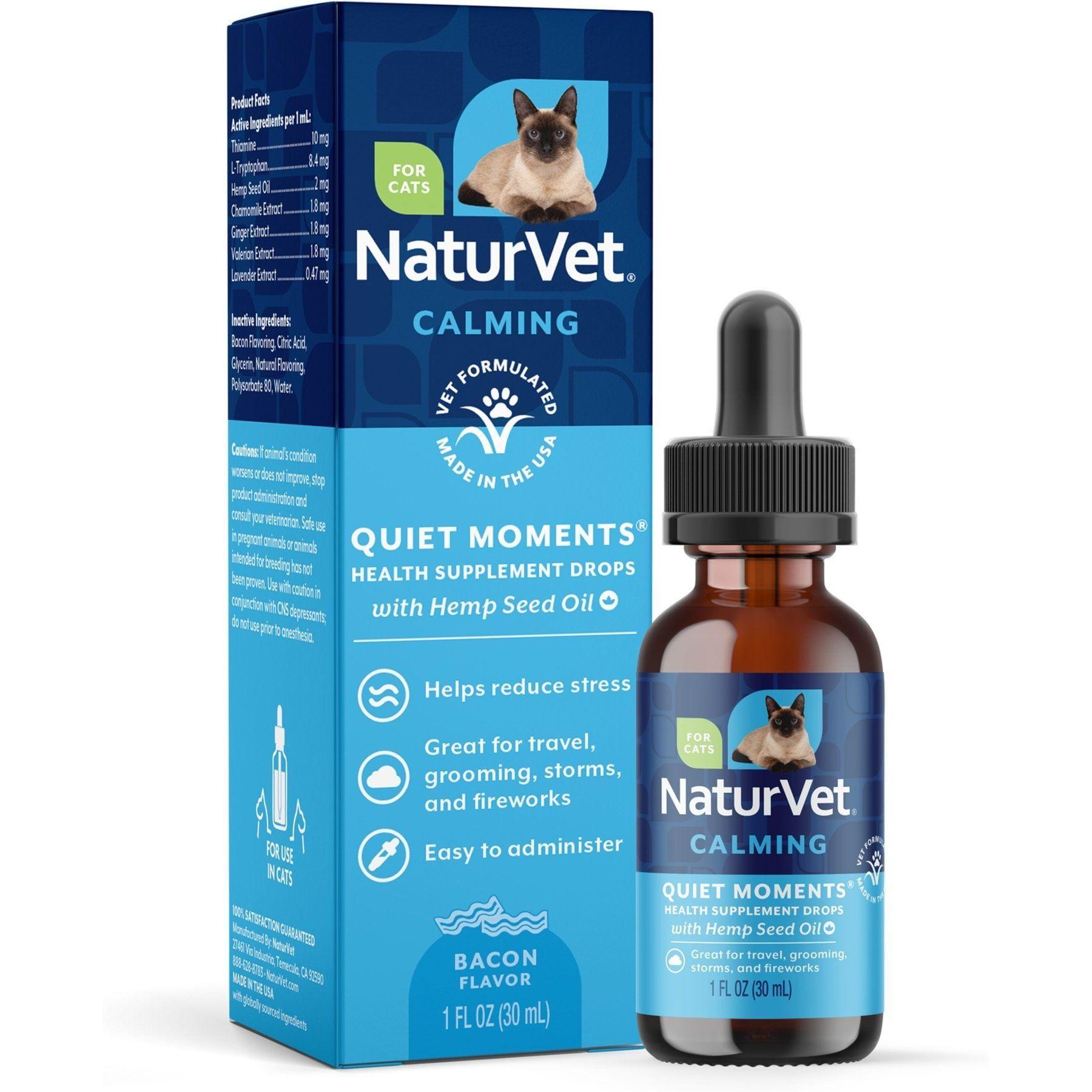
Hemp seed oil calming drops for cats; contains no CBD and is not a CBD oil, so ask your vet before using.
Webvet may earn a commission when you click through to Chewy, at no extra cost to you.
Animal CBD products are also sold for dogs, and the dog research is more developed. WebVet's guide to CBD oil for dogs covers that side, but dog findings do not transfer cleanly to cats; Cornell researchers studying both species concluded that more work in cats is needed to understand absorption.

Do vets recommend CBD for cats?
Many vets will discuss CBD, but there is no approved veterinary CBD product, no labeled dose, and only small feline studies, so a vet cannot recommend one with the confidence they bring to approved drugs. The FDA recommends that pet owners talk with their veterinarians about treatment options. A vet can weigh your cat's health, current medicines, and bloodwork, and steer you toward proven options first.
 Sponsored
Have a health question about your cat?
Talk to a licensed vet at Dutch over video or message, including nights and weekends.
Use code Pets60
Plans start at $12/month · covers up to 5 pets
- Licensed vets in most states
- Rx for 150+ conditions
- 4.7 on Trustpilot
Where the FDA stands on CBD for cats, and hemp seed oil vs CBD oil
The FDA's position is direct: it has not approved CBD for any use in animals, and its concerns about unproven claims and unknown product quality "equally apply to CBD products marketed for animals." The Merck Veterinary Manual adds that the FDA has not approved any THC, CBD with THC, or full-spectrum products for veterinary patients. That covers full-spectrum CBD treats for cats, which can carry THC.
Hemp seed oil versus CBD oil
Hemp oil is not the same as CBD oil for cats, and the names cause real confusion:
- Hemp seed oil is pressed from seeds. The FDA states that hemp seeds "do not naturally contain THC or CBD," and that hemp seed oil and other seed ingredients contain only trace amounts of either.
- CBD oil, sometimes labeled CBD hemp oil, is a plant extract that contains CBD itself, which seed oil does not in any meaningful amount.
- Full-spectrum products keep other cannabinoids, which can include small amounts of THC.
Hemp seed products for pets are not a source of CBD and should not be expected to act like it. A hemp seed calming chew is one example, and it contains no CBD.
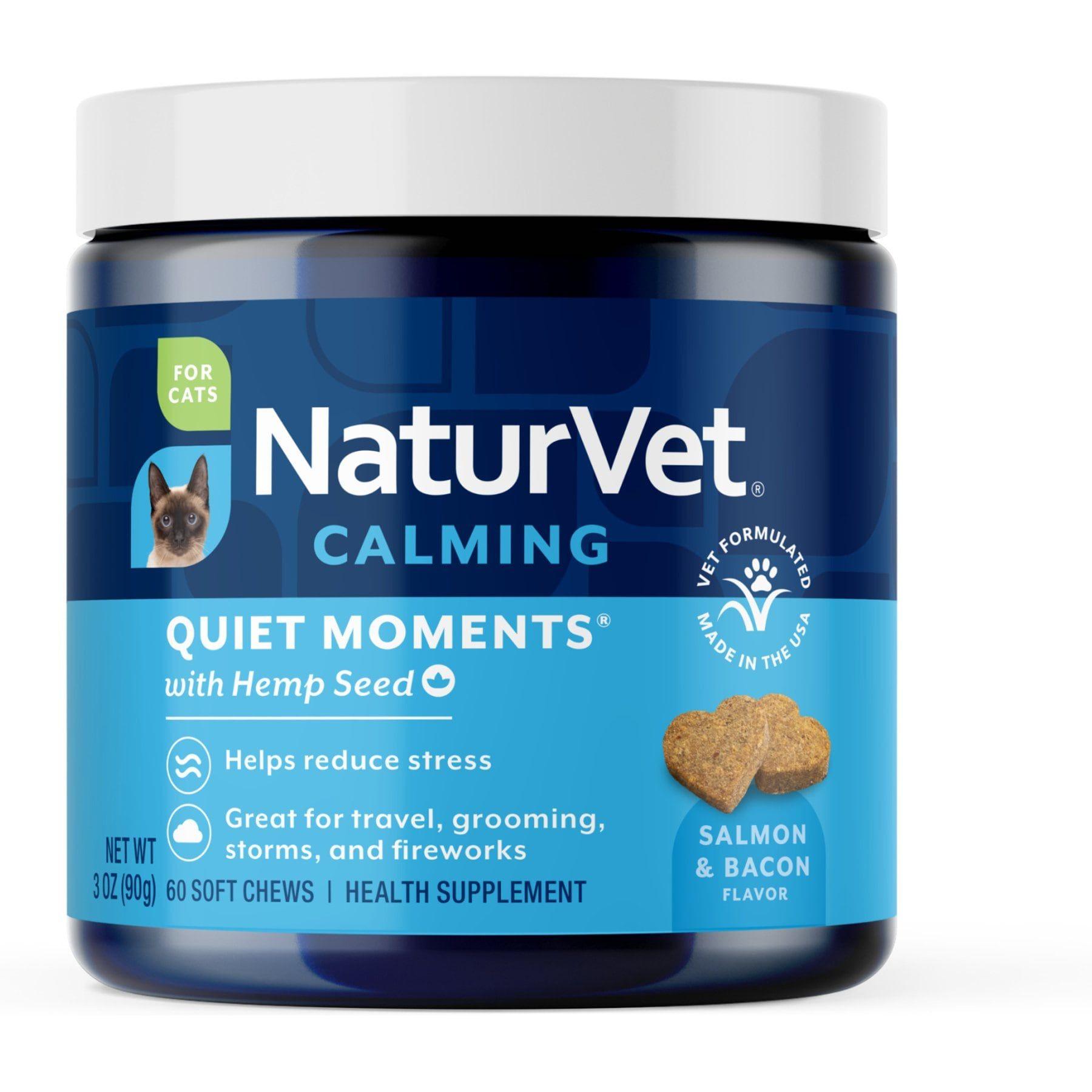
Soft calming chews with hemp seed, melatonin, and L-tryptophan; contains no CBD and is not a substitute for CBD.
Webvet may earn a commission when you click through to Chewy, at no extra cost to you.
The 2018 Farm Bill removed hemp, defined as cannabis with no more than 0.3 percent delta-9 THC by dry weight, from the legal definition of marijuana. The FDA notes that the same 2018 law "explicitly preserved FDA's authority" over products containing cannabis compounds. For a CBD product to become an approved animal drug, a company would open an investigational file with the FDA Center for Veterinary Medicine and prove safety and effectiveness. In January 2025, the FDA Center for Veterinary Medicine asked veterinarians and the public for information on these products, listing potential drug interactions and quality standards among its questions.
Is there an Rx CBD oil for cats?
No. There is no prescription (Rx) CBD oil for cats. The one FDA-approved CBD drug, Epidiolex, is a purified CBD medicine for people, not a veterinary product.
Which is better for cats, hemp oil or CBD oil?
They do different jobs, so neither is simply better. Hemp seed oil is a seed ingredient with trace CBD at most, so it will not deliver CBD effects. CBD oil contains the active compound but has no FDA approval and limited cat data. If your goal is CBD, a hemp seed product will not get you there; if your goal is safety, ask your vet before either.
What the evidence shows: cat CBD studies and their limits
| Claim | Evidence in cats | Evidence level | Risk to weigh |
|---|---|---|---|
| Calms anxious cats | One 2024 trial of 40 healthy cats found no stress reduction from a single dose before carrier travel | Low; the best cat trial was negative | Product may contain THC; masks a behavior problem a vet could treat |
| Eases arthritis pain | No published controlled trial in arthritic cats; positive data come from a Cornell trial in dogs | Very low for cats | Delays proven pain relief; liver enzyme changes |
| Helps travel stress | Same 2024 carrier trial showed no change in cortisol or behavior | Low; negative | Owner may skip proven pre-visit medicines |
| Improves appetite | No feline studies identified | None | Poor appetite can signal serious illness |
| Reduces seizures | Seizure data come only from dogs at Colorado State | None in cats | Must never replace anti-seizure drugs |
| Safe at study doses | Several small studies in healthy cats found mostly mild, short-lived effects | Moderate for short-term use in healthy cats | One cat had a persistent liver enzyme rise; sick cats not studied |
This claim-versus-evidence table rates each CBD claim for cats by evidence level and risk. Most feline work measured blood levels and safety in healthy cats, not whether CBD treats anything.
Here is what the main cat studies found:
- Cornell researchers, 2019: In Deabold et al., eight healthy cats received CBD-infused fish oil at 2 mg/kg by mouth twice daily for 12 weeks. One cat had a persistent rise in the liver enzyme ALT, cats often licked excessively and shook their heads when dosed, and the authors concluded "more work in cats is needed."
- Kulpa et al., 2021: In the Journal of Feline Medicine and Surgery, 20 healthy cats were titrated up to 30.5 mg/kg of CBD. All adverse events were mild and short-lived, with no clinically significant bloodwork changes.
- Cornell, 2022: Wang et al. gave 8 cats a CBD and CBDA hemp paste twice daily for a week with no placebo group, measured a CBD half-life of about 2.1 hours, saw a very mild ALT rise that stayed within the normal range, and concluded "short-term treatment was safe."
- Weller et al., 2024: In Frontiers in Veterinary Science, 40 healthy cats got a single 4 mg/kg dose of THC-free CBD two hours before carrier travel and meeting a stranger. The authors reported "no influence of CBD was observed in cats."
The well-known efficacy studies were in dogs. The Cornell osteoarthritis trial (Gamble et al., 2018) gave dogs 2 mg/kg of CBD oil every 12 hours and found less pain and more activity, alongside a rise in alkaline phosphatase. WebVet's article on CBD for dog pain and arthritis covers that trial in depth.
At Colorado State University, the McGrath epilepsy trial gave nine dogs CBD and seven a placebo, all staying on drugs such as phenobarbital, and reported that 89 percent of CBD dogs had fewer seizures. No comparable trial exists in cats with seizures.
So is CBD good for cats? Short-term safety in healthy cats looks reasonable, but benefits are largely unproven, and how long CBD takes to help a cat, if it helps at all, is unknown.
How fast does CBD kick in for cats?
In the Cornell feline study, CBD reached its highest blood level about 2 hours after an oral dose, and a later Cornell study measured a half-life of roughly 2 hours. Blood levels are not the same as an effect, though. In the 2024 travel trial, cats dosed two hours before a stressful event showed no measurable calming.
Does CBD actually calm cats?
The best controlled evidence says not reliably. In the 2024 trial of 40 healthy cats, a single dose of THC-free CBD did not lower cortisol or change behavior during carrier travel and meeting a stranger. Owner reports of calmer cats lack placebo controls.
SponsoredVet care that's always there
Unlimited video calls and messaging with licensed vets for less than a typical vet visit. One membership covers up to five pets.
Use code Pets60
Plans start at $12/month · covers up to 5 pets
- Licensed vets in most states
- Rx for 150+ conditions
- 4.7 on Trustpilot
CBD for cat anxiety, pain, and arthritis: what owners use it for
Most owners consider CBD calming products for anxiety, aggression, travel, sleep, or a cat in heat, and CBD for pain relief in older cats with stiff joints. For each of these uses, the feline evidence is thin. Older cats are also the group most likely to have hidden kidney or liver disease and to take other medicines.
Joint support is a common goal for owners of elderly cats. A hemp seed joint chew is one such product, and it contains no CBD.
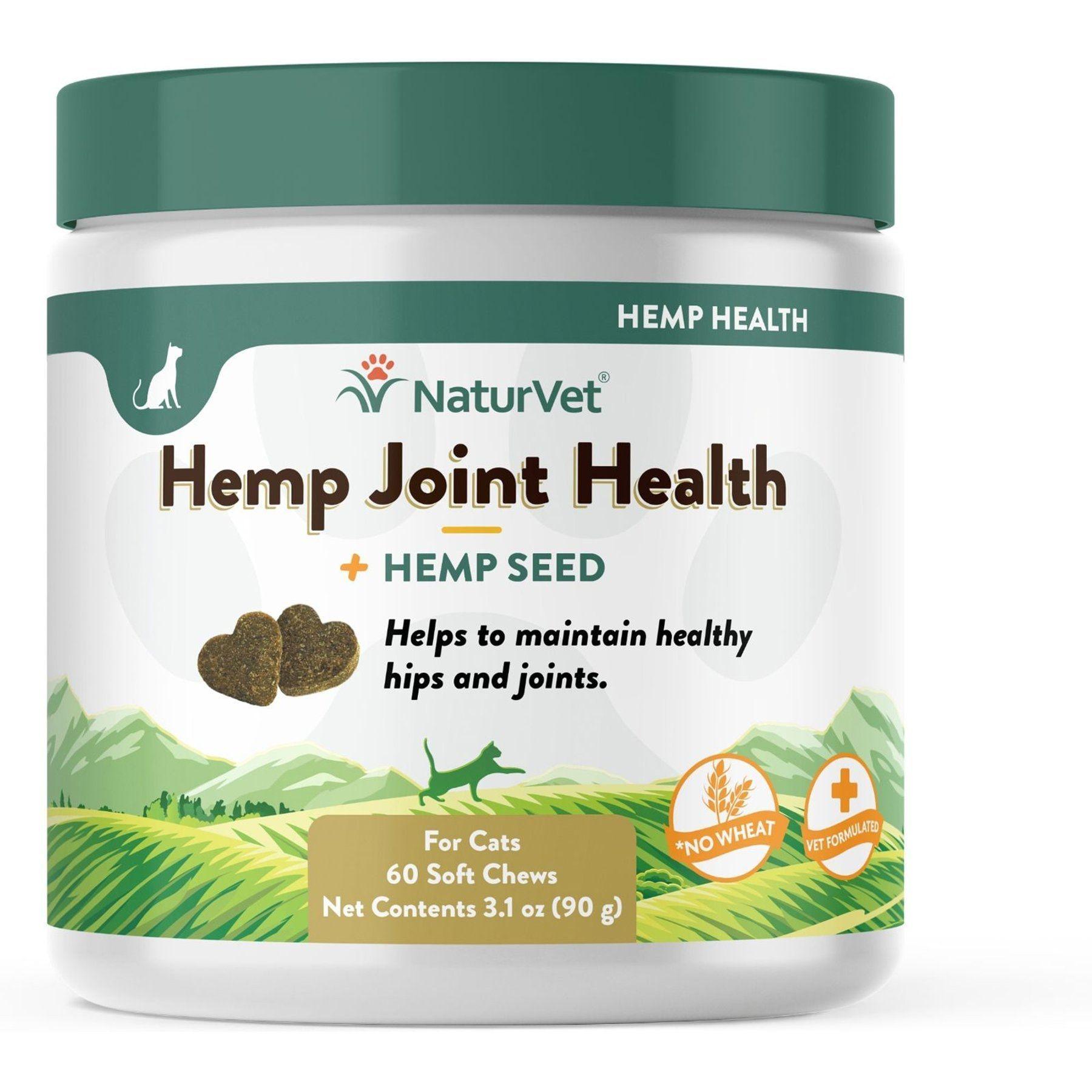
Hemp seed joint chew with glucosamine, chondroitin, and MSM for cats; contains no CBD and does not act like CBD.
Webvet may earn a commission when you click through to Chewy, at no extra cost to you.
Anxious and aggressive cats
Anxious cats and aggressive behavior usually have a cause: a new pet, a move, conflict over resources, or pain. CBD does not address those triggers. If you hope CBD will calm your cat down, including before a vet visit, the one rigorous feline stress trial found no calming effect. WebVet's guides to cat anxiety and cat stress relief cover environmental changes and vet-guided treatment that tackle the cause.
Vets typically recommend calming steps matched to the cause, from environment changes to proven medications; WebVet's roundup of what vets recommend for calming cats summarizes those options.
Pain, joints, and arthritic cats
Can cats take CBD for pain? Some owners do try CBD treats or oil for arthritic cats, but there is no published controlled trial showing that CBD relieves arthritis in cats. The positive Cornell pain data were in dogs. No CBD product is a substitute for proven pain management; see arthritis relief for cats: 9 ways you can help, which covers weight, home setup, and vet-prescribed medicine.
Skin and coat support is a separate goal some owners have for older cats. A hemp seed skin supplement is a different product type, and it contains no CBD.
Skin and coat chew with hemp seed, omega-3 fatty acids, and turmeric root; contains no CBD.
Webvet may earn a commission when you click through to Chewy, at no extra cost to you.
Travel, sleep, and cats in heat
CBD for travel stress has been tested directly in cats, and the 2024 carrier trial found no calming effect. No feline studies address CBD for sleep or for cats in heat. A cat in heat is best managed by discussing spaying with your vet, and repeated travel distress is worth raising with your vet before the trip.

CBD side effects, liver and kidney cautions, and drug interactions in cats
Is CBD safe for cats? In the short-term studies, healthy cats mostly tolerated it, but those studies did not include sick cats, and side effects did appear. The FDA warns that in people CBD can cause liver injury and can affect how other drugs work, and the small, short feline studies cannot rule out either risk in cats.
What are the side effects of CBD for cats?
In feline studies, reported side effects included excessive licking and head shaking during dosing, mild short-lived adverse events, and one cat with a persistent rise in the liver enzyme ALT. THC-containing oils caused more lethargy, low body temperature, wobbliness, and third eyelid protrusion. If your cat starts vomiting or seems unwell after a dose, stop and call your vet.
Liver enzymes and bloodwork
Two signals point to the liver. A cat in the Cornell feline study had a lasting ALT rise, and dogs in the Cornell osteoarthritis trial showed higher alkaline phosphatase (ALP) on CBD. That is why vets often want baseline bloodwork before CBD and rechecks during use, especially for a cat with liver disease.
Kidney disease, heart failure, thyroid problems, and high blood pressure
No published study has tested CBD in cats with kidney problems, kidney failure, heart failure, thyroid problems such as hyperthyroidism, or high blood pressure. Those cats are often older and on several medications, so the unknowns stack up. CBD has not been shown to treat any of these conditions, and it should never replace their treatment.

Drug interactions to raise with the vet
Bring a full medication list to the conversation. Points worth raising:
- Gabapentin: Gabapentin is widely used in cats, and a Journal of the American Veterinary Medical Association study found sedation was a common effect. Combining gabapentin and CBD in cats has not been studied, so ask your vet about added sleepiness. WebVet explains how gabapentin for dogs and cats works.
- Prednisolone and other daily drugs: The FDA says CBD can change how other drugs work in people, so steroids like prednisolone, heart medicines, and thyroid drugs all deserve a check.
- Anti-seizure drugs: The Colorado State dogs stayed on phenobarbital during the CBD trial; ask your vet how CBD might affect any anti-seizure or liver-metabolized medicine your cat takes.
- THC: In the Kulpa study, CBD combined with THC produced higher blood levels, suggesting the two interact.
A drug that is safe in dogs is not automatically safe in cats. The dog safety record does not settle the question for your cat, and the Cornell feline team concluded more work in cats is needed.
When your cat needs a vet instead of CBD
Some situations call for a veterinary exam, not a supplement. Pain in cats is easy to miss, and WebVet's guide on how to tell if a cat is in pain lists the subtle signs. Book a vet visit rather than reaching for CBD if your cat has:
- A sudden change in behavior, aggression, or hiding
- Limping, reluctance to jump, or crying when touched
- Poor appetite, weight loss, vomiting, or changes in drinking or urination
- Any seizure, collapse, or episode of confusion
- A known condition, such as kidney, liver, thyroid, or heart disease, or daily medication
Keep the product packaging so your vet knows exactly what your cat swallowed. The FDA has reported CBD products that contained THC and other contaminants, so the label alone may not tell the whole story.

How a vet approaches CBD dosing for cats, and what Chewy actually sells in this lane
There is no approved CBD dosage for cats. Because no product is FDA-approved, there is no labeled dose, and an online dose calculator cannot account for your cat's health, medicines, or the product's true strength. Doses in the research describe what investigators used, not what an owner should give:
- The Cornell feline study used 2 mg/kg twice daily for 12 weeks.
- The 2024 travel study used a single 4 mg/kg dose.
- The Kulpa safety study titrated healthy cats up to 30.5 mg/kg to test tolerance, not benefit.
A vet deciding whether CBD dosing for cats makes sense will usually check bloodwork first, review every medication, start low if they proceed, and recheck liver values. They will also look hard at the product.
Product form and quality
CBD comes as liquid drops and tinctures, flavored soft chews, treats, pills, and topical creams, balms, salves, and gel pens. Form affects absorption. In a Colorado State study in dogs, a transdermal CBD cream produced lower blood levels than oral forms, and oral CBD-infused oil had the most favorable profile. Transdermal and topical CBD for cats has not been studied.
Quality is the bigger problem. The FDA has reported that many CBD products it tested did not contain the levels of CBD they claimed, and some carried contaminants such as pesticides, heavy metals, or THC. A Veterinary Medicine: Research and Reports analysis of 29 veterinary hemp supplements found only 18 were appropriately labeled, and 4 contained heavy metals. A vet reviewing a product will look for:
- A batch-specific certificate of analysis from an independent lab
- CBD content that matches the label
- THC content, ideally none, for a cat
- Testing for heavy metals and pesticides
- A cat-appropriate concentration and flavor
What hemp seed products do
Chewy's options for cats in this lane are hemp seed supplements and non-hemp calming chews, not CBD products, and none of the four below contain CBD. Each lists its own active ingredients:
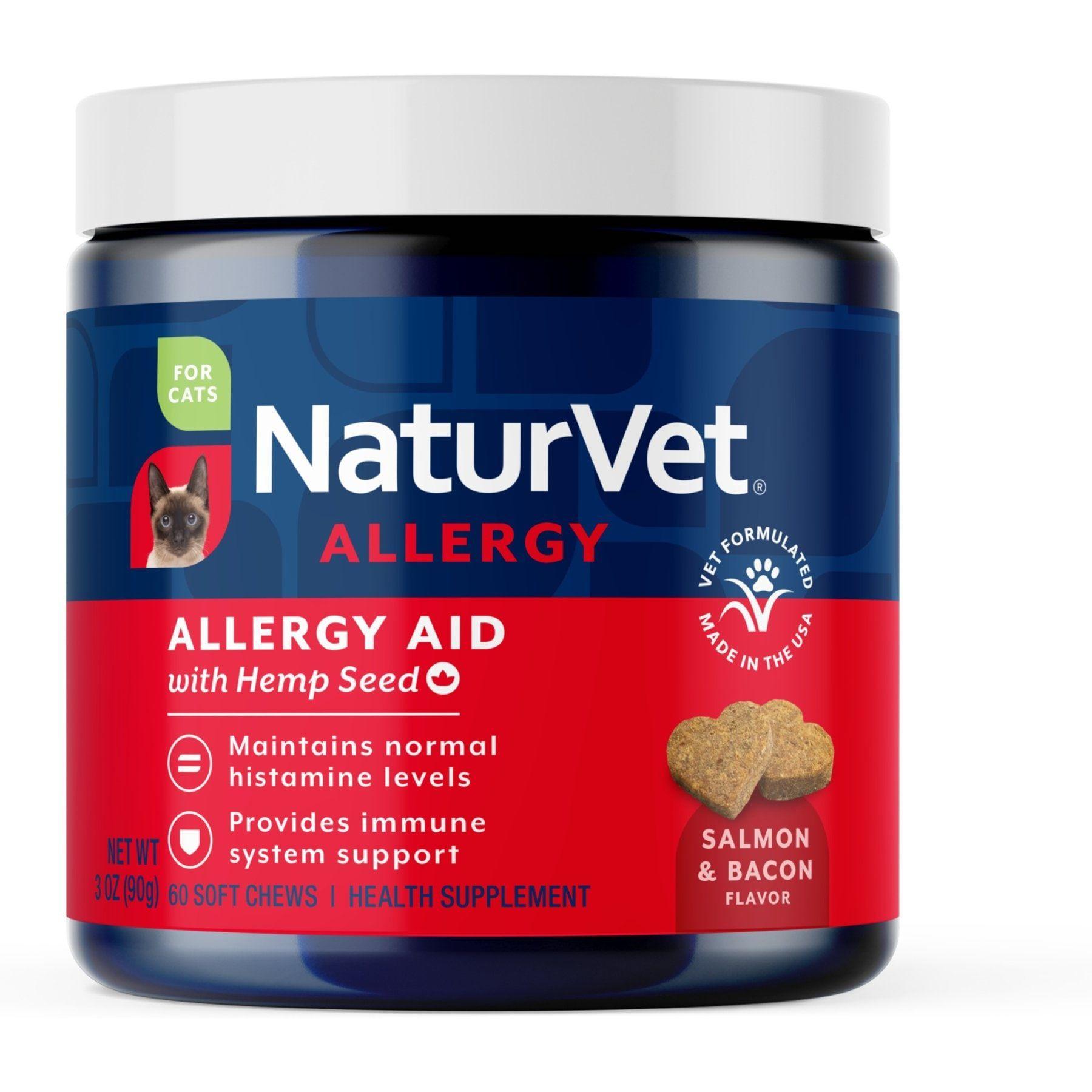
- NaturVet Quiet Moments with Hemp Seed Salmon & Bacon Flavored Calming Supplement for Cats, 60 count combines melatonin, L-tryptophan, thiamine, hemp seed, and ginger; it contains no CBD and is listed at $14.97 on Chewy when checked in November 2026.
- NaturVet Hemp Soft Chews Joint Supplement for Cats, 60 count pairs hemp seed with glucosamine, chondroitin, and MSM, contains no CBD, and is listed at $14.97 on Chewy when checked in November 2026.
- NaturVet Quiet Moments with Hemp Seed Oil Bacon Flavored Calming Supplement Drops for Dogs & Cats, 1-fl oz bottle is a hemp seed oil drop with ginger for homes with both species; it contains no CBD and is listed at $17.97 on Chewy when checked in November 2026.
- Vet Worthy Feline Calming Soft Chews Anxiety Supplement for Cats, 60 count is a non-hemp chew with chamomile and tryptophan, contains no CBD, and is listed at $14.99 on Chewy when checked in November 2026.
None of these will produce CBD effects. Ask your vet before adding any calming supplement, especially one with melatonin, to a cat on medication.

What is the best CBD for cats with anxiety?
No CBD product is proven for cat anxiety, and the best feline trial found no calming effect. If you and your vet still decide to try one, the best choice is a THC-free product with a batch certificate of analysis, a label that matches testing, and a vet-set starting dose, used alongside behavior changes that address the cause.
Where can I buy CBD for my cat?
CBD pet products are sold online and in some pet and specialty stores, but none are FDA-approved, and labels are often inaccurate. Ask your vet to review any product before you buy, request its certificate of analysis, and avoid products with THC. Hemp seed supplements sold for cats are different products and contain no CBD.
CBD for cats questions
Frequently Asked Questions
Can cats take CBD for pain?
Some owners give it, but no controlled study has shown that CBD relieves pain or arthritis in cats. The encouraging pain results come from dogs. A cat with chronic pain does better with a vet exam and a plan that may include weight control, home changes, and approved pain medicine.
Is CBD safe for cats with kidney disease?
Nobody knows yet, because cats with kidney disease have not been included in CBD studies. These cats often take several medicines and need careful monitoring. If your vet agrees to a trial, expect bloodwork before starting and regular rechecks.
Can a cat take CBD and gabapentin together?
The combination has not been studied in cats. Gabapentin often causes sedation on its own, and CBD can change how other drugs work, so the pairing could add sleepiness or wobbliness. Only combine them under your vet's direction.
Can cats have CBD oil made for dogs?
It is not a good idea. Dog products may differ in concentration, so a few drops can deliver far more CBD than intended for a small cat, and flavorings or other ingredients may not suit cats. Check the label with your vet, and use a product made and dosed for cats if you use one at all.
Does CBD help cats with travel stress?
The one controlled trial says no. Healthy cats given THC-free CBD two hours before carrier travel showed no drop in stress hormones or change in behavior. Getting your cat used to the carrier at home, and asking your vet about proven pre-visit options, is a better plan for travel.
Veterinarian · BVMS MRCVS
Dr. Pippa Elliott, BVMS, MRCVS, is a veterinarian with nearly 30 years of experience in companion animal practice. Dr. Elliott earned her Bachelor of Veterinary Medicine and Surgery from the University of Glasgow. She was also designated a Member of the Royal College of Veterinary Surgeons. Married with 2 grown-up kids, Dr. Elliott has a naughty Puggle named Poggle, 3 cats and a bearded dragon.
Related reading

CBD Oil for Dogs: Vet-Reviewed Evidence, Safety, and Dosing

Yunnan Baiyao for Dogs: Uses, Dosing, and What Vets Actually Know

Taurine Deficiency in Cats: Signs, Heart and Eye Damage, and Treatment
