Why Do Dogs Feet Smell Like Fritos? Causes and When It Means Infection
The Frito or corn chip smell on dog paws comes from normal yeast and bacteria living on the skin and paw pads, and on its own it is harmless. Why some dogs smell more, how to tell normal odor from an infection, and how to keep paws clean.

BVMS MRCVS
Medically reviewed by Dr. Pippa Elliott, BVMS MRCVS · Last reviewed

This article contains affiliate links. Webvet may earn a commission when you buy through them, at no extra cost to you.
Why do dogs feet smell like Fritos? The short answer from a vet
Why do dogs feet smell like Fritos? The corn chip smell comes from the normal yeast and bacteria that live on every dog's skin and paw pads, mixed with a little sweat and the moisture that collects between the toes. On a healthy paw it is harmless, and plenty of dogs have it.
Frito feet only becomes a concern when the smell turns strong, sour or rancid and arrives with redness, brown staining, greasy skin, swelling, constant licking or limping. Those signs can point to a yeast or bacterial paw infection, and that needs your vet rather than more scrubbing.
- 1Frito feet comes from normal skin microbes: the yeast and bacteria that live on healthy paws.
- 2Sweat from the paw pads and moisture trapped between the toes give those microbes a warm, damp place to grow.
- 3A mild corn chip smell on clean, pink, comfortable paws is normal and needs no treatment.
- 4A strong or sour smell with redness, brown staining, swelling, greasy skin, licking or limping is a reason to see your vet.

Dogs do sweat a little, and nearly all of it happens on the feet. The Merck Veterinary Manual notes that dogs have sweat glands on the feet that may play a minor role in cooling. Its veterinary edition adds that one type of sweat gland is present only on the footpads.
That sweat from the paw pads, held against the skin by fur and the folds between the toes, is where the smell starts. The yeast and bacteria that normally live on the skin feed on it, along with skin oils and whatever the dog has walked through.
For most dogs the routine is simple: wipe off dirt after walks, dry the gaps between the toes, and leave healthy skin alone. Getting those toe gaps fully dry matters most, since warm, moist skin between the toes often carries more bacteria.
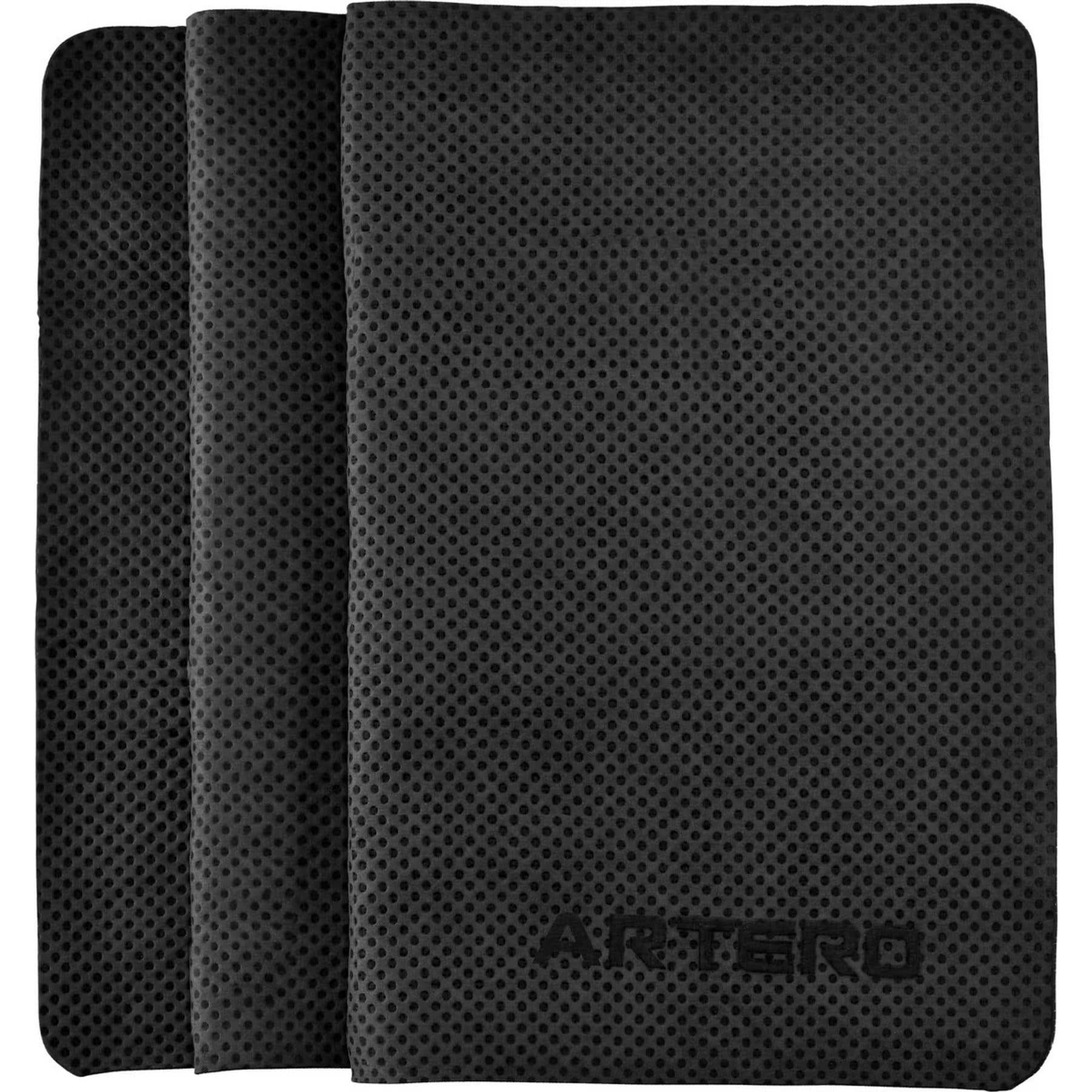
An absorbent towel for drying between the toes after walks and baths, since trapped moisture feeds the smell.
Webvet may earn a commission when you click through to Chewy, at no extra cost to you.
The yeast and bacteria behind Frito feet, and why paws hold the smell
A dog's skin is crowded with microbes, and that is normal. DNA sequencing of skin swabs from 12 healthy and 6 allergic dogs found far richer microbial communities than older culture methods showed, according to PLOS ONE.
The microbes behind the corn chip smell fall into three groups:
- Resident bacteria. The Merck Veterinary Manual lists Staphylococcus pseudintermedius, streptococci and other staphylococci among the normal residents of dog skin.
- Transient bacteria. Merck names Pseudomonas and Proteus mirabilis among the bacteria that pass through dog skin.
- Yeast. Malassezia pachydermatis is part of the normal skin microbiota of healthy dogs, according to Veterinary Research Communications, and the veterinary dermatology consensus guidelines describe it as a skin resident that can turn opportunistic.
The corn chip note itself may come from one bacterium. Pseudomonas aeruginosa gives off a grapelike odor from a compound called 2-aminoacetophenone, according to the Journal of Clinical Microbiology. A Journal of Breath Research study found that compound in four of 78 samples tested, with corn chips among the highest.
No study has measured that compound on dog paws, so it is a possible link rather than a proven one.
The paws hold the smell for three reasons:
- Sweat glands in the pads. Eccrine glands sit mainly in the hairless skin of the footpads and nose and release sweat by merocrine secretion straight onto the skin, according to an Ohio State veterinary histology text.
- Lasting damp. Dogs cool off mainly by panting, so the sweat glands in the pads do little cooling but keep the pads slightly moist.
- Warmth between the toes. Merck notes that warm, moist skin between the toes often carries higher bacterial counts.
That is the likely reason a dog's feet can smell more like Fritos after a nap: curled-up paws stay warm and still for hours.
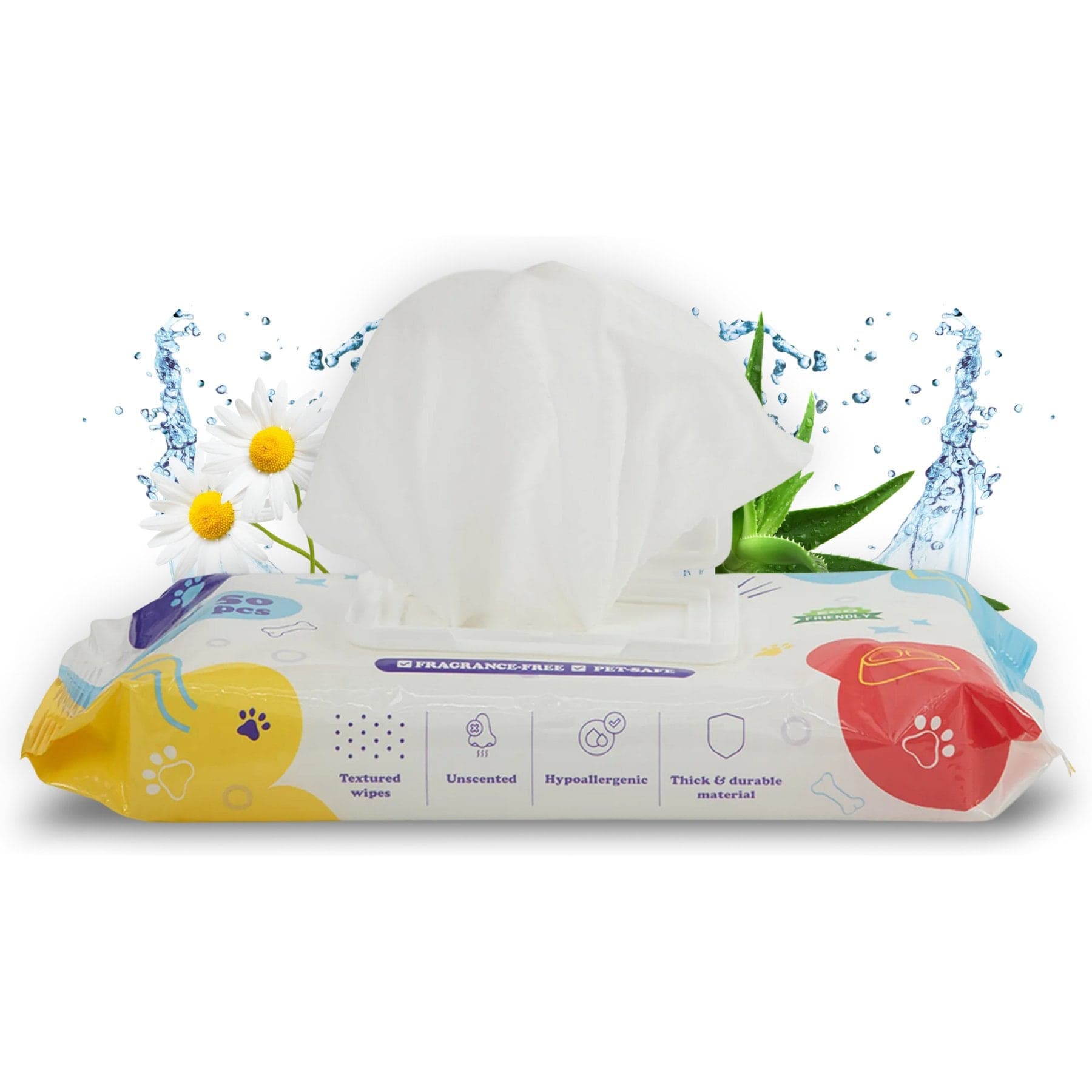
Thick unscented hypoallergenic wipes for dogs with sensitive paws that lick after cleaning.
Webvet may earn a commission when you click through to Chewy, at no extra cost to you.
Why some dogs smell more: paw hair, breed, licking, and warm sleep spots
Dogs that smell more usually have paws that hold extra moisture and oil, or paws that get licked a lot.

These factors make the biggest difference:
- Paw hair. Long fur between the pads traps sweat, saliva and dirt, and the Canadian Veterinary Journal lists humidity among the factors that let Malassezia yeast overgrow.
- Licking. Saliva adds moisture, and licking usually means itchy paws. Merck lists the paws among the areas most affected by skin allergies, and the dog licking paws guide covers the common reasons.
- Warm sleep spots. Heated beds, blankets and a tight curl keep paws warm and damp.
- Body weight. Merck notes that overweight dogs may put more pressure on the spaces between the toes.
- Breed. Merck names the Chinese Shar Pei, Labrador Retriever and English Bulldog as possibly prone to deep infections between the toes.
Long paw hair is the easiest factor to change: trimming it level with the pads using a rounded-tip tool such as the Laazar Rounded Curved Dog Grooming Scissors helps the skin dry faster.
What's the smelliest breed of dog?
No veterinary source ranks breeds by smell, but some breeds are prone to the oily skin and yeast overgrowth that make dogs smell stronger. Merck lists American Cocker Spaniels, English Springer Spaniels, Basset Hounds, West Highland White Terriers, Dachshunds, Labrador and Golden Retrievers, and German Shepherd Dogs as more prone to primary seborrhea.
For yeast skin disease, the Canadian Veterinary Journal lists the West Highland white terrier, basset hound, American cocker spaniel, shih tzu, poodle and boxer. A strong-smelling dog of these breeds deserves a skin check rather than extra baths.
 Sponsored
Want a vet's take on your dog's skin or coat?
Talk to a licensed vet at Dutch over video, often the same day. They can recommend treatment and prescribe it when it's appropriate.
Use code Pets60
Plans start at $12/month · covers up to 5 pets
- Licensed vets in most states
- Rx for 150+ conditions
- 4.7 on Trustpilot
Normal corn chip smell or infection: how to tell the difference
A mild corn chip smell on paws that look and feel normal is just the skin's usual microbes at work. An infection, including a yeast infection of the paw, shows up as changes an owner can see on the skin between the toes or around the nails, not as the smell alone.
| What you notice on the paw | Normal or infection? | Next step |
|---|---|---|
| Mild corn chip smell, clean pink skin, dog ignores its feet | Normal | Routine wipe and dry after walks |
| Smell stronger after sleep or a warm day, skin looks normal | Usually normal | Dry between the toes and keep paw hair short |
| Strong, sour or rancid smell with greasy skin between the toes | Possible yeast infection | Book a vet visit |
| Dark brown staining around the nail beds, with chewing at the feet | Possible yeast infection | Book a vet visit |
| Redness, small bumps or swelling on the webbing between the toes | Possible bacterial infection | See your vet soon |
| Limping, pain, crusts, discharge, blood or pus | Infection likely | See your vet promptly |

Yeast and bacteria each leave their own clues on the paw:
- Yeast. The Canadian Veterinary Journal describes itch with an unpleasant odor, greasy skin, and dark brown nail bed discoloration with or without obsessive paw chewing. A small Veterinary Research Communications study found higher Malassezia counts between the toes of dogs with paw inflammation than in healthy dogs.
- Bacteria. Merck lists pain, crusting, odor, and blood and pus as the hallmarks of deep bacterial skin infection.
To check at home, spread the toes gently in good light and compare all four feet, checking the webbing, the pads and the skin around each nail. Wiping the paws with a plain, unscented wipe first shows the skin clearly and means you will notice if the smell ever changes.
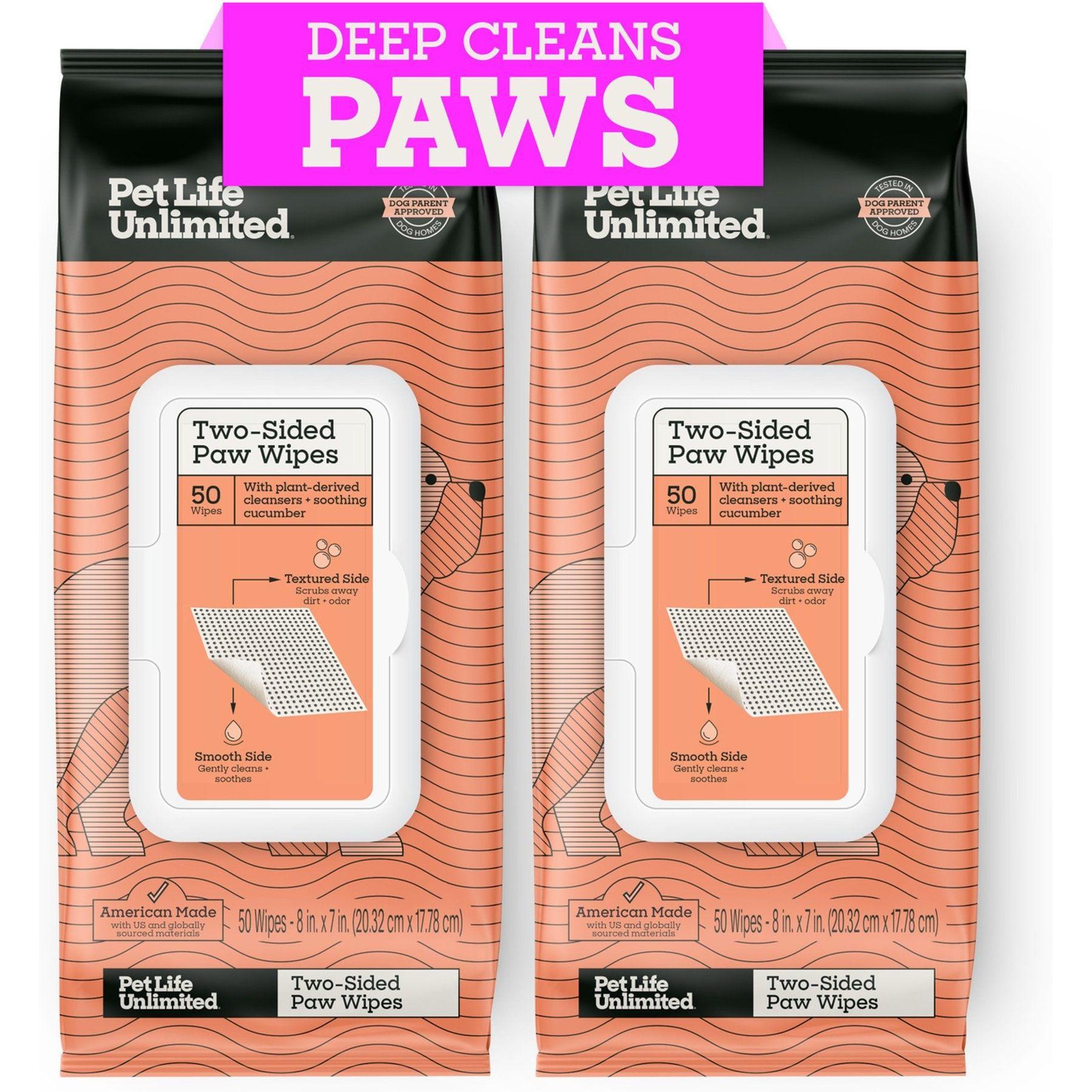
Unscented two-sided paw wipes for a quick clean after walks that will not mask a change in the smell.
Webvet may earn a commission when you click through to Chewy, at no extra cost to you.
The yeast infection in dogs guide covers paw yeast causes, tests and treatment in detail.
 Sponsored
Vet care that's always there
Unlimited video calls and messaging with licensed vets for less than a typical vet visit. One membership covers up to five pets.
Use code Pets60
Plans start at $12/month · covers up to 5 pets
- Licensed vets in most states
- Rx for 150+ conditions
- 4.7 on Trustpilot
When smelly paws need a vet: redness, discharge, swelling, and constant licking
The Merck Veterinary Manual describes rash-like redness and small bumps between the toes as early signs of infected hair follicles, which can rapidly become shiny, reddish purple boils. Affected dogs may limp and lick and bite at the sore foot.
Infected paws usually have a trigger, such as allergies or parasites. Your vet can check a skin sample under a microscope. Treatment works best when that trigger is found and corrected, according to the World Association for Veterinary Dermatology.
What are common dog paw problems?
Infections and allergies are behind many paw problems, and smelly paws often have both. Inflammation of the skin of the feet is called pododermatitis in dogs, and the Merck Veterinary Manual names these causes of paw and skin infection:
- Bacterial infection, including deep infected bumps between the toes
- Malassezia yeast overgrowth
- Allergies, including atopic dermatitis, food allergy and flea bite allergy
- Demodex mites
- Foreign material such as a splinter or burr, a less common cause
What does kidney failure in dogs smell like?
Kidney failure does not cause a Frito smell on the paws. In advanced kidney disease, Merck lists bad breath (halitosis) among the signs, with poor appetite, vomiting, weight loss and lethargy. Earlier, the Merck Veterinary Manual says most dogs drink and urinate more. Any of these signs needs a vet visit.
How to clean smelly dog paws and keep Frito feet down
Normal yeast and bacteria belong on the paw, so cleaning only needs to remove dirt, saliva and moisture with a quick wipe after walks. Antiseptic wipes are for a different job: a paw infection your vet has diagnosed.
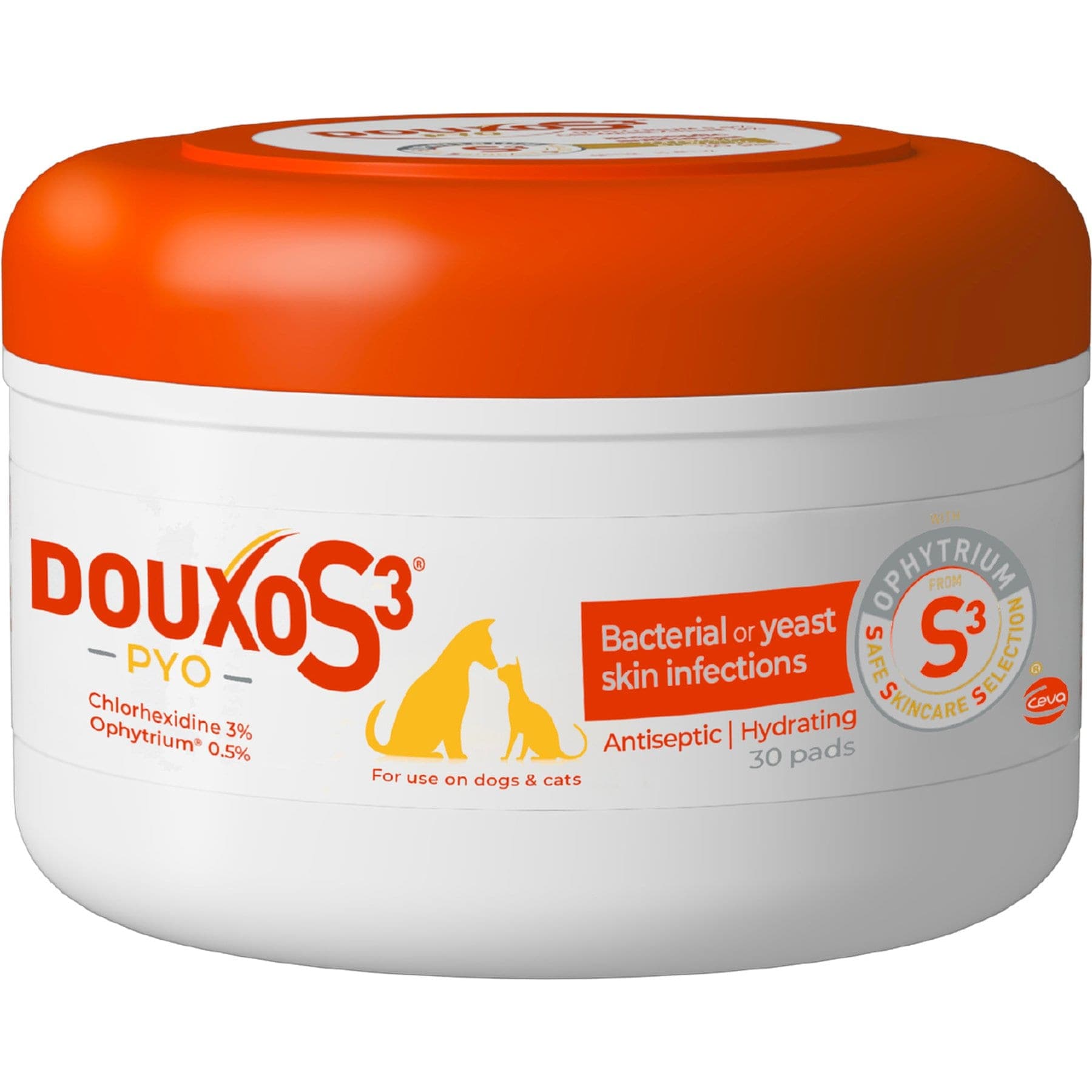
Chlorhexidine paw wipes for use only when a vet has diagnosed a paw infection and recommended antiseptic cleaning.
Webvet may earn a commission when you click through to Chewy, at no extra cost to you.
Medicated wipes come with a few rules:
- Merck notes that the best antimicrobial shampoos contain chlorhexidine combined with an antifungal.
- Medicated products are part of treatment, not of the everyday grooming routine, so use one on the paws only when your vet has recommended it, never to cover a smell that has changed.
- The Douxo S3 PYO Antiseptic Antifungal Chlorhexidine Dog & Cat Wipes 30 count are a chlorhexidine wipe made for antiseptic cleaning, listed at $19.99 on Chewy when checked in November 2026. They support the plan your vet sets and do not replace a vet exam.
Merck suggests bathing with a pet shampoo about once a month, depending on the season, or whenever the coat gets very dirty or smells bad. The how often should you bathe your dog guide explains how coat type and lifestyle change that schedule.
For paws that smell but look healthy, this routine is usually enough to keep Frito feet down:
- Wipe or rinse each paw after walks, working into the gaps between the toes and pads.
- On bath days, wash the feet with a dog shampoo and rinse well, since Merck notes cleansing shampoos must be rinsed out.
- Dry each paw fully, including between the toes, before the dog settles down to sleep.
- Check the skin as you go for redness, staining, bumps or sores.
Daily scrubbing is not part of it. Paws that look healthy are carrying their normal microbes, and harder cleaning will not change that.
Drying matters as much as washing. Merck notes that warm, moist skin between the toes often has higher bacterial counts, and the Canadian Veterinary Journal lists humidity as a factor that lets yeast overgrow. A paw that stays damp between the toes keeps feeding the smell, so pat each toe gap dry rather than rubbing the top of the foot.

For between-bath cleaning, an unscented wipe removes dirt without a perfume that hides a change in the smell. The Pet Life Unlimited Two-Sided Paw Deep Cleaning Fragrance Free Dog Grooming Wipes, 100 count have a ridged side for caked-on mud and a smooth side, listed at $21.98 on Chewy when checked in November 2026.
For dogs with sensitive skin, the PetsWorld Thick Hypoallergenic Dog Wipes, Unscented, 50 count are large, textured and fragrance free, listed at $6.99 on Chewy when checked in November 2026. The Arm & Hammer Products Unfragranced Hypoallergenic Dog Wipes, 100 count contain baking soda and suit quick touch-ups, listed at $7.99 on Chewy when checked in November 2026. The dog wipes guide compares more options. A few habits are worth skipping altogether:
- Perfumed sprays and scented wipes that hide the smell instead of removing its cause
- Scrubbing healthy paws hard or several times a day
- Leaving paws damp after a bath, a swim or a walk on wet grass
- Leaving burrs or splinters caught in paw hair, since Merck notes a splinter or burr can occasionally cause infection between the toes
Paw hair trimming, drying, and gentle products between baths

Trimming paw hair is the step that most reduces trapped moisture in long-coated dogs. Hair that grows past the pads holds sweat, saliva and dirt against the skin, and it picks up mud and burrs on walks.
A few habits keep trimming safe:
- Use rounded-tip scissors and trim only hair that sticks out past the pads, never down at the skin between them.
- Work slowly in good light, with the dog calm and the paw held steady.
- Brush the feet during regular grooming, since Merck advises regular brushing to remove loose hair and prevent mats.
- Ask a groomer or your vet to do it if your dog pulls away, the hair is matted, or you cannot see the skin clearly.
- For dogs that have had deep infections between the toes, Merck advises scissors rather than electric clipper blades over the paws, because short cut hairs can be pushed back into the follicles.
The Laazar scissors are made of stainless steel, listed at $22.79 on Chewy when checked in November 2026. Trimming after a bath, once the paw hair is fully dry, makes it easier to see where the pads end and the hair begins.
For drying, a towel that soaks up water fast makes it easier to reach between every toe. The ARTERO Samba Absorbent Dog Towel, Medium is a wringable towel designed for medium to large dogs, with ionized activated charcoal in the fabric, listed at $15.32 on Chewy when checked in November 2026.
Frequent wiping can leave pads dry. These steps keep them comfortable:
- Use a balm only on pads that are clean, dry and unbroken. The Natural Dog Company Paw Soother Dog Paw Balm, 2-fl oz tin is made for cracked or tender pads and protection from rough surfaces, listed at $18.29 on Chewy when checked in November 2026.
- Read the dog paw balm guide for when a balm helps, and the hot pavement and dog paws guide for summer pad care.
- Keep nails short enough to clean around the nail beds, where yeast staining can show. The how often to trim dog nails guide covers a safe schedule.
Most of this takes a minute after a walk. The payoff is a paw you know well enough to notice when something changes.
Frito feet questions
Frequently Asked Questions
What is Frito feet in dogs?
Frito feet is the nickname for the corn chip smell that many dogs' paws give off. It comes from the bacteria and yeast that normally live on the skin and paw pads, working on the sweat and oils that collect there. On clean, comfortable paws it is a normal smell, not a disease. How strong it gets varies from dog to dog, since a PLOS ONE sequencing study found high individual variability in skin microbes between dogs.
Why do my dog's paws smell like corn chips?
The paw pads are one of the few places a dog sweats, and the sweat glands there keep the skin slightly damp. Bacteria and Malassezia yeast that normally live on the skin do well in that warm, damp spot between the toes. One bacterium that passes through dog skin, Pseudomonas, makes a compound that has also been detected in corn chips, though it has not been measured on dog paws.
Why do my dog's feet smell like popcorn?
Popcorn, corn chips and tortillas are different ways people describe the same smell, which comes from the normal bacteria and yeast on the paws, not from anything the dog ate. If the popcorn smell stays mild and the skin looks pink and healthy, there is nothing to treat. If it turns sour, musty or much stronger than usual, look at the skin between the toes for the changes that suggest infection.
How do I get rid of Frito feet on my dog?
You can reduce Frito feet but not remove it, because the microbes behind it are part of healthy skin. Wash or wipe the paws after muddy walks, dry carefully between the toes, keep long paw hair level with the pads, and use a dog shampoo on a regular bath schedule. Avoid perfumed sprays or wipes that hide the smell, since a sudden change in how the paws smell is useful information. If a strong smell keeps coming back despite good cleaning and drying, ask your vet to look for a cause underneath, because yeast skin disease is usually secondary to another skin problem such as allergy, according to the Canadian Veterinary Journal.
Are smelly dog paws a sign of infection?
Usually not, because a mild smell on normal-looking paws is expected. Smelly paws point to infection when the odor is strong, sour or rancid and comes with redness, greasy skin, brown staining, swelling, discharge, limping or constant licking. A paw like that needs your vet, who can check a skin sample under a microscope, which the Canadian Veterinary Journal calls the most useful and practical way to confirm yeast. Merck notes that antibiotics for deep infections between the toes are often prescribed for an initial 4 to 6 weeks.
Veterinarian · BVMS MRCVS
Dr. Pippa Elliott, BVMS, MRCVS, is a veterinarian with nearly 30 years of experience in companion animal practice. Dr. Elliott earned her Bachelor of Veterinary Medicine and Surgery from the University of Glasgow. She was also designated a Member of the Royal College of Veterinary Surgeons. Married with 2 grown-up kids, Dr. Elliott has a naughty Puggle named Poggle, 3 cats and a bearded dragon.


