Puppy Shampoo: Vet-Reviewed Picks and When to Give the First Bath
A puppy needs a gentle, dog-labeled shampoo, a warm room, and a quick dry, not a strong scent or a human product. When the first bath makes sense, what tearless and hypoallergenic really mean, what to avoid, and our puppy shampoo picks.

BVMS MRCVS
Medically reviewed by Dr. Pippa Elliott, BVMS MRCVS · Last reviewed

This article contains affiliate links. Webvet may earn a commission when you buy through them, at no extra cost to you.
Puppy shampoo: what makes a safe one, and when a puppy can have a first bath
A safe puppy shampoo is a gentle, dog-labeled formula used in warm water, rinsed out completely, and followed by a fast, thorough dry. Tearless and fragrance-free formulas are sensible defaults for a first bath, and a very young puppy is usually spot-cleaned with a damp cloth rather than bathed.
The reason is warmth more than soap. The Merck Veterinary Manual notes that puppies lack the ability to regulate their own body temperature until 4 weeks of age, and that a damp newborn loses body heat rapidly. So a puppy shampoo matters, but keeping the puppy warm and dry matters more.
Human shampoo, baby shampoo, and dish soap are poor everyday substitutes because puppy skin is built differently from ours. Flea problems are handled with products used only at the age on their label and with your vet, not with an ordinary bath.
- 1A first bath makes sense once the puppy can hold its own body heat, the room is warm, and you can dry it fully straight away; very young puppies get a damp cloth instead.
- 2Tearless is a maker's claim that the formula is mild around the eyes, not a regulated standard, so you still keep suds away from the face.
- 3Pick a gentle, dog-labeled shampoo; fragrance-free or hypoallergenic formulas suit puppies with sensitive-feeling skin.
- 4Skip human, baby, and dish soap for routine baths and never add essential oils.
- 5Itching, flaking, sores, hair loss, or fleas mean a vet visit, not a stronger shampoo.
| Puppy shampoo | Best for | Scent | Size | Listed price on Chewy (November 2026) |
|---|---|---|---|---|
| Burt's Bees Tearless Puppy Shampoo with Buttermilk for Dogs, 16-oz | All-round tearless first choice | Not stated on listing | 16 oz | $9.39 |
| TropiClean Hypo-Allergenic Gentle Coconut Puppy & Kitten Shampoo, 20-fl oz bottle | Hypoallergenic, homes with kittens (12 weeks and older) | Light coconut | 20 fl oz | $14.99 |
| Douxo Spa Skin & Coat UltraSafe Puppy Shampoo, 16-fl oz bottle | Sensitive skin | Scented | 16 fl oz | $20.99 |
| We Love Doodles Tearless Unscented Puppy Shampoo, 8-fl oz bottle | Oatmeal formula, small bottle | Named unscented; listing lists lavender oil | 8 fl oz | $11.99 |
| Wahl Gentle Formula Tearless Puppy Shampoo, Cornflower & Aloe Scent, 24-fl oz bottle | Budget, large bottle | Cornflower and aloe | 24 fl oz | $8.97 |
| Lumi-noble 2in1 Puppy Shampoo + Conditioner, 16-fl oz bottle | Long or tangle-prone coats | Vanilla | 16 fl oz | $18.39 |
When a first bath makes sense
There is no fixed age for a first bath, so the safe answer comes from how puppies handle cold. Before about 4 weeks, a puppy cannot keep itself warm, and VCA Animal Hospitals warns that hypothermia, or chilling, in young puppies can lead to death.
VCA also points out that a puppy loses far more heat per pound of body weight than an adult dog. That is why a tiny puppy is best cleaned where it is dirty, with a warm, damp cloth, and dried at once.
A bath makes the most sense when:
- the puppy has soiled its coat or rolled in something that a damp cloth will not lift
- it is past the early weeks and active, eating well, and holding its own body heat
- the room is warm and draft-free, and you have towels ready
- you can stay with the puppy until it is completely dry
Wait, and call your vet instead, when the puppy is very young, small, weak, unwell, or already shivering.
Spot-cleaning a very young puppy
For a puppy too young for a bath, clean only the soiled area. The Merck Veterinary Manual notes that a newborn's body temperature drops rapidly when it is damp, so the aim is to leave as little of the coat wet as possible.
- Warm the room and the cloth first.
- Dampen a soft cloth with warm water so it is moist, not dripping.
- Wipe only the dirty patch, working with the lie of the coat.
- Pat the area dry straight away with a clean, dry towel.
- Return the puppy to its mother or its warm bed at once.
Warm water alone lifts most everyday mess at this age, so shampoo can wait until the puppy is older unless your vet suggests otherwise.

Keeping a wet puppy warm
Warmth is the part of the bath that protects the puppy. A wet coat pulls heat away fast, and small or young puppies have little body mass to spare. Practical ways to keep a wet puppy warm:
- warm the room before you start and close windows and doors against drafts
- use water warmed to body temperature and check it with your hand or elbow
- keep the bath short and the puppy's body in the water no longer than needed
- have a towel warmed and ready the moment the bath ends
- keep the puppy indoors and somewhere warm until the coat is dry to the skin
If a puppy becomes cold, limp, or unresponsive after a bath, treat it as an emergency and call your vet. VCA advises that a chilled puppy is rewarmed gradually, over 30 to 60 minutes, rather than quickly.
 Sponsored
Want a vet's take on your dog's skin or coat?
Talk to a licensed vet at Dutch over video, often the same day. They can recommend treatment and prescribe it when it's appropriate.
Use code Pets60
Plans start at $12/month · covers up to 5 pets
- Licensed vets in most states
- Rx for 150+ conditions
- 4.7 on Trustpilot
Our picks: the best puppy shampoos
The best puppy shampoo for most puppies is the one that matches the coat and skin in front of you: gentle, made for dogs, and easy to rinse. Each pick below is judged on what its label and maker's listing state (product type, intended coat, key ingredients, scent, and size), not on any claim of testing. A high rating on a store page does not make a shampoo right for a particular puppy; the species, age, ingredients, and directions on the label matter more.
None of these shampoos treats skin disease. If your puppy is itching or flaking, ask your vet before choosing any shampoo, because that puppy may need a diagnosis rather than a new bottle.
A quick way to narrow the choice:
- a first bath for a healthy puppy: a tearless, gentle formula
- a puppy that shares a home with a kitten: a formula labeled for both species and for each animal's age
- dry-feeling or sensitive skin without other signs: a hypoallergenic or oatmeal-based formula
- an owner or puppy who dislikes perfume: a formula whose ingredient panel lists no fragrance or essential oils; none of the listings below confirms that, so read the panel
- a long, silky, or curly coat: a 2-in-1 or a separate conditioner
How neighbouring picks differ:
- Burt's Bees and Wahl: both tearless puppy formulas; Burt's Bees lists sulfate-free, colorant-free, and pH balanced for dogs, while Wahl is the larger, lower-cost, concentrated bottle with a stated scent
- TropiClean and Douxo: both hypoallergenic; TropiClean is also labeled for kittens, from 12 weeks, while Douxo adds a prebiotic ingredient and costs more
- We Love Doodles and the rest: oatmeal and chamomile in the smallest bottle, named unscented, though its listing also names lavender oil
- Lumi-noble and the rest: the only 2-in-1, pairing oat and prebiotic ingredients with proteins aimed at the hair
Burt's Bees Tearless Puppy Shampoo with Buttermilk for Dogs: best overall puppy shampoo
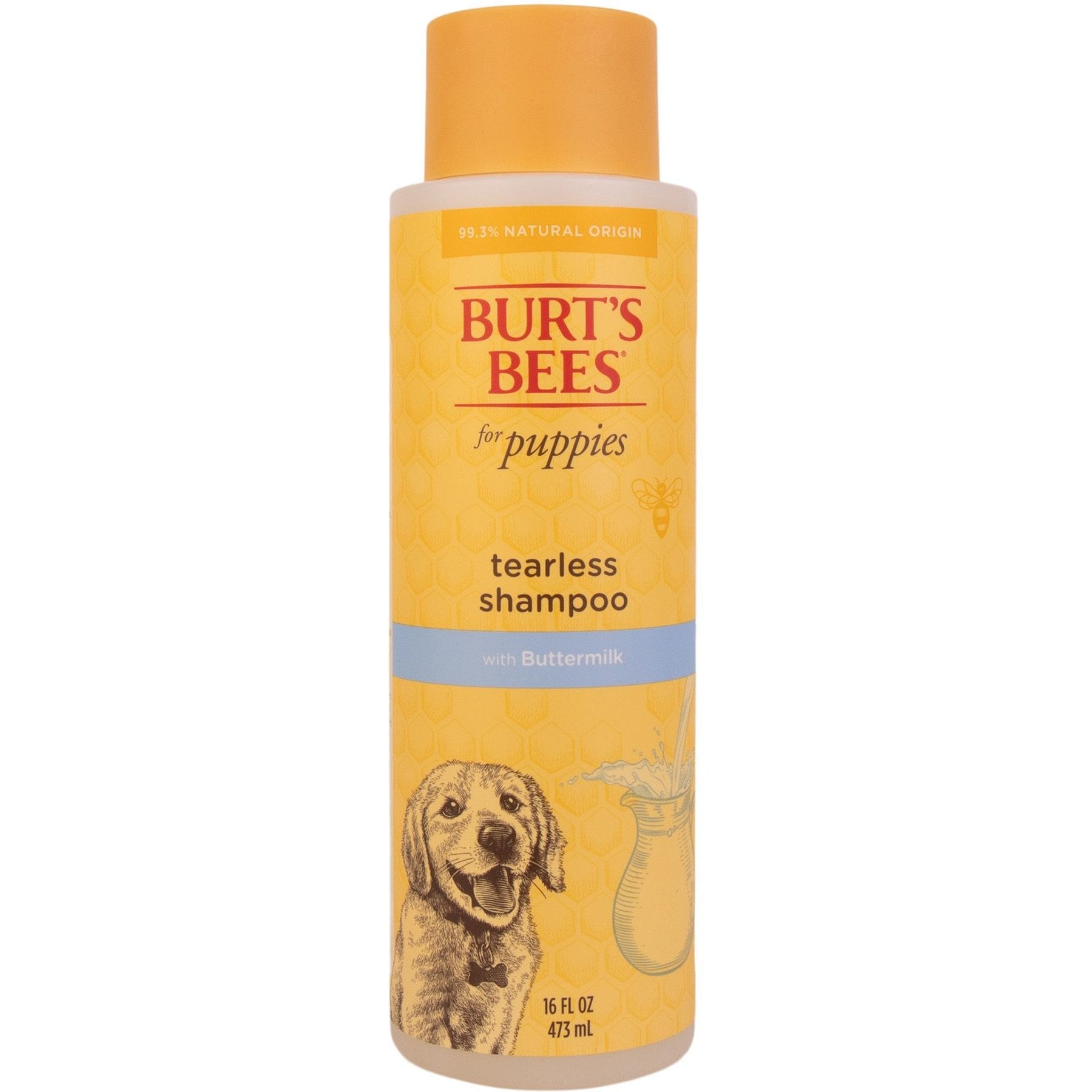
A tearless, sulfate-free puppy shampoo for routine first baths in healthy puppies.
Webvet may earn a commission when you click through to Chewy, at no extra cost to you.
Burt's Bees Tearless Puppy Shampoo with Buttermilk for Dogs, 16-oz is the all-round choice for a healthy puppy's first baths. Its listing describes a tearless formula that is free of sulfates and colorants and pH balanced for dogs, with buttermilk named on the bottle. It is listed at $9.39 on Chewy when checked in November 2026.
The pH point matters because, as VCA Animal Hospitals explains, a dog's coat sits closer to neutral than a human scalp, which is acidic. A formula built for dog skin avoids the mismatch that comes with human products, explained further down.
Who it suits, and who should skip it:
- suits: healthy puppies of any coat length getting routine baths, and owners who want a widely available, low-cost bottle
- suits: puppies whose faces need a gentle wash, though suds still stay out of the eyes
- skip: a puppy with itching, red bumps, flaking, or hair loss, which needs a vet before any shampoo change
- skip: owners who specifically want a product sold as unscented, since the listing does not state its scent
TropiClean Hypo-Allergenic Gentle Coconut Puppy & Kitten Shampoo: best hypoallergenic puppy shampoo
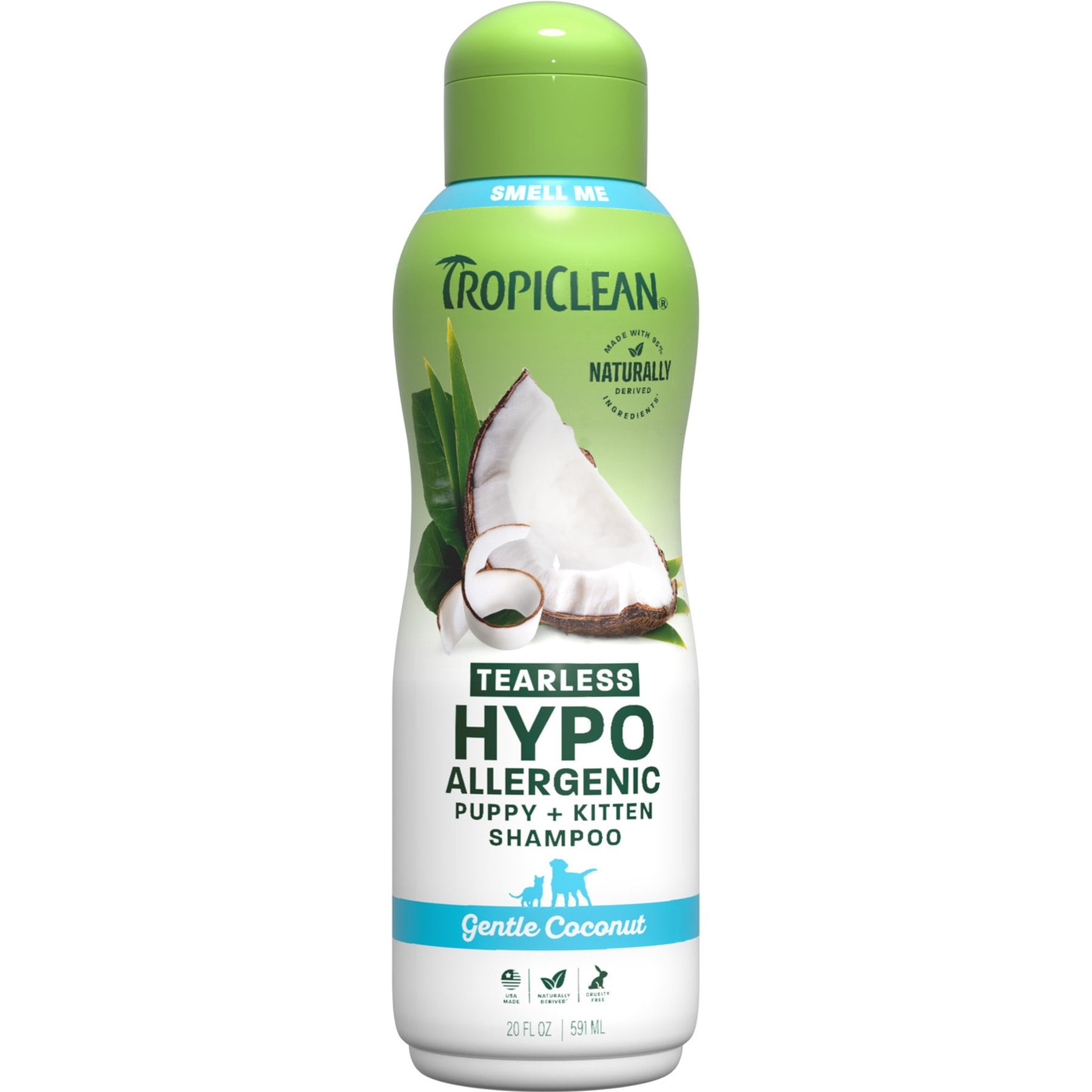
A hypoallergenic shampoo labeled for puppies and kittens 12 weeks and older, useful in a mixed dog and cat home.
Webvet may earn a commission when you click through to Chewy, at no extra cost to you.
TropiClean Hypo-Allergenic Gentle Coconut Puppy & Kitten Shampoo, 20-fl oz bottle is labeled for puppies, kittens, and pets with sensitive skin. Its listing describes a gentle cleanse that moisturizes the skin and coat, with a light tropical coconut scent. The listing says it is suitable for dogs and cats 12 weeks and older, so it is not the pick for a younger puppy or kitten. It is listed at $14.99 on Chewy when checked in November 2026.
The feature that sets it apart from the other picks is the label. Most puppy shampoos are made for dogs only, and a cat should be washed only with a product whose label includes cats. This bottle names both, which makes it the practical choice in a home with a new puppy and a kitten.
Keep in mind that the FDA does not regulate non-medicated grooming shampoos for pets, so hypoallergenic is a maker's description rather than a regulated standard; it signals a gentle intent, not a guarantee. Who it suits, and who should skip it:
- suits: puppies 12 weeks and older with sensitive-feeling skin and no other skin signs
- suits: households bathing a kitten too, following the label for each animal
- skip: puppies and kittens under 12 weeks, the minimum age on the listing
- skip: owners avoiding any scent, since the listing describes a coconut fragrance
- skip: a puppy that is already itching or sore, which needs a vet visit first
Douxo Spa Skin & Coat UltraSafe Puppy Shampoo: best for sensitive skin
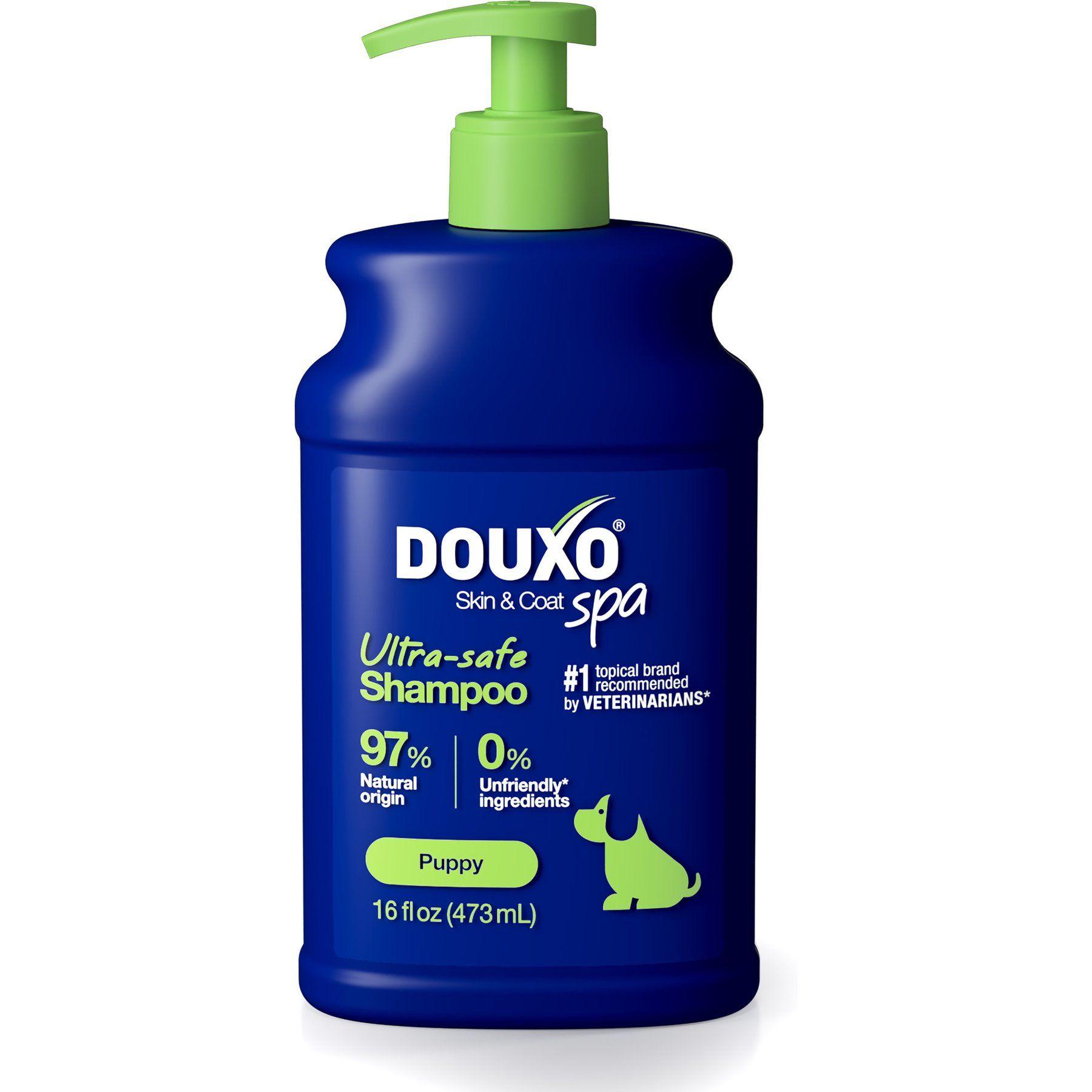
A hypoallergenic puppy cleanser with a prebiotic ingredient for puppies whose healthy skin feels sensitive.
Webvet may earn a commission when you click through to Chewy, at no extra cost to you.
Douxo Spa Skin & Coat UltraSafe Puppy Shampoo, 16-fl oz bottle is described as a hypoallergenic cleanser enriched with alpha-glucan oligosaccharide, a prebiotic, and made to cleanse and rehydrate the coat. Its listing says it leaves the coat pleasantly scented. It is listed at $20.99 on Chewy when checked in November 2026.
This is the pick for a healthy puppy whose skin seems easily irritated by ordinary products, for example one that has looked a little dry after past baths. It is a routine grooming shampoo, not a medicated one, so it is not a treatment for itching, sores, flaking, or infection.
Who it suits, and who should skip it:
- suits: puppies with sensitive-feeling or dry-feeling skin and no redness, sores, or hair loss
- suits: owners who want a prebiotic-containing, hypoallergenic formula for regular use
- skip: a puppy with active skin signs, which your vet should examine before any new product
- skip: owners avoiding fragrance, since the listing describes a scent
Compared with the TropiClean pick, this one is aimed at the skin itself rather than at a mixed-species home, and it costs more per bottle.
We Love Doodles Tearless Unscented Puppy Shampoo: best small-bottle oatmeal pick
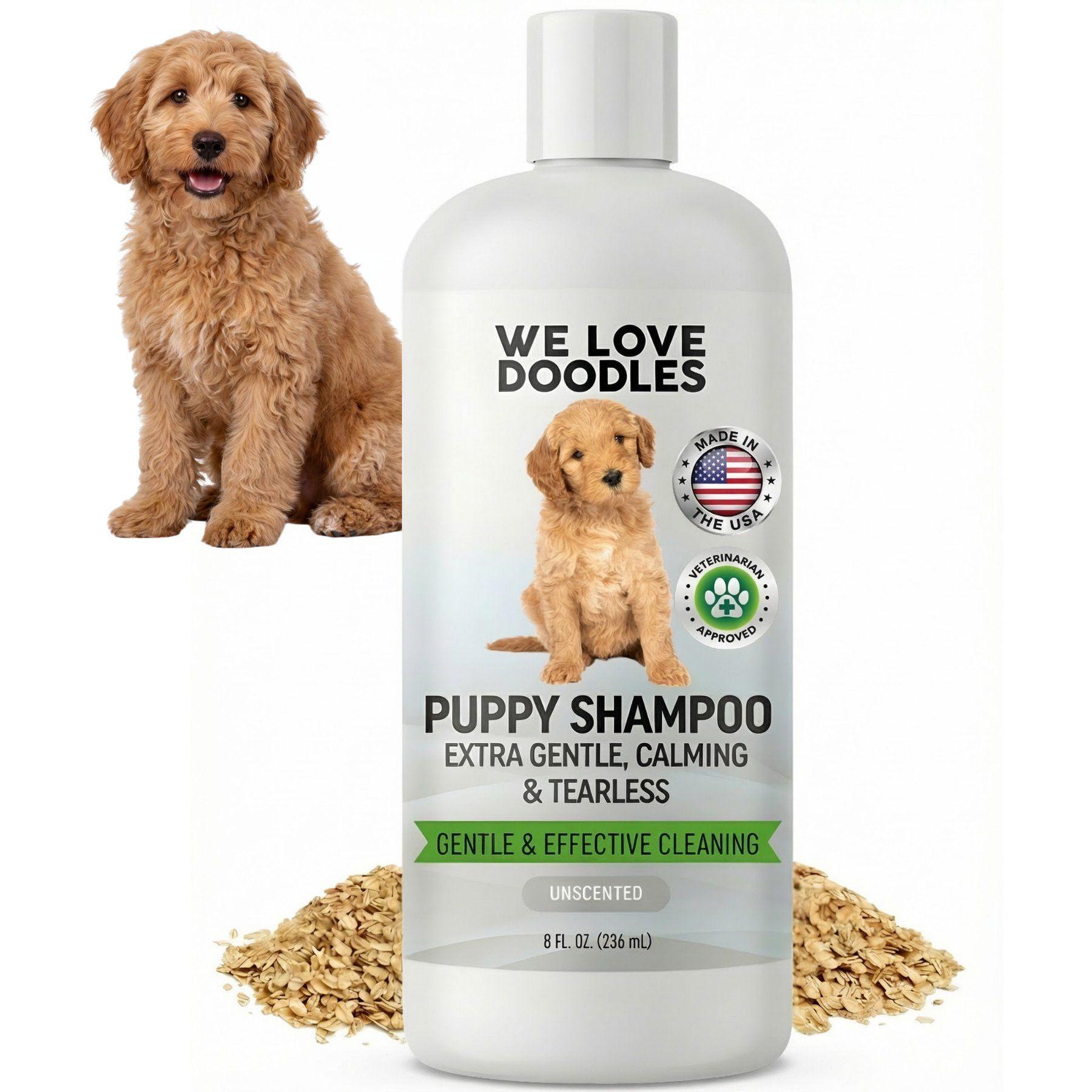
A tearless puppy shampoo with oatmeal and chamomile, named unscented although its listing also names lavender oil.
Webvet may earn a commission when you click through to Chewy, at no extra cost to you.
We Love Doodles Tearless Unscented Puppy Shampoo, 8-fl oz bottle is described as tear-free and gentle. Its listing names organic oatmeal and chamomile extract to soothe and moisturize the skin, and says it is safe for dogs of all breeds and ages. It is listed at $11.99 on Chewy when checked in November 2026.
One label detail deserves a close read. The product name says unscented, yet the same listing says the shampoo is crafted with lavender oil, an essential oil, to help calm a puppy. The listing does not reconcile the two, so do not treat this bottle as fragrance-free or free of essential oils. Check the ingredient panel before buying.
Who it suits, and who should skip it:
- suits: owners who want a tearless oatmeal and chamomile formula in a small bottle
- suits: healthy puppies with dry-feeling skin whose owners are comfortable with lavender oil in the formula
- skip: owners avoiding fragrance or essential oils, since the listing names lavender oil
- skip: large puppies with heavy coats, since 8 fluid ounces is the smallest bottle here
Wahl Gentle Formula Tearless Puppy Shampoo: best budget puppy shampoo
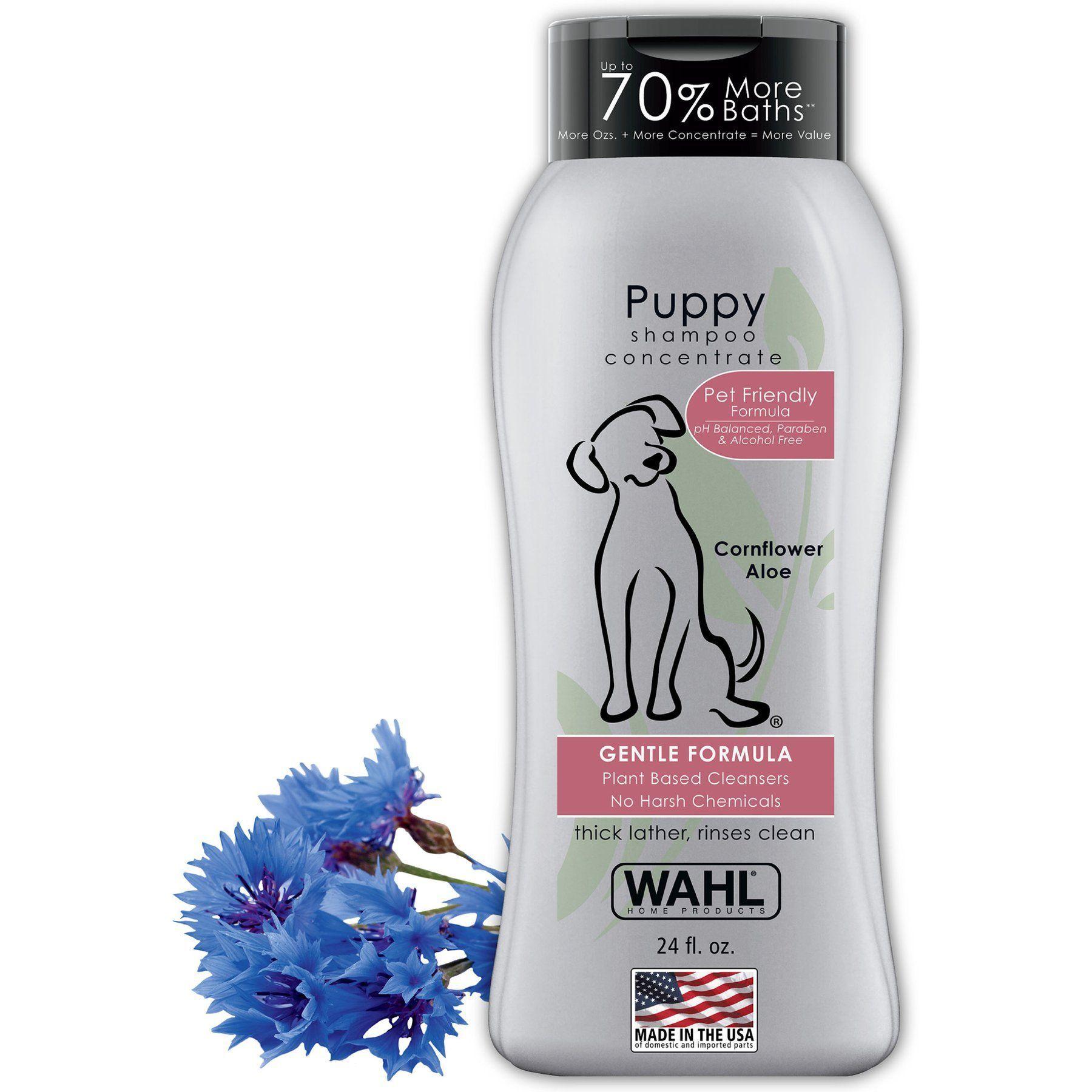
A large, low-cost tearless puppy shampoo in a concentrated formula that needs only a small amount.
Webvet may earn a commission when you click through to Chewy, at no extra cost to you.
Wahl Gentle Formula Tearless Puppy Shampoo, Cornflower & Aloe Scent, 24-fl oz bottle is the value pick. Its listing describes a tearless formula made to gently cleanse and protect delicate puppy skin, and a concentrated formula meant to be used in small amounts. It is listed at $8.97 on Chewy when checked in November 2026, the lowest price here for the largest bottle.
Because the formula is concentrated, follow the label's directions for how much to use, and rinse with extra care. Shampoo left in the coat is one of the easiest bath problems to avoid.
Who it suits, and who should skip it:
- suits: owners of large-breed puppies, or homes with more than one puppy, who go through shampoo quickly
- suits: healthy puppies getting routine baths
- skip: owners who want fragrance-free, since this version carries a cornflower and aloe scent
- skip: a puppy with skin signs that need a vet
Lumi-noble 2in1 Puppy Shampoo + Conditioner: best 2-in-1 for long coats
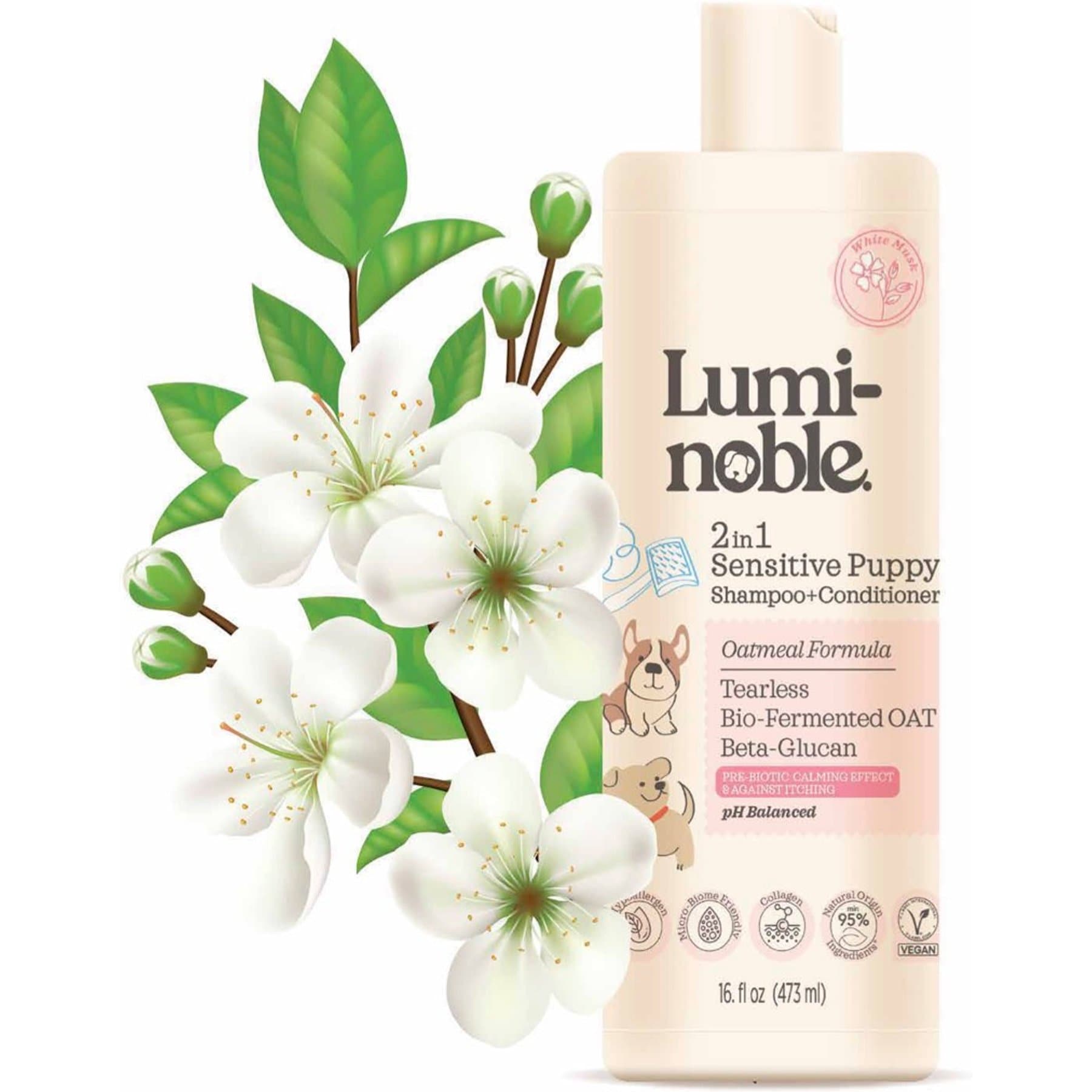
A puppy shampoo and conditioner in one bottle for long or tangle-prone coats that need a softer finish.
Webvet may earn a commission when you click through to Chewy, at no extra cost to you.
Lumi-noble 2in1 Puppy Shampoo + Conditioner, 16-fl oz bottle combines a cleanser and conditioner. Its listing names biofermented oat, beta-glucan, and prebiotics for the skin, plus collagen and natural proteins aimed at the hair. Its listing describes a vanilla scent. It is listed at $18.39 on Chewy when checked in November 2026.
A 2-in-1 saves a step, which helps with a wriggly puppy that tolerates only a short bath. The trade-off is rinsing: a conditioning formula needs a long, thorough rinse so nothing is left close to the skin.
Who it suits, and who should skip it:
- suits: puppies with long, silky, or curly coats that tangle, such as doodle, poodle, Maltese, or Yorkshire Terrier puppies
- suits: owners who want one bottle and a shorter bath
- skip: short, smooth-coated puppies that do not need conditioning
- skip: a puppy that is itching or red; the listing's skin wording is marketing, and itch needs a vet
- skip: owners avoiding fragrance, since the listing describes a vanilla scent
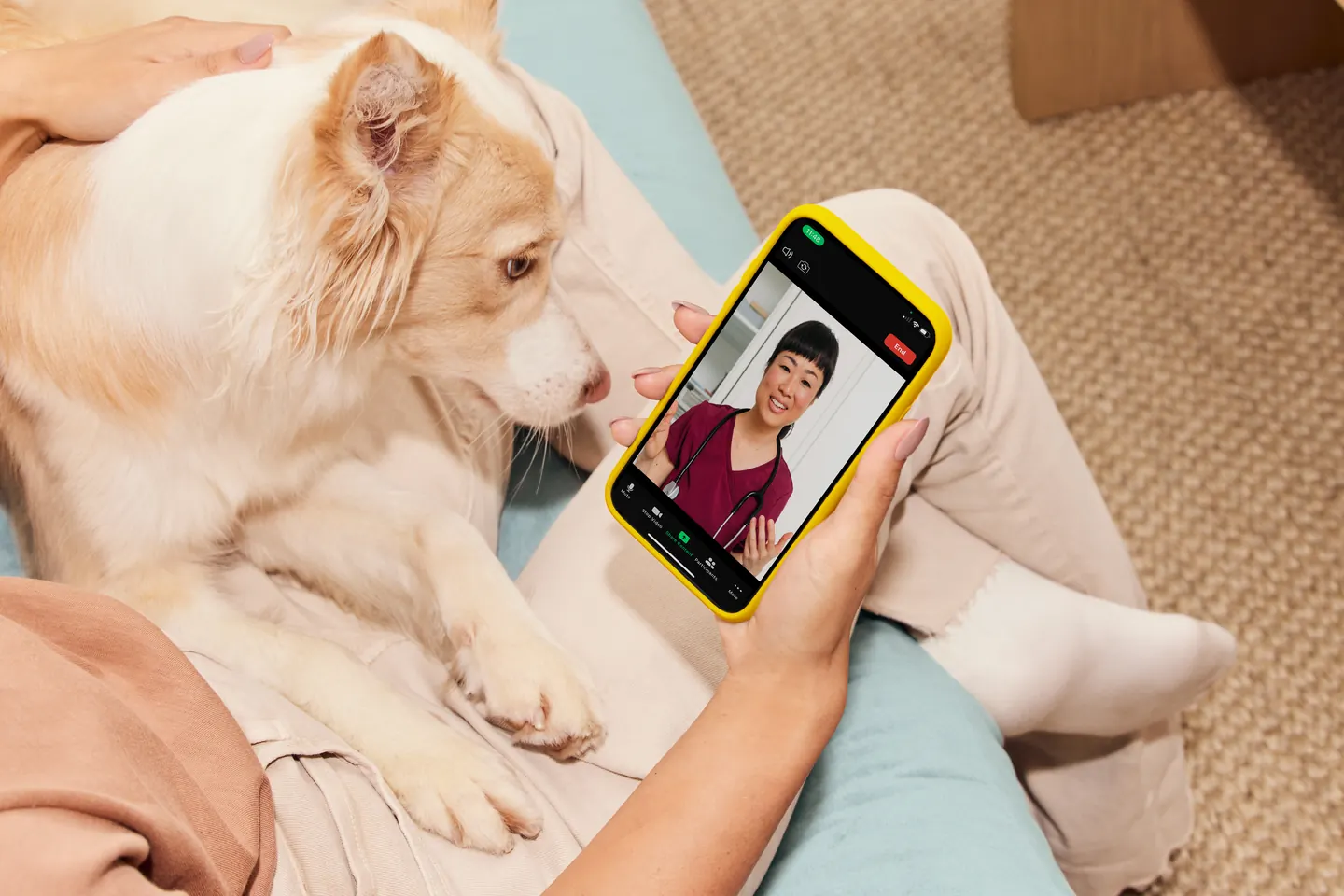 Sponsored
Vet care that's always there
Unlimited video calls and messaging with licensed vets for less than a typical vet visit. One membership covers up to five pets.
Use code Pets60
Plans start at $12/month · covers up to 5 pets
- Licensed vets in most states
- Rx for 150+ conditions
- 4.7 on Trustpilot
How to choose a puppy shampoo: tearless, fragrance-free, hypoallergenic, and long coats
| Puppy situation | Bath now or wait | Formula type that fits | Avoid | See-a-vet sign |
|---|---|---|---|---|
| Very young puppy, under about 4 weeks | Wait; spot-clean with a warm damp cloth | None needed for spot-cleaning | Full baths, damp coats, cool rooms | Cold, weak, or not feeding |
| Healthy puppy, first bath | Bath if dirty, in a warm room | Tearless, gentle, dog-labeled | Human, baby, or dish soap; strong perfume | Shivering that does not settle once dry |
| Long or curly coat | Brush first, then bath | 2-in-1 or shampoo plus puppy conditioner | Bathing over tangles | Mats pulling at red or sore skin |
| Sensitive or dry-feeling skin | Bath only as needed | Fragrance-free, hypoallergenic, or oatmeal | Essential oils, frequent washing | Redness, flaking, or hair loss |
| Puppy shares a home with a cat | Bath as needed | A product labeled for the species being washed | Using a dog-only product on the cat | Any cat that seems unwell after contact |
| Rolled in something | Bath now if a cloth will not lift it | Gentle, dog-labeled shampoo | Solvents or household cleaners | Possible contact with a toxin or oil |
| Already scratching | Wait for the vet | Only what your vet advises | Anti-itch or home remedies on your own | Fleas, flea dirt, sores, scabs, or itch |
Labels on puppy shampoo bottles promise a lot, and only some of those words carry real meaning. The U.S. Food and Drug Administration regulates medicated animal shampoos but not cosmetic, grooming shampoos for pets. A puppy shampoo that makes no treatment claim is a grooming aid, so terms like gentle, mild, or safe are the maker's description.
VCA's advice on how to choose a puppy shampoo gives a firmer starting point: look first for a dermatologist-formulated, soap-free shampoo made for pets. From there, the choice comes down to the eyes, the nose, the skin, and the coat.

Tearless puppy shampoo: what the word promises
A tearless, or tear-free, puppy shampoo is the maker's statement that the formula is mild if it reaches the eyes. It is not a federally defined term for pet products, and it is not permission to lather the face. VCA's bathing advice is to wash a puppy's face with a damp cloth without getting water in the eyes.
A tearless formula is still a sensible choice for a first bath because accidents happen with a wriggling puppy. Think of it as a safety margin, not a technique. Burt's Bees tearless puppy shampoo with buttermilk, for example, pairs its tearless claim with a sulfate-free, pH balanced formula on its listing, but the face still gets a damp cloth rather than suds.
Fragrance-free and good-smelling puppy shampoo
Fragrance-free is the safer default for a puppy, because the puppy's nose deserves a vote. The ASPCA notes that pets have a much better sense of smell than people, so a scent that seems light to us may overwhelm them.
VCA's grooming and coat care guidance is direct: a hypoallergenic shampoo without added perfumes is the best choice for routine bathing. A scented shampoo is still fine for a healthy puppy with no skin signs.
Two label realities to keep in mind:
- for cosmetics, the FDA notes that ingredients can be listed simply as fragrance or perfume without naming each one
- a product name is not an ingredient list; the We Love Doodles Tearless Unscented Puppy Shampoo, 8-fl oz bottle carries unscented in its name, yet its listing names lavender oil
Hypoallergenic and sensitive skin puppy shampoo
Hypoallergenic suggests a lower chance of irritation, but the FDA explains that, for cosmetics, there is no federal standard or definition for hypoallergenic, fragrance-free, or for sensitive skin. A hypoallergenic puppy shampoo is a reasonable pick for sensitive-feeling skin, but read the ingredient list as well as the front label.
What a gentle shampoo for sensitive skin can and cannot do:
- it can clean gently and reduce the chance that the shampoo itself irritates healthy skin
- it can suit a puppy that looked dry after baths with a stronger product
- it cannot fix allergy, parasites, or infection, which need a vet's diagnosis
- it cannot make frequent bathing harmless, since washing too often strips natural oils
Oatmeal puppy shampoo and colloidal oatmeal
An oatmeal puppy shampoo is a sensible choice for a puppy with dry skin. VCA describes oatmeal shampoos as a non-prescription moisturizing shampoo that is great for routine use in dogs. Colloidal oatmeal, the finely ground form, is described by VCA as anti-inflammatory, anti-itch, and emollient, and it comes as shampoos, cream rinses, and sprays.
Even gentle ingredients can disagree with some skin. VCA lists redness, itching, or irritation at the site as possible side effects of colloidal oatmeal, so stop and call your vet if skin looks worse after a bath. For more on these formulas, see WebVet's guide to oatmeal shampoo for dogs.
Skin pH and a pH balanced puppy shampoo
A pH balanced puppy shampoo is built for dog skin rather than ours. VCA gives the numbers: the human scalp is acidic, at 5.2 to 6.2, while the coat of dogs and cats is closer to neutral, at 6.2 to 7.5. A formula matched to dog skin pH avoids pushing a puppy's skin toward the acidity of a human product.
Long coats, curly coats, and puppy shampoo conditioner
Coat type decides whether a puppy needs conditioner and how much brushing comes before the bath. The American Kennel Club separates dogs with hair, such as the Poodle, Maltese, and Yorkshire Terrier, whose coats keep growing for a long time, from dogs with fur, such as the Labrador Retriever, Golden Retriever, and French Bulldog.
How that plays out by coat:
- hair coats, such as the Poodle, Maltese, and Yorkshire Terrier, and poodle crosses that inherit a curly or long coat: brush daily, then bathe; a 2-in-1 or separate conditioner helps
- fur coats (Labrador Retriever, Golden Retriever, and French Bulldog puppies): a gentle, mild shampoo and a thorough rinse
- double coats, which AKC describes as a harsh topcoat over a soft, dense undercoat (the Labrador Retriever's short double coat, the Australian Shepherd's medium double coat, and the Pomeranian's arctic-type coat): rinse long enough to reach the skin through the undercoat and dry fully
- any long or silky coat: brush out tangles first, since VCA warns they can become impossible to remove after a bath
Whatever the breed, check that the coat is dry right down to the skin, not just on top. VCA notes that dogs with long, silky, or curly coats need daily brushing to keep the hair from tangling or matting.
For a long coat that needs more than a 2-in-1, a separate puppy conditioner such as Melanie Newman Puppy Dog Conditioner, 500-ml bottle, listed at $24.95 on Chewy when checked in November 2026, is one option. Its listing names plant-derived ingredients and organic essential oils including rose and chamomile, so owners avoiding essential oils should choose differently.
A one-bottle option is the Lumi-noble 2in1 puppy shampoo and conditioner. WebVet's dog conditioner guide covers more choices.
Reading a puppy shampoo label
Before you buy, turn the bottle over. A short label check covers most of the risk:
- species: dog, or dog and cat if a cat will share the bottle
- age: a puppy formula, or an adult formula whose label allows young dogs
- purpose: a grooming shampoo for routine baths; medicated, anti-itch, and flea products only on your vet's advice
- scent: fragrance-free or unscented for sensitive skin, with the ingredient panel checked for essential oils such as tea tree or lavender
- directions: how much to use, how long to leave it on, and how to rinse
- size: a larger bottle for a large-breed puppy, a smaller one for a toy breed
What kind of shampoo should I use on my dog?
Use a shampoo formulated for dogs, and for a puppy, a gentle, dog-labeled puppy formula. VCA recommends a dermatologist-formulated, soap-free pet shampoo, and a hypoallergenic one without added perfume for routine baths. Choose tearless for the first baths, oatmeal for dry-feeling skin, and a medicated shampoo only when your vet prescribes one.
Puppy shampoo vs dog shampoo, baby shampoo, and dish soap
The right shampoo for a puppy meets three tests: it should be made for dogs, it should be mild, and it should be safe for the age on its label. That rules some substitutes in and some out.
The difference between puppy and adult dog shampoo is small: a puppy shampoo is a dog shampoo with a gentler, often tearless, formula. An ordinary dog shampoo is fine for a puppy if the label allows young dogs and the formula is mild; skip flea and tick or medicated products unless your vet chose them.
The bigger split is between pet and human products. VCA explains that puppy skin differs from human skin in thickness and acidity, and that using human shampoo on a puppy may set it up for skin issues. Here is how the common options compare:
- puppy shampoo: the first choice for any young puppy; gentle, dog-labeled, often tearless
- adult dog shampoo: acceptable for many puppies if the label allows it and it is mild, fragrance-free, and not medicated
- baby shampoo: an emergency stand-in at most, with VCA's own pages disagreeing
- dish soap: a decontamination tool for oily spills, not a routine shampoo
- human adult shampoo or conditioner: not recommended, because the pH and ingredients are built for human skin, and VCA notes that human conditioners may be too acidic, causing irritation and itching
Can you bathe puppies in baby shampoo?
Not routinely. VCA's grooming guidance says human shampoo, including baby shampoo, is far too harsh for dog skin. A separate VCA article on personal care products is softer, saying some gentle human shampoos can be used occasionally and that baby shampoo will do in a pinch.
The two views meet on one point: using baby shampoo on a puppy is a fallback, not a puppy shampoo. VCA explains that human shampoo disrupts the skin's acid mantle, the protective barrier on a pet's skin. Use baby shampoo once if there is nothing else, rinse well, and buy a dog-labeled formula for next time.
Can I use Dawn dish soap as shampoo for my dog?
Only for a specific job, not as a regular shampoo. The ASPCA advises a mild liquid dish soap, not dishwasher detergent, for washing an oily substance off a pet after exposure, then thorough rinsing. The same guidance warns that repeated bathing can cause dry or irritated skin.
VCA adds that soapy shampoos remove dirt but may also affect a puppy's natural skin barrier. If your puppy has rolled in grease or something oily, a one-time wash with mild dish soap is reasonable. If you think it touched something toxic, call your vet or ASPCA Animal Poison Control at (888) 426-4435.
What can I bathe my dog in if I don't have any dog shampoo?
Plain warm water is the safest substitute. For a puppy that is only muddy or sticky, a warm water rinse and a damp cloth will lift most dirt without anything that could irritate the skin, and the puppy can have a proper shampoo bath another day.
If water alone will not do, a gentle baby shampoo once is VCA's in-a-pinch option, and mild dish soap is for oily messes only. Avoid adult human shampoos, conditioners, and anything scented with essential oils.
The same label rule decides who else in the household can share the bottle. VCA advises that both dogs and cats use shampoo formulated specifically for pets, and the label tells you which species a product is made for:
- cats and kittens: only a formula whose label names cats, such as a puppy and kitten shampoo; a dog-only puppy shampoo is not a substitute for a cat
- an adult dog: a gentle puppy shampoo is a mild dog shampoo, so it suits grown dogs unless your vet has prescribed a medicated product
- a puppy borrowing the adult dog's bottle: fine only when that label allows young dogs and the formula is mild and not medicated
- any flea shampoo for dogs: never on a cat, and on a puppy only at the label age
How to bathe and dry a puppy safely, step by step
Bathing a puppy safely is mostly about preparation and warmth. An 8-week-old puppy has been able to hold its own body heat for only a few weeks, so its shampoo should be gentle and the bath brief, warm, and followed by a complete dry.
Healthy dogs do not need frequent baths. VCA's puppy bathing advice is that healthy dogs should not be bathed more than about once a month, which protects the natural oils in skin and coat. WebVet's guide on how often you should bathe your dog covers older dogs too.
Set up the space before the puppy arrives:
- a warm, draft-free room and a sink or tub at a comfortable height
- a nonslip mat so the puppy feels steady
- the puppy shampoo, a cup or gentle sprayer, and a damp washcloth for the face
- two towels, one warmed in the dryer
- treats for every calm moment

Before the bath, brush out loose hair and small tangles. VCA advises brushing burrs and tangles out before bathing because they can become impossible to remove once wet. A small slicker brush such as the Frisco Slicker Dog Brush, Small, listed at $5.99 on Chewy when checked in November 2026, has gentle stainless-steel pins made to remove tangles and loose hair.
Then bathe in this order:
- Test the water. VCA advises warming it to body temperature and checking it with your hand or elbow.
- Wet the body gently, pouring from the torso toward the feet, and keep water out of the ears.
- Lather a small amount of puppy shampoo into the coat with firm, slow strokes.
- Follow the label for contact time. VCA notes that most pet shampoos stay on for 5 to 10 minutes, but a young puppy's comfort comes first, so a short bath is fine for routine cleaning.
- Clean the face with a damp cloth, without shampoo near the eyes.
- Rinse with warm water until every sud is gone. VCA stresses that shampoo must be thoroughly rinsed out.
- Wrap the puppy in a warm towel straight away.
Drying is the step that protects the puppy most. Use slow, firm towel strokes, then a second dry towel. A lightweight pet towel such as the Bone Dry Embroidered Paw Dog & Cat Towel, Gray, listed at $10.19 on Chewy when checked in November 2026, is one option.
If you use a hair dryer, VCA suggests letting the puppy sniff it first, then running it on a low or cool setting from a distance. Keep the puppy in a warm room until the coat is dry right to the skin.
If your puppy races around the room once it is free, WebVet explains that behavior in dog zoomies: why does my dog go crazy after a bath.
Making the first bath a calm one
A puppy that learns baths are easy is easier to bathe for life. VCA suggests rewarding a nervous puppy for simply getting into an empty tub before any water is added, then building up slowly. Ways to keep the first experience calm:
- practice in the empty tub or sink for a day or two with treats
- keep the first wash to the dirty areas only
- talk quietly and keep one hand on the puppy at all times
- stop before the puppy becomes frantic and finish with a towel cuddle
With no dog shampoo in the house, use warm water alone, or a warm damp cloth on the dirty areas, and keep the same warmth and drying steps.
After the bath: what to watch
Most puppies settle within minutes of being dried and warmed. Keep an eye on a few things for the rest of the day:
- shivering that does not settle once the puppy is dry and warm, which is a reason to call your vet
- redness, scratching, or flaking that starts after a new shampoo; stop using it and ask your vet
- head shaking or scratching at the ears, since VCA links water in the ears to ear infections
- a sticky or stiff coat, a sign that shampoo was left behind and the rinse was too short
Cold weather and puppy wash routines
In winter, bathe less, not more. The ASPCA cold-weather guidance is to bathe pets as little as possible during cold spells, because washing too often can remove natural oils and lead to dry, flaky skin. It also advises towel drying promptly and asking your vet about a moisturizing shampoo or rinse if a bath is necessary.
A matted coat is not a bath problem to solve at home. VCA advises removing mats only with clippers, never scissors, and seeking a groomer or your vet for severe or extensive tangles.
When a puppy with fleas, itching, flaking, or sores needs a vet
Shampoo cleans healthy skin; it does not diagnose or fix a skin problem. A dandruff, allergy, or anti-itch shampoo can feel like the obvious fix, but VCA advises that changes such as excessive dandruff, red bumps, or hair loss are checked by a vet before you switch shampoos.
Anti-itch shampoos are not routine grooming products. VCA notes that antipruritic shampoos commonly contain steroids and antihistamines, which is why they are used on a vet's advice. The best shampoo for a puppy with itchy skin is the one your vet chooses after finding the cause.

Skin signs that need a vet rather than a bath:
- fleas, or reddish-black specks of flea dirt in the coat
- persistent scratching, chewing, or licking
- flaking with redness, or dandruff that keeps coming back
- red bumps, pimples, or pus-filled spots
- round or patchy hair loss
- scabs, crusts, sores, or a bad smell from the skin
- a puppy that seems tired, pale, or unwell along with skin changes
Fleas on a puppy
Bath time is a good moment to look, and VCA suggests checking for fleas and ticks and feeling for new lumps whenever you bathe a puppy.
The Companion Animal Parasite Council (CAPC) describes flea dirt as reddish-black pellets of dried blood in the coat, and warns that heavy infestations may lead to iron deficiency anemia and death, particularly in young animals.
CAPC advises starting preventive flea and tick products as soon after birth as possible, consistent with label claims. In practice, that means your vet picks a product whose label covers your puppy's age and weight. WebVet's flea shampoo for dogs guide covers shampoo options and label ages in detail.
Itching, flaking, and puppy dandruff
Flaking and itching have several possible causes in puppies, and some need specific treatment. CAPC notes that localized demodectic mange usually develops in puppies less than 6 months of age and is diagnosed with deep skin scrapes. The Merck Veterinary Manual describes pustules on the skin of young dogs, often called puppy pyoderma.
Ringworm is another reason not to guess. VCA says it usually appears as roughly circular hair loss, and that it can be easily transmitted to humans, especially young children. Your vet confirms it with a culture.
Once your vet has a diagnosis, the right product may be a medicated shampoo. WebVet's guides to medicated dog shampoo, dog shampoo for itchy skin, and dog dandruff shampoo explain the options to discuss with your vet.
What to tell your vet
A few details help your vet narrow down the cause quickly. Note them before the appointment:
- when the itching, flaking, or hair loss started, and where on the body
- every shampoo, spray, or flea product used, with the bottle or label
- whether other pets or people in the home have itchy skin or rashes
- whether you have seen fleas or flea dirt
- any change in appetite, energy, or stools
Questions worth asking:
- what is causing the skin change, and can it spread to other pets or people
- which flea preventive suits this puppy's age and weight
- whether a medicated shampoo is needed, how often to use it, and how long to leave it on
- which routine puppy shampoo is safe once the skin has healed
Homemade and natural puppy shampoo: what is safe to try
Vets do not offer a homemade shampoo recipe for puppies, and home recipes tend to rely on ingredients vets caution against. A ready-made natural shampoo labeled for dogs is a safer route than a home mix.
What vets steer toward instead is clear. VCA's first choice is a dermatologist-formulated, soap-free shampoo made for pets, and VCA notes that soapy shampoos may affect a puppy's natural skin barrier. A home recipe built on dish soap or castile soap is the opposite of soap-free.

Common homemade ingredients, and what to know about each:
- dish or castile soap: cleans, but soapy cleansers may affect the skin barrier and repeated washing dries skin
- vinegar: acidic, and VCA notes that overly acidic human conditioners can cause irritation and itching
- baking soda: there is no veterinary guidance supporting it as a puppy shampoo ingredient
- oatmeal: VCA describes oatmeal shampoos as moisturizing, but a kitchen oat paste is not the same as a formulated colloidal oatmeal product
- essential oils, including tea tree: the ASPCA advises against applying essential oils directly to pets
Words such as organic, all natural, and non-toxic on a label are the maker's own description. The FDA does not regulate non-medicated grooming shampoos for pets, so the ingredient panel tells you more than the front of the bottle.
What is a good homemade dog shampoo?
For a puppy, the best homemade option is warm water and a soft cloth, which cleans most everyday dirt without any irritation risk. No veterinary source supports a homemade recipe as equal to a dog-labeled shampoo, so when water is not enough, a gentle, ready-made puppy shampoo is the safer choice over a kitchen mix.
Can I mix Dawn dish soap and apple cider vinegar for my dog?
No, not as a routine shampoo for a puppy. Veterinary guidance supports mild dish soap only for washing off oily substances, with a warning that repeated washing dries skin. Adding vinegar adds acidity, and VCA notes that overly acidic products can cause skin irritation and itching.
What is 3 ingredient homemade shampoo?
It refers to a home recipe built from three kitchen ingredients, such as dish soap, vinegar, and water, sometimes with oil or baking soda in place of one of them. For a puppy, each ingredient has a drawback: soap can affect the skin barrier, vinegar is acidic, and oils can include essential oils. A dog-labeled puppy shampoo avoids all three problems.
Essential oils, tea tree oil, and non toxic puppy shampoo
Organic or all natural on a label does not mean safe for every puppy. The Pet Poison Helpline states that pet shampoos with tea tree oil at less than 1 to 2 percent are generally considered non-toxic when used as labeled, but that even a few concentrated drops, applied to the skin or swallowed, can cause severe poisoning.
Signs of essential oil poisoning include unsteadiness, depression, and low body temperature. If your puppy has been exposed to a concentrated oil, call your vet or Pet Poison Helpline at (855) 764-7661 straight away.
The safest natural option is a ready-made, dog-labeled product whose ingredient list you have read, used exactly as its label directs. Never add essential oils to a puppy shampoo yourself.
Puppy shampoo questions
Frequently Asked Questions
How old does a puppy need to be for a bath with puppy shampoo?
There is no single age in veterinary guidance, but a puppy cannot regulate its own temperature until about 4 weeks of age, so younger puppies are spot-cleaned with a damp cloth. For an older puppy, a first bath is reasonable when it is dirty, healthy, and you can keep it warm and dry it fully afterward. Keep that bath short, use water warmed to body temperature, and wrap the puppy in a towel the moment it ends.
Can I use regular dog shampoo on a puppy?
Often, yes, if the label allows young dogs and the formula is gentle, mild, and not medicated or designed for fleas. A dedicated puppy shampoo adds a tearless formula and a softer cleanse, which is why it is the easier first choice. When the label gives no age guidance, ask your vet.
Can you use puppy shampoo on a cat?
Only when the label names cats. Many puppy shampoos are made for dogs alone, and a cat should be washed with a product made for cats or one labeled for both species. Never use any dog flea shampoo on a cat, and ask your vet before bathing a kitten. If a cat seems unwell after contact with a dog product, call your vet.
What does tearless mean on a puppy shampoo?
Tearless means the maker formulated the shampoo to be mild if it reaches the eyes. It is not a regulated standard for pet shampoos, and it does not mean you can lather around the face. Keep suds away from the eyes and clean the face with a damp cloth instead.
Can I keep using puppy shampoo on my adult dog?
Yes. A puppy shampoo is a gentle dog shampoo, so it stays suitable as your puppy becomes an adult. As the adult coat comes in, a long or double coat may benefit from a conditioner or a product suited to that coat type, and any new skin problem is a reason to see your vet.
Is a puppy shampoo and conditioner in one worth it?
A 2-in-1 is worth it for puppies with long, silky, or curly coats that tangle, and for puppies that only tolerate a short bath. The catch is rinsing: conditioning ingredients need a longer, thorough rinse so nothing is left near the skin. Short, smooth coats rarely need one.
Veterinarian · BVMS MRCVS
Dr. Pippa Elliott, BVMS, MRCVS, is a veterinarian with nearly 30 years of experience in companion animal practice. Dr. Elliott earned her Bachelor of Veterinary Medicine and Surgery from the University of Glasgow. She was also designated a Member of the Royal College of Veterinary Surgeons. Married with 2 grown-up kids, Dr. Elliott has a naughty Puggle named Poggle, 3 cats and a bearded dragon.


