Dog Dandruff Shampoo: Best Picks and When Flakes Need a Vet
Light, dry flaking often improves with a gentle moisturizing or oatmeal shampoo, but heavy scale, greasy flakes, or itching can mean seborrhea, mites, or infection that a vet should treat. How to tell the difference, plus our picks.

BVMS MRCVS
Medically reviewed by Dr. Pippa Elliott, BVMS MRCVS · Last reviewed

This article contains affiliate links. Webvet may earn a commission when you buy through them, at no extra cost to you.
Dog dandruff shampoo: what it can fix, and what a good one contains
A dog dandruff shampoo can clear light, dry flaking, but it cannot fix every flake. Fine white flakes on a dog that is otherwise comfortable often improve with a gentle moisturizing or oatmeal dog shampoo used exactly as the label directs. Greasy scale, heavy flaking, itching, hair loss, or flakes that seem to move point to a problem a bottle alone will not solve.
Those signs can mean seborrhea, walking dandruff mites, allergies, or a skin infection, and a vet should see the dog before any dog dandruff shampoo goes on. Medicated shampoos work best when a vet chooses them for a diagnosed problem. Human dandruff shampoo is not made for dog skin, which is less acidic than ours.
- 1Light dry flaking on a comfortable dog is a reasonable first job for a gentle moisturizing or oatmeal shampoo.
- 2The key question is cosmetic flaking versus seborrhea: greasy scale, odor, or heavy flaking needs a vet diagnosis first.
- 3Flakes that move along the back can be walking dandruff mites, which spread to other pets and to people.
- 4Medicated shampoos belong to a vet plan, human dandruff shampoo and dish soap are poor swaps, and contact time matters.
| Shampoo | Type | Best match | Listed price (Chewy, November 2026) |
|---|---|---|---|
| Hartz Groomer's Best Professionals Anti-Dandruff with Jasmine & Citrus Scent Dog Shampoo, 18-fl oz bottle | Salicylic acid anti-dandruff, scented | Light, scaly cosmetic flaking on a budget | $8.46 |
| Douxo Spa Skin & Coat UltraSafe Oatmeal Dog Shampoo, 16-fl oz bottle | Oatmeal, moisturizing | Dry flaking and dry-feeling skin | $15.39 |
| KONG Hydrating Dog Shampoo, 16-fl oz bottle | Hydrating, pH-balanced, coconut scent | Everyday baths for dry, brittle, or coarse coats | $14.41 |
| DOG By Dr Lisa Sensitive Dog Shampoo, 16.9-fl oz | Fragrance-free, sensitive skin | Flaky dogs that react to scented products | $29.99 |
| Sulfox Dog Shampoo, 12-fl oz bottle | Medicated cleansing and degreasing | Scaling a vet has diagnosed | $20.99 |
What dandruff on a dog actually is
Healthy dog skin, according to VCA Animal Hospitals, should be supple and clear, not greasy, flaky, or bumpy. VCA adds that excessive dandruff can point to an underlying problem. A few flakes after a dry spell are one thing; a coat that keeps shedding scale is another.
Vets use the word seborrhea for the bigger problem. The Merck Veterinary Manual describes seborrhea as a skin disease marked by a defect in keratinization, the process that builds and sheds the outer skin layer. The result is more scale and, in some dogs, excessive greasiness of the skin and coat.
That difference shapes every decision on this page. Cosmetic flaking is usually dry, fine, and comfortable, and a gentle shampoo is a fair first step. Seborrhea is usually a sign of another disease, so shampoo becomes one part of a treatment plan rather than the whole answer.
What a good dandruff shampoo contains, ingredient by ingredient
Reading the label tells you what a shampoo is built to do. These are the ingredients veterinary sources name, and the job each one does:
- Salicylic acid and sulfur: keratolytic ingredients that break down built-up scale. Merck recommends them for scaly (dry) seborrhea.
- Tar: Merck's topical-therapy guidance lists it for oily seborrhea, but Merck's seborrhea chapter says tar shampoos are usually no longer recommended because they smell unpleasant and can irritate. Tar is contraindicated in cats, so a tar shampoo never goes on a household cat.
- Benzoyl peroxide and selenium sulfide: Merck lists these as options a vet can try when greasiness persists.
- Ceramides, ophytrium, or phytosphingosine: Merck notes shampoos containing these are often effective in seborrhea management.
- Chlorhexidine with miconazole, ketoconazole, or climbazole: antimicrobial combinations Merck names for bacterial or yeast involvement, which needs a vet diagnosis.
- Colloidal oatmeal: a cleanser and moisturizer whose starches and beta-glucan hold water on the skin, according to a review in the Journal of Drugs in Dermatology.
- Added perfumes and essential oils: VCA advises a shampoo without added perfumes for regular bathing, and the ASPCA advises against applying essential oils directly to pets.

No ingredient on that list replaces a diagnosis. A salicylic acid shampoo can lift dry scale from a healthy dog, yet the same flakes on a dog with mites or a thyroid problem will come back until the cause is treated.
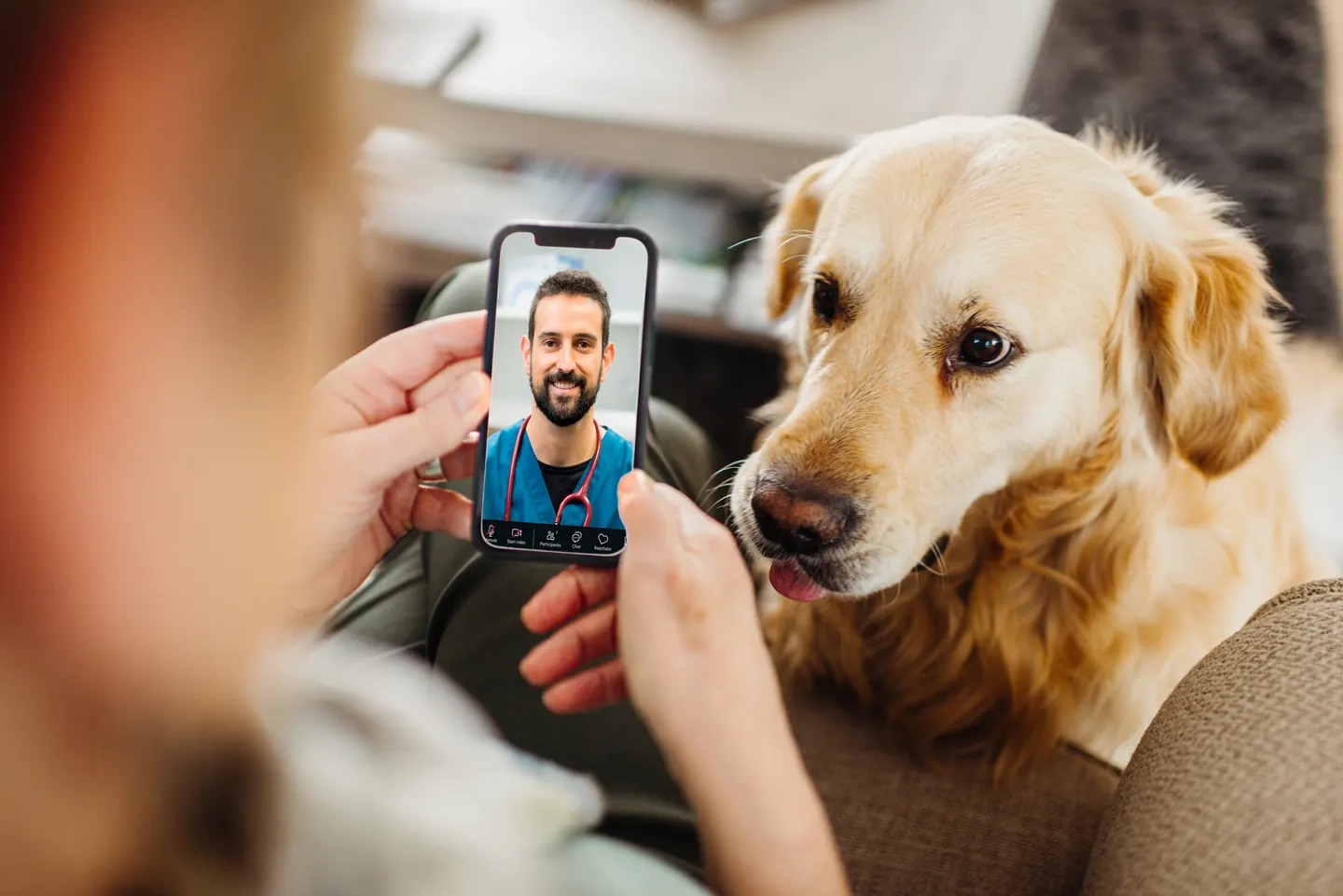
 Sponsored
Want a vet's take on your dog's skin or coat?
Talk to a licensed vet at Dutch over video, often the same day. They can recommend treatment and prescribe it when it's appropriate.
Use code Pets60
Plans start at $12/month · covers up to 5 pets
- Licensed vets in most states
- Rx for 150+ conditions
- 4.7 on Trustpilot
Our picks: the best dog dandruff shampoos
The best dog dandruff shampoo is the one that matches the flake type. Every pick here is judged on its label, the maker's stated specification, and the Chewy catalog listing, against what veterinary sources say each kind of dandruff needs. None of these products was tested hands-on, and prices are as listed on Chewy when checked in November 2026.
Four of the five are gentle, everyday shampoos for dogs with dandruff from dry skin or dry weather. One is a medicated formula for scaling a vet has already diagnosed. On a healthy coat, the right shampoo is rarely the strongest one: start gentle and step up only with a vet.
Hartz Groomer's Best Professionals Anti-Dandruff Dog Shampoo: best budget anti-dandruff shampoo
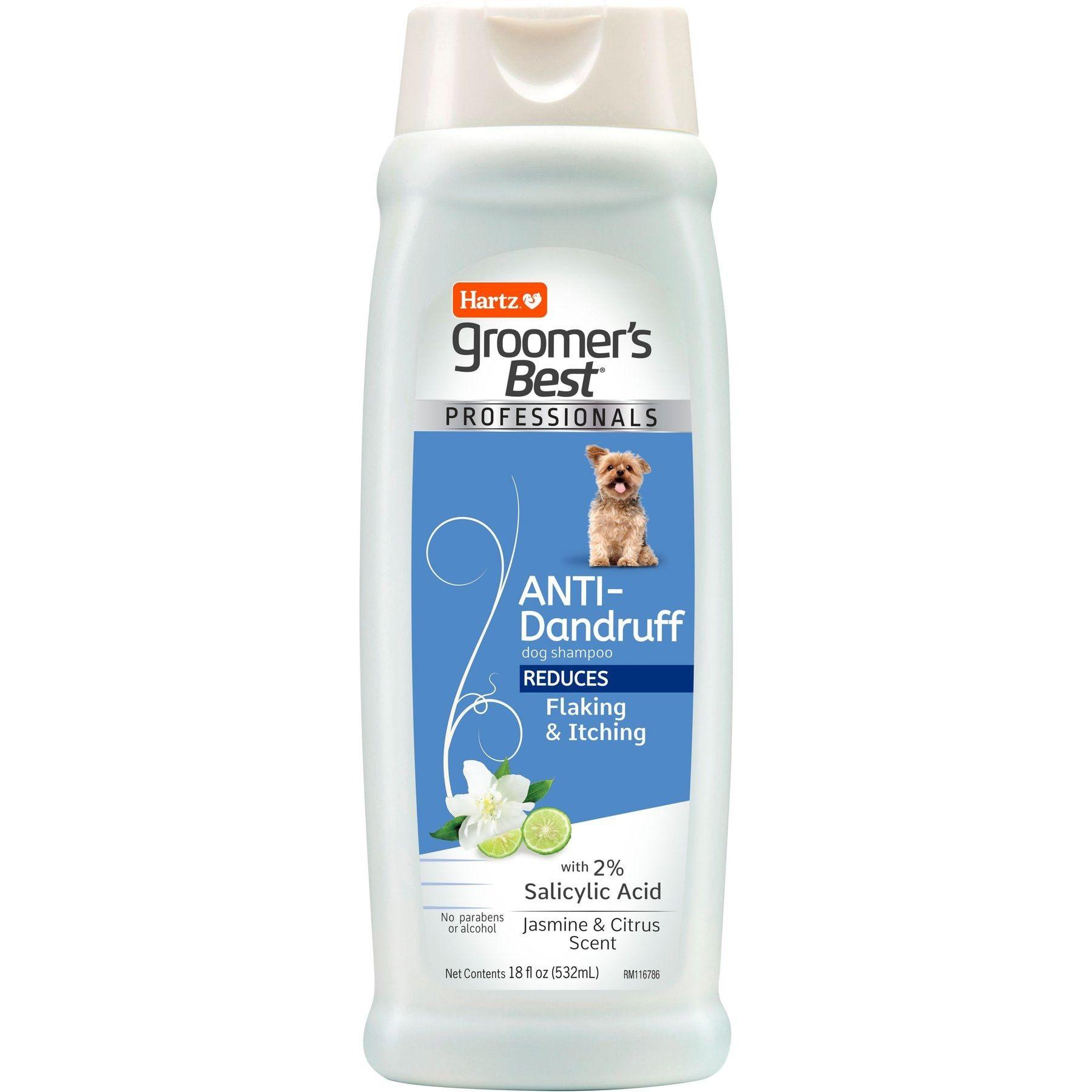
A low-cost salicylic acid shampoo for light, scaly dandruff on a dog whose skin is otherwise healthy.
Webvet may earn a commission when you click through to Chewy, at no extra cost to you.
This is the only pick built around a named anti-dandruff ingredient. Hartz says the formula uses salicylic acid to help eliminate dandruff, and the 18-fl oz bottle is listed at $8.46 on Chewy when checked in November 2026. Salicylic acid is a keratolytic, an ingredient that loosens built-up scale. A dog with diagnosed seborrhea still needs the shampoo its vet chooses.
Hartz describes the shampoo as sudsy and fragranced, with a jasmine and citrus scent, and suitable for dogs of all ages and fur lengths. Its label allows use twice weekly or as a vet directs.
- Who it suits: owners who want a budget anti-dandruff shampoo for a dog whose flakes are dry and whose skin looks normal.
- Who should skip it: dogs with sensitive skin or a history of reacting to scented products, since VCA prefers perfume-free shampoos for regular baths.
- How it differs: it is the only pick with a keratolytic active named in its listing, while the next three focus on moisture and gentleness.
Douxo Spa Skin & Coat UltraSafe Oatmeal Dog Shampoo: best for dry flaking
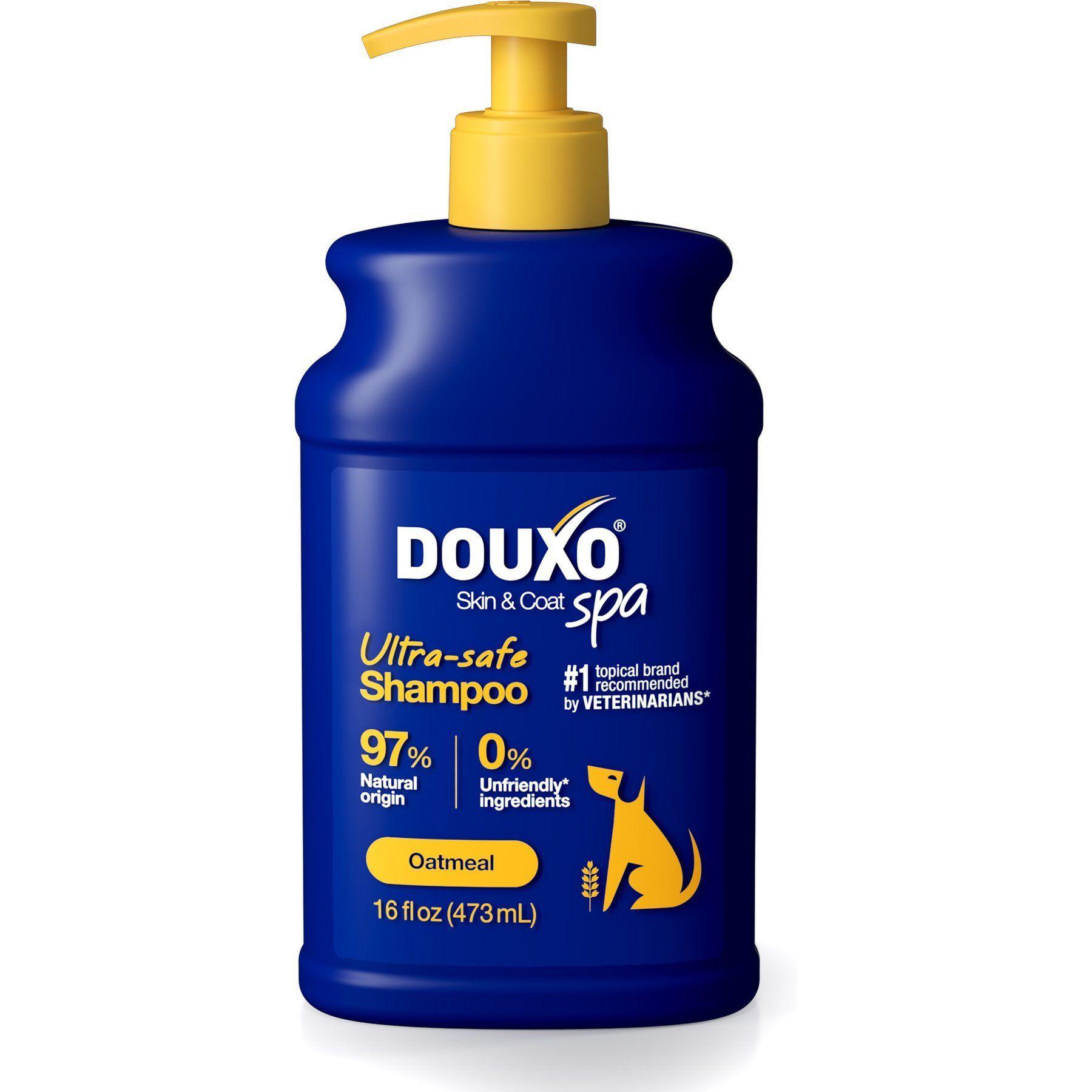
An oatmeal shampoo for dogs whose flakes come with dry-feeling skin rather than grease or odor.
Webvet may earn a commission when you click through to Chewy, at no extra cost to you.
Douxo's catalog listing describes an ultra-moisturizing shampoo enriched with oatmeal that is rich in beta-glucan, made with 97% ingredients of natural origin, and scented. The 16-fl oz bottle is listed at $15.39 on Chewy when checked in November 2026.
The oatmeal is the reason it suits dry flaking. A review of colloidal oatmeal in the Journal of Drugs in Dermatology credits its starches and beta-glucan with protective and water-holding functions on the skin. That research comes from human dermatology, so it explains the ingredient rather than proving results in dogs.
- Who it suits: dogs whose skin feels dry and flakes after baths, in cold weather, or under indoor heating.
- Who should skip it: dogs with greasy scale and odor, which calls for a different approach chosen by a vet, and dogs that react to scent.
- How it differs: it moisturizes rather than strips scale, so it pairs better with the contact-time steps for a gentle wash than with a degreasing routine.
KONG Hydrating Dog Shampoo: best moisturizing everyday shampoo
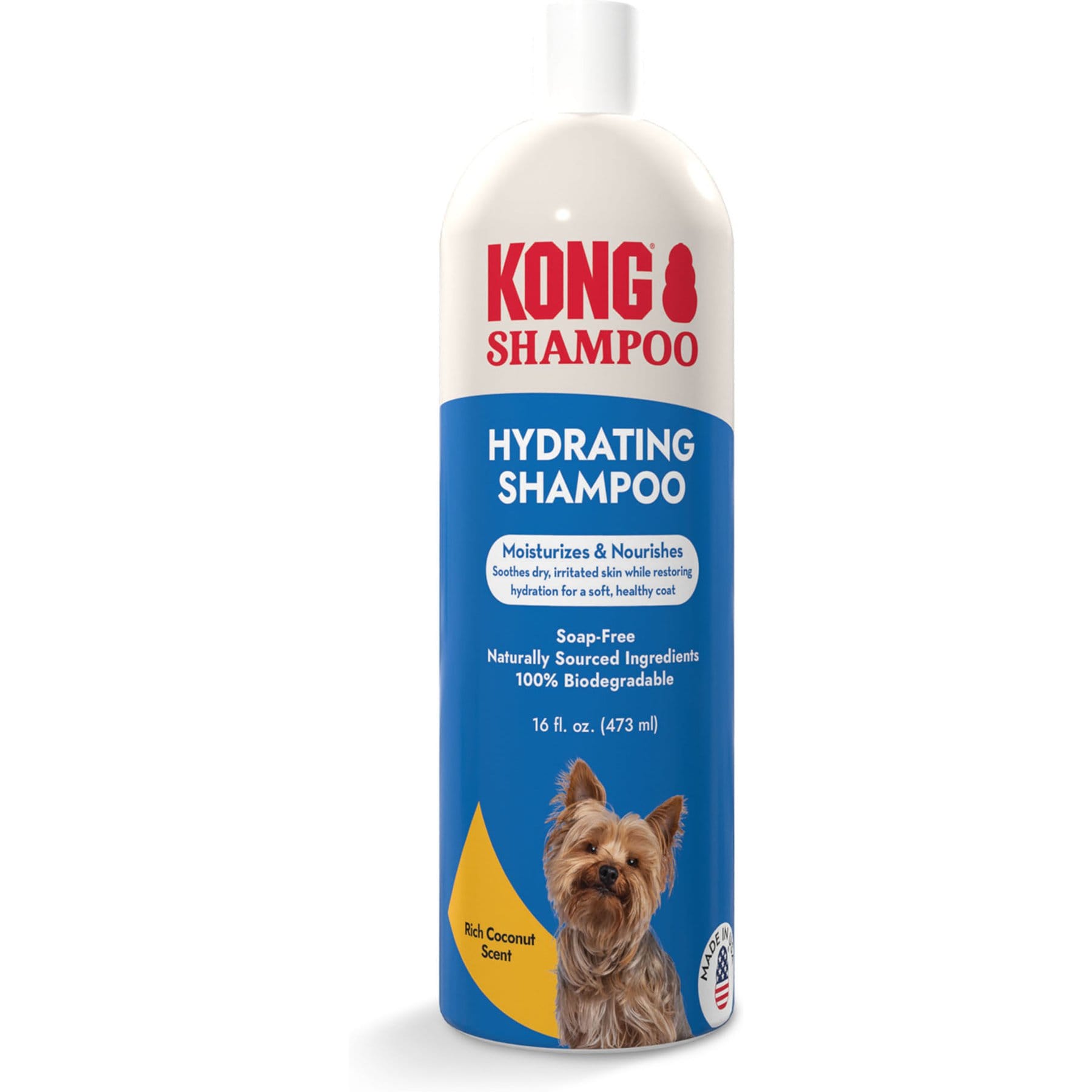
A hydrating, pH-balanced everyday shampoo for dogs with dry, brittle, or coarse coats that flake.
Webvet may earn a commission when you click through to Chewy, at no extra cost to you.
KONG's listing describes a shampoo formulated to moisturize, nourish, and soothe dry, irritated skin, with a coconut scent and a pH-balanced formula. KONG positions it for dogs with dry, brittle, or coarse fur. The 16-fl oz bottle is listed at $14.41 on Chewy when checked in November 2026.
The pH claim matters because dog skin is closer to neutral than human skin. VCA notes that a pet shampoo needs to maintain the skin's normal pH, which is the main reason a dog-specific formula beats a human one for routine baths.
- Who it suits: dogs that get regular baths for odor or mud and develop light flaking from the washing itself.
- Who should skip it: dogs with oily scale, and scent-sensitive dogs.
- How it differs: it is a general hydrating shampoo rather than an oatmeal or medicated one, making it the easiest everyday swap for a harsher product.
DOG By Dr Lisa Sensitive Dog Shampoo: best for sensitive skin
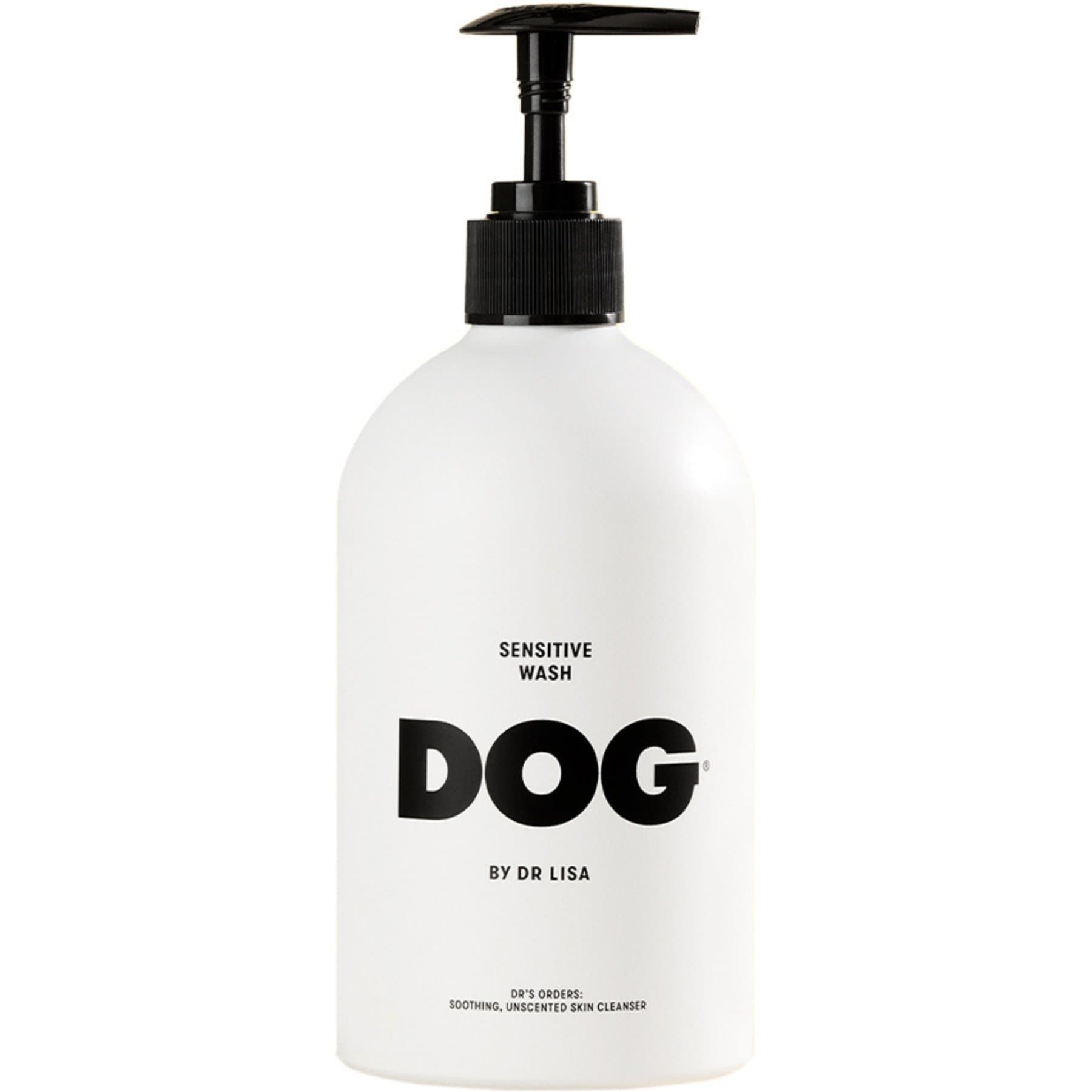
A fragrance-free shampoo for flaky dogs whose skin reacts to scented or regular shampoos.
Webvet may earn a commission when you click through to Chewy, at no extra cost to you.
The catalog listing describes a gentle, fragrance-free cleanser for dogs with allergies, sensitive skin, or a history of reacting to regular shampoos. It lists sphingolipids and phospholipids as ingredients intended to soften and protect the skin. The 16.9-fl oz bottle is listed at $29.99 on Chewy when checked in November 2026.
Fragrance-free is the reason it earns a place. VCA recommends a hypoallergenic shampoo without added perfumes for regular bathing, and this is the only pick in the group without an added scent.
- Who it suits: flaky dogs that have reacted to scented shampoos, and owners who want the gentlest wash between vet-directed treatments.
- Who should skip it: owners on a tight budget whose dog has no history of sensitivity, since it is the priciest pick per ounce.
- How it differs: it trades the scent of the other everyday picks for a fragrance-free formula. It is a cleanser, not a treatment for allergic skin.
Sulfox Dog Shampoo: best medicated option when a vet directs it
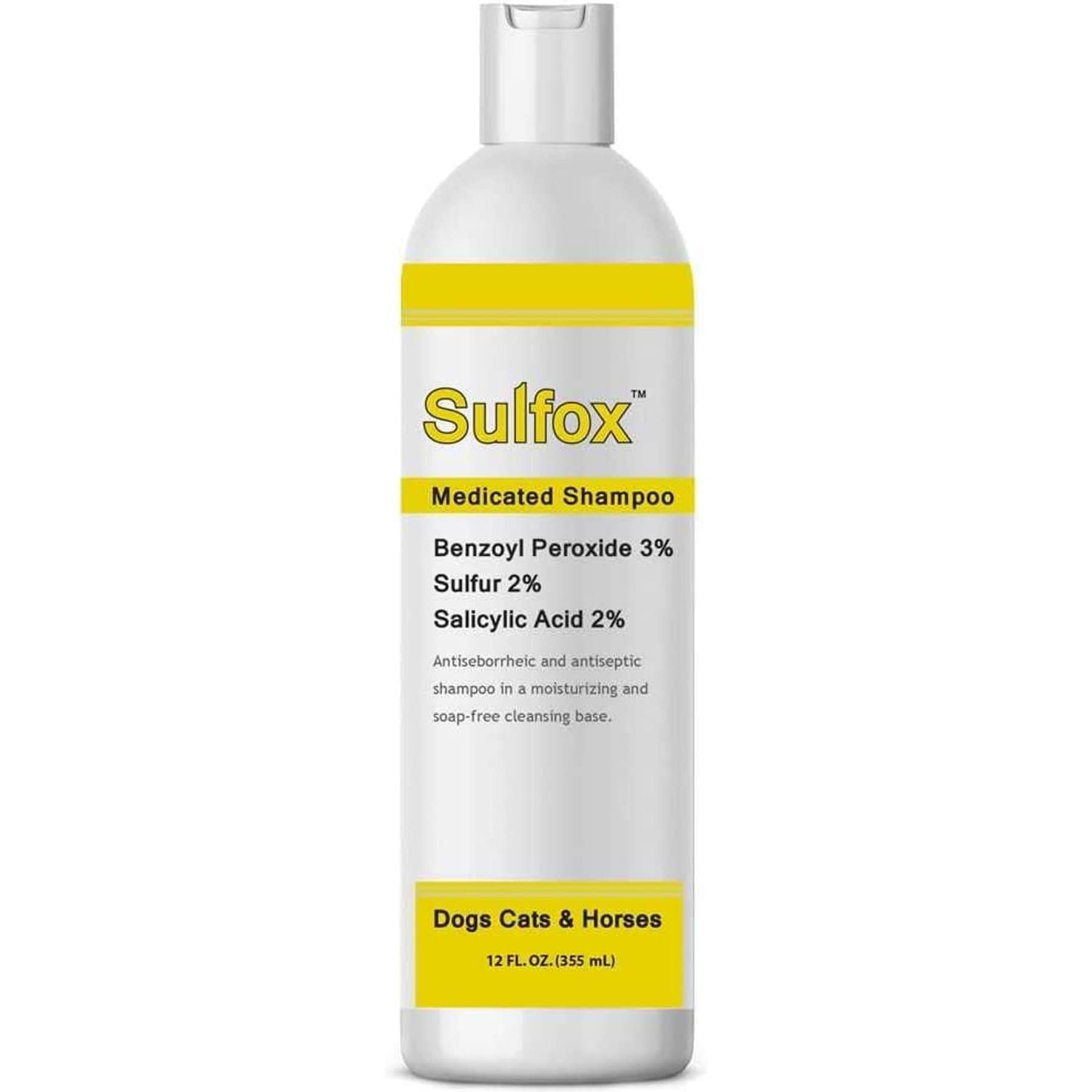
A medicated cleansing and degreasing shampoo for scaling that a vet has already diagnosed.
Webvet may earn a commission when you click through to Chewy, at no extra cost to you.
Sulfox's listing calls it a medicated cleansing and degreasing shampoo for dogs, cats, and horses, made in the USA, with a soap-free base that removes scale and oil from the coat. The listing does not name its active ingredients, so confirm the label with the vet before use. The 12-fl oz bottle is listed at $20.99 on Chewy when checked in November 2026.
A degreasing medicated shampoo fits the oily side of seborrhea, but Merck says the choice of medicated shampoo depends on the coat and on how scaly and oily the skin is, which is a call for the vet who examined the dog. The medicated dog shampoo guide covers the wider category.
- Who it suits: a dog whose vet has diagnosed greasy, scaling skin and wants a degreasing shampoo in the plan.
- Who should skip it: any dog with undiagnosed flakes, and dogs with dry flaking, where degreasing can work against the goal.
- How it differs: it is the only medicated pick, so it is used on the vet's schedule and contact time rather than as a routine wash.
How to choose a dandruff shampoo: dry flaking, oily scale, sensitive skin, and medicated formulas
Choose a dandruff shampoo by flake type: dry flakes suit a moisturizing formula, reactive skin suits a fragrance-free one, and greasy, itchy, or moving flakes need a vet before any shampoo. Match what you see on the coat to a shampoo type or a vet visit here:
| What you see | Likely cause | Shampoo step | See a vet when |
|---|---|---|---|
| Fine, dry white flakes on a comfortable dog | Dry skin, low humidity, or frequent baths | A moisturizing or oatmeal shampoo used as the label directs | Flakes persist, spread, or itching starts |
| Flakes that appear in winter with indoor heating | Dry winter air and low indoor humidity | A gentle hydrating shampoo and fewer baths | The coat stays dull or flaky despite gentle care |
| Greasy scale with an odor | Oily seborrhea, sometimes with yeast or bacteria | A medicated degreasing shampoo only as a vet directs | Book a visit before choosing a shampoo |
| Flakes that move along the back | Cheyletiella mites (walking dandruff) | Vet-prescribed treatment for every pet in the home | Book a visit before bathing; mites spread |
| Flakes with itching, redness, sores, or hair loss | Allergies, parasites, or skin infection | Soothing or medicated shampoo chosen by a vet | Book a visit before choosing a shampoo |
| Flakes in a dog gaining weight with a dull coat | Possible hypothyroidism causing secondary seborrhea | Shampoo eases scale but cannot fix the cause | Book a visit; blood tests are needed |
Start by matching the flakes to the dog. Merck's guidance is that a medicated shampoo is selected by the hair coat and by how scaly and oily the skin is. The same logic works for everyday products: dry flaking calls for moisture, oily scale calls for a vet and a degreasing formula, and reactive skin calls for fewer added ingredients.
Dry flaking: moisturizing and oatmeal formulas
For dry flaking, an oatmeal shampoo is a sensible starting point. VCA notes that an aloe and oatmeal shampoo is often recommended for regular bathing. Colloidal oatmeal is finely ground oat, and its beta-glucan holds water on the skin, which suits flakes from dry air or frequent washing.
A small study in the Japanese Journal of Veterinary Dermatology adds some dog-specific support. In 12 itchy dogs, a colloidal oatmeal shampoo relieved mild or moderate itching, though severe chronic cases got only short-term relief. That study measured itch rather than flaking, so oatmeal is best treated as a gentle moisturizer, not a cure.
Between baths, a leave-on product can help light cosmetic flaking without another full wash. The Pet MasterMind Fluffy Fido Dog Dandruff Treatment Spray, 7-fl oz bottle is listed by the maker as free from artificial fragrances, parabens, sulfates, and alcohol, and is listed at $16.95 on Chewy when checked in November 2026. Despite the name, it suits light dry flaking only.

Oily scale: degreasing and medicated formulas
Greasy scale is a different problem. Merck's topical-therapy guidance lists tar for oily seborrhea, though its seborrhea chapter says tar shampoos are usually no longer recommended because of their odor and potential to irritate. Merck lists benzoyl peroxide or selenium sulfide as options when greasiness persists. These are strong ingredients matched to specific seborrhea types, so the type has to be known before one is chosen.
Once a vet has made that call, a degreasing product such as Sulfox Dog Shampoo, 12-fl oz bottle can fit the plan. Use it on the schedule and with the contact time the vet sets, not as a weekly habit chosen at home.
Sensitive skin and the conditioner question
For dogs that react to products, fewer added ingredients is the safest rule. The DOG By Dr Lisa Sensitive Dog Shampoo, 16.9-fl oz is fragrance-free, which follows VCA's advice to skip added perfumes for regular bathing. Puppies need their own approach, and a puppy shampoo guide covers formulas made for young skin.
Following the shampoo with a conditioner can make sense for a dry coat. Merck describes emollients as excellent adjunct products after shampooing, once the skin has been rehydrated. Two-step routines suit dry flaking best; on oily scale, extra conditioning can add to the problem.
Shedding and dandruff together
Some dogs shed heavily and flake at the same time. No shampoo stops normal seasonal shedding, and VCA notes that a healthy dog does not shed excessively and has a coat free from dandruff or greasiness. Heavy shedding plus flaking is worth a closer look at diet and health.
Two causes in particular link the two signs:
- Diet: VCA says a dog eating an inadequate diet will have a dull, dry coat and often shed excessively.
- Hypothyroidism: Merck lists dryness, excessive shedding, and delayed hair regrowth among the common skin and coat changes.
For a dog with both shedding and flakes, a gentle moisturizing shampoo and regular brushing are the sensible routine, while the vet checks diet and thyroid function if the shedding is heavy.
 Sponsored
Vet care that's always there
Unlimited video calls and messaging with licensed vets for less than a typical vet visit. One membership covers up to five pets.
Use code Pets60
Plans start at $12/month · covers up to 5 pets
- Licensed vets in most states
- Rx for 150+ conditions
- 4.7 on Trustpilot
What causes dandruff in dogs: dry skin, seborrhea, walking dandruff, and diet
Dandruff has several causes, and the right shampoo depends on which one is at work. VCA groups seborrhea into two types, seborrhea sicca (dry) and seborrhea oleosa (oily), and notes that it typically affects the back, face, and flanks and is worse in skin folds.
Dry skin and the environment
The simplest cause is dry skin. VCA notes that some dogs develop skin irritation from dry winter conditions and low humidity in the home. Frequent bathing can add to it, because every bath with soap washes away part of the acid mantle that helps keep skin hydrated. The dry skin on dogs guide covers the wider list of causes.
For this kind of flaking, the shampoo should moisturize rather than strip. The gentlest formula that still cleans is usually the right one: oatmeal, hydrating, or fragrance-free.

Seborrhea: primary and secondary
Seborrhea comes in two forms by cause. In dogs, Merck says secondary seborrhea is more common than primary, and the most common underlying causes are hormone disorders and allergies. VCA's list of secondary causes is longer:
- Hormonal imbalances such as thyroid disease or Cushing's disease
- Allergies
- Parasites such as fleas, ticks, and mange mites
- Yeast (Malassezia) and bacterial skin infections
- Diets low in omega-3 fatty acids
- Environmental factors such as temperature and humidity changes
- Obesity or joint disease that stops a dog grooming properly
Primary seborrhea is inherited. Merck names American Cocker Spaniels, English Springer Spaniels, Basset Hounds, West Highland White Terriers, Dachshunds, Labrador and Golden Retrievers, and German Shepherds. It usually begins before 18 to 24 months of age and continues through the dog's life, so shampooing a dog with the primary form becomes long-term management rather than a cure.
Walking dandruff mites
Some flakes are not skin at all. Cheyletiella mites, according to the Companion Animal Parasite Council, are about 500 micrometers long and visible to the unaided eye. They live on the skin surface and feed on its outer layer, causing flaky, bran-like scale. Owners sometimes notice the flakes appear to crawl, which is where the name walking dandruff comes from.
Diet as a flaking cause
Diet is a less common cause. VCA lists diets low in omega-3 fatty acids among the causes of secondary seborrhea. Merck takes a more reassuring view, noting that nutritional skin disease is uncommon in dogs fed modern, balanced diets, though Siberian Huskies may need extra zinc. Both points hold: deficiency is possible, but most dogs on a complete commercial diet are not deficient.
Fatty acids matter because, as Merck explains, essential fatty acids are part of the skin barrier and cannot be made by the body, so they must come from food. Linoleic and linolenic acid are the most important for dog skin. A guide to skin issues in dogs and how to tell if it's food or fleas helps sort out the diet question.
Supplements are a vet conversation, not a cure-all. What the sources say about them:
- They have a place: VCA includes omega-3 fatty acid supplements in seborrhea management.
- Results are modest: Merck notes only about 20% of dogs with allergic itching show some improvement on essential fatty acids.
- They are not risk-free: Merck says large amounts can cause weight gain or diarrhea, and pancreatitis has rarely been reported.
If the vet agrees a supplement is worth trying, a fish oil such as the Native Pet Omega 3 Fish Oil Supplement To Support Skin & Coat Health for Dog, 8-oz bottle is one option. Its listing describes a liquid omega-3 supplement made from wild Alaskan salmon and pollock oil with wheat germ oil, listed at $16.99 on Chewy when checked in November 2026.
How to use a dandruff shampoo safely: contact time, rinsing, and how often
Yes, a dog can be washed with a dandruff shampoo made for dogs, and for dry, cosmetic flaking it can help. How well it works depends as much on the bath as on the bottle: how long the lather stays on, how well it rinses off, and how often the dog is bathed.
How do I treat dandruff on my dog?
Treat light dandruff on a healthy dog with a gentle dog shampoo matched to the flake type, left on for the label's contact time and rinsed off completely, with baths spaced so the skin is not dried out. If flaking is greasy, heavy, itchy, or moving, have a vet find the cause, because Merck says most seborrhea in dogs is secondary to another disease.
Contact time: why the lather has to stay on
A dandruff shampoo needs time on the skin to work. Merck's topical-therapy guidance says the dog should be fully lathered with the skin and hair massaged during the contact time, and that three to five minutes is effective. VCA's medicated-bath instructions set a timer for 10 minutes, or for the contact time the vet prescribed.
The two sources differ, and the gap is real: three to five minutes in Merck, 10 minutes in VCA's medicated-bath guide. The practical answer is to follow the product label for an everyday shampoo, and the vet's instruction for a medicated one. When the two conflict, the vet's instruction wins.

Step by step: bathing a dog with dandruff shampoo
These steps combine the Merck and VCA guidance with the product label:
- Brush out loose hair and scale first, so the shampoo reaches the skin. VCA notes that long, silky, or curly coats need daily brushing to stay free of tangles and mats.
- Wet the coat thoroughly with lukewarm water, as VCA advises for medicated baths.
- For a medicated shampoo, Merck suggests a prewash with a cleansing shampoo to remove debris first.
- Merck also suggests diluting a medicated shampoo in a bucket or container first, which reduces irritation and makes it easier to spread and rinse.
- Work the shampoo into a full lather and massage it down to the skin, keeping it out of the eyes.
- Time the contact period with a clock: the label time for an everyday shampoo, the vet's time for a medicated one.
- Rinse until the water runs clear. VCA stresses that shampoo should not be left on the skin.
- Towel dry and keep the dog warm until completely dry. Merck warns against leaving a dog shivering with lather in a tub.
Rinsing and conditioning
Rinsing is the step most often rushed. Leftover shampoo stays in contact with the skin long after the timed period, and VCA says residual shampoo should not be left behind. A double rinse is the easiest habit for thick or double coats.
A rinse-out conditioner can follow the shampoo on a dry-feeling coat. The CHI Oatmeal Dog Conditioner, 6-fl oz bottle is an oatmeal conditioner that its maker labels safe for dogs and puppies 8 weeks of age and older, listed at $8.75 on Chewy when checked in November 2026. The dog conditioner guide covers other options.
For the oatmeal route, the Douxo Spa Skin & Coat UltraSafe Oatmeal Dog Shampoo, 16-fl oz bottle and that conditioner make a simple two-step wash. For everyday baths on a coarse coat, the KONG Hydrating Dog Shampoo, 16-fl oz bottle is the plainer single-bottle choice.
How often to bathe a dog with dandruff
Frequency depends on what is causing the flakes, and the sources set very different schedules for different situations:
- Healthy skin: VCA says non-shedding breeds with no health issues usually need a bath every six to eight weeks.
- Everyday anti-dandruff shampoo: the Hartz Groomer's Best Professionals Anti-Dandruff with Jasmine & Citrus Scent Dog Shampoo, 18-fl oz bottle label allows use twice weekly or as a vet directs.
- Medicated baths: VCA notes these are often weekly, on the vet's schedule.
- Primary seborrhea: Merck describes bathing two to three times a week until it works, then once or twice a week for maintenance.
Daily washing does not help. Over-washing strips the acid mantle that keeps skin hydrated, and VCA advises asking a vet if a dog seems to need frequent baths. The how often should you bathe your dog guide covers routine schedules.
When dog dandruff needs a vet: mites, infection, allergies, and hormone disease
Dandruff becomes a vet problem when the flakes are a sign of disease rather than dryness. VCA's advice on seborrhea is that treatment should target the underlying cause, and the outlook is better when that cause is found and treated. A shampoo can ease the scale while the vet works on the reason.
Walking dandruff: why a shampoo from the shelf is not the answer
VCA describes cheyletiellosis as an uncommon but highly contagious skin parasite of dogs, cats, humans, and rabbits. The main sign is scaling, most often on the back and upper body, with itching that varies from dog to dog. CAPC adds that some infested dogs are moderately to severely itchy.
Most dogs catch the mites from other pets at shelters, breeders, groomers, or other places where many dogs mix, according to VCA. CAPC notes that skin lesions may develop on people in contact with infested pets, though human infestation is unlikely.
A shampoo from the shelf will not clear these mites. CAPC states that no treatments are labeled for them in the United States, although several treatments have been shown to work. What a mite plan involves:
- A vet-chosen treatment: the vet picks the product and schedule for the diagnosed mites.
- Every pet at once: VCA notes that all pets in the house must be treated at the same time.
- The home too: VCA advises thoroughly cleaning bedding and surfaces the dog has touched.
- Prevention: CAPC notes that current use of monthly internal or external parasite preventives may help prevent infestations.
How a vet finds the cause
A vet visit for flaking is mostly detective work. VCA lists the tests a vet may use to sort out seborrhea and its causes:
- Skin cytology: samples examined under a microscope for inflammatory cells, bacteria, yeast, or abnormal cells.
- Skin scrapings and hair pluckings: to look for mites and other external parasites.
- Flea combing and tape impressions: CAPC describes both for finding Cheyletiella.
- Skin culture: to test for bacterial and fungal infections such as ringworm.
- Hormone tests: to check for thyroid disease or Cushing's disease.

Allergies and infection
Allergies are one of the two most common causes of secondary seborrhea in Merck's account. VCA describes atopic dermatitis as a common condition of itchy, inflamed skin that typically starts between 2 and 6 years of age, with itching that may be seasonal or year-round. Bacteria and yeast can cause secondary infections on top of it. The dog skin allergies guide explains how vets manage allergic skin.
Many allergic dogs benefit from frequent baths with special shampoos, sprays, or mousses, according to VCA, but those products are chosen to fit the dog's diagnosis.
For a dog that is scratching as well as flaking, why is my dog so itchy: common causes of canine pruritus covers the wider list. For the bathing side of an itchy dog, the dog shampoo for itchy skin guide explains soothing, vet-guided options.
Hypothyroidism and other hormone disease
Flaking in a dog that is also gaining weight deserves a thyroid check. The Merck Veterinary Manual lists common skin and coat changes in hypothyroidism, including dryness, excessive shedding, and delayed hair regrowth. Other signs include:
- Weight gain without an increase in appetite
- Lethargy and reluctance to exercise
- Trouble keeping warm and seeking out heat
- Recurrent skin and ear infections, as listed by the Cornell Richard P. Riney Canine Health Center
Diagnosis takes blood tests and a vet's assessment. Cornell notes that once treatment starts, improvement in the skin and coat may take several months, so the flakes do not vanish overnight even when the cause is found.
Human dandruff shampoo, homemade rinses, and other things to avoid on dogs
Human dandruff shampoo should not go on a dog without a vet's go-ahead. A dandruff shampoo made for dogs is fine; the human anti-dandruff shampoo from the family shower is not, because it is formulated for different skin.
Is human dandruff shampoo good for dogs?
No. Human dandruff shampoo is not a good choice for dogs. The Merck Veterinary Manual's owner guidance on seborrhea says never to use a shampoo formulated for people without your vet's consent. VCA explains why: human skin is acidic, at pH 5.2 to 6.2, while dog skin is more neutral, at 6.2 to 7.5.
That pH gap is the problem. VCA says a more acidic human shampoo disrupts the acid mantle, the thin layer that protects skin from germs and helps keep it hydrated, and strips away protective oils. For a dog that is already flaky, that can make the dryness worse.
One nuance is worth stating plainly. Merck's professional topical-therapy guidance lists many mild human products among the cleansing shampoos used to prewash before a medicated shampoo. That is a clinical step a vet directs, which fits the owner guidance: human products only with the vet's consent.
Homemade and natural dandruff rinses
Homemade rinses are a gamble for a flaky dog, mainly because of what goes into them.
The best-documented risk in homemade and natural recipes is essential oils, especially tea tree oil. The ASPCA Animal Poison Control Center advises completely avoiding applying essential oils directly to pets, and says concentrated tea tree oil may cause problems with only seven or eight drops.
A study of ASPCA Animal Poison Control records in the Journal of the American Veterinary Medical Association reviewed 443 cases of 100% tea tree oil exposure in 337 dogs and 106 cats. In 89% the oil had been used on purpose, half the exposures were on the skin, and serious signs such as weakness, wobbliness, and tremors lasted up to 3 days.
Which dog shampoo to avoid?
Avoid any shampoo not formulated for dogs, any product containing concentrated essential oils, and heavily perfumed formulas on sensitive or flaky skin. VCA says human shampoo, including baby shampoo, is too harsh for dog skin, and recommends a hypoallergenic shampoo without added perfumes for regular baths. Avoid tar shampoos in homes where a cat could be bathed by mistake.
What are bad dog shampoos?
Bad dog shampoos are ones that ignore dog skin pH, add strong scent or concentrated essential oils, or carry medicated ingredients used without a diagnosis. VCA notes human conditioners can be too acidic and cause irritation and itching. Merck matches benzoyl peroxide and selenium sulfide to specific seborrhea problems and says tar shampoos are usually no longer recommended, so a strong medicated wash on healthy skin is a poor fit.
Can I use Dawn dish soap as shampoo for my dog?
Dawn dish soap should not be a dog's regular shampoo, though a single accidental wash is not a poisoning emergency. Merck says liquid hand-dishwashing soaps are pH-adjusted to cause minimal skin irritation and are not meaningfully absorbed. Dish soap is not formulated for dog skin, and VCA notes that soap baths wash away the protective acid mantle.
Machine dishwasher detergent is a different matter. Merck notes that electric-dishwasher detergents are alkaline, with a pH above 11, and corrosive, so they never go on a dog's skin.
Dog dandruff shampoo questions
Frequently Asked Questions
Can I use my own dandruff shampoo on my dog?
It is best not to. Human dandruff shampoo is made for skin that is more acidic than a dog's, so it can leave dog skin drier. Use a dog shampoo and follow its label for contact time and frequency, and ask a vet before using any human product, medicated or not.
What is walking dandruff in dogs?
Walking dandruff is the common name for an infestation with Cheyletiella mites. The mites are large enough to see and move across the skin, so the scale appears to crawl. They are highly contagious between pets and can cause skin lesions on people. A vet confirms the mites and sets the treatment, which VCA says usually includes 3 to 4 weekly medicated baths.
How often should I wash a dog with dandruff shampoo?
How often depends on the cause. For dry, cosmetic flaking, wash only as often as the label allows and no more, because over-bathing dries the skin further. A dog with healthy skin may only need a bath every six to eight weeks, according to VCA. Medicated schedules for seborrhea or mites are set by the vet.
Is oatmeal shampoo good for dog dandruff?
Oatmeal shampoo is a good fit for dry flaking. Colloidal oatmeal acts as a cleanser and moisturizer, and VCA notes aloe and oatmeal shampoos are often recommended for regular baths. In a small study of 12 itchy dogs, an oatmeal shampoo relieved mild and moderate itch. It is less suited to greasy scale.
Is seborrhea the same as dandruff in dogs?
Not quite. Dandruff is the visible flaking; seborrhea is a skin disease in which the skin makes too much scale, sometimes with grease and odor. Most seborrhea in dogs is secondary to another problem, such as allergies or hormone disease, so a vet needs to find the cause for flaking that keeps coming back.
Veterinarian · BVMS MRCVS
Dr. Pippa Elliott, BVMS, MRCVS, is a veterinarian with nearly 30 years of experience in companion animal practice. Dr. Elliott earned her Bachelor of Veterinary Medicine and Surgery from the University of Glasgow. She was also designated a Member of the Royal College of Veterinary Surgeons. Married with 2 grown-up kids, Dr. Elliott has a naughty Puggle named Poggle, 3 cats and a bearded dragon.
Related reading

Why Do Dogs Feet Smell Like Fritos? Causes and When It Means Infection

Dog Elbow Callus: Causes, Treatment, and When to Worry

Matted Dog Hair: How to Remove Mats Safely and When to See a Groomer
