Dog Conditioner: Best Picks and Which Coats Actually Need It
Many dogs never need conditioner, but long, curly, double, and dry-feeling coats often brush out easier with one. Which coats benefit, why human conditioner is a poor swap, how to use a dog conditioner safely, and our picks for each kind of coat.

BVMS MRCVS
Medically reviewed by Dr. Pippa Elliott, BVMS MRCVS · Last reviewed

This article contains affiliate links. Webvet may earn a commission when you buy through them, at no extra cost to you.
Dog conditioner: does your dog need it, and what makes a good one
A dog conditioner is a dog-labeled coat product used after shampoo, or left in, to soften the coat and make brushing easier, and many dogs never need one. A smooth, short-coated dog usually does well with a dog shampoo and regular brushing alone. Long, curly, silky, double, and dry-feeling coats are different: they often brush out more easily and tangle less when a dog-labeled conditioner follows the shampoo.
Human hair conditioner is a poor substitute for a dog conditioner, because it is made for human skin and hair, not a dog's. Fragrance and essential oils are best kept off a dog that licks its coat. And itching, flaking, redness, or hair loss is a skin problem for a vet, not something a conditioner fixes.
- 1Start with which coats benefit from conditioner: long, curly, silky, double, and dry-feeling coats gain the most, while most smooth short coats can skip it.
- 2Decide rinse-out versus leave-in: a rinse-out goes on after shampoo and washes off, a leave-in or spray stays on to help with tangles between baths.
- 3Use a dog-labeled product, not human hair conditioner, and skip fragrance and essential oils on a dog that licks.
- 4Rinse until the water runs clear, then dry thoroughly.
- 5Itching, flaking with redness, sores, odor, or hair loss need a vet, not a new conditioner.
| Pick | Type | Coat it suits | Who should skip it |
|---|---|---|---|
| KONG Hydrating Dog Conditioner, 16-fl oz bottle | After-shampoo conditioner, coconut scent, labeled pH-balanced | Everyday use on most coats | Dogs that react to scented products |
| CHI Oatmeal Dog Conditioner, 6-fl oz bottle | After-shampoo oatmeal conditioner, labeled for dogs and puppies 8 weeks and older | Dry-feeling coats | Puppies under 8 weeks; any dog with itchy or flaky skin that has not seen a vet |
| DOG By Dr Lisa Leave In Dog Conditioner, 16.9-fl oz bottle | No-rinse leave-in with coconut oil, chamomile, and rose water | Long and curly coats between baths | Dogs that lick their coat heavily |
| BioSilk Silk Therapy Detangling Dog Conditioner | Detangling conditioner with silk and vitamins | Long, silky coats | Tight mats, which need a groomer |
| TropiClean Lime & Cocoa Butter Deshedding Dog Conditioner, 20-oz | After-shampoo conditioner, lime and cocoa butter scent | Double coats in heavy shed | Scent-sensitive dogs |
| The Stuff Concentrate Dog Conditioner & Detangler, 4-fl oz bottle | Silicone-formulated leave-in concentrate, diluted before use | Long, show, or tangle-prone coats | Smooth short coats that never tangle |

What separates a good dog conditioner from a poor one is mostly fit. The right product matches your dog's coat, is made and labeled for dogs, and leaves out ingredients your dog should not lick off. Price and scent come after that.
Skin pH is part of why the dog label matters. A review in Veterinary Dermatology describes how skin pH differs between species and between individuals, and notes that skin acidity may help protect against microbes. Products made for people are built around human skin, so a dog product is the safer default.
The format matters as much as the brand:
- Rinse-out conditioner: goes on after the shampoo is rinsed, sits briefly, and is rinsed off. It suits most coats that need softening or easier brushing.
- Leave-in conditioner: stays on the coat after the bath or between baths. It helps long and curly coats resist tangles, but your dog may lick some of it off.
- Spray conditioner or detangler: a light leave-in you mist on and comb through, useful for quick tangles between baths.
- 2-in-1 shampoo and conditioner: one bottle that cleans and conditions, convenient for short coats but less adjustable for long ones.
 Sponsored
Want a vet's take on your dog's skin or coat?
Talk to a licensed vet at Dutch over video, often the same day. They can recommend treatment and prescribe it when it's appropriate.
Use code Pets60
Plans start at $12/month · covers up to 5 pets
- Licensed vets in most states
- Rx for 150+ conditions
- 4.7 on Trustpilot
Our picks: the best dog conditioners
Each pick is a dog conditioner labeled for dogs, judged on its label and the maker's product description. Each one is matched to a coat type, because the best dog conditioner for a curly-coated doodle is rarely the best one for a smooth Labrador.
A good dog conditioner should leave the coat easier to brush and soft to the touch and, for a rinse-out, wash away cleanly. Format and fit matter more than the brand name, so these six cover the main coat needs, from curly coats to heavy shedders.
A medicated dog conditioner is a separate category. It is chosen by your vet for a diagnosed skin condition and used on the vet's schedule. None of these six is medicated, and none is a treatment for skin disease.
KONG Hydrating Dog Conditioner: best budget everyday conditioner
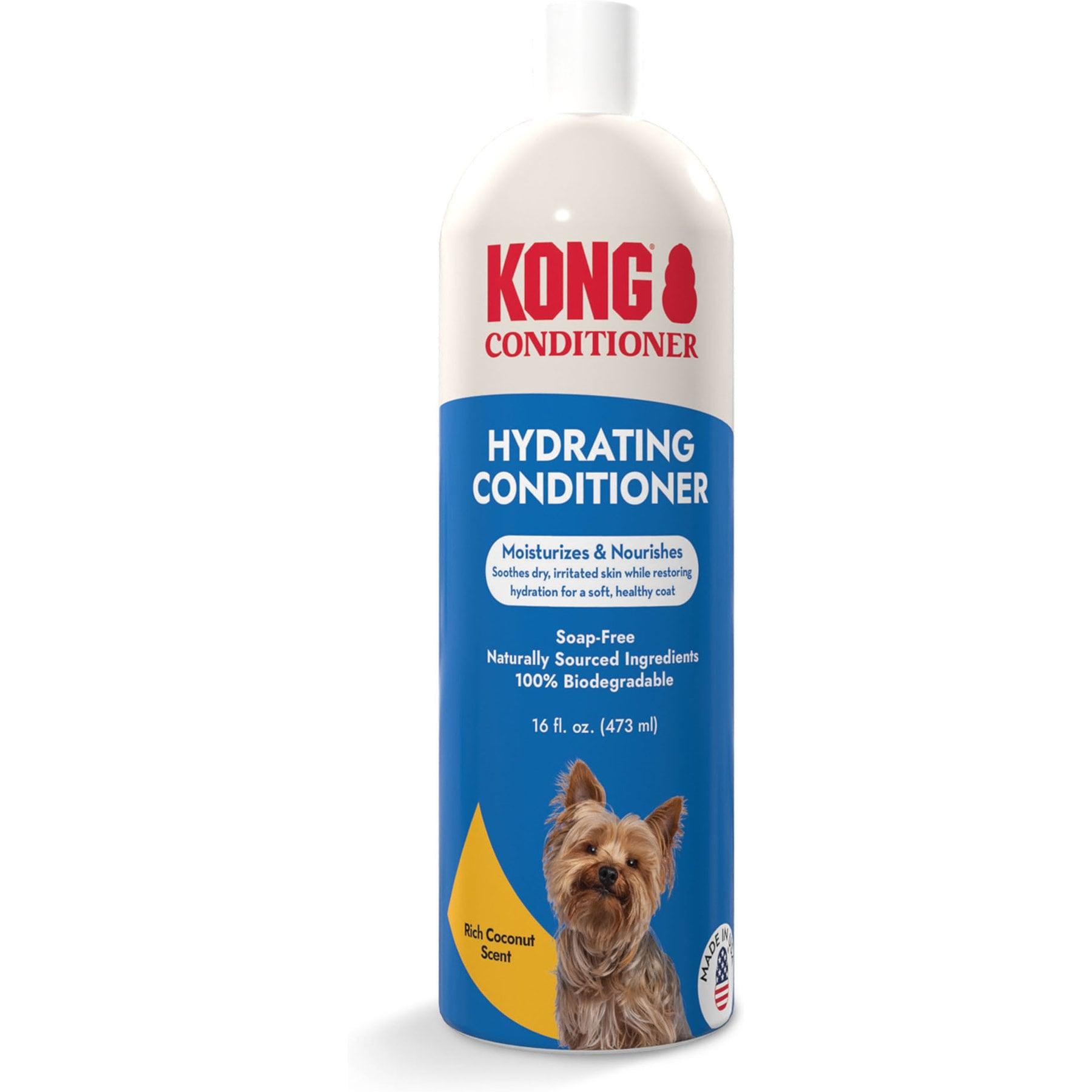
An everyday after-shampoo conditioner for most coats, labeled pH-balanced for dogs.
Webvet may earn a commission when you click through to Chewy, at no extra cost to you.
The KONG Hydrating Dog Conditioner, 16-fl oz bottle is a straightforward after-shampoo conditioner. KONG describes it as pH-balanced, made with naturally sourced, plant-based ingredients, and suitable for all breeds and coat types. It carries a coconut scent. It was listed at $14.43 on Chewy when checked in November 2026.
It suits:
- Owners who want one inexpensive conditioner for a mixed household of coats
- Medium coats that feel a little coarse after shampoo
- Dogs bathed on a routine schedule rather than for a skin problem
Skip it if your dog reacts to scented grooming products, or if a smooth short coat already brushes out easily without any conditioner. Like any rinse-out, it needs a thorough rinse so nothing is left on the skin.
CHI Oatmeal Dog Conditioner: best for dry-feeling coats
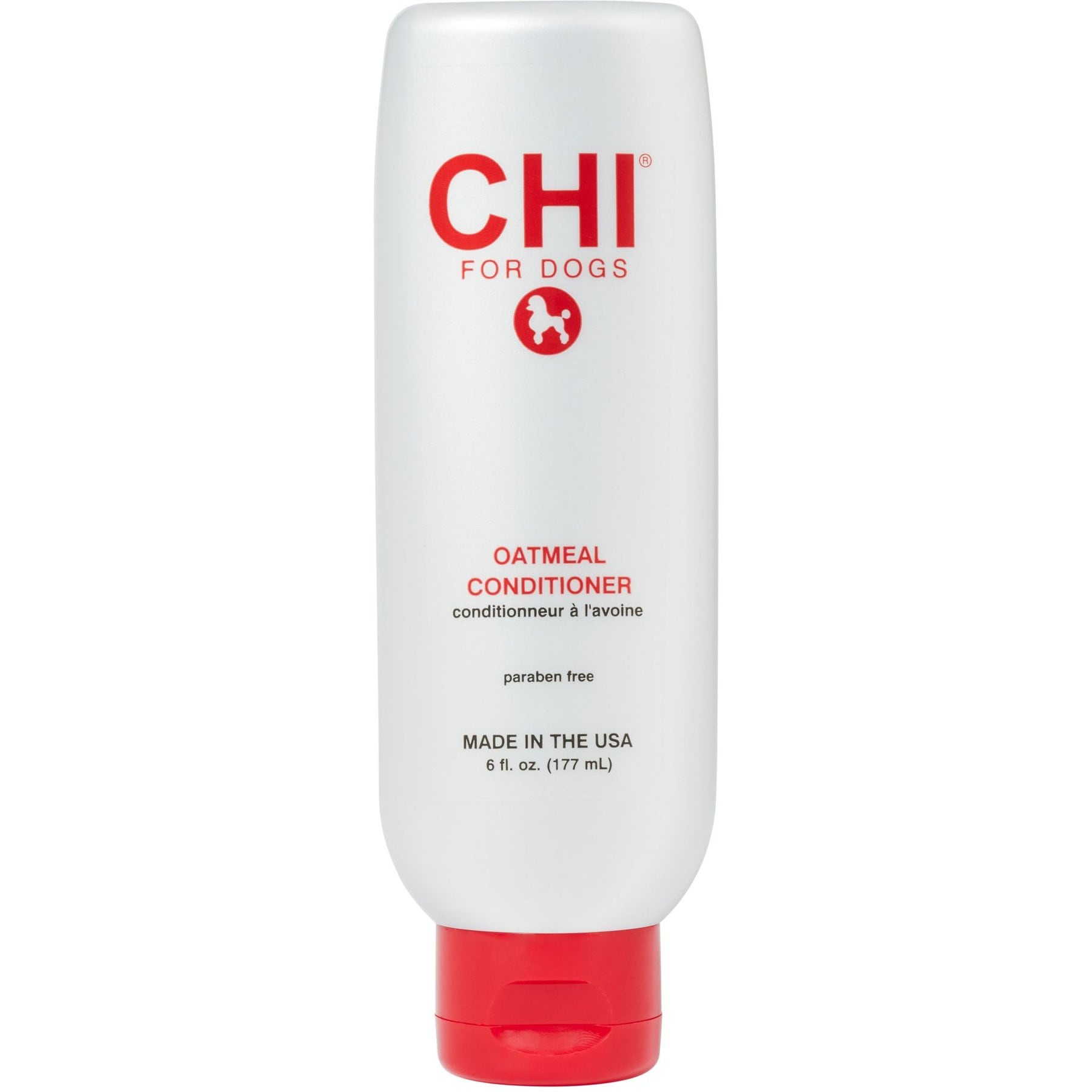
An oatmeal after-shampoo conditioner for coats that feel dry, labeled for puppies 8 weeks and older.
Webvet may earn a commission when you click through to Chewy, at no extra cost to you.
The CHI Oatmeal Dog Conditioner, 6-fl oz bottle is built around oatmeal. CHI says it deep conditions the coat, leaves it soft and shiny, and is safe for dogs and puppies 8 weeks of age and older. The 6-fl oz bottle is small, so it suits a small dog or occasional use. It was listed at $8.75 on Chewy when checked in November 2026.
Oatmeal has a real basis in skin care. A review in the Journal of Drugs in Dermatology describes colloidal oatmeal as a cleanser, moisturizer, buffer, and soothing, protective agent, based on human skin research.
It suits a coat that feels dry or dull after bathing on a dog with otherwise healthy, comfortable skin. Skip it as a fix for itching or flaking with redness: those signs need a diagnosis first, and the product's label is for conditioning, not treatment.
DOG By Dr Lisa Leave In Dog Conditioner: best leave-in conditioner
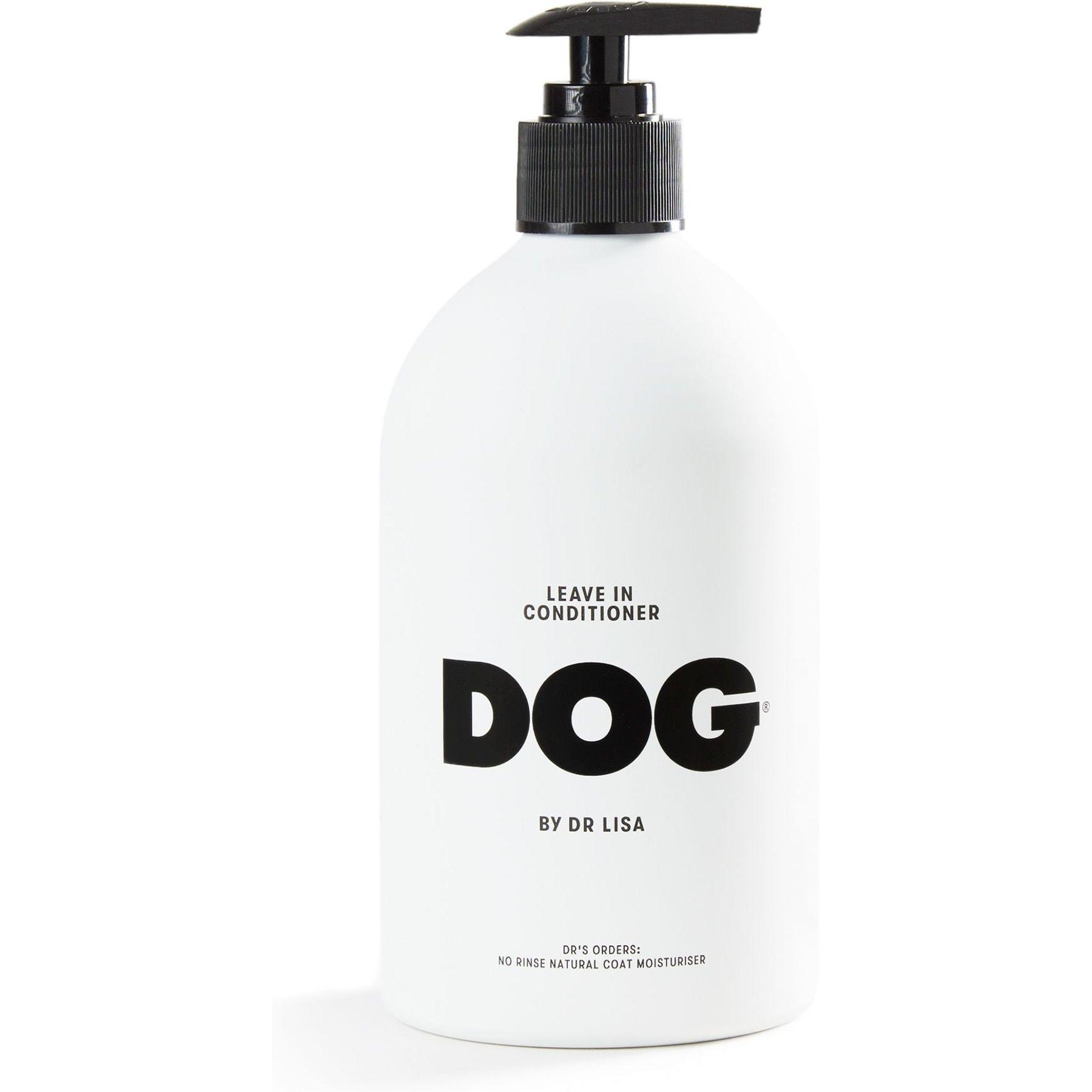
A no-rinse leave-in for long and curly coats, used on a damp coat after the bath or between washes.
Webvet may earn a commission when you click through to Chewy, at no extra cost to you.
The DOG By Dr Lisa Leave In Dog Conditioner, 16.9-fl oz bottle is a no-rinse formula with organic coconut oil, chamomile, and rose water. The maker says it can be used between washes or on a damp coat after bathing, and that regular conditioning can help reduce knots and tangles. It was listed at $22.49 on Chewy when checked in November 2026.
It suits:
- Long and curly coats that knot between grooming visits
- Owners who prefer not to add a second rinse step to bath time
- Coats that need a light conditioning touch on days without a bath
Because it stays on the coat, think about licking. A dog that grooms itself constantly will swallow some of whatever is left on its fur. If that describes your dog, a rinse-out product is the simpler choice.
BioSilk Silk Therapy Detangling Dog Conditioner: best for long silky coats
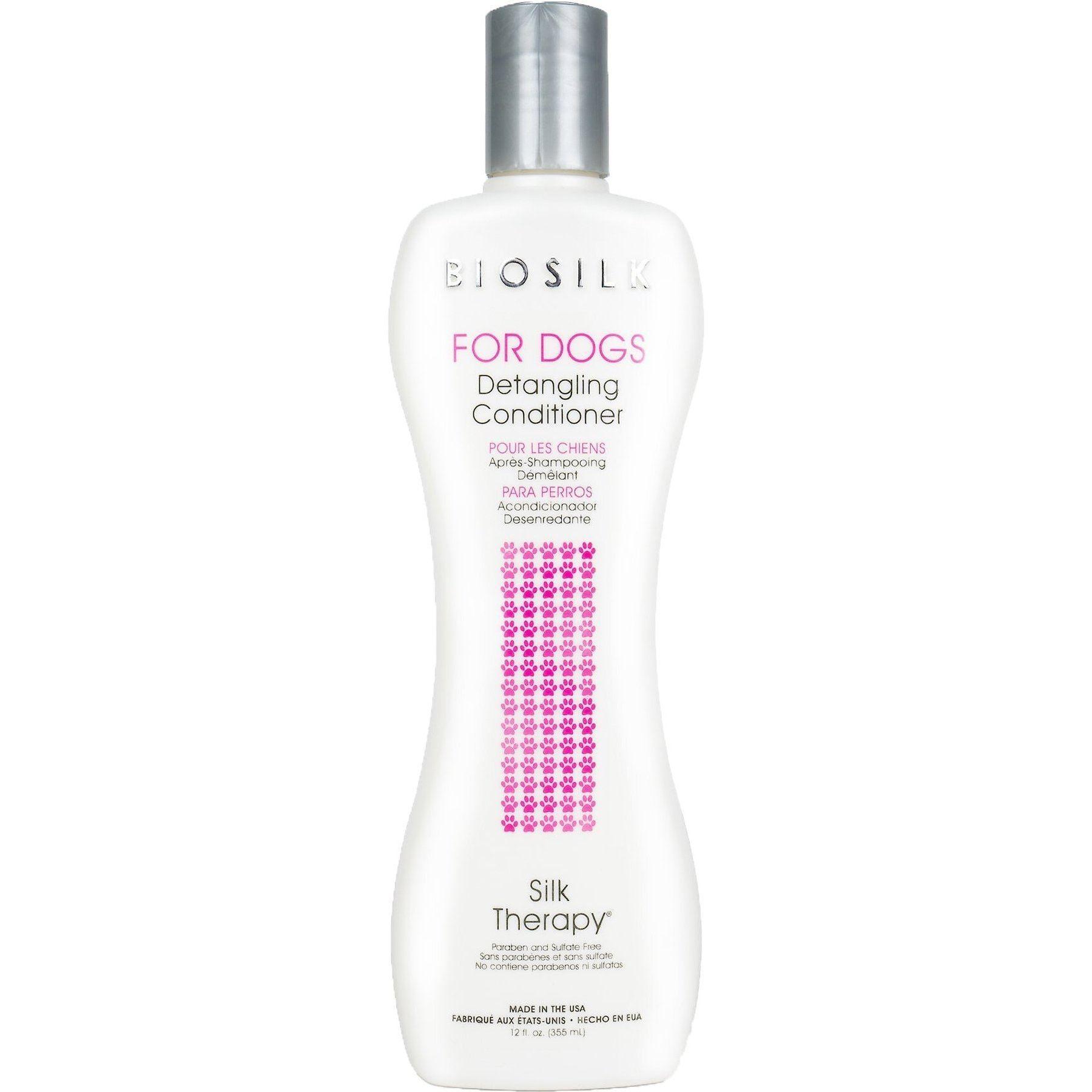
A detangling conditioner with silk for long, silky coats that knot easily between brushings.
Webvet may earn a commission when you click through to Chewy, at no extra cost to you.
The BioSilk Silk Therapy Detangling Dog Conditioner is made with silk and vitamins. BioSilk says it gently cleans, softens, and detangles, and is formulated to be tough on tangles while helping the coat smell fresh and clean. It was listed at $7.92 on Chewy when checked in November 2026.
It suits long, silky, flowing coats, such as a Yorkie or a Shih Tzu kept in full coat, where tangles form daily. It is a detangling aid, not a mat remover.
Skip it if your dog has tight mats against the skin. Those need careful clipping by a groomer; the Merck Veterinary Manual warns against scissors because it is easy to cut the skin.
TropiClean Lime & Cocoa Butter Deshedding Dog Conditioner: best for heavy shedders
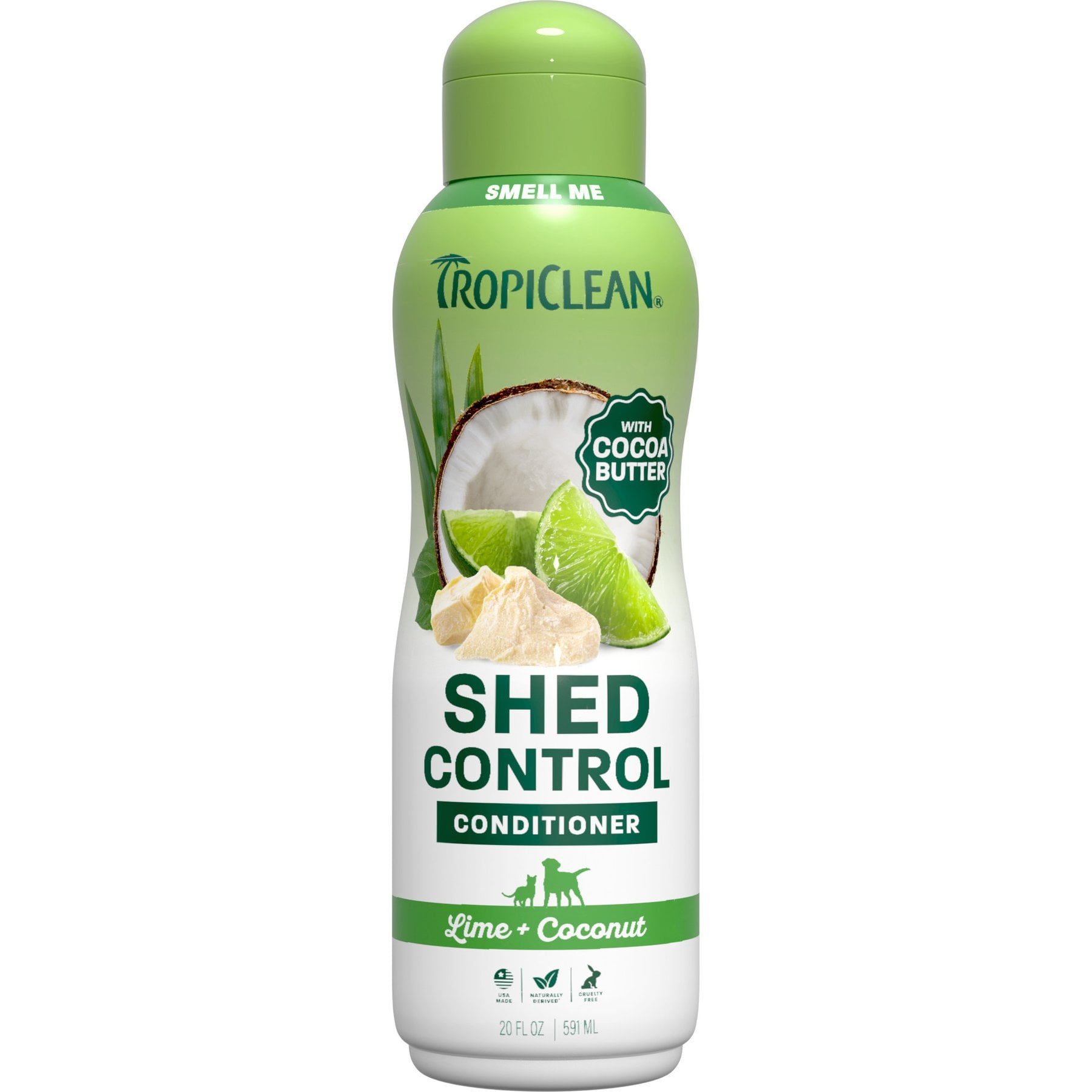
A scented conditioner for double-coated dogs in heavy shed, used alongside thorough brushing.
Webvet may earn a commission when you click through to Chewy, at no extra cost to you.
The TropiClean Lime & Cocoa Butter Deshedding Dog Conditioner, 20-oz is designed to moisturize and condition skin and coat, and TropiClean positions it for shed control. It carries a lime and cocoa butter scent. It was listed at $16.99 on Chewy when checked in November 2026.
It suits double-coated dogs during seasonal shedding, when a conditioned coat may be easier to brush through. Think of it as a brushing aid. No conditioner removes loose undercoat on its own; the brush does that.
Skip it for scent-sensitive dogs. Households washing several large double-coated dogs may prefer a bulk option such as the FURminator deShedding Ultra Premium Dog Conditioner, 1-gal bottle, which comes with a pump and was listed at $48.90 on Chewy when checked in November 2026.
The Stuff Concentrate Dog Conditioner & Detangler: best concentrate for tangle-prone coats
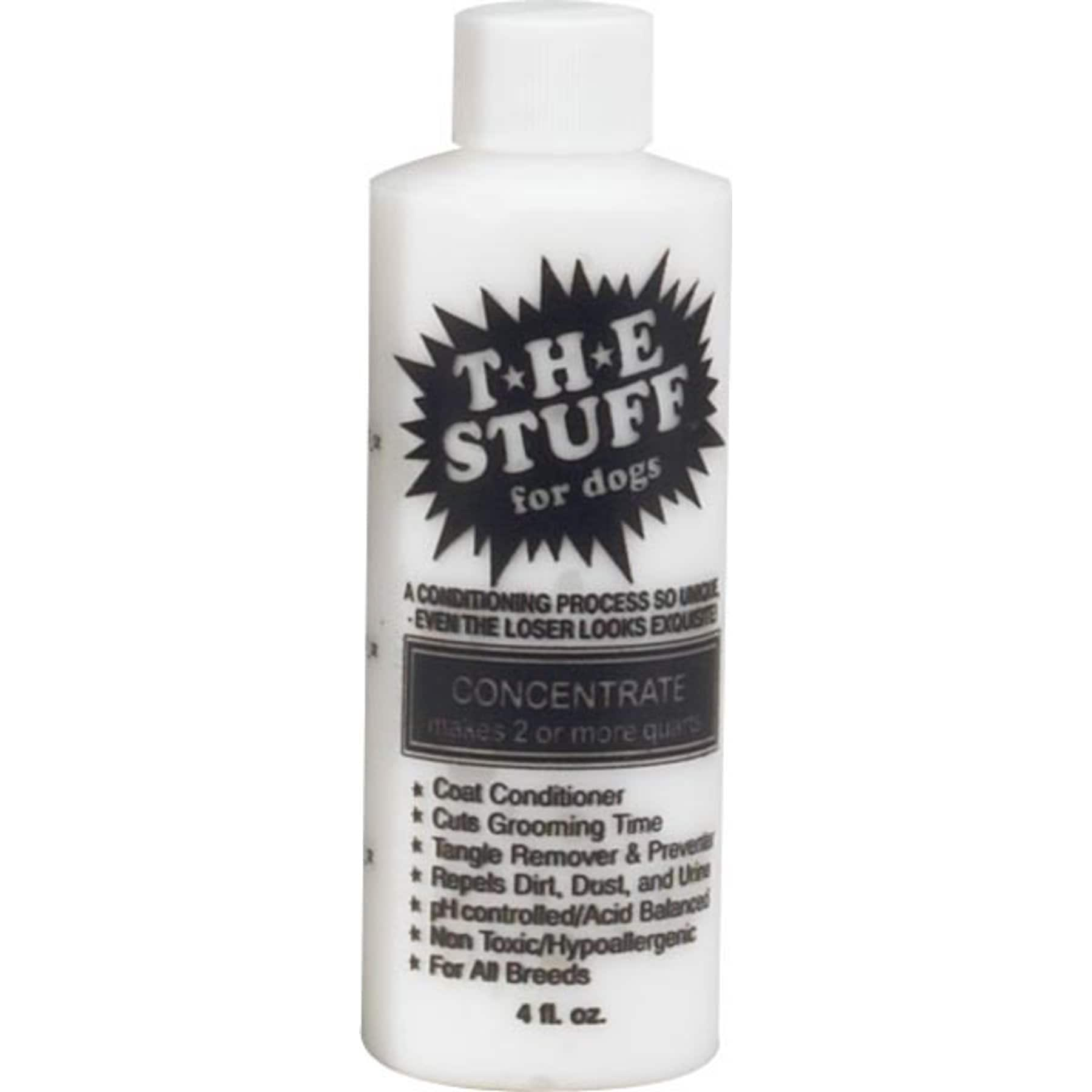
A silicone leave-in concentrate for long or tangle-prone coats, diluted with water before use.
Webvet may earn a commission when you click through to Chewy, at no extra cost to you.
The Stuff Concentrate Dog Conditioner & Detangler, 4-fl oz bottle is a silicone-formulated leave-in conditioner sold as a concentrate. The maker says it conditions the coat, works into mats and tangles, saves combing time, and helps repel dirt. It was listed at $18.68 on Chewy when checked in November 2026.
It suits:
- Long or show coats that are combed out often
- Tangle-prone coats where a slippery finish speeds up combing
- Owners comfortable mixing a concentrate with water before each use
Because it is a concentrate, mix it with water exactly as the bottle directs before it goes on the coat. Skip it for smooth short coats, which rarely tangle enough to need it.
 Sponsored
Vet care that's always there
Unlimited video calls and messaging with licensed vets for less than a typical vet visit. One membership covers up to five pets.
Use code Pets60
Plans start at $12/month · covers up to 5 pets
- Licensed vets in most states
- Rx for 150+ conditions
- 4.7 on Trustpilot
How to choose a dog conditioner for your dog's coat: rinse-out, leave-in, spray, and 2-in-1
| Coat | Needs conditioner? | Format that suits | Avoid | Sign it is skin, not coat |
|---|---|---|---|---|
| Smooth short coat | Usually not | Shampoo alone, or a light rinse-out | Heavy leave-ins that feel greasy | Itching, bald patches, or odor |
| Double coat | Helpful in heavy shed | Rinse-out, plus thorough brushing | Expecting conditioner to remove undercoat | Hair loss beyond seasonal shedding |
| Long silky coat | Often | Rinse-out, plus a detangling leave-in or spray | Working tangles wet and dry without combing | Redness under tangles or mats |
| Curly or doodle coat | Often | Leave-in or spray between baths, rinse-out after shampoo | Skipping daily brushing | Sores or odor under matted areas |
| Wire coat | Usually not | Shampoo alone; ask a groomer about coat finish | Heavy softening products | Scaling or bald patches |
| Dry-feeling coat | Sometimes | Gentle or oatmeal rinse-out | Fragrance and essential oils | Flakes with redness or itching |
| Sensitive skin | Only if your vet agrees | Fragrance-free leave-in or rinse-out | Scented and essential-oil products | Any itching, rash, or recurring flare |
Choosing a dog conditioner starts with the coat in front of you. A cosmetic conditioner mainly helps the coat: easier combing and a softer feel. It cannot fix a skin disease underneath.
Smooth short coats need the least. The ASPCA says smooth, short coats only need brushing once a week, while long, silky coats need tangles removed with a slicker brush every day. That difference in brushing is a good guide to which coats benefit from conditioner.

A double coat has two distinct layers, a harsh topcoat over a soft, dense undercoat, according to the American Kennel Club. A deshedding conditioner, such as the TropiClean Lime & Cocoa Butter Deshedding Dog Conditioner, 20-oz, may make a shedding coat easier to brush, but the undercoat still has to be brushed out.
Curly and long coats gain the most. The AKC describes poodles as having a curly, low-allergen coat and Yorkies a glossy, floor-length coat. These coats, like doodles and Shih Tzus kept in long hair, tangle easily. A detangling conditioner after shampoo, such as the BioSilk Silk Therapy Detangling Dog Conditioner, plus a leave-in between baths makes daily combing easier.
A leave-in suits long, curly, or tangle-prone coats, because it stays on after the bath or between baths to ease combing; a dog that licks will swallow some. These formats match each need:
- Bulk deshedding conditioner: for a household of large double-coated shedders, such as the FURminator deShedding Ultra Premium Dog Conditioner, 1-gal bottle, which the maker enriches with omega-3 and omega-6 fatty acids.
- No-rinse leave-in: worked through a damp coat after the bath, such as the DOG By Dr Lisa Leave In Dog Conditioner, 16.9-fl oz bottle.
- Diluted concentrate: mixed with water before use, such as The Stuff Concentrate Dog Conditioner & Detangler, 4-fl oz bottle, a silicone leave-in.
- Spray-on detangler: misted onto the coat and combed through, such as the We Love Doodles Unscented Dog Detangler Spray, 16-fl oz bottle, which is unscented and labeled for dogs of all breeds and ages. It was listed at $12.79 on Chewy when checked in November 2026.
- Fragrance-free leave-in: for owners who want no scent on a dog with calm skin, such as the DOG By Dr Lisa Sensitive Leave-In Dog Conditioner, 16.9-fl oz, which is labeled fragrance-free and was listed at $32.99 on Chewy when checked in November 2026.
For sensitive skin, ask your vet before adding any conditioner. A hypoallergenic or gentle label is not a medical claim, so any itch or rash still goes to your vet.
Conditioner helps dry skin only when the dryness is cosmetic: a gentle or oatmeal conditioner suits a dry-feeling coat when the skin itself is calm, not itchy or red. A Canadian Veterinary Journal review lists colloidal oatmeal among veterinary shampoo ingredients used to reduce itching, and human testing in Clinical, Cosmetic and Investigational Dermatology found oatmeal products had very low irritant and allergy potential. The oatmeal shampoo for dogs guide covers oatmeal baths.
Use these filters to narrow the choice:
- Coat type first: short, double, long silky, curly, wire, or dry-feeling.
- Format second: rinse-out, leave-in, spray, or 2-in-1.
- Scent third: unscented or fragrance-free for licking or sensitive dogs; scented formulas only for dogs that tolerate them.
- Label claims last: professional, groomer, luxury, or natural labels describe marketing, not proven skin benefit.
A 2-in-1 dog shampoo and conditioner is enough for many short and medium coats. It saves a step, but you cannot adjust the amount of conditioning separately. For long or curly coats, a separate shampoo and conditioner gives more control.
For a puppy, read the label's minimum age. The CHI Oatmeal Dog Conditioner, 6-fl oz bottle is labeled for 8 weeks and older, and a 2022 study in Veterinary Dermatology found skin pH in puppies under 12 weeks was lower than in older dogs. The puppy shampoo guide covers the first baths.
If tangles have already tightened into mats, conditioner will not loosen them safely. The matted dog hair guide explains when a groomer or vet needs to take over.
What do professional dog groomers use to make dogs smell good?
A thorough wash, a complete rinse, and full drying do most of the work; many grooming conditioners and sprays then add a scent, such as coconut or lime and cocoa butter. Odor that returns within days can signal a skin problem: the Merck Veterinary Manual lists odor among signs of skin infection.
Can you use human conditioner on a dog, and which ingredients to avoid
Human conditioner is not a good routine choice for a dog. Human hair conditioner, whatever the brand, is formulated for human hair and skin, so a dog-labeled conditioner is the safer pick.
Vet guidance on human products is written mostly about shampoo, and the same reasoning applies to conditioner. The Merck Veterinary Manual says never to use a shampoo formulated for people without your vet's consent. The ASPCA says human shampoos are not toxic to pets, but some contain fragrances or other substances that can irritate a pet's skin.
Skin pH is the main reason the label matters:
- Dog skin pH varies widely. In 77 healthy dogs, a 2022 study in Veterinary Dermatology measured skin pH of 4.40-8.18 in dogs older than 12 weeks, with differences by body region.
- Products vary too. A 2022 study in the Polish Journal of Veterinary Sciences found 20 commercial dog shampoos ranged from pH 5.6 to 8.4.
- The practical takeaway: a dog-labeled product is formulated for dog skin, while a human product is not, so the dog label is the safer default.
The better choice is a dog-labeled rinse-out such as the KONG Hydrating Dog Conditioner, 16-fl oz bottle, which its maker labels pH-balanced.
The same goes for a human leave-in or any other product not labeled for dogs. Since the ASPCA says human shampoos are not toxic to pets, an accidental one-off use is not an emergency: rinse well and watch for irritation. Coconut oil is covered below, and the canine evidence for it is thin.
Some ingredients are worth avoiding or limiting on a dog that licks its coat:
- Concentrated essential oils: the Merck Veterinary Manual says concentrated essential oils should never be applied directly to pets, and that oil on the coat can be absorbed through the skin or swallowed during self-grooming.
- Tea tree oil: Merck reports it has been the most commonly reported essential-oil intoxicant in pets. Pet Poison Helpline says even a few concentrated drops applied to the skin or swallowed can cause severe poisoning, while pet shampoos with less than 1-2% are generally considered non-toxic.
- Heavy fragrance: the ASPCA notes fragrances in human products can irritate a pet's skin, and a licking dog also swallows what is left on its coat.
If your dog has licked or been coated in a concentrated essential oil, the ASPCA advises contacting your veterinarian. Merck adds that the higher the concentration, the greater the risk.
How to use dog conditioner safely: after the shampoo, rinsing, and how often

Use dog conditioner after the shampoo is fully rinsed out, rinse it off until the water runs clear, and condition no more often than you bathe. Not every dog needs it, and the coat tells you which do: tangles, dryness, and daily brushing are the clues.
Should you use conditioner for your dog?
Yes, if your dog has a long, curly, silky, double, or dry-feeling coat; often no for a smooth short coat that brushes out easily. A review in the Canadian Veterinary Journal notes that, as with people who have sensitive scalps, dogs can benefit from changing shampoo or adding a conditioner. Use a dog-labeled product and rinse it out completely.
Step by step for a rinse-out conditioner:
- Brush out loose hair and small tangles before the bath.
- Wet the coat with lukewarm water, the temperature the Canadian Veterinary Journal review says is often suggested for healthy dogs, and shampoo from head to tail, as the ASPCA describes, then rinse.
- Apply the conditioner through the coat, following the label for how long to leave it on.
- Rinse until the water runs clear. The Canadian Veterinary Journal review warns that incomplete rinsing can lead to skin irritation.
- Towel dry thoroughly, avoiding vigorous scrubbing or hard-bristled brushes on wet skin.
- If you blow-dry, use cool air only, as the same review advises; the dog blow dryer guide covers settings.
Leave-ins and sprays follow their own label. A concentrate such as The Stuff Concentrate Dog Conditioner & Detangler, 4-fl oz bottle is diluted first. For a long, silky coat, a detangling conditioner like BioSilk Silk Therapy Detangling Dog Conditioner goes on after shampoo, following its label.
Timing matters for prescribed products. The Canadian Veterinary Journal review says that when a vet prescribes a leave-on conditioner, it is applied within 1 hour after drying to reduce water loss through the skin. That timing applies to vet-directed treatment, not to everyday grooming sprays.
How often to condition follows how often you bathe, and sources differ on bathing:
- Merck Veterinary Manual: about once a month depending on the season, or when the coat is very dirty or smells bad, according to its routine care guidance.
- ASPCA: at least once every three months, more often for dogs outdoors a lot or with skin problems.
- Canadian Veterinary Journal review: in healthy dogs, frequency is set by coat, odor, and owner preference.
For the full schedule by coat and lifestyle, see how often should you bathe your dog. Leave-in sprays can be used between baths on tangle-prone coats, following the label.
When dry, itchy, or flaky skin needs a vet instead of a conditioner
No cosmetic conditioner treats skin disease. Owners usually start looking for an anti-itch conditioner, or a leave-in for a dog with allergies, because the dog is scratching. The Merck Veterinary Manual says the most common causes of itching are parasites, infections, and allergies, and treatment depends on finding the cause.

Book a vet visit if you notice any of these:
- Scratching, biting, or licking the skin more than usual, which Merck describes as the behavior of an itchy dog
- Hair loss, scaling, odor, or discharge, which Merck lists as common companions of skin infection
- Red spots on the skin or seeming excessively itchy, signs Merck's routine care guidance lists as illness
- Flakes with greasiness, or flaking that returns after every bath
- Fleas or flea dirt in the coat, since Merck says parasites are the first cause a vet rules out
Flaking deserves a closer look. Merck describes seborrhea as increased scale formation, sometimes with excessive greasiness of the skin and coat, and lists hormonal disorders and allergies as its most common underlying causes. The dog dandruff shampoo guide covers what vets may suggest once the cause is known.
For an allergic dog, your vet builds the bathing routine around the diagnosis. See dog skin allergies and dog shampoo for itchy skin. Patchy or spreading hair loss is covered in hair loss in dogs.
A homemade conditioner can make itchy skin worse, especially one made with essential oils. The home remedies for dog itchy skin guide covers home care and when it stops being enough.
How can I rehydrate my dog's dry skin?
Have your vet rule out parasites, infection, or allergy first, then bathe in lukewarm or cool water, rinse fully, and follow with a dog conditioner or vet-recommended moisturizer. The Canadian Veterinary Journal review says warm to hot water can worsen dryness in sensitive skin, and that bathing followed by conditioner supports barrier repair. More causes are in dry skin on dogs.
Merck also describes emollients, products that reduce water loss from the skin, as excellent after shampooing in dogs with seborrhea. That is the vet-directed way to condition dry, itchy skin: chosen for a diagnosed condition, rather than picked off a shelf.
Coconut oil, homemade mixes, and other moisturizers for a dog coat

Coconut oil is the home conditioner owners ask about most, along with homemade and DIY mixes. The honest answer is that evidence in dogs is thin, and a dog-labeled product is the more predictable choice.
Is coconut oil good for dog's skin?
There is no good evidence that it is. A 2019 lab study in Veterinary Dermatology notes that studies of topical use in dogs are lacking, and found undiluted virgin coconut oil raised a cell-damage marker in canine skin cells (62.29% versus 8.88% in controls). The authors called the data preliminary.
That study was done on cells in a dish, not on living dogs, so it does not prove coconut oil harms a dog's skin. It does mean the popular claims are not backed by canine research. Coconut oil is also greasy, and a dog will lick an oily coat.
Should I put coconut oil on my dog wet or dry?
Neither way has been studied in dogs, so there is no evidence-based method for applying it. If you still want to try it, ask your vet first. For routine conditioning, a dog-labeled leave-in made for damp coats after the bath is the more predictable option, because it is formulated and labeled for dogs.
What can I put on my dog to moisturize?
A dog-labeled conditioner or a moisturizing spray made for dogs is the safest choice. In a 2026 study of 12 healthy dogs in Veterinary Dermatology, a moisturizing spray used after shampoo increased skin hydration for at least 24 hours with no treatment-related side effects. Ask your vet before treating dry, irritated skin.
The Canadian Veterinary Journal review describes veterinary moisturizing products as nourishing, soothing, or moisturizing formulations, often containing fatty acids. That is a better template than a kitchen-cupboard mix.
Homemade and natural mixes carry specific problems:
- Essential oils: homemade recipes often add them, but the ASPCA says it is best to avoid applying essential oils directly to a pet.
- Tea tree oil: Pet Poison Helpline says poisonings come from owners applying concentrated oil, not from the very low levels in dog shampoos.
- Oils and butters: they coat the hair and skin, attract licking, and can leave the coat greasy if not rinsed out.
- Kitchen ingredients: a homemade mix without coconut oil still has no tested formula, pH, or preservative.
Labels such as natural or organic describe ingredient sourcing. They do not make a product safer for a dog that licks, since essential oils are natural too.
If you want a natural leave-in conditioner, choose a dog-labeled product that lists its ingredients and is fragrance-free or lightly scented. That gives you the plant-based approach without guessing at amounts.
Dog conditioner questions
Frequently Asked Questions
Can I use human hair conditioner on my dog?
It is best not to. Human conditioner is made for human hair and skin, while dog skin pH varies widely between individual dogs and body areas. A dog-labeled conditioner is the better routine choice, and Merck advises asking your vet before using a shampoo or conditioner made for people.
Do dogs need conditioner after every bath?
No. A dog with a long coat, curly coat, or tangle-prone coat often benefits after each bath, while a smooth short-coated dog usually does not need it at all. Match conditioning to the coat, not to the bath count.
Is leave-in conditioner safe for dogs that lick?
A dog-labeled leave-in is designed to stay on a dog's coat, but licking means some is swallowed. For heavy lickers, choose an unscented or fragrance-free formula with no essential oils, use a light amount, or switch to a rinse-out instead.
Does conditioner help a shedding dog?
It can make brushing easier, but it does not remove shed hair by itself. Loose undercoat comes out with brushing, which the Merck Veterinary Manual says removes loose hair and prevents mats. The AKC notes double coats often shed heavily during seasonal changes, so brush more often then.
Is a 2-in-1 dog shampoo and conditioner as good as using both?
For short and medium coats, a 2-in-1 is usually enough. Long and curly coats often do better with separate products so the conditioner can be adjusted. Either way, rinse until the water runs clear.
Can conditioner get tangles out of a dog coat?
It loosens light tangles so a comb can work through them, but it will not undo tight mats. Work small tangles out with a wide-tooth comb after conditioning. Mats tight to the skin need a groomer or vet, never scissors.
Veterinarian · BVMS MRCVS
Dr. Pippa Elliott, BVMS, MRCVS, is a veterinarian with nearly 30 years of experience in companion animal practice. Dr. Elliott earned her Bachelor of Veterinary Medicine and Surgery from the University of Glasgow. She was also designated a Member of the Royal College of Veterinary Surgeons. Married with 2 grown-up kids, Dr. Elliott has a naughty Puggle named Poggle, 3 cats and a bearded dragon.
Related reading

Dog Blow Dryer: Best Picks and How to Dry a Dog Safely

Best Dog Brush for Shedding: Vet-Reviewed Picks by Coat Type

Slicker Brush for Dogs: Best Picks and How to Use One Without Hurting Skin
