Dog Blow Dryer: Best Picks and How to Dry a Dog Safely
A dog dryer saves time on thick coats, but heat, noise, and heated cage dryers carry real risks. Which dryer suits your dog's coat, how to dry safely with ears and eyes protected and never unattended, and our picks.

BVMS MRCVS
Medically reviewed by Dr. Pippa Elliott, BVMS MRCVS · Last reviewed

This article contains affiliate links. Webvet may earn a commission when you buy through them, at no extra cost to you.
Dog blow dryer: what makes a dog dryer safe and when you need one
A dog blow dryer moves a large volume of air at low heat or no heat, so it pushes water out of a thick or long coat much faster than a towel can. Airflow does most of the work. Heat adds risk, because a dog cannot tell you the air on its skin is too hot.
Whether a dog needs a dryer at all depends on the coat. Short, smooth coats usually dry well with a towel. Long, thick, curly, and double coats can stay damp next to the skin for hours, and Cornell University College of Veterinary Medicine notes that after a swim, "a dog with a long or double coat may require brushing and the use of a blow dryer."
- 1High-velocity dryers use strong airflow at low heat to push water off thick and double coats.
- 2A human hair dryer can burn or overheat a dog, so use one only on its cool setting, held well away from the skin.
- 3Keep air out of the ears, eyes, and face, and never leave a dog unattended with any dryer running.
- 4Heated cage dryers and dryer boxes carry a real overheating risk, especially for flat-faced, older, overweight, and thick-coated dogs.
- 5Redness, crusting, ear odor, or heavy panting after drying is a reason to call your vet.
Safety comes down to four habits that apply to every dryer type:
- Low heat or no heat, with the airflow doing the drying.
- The nozzle kept moving and kept off the skin, ears, eyes, and face.
- Someone with the dog the whole time; a dog is never left unattended with a dryer running.
- No heated cage dryers or closed dryer boxes for dogs that overheat easily.
Six dryers cover the common jobs, from a budget high-velocity dryer to a cordless touch-up tool, each listed with its Chewy price as checked in November 2026.
| Dryer | Type | Heat | Suits |
|---|---|---|---|
| SHELANDY Dog Grooming Dryer, Blue | High-velocity with hose | Two heating temperatures | Home use on medium and large dogs |
| Flying Pig Grooming High Velocity Dog & Cat Grooming Dryer, Green | Portable high-velocity | Two heat settings | Thick double coats |
| Neakasa F1 Fast Quiet Dog & Cat Grooming Dryer, White | Lightweight handheld | Four temperatures | Noise-sensitive dogs |
| Tauro Pro Line Cordless Dog & Cat Dryer | Cordless mini dryer | Cold air only | Small dogs and touch-ups |
| Fido Fave Dog Grooming Hair Dryer with Slicker Brush, White, Medium | Brush dryer | Cold and high settings | Small short-coated dogs |
| SHELANDY Dog & Cat Grooming Dryer with Stand | Stand setup for SHELANDY force dryers | Check the listing | Hands-free drying |

A dog with a short coat that dries in an hour indoors may not need any dryer at all. A dog that swims, has a thick undercoat, or carries a curly coat that tangles when it dries slowly is the one that gains the most from a dedicated dog dryer.
 Sponsored
Want a vet's take on your dog's skin or coat?
Talk to a licensed vet at Dutch over video, often the same day. They can recommend treatment and prescribe it when it's appropriate.
Use code Pets60
Plans start at $12/month · covers up to 5 pets
- Licensed vets in most states
- Rx for 150+ conditions
- 4.7 on Trustpilot
Our picks: the best dog blow dryers
For most homes, the best dog blow dryer is a high-velocity dryer run on low heat. The picks are compared on the maker's listed specifications rather than hands-on testing: dryer type, airflow, heat settings, noise features, and attachments. These dryers are built for fur rather than human hair. Match the dryer to your dog's coat, size, and tolerance for noise first.
None of the picks is a full grooming kit, so pair yours with a brush that suits the coat. A force dryer is another name for a high-velocity dryer: air speed, not heat, lifts water out of the coat.
SHELANDY Dog Grooming Dryer: best value high-velocity dryer
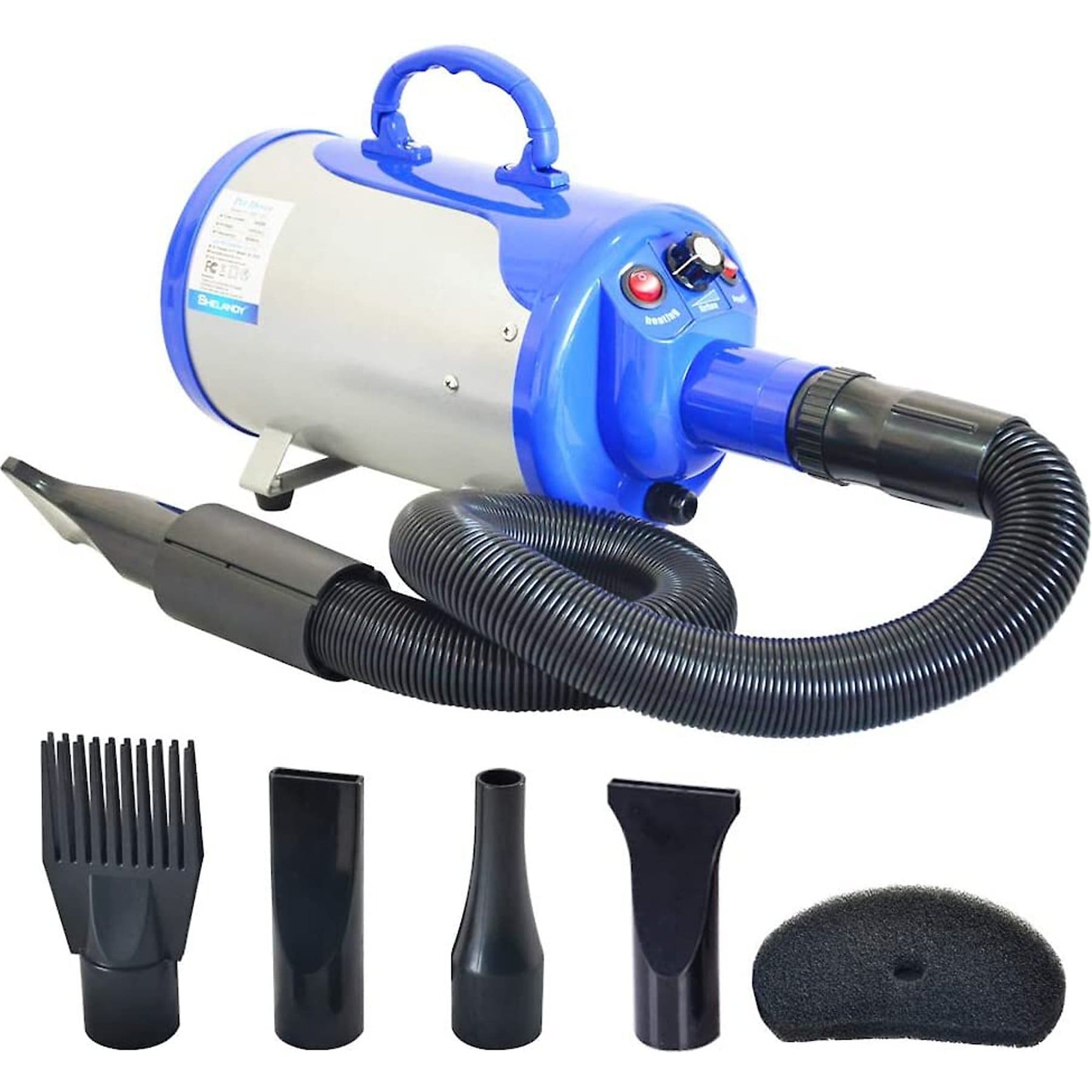
A budget high-velocity dryer with a hose, four attachments, and two heat levels for drying thick coats at home.
Webvet may earn a commission when you click through to Chewy, at no extra cost to you.
The SHELANDY Dog Grooming Dryer, Blue is a high-velocity dryer for home grooming. Its Chewy listing describes high airflow, variable speed settings, a flexible extendable hose with four attachments, noise reduction devices at the air inlets, a silencing cover, and two heating temperatures. It is listed at $64.59 on Chewy when checked in November 2026.
- Suits: medium and large dogs with thick or long coats, and owners who want a capable dryer at home without a professional price.
- Skip it if: your dog panics at loud equipment and has not yet been introduced to a dryer step by step, or you only need to dry a small, short-coated dog.
Use the lower heat setting and let speed do the work. Start on the slowest speed, keep the nozzle well away from the skin, and keep it moving, especially around the ears and face.
Flying Pig Grooming High Velocity Dog & Cat Grooming Dryer: best for thick double coats
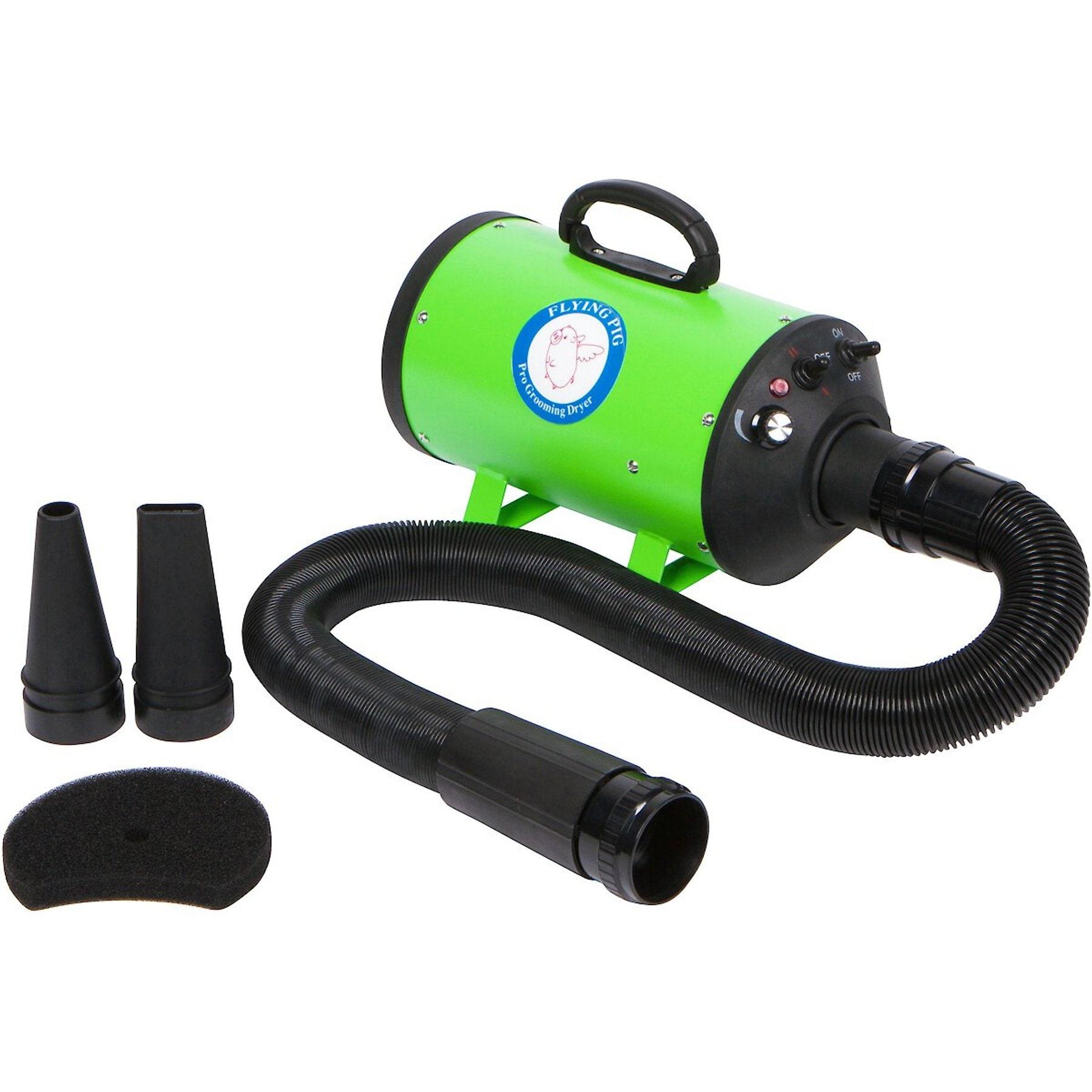
A portable high-velocity dryer with multiple air speeds and two heat settings for double-coated dogs.
Webvet may earn a commission when you click through to Chewy, at no extra cost to you.
The Flying Pig Grooming High Velocity Dog & Cat Grooming Dryer, Green is sold as a portable, high-performance dryer. Its listing names multiple air speeds and two heat settings, and positions it for double-coat breeds. It is listed at $187 on Chewy when checked in November 2026.
- Suits: thick double coats that hold water close to the skin, and owners who groom large dogs regularly.
- Skip it if: your dog is small or short-coated, where a lighter, cheaper dryer does the job.
Compared with the SHELANDY Dog Grooming Dryer, Blue, this is the step up for owners who dry a heavy coat often and want a portable unit. The same rules apply: the lowest heat that works, constant movement, and a person beside the dog the whole time.
Neakasa F1 Fast Quiet Dog & Cat Grooming Dryer: best for noise-sensitive dogs
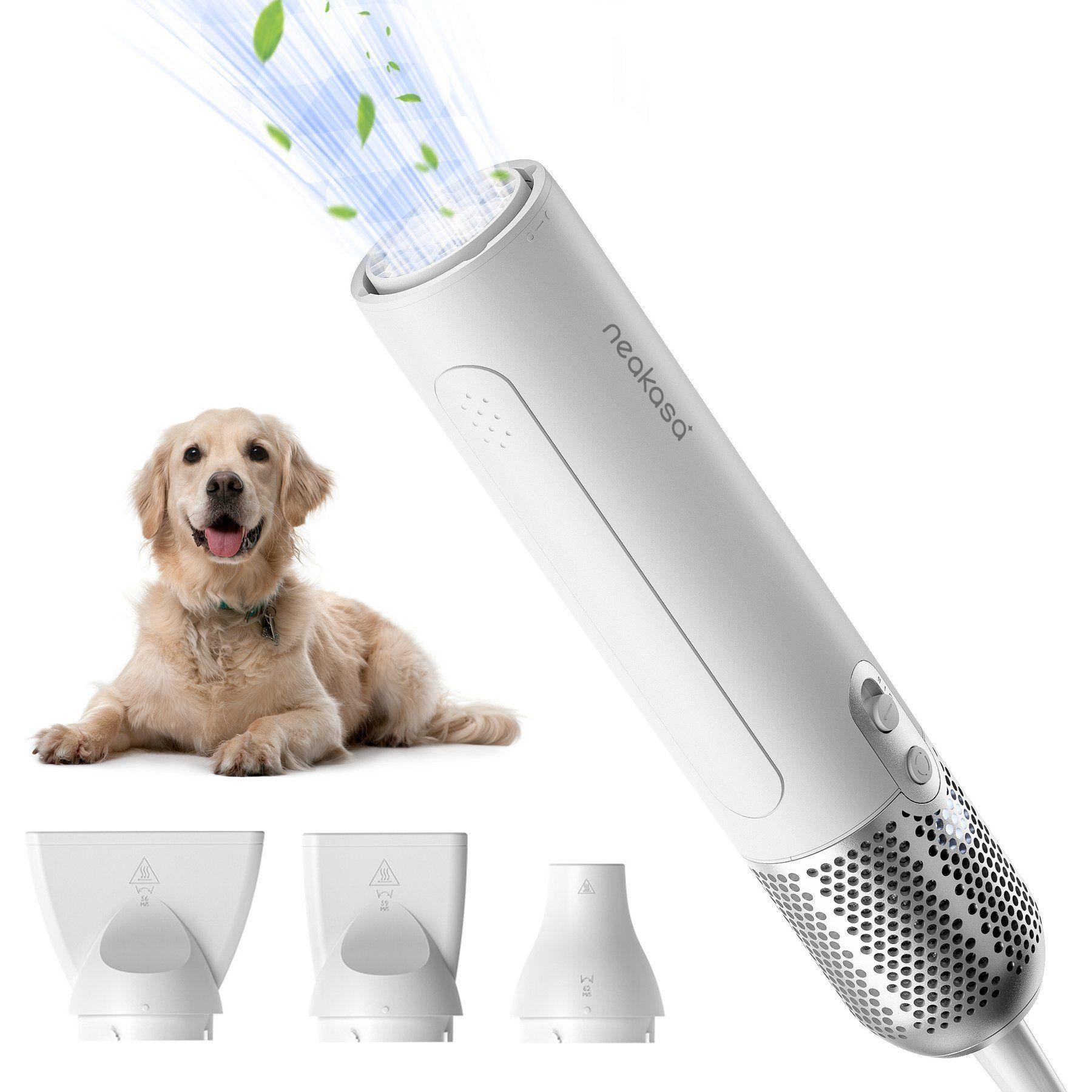
A light handheld dryer with two speeds and four temperatures, built around noise reduction for nervous dogs.
Webvet may earn a commission when you click through to Chewy, at no extra cost to you.
The Neakasa F1 Fast Quiet Dog & Cat Grooming Dryer, White is a handheld dryer that the maker lists at 1.2 lbs with a 62 m/s airspeed, two-speed and four-temperature control, three styling nozzles, and noise reduction and heat protection features. It is listed at $119.99 on Chewy when checked in November 2026.
- Suits: dogs that react to loud sounds, small and medium dogs, and owners who want a quieter dryer that is easy to hold with one hand.
- Skip it if: you need to dry a giant, heavily coated dog quickly, where a high-velocity dryer with a hose moves more air.
The quiet claim is the maker's own specification, so pair it with a slow introduction rather than counting on it alone.
Tauro Pro Line Cordless Dog & Cat Dryer: best cordless dryer for small dogs
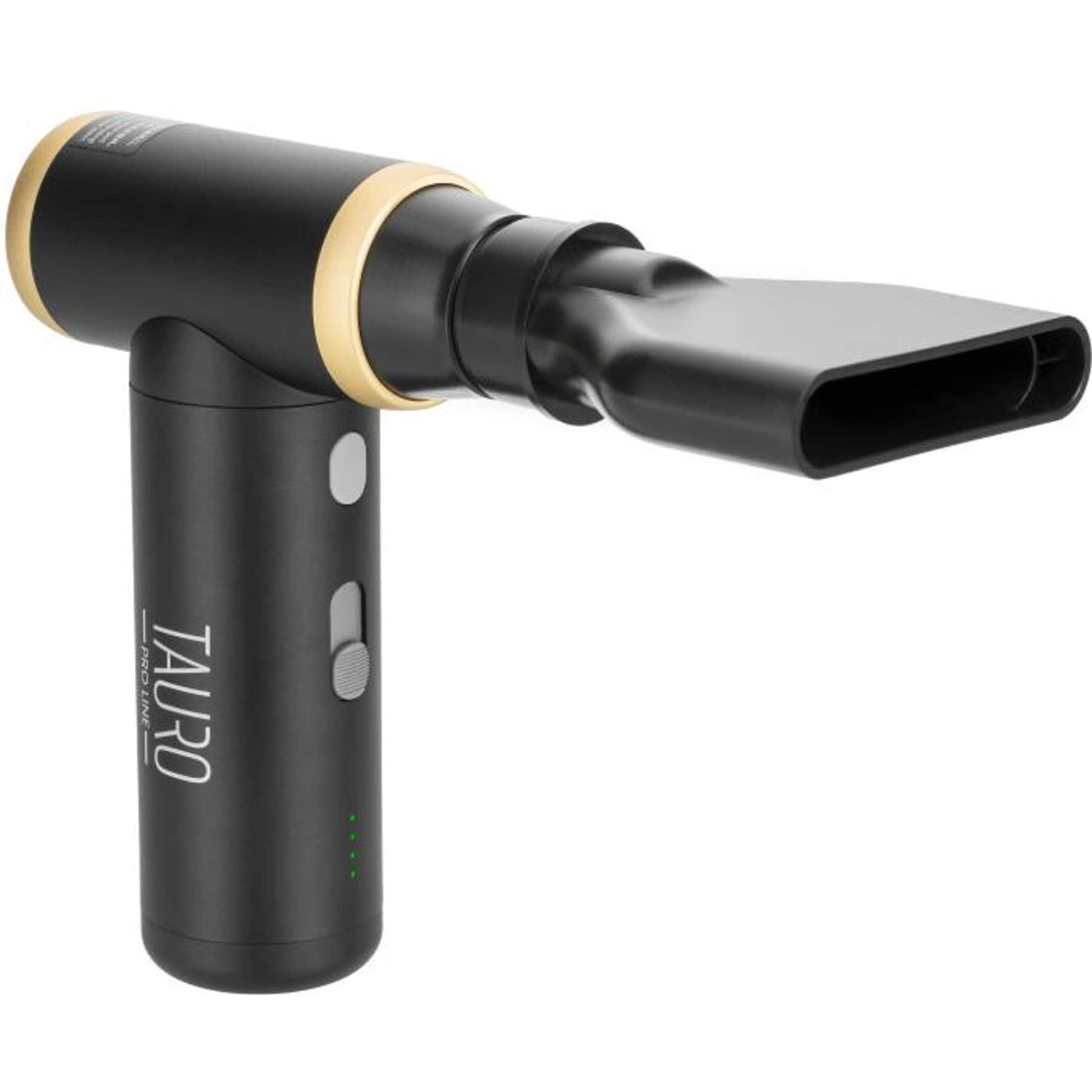
A compact cordless dryer with cold air only, for small dogs, paws, and quick touch-ups.
Webvet may earn a commission when you click through to Chewy, at no extra cost to you.
The Tauro Pro Line Cordless Dog & Cat Dryer is a compact, portable mini dryer. Its listing describes airflow to remove moisture, loose hair, and dust from the coat without cords, and a cold-air-only system. It is listed at $135.72 on Chewy when checked in November 2026.
- Suits: small dogs, wet paws and bellies after walks, and owners who want a dryer with no heat setting to get wrong.
- Skip it if: you dry a large or thick-coated dog in full after every bath.
Because it blows cold air only, it removes the burn risk that comes with heat. That makes it a sensible fit for dogs that cannot be trusted to tolerate warm air, while drying still takes longer on a dense coat.
Fido Fave Dog Grooming Hair Dryer with Slicker Brush: best brush dryer for small dogs
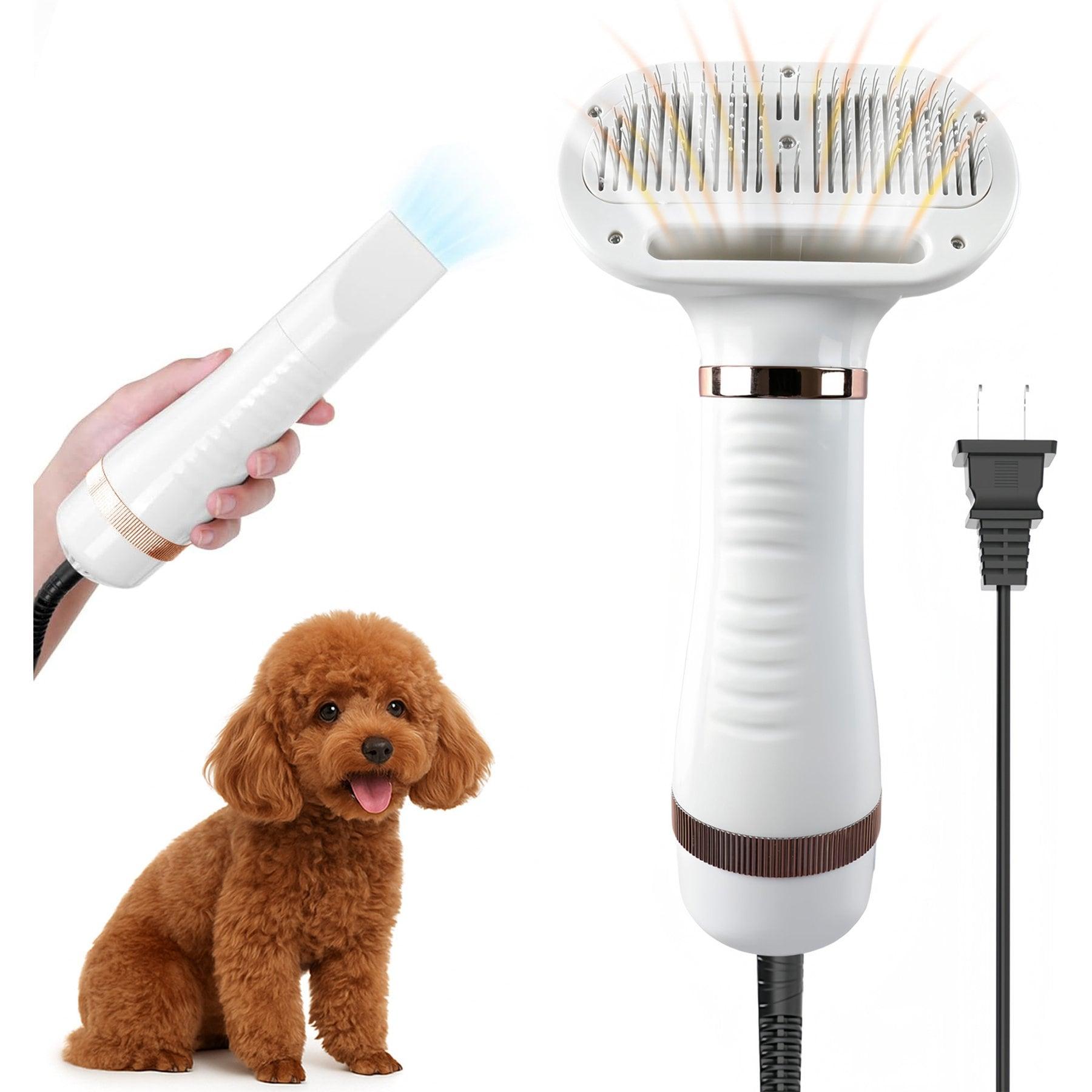
A brush dryer that dries and combs at once, for small dogs with short or light coats.
Webvet may earn a commission when you click through to Chewy, at no extra cost to you.
The Fido Fave Dog Grooming Hair Dryer with Slicker Brush, White, Medium combines a hair dryer with a pet comb, so you dry and comb at the same time. Its listing names cold and high temperature settings and stainless steel comb tips. It is listed at $37.83 on Chewy when checked in November 2026.
- Suits: small dogs with short or light coats, and owners who want one tool for drying and brushing.
- Skip it if: your dog has a heavy double coat or long, tangle-prone hair that needs real air volume.
Use the cold setting first. A brush dryer puts the air source close to the skin, so keep the high setting for brief use, test the air on your own wrist, and never leave the dog alone with it.
SHELANDY Dog & Cat Grooming Dryer with Stand: best hands-free stand dryer
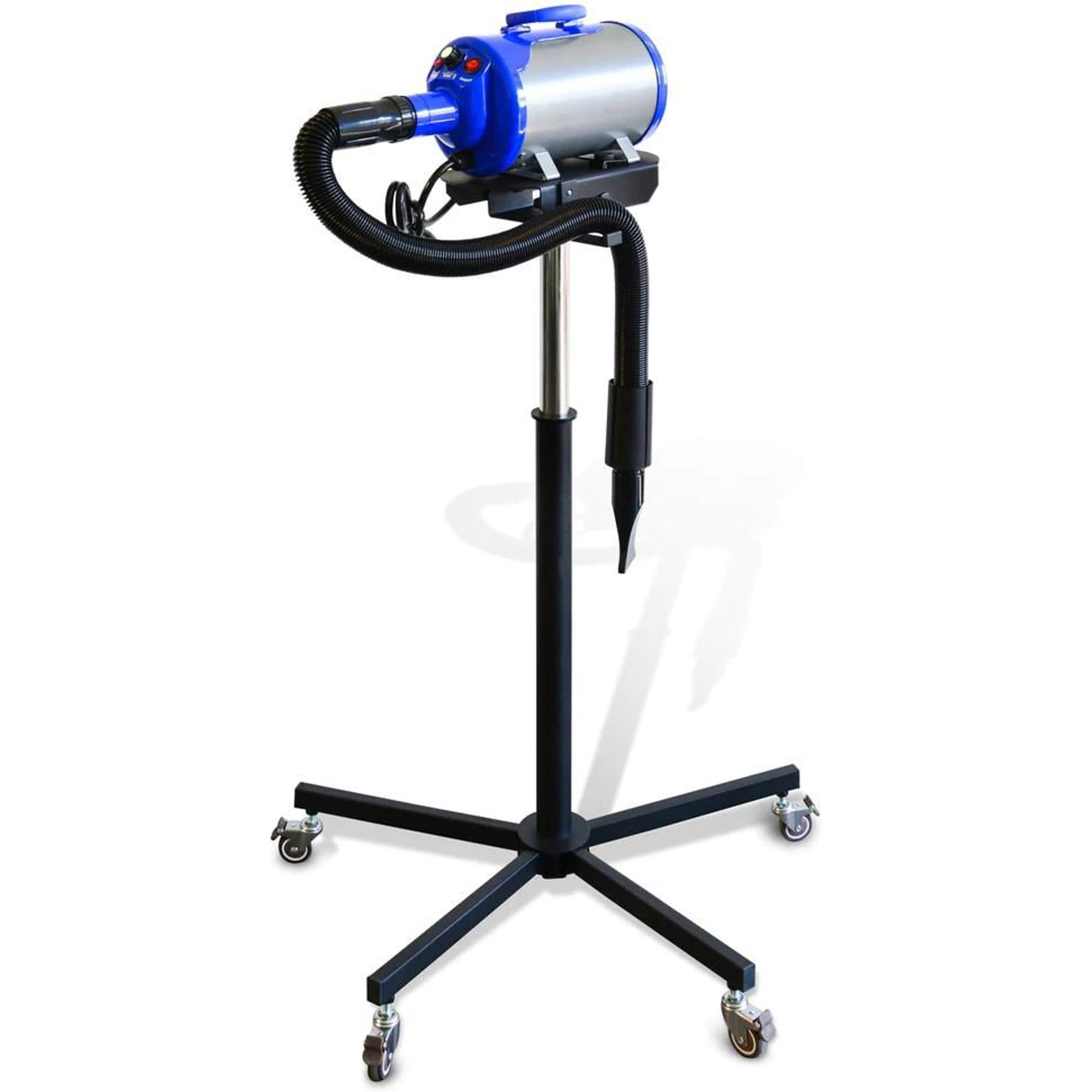
A 3.7-foot stand setup for SHELANDY force dryers that keeps both hands free for brushing.
Webvet may earn a commission when you click through to Chewy, at no extra cost to you.
The SHELANDY Dog & Cat Grooming Dryer with Stand is sold for hands-free drying. Its listing says it fits SHELANDY force dryer model numbers 1902, 1903, 1904, and 1907 and asks buyers to check the model number before purchase, so confirm on the listing exactly what is included before you order. The stand height is 3.7 feet and the product weight is 16.5 lbs. It is listed at $170 on Chewy when checked in November 2026.
- Suits: owners who groom long or thick coats at home and want both hands free to brush while the air runs.
- Skip it if: you cannot confirm the model fit on the listing, or you have no room to set up a stand.
Hands-free means your hands are free, not that you can step away. Keep the dog within reach the whole time, and switch the dryer off when you leave the room.
 Sponsored
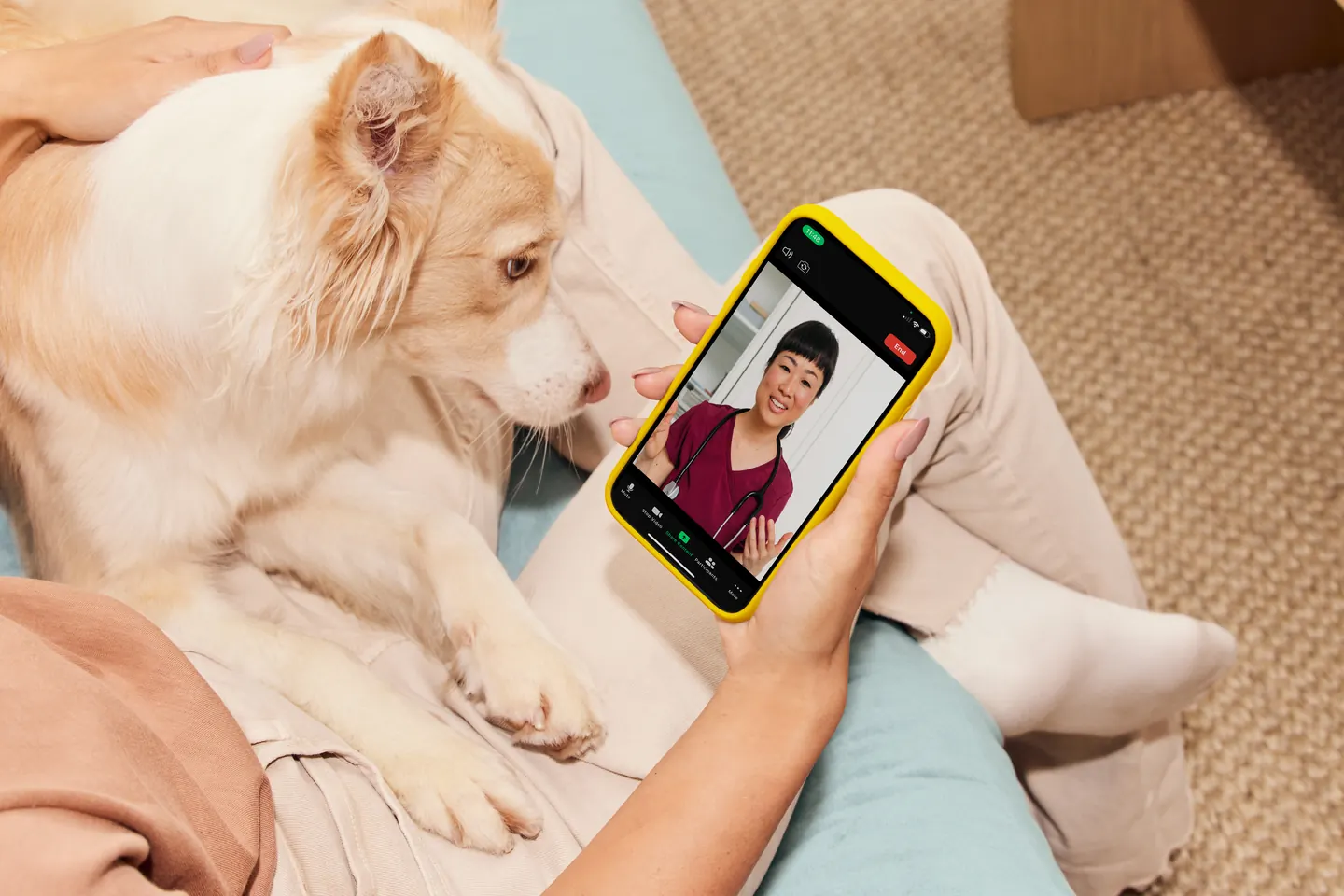
Vet care that's always there
Unlimited video calls and messaging with licensed vets for less than a typical vet visit. One membership covers up to five pets.
Use code Pets60
Plans start at $12/month · covers up to 5 pets
- Licensed vets in most states
- Rx for 150+ conditions
- 4.7 on Trustpilot
How to choose a dog dryer: high-velocity, handheld, stand, and coat type
Choose by coat first: match your dog to a dryer type, heat setting, and noise plan.
| Dog | Dryer type | Heat setting | Noise plan | Heated cage or box dryer |
|---|---|---|---|---|
| Small, short-coated | Towel first, then a brush dryer or cordless dryer | Cool or cold air | Short sessions with treats | Not needed; never leave the dog unattended |
| Thick double coat | High-velocity dryer with hose, or a stand dryer | Low heat setting or none | Start on the slowest speed and build up | Avoid; thick coats raise heatstroke risk |
| Curly or doodle coat | High-velocity dryer plus brushing as you dry | Low heat setting | Gradual introduction, nozzle off the face | Avoid; mats hold moisture against the skin |
| Puppy | Towel first, then a quiet handheld dryer | Cool air | Very short, positive first sessions | Never; a puppy is never unattended near a dryer |
| Noise-sensitive dog | Quiet handheld or cordless dryer | Cool or low | Step-by-step desensitization with food | Never |
| Senior or flat-faced dog | Towel plus a cool handheld dryer | Cool air only | Breaks for panting, short sessions | Never; highest overheating risk |
After coat, size and temperament decide the fit. Dryers fall into a handful of types:
- High-velocity dryer (force dryer): a motor and hose that push water off the coat with air speed, the strongest choice for large dogs and dense coats.
- Handheld dryer: a lighter unit held in one hand, quieter on many models, suited to small and medium dogs.
- Stand dryer: a dryer held on a stand so both hands are free to brush, useful on long coats.
- Cordless dryer: a battery mini dryer for paws, bellies, and small dogs.
- Brush dryer: a dryer with a built-in brush that dries and combs at once, for small, light coats.
Large dogs need air volume, and the Flying Pig Grooming High Velocity Dog & Cat Grooming Dryer, Green is the pick for thick coats; a small, smooth-coated dog suits the Tauro Pro Line Cordless Dog & Cat Dryer or the Fido Fave Dog Grooming Hair Dryer with Slicker Brush, White, Medium.

Shedding dogs gain the most from a high-velocity dryer, because the air lifts loose undercoat as it dries. The Merck Veterinary Manual says regular brushing removes loose hair and prevents mats, which matters most for dogs with thick or long fur. Drying works best alongside one of the best dog brushes for shedding.
For doodles and other curly coats, the best dryer is one you can run at low heat while brushing section by section, so the coat dries straight and tangles do not set. A dog conditioner used in the bath can make that brushing easier. Merck warns against cutting out mats with scissors, because it is easy to cut the skin.
Professional salon dryers are built for all-day use. At home, a high-velocity dryer with variable speed and a low heat setting covers most dogs. For noise-sensitive dogs, the Neakasa F1 Fast Quiet Dog & Cat Grooming Dryer, White is the quieter handheld choice by its maker's specification.
How much does a dog dryer cost?
Among these six dryers, prices run from about $38 to $187. The Fido Fave brush dryer is listed at $37.83, the SHELANDY high-velocity dryer at $64.59, the Neakasa F1 at $119.99, the Tauro cordless at $135.72, the SHELANDY stand at $170, and the Flying Pig high-velocity dryer at $187, all on Chewy when checked in November 2026. Professional salon dryers cost more.
What is the hardest dog breed to groom?
No veterinary body ranks breeds by grooming difficulty, but the hardest coats to keep are thick, long, and curly ones. The American Kennel Club describes the Poodle as having a curly coat and the Siberian Husky as thickly coated. Merck notes that thick or long fur needs the most regular brushing to prevent mats.
Human hair dryer, towel, or dog dryer: which to use
Most dogs can be dried safely with a towel, a human hair dryer on its cool setting, or a dog dryer; the difference is speed and control. Cornell's Riney Canine Health Center notes that dogs only have sweat glands on their paws and rely on panting to cool down.
Can I use a normal blow dryer on my dog?
Yes, but only on the cool setting. The Texas A&M School of Veterinary Medicine and Biomedical Sciences warns that owners can unintentionally burn a pet with a hair dryer after a bath and advises a cool setting only. Hold it well away from the skin, keep it moving, and stop if your dog pulls away.
The main risks with a human hair dryer are a hot nozzle, heat concentrated on one patch of skin, and a loud motor close to the head. Cool air alone also takes a long time on a thick coat. A dog dryer is built to move air rather than heat it, which is where it earns its price.

Without a dryer, start with the towel. Texas A&M lists thorough towel drying as a less harmful way to dry a pet. Press and squeeze the coat rather than rubbing it, which tangles long hair:
- Squeeze water from the legs, tail, and ears first, then blot the body.
- Swap to a dry towel as soon as the first one is soaked.
- Let the dog finish air drying in a warm, draft-free room.
- Brush long coats as they dry so they do not mat.
An absorbent towel such as the Safari Shammy Dog Towel, Grey pulls more water out before any dryer comes out, which shortens drying time either way. How often all of this happens depends on how often you bathe your dog.
How to blow dry a dog safely: heat, ears, eyes, noise, and never unattended
The same steps keep every dryer safe:
- Towel dry first to remove as much water as possible.
- Choose the lowest heat that works, or no heat; the airflow does the drying.
- Start on the slowest speed with the nozzle aimed at the back or rump, away from the head.
- Keep the nozzle moving and well away from the skin; check the air on your own wrist.
- Keep air out of the ears and eyes; dry the face and head with a towel.
- Watch for heavy panting, restlessness, or trying to escape, and stop for a break.
- Never leave the dog unattended while the dryer is running.
Ear protection matters for two reasons: water and noise. The Merck Veterinary Manual advises avoiding water in the ears during bathing and keeping ear canals dry and well ventilated. Aim air away from the ear opening rather than into it.
Noise is the other half. A 2012 study in Noise and Health by Scheifele and colleagues measured four professional forced-air dog dryers at 1 meter and found average levels of 94.8 to 108.0 dBA. The study measured the dryers, not the dogs' hearing, but it shows why an ear cover or snood appeals to owners of nervous dogs.

Helping a dog afraid of the blow dryer
Fear of the dryer is common. A 2023 review in Animals by Riemer found noise fears are the most prevalent behavioral problem in dogs. Signs include freezing, a low body posture, panting, and trembling. Whether your dog barks at the dryer or quietly backs away from it, use the same plan:
- Show the dryer switched off, and give treats while your dog sniffs it.
- Turn it on at the lowest setting across the room, with treats, for a few seconds.
- Move it closer over several sessions only when your dog stays relaxed.
- Point air at the rump first, never at the face.
- Stop immediately if your dog reacts, let them settle, and go back a step.
Puppies learn fastest the same way: towel dry first, then keep the first sessions very short, positive, and on cool air.
That matches the controlled exposure guidance in the Merck Veterinary Manual: raise intensity only when the dog shows no response or a positive one, and keep sessions frequent and short. A quieter dryer, or a high-velocity dryer on its lowest speed, makes each step easier. Many dogs burst into zoomies after a bath, so let some energy out before drying starts.
How do groomers dry dogs so fast?
Groomers dry dogs fast by removing water with air speed rather than heat. They towel off first, then use a high-velocity force dryer that blows water out of the coat, brushing as they go so the coat lifts and air reaches the skin. Low heat and constant attention keep it safe.
Brushing while you dry
Brushing while the air runs separates the coat so it dries evenly and lifts out loose hair. A slicker brush suits most medium and long coats; the Andis Self-Cleaning Dog Slicker Brush, Green/White has a button that pushes collected fur off the bristles. Work in sections from the rump forward.
Cage dryers and dryer boxes: the overheating risk
A cage dryer or dryer box is risky because the dog cannot move away from the heat. These dryers clip onto or sit beside an enclosed crate and blow air in while the dog waits inside. Some are sold as automatic pet dryer boxes, including large models for big dogs.
The law reflects the risk. New York's Agriculture and Markets Law 353-E bars using a cage or box dryer with its heating element turned on, with civil penalties of not less than $250. The Los Angeles County Department of Animal Care and Control requires pets in cage dryers to be observed at least every 15 minutes and cites past deaths from overheating in an enclosed cage dryer.
A veterinary review by Romanucci and Della Salda links heatstroke to confinement in an overheated enclosure and lists obesity, thick haircoat, older age, and flat-faced anatomy as predisposing factors. The Kansas State Veterinary Diagnostic Laboratory names both hair dryers and drying cages among sources of thermal injury. Never use a heated cage dryer or dryer box for these dogs:
- Flat-faced (brachycephalic) breeds.
- Older or overweight dogs.
- Thick-coated or dark-coated dogs.
- Any dog that is ill or already panting.
Flat-faced breeds deserve extra care. In a UK study of heat-related illness in pets seen at veterinary practices, Hall, Radford, and Carter reported that brachycephalic breeds made up 21.2% of canine cases, and they note earlier reports of heat-related illness following grooming. If a groomer uses a dryer box, ask whether it runs unheated and who watches your dog the whole time.
When skin, ear, or overheating problems need a vet
Heavy panting, collapse, red or crusting skin, or a smelly ear after drying needs your vet rather than another bath or a new product. These signs point to heat injury, skin disease, or an ear problem.

Contact your vet promptly for any of these, and treat heatstroke as an emergency:
- Heatstroke signs: heavy panting, drooling, vomiting, weakness, confusion, seizures, or collapse. Cornell's Riney Canine Health Center calls heatstroke a medical emergency: normal dog temperature is 100.5 to 102.5 degrees Fahrenheit, and heatstroke means 105 or higher. Start cooling with cool water immediately and drive to the vet. Read more on dog heatstroke signs and what to do.
- Burn signs: Texas A&M says a burn may start as red or inflamed skin, with hair that turns dry, brittle, curled, or falls out, and may later turn black, crusty, and painful. Burns are emergencies in just about all situations.
- Ear infection signs: head shaking, foul odor, redness, swelling, scratching, discharge, or scaly skin, which Merck says need prompt veterinary attention.
Some injuries show up late. The Kansas State Veterinary Diagnostic Laboratory notes that signs of scald injuries usually do not appear for several days, so check the skin along the back and flanks for redness or crusting in the days after a hot-air groom.
Skin problems after drying also need a vet:
- Hot spots: Cornell notes that matted areas hold moisture next to the skin and raise the risk of infections and sores, and that a hot spot more than 24 hours old is likely infected and needs a vet. Learn the early look of hot spots on dogs.
- Yeast: greasy, red, scaly, itchy skin can point to yeast. The University of Illinois College of Veterinary Medicine describes Malassezia dermatitis as redness, scaling, and greasy discharge, often itchy, and notes that humidity and temperature predispose to it. Your vet confirms it with a skin sample; see yeast infection in dogs and when a vet may prescribe a medicated dog shampoo.
Scooting after a groom is a different issue. Small breeds are predisposed to anal sac disease, and the Merck Veterinary Manual says a veterinarian can often empty impacted sacs by hand. Why groomers express these glands, which dogs need it, and what a vet charges are covered in our guide to dog anal glands.
Dog blow dryer questions
Frequently Asked Questions
How do I get a nervous dog used to the dryer?
Introduce the dryer gradually and pair every step with treats. Show the dryer switched off with treats, then run it on the low setting at a distance for a few seconds while your dog eats. Bring it closer over many short sessions, and drop back a step the moment your dog freezes, trembles, or moves away.
Does my dog need ear protection when blow drying?
Yes, protect the ears from both water and air. Keep the airflow pointed away from the ear canals, dry the ears and head by hand with a towel, and check that no water is left inside. A snood or cover that muffles sound can also help nervous dogs, since professional dryers are loud.
Is a dryer box safe for dogs?
No, a heated dryer box is not a safe choice for most home use. The dog is enclosed with warm air it cannot escape, and overheating can build quickly. New York bans running heated cage or box dryers with the heat on, and Los Angeles County requires checks every 15 minutes. Constant supervision is the minimum.
How can I dry my dog without a blow dryer?
Use a towel and patience. Squeeze water out with an absorbent towel, swap towels as each one soaks through, then let your dog air dry in a warm room with no drafts. Brush long or curly coats while they dry so they do not mat, and keep your dog indoors until the coat is dry at the skin.
Which dryer is best for a doodle coat?
A curly coat dries best with a high-velocity dryer on a low heat setting, used while you brush section by section. Drying straight and fully, right down to the skin, stops tangles from setting into mats. Slow, damp drying lets curls clump together, and mats hold moisture against the skin.
Can a blow dryer burn a dog?
Yes, a blow dryer can burn a dog when the heat setting is too high, the nozzle is too close, or the air stays on one patch of skin. Signs can take days to show. Keep heat low, keep the nozzle moving, and test the air on your wrist every few minutes.
Does blow drying help remove loose undercoat?
Yes, a high-velocity dryer lifts loose hair out of a thick undercoat as it dries, which is why shedding season is easier with one. Brushing during and after drying catches the loose hair before it settles back in, and regular brushing helps prevent mats in thick or long coats.
Veterinarian · BVMS MRCVS
Dr. Pippa Elliott, BVMS, MRCVS, is a veterinarian with nearly 30 years of experience in companion animal practice. Dr. Elliott earned her Bachelor of Veterinary Medicine and Surgery from the University of Glasgow. She was also designated a Member of the Royal College of Veterinary Surgeons. Married with 2 grown-up kids, Dr. Elliott has a naughty Puggle named Poggle, 3 cats and a bearded dragon.


