Best Dog Boots for Traction, Weather, and Paw Protection
Compare four dog boots by sole, lining, water protection, fit, and pack count, with practical guidance on acclimation, paw checks, and wear time.

BVMS MRCVS
Medically reviewed by Dr. Pippa Elliott, BVMS MRCVS · Last reviewed

This article contains affiliate links. Webvet may earn a commission when you buy through them, at no extra cost to you.
The best dog boots match the surface, weather, and shape of your dog’s paws. Our four picks cover a rugged outsole, a thin rubber barrier, fleece-lined winter boots, and a flexible neoprene set. Start by measuring front and rear paws separately, then compare the exact pack count. A two-boot pair and a four-boot set are different purchases even when their listed prices look similar.
 Sponsored
Have a health question about your dog?
Talk to a licensed vet at Dutch over video or message, including nights and weekends.
Use code Pets30
Plans start at $11/month · covers up to 5 pets
- Licensed vets in most states
- Rx for 150+ conditions
- 4.7 on Trustpilot
How to choose the best dog boots
Dog booties are paw coverings sold in several constructions, not a single level of protection. Pawz rubber booties are reusable or disposable barriers, so damaged ones can be thrown away; Grip Trex has a structured outsole, Muttluks adds winter insulation, and Bark Brite uses flexible neoprene. Decide between these functions before comparing ratings or buying online. The highest-rated listing is not a substitute for fit: a review is most useful when it identifies the same model, size, surface, and duration of use.
Choose the job before the material. For rough walking surfaces, the Ruffwear Grip Trex offers a defined outsole to compare. Pawz is the thin waterproof rubber-barrier option. The Muttluks Original Fleece-Lined set is winter-oriented, while Bark Brite’s selected neoprene set offers a different flexible format. None is a universal winner for hot pavement, deep snow, wet ground, and indoor floors at the same time.
Boots can reduce direct contact with a surface when correctly fitted and used for their intended purpose. They do not make dangerously hot conditions appropriate for exercise, guarantee traction everywhere, or replace treatment for an injured paw. If your dog is already limping or has a wound, get veterinary advice before deciding that covering the paw solves the problem.
- 1Compare front and rear sizing with the exact manufacturer chart.
- 2Check pack count before comparing the cost of covering four paws.
- 3Keep water resistant and waterproof claims distinct, and remove boots for paw checks and drying.
This comparison uses manufacturer and exact product specifications. We did not test heat resistance, traction, waterproofing, or how often boots came off. Construction details help narrow a choice, but a successful fit and brief supervised trial are still necessary. A closure described as secure cannot guarantee retention on every paw or during every movement.
| Boot | Best fit | Pack count | Main tradeoff |
|---|---|---|---|
| Ruffwear Grip Trex, 2.25-inch | Rough-surface walking | 2 boots | Four-paw coverage needs two pairs; check front and rear sizes |
| Pawz Waterproof, Small | Thin rubber barrier | 12 boots | No padded rugged outsole; inspect for damage |
| Muttluks Original Fleece-Lined, Medium | Winter outings | 4 boots | Fleece lining and leather care differ from a warm-weather boot |
| Bark Brite All Weather Reflective Neoprene, Large | Flexible neoprene coverage | 4 boots | Do not treat the selected set as waterproof or a hard-soled trail boot |

The best protection is the one your dog can use comfortably for the actual task. A bulky winter boot may be unnecessary for a short mild-weather walk, while a thin rubber barrier provides a different kind of coverage from a substantial outsole. Check the surface and trip length, then compare fit, fastening, and care. If you cannot establish a comfortable fit, changing the route or timing can be more sensible than persisting with unsuitable footwear.
Check the seller’s return conditions before the fitting trial, particularly for footwear used outdoors. Keep the packaging and size labels until the fit is clear so that a replacement order matches the model and measurements you intended.
 Sponsored
Vet care that's always there
Unlimited video calls and messaging with licensed vets for less than a typical vet visit. One membership covers up to five pets.
Use code Pets30
Plans start at $11/month · covers up to 5 pets
- Licensed vets in most states
- Rx for 150+ conditions
- 4.7 on Trustpilot
Four dog boots for different needs
Ruffwear Grip Trex Dog Boots, Obsidian Black, 2.25-in, Set of 2
The Ruffwear Grip Trex 2.25-inch pair is the outsole-focused option. Ruffwear identifies a Vibram outsole and breathable mesh upper, giving this boot a distinct construction from thin rubber coverings or fleece-lined winter footwear. Consider it when the main need is a boot designed around walking on varied, rough surfaces rather than simply separating the paw from moisture.
The selected listing contains two boots. That can be useful when front and rear paws need different sizes, but covering all four paws requires two pairs. Measure each paw using Ruffwear’s instructions and compare the result with the current chart. Do not buy the same size for the rear feet solely because the front paws fit the selected 2.25-inch version.
- Choose it for: a defined outsole and mesh-upper construction for outdoor walking.
- Check first: front and rear measurements, the exact width size, and the cost of the number of boots needed.
- Main tradeoff: the outsole is a different feel underfoot and may require gradual acclimation.
Follow the Grip Trex fitting guidance, including a closure check after the dog has walked and settled into the boots. Ruffwear advises checking fit and tension after about 15 minutes. Inspect sooner if a boot twists, the dog changes gait markedly, or there is obvious discomfort. Do not wait for a scheduled check when the setup already looks wrong.
Remove debris from the boot and examine the paw after use. A rugged outsole does not eliminate rubbing or prevent grit from entering around the opening. Keep the care instructions with the size information, especially if you use one size in front and another behind. Marking the pairs in a practical way can prevent mixing them up before an outing.
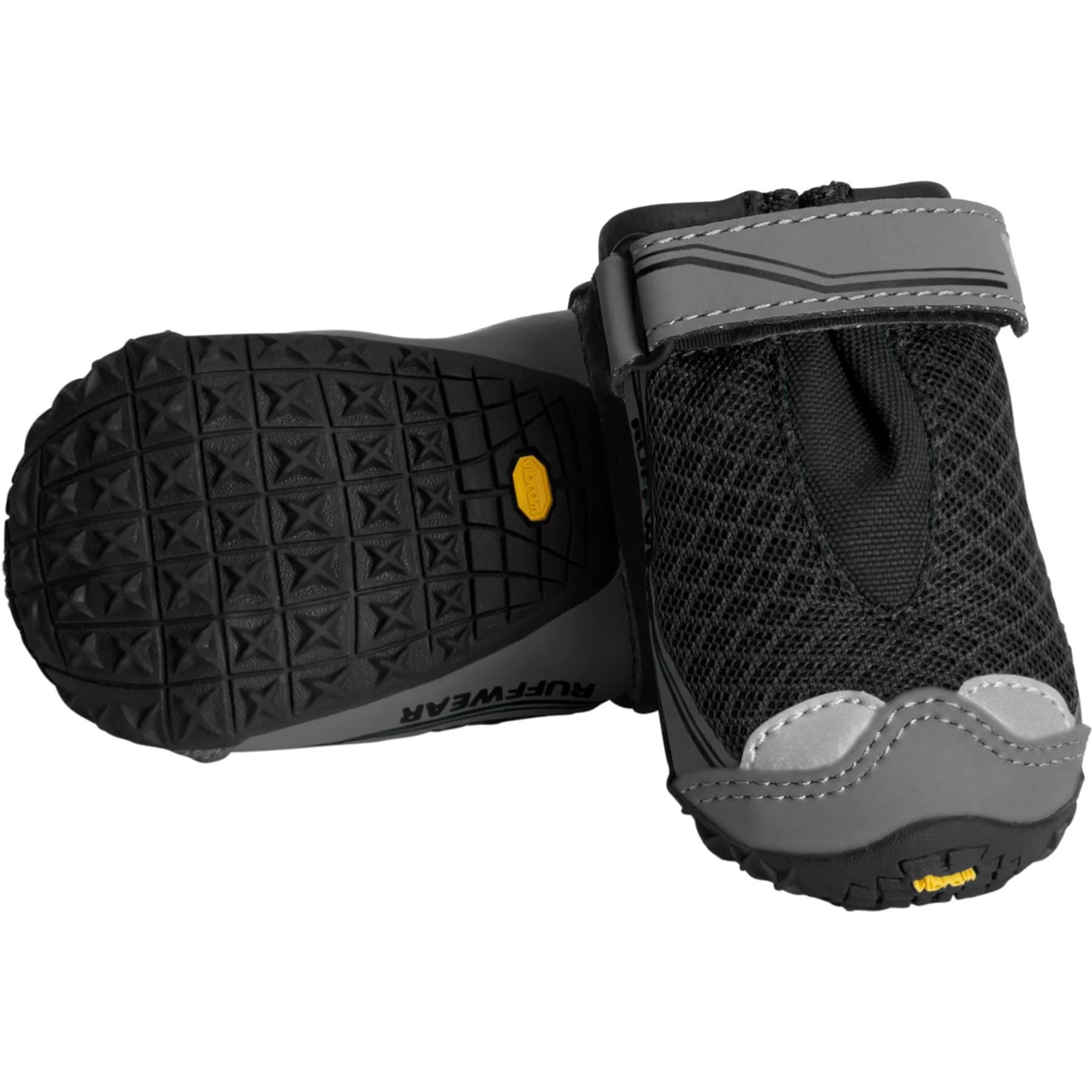
A Vibram outsole and mesh upper in a two-boot pair for separate front and rear sizing.
Webvet may earn a commission when you click through to Chewy, at no extra cost to you.
Pawz Waterproof Dog Boots, Black, Small, 12 count
The Pawz Black Small 12-pack provides thin rubber boots rather than a padded trail sole. The manufacturer describes them as waterproof, reusable or disposable coverings. This makes them a different option for owners who want a simple barrier and a close-to-the-ground feel, subject to the dog’s tolerance and the exact fit.
The pack contains 12 individual boots, not 12 pairs. That supplies replacements, but it does not establish how long any one boot will last. Check each for a tear, puncture, or other damage before reuse. A damaged rubber barrier cannot be assumed to retain the protection described for an intact product.
- Choose it for: a thin waterproof rubber barrier in a multipack.
- Check first: the Small chart, opening fit, and whether you can put it on without stressing the dog.
- Main tradeoff: it does not provide the cushioning or rugged outsole construction of a heavier boot.
Use the Pawz sizing and product guidance for this rubber design. Applying it feels different from opening and fastening a fabric boot. Practice calmly at home and make sure the opening is correctly positioned. Do not choose a tighter size simply to stop it coming off if that compromises comfort.
Waterproof material is not permission to leave a covered paw damp for long periods. Remove the boots after the intended use, inspect the paws, and let everything dry. For indoor traction, trial the boot on the actual flooring while supervising; do not assume that any rubber surface gives every dog stable footing on every floor.
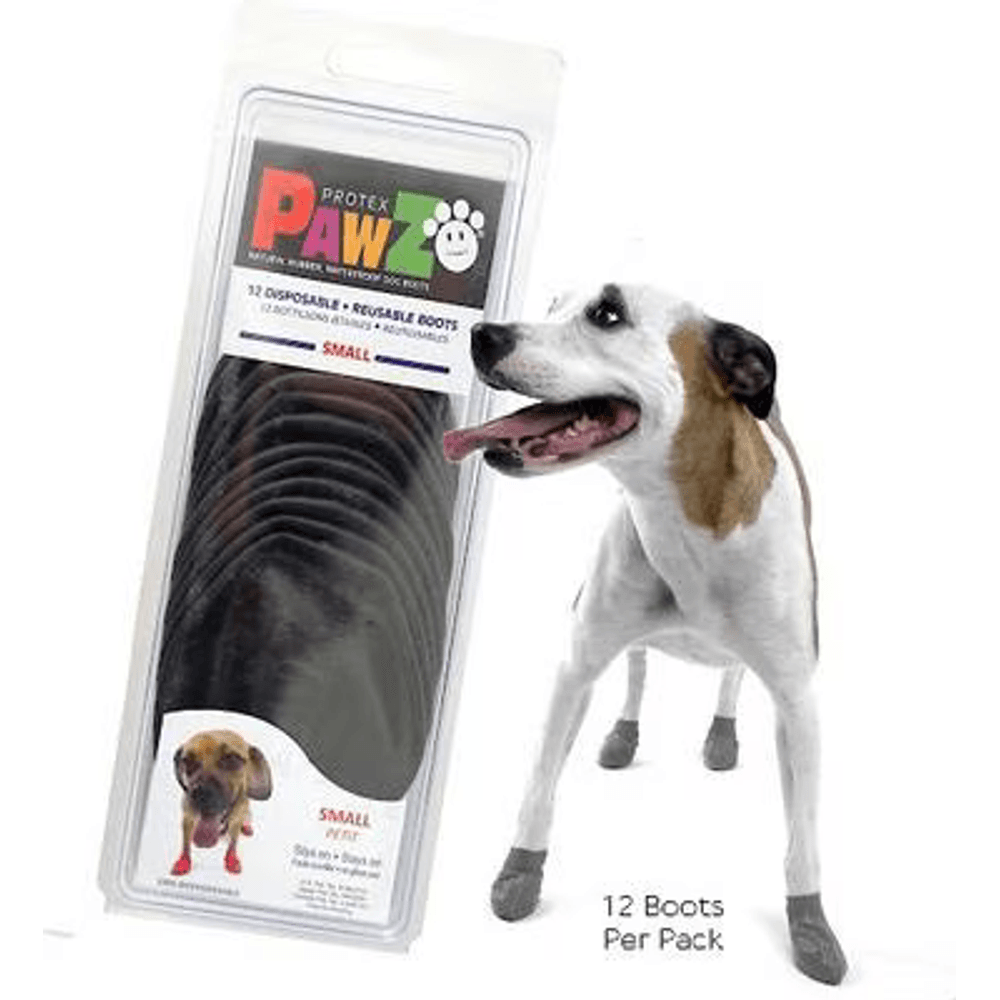
Twelve thin waterproof rubber boots for a simple barrier, without a padded trail sole.
Webvet may earn a commission when you click through to Chewy, at no extra cost to you.
Remove the boots after the intended use, inspect each paw, and allow the skin and footwear to dry before the next outing.
Muttluks Original Fleece-Lined Winter Dog Boots, 4 count, Black, Medium
The Muttluks Original Fleece-Lined Medium set is the winter-oriented choice. The manufacturer describes fleece lining, a flexible treated-leather sole, and waterproof breathable outer fabric. Those features differ from an unlined mesh trail boot and should be evaluated with cold-weather use in mind.
The selected package contains four boots. Check the Medium measurements against each paw, rather than assuming that a complete set guarantees an identical fit front and rear. The leather sole also has its own care requirements. Follow the Original Fleece-Lined Muttluks instructions rather than washing or treating it as if every part were synthetic fabric.
- Choose it for: winter footwear with fleece lining and a flexible leather sole.
- Check first: paw dimensions, closure placement, and care of the outer fabric and sole.
- Main tradeoff: insulation that suits winter may be inappropriate for a warm-weather outing.
Snow and wet conditions still call for checks during the walk. Look for a boot shifting, snow collecting around an opening, or a dog beginning to favor a foot. Once indoors, remove the boots and check the paws before putting the footwear away. Drying is part of the routine even when the outer fabric has a waterproof specification.
Choose route length and conditions to suit the dog, not just the boot. Footwear can be one part of cold-weather management, but it cannot make prolonged exposure comfortable for every coat type, age, or health condition. Turn back when the dog appears cold, tired, or uncomfortable instead of relying on the lining to settle the question.
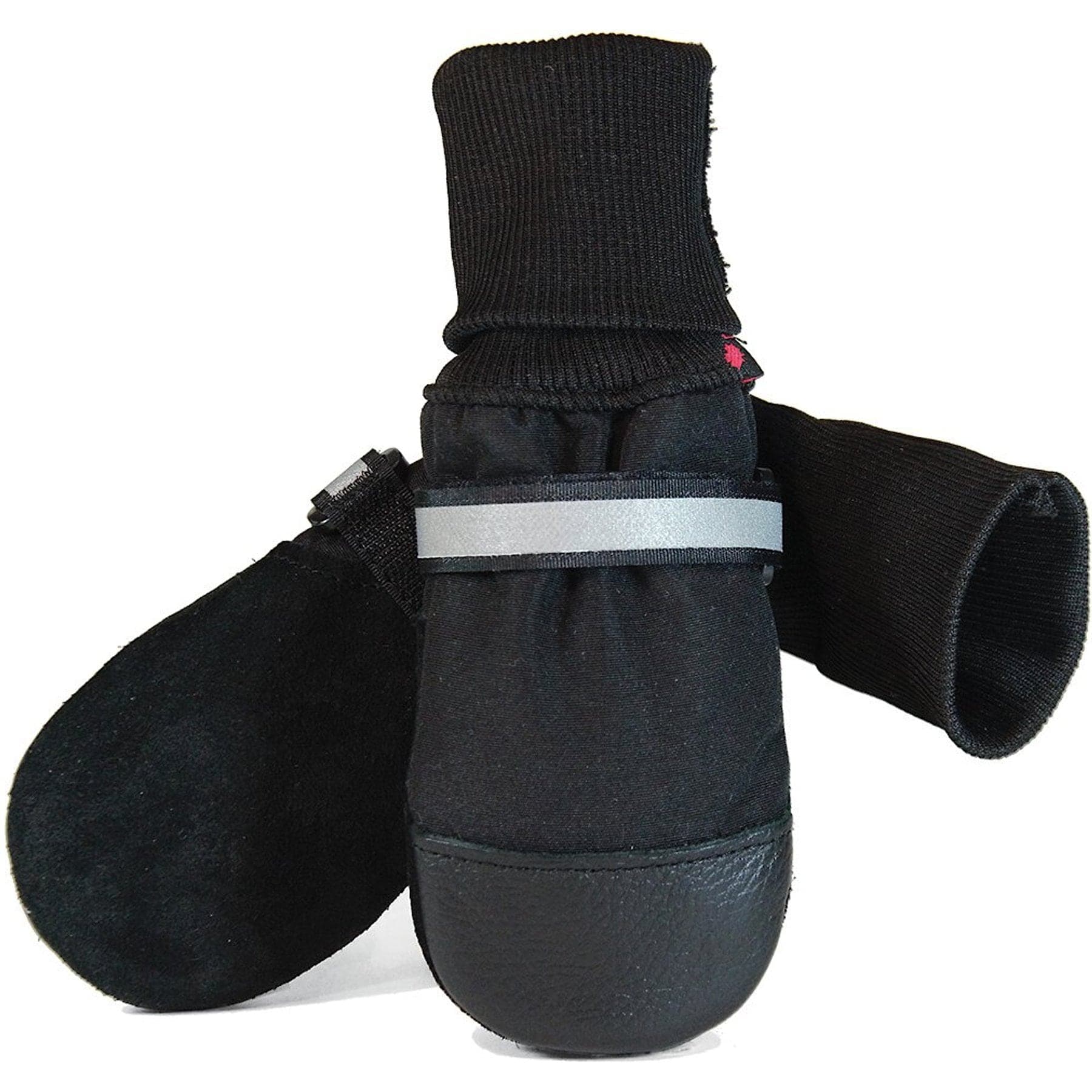
Four fleece-lined winter boots with flexible treated-leather soles.
Webvet may earn a commission when you click through to Chewy, at no extra cost to you.
Bark Brite All Weather Reflective Neoprene Dog Boots, 4 count, Turquoise, Large
The Bark Brite All Weather Reflective Neoprene Large set offers a flexible neoprene format with reflective details. The selected package contains four boots. Consider it as a distinct material and fastening option, particularly if you are comparing a flexible fabric boot with thin rubber or a more structured outsole.
Keep the exact model name and size together when checking instructions. Bark Brite sells different boot designs, so do not transfer a hard-sole or all-terrain claim from another model to this selected set. Its current comparable All-Season manufacturer description explicitly distinguishes water resistance from waterproofing. We would not choose this listing when a verified waterproof barrier is the deciding requirement.
- Choose it for: flexible neoprene coverage in a four-boot set.
- Check first: the exact Large chart, closure instructions, and the model supplied by the seller.
- Main tradeoff: the available model match does not support treating this set as a waterproof or hard-soled trail product.
The Bark Brite All-Season page provides context for the flexible design, but the selected merchant listing uses the All Weather name. Confirm specifications with the seller or manufacturer if a particular construction detail is essential. Reflective details are also a visibility aid when light reaches them, not a replacement for choosing a suitable walking environment.
As with the other options, judge fit while the dog stands and moves. A boot that rotates or begins sliding off needs attention before the walk continues. Tightening a closure excessively is not a reliable solution for the wrong shape or size. Reassess the chart and placement, and choose a different design if this one cannot fit comfortably.

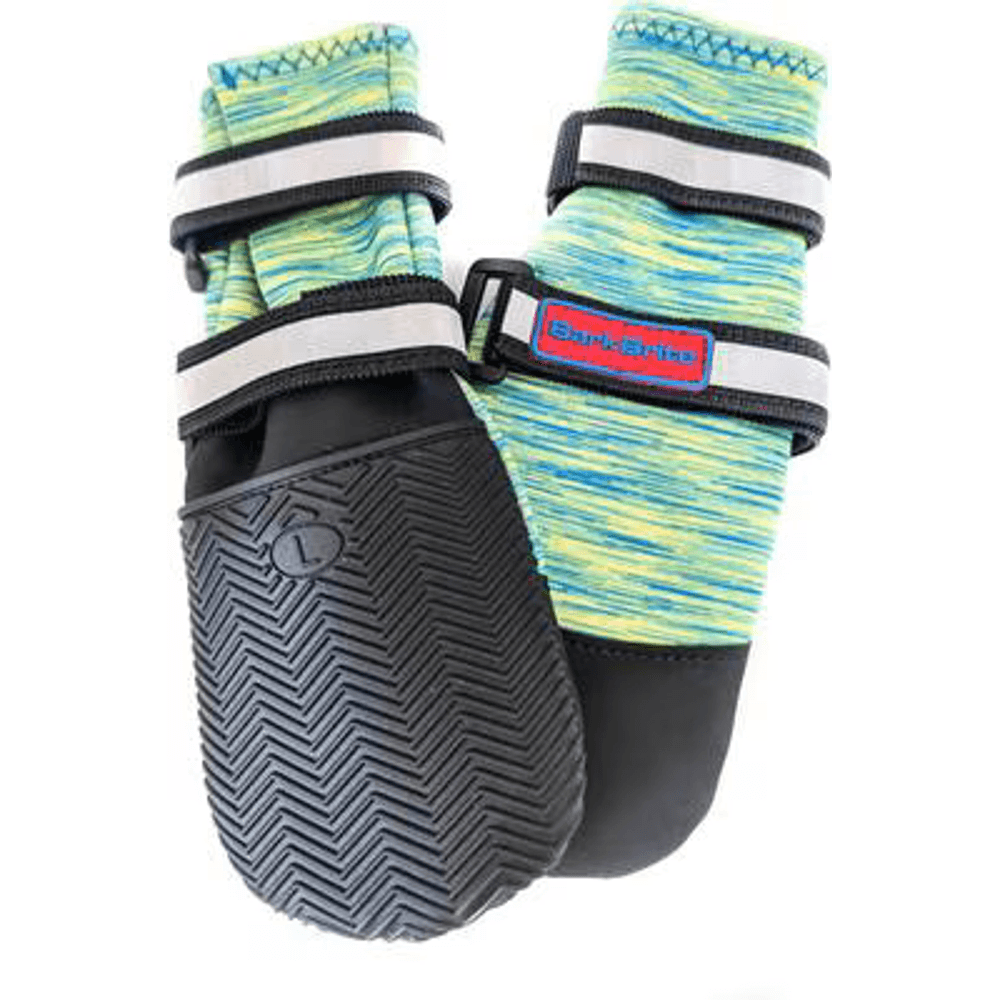
Four flexible reflective neoprene boots; choose another option when verified waterproofing is essential.
Webvet may earn a commission when you click through to Chewy, at no extra cost to you.
Measure paws and match boots to the surface
Dog boots can work as protective equipment when their construction matches the task and they remain correctly fitted. They cannot promise the same result across hot pavement, salted sidewalks, rough trails, and smooth indoor flooring. For ordinary outdoor walks, start with the surface you actually encounter. For specialized hunting or working use, check the maker’s intended use and the particular terrain rather than assuming a hiking-style sole has been tested for that work.
| Decision | What to check | Relevant distinction |
|---|---|---|
| Front and rear sizing | Measure paws separately while weight bearing | Two-boot pairs can accommodate different front and rear sizes |
| Pack count | Count individual boots in the exact package | Ruffwear 2; Pawz 12; Muttluks 4; Bark Brite 4 |
| Wet ground | Exact waterproof or water resistant specification | Pawz rubber and Muttluks outer fabric differ from Bark Brite’s limited water resistance |
| Rough surface | Sole construction and intended use | A defined outsole differs from a thin rubber barrier |
| Winter conditions | Lining, sole care, fit, and drying | Fleece insulation is a different choice from breathable mesh |
| Ease of fitting | Opening, closure, and tolerated handling | The easiest design depends on the dog and the person applying it |
Measure front and rear paws while standing
Booties for a German Shepherd, Australian Shepherd, or Great Dane still need individual front and rear measurements. A small dog such as a Yorkshire Terrier, Dachshund, or Cavalier King Charles Spaniel can also need different sizes between feet. Breed labels do not establish paw width or closure position; use the exact boot chart, including when choosing snow or waterproof footwear.
Check dew claws and the closure position as well as paw width. A boot should not rub a dew claw or compress the leg to prevent slipping. Long, narrow hare feet and broad paws can need different shapes. Breed names, including Chihuahua, Shih Tzu, Golden Retriever, Newfoundland, Boxer, and giant breeds, cannot choose the size; measure the individual paws and use the exact chart.
Follow the selected manufacturer’s measuring method with the dog standing comfortably and bearing weight. A paw spreads differently under load than when held in the air. Measure each foot as directed, keeping units consistent with the chart. If using a paper outline or marked width, check that the dog has not shifted weight away from the paw being measured.
Reassess a loose boot
A boot that is too big can rotate or slide off; remeasure the paw rather than tightening the opening until it grips. Record front and rear measurements separately. They may differ, and an injured or unusually shaped paw may need professional advice rather than a standard size assumption. Select the exact size from the appropriate chart; Small, Medium, and Large do not translate reliably between brands. Recheck growing dogs and dogs whose fit changes over time.
Compare the full purchase cost
For a four-paw purchase, calculate the whole setup. One Grip Trex pair covers two paws, so two pairs are needed if all four feet require coverage; those pairs can be different sizes. One four-count Muttluks or Bark Brite set contains four individual boots. A twelve-count Pawz package contains the equivalent of three groups of four, but replacement frequency depends on use and condition. Do not compare twelve thin rubber boots with two structured boots as though package quantity measured durability or value by itself.
- Identify the chart for the exact model and current size range.
- Measure under the conditions the manufacturer specifies.
- Check all four paws rather than copying one measurement.
- Confirm the pack count and any need for different pairs.
- Trial the fit indoors, then inspect again after a short walk.
Outsoles, rubber barriers, fleece, and neoprene
Heavy-duty and high-end labels do not establish tested durability. A high-top or high-ankle cuff covers a different area and needs checking for leg or dew-claw pressure; greater height alone is not better protection. None of these boots is established here as chew-proof. Remove damaged footwear rather than relying on it to withstand chewing.
Breathable dog booties still need removal after use. Mesh improves air exchange compared with a closed material, but does not prove active cooling. Pawz rubber has an elastic opening: if a boot appears to cut off circulation, remove it and reassess the size and placement rather than stretching wear time. A sock worn under another boot changes the fit and can hold moisture; use one only when the manufacturer’s instructions support it.
The selected Muttluks Original Fleece-Lined boots, Pawz rubber boots, Ruffwear Grip Trex, and Bark Brite neoprene set use different materials. Mesh can improve ventilation but does not prove cooling or waterproofing. Boots sold in pairs need a different cost comparison from four-boot or twelve-boot packs. Follow the Muttluks sizing chart for this fleece-lined model rather than another Muttluks range.
Compare protection with intended conditions
The Ruffwear outsole is the most relevant starting point here for a reader comparing structured rough-surface footwear. Pawz provides a thin waterproof barrier, while Muttluks adds winter lining and a leather sole. Bark Brite’s flexible neoprene format is water resistant rather than a verified waterproof choice. These are construction-based recommendations, not results from a comparative field trial.
For waterproof boots that stay on, answer both parts separately. An intact waterproof material can still fit poorly, and a well-retained boot can lack waterproof construction. Compare Pawz or the Muttluks winter option according to conditions, then verify the individual fit. No closure or material can establish universal retention before you see how the dog moves in the boot.
Putting boots on calmly
Some dogs like wearing boots after gradual introduction; others do not tolerate them. If your dog does not like booties, shorten the session and reassess fit before trying again. One downside is the extra handling and inspection required, so protection is useful only when it matches a real need and the dog can move comfortably.
The easiest boots to put on are those whose opening and fastening you can operate calmly with your dog. A wide-opening fabric boot may be easier for one owner; another may manage a stretchy rubber opening comfortably. Practice the process away from the pressure of an imminent walk. If applying the boot requires repeated force or prolonged restraint, reconsider the format or seek help with handling.
Match specialized outings to the intended boot use
For sports or other strenuous activity, verify the intended use before choosing protective dog booties. A normal trail sole does not establish suitability for every sport, and stopping to inspect fit remains necessary.
For hunting dogs, the Grip Trex is the outsole-focused candidate in this shortlist to investigate for rough-ground use, but we have not established a best hunting boot through field testing. Consider brush, abrasive ground, moisture, and how often you can stop to inspect the paws. Confirm intended use with the manufacturer for the particular work. A thin rubber barrier is not interchangeable with a substantial sole, and a winter lining may be unsuitable for a warm, strenuous outing.
Fit checks, wear time, and paw care
Booties that stay on need the correct paw shape, size, and closure placement. Keeping dog booties on by overtightening can create another problem. Cold-weather booties should suit the temperature and be removed indoors; running or hiking booties need an appropriate sole, secure fit, and repeated paw checks. No footwear is necessary for every dog or every walk.
Boot acclimation starts with brief, calm practice. Recheck closures after movement; Ruffwear specifically advises another fit and tension check after about 15 minutes for Grip Trex. Other models follow their own instructions. A boot that slips off, rotates, or appears to restrict circulation needs removal and reassessment, not harder tightening.
Veterinarians may recommend boots for a specific protection or traction need, but the right use depends on the dog and condition. A healthy dog may not need boots for every ordinary walk. If the purpose is covering a wound, protecting a bandage, or compensating for weakness, ask the veterinary team which device, fit, and wear schedule are appropriate. A general outdoor boot is not automatically a medical dressing.

Introduce the boots during a short supervised indoor session. Reward calm investigation, apply the footwear as directed, and invite a few voluntary steps. An unfamiliar high-stepping gait can occur during introduction, but persistent distress, slipping, or an abnormal gait calls for reassessment. Do not immediately attempt a long walk because the boots stayed on during the first minute.
During a trial, check whether a boot twists, catches a nail, rubs, or changes how the dog bears weight. Look again after a short period of walking and follow any model-specific recheck interval. Remove the boots to inspect the skin and paws after use. Moisture, grit, and pressure can create problems even when the outside of the boot looks intact.
Make the first outdoor trial easy to end. Choose a short familiar route near home, carry a way to bring the boots back, and avoid using an ambitious hike as the first fitting test. Watch the dog from more than one angle as they walk and turn. If removing the boots leaves the route unsuitable for bare paws, return or change the plan rather than asking the dog to finish an uncomfortable outing.
You can walk a dog in a correctly fitted boot intended for that activity, but a boot on only one foot deserves context. If it covers an injury or bandage, follow the veterinarian’s exercise and wear instructions. If the dog is limping, do not use the boot to continue the same walk without assessing why. Our broken-nail guide covers one common reason a paw needs more than equipment.
Adjust the outing to the weather
For hot weather, change walking time and route before relying on footwear. Our guide to hot pavement and dog paws explains that risk. Boots do not prevent whole-body overheating or make a hot outing appropriate. Shorten or postpone the walk when conditions are unsuitable, even if the soles appear well covered.
For indoor hardwood or other smooth floors, trial traction under supervision rather than assuming all boots are non-slip. Older dogs may need an individual mobility assessment. Snow, salt, rough ground, grass seeds, and sand burrs create different exposure problems; inspect the paws after the activity. No boot makes every winter, summer, trail-running, or hunting outing appropriate.
After use, follow the cleaning instructions for the exact materials and allow the boots to dry. Inspect seams, soles, rubber, and closures before the next outing. Keep matched sizes organized and replace damaged individual boots where the product allows. A worn sole or torn barrier should not be treated as equivalent to the intact equipment described by the manufacturer.
Dog boot questions
Frequently Asked Questions
Are there any dog boots that actually stay on?
Many can remain in place when the size, shape, and closure suit the dog. Check front and rear sizing separately, follow the fitting instructions, and reassess after walking. A boot that rotates or slips is a reason to stop and adjust or choose another size, not simply tighten harder. Pack count matters when buying different pairs, and water resistant construction says nothing about retention.
Can you leave dog boots on all day?
Do not leave ordinary walking boots on continuously. Remove them after the intended activity to inspect paws, remove debris, and allow drying. Even a water resistant or waterproof outer material can trap moisture around the foot. If a veterinarian prescribes a protective device, follow that specific wear schedule. Inspect every boot before reuse.
What can I use instead of dog booties?
Depending on the need, alternatives include changing the route or time of a walk, using suitable floor runners for indoor traction, or cleaning and drying paws after exposure. Paw wax offers a different kind of barrier and is not a rugged sole or medical treatment. Choose the alternative for the actual exposure; none of these options replaces a medical dressing prescribed for an injured paw.
When should a dog wear boots?
Consider them for a defined surface or weather problem when a suitable boot fits and the dog can use it comfortably. Examples include rough ground, winter exposure, or an individually assessed traction need. Check front and rear sizing and whether the product is water resistant or waterproof for the intended conditions. The dog’s comfort and the manufacturer’s intended use determine whether you should use it.
Can I choose dog boot sizes by breed?
No. A Jack Russell or Lhasa Apso still needs each paw measured while standing and bearing weight; neither a breed label nor a familiar Small size replaces the model’s chart. The same rule applies to a Miniature Schnauzer or Italian Greyhound: compare front and rear sizing, check the opening, and observe movement before an outing.
For a Basset Hound, Rhodesian Ridgeback, or Siberian Husky, do not choose a larger label merely because of overall body size. Record the loaded paw measurements, check the exact pack count if different pairs are needed, and reassess any slipping or rotation. Breed names are examples, not size recommendations.

Editor
The Webvet Editorial Team is the in-house group of pet-care editors and writers behind Webvet, operated by Smart Pet Collective. The team researches, writes, and maintains Webvet's pet health, behavior, and medication content. Every article follows a defined editorial process: research from reputable veterinary and scientific sources, careful drafting, mandatory review of medical content by a credentialed veterinarian, and dated publication. Health and medication articles are medically reviewed by a licensed veterinary professional before they go live and are kept current over time.
Veterinarian · BVMS MRCVS
Dr. Pippa Elliott, BVMS, MRCVS, is a veterinarian with nearly 30 years of experience in companion animal practice. Dr. Elliott earned her Bachelor of Veterinary Medicine and Surgery from the University of Glasgow. She was also designated a Member of the Royal College of Veterinary Surgeons. Married with 2 grown-up kids, Dr. Elliott has a naughty Puggle named Poggle, 3 cats and a bearded dragon.
Related reading

Vestibular Disease in Dogs: Symptoms, Diagnosis, and Recovery Timeline

In Home Pet Euthanasia: Cost, What Happens, and How to Choose a Provider

Dog Dementia: Signs, Stages, Treatment, and When to Say Goodbye
