Pet Safe Ice Melt: What Is Actually Safe for Dogs and Cats, and Our Picks
No ice melt is harmless if a dog eats enough of it, but some are far safer on paws and far less toxic than rock salt. Here is what is in pet-safe ice melt, how to read the label, and the products we would reach for.

BVMS MRCVS
Medically reviewed by Dr. Pippa Elliott, BVMS MRCVS · Last reviewed

This article contains affiliate links. Webvet may earn a commission when you buy through them, at no extra cost to you.
No pet safe ice melt is completely harmless. Every ice melt can irritate paw pads or upset a stomach if a dog or cat licks or eats enough of it. What a "pet safe" label usually signals is a safer ingredient class, most often urea or magnesium chloride, in place of rock salt or calcium chloride.
So the smart way to shop for pet safe ice melt is to read the ingredient panel, not the paw print on the bag. Below is a quick comparison of the products we would reach for, then an ingredient-by-ingredient guide to what hurts paws and what hurts stomachs, and the steps to take if your pet swallows some.
| Product | Best fit | Format | Key label claim | Main tradeoff |
|---|---|---|---|---|
| Safe Paw PetSafe Ice Melt for Dogs & Cats, 8-lb jug | Steps, stoops and short walks | 8-lb jug, $29.99 | Salt-free and chloride-free (manufacturer claim) | Small jug runs out on long driveways |
| Just For Pets Snow & Ice Melter, 35-lb bucket | Long driveways | 35-lb bucket, $79.95 | Sold as a pet-specific melter | Manufacturer ingredient details not published in our sources |
| Safe Paw PetSafe Ice Melt for Dogs & Cats, 35-lb pail | Whole-season bulk use | 35-lb pail, $88.31 | Same salt-free, chloride-free claim as the jug | Big upfront cost and storage space |
| Winter Paw Protection Starter Kit - Safe Paw Ice Melt, Musher's Secret Paw Protection Wax, Pawz Dog Boots, X-Small | First winter with a small dog | Bundle, $61.72 | Melter plus paw wax plus boots | Boots are X-Small only |
What pet safe ice melt actually means
"Pet safe" is a marketing phrase, not a regulated standard. We found no primary source showing that the term is defined or tested by any agency. Every type of ice melt can be hazardous, according to the Pet Poison Helpline, including products sold as pet friendly.
PetMD puts it plainly: no ice melt is entirely pet-safe, and the safer options may still cause stomach upset. That is the honest baseline for what pet safe on a label means: a lower-risk product, not a risk-free one.
What the label does tell you is the safer ingredient class. The ASPCA lists the common ice melt ingredients as sodium, potassium, calcium and magnesium chloride, and says pet-friendly versions typically contain urea or magnesium chloride instead.
- 1Know what pet safe on a label means: a lower-risk formula, never a guarantee that a dog or cat cannot get sick.
- 2Use the ingredient-by-ingredient paw and stomach risk guide below to judge any bag, not just our picks.
- 3Urea-based melts are generally the ones labeled pet safe; calcium salts are the harshest on paws and stomachs.
- 4Wipe or rinse paws after every winter walk, and call your vet if your pet drools, vomits or seems unwell after contact.
The Pet Poison Helpline still sees value in the category. It says pet-friendly ice melts may help minimize the chance of injury or toxicity. In practice, a safer ingredient lowers the stakes of the two ways pets meet ice melt:
- Paw contact: crystals and brine lodge between the toes and on the paw pads, where they can irritate skin.
- Ingestion: a pet licks residue off its feet or fur, eats melt-water, or gets into the bag itself.
The AKC advises reading all labels on pet-safe melts and asking your vet if you have questions. It also notes that some pet-safe products contain urea, which can still cause drooling or vomiting in dogs.
What is the safest pet friendly ice melt?
The safest pet friendly ice melt is one built on urea rather than chloride salts, because the Pet Poison Helpline says urea-based melts are generally the ones labeled safe for pets and calcium salts are the most hazardous. Safe Paw markets itself as salt-free and chloride-free, which is why it leads our picks.
Does Home Depot have pet friendly ice melt?
Big-box stores such as Home Depot, Lowes and Walmart, and smaller chains like Dollar General and Walgreens, often stock a pet friendly ice melt in winter, but shelf stock varies by store and season. Whatever brand you find nearby, check the ingredient panel for urea first and avoid calcium chloride.
That same rule covers the store brands people search for most, including Morton Safe-T-Pet and Road Runner pet safe ice melt. We found no published ingredient data for those bags in the veterinary sources we reviewed, so judge them by the ingredient list printed on the bag, using the comparison table further down.
Our picks: the safest ice melts for homes with pets
Rather than ranking the top rated pet friendly ice melt bags by star count, our picks favor products built around the safer ingredient classes and sold specifically for homes with dogs and cats. Vetstreet frames it well: no ice melt is 100 percent pet safe, but some options are safer than others. Prices below were recorded from Chewy listings at the time of writing.

Safe Paw PetSafe Ice Melt, 8-lb jug: best overall
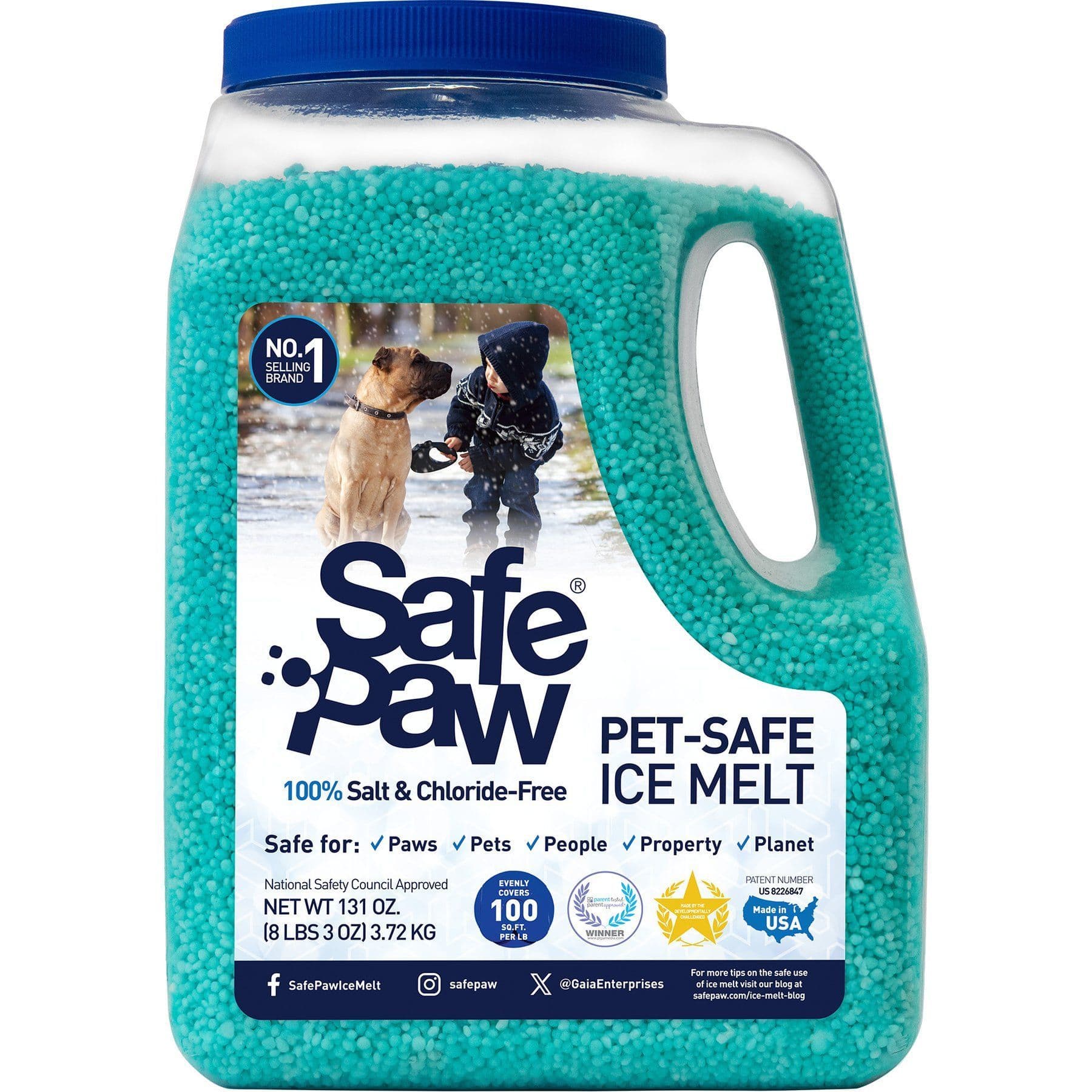
A salt-free, chloride-free melter in a jug sized for steps, stoops and short front walks.
Webvet may earn a commission when you click through to Chewy, at no extra cost to you.
Safe Paw is the best pet safe ice melt for most homes because its whole pitch is the absence of the harshest ingredients. The manufacturer, Safe Paw, labels it "No Salt, No Chlorides" and says it has been made since 1998.
According to Safe Paw, as reported by Vetstreet, the formula uses modified carbonyl diamide crystals (urea) and special glycols. That puts it in the urea class the Pet Poison Helpline describes as the type most often labeled pet safe.
The brand claims it will not harm animals or children and will not damage concrete, Trex decking, pavers or roofs. Those are manufacturer claims, not independent test results, and the veterinary sources still say no ice melt is fully pet safe.
- Who it suits: owners treating steps, a stoop or a short front walk.
- Price: $29.99 for the 8-lb jug on Chewy.
- Tradeoff: a small jug goes quickly on a long driveway; the pail below is the better buy for big areas.
Just For Pets Snow and Ice Melter, 35-lb bucket: best for long driveways
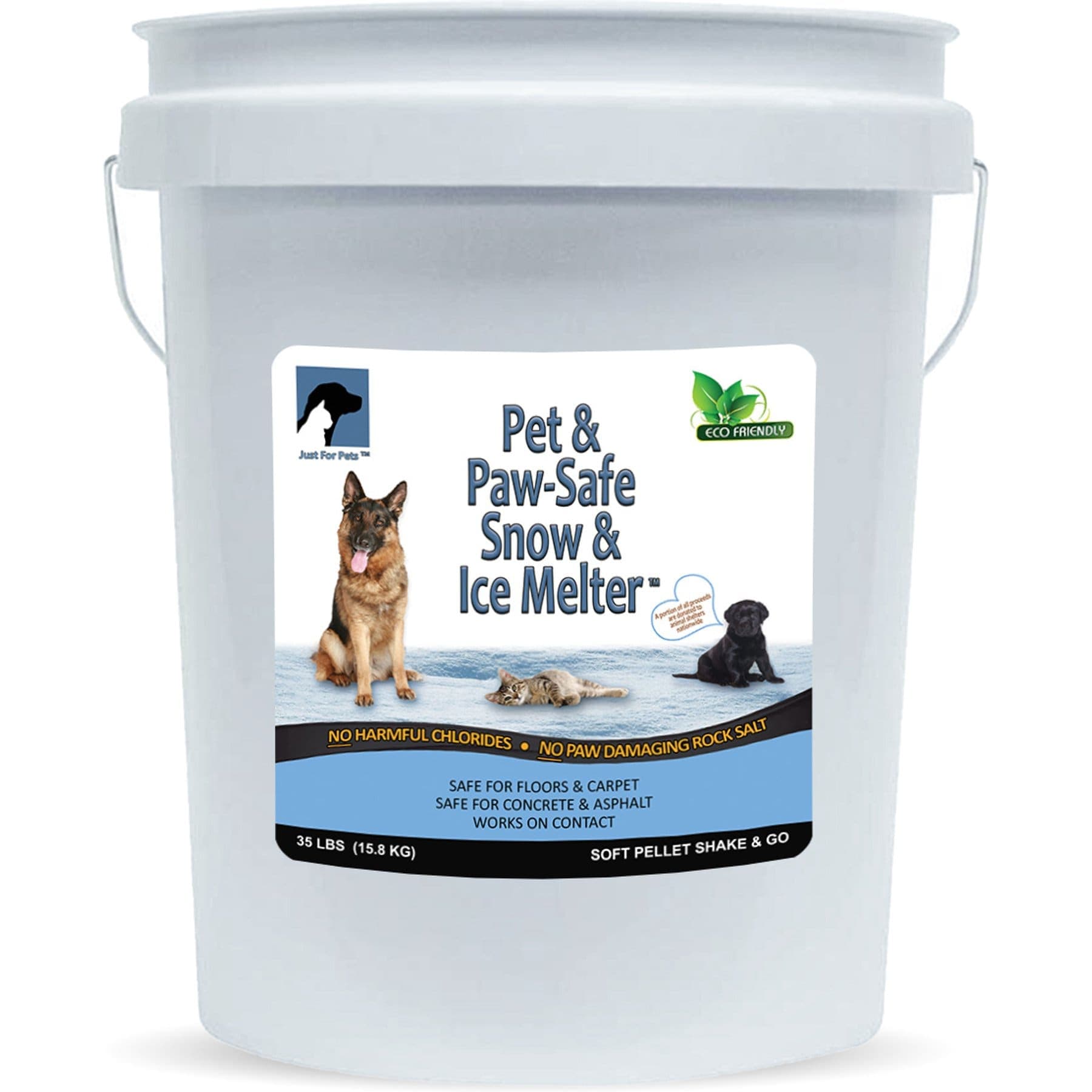
A 35-lb bucket of pet-specific melter for long driveways where a small jug runs out fast.
Webvet may earn a commission when you click through to Chewy, at no extra cost to you.
Just For Pets Snow & Ice Melter comes in a 35-lb bucket for $79.95, which suits owners with a long driveway or a large patio to keep clear all winter. It is sold specifically for households with pets.
The maker does not publish an ingredient list we could confirm, so read the panel on the listing or bucket before you buy and check it against the risk table below.
- Who it suits: homes with long driveways and pets that use them daily.
- Price: $79.95 for 35 lb on Chewy.
- Tradeoff: less published ingredient detail than Safe Paw, so the label check matters more.
Safe Paw PetSafe Ice Melt, 35-lb pail: best bulk buy
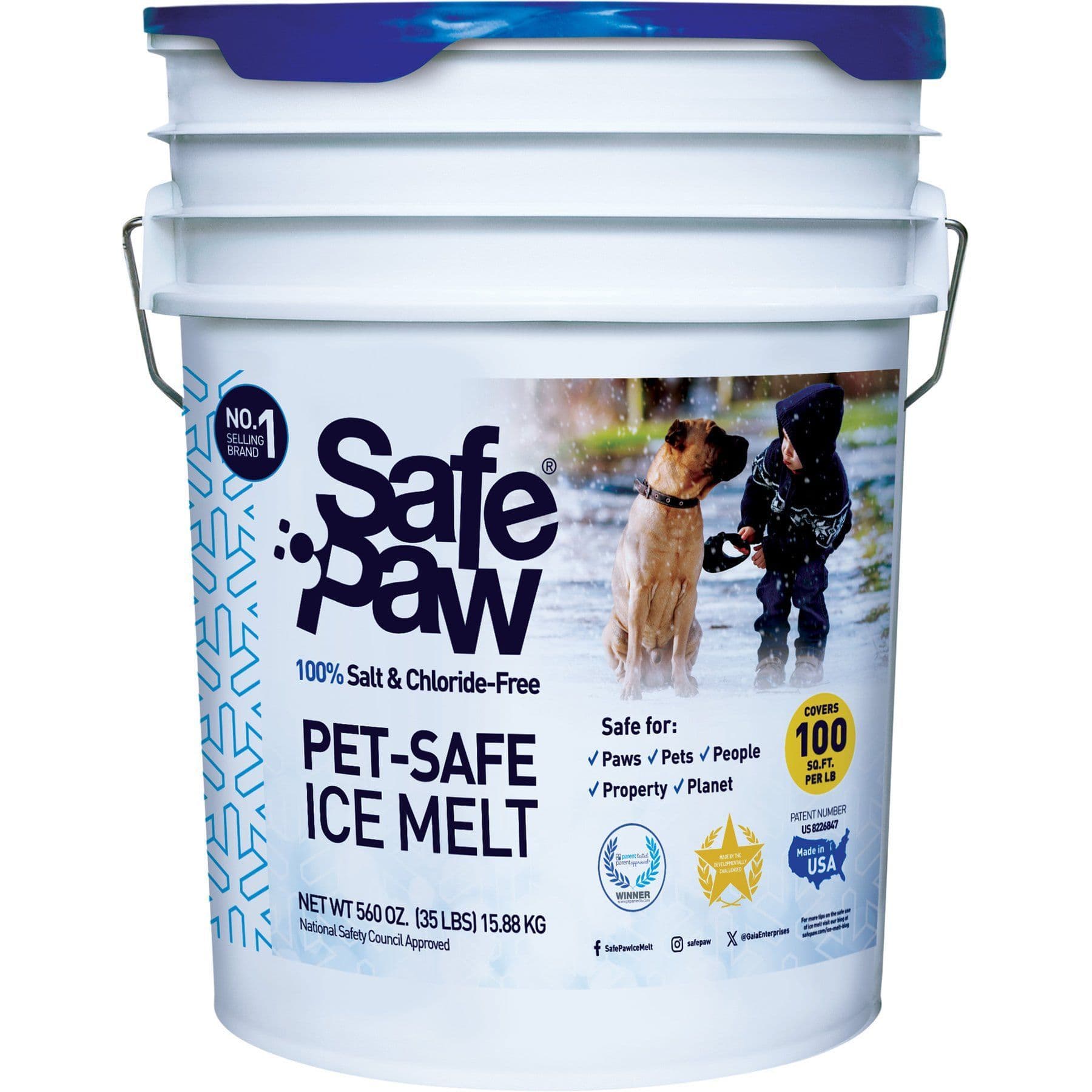
The same salt-free Safe Paw formula in a 35-lb pail for full driveways all season.
Webvet may earn a commission when you click through to Chewy, at no extra cost to you.
The 35-lb pail is the same Safe Paw product as the jug, carrying the same salt-free and chloride-free label claims, in a size that covers a full driveway through a snowy season. At $88.31 it costs more upfront than the bucket above.
Vetstreet's summary of the brand's claims lists it as usable on concrete, asphalt, pavers and lawns. Those surface claims come from the manufacturer, with no independent test data in our sources.
- Who it suits: owners who already like Safe Paw and want fewer reorders.
- Price: $88.31 for 35 lb on Chewy.
- Tradeoff: a heavy pail that needs dry storage space.
Safe Paw Winter Paw Protection Starter Kit: best bundle with paw wax
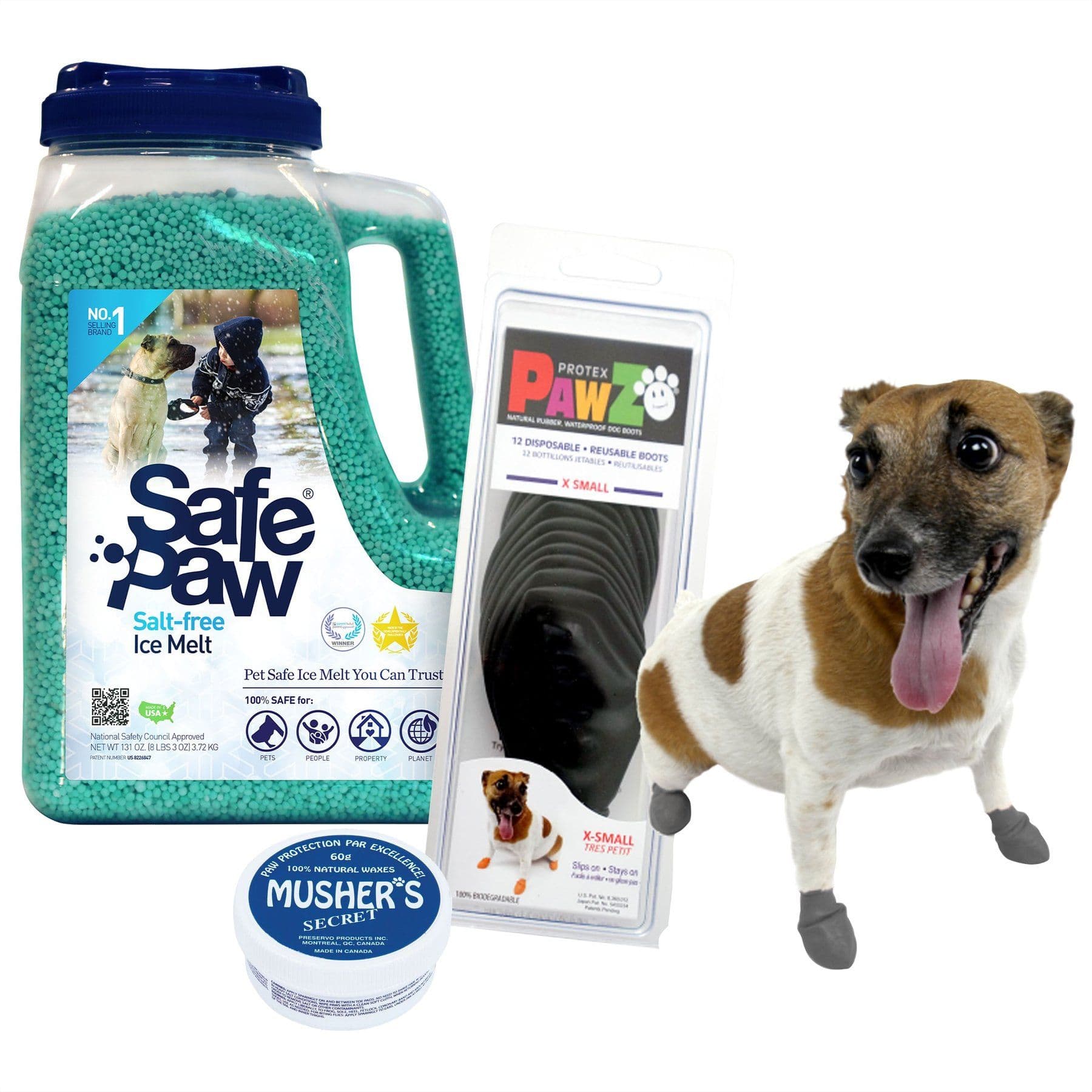
Safe Paw melter, Musher's Secret paw wax and Pawz boots in one winter starter bundle.
Webvet may earn a commission when you click through to Chewy, at no extra cost to you.
This kit bundles Safe Paw Ice Melt with Musher's Secret Paw Protection Wax and Pawz Dog Boots in X-Small, for $61.72. It covers both halves of the winter paw problem: a lower-risk melter on your own walk, and a barrier on the pads for sidewalks you do not control.
The ASPCA says paw wax or doggie booties provide an excellent barrier against ice melt.
- Who it suits: toy and small breeds that fit X-Small boots, and owners starting from scratch.
- Price: $61.72 for the bundle on Chewy.
- Tradeoff: the boots come in one size; larger dogs need boots bought separately. Our best dog boots guide covers sizing.
Ice melt ingredients compared: what hurts paws and what hurts stomachs
Ingredient by ingredient, ice melts fall into two separate risks: what the product does to skin and paw pads, and what happens when a pet swallows it. The ASPCA Animal Poison Control Center toxicology brief lists the solid ingredients as sodium, potassium, magnesium and calcium chloride, calcium carbonate, calcium magnesium acetate and urea.
The same brief says most solid ice melts are skin irritants. That is why the paw side of the table matters even for "pet safe" products. The table below separates paw irritation risk from ingestion risk for each ingredient, using only what veterinary toxicology sources report.
| Ingredient | Paw irritation risk | Ingestion risk | Concrete note |
|---|---|---|---|
| Sodium chloride (rock salt) | Can lodge between toes and cause redness, inflammation and burning | Mild cases cause vomiting and diarrhea; large amounts can cause sodium poisoning and kidney damage | Lacks the chemical reaction that calcium and magnesium chloride have with concrete |
| Calcium chloride | Most severe irritant among calcium salts; skin irritation may include burns | GI irritation and possible hemorrhage | Reacts with concrete at high concentrations |
| Magnesium chloride | Magnesium dust may be irritating | GI upset; vomiting and diarrhea expected, worse in pets with kidney problems | Reacts with concrete at high concentrations |
| Potassium chloride | Most solid melts are skin irritants; no paw-specific data found | Severe irritant; GI distress, possibly to the point of hemorrhage | No data in our sources |
| Urea | Most solid melts are skin irritants; no paw-specific data found | Hypersalivation, gastroenteritis and abdominal pain possible; dogs and cats lack the gut flora for classic urea toxicosis | No data in our sources |
| Propylene glycol | No paw data found | Evidence is thin; no primary source gives ice melt toxicity data | No data in our sources |
Is urea pet safe?
Urea is the safest common ice melt ingredient, but not harmless. ASPCA Animal Poison Control explains that dogs and cats lack the gut flora needed for classic urea toxicosis, yet can still show drooling, gastroenteritis and abdominal pain. PetMD calls urea-based products some of the safest options for pets.
What is a safe ice melt for concrete that is safe for pets?
A safe ice melt for concrete that is also pet safe avoids high-concentration calcium chloride and magnesium chloride. A 2022 Materials and Structures study found those salts, typically above about 15 percent by mass, react with calcium hydroxide in concrete to form calcium oxychloride, which damages it. Urea products like Safe Paw claim concrete safety, a manufacturer claim only.
Calcium chloride: the harshest on both counts
Calcium chloride is the ingredient to avoid if you have pets. The Pet Poison Helpline says calcium salts are the most hazardous ice melt ingredients because they are the most severe irritants. A bag labeled "calcium chloride ice melt pet safe" deserves real skepticism.
Magnesium chloride: safer, with caveats
Magnesium chloride sits in the middle. The ASPCA names it as a typical pet-friendly ingredient, yet PetMD lists it in both its safer and its highly toxic groups. The toxicology brief says vomiting and diarrhea are the expected signs, with more severe problems mainly in animals with kidney disease.
Propylene glycol: the evidence is thin
Propylene glycol shows up in liquid ice melts, which the ASPCA toxicology brief says are mainly used commercially on roads and highways. No primary pet-poison source gives toxicity data for propylene glycol in ice melt, so we cannot give a safe or dangerous amount. If your pet gets into a liquid product, call your vet.
What happens when sodium chloride melts ice
When sodium chloride melts ice, it leaves salty brine and crystals behind on sidewalks and paws. Concrete researchers found sodium chloride lacks the specific chemical reaction with concrete that calcium and magnesium chloride have. For pets, though, it is the brine on the paw pads and the salt licked off later that cause the trouble.
Is rock salt safe for dogs?
Is rock salt safe for dogs?
Rock salt is not safe for dogs in any real quantity. The Pet Poison Helpline says rock salt (sodium chloride) can be toxic in high concentrations, leading to severe sodium poisoning, dehydration and kidney damage. Mild ingestions usually cause only vomiting and diarrhea, but salt on the paws can still burn.
Signs of a serious salt problem listed by the Pet Poison Helpline include:
- Vomiting and diarrhea
- Tremors
- Lethargy
- Coma in severe cases
The paw risk is the one most owners notice first. Salt that gets between the toes can cause inflammation, redness and a burning sensation, according to the Pet Poison Helpline. So yes, ice melt can hurt dogs' paws and feet, and rock salt is one of the more common culprits on public sidewalks.
The ingestion risk depends heavily on dose and water. ASPCA Animal Poison Control reports that dogs ingesting 4 g/kg or more of sodium chloride are at high risk of death, while large ingestions usually cause vomiting first. The Merck Veterinary Manual adds that salt toxicity is unlikely when fresh drinking water is available.
Rock salt versus pet safe products
Rock salt versus pet safe products comes down to ingredient class. A "pet safe rock salt ice melt" is a contradiction: if the main ingredient is sodium chloride, it carries rock salt's risks. Pet-friendly ice melt is safer for dogs mainly because urea avoids salt poisoning, though the AKC notes urea can still cause drooling or vomiting.
The same logic answers questions about named brands. Whether Scotts, Blue Heat or Purple Heat ice melt is safe for pets, or whether an eco friendly ice melt is safe for dogs, depends on the ingredient panel, not the name or color. We found no veterinary data on those specific products, so treat any chloride-based formula with rock salt's caution.
And if your dog ate pet safe ice melt, do not assume it is fine. Even urea-based products can cause drooling, vomiting and stomach upset. The next two sections cover how to prevent that and what to do when it happens.
How to use any ice melt more safely around pets
Even the best product works better with good habits. The ASPCA, the AVMA and the Pet Poison Helpline agree that the most important habit is rinsing paws after walks, because the sidewalk you walk on is rarely the one you treated.

Follow these steps after every winter walk:
- Wipe your pet's paws with a damp cloth or baby wipes as soon as you get inside, as the ASPCA advises.
- Rinse the feet, including the spaces between the toes and the paw pads, to wash off salt and ice melter, per the AVMA.
- Wipe down or wash the legs and belly too, so your pet does not lick off de-icer later, as the AVMA recommends.
- Minimize paw licking until the paws are completely clean.
The Pet Poison Helpline warns that ice melt can get stuck in the paws and cause redness, cracking or chapping. If you see those signs, our guide to dog paw pad peeling explains what is normal and what needs a vet, and a dog paw balm can help dry pads.
A physical barrier reduces contact in the first place. The ASPCA says paw wax or doggie booties provide an excellent barrier, and the AVMA suggests paw protectors for dogs who run in ice or snow. Pads face a similar problem in summer, covered in our guide to hot pavement and dog paws.
At home, a few habits lower the ingestion risk:
- Store ice melt bags and jugs where pets cannot chew into them.
- Use only as much product as you need to break the ice, so less residue sits on the walk.
- Keep fresh drinking water available, which the Merck Veterinary Manual ties to a lower risk of salt toxicity.
- Limit time outdoors on the coldest days; our guide on how cold is too cold for dogs covers the thresholds.
What to do if your dog eats or licks ice melt
The most common problem when a pet eats ice melt is stomach upset, vomiting and diarrhea, according to the ASPCA. Poison Control adds that pets can develop mouth irritation from eating the chemicals or drinking the melt-water.
Signs of solid ice melt exposure listed by ASPCA Animal Poison Control include:
- Drooling (salivation) and depression
- Excessive thirst
- Vomiting, diarrhea and loss of appetite
- Crying or vocalizing, disorientation and apprehension
Inducing vomiting is not always the right move. The ASPCA toxicology brief says it should not be done at home for pets with recent surgery or conditions like epilepsy, may be contraindicated for some formulas, and that activated charcoal is unlikely to help. The hotline or your vet can tell you what applies.
While you wait for advice, offer fresh water, which the Pet Poison Helpline says helps against dehydration, and rinse any residue off the paws and coat. The ASPCA brief recommends bathing an exposed pet in a mild, noninsecticidal pet shampoo and rinsing well.
The Pet Poison Helpline lists an $89 per-incident fee that includes follow-up consultations. If your pet needs to be seen after hours, our breakdown of emergency vet cost explains what to expect.
Alternatives to ice melt on steps and walkways
Is there an alternative to ice melt?
Yes. The simplest pet safe ice melt alternative is not a melter at all. An ice melt manufacturer's own safety guide, from Ossian, suggests skipping chemical deicers in favor of sand or grit, which provide traction without chemical risk, and wiping paws with a damp towel after walks.

Your sand and litter alternatives each have tradeoffs:
- Sand or grit: adds traction with no chemical exposure, per the Ossian guide, but does not melt anything.
- Cat litter: Vetstreet notes it does not melt ice either; it only adds traction, is messy, and can leave slippery slush that refreezes.
- Shoveling early: clearing snow before it packs down means less product is needed at all.
As for whether you can use Epsom salt to melt snow, none of the veterinary or manufacturer sources we reviewed address Epsom salt as a deicer, so we cannot recommend it as a safer option. When you do need melting power, a urea-based product used sparingly, plus a paw rinse, is the better-documented route.
Pet safe ice melt questions
Frequently Asked Questions
What melts ice without damaging concrete?
Avoid high-concentration calcium chloride and magnesium chloride. Concrete research in Materials and Structures found these salts react with concrete to form calcium oxychloride, which damages the slab and can show up as surface spalling. Sodium chloride lacks that reaction, and urea products like Safe Paw claim concrete safety, though that is a manufacturer claim.
Is there any non-corrosive ice melt available?
Some urea-based products are marketed as gentler on surfaces, and Safe Paw claims it will not damage concrete, decking, pavers or roofs. None of the sources we reviewed give independent data on which melts are or are not corrosive to metal, so treat "non-corrosive" on a label as a manufacturer claim.
Can ice melt make my dog sick?
Yes. The most common result is stomach upset, with vomiting and drooling, and diarrhea. Rock salt can cause sodium poisoning in large amounts, and even urea products can cause drooling or vomiting. If your dog shows any symptoms after eating or licking ice melt, call your veterinarian right away.
How do I get ice melt off my dog's paws?
Wipe the paws with a damp cloth as soon as your dog comes inside, then follow with a warm water rinse that reaches the spaces between the toes and the paw pads, as the AVMA advises. Towel off and dry between the toes before your dog settles in to lick.

Editor
The Webvet Editorial Team is the in-house group of pet-care editors and writers behind Webvet, operated by Smart Pet Collective. The team researches, writes, and maintains Webvet's pet health, behavior, and medication content. Every article follows a defined editorial process: research from reputable veterinary and scientific sources, careful drafting, mandatory review of medical content by a credentialed veterinarian, and dated publication. Health and medication articles are medically reviewed by a licensed veterinary professional before they go live and are kept current over time.
Veterinarian · BVMS MRCVS
Dr. Pippa Elliott, BVMS, MRCVS, is a veterinarian with nearly 30 years of experience in companion animal practice. Dr. Elliott earned her Bachelor of Veterinary Medicine and Surgery from the University of Glasgow. She was also designated a Member of the Royal College of Veterinary Surgeons. Married with 2 grown-up kids, Dr. Elliott has a naughty Puggle named Poggle, 3 cats and a bearded dragon.
Related reading

Matted Cat Fur: How to Remove Mats Safely

Pet Safe Roach Killer: What Works Without Poisoning Your Pet

Pet Safe Pest Control: What Is Safe to Use Around Dogs and Cats
