Dog Training Whistle: Teach a Reliable Recall Cue
Build a clear whistle recall with practical equipment choices, staged exercises and troubleshooting for missed cues, distractions and handling, while preserving safe management throughout.

This article contains affiliate links. Webvet may earn a commission when you buy through them, at no extra cost to you.
A dog training whistle can become a clear signal to return to you, but it has no built-in meaning. Your dog learns that meaning through repeated, rewarding practice. Choose a whistle you can reproduce consistently, start in easy conditions and use safe management while you gradually add distance and distractions.
Do not blow a whistle repeatedly at a dog who has never learned the cue, or use it to startle a barking dog into silence. A positively trained recall signal and an aversive noise interruption are different tools, even if both begin with a sound.
What a whistle can and cannot teach
- 1Pair the cue with a reward and build an easy return before increasing difficulty.
- 2Use a long line attached to a harness during suitable outdoor practice.
- 3Increase one challenge at a time: distance, distraction or a new location.
A whistle offers a sound that different household members may find easier to reproduce than an emotional shouted command. That consistency can be useful, but it still depends on using the same pattern and rewarding the same response.
The cue does not overcome every distraction automatically. A dog chasing wildlife, frightened by another animal or too far away to respond safely is not a good first test. Training builds a history of success; management prevents a failed practice attempt from becoming a dangerous event.
Dogs Trust’s recall guidance describes a whistle as one possible recall cue and recommends starting in an enclosed setting, rewarding returns and increasing challenges gradually. A long line attached to a harness can support practice before off-leash freedom is appropriate.
Decide what the sound will mean
For a household pet, one useful meaning is “come all the way back to me.” Make that action specific enough that everyone rewards the same result. Turning the head briefly, stopping at a distance and returning within comfortable reach are different behaviors.
You can teach other whistle cues, but do not begin with a complicated code. If several family members remember different patterns, the equipment has not made communication clearer. Write down the chosen signal and practice producing it away from the dog first.
Recall is not an anti-bark function
A trained return can help you move your dog away from a window or yard trigger, but the whistle itself does not mean “stop barking” unless you have taught a particular response. Blowing harder at a distressed dog is not the next step when recall fails.
Use the reward-based barking plan for excessive vocalization. The anti-bark device guide explains why sound intended as a deterrent has different welfare questions from a cue paired with good outcomes.
Choose a whistle you can use consistently
For most beginners, clear operation and repeatability matter more than the number of features. Choose a whistle you can hold comfortably, carry reliably and use without producing an unexpectedly harsh sound near the dog.
The Coachi Training Whistle is one straightforward example: its listing describes a single tone and an adjustable lanyard. The manufacturer’s whistle-training guide also distinguishes single-tone, two-tone and adjustable-pitch designs. Those features support different handling preferences; they do not establish that one model automatically trains a better recall.
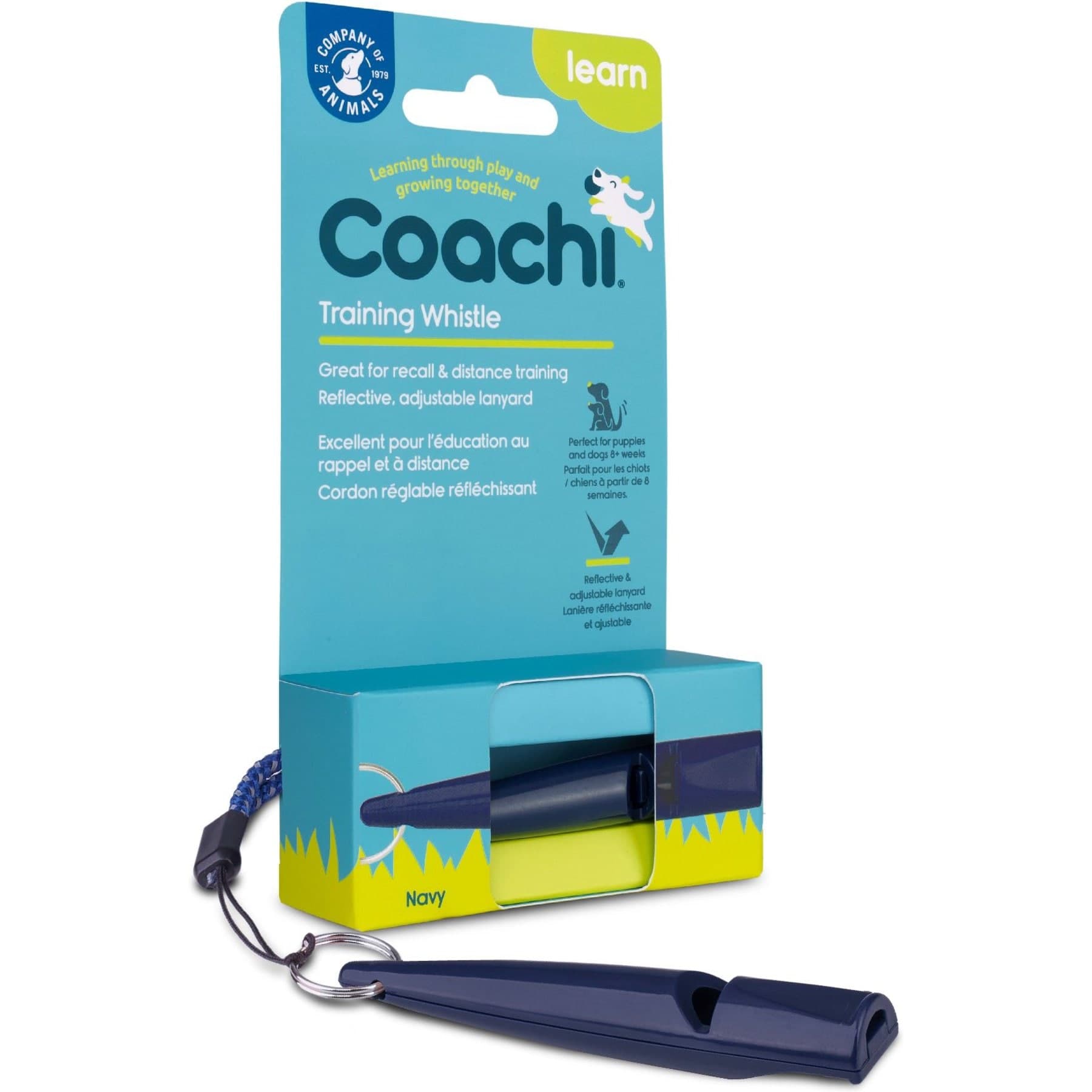
Single-tone training whistle with an adjustable lanyard for practicing a consistent cue.
Webvet may earn a commission when you click through to Chewy, at no extra cost to you.
| Choice | Useful fit | Tradeoff to consider |
|---|---|---|
| Simple fixed-tone whistle | One recall cue shared by a household | You still need a consistent blow pattern and reward plan |
| Two-tone whistle | A handler deliberately teaching separate signals | More options can create confusion before either cue is established |
| Adjustable-pitch whistle | A handler who needs a repeatable chosen pitch | Changing the setting during learning changes the cue |
| Combined clicker and whistle | A handler using a marker and a recall cue | The two sounds have different jobs and must be taught separately |

Compare named whistle designs by the cue you need
| Coachi design | What differs | Who needs to keep the rule consistent |
|---|---|---|
| Standard Training Whistle | One audible whistle tone | Every handler uses the same chosen pattern |
| Two-Tone Whistle | Two distinguishable tones | Handlers must agree which tone belongs to each learned cue or dog |
| Whizzclick | Whistle and clicker combined in one tool | The whistle requests the learned response; a trained click marks behavior for a reward |
Company of Animals’ whistle guide describes these three designs. More sounds do not create more trained behaviors automatically. Start with the smallest cue system your household can use consistently.
For example, two people recalling the same dog should agree on one pattern and the same arrival routine. A two-tone whistle is useful only when its separate signals have been deliberately taught. Alternating ends casually adds a distinction the dog has not been taught to interpret.
For one dog learning ordinary recall, the Standard gives you the single audible cue needed. Consider Two-Tone when you genuinely need separately taught signals. Choose Whizzclick when you already use, or plan to teach, a reward marker and want both tools together; the click is not a second recall command.
“Silent” does not mean inaudible to every animal
A whistle marketed as silent to people may still produce sound a dog can hear. Do not assume it is automatically more comfortable or effective. Hearing and sensitivity differ, and the surrounding environment affects what reaches the dog.
Avoid chasing an advertised maximum distance before you have a reliable nearby response. The practical question is whether your dog detects the cue comfortably and has learned what to do. If you suspect hearing loss, ask your veterinarian and consider a professionally guided visual-cue plan rather than buying progressively louder equipment.
Set up the equipment before the dog joins
Check the whistle for damage, make sure an adjustable setting is secure and choose a storage place that keeps it available for practice. A spare of the same model can be useful, but check that you can produce the same signal rather than assuming two different whistles sound identical.
Keep lanyards and small items out of reach when not in use. The whistle is handler equipment, not a chew toy. If you use a neck lanyard, manage it safely around children, rough play and anything that could snag.
Build the whistle-to-reward association
Start in a quiet, secure place where the dog is comfortable and nothing urgent depends on the result. Have the reward ready before using the sound. The first goal is a clear positive association, not distance or speed.
Use a gentle, consistent signal at a comfortable distance from the dog’s ears, then provide the reward promptly. Avoid looming over the dog or surprising it with a sudden blast. If the sound produces avoidance or tension, stop and reconsider the setup with qualified help if needed.
First sessions: keep the task obvious
- Choose a moment when the dog is awake, comfortable and interested in you.
- Give the selected whistle pattern once.
- Deliver the expected reward promptly.
- Pause and allow the dog to reset before another repetition.
- End while the dog remains engaged rather than waiting for interest to disappear.
The exact number of repetitions is less important than the dog’s response. A short successful session is enough. Do not interpret looking away as defiance; the dog may be full, tired, distracted or uncertain about the sound.
Add a very small return
Once the sound predicts something welcome, arrange an easy return from a step or two away. Use the whistle when the dog is likely to succeed, move invitingly away if that helps and reward arrival close to you. Keep the end point consistent.
If the dog only turns its head, avoid immediately increasing distance. Make the next repetition easier and reward the full return you want. You can use your posture and movement to make coming toward you inviting without pulling or chasing.
Do not make every return end the fun
Sometimes reward the dog and release them back to a safe enjoyable activity. If the whistle always predicts the end of play, the dog may learn that ignoring it keeps access to something valuable. A return should have its own good outcome.
This does not mean you must offer unlimited freedom after every cue. It means the learning history should include returns that are worthwhile, not only the moments when you need to leave the park or stop an activity. Plan practice when you have time to reward properly.
Teach comfortable handling separately
Returning near a person and allowing a leash to be attached are related but distinct skills. Practice a gentle, consent-based collar or harness touch in quiet conditions and reward it. Do not suddenly grab at the dog after every successful recall if that makes approaching unpleasant.
For dogs worried about hands reaching toward equipment, get help with a gradual handling plan. A recall that stops just beyond reach may reflect what happens after arrival rather than a failure to hear the whistle.
Move from indoors to a long line
Choose a secure, quiet outdoor location with room to move and few hazards. A long line such as Coachi Waterproof Training Line provides a safety layer while the dog practices.
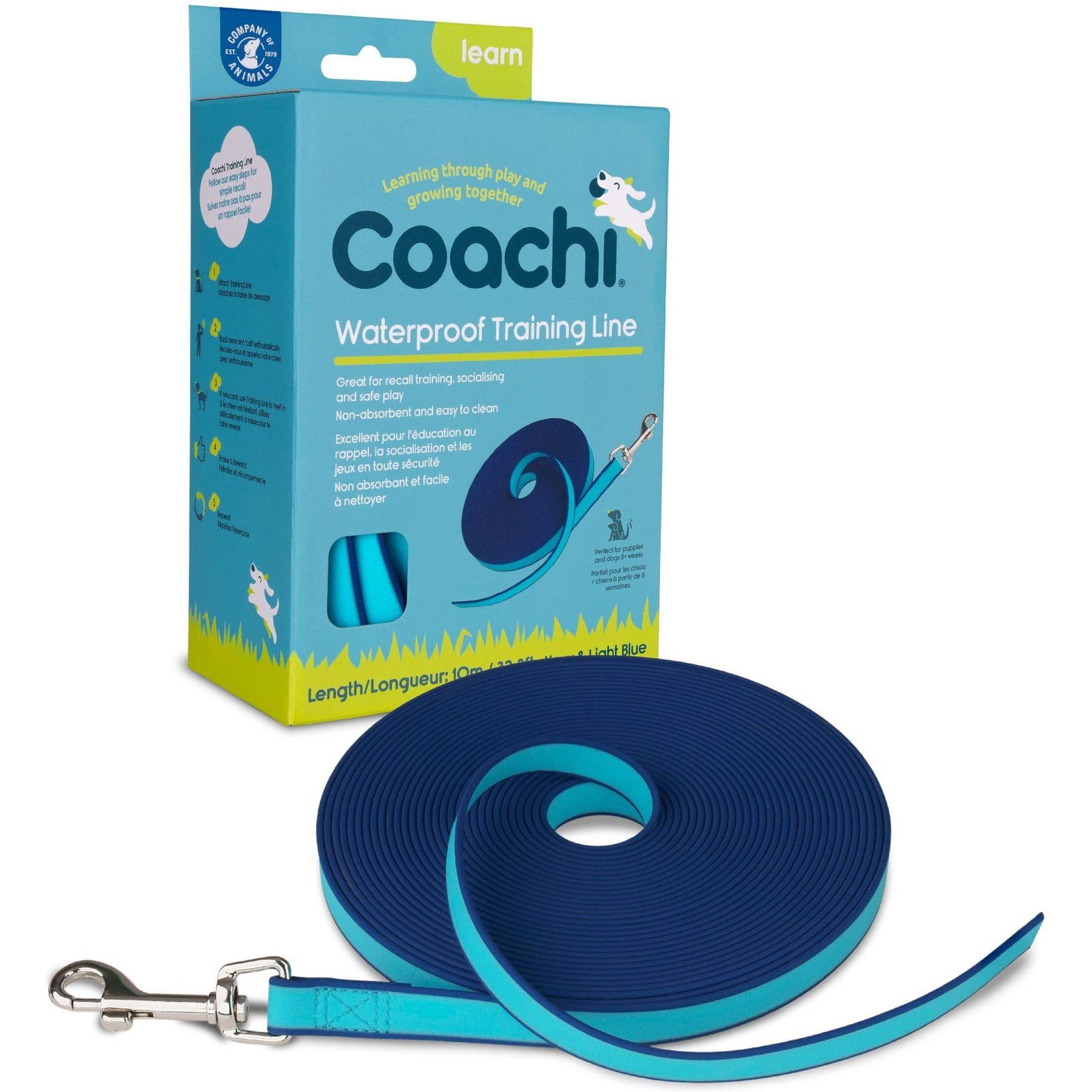
Waterproof training line for managed outdoor recall practice with a well-fitted harness.
Webvet may earn a commission when you click through to Chewy, at no extra cost to you.
Attach the training line to a well-fitted harness. Check its fit and attachment before practice.
A line and harness do not make an unsafe location suitable or replace supervision.
The line should be appropriate to the dog’s size and the setting, and the handler should be able to manage it without tangling people or animals. Check the clip and line condition before each session. Avoid crowded spaces, traffic, sharp obstacles and situations where a running dog can hit the end at speed.

Learn line handling before adding difficulty
Keep enough slack for normal movement while preventing the line from creating loops around legs or equipment. Do not wrap it around your hand or use it to jerk the dog toward you. If you cannot manage the line comfortably, work in a smaller secure area and ask a qualified trainer to demonstrate.
For the attachment choice, see dog harness versus collar. A harness fit check belongs in the setup before recall practice, not after a dog has already run into the end of the line.
Repeat the easy indoor task outdoors
Start close, even if indoor returns were excellent. New smells and movement make the outdoor task different. Give the signal when the dog is likely to respond, reward arrival and allow an appropriate reset.
If the dog ignores the cue, do not keep blowing it while the dog continues doing something else. Calmly reduce the challenge, move closer or return to an easier part of the area. The line is there to prevent an unsafe departure, not to drag the dog through the answer.
Separate distance from environmental difficulty
An example progression might look like this:
- A nearby return in the quietest part of the enclosed space.
- The same nearby return while the dog has noticed a mild, stationary distraction.
- A slightly longer return in the quiet part again.
- The familiar distance in a second calm location.
These are examples of how to change one variable, not a timetable every dog must follow. Stay at a level where the dog succeeds comfortably across several short sessions. If you add distance, a new park and moving dogs at the same time, you will not know which change exceeded the dog’s current skill.
Reward the arrival you want to repeat
Deliver the reward close to you if your goal is a complete return. If you routinely toss it far away before the dog reaches you, you may teach a different end point. You can release the dog to sniff again after the close reward, making both parts of the sequence clear.
Keep your own response welcoming. Scolding after a slow return can make approaching less attractive, even though you are frustrated about what happened earlier. Solve the training difficulty in the next setup rather than punishing the dog at the moment it finally comes back.
Add distractions without losing the response
Distraction practice should be planned, not a surprise examination. Choose something mild enough that the dog can notice it and still respond. A distant stationary person is different from a running animal close by.
Watch the dog before using the cue. If the body is rigid, the dog is fixated or the situation is escalating, create distance instead of testing the whistle. Successful recall practice starts below the point where the dog is overwhelmed or fully committed to chasing.

Use a simple progression rule
Move forward when the current version is easy and repeatable, not because a calendar says it is time. If the dog repeatedly hesitates, stops partway or needs extra prompting, the task is not ready for another increase in difficulty.
A practical note can include location, approximate distance, distraction, whether the dog returned on the first cue and what reward followed. You do not need a formal scoring system to notice that quiet-garden returns are reliable while a busy park is not.
Practice with people carefully
Ask a helper to stand quietly at a comfortable distance while you repeat an easy return. The helper should not call, excite or feed the dog unpredictably. Increase movement only after the still version is manageable.
Children should not be responsible for managing a strong dog on a long line or creating difficult distractions. An adult should control the environment and equipment. Clear household practice is more useful than turning recall into a competitive game of who can call the dog louder.
Other dogs are not training props
Do not repeatedly call your dog away from unfamiliar dogs at close range before the skill is ready. Choose distance and avoid interrupting another owner’s activity. If practicing around a known dog, agree on the setup and keep both animals comfortable.
For a dog who becomes frightened or frustrated around other dogs, recall work may need to sit inside a broader behavior plan. A whistle is not a substitute for addressing that emotional response. Our trainer versus behaviorist guide can help you choose support.
Prepare manageable rewards
For distraction practice, prepare manageable rewards. Small portions of Pet Botanics Chicken Training Rewards are one option when they suit the dog’s diet. Small pieces that the dog can eat promptly make it easier to deliver several successful repetitions without long pauses.
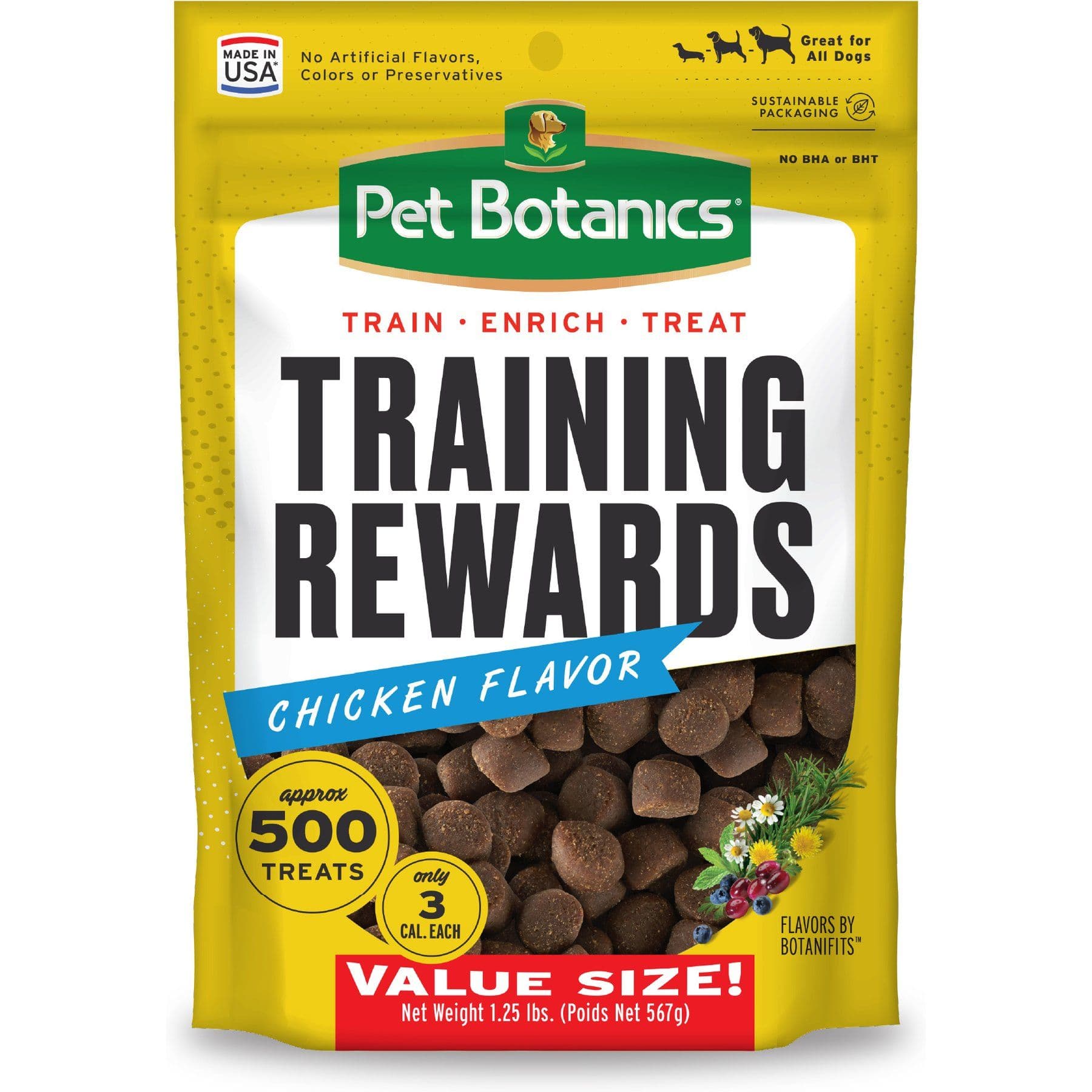
Small chicken-flavored treats for rewarding successful training repetitions.
Webvet may earn a commission when you click through to Chewy, at no extra cost to you.
Account for treats within the dog’s diet and use food appropriate to any veterinary dietary restrictions. A reward does not have to be expensive to be effective; it does need to matter to the individual dog in that setting.
Wildlife, livestock and roads remain management decisions
A strong recall history does not make every off-leash environment appropriate. Use a lead where required and wherever wildlife, livestock, traffic or other hazards make a failed response unacceptable. Do not test the newest training stage beside a road or around animals the dog may chase.
Breed tendencies, prior learning and individual motivation can affect how challenging a situation is. They do not create a universal whistle frequency that overrides behavior. A safe choice may remain an enclosed area or a managed line even after substantial practice.
Fix common whistle-training problems
When a recall fails, identify the weakest part of the sequence. Did the dog notice the cue, begin to return, stop short or avoid the final approach? Each pattern suggests a different adjustment. Repeating the same difficult attempt at greater volume usually supplies less information than simplifying it.
The dog does not appear to notice the whistle
Check whether the signal is the same as during successful practice and whether the environment has changed. Wind, distance and competing activity can affect the situation. Return to a quiet nearby setup rather than assuming the dog is deliberately ignoring you.
If responsiveness to other ordinary sounds has changed, discuss hearing or health concerns with your veterinarian. Do not keep increasing volume close to the ears. A visual cue or another approach may be more appropriate, particularly when hearing is impaired.
The dog looks but does not return
The sound may predict attention without a fully learned movement back to you. Go back to a short, obvious return and reward the complete action. Make the end point clear and avoid adding distance until that small version is reliable.
Also examine competing value. A dog deeply engaged in sniffing may need an easier setup and a more worthwhile return history. This is a training design question, not evidence that rewards never work.
The dog returns only when food is visible
Prepare rewards before the session, but avoid making a displayed handful the only signal to approach. Let the whistle cue the action, then reward the arrival. Begin in easy conditions so hiding the food does not coincide with a major increase in difficulty.
You are not required to remove rewards quickly to prove the dog has learned. Maintain a strong reinforcement history, especially for a behavior with important safety value. Varying enjoyable outcomes can be useful, but do not abruptly make most returns unrewarding.
The dog stops just out of reach
Look at what happens when the dog arrives. If every return leads to grabbing, unpleasant handling or the end of all enjoyable activity, approaching fully may have become unattractive. Practice a comfortable arrival, a gentle learned equipment touch and a reward, then release back to safe activity sometimes.
Do not chase the dog to finish the exercise. Reduce the setup and work on the final approach separately. If handling is a concern, a qualified trainer can help identify a gradual plan.
The whistle worries the dog
Stop using the sound in the current way. Do not force exposure until the dog stops reacting. Consider volume, proximity, previous associations and whether a different cue would be kinder and clearer. Seek professional guidance if the dog remains worried.
A tool that is convenient for the handler is not automatically suitable for every dog. The useful outcome is comfortable, reliable communication. There is no requirement to use a whistle if a different trained cue works better for the individual.
Different people get different results
Compare the actual signal, timing, body position and reward. One person may blow several times, lean over the dog or only call when leaving. Another may practice easy returns and reward generously. The whistle alone cannot erase those differences.
Agree on one pattern and one arrival behavior. Have each person begin with easy practice rather than assuming the dog will generalize instantly. Keep the same safety management while the skill transfers between handlers.
Decide what to change before the next repetition
| Observation | Easier next step | What would count as progress? |
|---|---|---|
| Dog responds indoors but not outside | Return to a quiet enclosed outdoor area with management | Prompt comfortable turns across several easy repetitions |
| Dog turns but stops out of reach | Practice very short returns and reward comfortable arrival | Dog chooses to complete the approach |
| Dog startles or avoids the sound | Stop that setup and reassess the cue with qualified help | Comfort returns before further training is attempted |
| Line repeatedly tightens | Reduce available distance and improve the layout | Handler can keep safe slack without pulling |
This troubleshooting record keeps the next step tied to the observed difficulty. Change one demand at a time; a louder blast does not solve a poorly matched exercise.
Check the harness before the next session
Attach the line to a well-fitted harness such as Frisco Padded No Pull Harness.
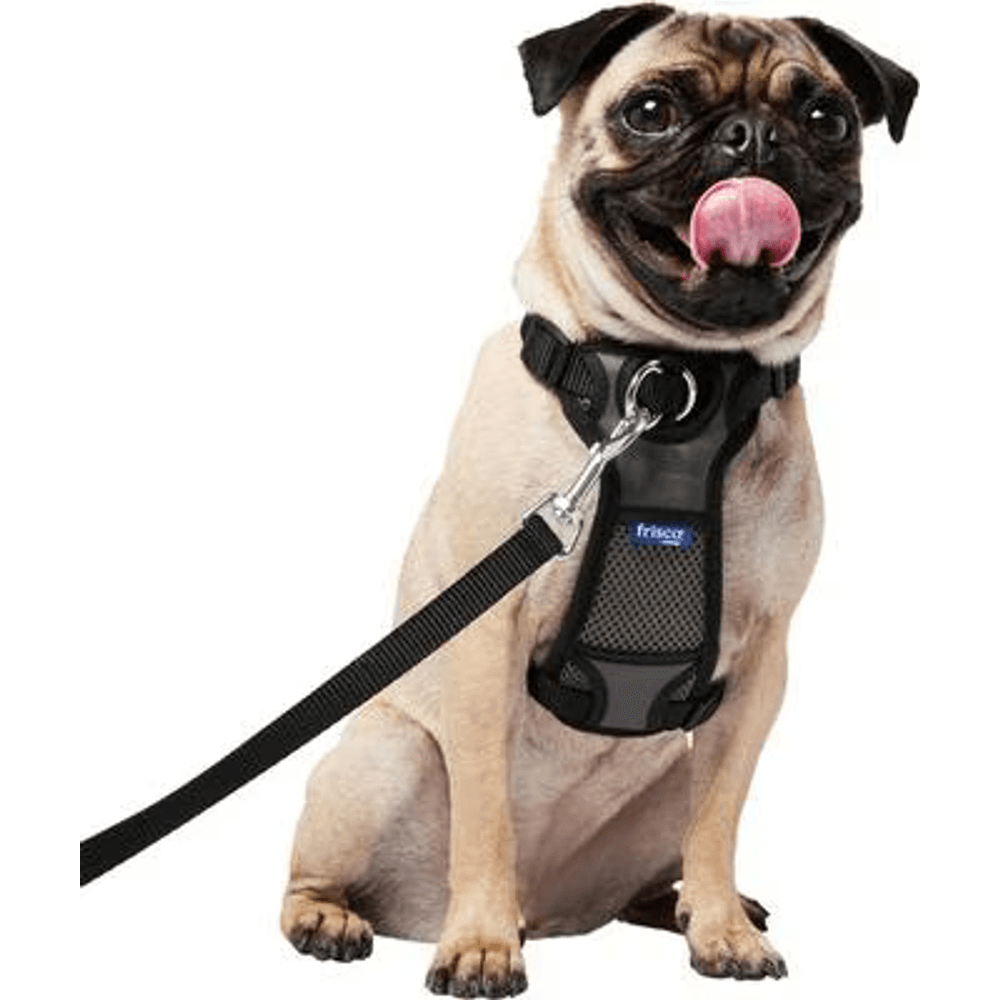
Padded walking harness; choose the fit and size for your dog.
Webvet may earn a commission when you click through to Chewy, at no extra cost to you.
Whistle questions
Moving an existing verbal recall to a whistle
If the dog already has a comfortable, reliable verbal recall, a trainer can help pair the new sound with the familiar cue in easy conditions. Keep rewards strong and avoid using both signals repeatedly when the dog is unlikely to respond.
If the old cue is unreliable, adding a whistle does not automatically repair the underlying problem.
Practice the new cue close by before relying on it at distance. The transfer should preserve the successful behavior, not become an excuse to skip the foundation. Different settings and handlers still need gradual practice.
A sample first indoor session
Prepare a few small rewards and choose a quiet room with a clear floor. Let the dog approach voluntarily. Give the selected whistle pattern gently, then deliver the reward. Pause long enough for the dog to finish and return to ordinary attention before deciding whether to repeat.
Watch the response to the sound itself. An easy orientation toward you is useful; a flinch, retreat or reluctance to approach means the setup needs to change. Do not keep repeating the sound to make the dog accept it. Stop while the interaction remains comfortable.
Practice one short return
For the first tiny return, begin only a step away when the dog is already likely to move toward you. Use the cue once and reward the completed approach. This gives the dog a simple pattern to learn without requiring a choice between you and a major distraction.
Finish with a normal pleasant activity. Put the equipment away rather than allowing children to blow the whistle repeatedly afterward. Unplanned uses can weaken the clarity you just built, especially while the sound is still new.
A sample quiet-garden session
Inspect the enclosure and attach the appropriate line to the harness before opening access. Begin near the point where the dog already succeeds, not at the far end of the garden. Give time to notice ordinary smells before selecting an easy moment for a return.
After a successful recall, reward close to you and release the dog to sniff again if that is safe. A few repetitions spaced through an ordinary calm outing can be more useful than standing still and calling every few seconds. The return becomes part of enjoyable activity rather than its constant interruption.
Adjust to changes in the garden
If a neighbor appears or a loud event changes the setting, treat that as a new difficulty. Move away, wait or finish. You do not need to salvage the planned number of repetitions. Good practice includes deciding when the conditions no longer match the dog’s current skill.
Write one factual note afterward: the setting, the response and the adjustment you made. “Three easy returns close by; stopped when construction noise began” is a useful record. It shows what was learned and why the session ended without describing the dog as either perfectly trained or a failure.

A sample session with a mild distraction
Ask a helper to stand still at a distance where the dog can notice them without fixating. Begin with a familiar nearby return while the helper remains uninteresting. Reward arrival, then allow a pause before another attempt.
If this stays easy, change only one element in a later repetition or session: the helper takes a slow step, or you begin slightly farther from the dog. Do not simultaneously ask the helper to run, move closer and offer food. That would create a different task, not a small progression.
Give the helper a clear stopping rule
Agree in advance that the helper will stop if the dog becomes worried or overexcited. The helper should not call the dog after a missed response or turn the exercise into a tug-of-war for attention. Your management plan keeps the dog safe while you simplify the next attempt.
When the dog returns slowly, reward the arrival and note the hesitation. Do not punish the completed return. The record tells you to make the next setup easier or strengthen the foundation, not to express frustration at the moment you wanted the dog to reach you.
Training more than one dog
Teach each dog individually before expecting a group to sort out a new signal. Separate practice lets you see whether each dog understands the cue and can return without competition over rewards. It also prevents one confident dog from completing every repetition while another remains uncertain.
If you later use separate signals, choose a system the humans can reproduce reliably and practice it in controlled conditions. A two-tone whistle creates options, but the dogs do not arrive knowing which tone belongs to whom. Each association still needs to be taught.
Manage spacing and rewards in a group
For group practice, maintain safe spacing and a reward plan that does not create conflict. Do not toss a handful of valuable food into the middle of dogs who may compete. If resource guarding or social tension is present, seek professional guidance before combining recall exercises.
A group return is a separate skill from an individual recall around another dog. Keep those goals distinct in your notes. Success with two relaxed household dogs in the garden does not prove that either will return from unfamiliar dogs in a crowded park.
Puppies and newly adopted adult dogs
Use age-appropriate expectations and a setting that suits the dog’s current confidence and physical ability. A young puppy may need frequent rest and toilet opportunities; a newly adopted adult may still be learning the household and responding to unfamiliar surroundings. Neither benefits from being tested at the edge of its capacity.
Start with the same simple association and nearby return. Do not assume an adult understands a whistle because a previous owner might have used one. The sound could have a different history, including an unpleasant one. Observe the response before building on it.
Match outdoor practice to the dog’s needs
Keep outdoor access consistent with veterinary advice, local conditions and the dog’s vaccination and health needs. A secure suitable space is more important than reaching a particular training milestone quickly. A qualified trainer can help you adapt the plan when safe outdoor options are limited.
For a dog who is hesitant to approach people, voluntary engagement is the first priority. Do not use the line to pull the dog into touching distance. Work on comfort and trust with professional support, and treat the recall exercise as one part of that broader process.
Switching equipment without confusing the cue
If you lose a whistle or change models, do not assume the new sound has the same meaning to your dog. Revisit the association in a quiet setting and test only an easy nearby return. Rebuild confidence before relying on it outdoors.
For adjustable models, preserve the chosen setting and check it before practice. Avoid changing pitch because one difficult recall failed. If the dog heard the cue but could not disengage, a new frequency does not address the missing training step.
Treat a combined clicker-and-whistle device as two tools. A clicker commonly marks the moment a rewarded behavior occurs; a recall whistle asks for the behavior to begin. Using the sounds interchangeably can blur those jobs. Follow a clear plan and keep the distinction consistent across handlers.
Deciding whether an off-leash trial is appropriate
Begin by asking whether the location permits it and whether a missed response could expose the dog, wildlife, livestock or other people to risk. Good recent recalls do not remove those responsibilities. An enclosed area can provide room to move without requiring a risky test.
Review evidence from comparable settings. Has the dog returned comfortably around the kinds of distractions actually present, or only in a quiet garden? Does the dog arrive fully, and can you attach a lead without avoidance? Are you able to observe and respond before the dog becomes committed to chasing?
If those questions are unresolved, continue managed practice. There is no obligation to remove the line on a certain date or to match another dog’s freedom. A qualified reward-based trainer can help assess readiness and choose a safer progression.
Maintaining the skill after it improves
Include easy rewarded returns in ordinary walks where it is safe to practice. Do not save the cue only for the hardest moments. Refresh the foundation after a long break, a major routine change or a period in which responses have become less reliable.
Keep equipment checks part of the routine. A damaged whistle, altered adjustable pitch or unavailable reward can change the session. Carry the management equipment appropriate to the setting even when recall has been good recently.
The most useful question is not how far away a dog could theoretically hear the whistle. It is whether your dog has a practiced, comfortable response in the situation you are about to enter. That distinction keeps training decisions tied to evidence you can actually observe.
Use a short session record
Record the location, cue pattern, distance, distraction and response. Add what happened at arrival and whether you changed the setup. A factual entry might read: “Quiet enclosed garden, nearby return, one cue, came fully, reward and release to sniff.”
A harder session might read: “Person moving beyond fence, dog looked but stayed still; moved farther away and ended with an easy return.”
Use the record to select the next step
Compare the dog’s response before increasing difficulty. A head turn tells you the cue was noticed; it is not yet a complete return. Record the arrival separately, including whether the dog remained close enough for the usual reward and comfortable handling.
| Observation after one cue | Interpretation to check | Next practice setup |
|---|---|---|
| No visible orientation | Cue not noticed, not learned here, or competing activity too strong | Return to a quiet close-distance setup; consider hearing concerns when appropriate |
| Looks toward handler but resumes sniffing | Noticing is stronger than the complete recall in this setting | Reduce distraction and distance; reward successful easy arrivals |
| Returns promptly but stops beyond reach | Arrival and comfortable close handling need separate practice | Reward nearby contact in easy sessions without grabbing |
| Comes indoors and outdoors on the line | Progress across two controlled settings | Keep physical safety management; do not infer road or wildlife reliability |
Change one feature, then repeat the same observation. If you move farther away, add another dog and hide the reward at once, the result cannot tell you which change mattered. Keep the reward available, deliver it after the response and avoid turning repeated whistle blasts into background noise.
Decide what to carry on an ordinary outing
Take the whistle, an appropriate reward, correctly fitted equipment and the lead or line needed for the setting. Check that the reward remains suitable in the weather and that clips, straps and the whistle are intact.
Carrying the whistle without the rest of the plan can tempt you to test a cue when you cannot manage a missed response safely.
Before opening a gate or leaving a secure area, decide where recall practice can happen and where the dog will stay on lead. This simple decision keeps training separate from wishful thinking. A well-practiced cue is valuable, but thoughtful location choice and ordinary equipment remain part of responsible recall work.
Questions owners ask
Frequently Asked Questions
Are dog whistles effective for training?
They can be useful cues when deliberately paired with rewards and practiced gradually. A whistle does not have an automatic meaning or guarantee recall around every distraction. Its effectiveness depends on learning, management and the individual dog.
What is the most effective dog whistle for training?
Choose a model you can use consistently and that your dog detects comfortably. A simple fixed-tone whistle may suit one recall cue; extra tones or adjustable pitch are not automatically better. Training history matters more than a feature count.
How do I train my dog with a whistle?
Begin in a quiet secure setting, pair the chosen sound with a welcome reward, then practice a very short return. Add outdoor space, distance and distractions one at a time, using safe management such as an appropriate harness and long line.
What are the drawbacks of using a dog whistle?
You must carry it, reproduce the cue consistently and account for hearing, sensitivity and environmental conditions. A whistle can become confusing or unpleasant if used repeatedly without training or as punishment. It does not replace a complete recall plan.
Do dog whistles annoy dogs?
An intense, unfamiliar or repeatedly imposed sound can be unpleasant for some dogs. Introduce a cue gently and watch the response. Stop if the dog appears worried; a sound being marketed as silent or humane does not establish individual comfort.
Do dogs prefer silence or TV?
There is no universal preference. For training, start with the TV off so the cue is easy to notice. If you use background television at other times, keep the volume low and allow access to a quieter space. Watch whether the dog rests normally or instead watches tensely, startles or leaves.
Choose the calmer setup for that dog; do not use loud television to mask distress or assume every dog finds it soothing.
Can I use a replacement whistle if I lose mine?
Check the new whistle in a quiet, secure setting before relying on it outdoors. A similar-looking model may produce a different sound. Refresh the sound-to-reward association and confirm comfortable short returns first; keep normal lead management until the dog responds reliably to the replacement.

Editor
The Webvet Editorial Team is the in-house group of pet-care editors and writers behind Webvet, operated by Smart Pet Collective. The team researches, writes, and maintains Webvet's pet health, behavior, and medication content. Every article follows a defined editorial process: research from reputable veterinary and scientific sources, careful drafting, mandatory review of medical content by a credentialed veterinarian, and dated publication. Health and medication articles are medically reviewed by a licensed veterinary professional before they go live and are kept current over time.


