Anti Dog Barking Device: What Works and What Risks Remain
Evaluate anti-bark devices by their mechanism, exposure and evidence, with practical alternatives for common triggers and clear boundaries around products aimed at a neighbor’s dog.

This article contains affiliate links. Webvet may earn a commission when you buy through them, at no extra cost to you.
An anti dog barking device may interrupt a bark, but interruption is not the same as lasting behavior change. Ultrasound, spray and vibration can be unpleasant even when a product is advertised as nonshock. A useful plan asks why the dog barks and whether comfort and coping improve, not only whether the noise stops.
Before buying a device for your own dog or aiming one toward a neighbor’s yard, compare the mechanism, exposure and evidence. The strongest practical starting point is usually a change to the trigger and a reward-based alternative.
What does an anti-bark device promise?
- 1Separate interruption versus behavior change when reading efficacy claims.
- 2Consider other animals within range of sound-based products.
- 3Identify the trigger before deciding which tool, if any, has a useful job.
Products in this category include automatic sound boxes, handheld sound emitters, spray collars and vibration collars. Some activate when they detect barking; others require a person to press a control. The intended output is usually a consequence that makes continued barking less likely.
That mechanism does not identify the dog’s reason for barking. A sensor can respond to a sound without understanding fear, pain, excitement, frustration or distress during an absence. A manual control gives a person a choice about timing, but it does not automatically make the method appropriate.
Define “works” before comparing claims
Ask whether a claim means a single bark stopped, barking decreased while the device was present, or the dog developed a comfortable response that lasts across ordinary situations. Those are different outcomes. A short customer video usually cannot distinguish them.
Tools are most useful when each has a defined job. A camera such as INSTACHEW Purrsight camera can reveal the pattern during departures. A visual barrier can reduce repeated window triggers.
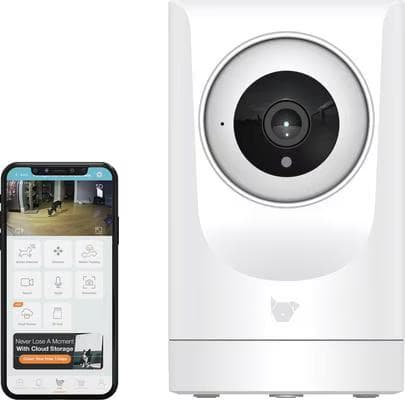
Wi-Fi camera for observing what your pet does when you are elsewhere.
Webvet may earn a commission when you click through to Chewy, at no extra cost to you.
The AVSAB position on training recommends reward-based methods. A product’s “nonshock” description does not establish that its consequence is nonaversive. The experience of the dog matters more than the reassuring label.
For a plan that starts with the cause, use how to stop dog barking. This comparison focuses on evaluating device claims so a purchase does not replace that investigation.
Compare ultrasound, spray and vibration
Each mechanism raises a different practical question. Do not group all nonshock products together as if they have identical effects or evidence. Equally, do not infer welfare from whether a person can hear or feel the output.
| Mechanism | Intended effect | Important limitation |
|---|---|---|
| Ultrasonic sound | Interrupt barking through a high-frequency sound | Responses vary; nearby animals may also be exposed |
| Audible sound | Interrupt or cue a response | An unfamiliar startling sound is not automatically a learned cue |
| Spray | Deliver a burst near the dog when barking is detected | Scent-free does not mean the sensation is neutral |
| Vibration | Deliver a mechanical sensation through a collar | No electrical stimulus does not prove the vibration is pleasant |

Ultrasound and “most powerful” searches
Greater advertised range or output is not evidence of a better welfare outcome. A device may affect more space without distinguishing the intended dog from another animal nearby. Walls, placement and the actual setting can also change what reaches an animal.
Do not assume that a sound you cannot hear is absent or harmless. Conversely, do not assume every dog responds to a particular frequency in the same way. A sales claim about range does not tell you whether the dog becomes less distressed by the original trigger.
Spray and vibration products
These are often presented as alternatives to electrical stimulation. That is a factual distinction about mechanism, but a dog can still avoid or be startled by either consequence. Read the exact model description and manual rather than transferring claims from another device.
The bark collars explainer covers detection and fit in more detail. The best bark collar comparison examines named nonshock examples without awarding an unsupported universal humane winner.
Compare who controls activation and who may be exposed
| Device arrangement | Practical difference | Question to resolve |
|---|---|---|
| Handheld sound device | A person chooses when to activate it | What behavior is the person timing, and what do nearby animals experience? |
| Automatic sound box | A sensor activates the unit without a handler choosing each event | Can it respond to another dog, and which animals occupy the area? |
| Wearable spray or vibration collar | The dog carries the receiver and its detection system | What triggers output, how does fit affect operation, and what are the stop conditions? |
| Camera or recording device | It collects observations rather than delivering a consequence | Does the recording show the trigger and recovery clearly? |
A claimed range does not tell you whether a device can distinguish dogs, work through your wall or improve the cause of barking. Ask for evidence of the exact claim and exact model. If it is missing, a larger advertised distance or stronger output does not fill that gap.
A trained whistle is a different tool
A whistle paired with a reward can become a recall cue. Blowing an unfamiliar whistle to startle a barking dog is a different learning arrangement. Our dog training whistle guide explains how to build a positive cue deliberately.
Small rewards such as Pet Botanics Chicken Training Rewards can reinforce checking in or moving away.

Small chicken-flavored treats for rewarding successful training repetitions.
Webvet may earn a commission when you click through to Chewy, at no extra cost to you.
Why neighbor-dog devices are especially difficult
When the barking dog belongs to someone else, you may not know its health, hearing, triggers or previous experiences. A device aimed across a boundary cannot coordinate with the caregiver’s plan or assess how the animal responds when you are not watching.
Sound may also reach dogs who were not barking or other animals in the area. This makes automatic exposure especially difficult to justify as a precise intervention. Do not treat a fence line as a controlled training setup.
Start with a concrete, calm report
Record when the barking occurs and its approximate duration. A useful conversation describes a pattern, such as repeated barking after the owner leaves, instead of labeling the dog or owner. They may not know what happens during an absence.
On your side, consider changes that reduce conflict or exposure: move your own dog away from the fence, block a provocative sightline or adjust the timing of outdoor use. These steps may make the immediate situation more manageable without subjecting another animal to an unwanted consequence.
If the problem continues, use the appropriate local complaint or animal-welfare process for your location. Rules vary, so obtain current local guidance rather than relying on a device seller’s claim that a product is legal everywhere. Do not trespass, enter the animal’s space or attempt to train another person’s dog without agreement.
Treat through-wall claims cautiously
A claim that an anti-barking device works through walls is not a dependable control plan. Walls, distance, placement and other animals complicate exposure, while the device cannot identify why the dog is barking. Do not use a range claim to justify aiming sound into another household.
Measure meaningful improvement
Before changing a setup, note the trigger, duration and recovery time during ordinary episodes. Then compare similar situations. A quiet afternoon with no deliveries is not proof that a device solved barking at visitors.
A comfortable mat such as Kurgo Loft Wander Travel Bed can support a learned settling response.

A portable padded resting surface for practicing a familiar settle cue. Choose a size that lets your dog rest comfortably.
Webvet may earn a commission when you click through to Chewy, at no extra cost to you.
Look for the dog returning to normal activities, not merely stopping the sound. A dog who can notice a passerby and then rest differs from one who becomes silent but hides. The second outcome needs attention even if it is less disruptive to people.

Questions an evidence claim should answer
- Which dogs and which barking causes were studied?
- What counted as improvement, and who measured it?
- Was comfort or distress assessed as well as noise?
- How long did the result last, including without the device?
- Were other animals exposed or unintended activations recorded?
An exact product may have clear operating specifications without providing all this information. State that limitation rather than filling the gap with an assumption. Retail reviews can describe individual experiences, but they do not establish that the same outcome will occur in your home.
If you already use a product and notice fear, avoidance, skin irritation or other concerning changes, stop and seek professional advice. Do not increase the setting because the first response did not match a marketing promise.
A better tool kit for the actual trigger
A food puzzle such as Outward Hound Spin N’ Eat Puzzle Feeder may help during an ordinary quiet period, but it is not a substitute for treating severe distress. Start with an easy item, supervise unfamiliar products and choose something the dog can use without frustration or a swallowing risk.
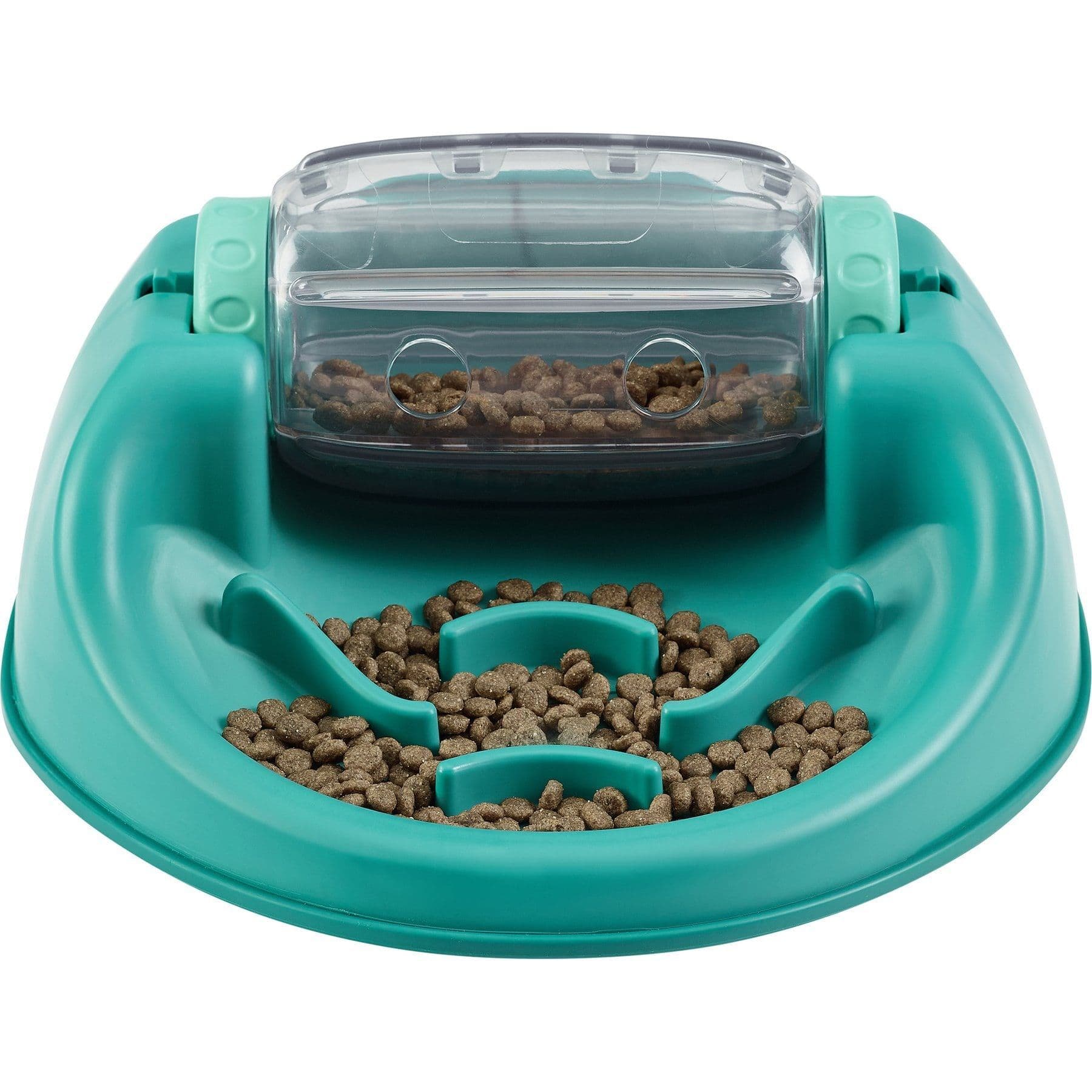
Food-puzzle feeder for supervised activity during an ordinary quiet period.
Webvet may earn a commission when you click through to Chewy, at no extra cost to you.
A practical comparison before buying
Imagine barking starts when a dog sees pedestrians through a low window. Compare two proposals. One adds an automatic sound whenever the dog barks. The other blocks that particular view during busy periods and teaches the dog to return to a resting place in easier conditions.
The first proposal acts after the sound begins without changing the visible trigger. The second changes exposure and supplies an alternative. That does not guarantee instant success, but it gives you specific observations to track and a clear adjustment when the dog struggles.
Change the tool when the cause changes
Now consider a dog who barks only when left alone and spends the rest of the time pacing. A visual barrier might not address that pattern at all. A camera and professional assessment become more relevant.
The best tool changes with the job, which is why a universal “strongest deterrent” ranking is not a useful starting point.
Avoid buying several interventions at once
When possible, introduce low-risk environmental changes in a way that lets you see what helps. If you add a sound box, a supplement, background music and a new confinement area simultaneously, you may not know which change affected the behavior or caused a new problem.
Keep essential safety and veterinary advice in place, and make optional adjustments deliberately. Record the response under comparable conditions. If comfort worsens, stop the optional change and reassess rather than adding another product to counteract it.
Return to the trigger record
Use the record to choose one practical first change. For a dog watching pedestrians, screen the view before ordinary foot traffic begins. For barking after departure, review the recording for pacing and difficulty settling. For a neighbor’s dog, report the times and duration to its caregiver rather than experimenting with sound across the boundary.
| What a seller reports | What you still need to know |
|---|---|
| The dog stopped barking during activation | What the dog did afterward and whether comfort improved |
| Several intensity or sensitivity levels | Whether the setting changes detection, output or both |
| Works at long range | Test conditions, obstacles, which animals were exposed and relevance to your household |
| Safe or humane wording | The evidence supporting that claim for this method, model and situation |
These questions can reveal that the right next purchase is none. If the first setup change already prevents the problem during ordinary activity, maintain it while teaching the alternative. If distress remains, buying a second interrupter does not explain why the first failed.
Match the first change to the pattern
- Window alerting: Reduce visual access and practice moving to a quieter location.
- Barking at dogs on walks: Increase distance and reward a comfortable check-in.
- Learned requests: Make essential needs predictable and teach an alternative request.
- Distress when alone: Seek a tailored assessment and gradual plan.
- Apparently absent triggers: Use the barking-at-nothing investigation before assuming the behavior is random.
Seek veterinary assessment for sudden unexplained changes or accompanying health signs. For persistent fear or difficult behavior, qualified help can identify a workable plan. The aim is a dog who copes better with everyday events, not simply an environment in which communication is suppressed.
Keep the next step small and observable
Choose one ordinary situation to improve first, such as a delivery seen through the front window. Write what you will change before the event and what a comfortable response would look like. This creates a practical decision you can review.
It is more useful than searching for a device powerful enough to cover every possible trigger, especially when the cause of the barking remains uncertain.
Questions owners ask
Frequently Asked Questions
Is there an anti-barking device that really works?
Some devices interrupt or suppress barking, but that alone does not prove lasting improvement or better welfare. Define the goal, identify the cause and assess comfort and recovery. No single device is established here as a solution for every dog.
What is the best device to stop dogs from barking?
There is no universal best device. A camera, visual barrier or training rewards may be useful for a specific job in a cause-based plan. Automatic consequences cannot determine why the dog is barking.
What is the best device to stop neighbor dogs from barking?
We do not recommend targeting a neighbor’s animal with an aversive device. Record the pattern, discuss it calmly with the caregiver and use appropriate local processes if needed. You cannot assess the other dog’s health or welfare from your side of the fence.
What do vets recommend to stop dogs from barking?
Start with the cause, including health assessment when behavior changes. AVSAB recommends reward-based training. Management and an achievable alternative response are more useful than assuming a nonshock label proves suitability.
What is the fastest way to stop a dog from barking?
In the moment, calmly increase distance or remove access to the trigger when safe. That manages the episode; it does not finish training. Later, practice a useful alternative at an easier level and address the underlying cause.
What is the 3 bark rule?
It is an informal idea about allowing a few alert barks before cueing another response. It is not a universal rule or a reason to ignore distress. Teach any cue deliberately and adapt the plan to the dog.
Can barking be trained out of a dog?
Excessive barking can often be reduced, but normal vocal communication should not be eliminated. Aim for improved coping and manageable behavior. A plan that only silences the dog may leave the cause unresolved.

Editor
The Webvet Editorial Team is the in-house group of pet-care editors and writers behind Webvet, operated by Smart Pet Collective. The team researches, writes, and maintains Webvet's pet health, behavior, and medication content. Every article follows a defined editorial process: research from reputable veterinary and scientific sources, careful drafting, mandatory review of medical content by a credentialed veterinarian, and dated publication. Health and medication articles are medically reviewed by a licensed veterinary professional before they go live and are kept current over time.


