Bark Collar Types, Risks and Better Training Choices
Compare the mechanisms and limitations of bark collars, separate product specifications from welfare evidence, and choose practical tools for a reward-based plan that addresses the cause.

This article contains affiliate links. Webvet may earn a commission when you buy through them, at no extra cost to you.
A bark collar detects a dog’s barking and delivers a consequence, such as vibration, spray, sound or an electric stimulus. A device may interrupt barking without resolving why the dog barked. “No shock” does not establish that a collar is comfortable, effective long term or appropriate for an anxious dog.
The American Veterinary Society of Animal Behavior’s current position recommends reward-based training and rejects aversive methods. Before buying a collar, identify the trigger and consider what you want the dog to learn instead.
What a bark collar actually does
- 1Automatic correction is different from teaching a useful alternative behavior.
- 2Nonshock is not a welfare guarantee: a sound, spray or vibration can still be unpleasant or frightening.
- 3Reward-based alternatives address triggers, environment and skills rather than relying on punishment to stop noise.
An automatic bark collar uses a sensor system to detect an event and activate an output. Depending on the model, detection may involve sound, vibration at the throat or a combination. The output is intended to change the likelihood of further barking.
That mechanism cannot identify the dog’s motivation. A collar does not know whether the dog is greeting someone, alarmed by another animal, in pain, frustrated behind a barrier or distressed when alone. The same bark can therefore receive the same consequence in very different situations.
Rewarded cues need practice
Do not confuse an automatic correction with a carefully taught signal. A cue paired with a reward tells a dog what action will pay off. An unpleasant event triggered by barking attempts to reduce the bark. Those learning arrangements have different goals and welfare implications.
Small training rewards such as Pet Botanics Chicken Training Rewards help reinforce an alternative promptly.

Small chicken-flavored treats for rewarding successful training repetitions.
Webvet may earn a commission when you click through to Chewy, at no extra cost to you.
Bark collars and remote training collars are not identical
An automatic collar activates according to its detection system. A remote collar is controlled by a person. Some products combine functions or offer several modes, which makes the exact model and manual important. A tone or vibration setting does not mean the device lacks an electric-stimulus mode.
For the ordinary differences between walking equipment, see dog harness versus collar. A bark-control device is not simply another style of everyday identification collar.
Compare shock, vibration, spray and sound

Manufacturers may use terms such as “static,” “stimulation,” “correction” or “interruption.” Read past the label to identify what the dog experiences. The fact that a product is widely sold does not establish that it is the best choice for the individual dog.
| Type | What it delivers | What the label does not prove |
|---|---|---|
| Electric or static | Electrical stimulation through contact points | That a low setting is necessary, humane or suitable for the barking cause |
| Vibration | Mechanical vibration against the dog | That the sensation is neutral or pleasant to this dog |
| Spray | A burst of liquid, sometimes scented | That the dog will not find it frightening or associate it with something else |
| Audible or ultrasonic sound | Sound intended to interrupt behavior | That every dog hears or responds similarly, or that other animals are unaffected |
Product features are not welfare studies
For example, the PetSafe vibration collar specifications describe combined sound-and-vibration detection and varying vibration patterns. Those are specifications of the product. They do not establish that vibration is a pleasant experience for every dog or that the cause of barking has improved.
The same distinction applies to automatic shutoffs, adjustable sensitivity and waterproofing. These features may matter to operation, but they do not convert punishment into a reward-based behavior plan. A collar can function exactly as designed while being a poor choice for the problem.
For buying-intent comparisons, see best bark collar options and their limitations. That guide distinguishes named product specifications from an unsupported universal recommendation. For non-collar products, use the anti-bark device guide.
Give a trained alternative a place to happen
A comfortable mat such as Kurgo Loft Wander Travel Bed can give a practiced settling behavior a clear location.

A portable padded resting surface for practicing a familiar settle cue. Choose a size that lets your dog rest comfortably.
Webvet may earn a commission when you click through to Chewy, at no extra cost to you.
Why detection and fit do not prove safety
A device that detects the intended dog more accurately still cannot determine whether punishing that bark is appropriate. Detection and welfare answer separate questions. Do not treat a dual-sensor claim as proof that every activation occurs at a useful learning moment.
Physical fit matters too. A device must not restrict movement, rub the skin or be so heavy that it interferes with normal activity. Follow the exact manufacturer’s instructions for any product you already own and seek veterinary advice if there is irritation or discomfort.
A label’s size range does not mean a collar is behaviorally appropriate for every dog in that range.
Read detection, output and timeout as separate features
| Manual term | Question it answers | What it does not establish |
|---|---|---|
| Detection or sensitivity | What event triggers activation? | How unpleasant the output feels to this dog |
| Output level | What sound, vibration, spray or electrical output is delivered? | Whether the underlying barking cause changes |
| Escalation | Does the output change after repeated barking? | Whether the dog understands an alternative response |
| Timeout or lockout | When does the device stop activating temporarily? | That earlier activations were appropriate or harmless |
PetSafe’s PBC00-12789 operating guide provides a concrete example: the company lists sound-plus-vibration detection, ten vibration combinations and a one-minute pause after 15 barks within 80 seconds.
Those numbers describe the manufacturer’s operating sequence. They are not a safe exposure allowance or a reason to provoke barking. A dual sensor and an automatic pause answer different hardware questions; neither supplies a treatment plan for fear, pain or difficulty being alone.
Small dogs and puppies need more than a size filter
Choosing a smaller device does not resolve fear, incomplete toilet training or a puppy’s difficulty being alone. A puppy crying in confinement needs an assessment of needs and gradual learning, not an automatic consequence for asking for help.
Likewise, a large dog does not need a stronger stimulus simply because of body size. Bark volume and physical strength do not identify the cause or justify an aversive training method. Start with the trigger and the dog’s response to the situation.
Observe departures before choosing a device
A camera such as INSTACHEW Purrsight camera can reveal what happens during departures.
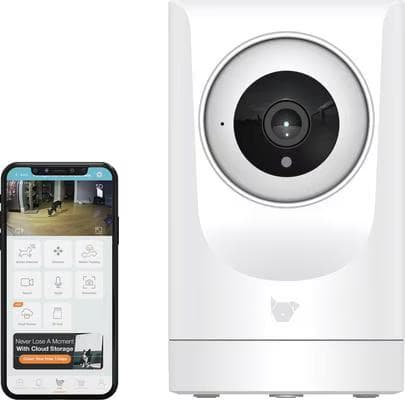
Wi-Fi camera for observing what your pet does when you are elsewhere.
Webvet may earn a commission when you click through to Chewy, at no extra cost to you.
Do bark collars work, and do vets recommend them?
“Works” needs a definition. A product might reduce visible barking during a particular period. That does not show that the dog is less frightened, that the behavior will remain improved without the device, or that the dog has learned a useful alternative.
AVSAB’s position favors reward-based methods for both ordinary training and behavior problems. It does not endorse an aversive method simply because the device does not deliver shock. The relevant question is how the method functions for the dog, including whether it relies on discomfort or intimidation.

Measure more than silence
- Can the dog notice the trigger and disengage comfortably?
- Does normal eating, play and rest continue?
- Is recovery after an event becoming easier?
- Has barking decreased because the setup and learned response improved?
- Are avoidance, freezing or other concerning changes appearing?
A quiet dog hiding from a doorway is not the same outcome as a relaxed dog settling on a mat when someone arrives. Your record should distinguish those states. If the dog seems distressed, stop treating sound reduction alone as success.
Provide an ordinary quiet activity
A suitable food puzzle such as Outward Hound Spin N’ Eat Puzzle Feeder can occupy an ordinary quiet period. None of these is a universal cure, and their usefulness depends on the actual cause.
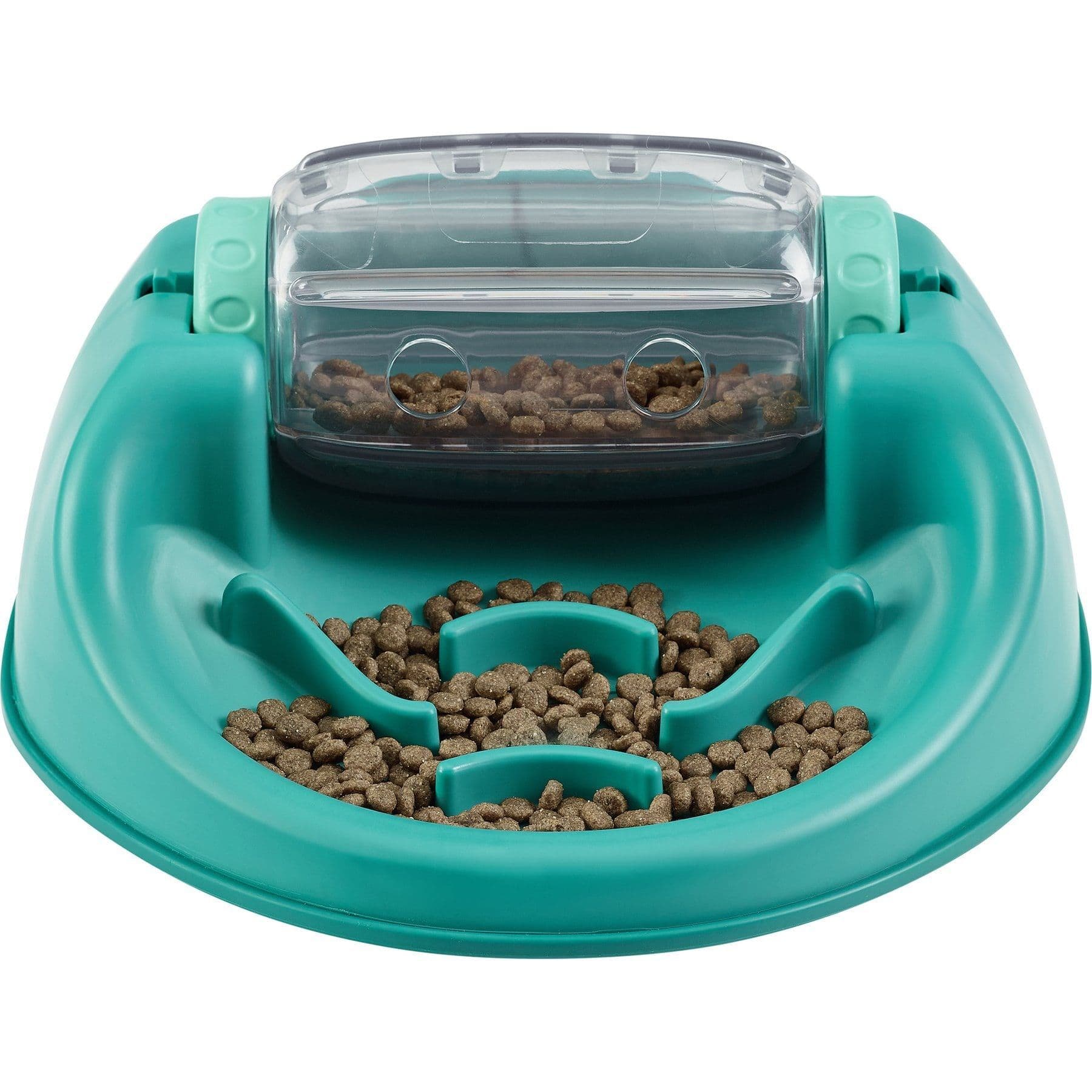
Food-puzzle feeder for supervised activity during an ordinary quiet period.
Webvet may earn a commission when you click through to Chewy, at no extra cost to you.
When barking relates to fear, anxiety, pain or other complex factors, a veterinarian or qualified behavior professional can help identify the plan. Our trainer versus behaviorist guide explains the roles without treating a product purchase as a substitute for assessment.
Choose a plan that addresses the barking
Begin with a short record of the trigger, location, duration and recovery. Change the environment to prevent repeated overwhelming episodes while you teach a response the dog can actually perform. That may mean blocking a window view, increasing distance on walks or arranging a quieter resting location.
Teach a simple alternative in easy conditions first. Reward moving to a mat, looking toward you or returning indoors. Practice around a mild version of the trigger only when the dog remains able to engage. If barking escalates, reduce the challenge instead of increasing the consequence.
A worked example: barking at passing dogs
Suppose a dog barks whenever another dog passes the front window. An automatic collar may respond to the sound, but it does not change how close the passing dog appears or teach the household what to do before the reaction starts.
A cause-based plan can begin by blocking the relevant view during busy periods and moving the resting area farther from the glass. Separately, teach a comfortable mat response in a quiet room. Later, practice around a mild version of outside activity at a distance where the dog can still engage.
Compare the results using more than noise: does the dog return to resting, move freely through the room and recover promptly? If the dog remains unable to settle, the plan needs adjustment or professional help. Buying a device with more sensitivity settings would not answer that missing question.
A different example: barking during departures
A dog who barks, paces and attempts to escape when left alone may be distressed. The first useful tool is observation of a natural departure and a professional assessment, not an automatic consequence delivered when nobody is present to interpret the reaction.
An untouched food toy should not be treated as proof that the dog prefers to bark. It may show that the situation is too difficult for ordinary engagement. A tailored plan may involve management of absences and gradual learning at a level the dog can tolerate.
These examples explain why the cause matters before the product comparison. Two dogs making the same noise can need different practical arrangements. A device that responds only to barking cannot make that distinction on your behalf.
Questions to ask before accepting a recommendation
Ask what the assessment found, what alternative behavior will be taught and how the dog’s comfort will be measured. Ask what happens if the dog becomes more worried or the plan stops working.
A recommendation should explain the learning process rather than relying on a brand’s reputation or a claim that the lowest setting is always gentle.
If you do not understand how a method is supposed to help, pause and request a clear explanation. A practical plan should be possible to describe in terms of the trigger, the dog’s response and the reward or consequence involved. Vague promises about respect or dominance do not supply that information.
Keep the dog free to disengage
Do not use food or confinement to keep a distressed dog trapped near a trigger. Management should reduce pressure, while training builds a better response. Seek help when the dog cannot remain comfortable at a practical distance or when safety and daily life are affected.
Follow the full how to stop dog barking plan for a cause-based progression. The goal is reduced excessive barking and better coping, not eliminating every normal vocalization a dog makes.
Keep product operation separate from the behavior goal
A charged battery, correct setting and well-maintained strap can show that a device is operating as intended. They do not show that the selected method is appropriate for the dog. Keep those two checklists separate when speaking with a professional.
Ask what the dog should learn, how you will recognize improved comfort and what will change if the plan fails. A clear answer should describe more than the absence of barking while equipment is worn.
Questions owners ask
Frequently Asked Questions
Do vets recommend bark collars?
Individual advice varies, but AVSAB’s current position recommends reward-based training and rejects aversive methods. A nonshock label is not a blanket veterinary endorsement. Ask for a cause-based behavior plan rather than choosing a device solely from marketing claims.
Do barking collars actually work?
They may interrupt or suppress barking in some situations, but sound reduction alone does not establish improved welfare, resolution of the cause or durable learning. Assess the dog’s comfort and behavior as well as noise, and consider reward-based alternatives.
What should I bring to a behavior appointment about barking?
Bring a short trigger log, safe recordings of ordinary episodes and the exact name and manual of any device already used. Note changes in appetite, movement, sleep and recovery after barking. This helps the professional evaluate the behavior and the equipment separately instead of relying on a marketing label.

Editor
The Webvet Editorial Team is the in-house group of pet-care editors and writers behind Webvet, operated by Smart Pet Collective. The team researches, writes, and maintains Webvet's pet health, behavior, and medication content. Every article follows a defined editorial process: research from reputable veterinary and scientific sources, careful drafting, mandatory review of medical content by a credentialed veterinarian, and dated publication. Health and medication articles are medically reviewed by a licensed veterinary professional before they go live and are kept current over time.


