Dog Crate Sizes: Measurement Guide and Size Chart
Choose dog crate sizes using your dog's real measurements. This guide separates interior space, doorway clearance and common size labels, with practical checks for puppies and adult dogs.

This article contains affiliate links. Webvet may earn a commission when you buy through them, at no extra cost to you.
Dog crate sizes are a useful shopping shortcut, but the number on the box does not tell you whether your dog fits comfortably. A crate sold as 36 inches long can have less usable room inside, and two dogs of the same weight may need different shapes.
Start with your dog's measurements and normal resting posture, then compare the interior dimensions of the exact model.
- 1A dog should stand normally, turn around and lie down comfortably.
- 2Use breed and weight only to narrow the search.
- 3Check usable inside space and the doorway with the intended bedding.
Dog crate size chart: a starting point
The chart below lists common crate length labels and the questions they help you ask. These are shopping categories, not prescriptions for particular breeds. Manufacturers use different dimensions, and a tall, narrow dog can need more height than a stockier dog in the same weight range.
| Common length label | What to compare next | A common mistake |
|---|---|---|
| 18-22 inches (about 46-56 cm) | Interior height and room to turn for a very small dog | Choosing by puppy size without allowing for growth |
| 24 inches (about 61 cm) | Usable floor length after bedding is added | Assuming every small breed fits this label |
| 30 inches (about 76 cm) | Height while standing and length while resting | Selecting on weight alone |
| 36 inches (about 91 cm) | Shoulder width, doorway and turning space | Treating the outside length as inside space |
| 42 inches (about 107 cm) | Full-body resting space and room placement | Buying a long crate with insufficient height |
| 48 inches (about 122 cm) | Interior width and convenient access for a large dog | Forgetting the open door needs floor space |
| 54 inches (about 137 cm) and other giant sizes | All interior measurements and assembly access | Assuming “XXL” has a standard meaning |
Actual model dimensions to compare
Petmate publishes interior dimensions for the Vari range. Pet Gear lists product and shipping dimensions for its 30-inch Insta-Fold, but does not identify those product measurements as interior clearance. The distinction changes which numbers belong on your fit worksheet.
| Exact model or variant | Published dimensions, inches (L × W × H) | What the figures establish |
|---|---|---|
| Petmate Vari 28-inch | Interior: 24.25 × 18.25 × 19.5 | Usable enclosure dimensions published by the maker; check doorway separately |
| Petmate Vari 32-inch | Exterior: 32 × 22.5 × 24; interior: 29.5 × 19.75 × 23.5 | The 32-inch label overstates internal length by 2.5 inches |
| Petmate Vari 36-inch | Interior: 32.5 × 22.25 × 26 | A different usable shape; not a breed-based recommendation |
| Petmate Vari 40-inch | Interior: 36.25 × 24.75 × 28.8 | Compare the dog plus this maker’s clearance recommendation, then the doorway |
| Pet Gear Insta-Fold 30-inch, PG5530I | Product: 29.5 × 22 × 24; shipping: 24.4 × 22.4 × 4.3 | Shipping height describes the packed crate; usable interior clearance is not stated here |
Compare a wire-crate starting size
For an open wire layout, compare the MidWest iCrate with your worksheet. Check both usable floor space and the door opening; the selected 36-inch label is a starting size to investigate, not a recommendation for every dog of a particular weight.
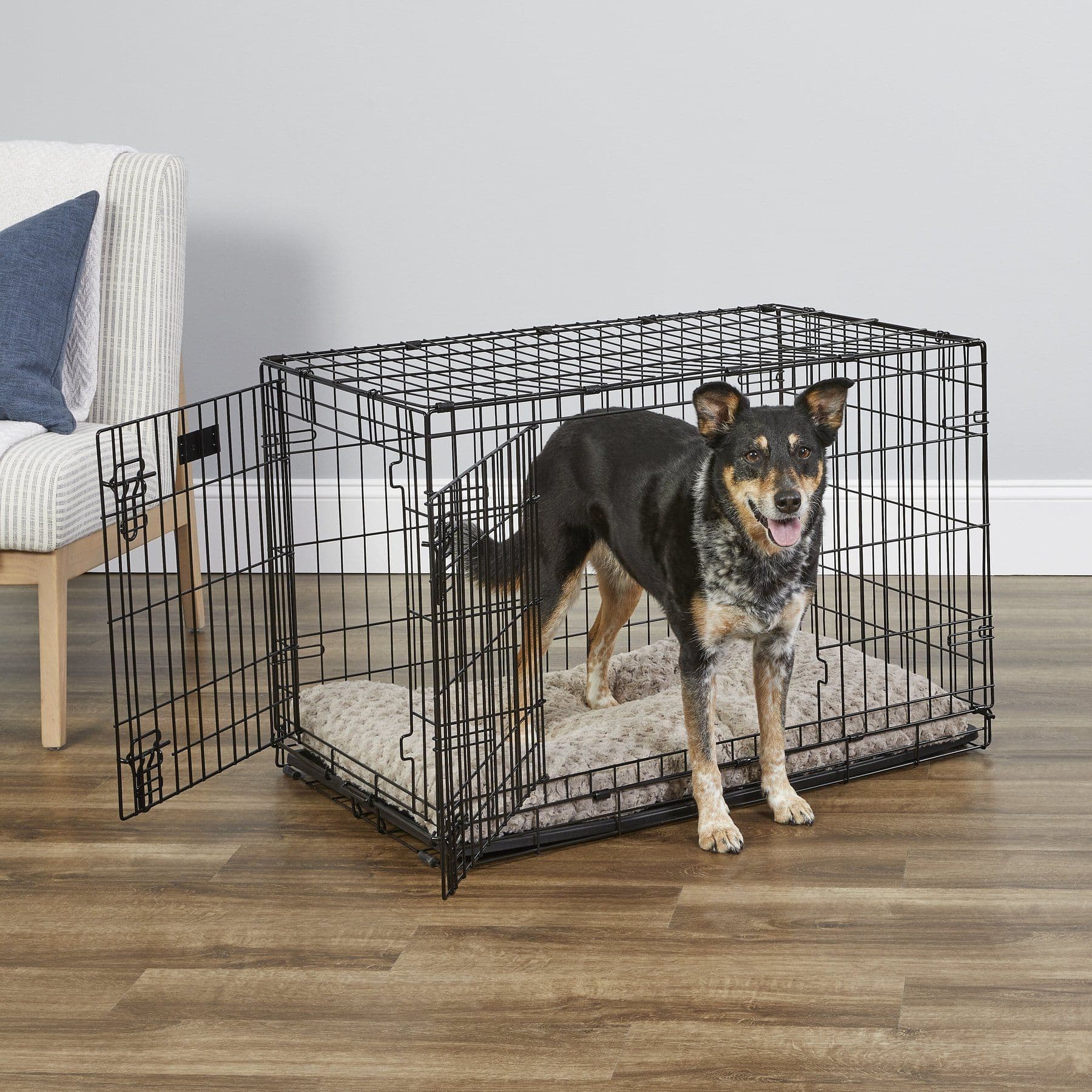
A folding wire crate with two doors; compare this variant's usable dimensions with your dog's measurements.
Webvet may earn a commission when you click through to Chewy, at no extra cost to you.
Pet Gear’s size chart also lists an 11-pound product weight. Use its assembled dimensions to plan the room and its packed dimensions to understand delivery; measure or confirm the interior after the steel frame and liner are in place.
Use labels and metric conversions carefully
Metric equivalents are rounded conversions of the length labels, not separate fit standards. For UK or other metric listings, compare the exact interior measurements in one unit system; multiplying inches by 2.54 converts them to centimeters.
A Labrador, poodle or mixed-breed dog does not acquire a fixed crate requirement from its name. If a breed chart suggests one size and the measurements show your dog cannot stand or lie comfortably in it, trust the fit check. The MidWest sizing guidance also emphasizes the ability to stand, turn and lie down.
For material and door-layout choices after sizing, compare the dog crate options. A different shape can solve a fit problem more effectively than moving up one nominal size in the same range.
Measure length, height and resting space
Take measurements when your dog is standing naturally on a nonslip floor. A helper can offer a treat at nose level while you use a soft measuring tape. Do not pull your dog's head up or tuck their tail into a pose that makes the numbers look tidier.

Record these four observations:
- Body length: Follow the chosen manufacturer's method, usually nose to the base of the tail. Record the method alongside the number so you do not mix incompatible charts.
- Standing height: Note the highest part of the dog's natural standing posture. Erect ears may matter when the manufacturer's instructions include them.
- Resting footprint: Watch your dog lying on their side or in their usual relaxed position. The crate should not require a tightly curled posture every time.
- Turning space: Width must permit the dog to change direction without wedging shoulders or hips against the sides.
Compare the Petmate Vari Kennel separately from wire crates: its plastic shell and entrance define the actual space the dog can use. Match the chosen variant to the measurements rather than transferring a size recommendation from another model.
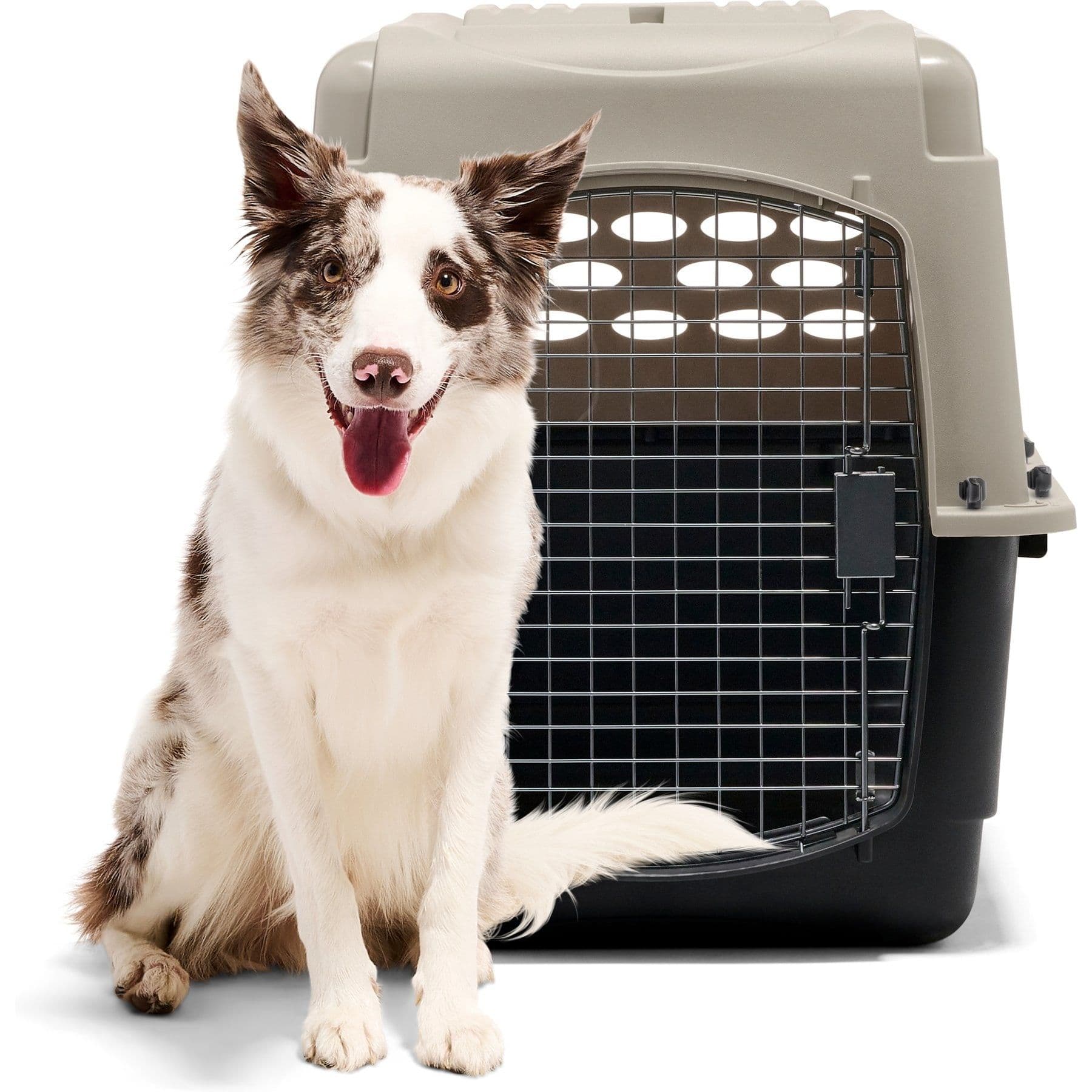
A plastic-shell kennel option; check interior headroom and the doorway rather than choosing by weight alone.
Webvet may earn a commission when you click through to Chewy, at no extra cost to you.
Do not add one universal number to every measurement and assume the job is finished. Clearance recommendations differ by product and purpose. Follow the selected maker's guide, then verify the actual posture check.
A domestic sleeping crate is also a different decision from an airline travel kennel; the airline's current rules and the animal's travel requirements control that purchase.
Use the worksheet below to separate the dog's measurements from the product's measurements. Outside shipping dimensions describe the package; interior living space and doorway clearance describe what the dog can use. Record sleeping posture as well as standing height so a long frame does not disguise an uncomfortable resting fit.
| Worksheet entry | Record and compare |
|---|---|
| Dog's length and standing height | Use the selected maker's measuring method |
| Dog's sleeping posture | Note stretched resting length and width |
| Interior living space | Confirm usable length, width and height after bedding |
| Doorway clearance | Check shoulder passage and step-over height |
| Exterior or shipping dimensions | Use for room placement or delivery, not dog fit |
If a seller lists only shipping dimensions or assembled exterior size, obtain the missing interior measurements before ordering.
Compare inside dimensions, not just the label
A plastic kennel has walls, seams and a doorway that can narrow the available space. A wire crate may have a divider, tray lip or sloping profile. Furniture crates can devote a surprising amount of their outside width to trim, drawers or a second compartment.
Use measurements in a worked comparison
Suppose a dog measures 27 inches from nose to tail base, stands 24 inches high naturally, and uses 18 inches of width while resting. Compare those observations with the 32-inch Vari’s published interior, rather than treating “32” as available floor length.
Petmate recommends a kennel three to four inches taller and longer than the dog. Applying that maker-specific advice to usable interior space gives this example a 30–31-inch length and 27–28-inch height target. Do not transfer that allowance to every other crate brand.
| Check against the 32-inch Vari | Calculation | Decision |
|---|---|---|
| Length | 29.5 − 27 = 2.5 inches remaining | Below Petmate’s stated 3–4-inch extra-length guidance |
| Height | 23.5 − 24 = −0.5 inch | Reject this variant: the interior is shorter than the dog |
| Resting width | 19.75 − 18 = 1.75 inches remaining | Check turning and bedding; subtraction alone does not establish comfort |
The 36-inch Vari also fails this example’s height check: its 26-inch interior leaves only two inches above the 24-inch dog. The 40-inch version’s 28.8-inch interior height clears the maker’s minimum allowance. It becomes a candidate for checking the full interior, entrance and resting fit, not an automatic purchase.
The MidWest LifeStages includes a divider for adjusting a puppy’s living area. Compare the adult-size crate with the dog’s expected measurements, then follow the divider instructions and repeat the posture check as the puppy grows.
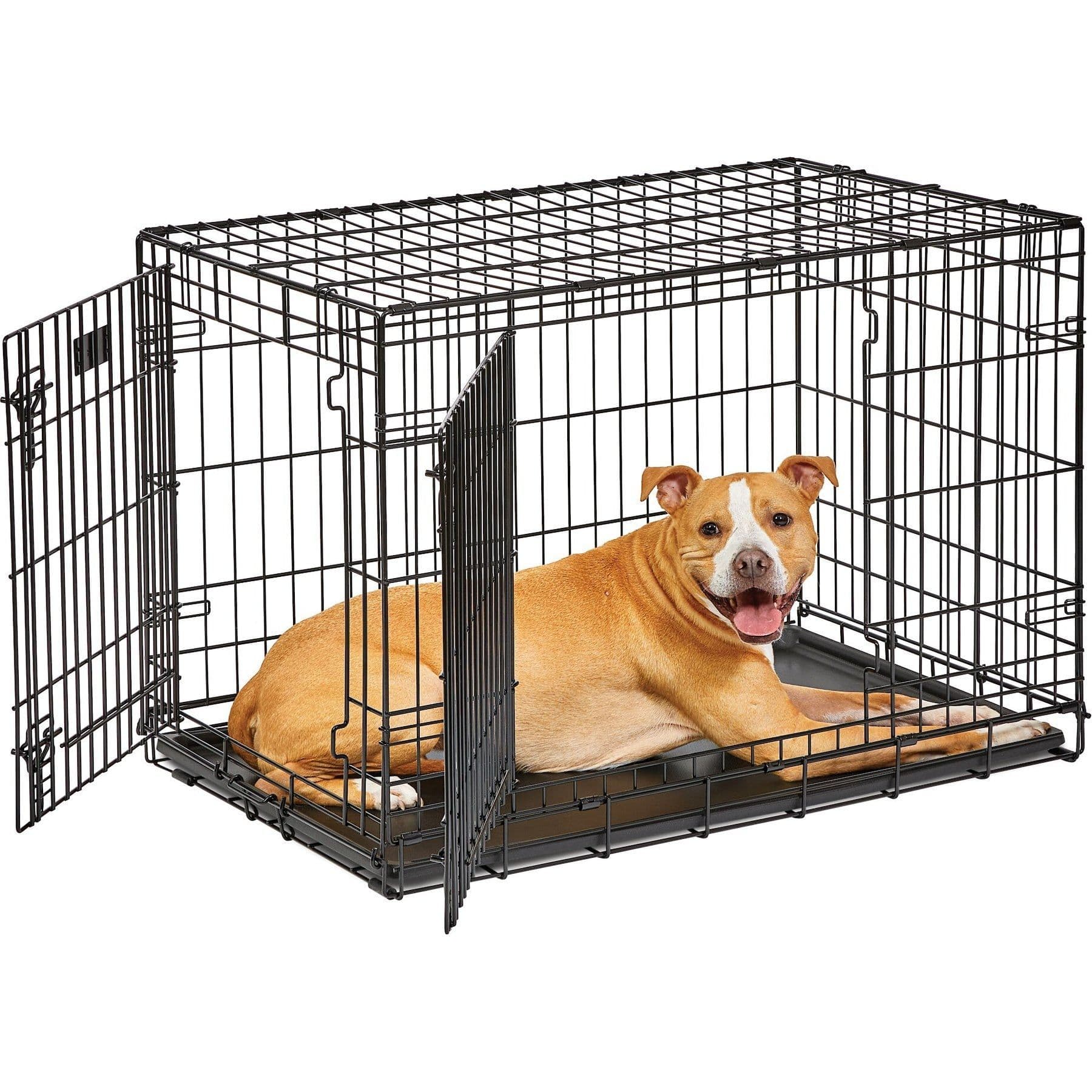
A wire crate option for comparing divider use and changing fit as a puppy grows.
Webvet may earn a commission when you click through to Chewy, at no extra cost to you.
Three dimensions deserve separate attention:
- Living space: The area enclosed by the actual interior walls or fitted divider.
- Entrance: The opening through which the dog must step without scraping or awkward crouching.
- Room footprint: The outside crate dimensions plus the space needed to open doors and remove a cleaning tray.
The distinction is especially important with dog crate furniture. A wide tabletop may cover two smaller compartments; each dog still needs a correctly sized individual space. Do not combine the total width and describe it as one dog's room unless the divider is designed to be removed and the resulting structure remains appropriate.
Size a crate for a growing puppy
A divider can make an adult-size crate usable during puppyhood when the product is designed for one. Set it so the puppy can stand, turn and rest comfortably now, and move it as growth changes the fit. Recheck frequently during rapid growth rather than waiting for the puppy to refuse entry.
The divider must be the correct part for that model and securely attached. Do not improvise a partition with cardboard, loose wire, a storage box or a panel that can tip. Follow the assembly instructions and check for projecting hooks or gaps after every adjustment.
Puppy size is only one part of the care plan:
- Arrange toilet trips that match the puppy's age, health and individual progress.
- Build positive, gradual familiarity with the space.
- Provide social contact, play and activity outside confinement.
- Choose another safe management arrangement when the puppy cannot cope with the planned absence.
Shrinking the space until a puppy cannot move comfortably is not a solution to accidents. Nor does buying a larger crate make an all-day absence suitable.
If the puppy needs a separate rest and toilet area during an unavoidable short interval, consider an appropriately arranged pen and help from a caregiver rather than trying to force every need into a sleeping crate.
Check the fit with your dog
Compare a soft-sided fit
For a calm dog already comfortable in a fabric crate, the Pet Gear Insta-Fold provides a soft-sided comparison. Check the usable space after its frame is assembled. Fabric construction changes suitability as well as shape, so it is not a substitute for assessing chewing or escape behavior.
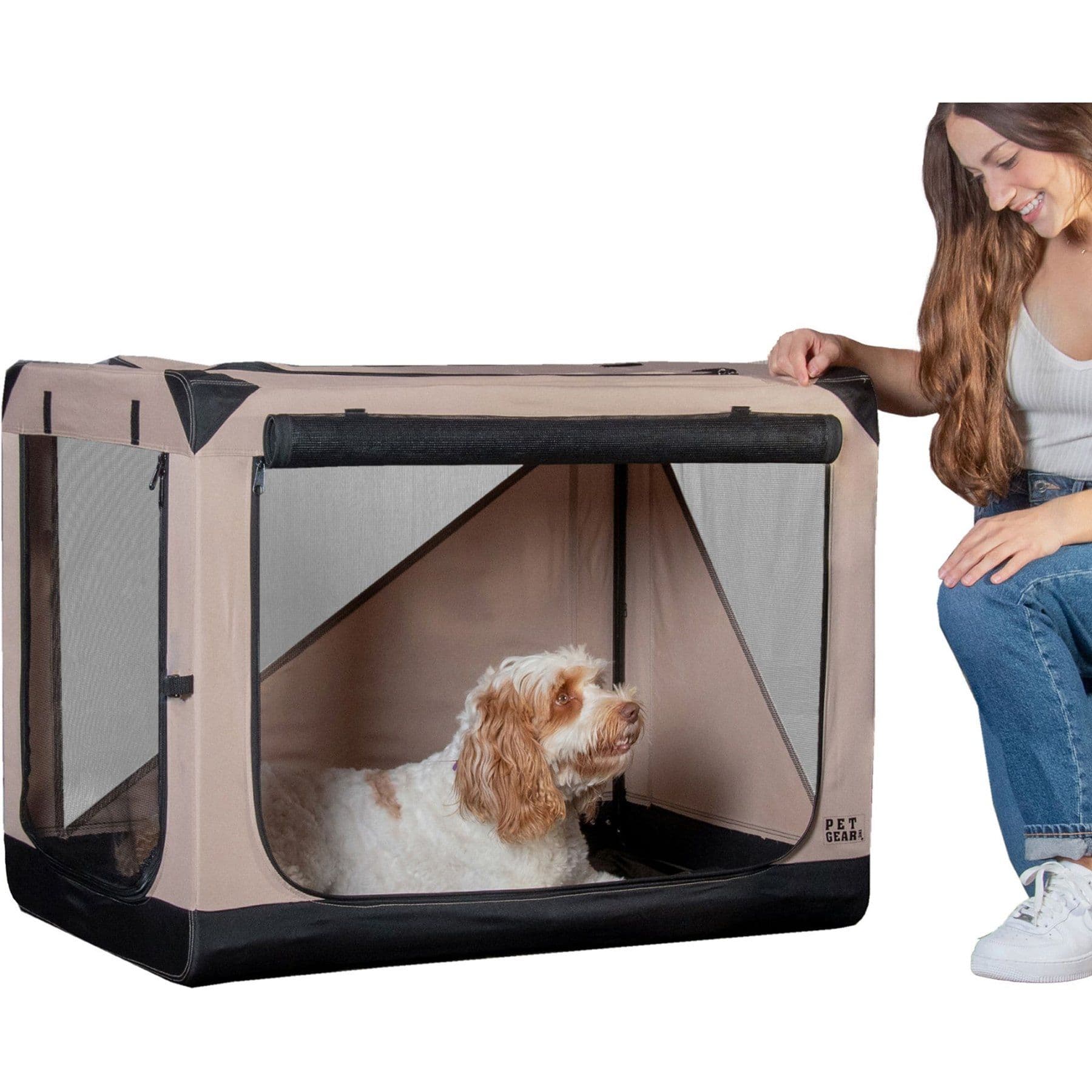
A soft-sided option for a calm, crate-trained dog during supervised use; unsuitable for chewing or escape attempts.
Webvet may earn a commission when you click through to Chewy, at no extra cost to you.
Watch normal standing and turning, then check the dog lying comfortably in a usual sleeping posture. The crate should permit these movements without crouching, squeezing past bedding or keeping the body tightly curled just to fit. Repeat the observation when the dog grows or you change the bedding.
Introduce the candidate crate with the door open and watch what your dog actually does. Encourage entry with a reward, but allow an easy exit. The most useful observations happen when the dog is relaxed, not while you are holding them in place for a photograph.
Your fit check should confirm that the dog can:
- Walk through the entrance without scraping the back or forcing the shoulders through.
- Stand in a normal posture rather than keeping the head bent.
- Turn around smoothly without getting stuck against bedding or a bowl.
- Lie in a comfortable resting position and change position.

Bedding uses space. A thick bolster bed that looks comfortable outside the crate may remove needed floor area once fitted. Check the dog's posture with the bedding you intend to use, and remove any item the dog chews or swallows. Position water equipment only where the design and the dog's needs allow comfortable movement.
Fit is not the same as acceptance. A dog may have enough room and still be frightened by confinement. Repeated bar biting, frantic escape attempts or injury require a different management plan and veterinary advice, not a smaller crate or a stronger latch. The guide to dog anxiety at night explains why restlessness needs context.
When a different crate shape helps
A worked fit check
A useful comparison can also reject a crate that is long enough. Write down the narrowest usable width, the entrance and the space your dog occupies while resting. For a tapered plastic shell, the broadest outside measurement cannot stand in for the floor beneath the dog.
Account for the doorway and bedding
Now add the entrance. If the dog must crouch sharply or rub its shoulders through the doorway, the interior measurement alone has not solved the problem. Compare door clearance separately and watch a voluntary entry. A dog should not need repeated encouragement to negotiate an awkward shape that could be avoided with a better-fitting model.
Finally, place the intended bed in the crate. Thick sides may remove several inches of usable room even when the bed's outer dimensions match the tray. A flatter surface may restore comfortable movement, provided it is suitable for the dog.
Judge the finished setup
The fit decision is about the finished resting setup, not an empty frame measured in isolation.
Record and recheck the measurements
Keep the dog's measurements and the exact product model together. This helps when buying replacement bedding, ordering a divider or checking whether a growing puppy still fits. Photograph the manufacturer's label rather than relying on a retailer's informal “medium” or “XL” description.
Recheck after noticeable growth, a change in body condition or a new mobility problem. Also reassess if the dog starts avoiding the entrance, cannot change resting position easily or catches the back on the doorway. Those observations deserve a fit check even if a breed chart still lists the same nominal size.
Distinguish fit from other problems
Do not assume avoidance always means the crate is too small. Pain, frightening experiences or separation distress can change behavior too. Measure the space, observe the pattern and seek veterinary advice when a previously comfortable dog develops a new difficulty.
Buying the next size up may help a true fit problem, but it will not explain every change in crate use.
Compare a different crate shape
Moving from a wire crate to a plastic kennel, or from a narrow furniture crate to a conventional rectangular model, changes more than appearance. Compare visibility, airflow, floor shape, door height and cleaning access along with the measurements.
For an older dog or one with mobility difficulty, a high threshold may matter as much as the interior length. Ask your veterinarian about comfortable movement and positioning if your dog has pain or a medical recovery plan. Do not use an ordinary sizing chart to override instructions for prescribed rest.
Heavy-duty crates also need the same fit checks. Thick walls or reinforced panels do not justify less usable room. Their weight may make repositioning difficult, so measure the route through the house and choose the resting location before assembly.
Dog crate sizing questions
Frequently Asked Questions
Can a dog crate be too big?
A crate can be larger than needed for its intended sleeping role, but the answer is not to restrict comfortable movement. For a puppy, a manufacturer-approved divider can adjust the living area. If you want separate rest, water and activity zones, a pen or dog-proofed room may be the clearer choice.
What size crate does a 70-pound dog need?
Weight alone cannot choose it. Measure the dog's length, natural standing height and resting width, then check usable dimensions and the manufacturer's guide. Two 70-pound dogs can differ substantially in height and build.
Should my dog's ears touch the top?
The dog should be able to stand normally without being forced into a lowered posture. Follow the manufacturer's height-measurement instructions, including any guidance for erect ears. A dog that must crouch or bend to stand needs a better-fitting space.
Are wire and plastic crate sizes interchangeable?
No. The same advertised length can produce different interior and doorway measurements. Compare the exact models with the same worksheet rather than transferring a size label between brands or materials.

Editor
The Webvet Editorial Team is the in-house group of pet-care editors and writers behind Webvet, operated by Smart Pet Collective. The team researches, writes, and maintains Webvet's pet health, behavior, and medication content. Every article follows a defined editorial process: research from reputable veterinary and scientific sources, careful drafting, mandatory review of medical content by a credentialed veterinarian, and dated publication. Health and medication articles are medically reviewed by a licensed veterinary professional before they go live and are kept current over time.


