How To Choose the Right Dog Collar: A Comprehensive Guide
Empowering Pet Parents With Invaluable Tips and Insights and How to Choose the Right Dog Collar

BVMS MRCVS
Medically reviewed by Dr. Pippa Elliott, BVMS MRCVS · Last reviewed

This article contains affiliate links. Webvet may earn a commission when you buy through them, at no extra cost to you.
A dog collar goes beyond being a mere fashion accessory — it plays a pivotal role in your pet’s well-being. Beyond adding style, dog collars serve several essential purposes:
- Identification and Safety: Dog collars are the primary means of displaying identification tags with vital information like your pet’s name, your contact details, and microchip details. In the event that your dog goes missing, a collar with proper identification can increase the chances of a safe reunion.
- Leash Attachment: A well-fitted collar provides a secure point for leash attachment, allowing you to take your dog on walks, outdoor adventures, or simply control their movement when needed.
- Enhancing Safety: Certain collars feature reflective materials or LED lights to improve visibility in low-light settings, enhancing the safety of evening walks or in dimly lit areas.
- Sense of Security: Wearing a collar can provide a sense of security and routine for dogs, as it becomes a familiar and comforting aspect of their daily life.
Different Types of Dog Collars
Every dog is different, with individual needs for collars. Factors such as their temperament, training level, and lifestyle play a role in determining the right collar for them.
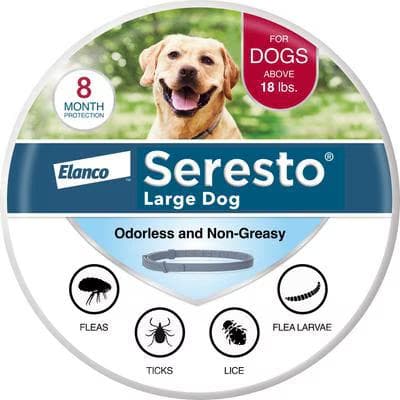
An eight-month flea and tick collar for dogs over 18 lbs that releases protection steadily. A low-effort layer to help keep ticks off between vet-recommended preventives.
Webvet may earn a commission when you click through to Chewy, at no extra cost to you.
Here are some tips to help you choose between a traditional dog collar for daily comfort and a prong collar for specialized training:
- Traditional Dog Collars: Traditional collars are the most common and versatile type of collars available for dogs. They come in various materials such as durable nylon, classic leather, and comfortable fabric options. These collars are perfect for everyday use and are well suited for dogs with good leash manners and no specific training requirements. They typically feature a buckle or quick-release closure for easy and secure attachment, making them convenient for quick walks or outdoor activities.
- Prong Collars: Prong collars, also called “pinch collars,” are specialized training tools for dogs requiring extra guidance and control while walking. They consist of interlocking metal links with prongs that gently pinch the dog’s neck when tension is applied to the leash. This action aims to discourage pulling and encourage better behavior during walks. Importantly, prong collars should only be used under the guidance of a professional dog trainer to ensure responsible and proper usage.
 $65 · no membership
Have a health question about your dog?
A licensed vet can assess your dog over video and prescribe online when it's appropriate.
 Talk to a vet
- Licensed vets
- All 50 states
- same-day Rx
Webvet may earn a commission if you book.
Factors To Consider When Choosing a Dog Collar
To ensure you make the best decision for your furry companion, take the following factors into account:
- Size and Fit: An incorrectly fitting collar can lead to discomfort, chafing, and safety hazards. To ensure the perfect fit, accurately measure your dog’s neck circumference and add a few extra inches for comfort. Avoid collars that are either too tight or too loose. You should be able to comfortably slide two fingers between the collar and your dog’s neck.
- Material and Durability: Opt for sturdy materials like high-quality nylon, leather, or reinforced fabric. These options can withstand rough play, outdoor activities, and regular wear without losing their shape or effectiveness.
- Safety Features: Safety should always be a top priority when selecting a dog collar. Look for collars with safety features, such as quick-release buckles or breakaway mechanisms. Quick-release buckles allow you to easily remove the collar in emergencies or if it gets caught on something. Breakaway collars are particularly important for cats or small dogs to prevent accidental choking or injuries if the collar becomes entangled.
By carefully considering these factors, you can make a well-informed decision that ensures your dog’s comfort, safety, and successful training experiences.
How To Choose the Right Dog Collar and Size
Ensuring your dog’s collar fits just right is essential for their comfort and overall well-being. To accomplish this, follow these straightforward steps to accurately measure and fit your furry friend’s collar:
- Measure Your Dog’s Neck: Using a soft measuring tape, measure around the base of your dog’s neck, where the collar will sit. If you don’t have a soft measuring tape, you can use a piece of string or ribbon and then measure it with a ruler. Ensure that the measuring tape or string is snug but not too tight. It should be touching your dog’s neck without causing any discomfort. Take note of the measurement in inches or centimeters, depending on the unit you prefer.
- Find the Perfect Fit: Add an inch or two to the measured neck size to provide some breathing room and comfort for your dog. This extra space will prevent the collar from being too tight and rubbing against your dog’s skin. When you put the collar on your dog, make sure you can slide two fingers comfortably under the collar. This indicates that the collar is not too tight, and your dog can breathe and move freely. Check that the collar is secure but not overly loose. You don’t want it slipping off or getting caught on something.
Tips for Selecting the Best Dog Collar
Choosing the right dog collar goes beyond size and functionality. Consider these additional tips to ensure the perfect fit for your furry friend:
- Choose the Right Collar for Your Dog’s Breed: Different dog breeds have unique physical characteristics and temperaments that may influence the most suitable collar type. For example, short-snouted breeds like bulldogs may benefit from harnesses rather than traditional collars to reduce strain on their necks. Long-haired breeds might require collars with smooth materials to prevent matting or tangling of fur.
- Consider Your Dog’s Activity Level: An active and energetic dog requires a collar that can withstand their adventurous spirit. For highly active dogs or those who love outdoor activities, consider collars made from durable materials like reinforced nylon or waterproof materials. Additionally, certain collar styles, such as martingale collars or harnesses, can provide added control during walks or training sessions.
- Personalize Your Dog’s Collar: Show your dog some love by adding a personal touch to their collar. Many people enjoy customizing their dog’s collar with name tags, ID charms, or fun accessories that reflect their pet’s personality. Personalized collars not only look adorable but also serve as a form of identification, helping others to quickly recognize your pet if they happen to wander off.
Conclusion
Choosing the right dog collar is essential for your pet’s safety and well-being. Armed with the information from this article, now you can make an informed choice that perfectly suits your pet’s needs.
Links/Sources:
FAQs
Is it safe to use a prong collar on my dog?
Prong collars should only be used as a training tool under the guidance of a professional dog trainer. Never leave a prong collar on your dog unsupervised.
How often should I check my dog’s collar for wear and tear?
Regularly examining your canine companion’s collar for any indications of deterioration, such as fraying or loosening, is of utmost importance. Should you notice any such signs, promptly replace the collar to ensure the continued safety and security of your pet.
Can I leave my dog’s collar on at all times?
Leaving your dog's collar on during the day can be helpful for identification, control, and safety purposes. Remove the collar at night to minimize potential risks and ensure your dog's safety and comfort during sleep. Nighttime collar removal reduces the chances of the collar getting caught on objects, prevents skin irritation, and avoids collar-related incidents that could harm your pet. It also provides a quieter and more relaxed environment for your dog's rest. Ask your veterinarian for personalized advice on collar usage.
$65 · no membershipHave a health question about your dog?
A licensed vet can assess your dog over video and prescribe online when it's appropriate.
Talk to a vet- Licensed vets
- All 50 states
- same-day Rx
Webvet may earn a commission if you book.

Editor
The Webvet Editorial Team is the in-house group of pet-care editors and writers behind Webvet, operated by Smart Pet Collective. The team researches, writes, and maintains Webvet's pet health, behavior, and medication content. Every article follows a defined editorial process: research from reputable veterinary and scientific sources, careful drafting, mandatory review of medical content by a credentialed veterinarian, and dated publication. Health and medication articles are medically reviewed by a licensed veterinary professional before they go live and are kept current over time.
Veterinarian · BVMS MRCVS
Dr. Pippa Elliott, BVMS, MRCVS, is a veterinarian with nearly 30 years of experience in companion animal practice. Dr. Elliott earned her Bachelor of Veterinary Medicine and Surgery from the University of Glasgow. She was also designated a Member of the Royal College of Veterinary Surgeons. Married with 2 grown-up kids, Dr. Elliott has a naughty Puggle named Poggle, 3 cats and a bearded dragon.


