Dog Muzzles: Fit, Basket Styles and Comfortable Training
A suitable basket muzzle can support a safety plan. Learn how to compare designs, check full pant room, introduce it gradually and protect the dog during supervised use.

This article contains affiliate links. Webvet may earn a commission when you buy through them, at no extra cost to you.
A dog muzzle can add a useful layer of protection during carefully managed situations. The right design must fit the dog's face, allow the activities needed and be introduced without force. A muzzle does not treat fear, make close contact safe or replace a plan for the behavior that prompted its use.
- 1For walks and training, choose a suitable basket design with room for a full pant.
- 2Introduce the muzzle through short, voluntary, reward-based steps.
- 3Never leave a muzzled dog unattended or use a muzzle to prevent normal panting or barking.
When a dog muzzle can help
A muzzle may be part of a plan for veterinary handling, a dog with a known bite risk or a dog that scavenges dangerous items. It should be chosen for that specific purpose with appropriate professional guidance. Different risks may require different basket construction and openings.
Start with the activity rather than a label:
| Intended activity | What the dog needs | What still needs management |
|---|---|---|
| A supervised walk | Full panting room and comfortable movement | Distance from triggers and control of the route |
| Reward-based training | Suitable treat access and voluntary participation | Short sessions and an appropriate behavior plan |
| Veterinary care | A fit and handling plan agreed with the clinic | Pain, fear and the need for other clinical support |
| Scavenging management | A design appropriate to the items of concern | Supervision and prevention of access to hazards |
The Best Friends muzzle guide explains why a suitable basket is useful in many situations. It remains one part of management, not permission to expose the dog to interactions they cannot handle.
Compare a basket option
The Baskerville Ultra is a basket option to compare with your dog’s snout measurements and full pant. Choose the actual size from its fitting instructions; a breed label or the selected listing size cannot establish individual fit.
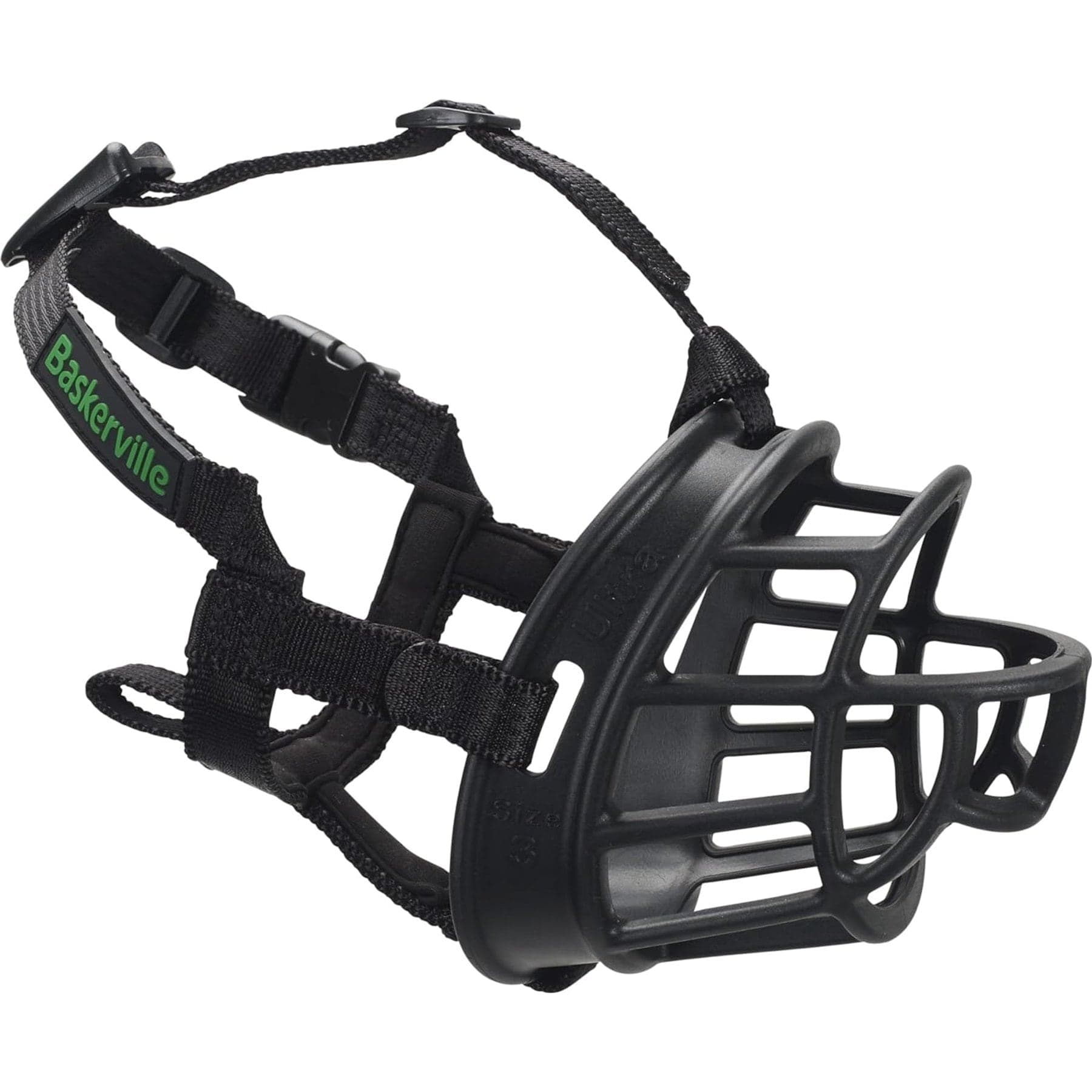
A basket muzzle option for individual fit and pant-room checks, introduced gradually with rewards.
Webvet may earn a commission when you click through to Chewy, at no extra cost to you.
Basket and fabric muzzles serve different jobs
A basket surrounds the snout while leaving space for the mouth to open. Depending on design and fit, it may permit drinking and receiving small rewards. A tight fabric or grooming muzzle generally restricts mouth opening and is not an appropriate walking or exercise muzzle.
An anti-bark dog muzzle is not an appropriate solution to barking. A suitable basket allows mouth opening and may still allow vocalization; a product that holds the mouth closed can interfere with panting. Address the cause of the barking through an appropriate behavior plan.
Compare designs for the planned activity
Compare designs using these questions:
- Can the dog open the mouth for a full pant?
- Does the nose have clearance without pressure against the front?
- Can the muzzle stay secure without straps rubbing the eyes or throat?
- Can the dog perform the activities needed during the planned use?
A Baskerville dog muzzle size guide applies to the named Baskerville model, not every basket sold by the brand. Match the instructions to the product, and request fitting help when the measurements sit between sizes or the face does not match the basket shape.
Compare basket muzzle designs

Basket muzzles may use flexible molded materials, rigid plastic, coated wire or other constructions. Material affects weight, rigidity, cleaning and openings, but the finished fit and intended use are more important than a broad claim that one material is always humane.
The Baskerville Ultra dog muzzle is one recognizable molded-basket option. Check its current sizing and fitting instructions for your dog. A product marketed to permit panting can still be too small when the wrong size is selected.
Compare other shapes by fit
Other basket ranges, including specialist wide-pant designs and wire baskets, may suit dogs whose proportions do not match a common retail shape. Ask the maker for fit advice using the measurements and photographs they request. Do not cut or reshape a muzzle unless the exact manufacturer provides an approved method.
Compare practical details:
- The dimensions available for length, width and pant depth.
- The strap arrangement and retention method.
- The size and placement of openings for treats or drinking.
- Cleaning instructions and replacement straps or parts.
Plan access to training rewards
Small rewards such as Etta Says! Sit! Bacon Training Treats can help reinforce voluntary approaches during gradual conditioning. Use a food the dog can safely eat, account for training calories, and stop before the exercise creates distress.
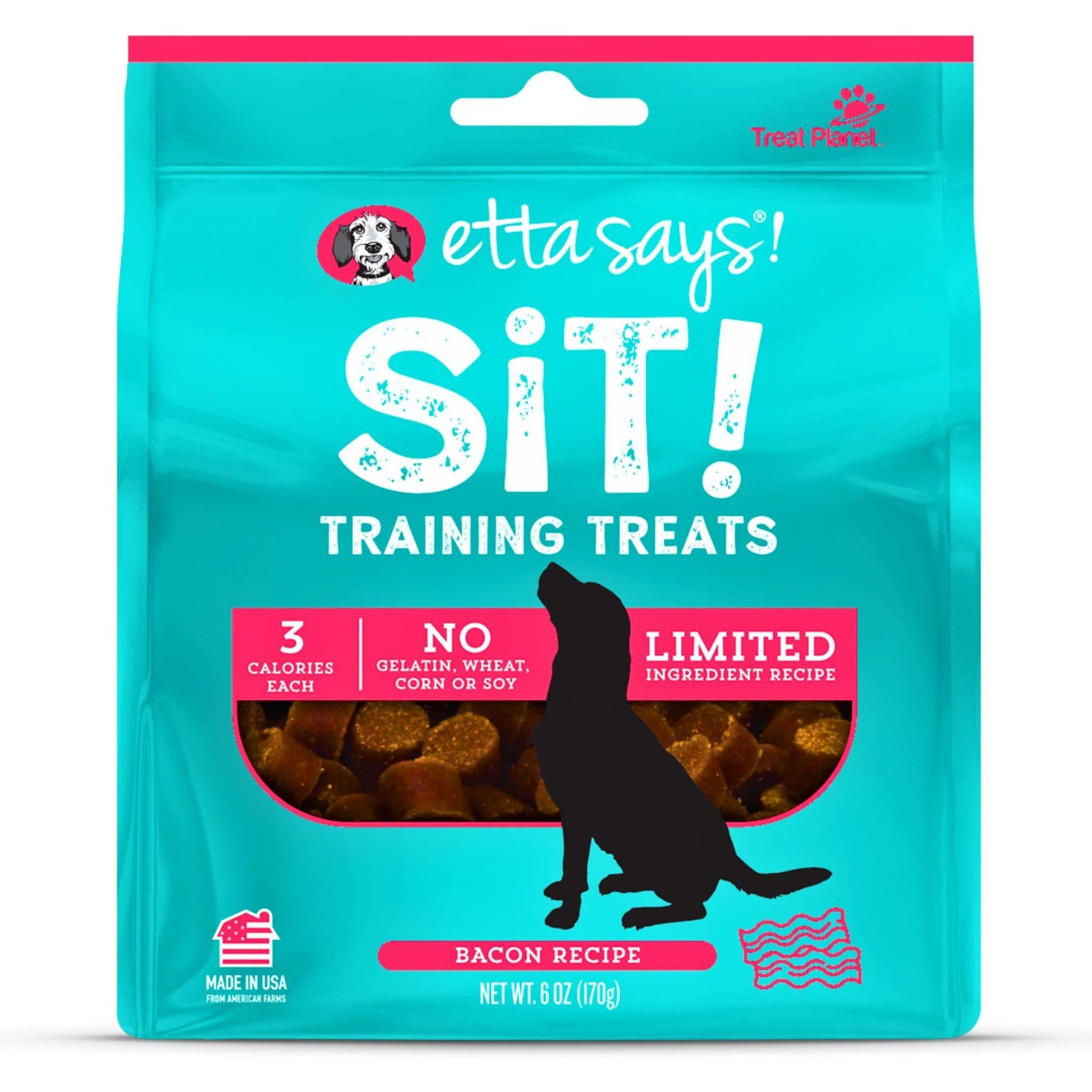
Small training rewards for voluntary muzzle introduction when the ingredients and portions suit the dog.
Webvet may earn a commission when you click through to Chewy, at no extra cost to you.
No basket should be assumed to eliminate bite risk in every circumstance. A dog may still injure someone by striking with the muzzle, and fingers can be placed through some openings. Keep people and animals at an appropriate distance rather than using the equipment to permit closer contact.
Measure fit and check a full pant
An activity-based fit check separates nose length from pant circumference and checks retention without tightening away breathing room. Use the exact dog muzzle size chart for the selected model; a chart from another range cannot reliably establish fit. Compare the measurements, then observe comfortable movement and the required activities.
Check the fit while the dog is calm, then observe the activities for which the muzzle is intended. Look for pressure on the nose, rubbing near the eyes, pinching at the lips or a basket that restricts mouth opening. Straps should retain the muzzle without compensating for a badly shaped basket by being excessively tightened.
A useful fit review separates four questions:
- Is the basket long enough without projecting so far that it interferes with movement?
- Is it wide and deep enough for the dog's natural mouth opening?
- Does the strap arrangement keep it in place comfortably?
- Can the dog drink or receive rewards when those activities are needed?
A Frisco Training Treat Pouch keeps rewards accessible so they can follow a willing approach promptly. Prepare the pouch before starting rather than reaching across the dog’s face to retrieve food. Equipment organization supports timing; it does not replace a gradual training plan.
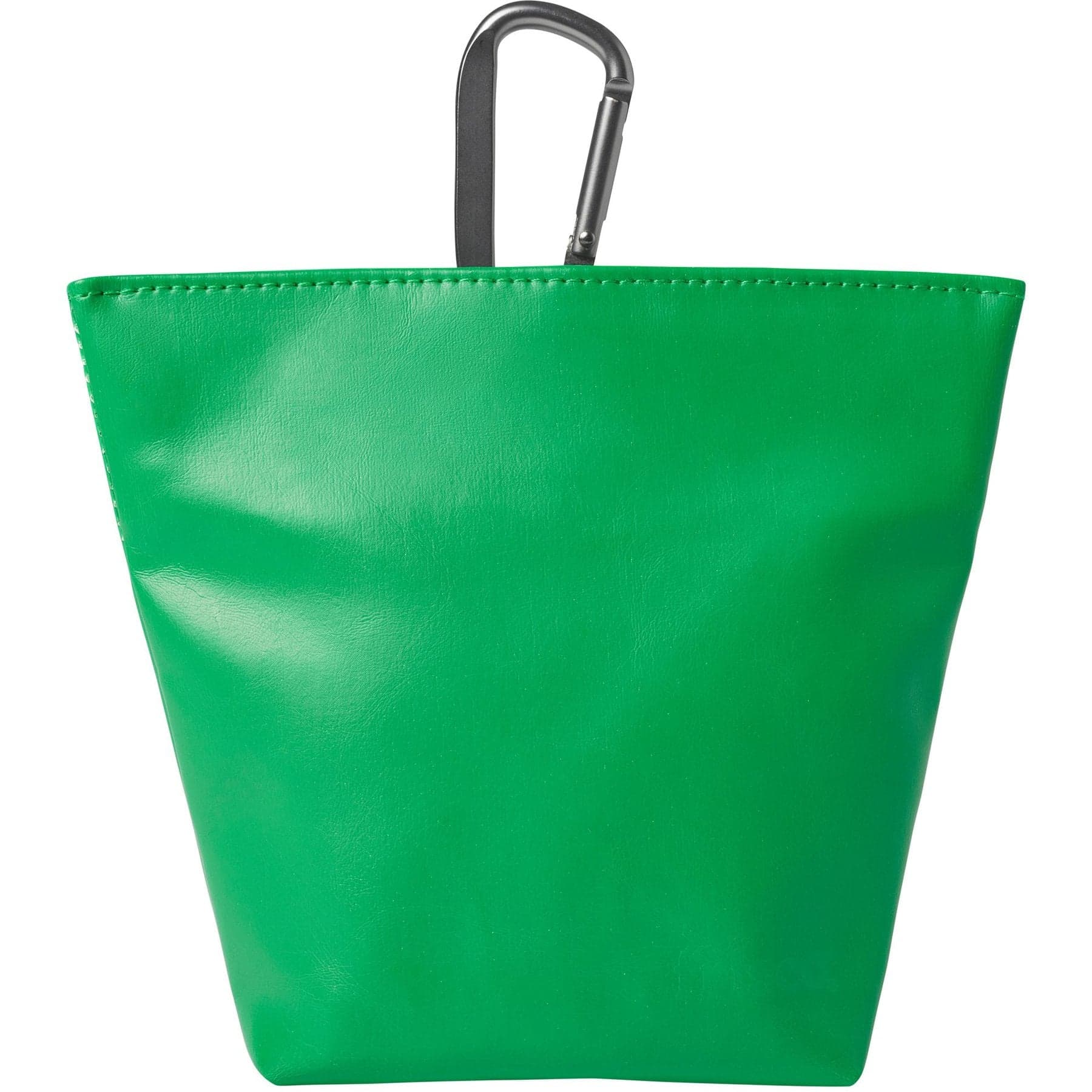
A treat pouch that keeps rewards accessible during short, planned training sessions.
Webvet may earn a commission when you click through to Chewy, at no extra cost to you.
If the fit is uncertain, ask a veterinarian, appropriately qualified trainer or experienced manufacturer support team to assess it. Do not wait for skin damage or an escape from the muzzle to discover that the shape was wrong.
Dog muzzle size chart worksheet
Use this worksheet to record a candidate fit before ordering. For Baskerville Ultra, the manufacturer's sizing guidance measures nose length from the nose tip to just below the eyes. Record the exact model and its measurement method; do not transfer another range's size number.
| Measurement or fit check | Your record | What to compare before use |
|---|---|---|
| Exact model and chart version | Model: ___; date checked: ___ | Use the chart for that model, not a breed-only recommendation |
| Nose length | ___ cm or ___ inches; method: ___ | Compare the model's stated range; the basket must not press against the nose or eyes |
| Snout circumference | ___ cm or ___ inches; mouth position: ___ | Follow the maker's method; a closed-mouth number alone does not establish full pant room |
| Full pant room | Comfortable opening observed: yes / no / uncertain | Check usable basket width and depth during natural mouth opening; do not force the mouth open |
| Retention and activity | Slips: ___; rubs: ___; drinking/reward access: ___ | Check straps and intended activities without tightening away breathing space |
A model-specific Baskerville Ultra size reference
Company of Animals publishes the following Ultra sizing pairs in its current fitting leaflet. They are manufacturer chart values, not universal muzzle sizes or a guarantee of enough room for a full pant. Use the exact Ultra measuring method and the worksheet above.
| Baskerville Ultra size | Length in manufacturer chart | Circumference in manufacturer chart |
|---|---|---|
| 1 | 5 cm | 22 cm |
| 2 | 6 cm | 26 cm |
| 3 | 7 cm | 28 cm |
| 4 | 8 cm | 32 cm |
| 5 | 9.5 cm | 36 cm |
| 6 | 10 cm | 42 cm |
For example, a 7-centimeter nose length points to the size-3 length row. If the circumference measurement belongs to a different row, do not assume tightening the straps or choosing a longer basket will fix the shape. Ask the manufacturer to assess both measurements and the intended activity.
The maker measures nose length from the tip to the base just below the eyes, and circumference around the widest part there. Keep centimeters throughout this comparison. Then check the actual fitted basket for nose clearance, retention, drinking and a full natural pant; a chart match is only the shortlist.
Introduce the muzzle in small steps
Choose a quiet setting and rewards the dog values. Let the dog investigate the muzzle without immediately fastening it. The VCA introduction guidance supports building familiarity through gradual positive practice.

Break the task into small stages:
- Reward looking at or approaching the muzzle.
- Reward the dog voluntarily placing the nose near or into the basket.
- Gradually build a comfortable moment with the nose inside before asking for more duration.
- Introduce the movement and sound of straps separately, then briefly fasten only when the dog is comfortable.
- Add ordinary movement and a short familiar activity before trying a challenging setting.
Walking equipment alongside a muzzle
The Leash Boss Patterned Standard Dog Leash provides a standard six-foot connection for supervised outings. A leash and a fitted, conditioned muzzle serve different jobs; maintain distance from triggers and follow the veterinary or behavior team’s handling plan.
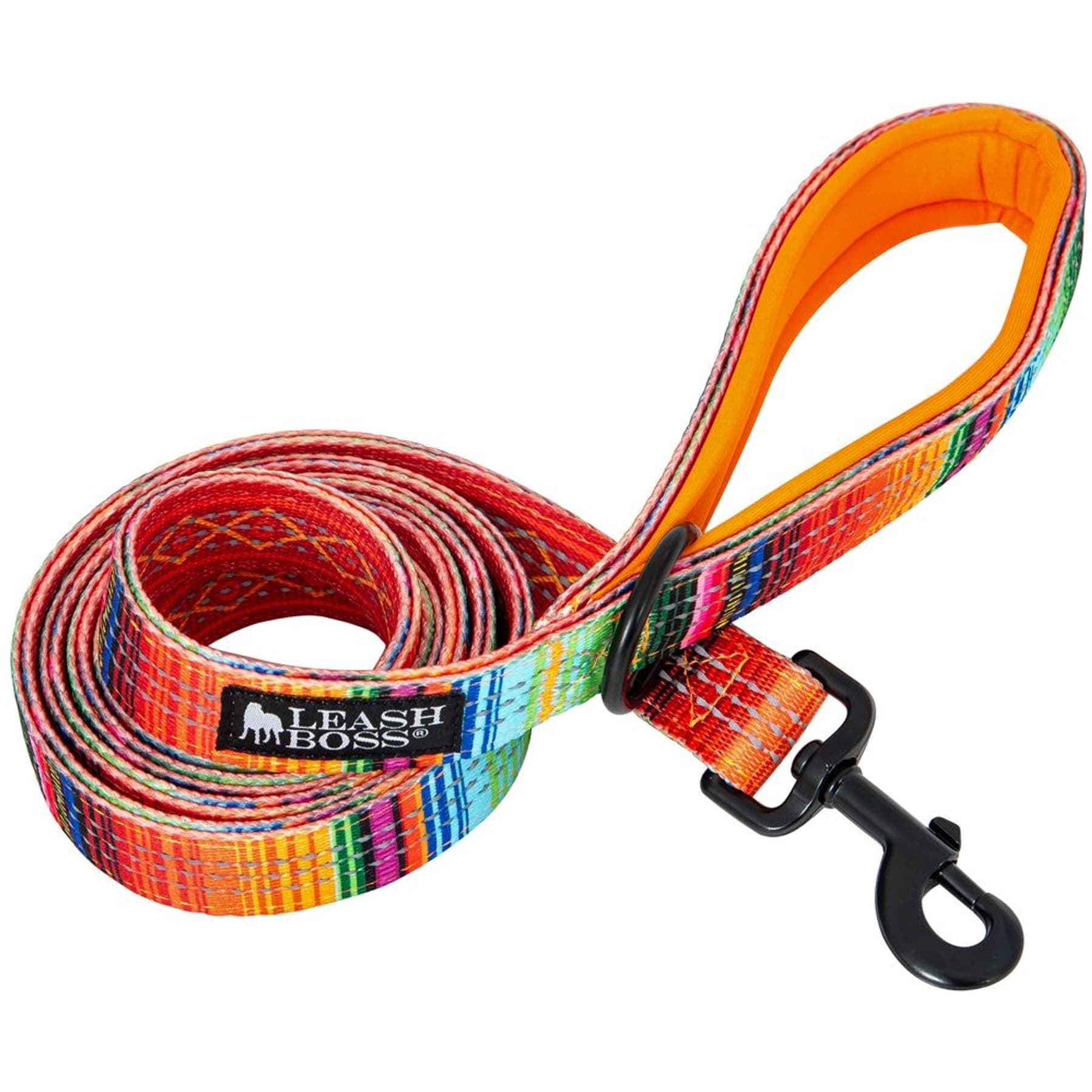
A six-foot leash for supervised walks alongside a separately fitted and conditioned muzzle.
Webvet may earn a commission when you click through to Chewy, at no extra cost to you.
End while the dog is still comfortable. If the dog pulls away, freezes, repeatedly paws or becomes distressed, make the next step easier rather than holding them still until they stop resisting. Progress is measured by willing participation, not by how quickly the buckle can be closed.
Practice before an urgent situation if possible. If the dog already presents a significant bite risk, get professional help planning safe training. Do not put hands near the mouth to force a fitting or create a bite-risk exercise from a general article.
Can a muzzle prevent eating things outside?
A basket intended to limit scavenging must have openings appropriate to the particular items of concern while preserving necessary panting and comfortable movement. An ordinary open basket may still allow the dog to pick up food or debris. Ask the veterinarian or manufacturer about the specific risk and continue supervising the route.
What a muzzle cannot safely do
A muzzle is not a treatment for aggression, fear or pain. It cannot replace distance, barriers, supervision or a behavior plan. It also should not be used to stop normal puppy mouthing by leaving a puppy muzzled around the house; the guide to puppy biting and growling addresses that different problem.
Do not leave a muzzled dog alone, tie them out unattended or assume they can interact freely with other dogs. The equipment can catch on objects, and the dog may have difficulty responding to a threat. A muzzled dog still needs an advocate who prevents unwanted contact.
Avoid use when the dog is vomiting, having difficulty breathing or otherwise needs urgent medical attention unless a veterinarian specifically directs the handling. Call the clinic for safe transport and handling advice rather than improvising a homemade mouth restraint.
Plan walks and veterinary visits
Fit depends on the face, not the breed label
French Bulldogs, Boston Terriers and Shih Tzus can present short-face fitting challenges, while a German Shepherd, pit bull-type dog or Cane Corso may need a different length-to-width relationship. These examples identify shape questions, not breed-based size recommendations. Measure the individual dog and obtain fitting advice rather than ordering by breed name alone.
A big dog muzzle must fit the face, not simply match the dog's overall weight. Length, width and pant depth can vary among dogs of similar body size. The manufacturer's measurements and a supervised fit assessment are more useful than choosing the largest basket by default.
For a short-faced dog, involve your veterinarian before choosing equipment that surrounds the nose and mouth. The dog needs unobstructed breathing and appropriate cooling, and a generic long-snouted basket may sit against the eyes or fail to stay in place. Do not tighten a poorly shaped product until it appears secure.
Check bulk and face shape
For a very small dog, consider weight and bulk as well as dimensions. A basket that meets the length measurement may still be awkward to carry on the face. Watch normal head movement and check the skin after short supervised practice. Stop if the product rubs or changes the dog's comfortable movement.
For a broad-headed dog, measure the snout rather than assuming the largest size is the correct one. Length, width and depth should work together. A too-long basket can interfere with exploring or drinking even when its circumference is generous.
Keep the equipment and training records together
Record the exact model, size and strap setting that fits. This is useful when another caregiver helps or when a replacement strap is needed. A photograph can support a professional fit discussion, but it should show the dog naturally and should not be used to force an uncomfortable pose.
Inspect the basket and straps before each outing. Look for cracks, bent components, damaged stitching and buckles that do not fasten normally. Clean the product as directed and check for irritation after use. Replace damaged equipment through the manufacturer rather than repairing a safety-critical part with improvised tape or ties.
If training stops progressing, record what changed: duration, location, handling, noise or the presence of another animal. Return to an easier successful step and seek help where needed. This gives a professional more useful information than describing the dog as simply “not liking muzzles.”
Plan walks and veterinary visits
For walks, choose a route with room to create distance and use secure, comfortable walking equipment. A muzzle does not justify approaching a trigger more closely. Reward calm behavior and leave situations that become too difficult.
Tell the veterinary team about the dog's history before the appointment. They can plan arrival, handling and any clinical support needed. Bring the familiar muzzle if the team agrees, but do not insist on continuing a stressful procedure merely because the dog cannot easily bite.
At home, a suitable gate or pen can help create space between the dog and visitors when appropriate. A comfortable rest arrangement from the crate guide is another option for a dog that tolerates confinement. These tools support separation; they do not replace supervision of children or other vulnerable people.
Dog muzzle questions
Frequently Asked Questions
Is it good to put a muzzle on a dog?
A suitable, well-fitted muzzle can be useful in a specific safety plan when introduced positively. It is not helpful when used to suppress normal needs, punish behavior or force a dog into situations they cannot tolerate.
Do muzzles stress dogs out?
Poor fit, force or an unfamiliar experience can be stressful. Gradual voluntary introduction and an appropriate basket can help a dog become comfortable, but the person's handling and the surrounding situation still matter.
What is the most humane muzzle?
Choose a design that fits the individual dog, permits the required activities and is introduced through rewards. For walking and training, a basket with full pant room is the starting point; the brand alone cannot establish humane use.
What can I use instead of a muzzle?
Distance, secure barriers and a different handling plan may reduce exposure to the situation. Where a muzzle is part of professional safety advice, do not substitute an improvised restraint; discuss alternatives with the veterinarian or qualified behavior professional.
When should a dog not be muzzled?
Do not leave a muzzled dog unattended, use a restrictive muzzle during exercise or use one to prevent panting or barking. Breathing difficulty, vomiting or an emergency calls for veterinary handling advice.
Can I make a homemade muzzle?
Do not improvise a routine muzzle from tape, cord or fabric. Such restraints can restrict breathing or mouth opening and are not a substitute for a fitted product. In an emergency, call the veterinary team for handling instructions.
What goes on a dog's face to prevent biting?
A muzzle can reduce some bite risk, but it does not make every interaction safe. Correct fit, appropriate design, supervision and distance remain essential, and no one should put fingers through the basket.
What is the safest way to muzzle a dog?
Plan ahead with a suitable basket and reward-based introduction. Let the dog participate voluntarily, check fit and use it under supervision. If an immediate bite risk makes that impossible, obtain professional handling advice rather than forcing a general training method.
How do you make a mouth guard for a dog?
A dental mouth guard and a muzzle have different purposes. A dental appliance needs veterinary assessment; it is not a homemade bite-prevention tool. For supervised management, use an appropriately fitted basket muzzle and gradual introduction. Do not tape or tie the mouth closed, which prevents normal panting and can create an emergency.

Editor
The Webvet Editorial Team is the in-house group of pet-care editors and writers behind Webvet, operated by Smart Pet Collective. The team researches, writes, and maintains Webvet's pet health, behavior, and medication content. Every article follows a defined editorial process: research from reputable veterinary and scientific sources, careful drafting, mandatory review of medical content by a credentialed veterinarian, and dated publication. Health and medication articles are medically reviewed by a licensed veterinary professional before they go live and are kept current over time.
Related reading

Invisible Fence for Dogs: Limits, Welfare Risks and Safer Alternatives

Electronic Dog Doors: Microchips, Collar Keys and App Controls

Dog Door for Sliding Glass Door: Panel Fit, Locks and Screens
