When Can Puppies Go Outside? A Vet-Reviewed Timeline by Vaccine Stage
Puppies can go outside earlier than many owners think, but where they go matters: backyard versus public places, potty breaks before the final vaccines, safe socialization, and building up to first walks.

BVMS MRCVS
Medically reviewed by Dr. Pippa Elliott, BVMS MRCVS · Last reviewed

This article contains affiliate links. Webvet may earn a commission when you buy through them, at no extra cost to you.
So, when can puppies go outside? Right away, as long as you choose the place. A private, clean backyard is fine for potty breaks from the day your puppy comes home. Public ground where unknown dogs walk, sniff, and toilet should wait until your vet says the vaccine series is complete.
The answer to when can puppies go outside is not "stay indoors until the last shot." Vets want safe socialization to start well before then, because the window for learning to accept new people, sounds, and places closes early. The goal is to keep your puppy's paws off contaminated ground while their world still gets bigger every week.
 Sponsored
Have a health question about your dog?
Talk to a licensed vet at Dutch over video or message, including nights and weekends.
Use code Pets60
Plans start at $12/month · covers up to 5 pets
- Licensed vets in most states
- Rx for 150+ conditions
- 4.7 on Trustpilot
When can puppies go outside? The short answer by vaccine stage
How old should puppies be to go outside? There is no minimum age for a supervised trip into your own clean yard. What changes is which public places are reasonable, and that depends on the vaccine series, not the calendar.
- 1Outdoor timing by vaccine stage: a private yard is fine from day one, and public dog areas wait until your vet confirms the final puppy booster.
- 2Backyard versus public places: the risk comes from ground where dogs of unknown vaccination status have been, such as dog parks, pet store floors, and busy sidewalks.
- 3Socialize now, not later: carried outings, a clean puppy class, and visits with healthy vaccinated dogs fit the early weeks.
- 4Call your vet the same day for vomiting, diarrhea, lethargy, or a puppy that stops eating after an outing.
According to the AAHA canine vaccination guidelines, the core puppy series starts at 6 to 8 weeks of age. Doses are repeated every 2 to 4 weeks until the puppy is older than 16 weeks, and AAHA notes that 18 to 20 weeks is preferred in areas with a high risk of canine parvovirus.
The reason for repeated doses is maternal antibody. AAHA explains that antibodies passed from the mother can block puppy vaccines and are usually gone by 12 to 14 weeks. Until then, nobody can tell which dose "took," so a puppy is not fully protected until the whole series is finished. Your vet sets the exact schedule, which our puppy vaccine schedule walks through stage by stage.
Here is how outdoor access usually lines up with each stage:
- Coming home, about 8 weeks: your own clean, private yard for potty breaks and short play, with you right there. Your puppy should not go outside by themselves at this age.
- After the first vaccination: carried outings, car rides, and visits with healthy vaccinated dogs you know. A puppy class becomes an option once the class's vaccine and deworming rules are met.
- After the second injection: the same plan, a little more confidence in clean settings, but still no dog parks or unknown dogs.
- After the final puppy booster: your vet clears public walks, usually once the series ends at 16 weeks or later.
A small pen in the yard lets a young puppy enjoy fresh air during supervised time without wandering into corners you have not checked.
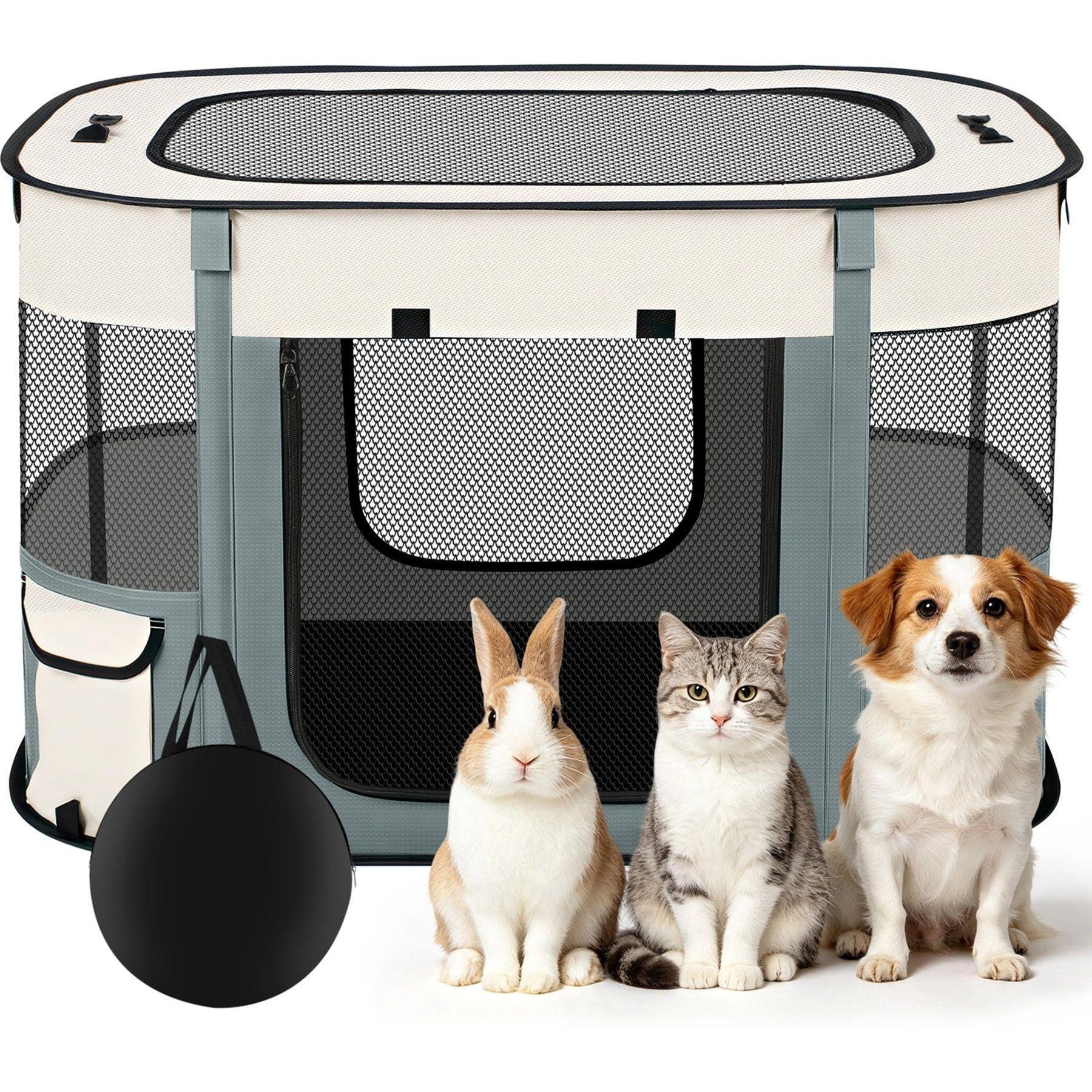
A small portable pen that keeps a young puppy contained during supervised time in your own yard.
Webvet may earn a commission when you click through to Chewy, at no extra cost to you.
The core vaccines in that series protect against canine distemper, canine adenovirus type 2, canine parvovirus type 2, and rabies, per AAHA, and most puppies get the first three as a combination shot explained in our guide to the DHPP vaccine for dogs. AAHA suggests starting leptospirosis vaccination at or after 12 weeks for dogs whose vet recommends it.

Breed does not change the timeline. AAHA defines core vaccines as recommended for all dogs irrespective of lifestyle, so the same yard-now, public-later rule applies to:
- Toy and small breeds such as the Yorkie, Chihuahua, Shih Tzu, and Dachshund.
- Poodle crosses such as the Cavapoo and Cockapoo.
- Active and larger breeds such as the Jack Russell, Golden Retriever, German Shepherd, and Husky.
- Flat-faced breeds such as the French Bulldog and English Bulldog, which need extra care with heat once walks begin.
Can I take my dog out after the 2nd vaccination?
Into your own yard and on carried or car outings, yes. Onto public ground where unknown dogs go, not yet. The Merck Veterinary Manual lists incompletely vaccinated dogs from 6 weeks to 6 months among the most susceptible to parvovirus, so a second dose is progress, not a finish line. Ask your vet whether a final booster is still due.
Backyard vs public places: where a puppy can go before full vaccination
| Place | Risk before the final vaccines | What to do |
|---|---|---|
| Your private backyard or garden | Low if no unknown or unvaccinated dogs use it | Use it for potty breaks and play with you present from day one |
| A vaccinated friend's home and yard | Low if the dogs there are healthy and up to date | Good for supervised play with known calm dogs |
| Puppy class on a cleanable indoor floor | Low when vaccine, deworming, and health rules are enforced | Enroll once your puppy meets the class requirements |
| Sidewalks and building entrances | Moderate, because many dogs of unknown status toilet there | Carry your puppy or keep them in a carrier |
| Pet store or vet clinic floor | Moderate to high, because sick and healthy dogs share the floor | Carry your puppy and keep them off the ground |
| Dog park or busy dog walking trail | High, because ground is heavily used by unknown dogs | Wait until your vet confirms the series is complete |
| Shelters, kennels, and boarding facilities | High, because parvovirus concentrates where many dogs pass through | Avoid until vaccinations are complete |
When can puppies go outside at home if you live in an apartment? City life, whether in NYC or any other building with shared halls, means no private grass. Carry your puppy through lobbies, elevators, and sidewalks, and use indoor potty pads or a private balcony patch until your vet clears public ground.
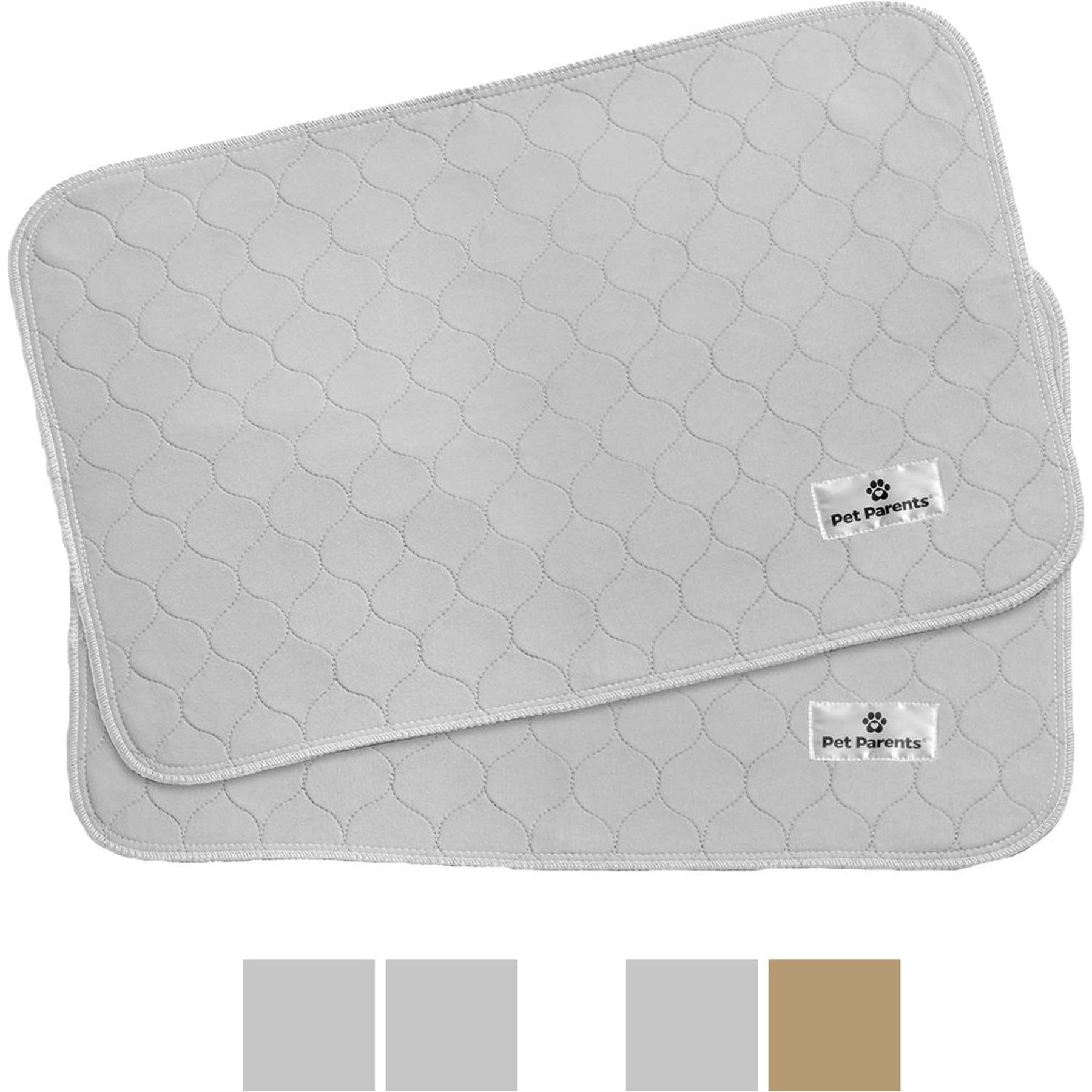
Washable pee pads that give apartment puppies an indoor toilet spot until public ground is cleared.
Webvet may earn a commission when you click through to Chewy, at no extra cost to you.
When can puppies go outside in the yard or garden? From the first day, if the space is private. The risk comes from what other dogs leave behind, so a fenced backyard that only your household's healthy, vaccinated dogs use is very different from a shared lawn.
The reason for all this care is that parvovirus is tough. VCA Animal Hospitals and the Cornell University Baker Institute for Animal Health describe how it behaves:
- Infective virus has been recovered from feces-contaminated surfaces after three months at room temperature, per VCA.
- It is easily carried on the hair or feet of dogs and on shoes, clothes, and other objects, VCA notes.
- It survives for months outside an animal, even through winter, and resists most household cleaners, according to Cornell.
- You cannot, and should not, bleach a lawn, Cornell points out, though rain or watering dilutes the virus over time.

If a dog with parvo, or a dog of unknown history, has used your yard in recent months, ask your vet before letting your puppy down there. Otherwise, a few habits keep a private yard low risk:
- Pick up any dog waste promptly so it never builds up.
- Do not invite unfamiliar dogs over until your puppy's series is complete.
- Leave outdoor shoes by the door if you have walked through dog areas.
Leptospirosis is the other reason to be choosy about outdoor spots. AAHA lists any time outdoors, in urban, suburban, and rural environments alike, plus exposure to rodents as risk factors, and the Merck Veterinary Manual explains it often spreads through urine of infected animals. Our guide to leptospirosis in dogs covers where the risk is highest.
Potty breaks before your puppy is fully vaccinated
When can puppies go outside to pee or potty? Immediately, as long as it is a private toilet spot. Potty breaks before the final shots work best in one consistent corner of your own yard, or on pads indoors if you have no private outdoor space.
VCA Animal Hospitals notes that dogs can be taught to eliminate outdoors or indoors on absorbent pads, a clean option for apartment owners.
How often should you take a puppy outside? VCA's house training guidance lists these elimination breaks:
- After a meal or a big drink of water.
- Immediately after waking up from a nap.
- Every half hour during running and play.
- Every 1 to 2 hours while awake, on top of the times above.
- Every 4 hours, even if your puppy has been resting.
Night trips work differently: puppies may still need an overnight potty outing until about 5 months of age.

Each trip goes more smoothly with the same simple routine, built from VCA's house training advice:
- Bring your puppy out on a leash, through the same exit door every time, to one chosen toileting spot.
- Stay with them until they finish, so you know the trip worked.
- Quietly praise them and offer a small treat the moment they go. Soft, small rewards such as Zuke's Puppy Naturals Lamb Recipe Soft & Chewy Training Dog Treats, 5-oz pouch are easy to carry in a pocket.
Accidents will happen. VCA explains that good cleanup is crucial, because the odor of urine or feces cues a puppy to use the same spot again. VCA recommends keeping a high quality enzymatic cleaner on hand for indoor accidents. One option is Emmy's Best Pet Products Enzyme-Based Pet Odor & Stain Eraser, 32-fl oz bottle.
A new puppy checklist is a handy way to stock pads, treats, and cleaning supplies before pickup day.
 Sponsored
Vet care that's always there
Unlimited video calls and messaging with licensed vets for less than a typical vet visit. One membership covers up to five pets.
Use code Pets60
Plans start at $12/month · covers up to 5 pets
- Licensed vets in most states
- Rx for 150+ conditions
- 4.7 on Trustpilot
Socialization vs disease risk: why vets do not want puppies kept indoors until the last shot
It feels safest to keep a puppy home until every shot is done. Behavior specialists say that plan carries its own serious risk, because the socialization window closes before the vaccine series usually ends.
The American Veterinary Society of Animal Behavior (AVSAB) puppy socialization position statement names the first three months of life as the primary and most important time for puppy socialization. AVSAB states it should be the standard of care for puppies to receive socialization before they are fully vaccinated.
Sources differ slightly on the exact edges of the window. The UC Davis School of Veterinary Medicine puts the critical period at roughly 3 to 14 weeks, while VCA describes the sensitive period as 3 to 16 weeks. Either way, VCA notes the sensitive period is over by the time the vaccination series is finished. AVSAB's position statement explains why vets weigh this so heavily:
- Behavioral issues, not infectious diseases, are the number one cause of death for dogs under three years of age.
- Behavior problems are the number one cause of relinquishment to shelters.
- Maternal immunity, primary vaccination, and appropriate care make the risk of infection relatively small compared with the chance of death from a behavior problem.
UC Davis agrees that the risk of serious behavior problems from poor socialization is far greater than that of infectious disease. That does not make parvo minor. It means the answer is managed exposure: new sights, sounds, people, and surfaces without contact with contaminated ground or unknown dogs.
UC Davis suggests aiming for 90 different pleasant situations by 14 weeks. Keep encounters short and watch for stress signs, which UC Davis lists as a tucked tail, licking lips, yawning, shaking, and ears back. If you see them, move your puppy away so the experience ends well. Our puppy socialization checklist breaks those 90 experiences into weekly goals.
Safe outings before the final shots: carrying, puppy classes, and vaccinated dog friends
Can puppies go outside before shots or without shots? In a private clean yard, yes, but before the first vaccination keep outings to that yard and your car. Once the first vaccination is on board, safe socialization outings can widen a lot, provided the puppy's feet stay off ground used by unknown dogs. VCA also advises getting a puppy used to the leash at home before you start taking them outside on it.
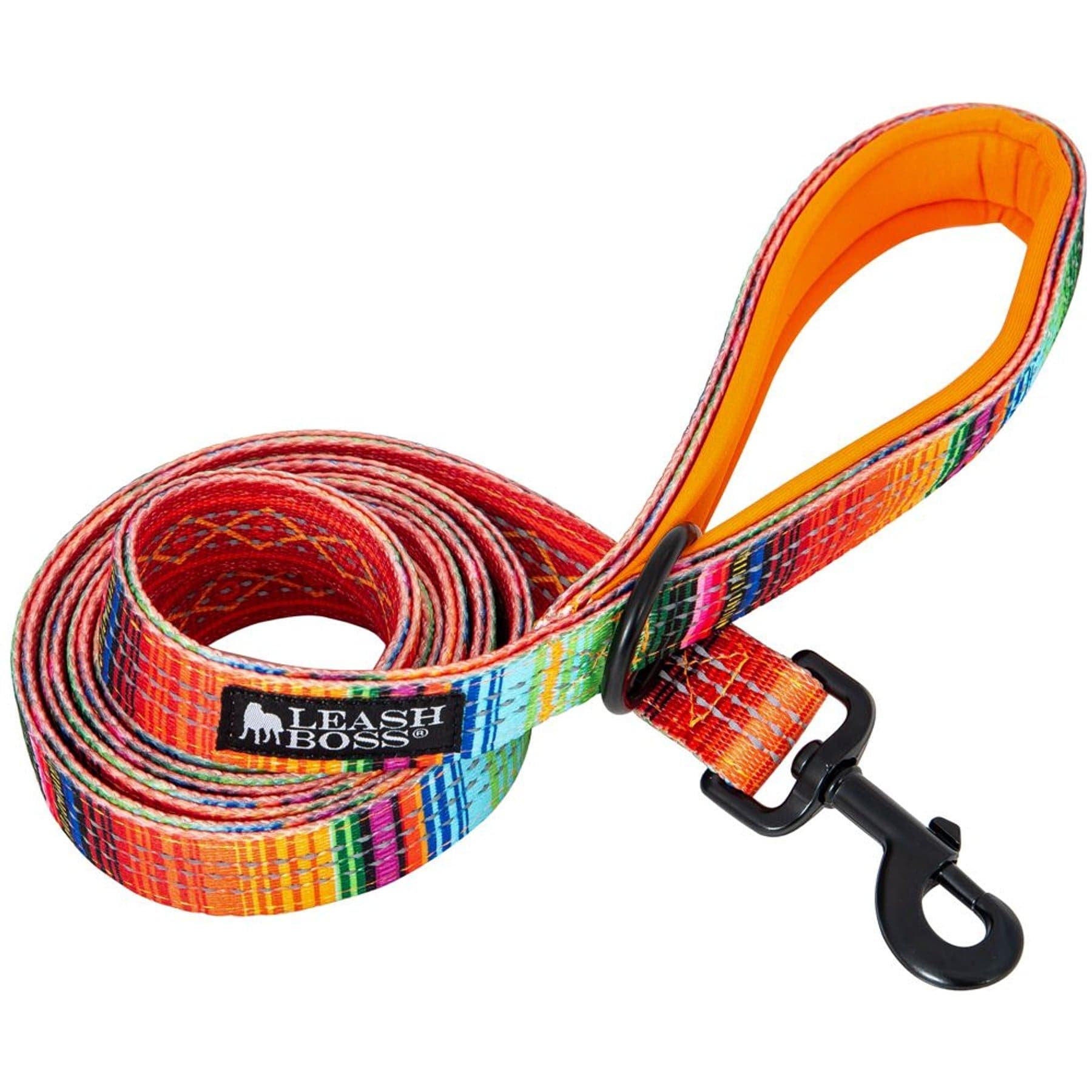
A standard 6-foot leash for indoor leash practice now and the first public walks once your vet clears them.
Webvet may earn a commission when you click through to Chewy, at no extra cost to you.
Can I carry my puppy outside before vaccinations? Yes, and carrying is one of the most useful tools in this stage. A puppy held in your arms or in a carrier can watch traffic, hear city noise, and meet friendly people without touching sidewalks where parvovirus may linger.
Good outings to try in these weeks include:
- Sitting on a bench near a school as the kids come out, with your puppy on your lap, which UC Davis suggests.
- Car rides on errands, avoided on a full stomach, per UC Davis.
- Visits to new places at least twice weekly, as VCA recommends.
- Meeting friendly people of different ages, sizes, and appearances every week, per VCA.
Puppy classes are the other big option. AVSAB says puppies can start socialization classes as early as 7 to 8 weeks. Before you enroll, check that the class follows these entry rules from AVSAB and VCA:
- At least one set of vaccines given at least 7 days before the first class, plus a first deworming, per AVSAB.
- At least 10 days in the new home, appearing healthy the whole time, per VCA.
- Up to date on vaccines and free of intestinal parasites, per VCA.
- Classes held on surfaces that are easily cleaned and disinfected, such as indoor floors, which AVSAB prefers.

How safe are classes? In a study published in the Journal of the American Animal Hospital Association (Stepita et al., PubMed), 279 puppies attended socialization classes and none were suspected of or diagnosed with parvovirus. The authors found vaccinated puppies in classes were at no greater risk than vaccinated puppies that did not attend. A well-run class will ask for vaccine records at the door.
Vaccinated dog friends round out the plan. UC Davis advises letting your puppy interact only with dogs you know are physically and behaviorally healthy and vaccinated. Before a playdate, check that:
- The other dog is up to date on vaccines and has not been unwell recently.
- It is calm and gentle with puppies.
- The meeting happens in a private home or yard, since VCA recommends avoiding unvaccinated dogs and groups of unknown dogs, such as a dog park.
Clean up after your puppy wherever you go, including a friend's yard. VCA's walking advice is to bring bags no matter where your dog goes, and a roll of plain bags in your pocket covers it.

Unscented waste bags for quick pickup in a friend's yard now and on first walks later.
Webvet may earn a commission when you click through to Chewy, at no extra cost to you.
When can puppies go outside after the second injection? Treat it like the first: more of the same safe outings, with public dog ground still off limits until the final booster. If your puppy is on a two-injection schedule, ask your vet when they consider it complete, since AAHA calls for continuing doses past 16 weeks.
Can I take my 9 week old puppy for a walk outside?
Not on public sidewalks or trails yet. At 9 weeks most puppies have had only one or two vaccinations, and parvovirus can survive for months on ground other dogs use. Walk your 9 week old in your private yard, carry them for neighborhood outings, and save leash walks in public for after your vet confirms the final shots.
Signs of illness after an outing that need a vet now
Most outings end with a tired, happy puppy. Knowing the illness signs after an outing still matters, because young puppies can go downhill quickly and some infections spread to other dogs before symptoms show.
The Merck Veterinary Manual describes parvovirus signs as loss of appetite, lethargy, vomiting, and diarrhea that is often bloody. Early signs can be vague, such as a puppy that is quieter than usual or skips a meal. VCA notes that vomiting usually begins first and that puppies under five months are usually the most severely affected.
Do not wait to see whether diarrhea passes in a young or incompletely vaccinated puppy. VCA's guidance on diarrhea in dogs says severe, bloody diarrhea or broader signs such as weakness, fever, vomiting, or dehydration need medical attention as soon as possible. Our guide to parvo symptoms in dogs explains what the vet will check.
Your vet confirms parvo with a test, because VCA points out it can look like many other diseases that cause vomiting and diarrhea. Fast care matters: with appropriate supportive care, Merck reports that 70 to 90% of dogs with parvoviral enteritis survive. That depends on prompt treatment, so a vomiting puppy is a same-day call.
Other infections in the vaccine series have their own warning signs:
- Canine distemper: the Merck Veterinary Manual describes nasal discharge, eye discharge, lethargy, and loss of appetite, and later nervous system signs such as seizures. It spreads mainly through airborne droplets from infected animals.
- Leptospirosis: Merck lists lethargy, loss of appetite, vomiting, and abdominal pain, and notes that acute kidney injury is the most common presentation. VCA adds that a high fever is common and that the disease can be fatal in severe cases.
VCA Animal Hospitals adds that distemper also spreads by direct contact with an infected dog showing symptoms, and that coughing and sneezing can carry the virus over short distances. Keep a carried puppy well away from any dog that is coughing or sneezing, because VCA notes that dogs who survive distemper are often left with twitches and recurrent seizures.
Leptospirosis can also affect people. Merck advises owners to wear gloves when cleaning up urine from an infected dog and to wash their hands after handling the dog, so follow your vet's hygiene advice closely if lepto is suspected.
If your puppy is diagnosed with parvo, these points from VCA and Cornell help protect other dogs:
- Dogs shed the virus in feces just before signs appear and for about 14 days after signs resolve, according to VCA.
- Cornell says a solution of one part bleach to about 30 parts water is an acceptable way to disinfect indoor areas, bedding, bowls, and surfaces.
- Lawns cannot be bleached, so keep other unvaccinated puppies off that ground and ask your vet how long to wait.
Overheating is the other emergency an outing can trigger, even on a short trip. VCA Animal Hospitals calls hyperthermia an immediate medical emergency and lists these signs of heat stroke:
- Fast breathing.
- Dry or sticky gums, abnormal gum color, or bruising on the gums.
- Lethargy or disorientation.
- Seizures.
VCA warns that flat-faced breeds such as pugs, boxers, and bulldogs are at even greater risk, and can show heat stroke signs when the temperature and humidity are only moderately raised. A Frenchie or English Bulldog puppy needs shade, water, and short outings on warm days.
While you head to the vet, VCA advises pouring cool, not cold, water over the head, stomach, armpits, and feet, and not covering the dog with wet cloths, which can block cooling. Most healthy pets recover quickly when they are treated immediately, VCA notes.
First walks after the final vaccines: building up time, weather, and leash basics
When can I walk my puppy outside in public? Once your vet confirms the final puppy booster, typically when the series ends at 16 weeks or later. Ask at that appointment exactly when your puppy can go for walks outside.
Building up the first walks gradually works better than a long outing on day one. VCA's leash training advice is to attach the leash for short periods at home during play first, and to keep sessions short because a puppy's attention span is brief.
Practical leash basics from VCA's dog walking safety advice:
- Use a sturdy leash 4 to 6 feet long on a properly fitting collar or harness. The Leash Boss Patterned Standard Dog Leash, 6-ft long, Orange is one option in that range.
- Put an ID tag with your dog's name and your phone number on the collar.
- Bring bags for every walk. The Original Poop Bags Peanuts USDA Biobased Dog Poop Bags, 60 count, Unscented is a 60-count roll, listed at $8.19 on Chewy when checked in November 2026.
- Offer frequent drinks on longer walks in warm weather.

VCA also warns that puppies react to the leash in different ways: some try to drag you, some freeze, and others simply lie down. Treats when the leash comes out, and rewards when your puppy walks beside you, help either way. AVSAB adds that positive, consistent training is linked with fewer behavior problems than methods based on punishment.
Keep the effort gentle. VCA explains that young pups have developing joints that can be injured when overworked, so strenuous exercise such as jogging should wait until growth plates start to close. Short, frequent walks on varied surfaces suit a growing puppy far better than one long hike.
Weather and ground checks before each walk, drawn from VCA and Merck:
- If a surface is too hot for your hand or bare foot for 10 seconds, it is too hot for your puppy's paws.
- A short nose can make breathing harder during exercise, so walk flat-faced puppies in the cool parts of the day.
- In winter, booties can protect paws from chemical irritation on snowy or icy sidewalks.
- Watch for heavy panting or drooling in the heat, and seek immediate care if your dog becomes weak, vomits, or has diarrhea.
- Steer your puppy away from puddles and standing water, since Merck notes environmental contamination by urine can spread leptospirosis when conditions are suitable. VCA adds that the bacteria can survive for long periods in warm, stagnant water or moist soil, and can enter through skin lesions on the feet after a walk in contaminated mud.
Loose leash walking takes time. VCA describes it as one of the most complex skills taught to pet dogs, needing patience, planning, and persistence, and notes that unstructured exploration and low-stress walks in a quiet location are an important part of wellness. Let early walks include plenty of sniffing.
If your puppy pulls, VCA's guidance on walking equipment is worth knowing before you buy gear:
- A collar is not the right choice for a dog that pulls very hard or pulls until it coughs or breathes noisily.
- A well-fitted H-style or Y-style harness can be a wonderful tool for many dogs.
- Harnesses should only be worn while the dog is on a leash.
- Training collars such as slip, choke, prong, or electronic collars all rely on pain to stop pulling.
Socialization does not end when walks begin. AVSAB encourages owners of puppies past the first three months to keep socializing them to as many people, pets, and locations as is practical, and advises that owners of fearful puppies seek veterinary guidance.
Public walks open up new kinds of socialization: joggers, bikes, traffic, and well-mannered neighborhood dogs. Keep early greetings with unfamiliar dogs short and calm, and let your puppy watch from a distance if they seem unsure.
The vaccine series is not the only prevention to sort out before walks become routine. The American Heartworm Society recommends starting puppies on a heartworm preventive no later than 8 weeks of age, which our guide to heartworm prevention for puppies explains. Cornell notes a parvovirus booster is recommended one year later, then every one to three years after that, on the schedule your vet sets.
How do I stop my puppy from eating things outside?
Supervise closely and teach a "drop it" cue at home first. VCA warns that trash, chicken bones, and cigarette butts on the ground can be dangerous, and suggests practicing with treats during play, then on walks once your puppy is leash trained. A short leash keeps your puppy's nose away from litter. If your puppy is chewing everything in reach at home too, our guide to when puppies start teething explains what is normal.
When can I take my puppy for a walk around the block?
After your vet confirms the vaccine series is complete. Start with a short loop of a few minutes, let your puppy sniff and watch, and build up the distance over days as they stay relaxed and keep pace. Keep the first walks away from dog parks and busy dog areas until your puppy has settled into the routine.
When can puppies go outside questions
Frequently Asked Questions
Can I carry my puppy outside before vaccinations?
Yes. You can carry your puppy in your arms or in a carrier so they see and hear the world while their paws stay off ground used by unknown dogs. Avoid setting them down on sidewalks, in pet stores, or on the vet clinic floor, and do not let unknown dogs sniff them nose to nose. Carried trips work well for busy streets, outdoor cafes, and car rides, giving your puppy new sights and sounds while public ground stays off limits.
How often should I take my puppy outside to pee?
VCA lists trips after meals or a big drink, right after waking from a nap, every half hour during active play, every 1 to 2 hours while awake, and every 4 hours even when resting. Praise quietly and offer a small treat when your puppy goes in the right spot. Use the same exit door and the same toileting spot each time, as VCA recommends, so the routine becomes predictable. Expect fewer trips as your puppy grows and gains bladder control.
Can my puppy go in the backyard before shots?
Yes, if it is a private backyard that unvaccinated dogs and unknown dogs do not use. Pick up waste promptly and stay with your puppy. Cornell notes parvovirus can survive for months on outdoor ground, so the yard's recent history matters. If a sick dog or a dog of unknown history has used the yard recently, ask your vet before letting your puppy down there. VCA notes leptospirosis bacteria are carried mainly by rats and other rodents, so clear away standing water and anything that attracts rodents.
How many shots does a puppy need before going outside?
None for your own private yard. VCA gives one common pattern as distemper vaccines alongside other routine vaccines at 8, 12, and 16 weeks of age. For public dog areas, AAHA calls for repeated core doses every 2 to 4 weeks until after 16 weeks, so the number depends on when the series started. AAHA also notes that a final dose at 18 to 20 weeks is preferred where parvo risk is high. Your veterinarian decides when the final booster is given and when public walks can begin.
How often should I take my puppy outside at night?
VCA notes that puppies may need overnight potty trips until about 5 months of age, until they are physically mature enough to hold their bladder consistently. Keep night trips quiet and brief: straight to the toilet spot, praise, and back to bed so your puppy learns night is for sleeping. VCA notes that, with a little training, most puppies learn to go to sleep when they are put into their crates, which makes those overnight trips easier.

Editor
The Webvet Editorial Team is the in-house group of pet-care editors and writers behind Webvet, operated by Smart Pet Collective. The team researches, writes, and maintains Webvet's pet health, behavior, and medication content. Every article follows a defined editorial process: research from reputable veterinary and scientific sources, careful drafting, mandatory review of medical content by a credentialed veterinarian, and dated publication. Health and medication articles are medically reviewed by a licensed veterinary professional before they go live and are kept current over time.
Veterinarian · BVMS MRCVS
Dr. Pippa Elliott, BVMS, MRCVS, is a veterinarian with nearly 30 years of experience in companion animal practice. Dr. Elliott earned her Bachelor of Veterinary Medicine and Surgery from the University of Glasgow. She was also designated a Member of the Royal College of Veterinary Surgeons. Married with 2 grown-up kids, Dr. Elliott has a naughty Puggle named Poggle, 3 cats and a bearded dragon.
Related reading

When Do Puppies Start Teething? Timeline, Signs, and How to Help

New Puppy Checklist: Supplies, First-Week Plan, and Vet Visits

IMHA in Cats: Signs, Causes, Treatment, and Survival
