Heartworm Prevention for Puppies: A Vet-Reviewed Guide
Heartworm prevention for puppies starts earlier than most new owners expect. A vet-reviewed guide to the first dose deadline, why puppies under seven months skip the pre-start test, weight-band dosing while your puppy grows, the first-year testing schedule, and what it all costs.

BVMS MRCVS
Medically reviewed by Dr. Pippa Elliott, BVMS MRCVS · Last reviewed

This article contains affiliate links. Webvet may earn a commission when you buy through them, at no extra cost to you.
Heartworm prevention for puppies starts earlier than most new owners expect. The American Heartworm Society asks for the first dose as early as the product label allows and no later than 8 weeks of age, with the medication dosed by weight, every month, on the same date. A puppy under seven months old can begin without a blood test first.
That last point is the one that separates a puppy from an adult dog, and it is the point the competing pages get wrong most often. It also explains why waiting for the "right time" is the expensive answer: the mosquito that infects your puppy does not check its age, and prevention starts before the risk does.
This guide covers the whole first year in order. When the first dose is due, why the pre-start test is skipped in young puppies, how weight-band dosing works while your puppy is doubling in size, what the first-year testing schedule looks like, what it costs, and what to do the month you forget.
- 1Give the first dose as early as the product label allows and no later than 8 weeks of age, whichever comes first for the product your veterinarian picks.
- 2A puppy's risk is equal to an adult dog's, so there is no grace period while a puppy is small or mostly indoors.
- 3Puppies under 7 months of age can start without a heartworm test, because it takes at least six months to test positive after infection.
- 4Every heartworm preventive sold in the United States is prescription only, and no natural product, food, herb or supplement prevents heartworm.
- 5Dosage is based on body weight, not age, so a growing puppy can outgrow its dose in a matter of weeks.
- 6The first heartworm test comes six months after the first dose, a second test six months later, and yearly after that.
- 7Doses have to be given on the same day each month, because larvae can molt past the stage a preventive can reach in as little as 51 days.
Heartworm Prevention for Puppies: The Short Answer
Start heartworm prevention as early as the product label allows and no later than 8 weeks of age. Give one dose every month, on the same date, at a dose matched to your puppy's current weight. Skip the pre-start blood test if your puppy is under seven months old, then test six months after the first dose.
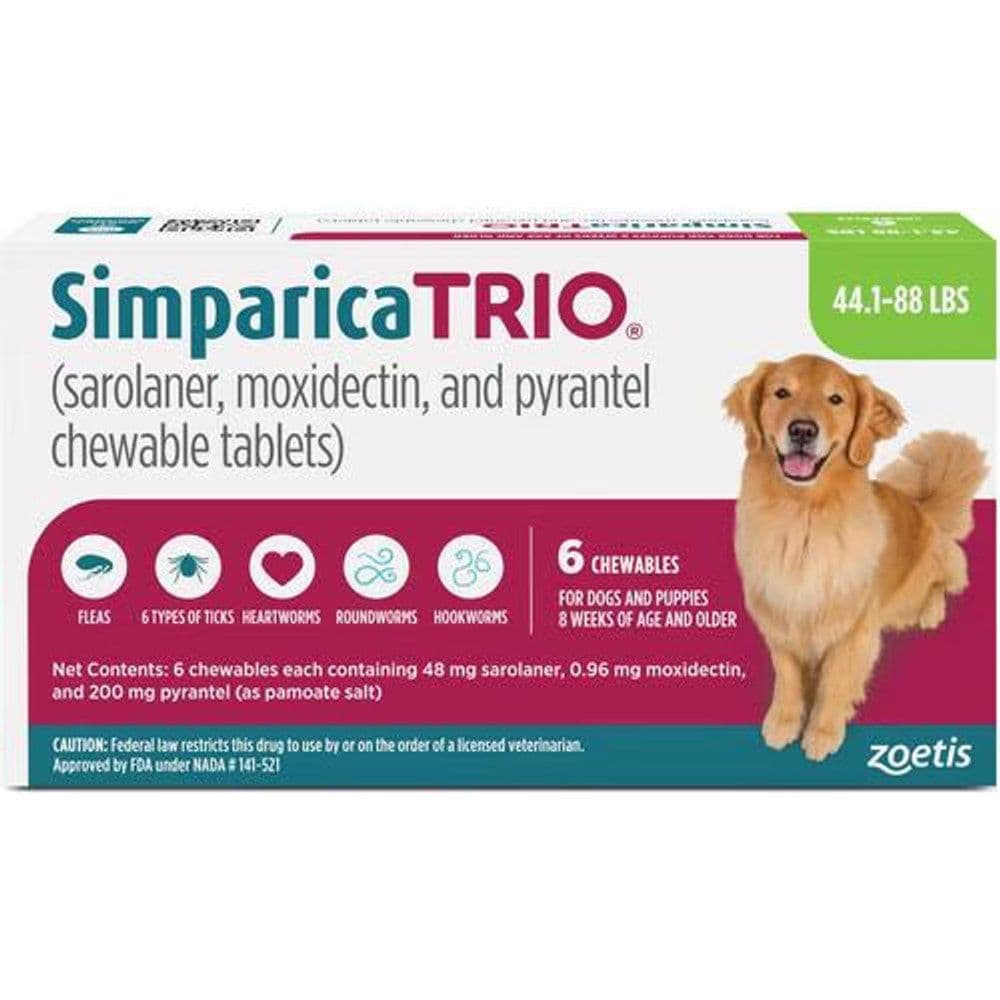
Monthly chew that protects dogs from fleas, six species of ticks, heartworm disease, roundworms, and hookworms.
Webvet may earn a commission when you click through to Chewy, at no extra cost to you.
Most puppies leave the breeder or rescue at six to eight weeks, which is exactly when the first dose is due, so the conversation belongs at the first well-puppy visit rather than a month later. A monthly prescription combination such as Simparica TRIO Chewable Tablets for Dogs is labelled for puppies from eight weeks of age and 2.8 pounds, and it covers fleas, ticks and two intestinal worms alongside heartworm. Your veterinarian decides whether that breadth is the right fit or whether a narrower product suits your puppy better.
Here is the entire first year on one page, from the first dose to the first birthday:
| Milestone | What happens | Why it matters |
|---|---|---|
| First vet visit, usually 6 to 8 weeks | Your veterinarian selects a preventive and dispenses or prescribes the first dose | The first dose is due as early as the product label allows and no later than 8 weeks of age |
| Every month, same date | One dose given on the same day each month | Preventives kill larval stages picked up over the previous month, so a gap leaves that month uncovered |
| Every well-puppy visit, roughly 8, 12 and 16 weeks | Your puppy is weighed and the dose is checked against the label band | Dosage is based on body weight, not age, and a puppy can outgrow a band in weeks |
| Six months after the first dose | First heartworm antigen test | It takes at least six months to test positive after infection, so an earlier test cannot rule anything out |
| About six months later, near the first birthday | Second heartworm test | Confirms nothing slipped through during the first year of dosing |
| Yearly after that | Annual heartworm test, prevention continues year-round | Annual testing even on year-round prevention, because doses get missed, spat out, vomited or rubbed off |
When Should a Puppy Start Heartworm Prevention?
A puppy should start heartworm prevention as early as the product label allows and no later than 8 weeks of age. Minimum ages differ by product, so some preventives can be given from six weeks and others not until eight. Whichever product your veterinarian chooses, eight weeks is the outside limit rather than a target.
Two numbers do all the work in that answer, and they are easy to mix up:
- The label minimum is set per product by the FDA approval. Some monthly chews and topicals are labelled from six weeks of age, others from eight weeks, and some carry a minimum body weight as well as a minimum age.
- The eight-week deadline is the American Heartworm Society's guidance for puppies generally, regardless of which product is picked. It is a backstop, not a starting bell.
In practice the two collapse into one instruction. Bring your puppy to its first well-puppy exam, ask your veterinarian to start a heartworm preventive at that appointment, and leave with the first dose given or a prescription in hand. If your puppy arrived already older than eight weeks, the answer is not to wait for a neater milestone. Start now, and let your veterinarian decide whether a test is needed based on your puppy's age.
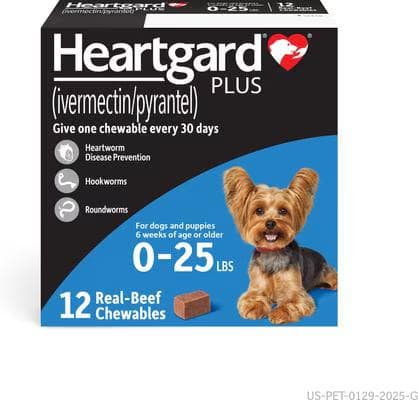
Webvet may earn a commission when you click through to Chewy, at no extra cost to you.
Do Puppies Need Heartworm Prevention?
Yes. A puppy's risk of heartworm disease is equal to that of an adult dog, according to the American Heartworm Society, because infection depends on a single mosquito bite rather than on age, size, breed or how much time the dog spends outside. If a puppy's risk equals an adult dog's, there is no protected window in early life and no threshold weight to reach before mosquitoes become a problem.
Waiting has a specific cost that is worth spelling out:
- Infective larvae deposited today keep developing whether or not a preventive is started next month, and monthly products work backwards on the previous month's larvae, not on last summer's.
- Once larvae mature into adult worms in the heart and pulmonary arteries, prevention is no longer the relevant treatment. The dog needs an adulticide protocol instead.
- Adult worms cause damage that can persist after they are killed, so an infection avoided is not the same as an infection cured.
- A puppy that starts on time and stays on schedule effectively never enters that sequence at all.
Prevention also does double duty in a puppy. Several monthly chews cover the intestinal worms that puppies commonly carry from birth, which is why deworming and heartworm prevention often arrive on the same chew. Interceptor Plus Chew for Dogs is labelled for puppies from six weeks of age and two pounds and covers roundworms, hookworms, whipworms and tapeworms alongside heartworm, which is a genuine consideration for a puppy that came home with a positive fecal test. Our guide to deworming a puppy explains where that overlap starts and stops. Like every product in this category, it still needs a prescription.
Why Puppies Under 7 Months Can Start Without a Test
Puppies under 7 months of age can start heartworm prevention without a heartworm test, while dogs over 7 months must be tested first. The reason is biological rather than administrative: the standard antigen test detects a protein produced by adult female worms, and worms need roughly six to seven months after infection to reach that stage.
That means a test run on an eight-week-old puppy cannot tell you anything useful. A negative result would be negative whether the puppy was infected on the day it was born or never exposed at all. Testing at that age spends money without producing information, which is why the American Heartworm Society sets seven months as the threshold and why a puppy that walks in at nine weeks starts prevention the same day.
The practical split comes down to two lines:
- Under seven months. Start prevention at the first visit, no test required, first test six months later.
- Over seven months with no reliable history. Test first, then start, because a dog that age could already be carrying adult worms and starting a preventive in that dog without testing is genuinely unsafe.
Adopted a puppy of unknown age? Tell your veterinarian that the age estimate is a guess. A shelter or rescue puppy listed as five months old but built like a seven-month-old is exactly the situation the threshold exists for, and your vet may test anyway rather than assume.
What the antigen test measures, why a negative at four months means nothing, and how the timing works for adult dogs are covered in our guide to the heartworm test for dogs.
Choosing a Puppy Heartworm Preventive
The best heartworm prevention for puppies is the FDA-approved product your veterinarian selects for your puppy's current age, weight, breed and health history, and that you can reliably give on time every month. There is no single best product, because the decision turns on the label and the puppy in front of the vet. The formats break down into a monthly chew, monthly topical, or an injection.
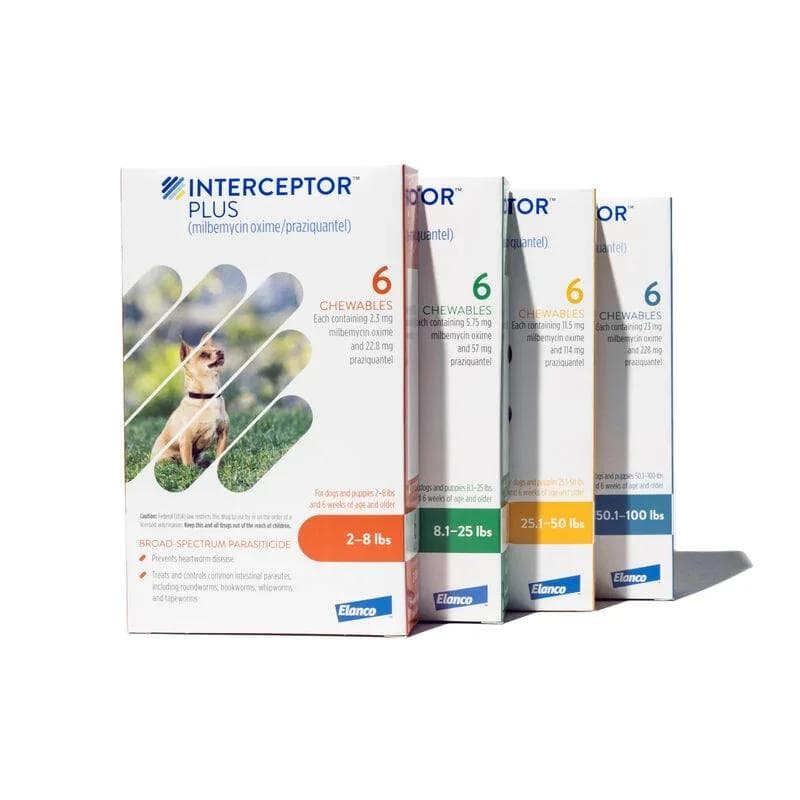
A monthly prescription chew that prevents heartworm and clears roundworm, hookworm, whipworm, and tapeworm. Since tapeworm is the usual reason a dog scoots, monthly cover is what stops it coming back.
Webvet may earn a commission when you click through to Chewy, at no extra cost to you.
| Format | Typical minimum age | How it is given | What else it can cover |
|---|---|---|---|
| Monthly chew or tablet | Commonly six to eight weeks, product-specific | Swallowed like a treat, once a month | Intestinal worms, and on some products fleas and ticks |
| Monthly topical | Commonly six to seven weeks, product-specific | Applied to the skin between the shoulder blades | Fleas, ear mites and some mites, product-specific |
| Veterinarian-administered injection | Dogs six months of age or older | Given in the clinic, lasts six or twelve months | Heartworm only, plus hookworms on some labels |
Every option still needs a prescription, including the injection, and exact minimum ages and weights differ by product, so the label governs rather than the category. Chews suit puppies that take food readily and owners who will not forget the date. Topicals suit puppies that spit tablets out or have a sensitive stomach, though the dose has to stay on the skin and dry, which means no bath and no swimming for the window the label specifies.

Three things belong in the conversation before the first dose, and none of them can be settled from a product page:
- Current weight, not expected adult weight. A Great Dane puppy is dosed as the small dog it is today.
- Breed and family history. Tell your veterinarian if your puppy has herding-breed ancestry, because the MDR1 gene mutation is common in collies and related breeds and affects how some drugs are handled. Mention any history of seizures too, so the product choice accounts for it.
- What else you need covered. Fleas, ticks and intestinal worms are separate problems with separate products, and combining them into one monthly chew is convenient but not automatically the right call.
For a bigger puppy already past five pounds, Trifexis Chewable Tablet for Dogs is labelled from eight weeks of age and five pounds and combines heartworm prevention with flea control and three intestinal worms, which rules it out for the smallest toy-breed puppies until they grow into the band. That is a good illustration of why the label decides and not the marketing. If you are weighing combination products against single-purpose ones, our comparison of combination flea, tick and heartworm products lays out the trade-offs in full.
 $65 · no membership
Need flea, tick, or heartworm prevention for your dog?
A licensed vet can recommend and prescribe the right preventive for your dog online when it's appropriate.
 Talk to a vet
- Licensed vets
- All 50 states
- same-day Rx

Webvet may earn a commission if you book.
Weight-Band Dosing as Your Puppy Grows
Heartworm medication dosage is based on body weight, not age. That is straightforward in an adult dog whose weight barely moves, and it is the single most common mistake in a puppy, because a puppy can gain enough weight to move from one dosage range to the next within weeks. A dose that was correct in March can be the wrong dose by May.

Most puppies start in the smallest weight band their product offers and work upward through the first year. Exact cutoffs differ by product, so treat the ranges below as the shape of the system rather than as your puppy's numbers:
| Typical band | Roughly who sits here | What to check |
|---|---|---|
| Smallest band | Puppies from about 2 to 10 pounds, and most toy breeds for life | Whether your product has a minimum weight as well as a minimum age |
| Second band | Puppies from about 11 to 25 pounds | Whether a fast-growing puppy has already passed the top of the band |
| Third band | Dogs from about 26 to 50 pounds | Weight at the most recent visit, not the weight on the last box you bought |
| Largest bands | Dogs above roughly 50 pounds | Whether a large-breed puppy will cross again before the next refill |

Webvet may earn a commission when you click through to Chewy, at no extra cost to you.
The practical rule follows from the biology. Buy one or two doses at a time while your puppy is still growing rather than a twelve-month box, weigh your puppy at every visit, and confirm the band before you give the next dose. Crossing into the next weight band mid-box is normal and expected in a growing puppy, and the box does not tell you it has happened. Underdosing a puppy that has quietly grown out of its band is the real risk here, and an underdosed month is functionally a missed month.
Topical products work the same way. Revolution Topical Solution for Dogs is sold in weight-banded tubes and labelled for puppies from six weeks of age, so the tube that fits in week one may not be the tube that fits in month three. Ask your clinic to re-check the band at every appointment rather than assuming the last box still applies. Every one of these products is prescription only.
Your Puppy's First-Year Heartworm Testing Schedule
A puppy started on prevention before seven months of age is tested six months after the first dose, tested again six months later, and yearly after that. Nothing in that schedule is optional, and the timing is not arbitrary: each test is placed at the earliest point it could detect an infection that slipped past the previous stretch of dosing.

Owners often ask why a dog on prevention needs testing at all, and the honest answer is that no preventive is perfect in the real world:
- Doses get missed, given late, spat out behind the sofa, vomited an hour later, or in the case of a topical, rubbed off on the carpet.
- A puppy that grew out of its weight band was underdosed without anyone noticing.
- Preventives are highly effective but not 100 percent effective, which is why annual testing even on year-round prevention is the standard recommendation rather than a belt-and-braces extra.
Finding an infection at the six-month test is a far better outcome than finding it three years later, because early disease is simpler to treat and does less permanent damage. A positive result in a young dog is uncommon when prevention has been consistent, and it is exactly what the schedule exists to catch.
Why Heartworm Prevention Is Prescription Only
No, you cannot legitimately buy heartworm prevention without a veterinarian. Every approved heartworm preventive in the United States is prescription only, and FDA labelling states the medication is to be used by or on the order of a licensed veterinarian. That leaves two lawful routes: buy it at your clinic, or buy it from a pet pharmacy that fills a prescription your veterinarian writes.
The requirement is not paperwork for its own sake. Giving a preventive to a dog that already carries adult heartworms and circulating microfilariae can trigger a rare but severe reaction, which is why an adult dog is tested before starting and why the seven-month threshold governs whether your puppy needs that test. A seller who ships a preventive with no prescription and no questions is skipping the step that protects your dog.
The natural-prevention question deserves the same flat answer. No natural heartworm preventive works. No herb, garlic clove, essential oil, diet, black walnut tincture or supplement has been shown to prevent heartworm infection, and there is no heartworm vaccine. Only FDA-approved products are proven, and the American Heartworm Society is explicit that only products tested and proven effective should be used.
What Heartworm Prevention Costs for a Puppy
Costs vary by weight band and product, so there is no single monthly figure that applies to every puppy. Broadly, a monthly heartworm-only preventive sits at the low end, a combination product that also covers fleas, ticks and intestinal worms sits at the high end, and a larger dog costs more than a small one because the dose is bigger. Ask your clinic for the price at your puppy's current weight.
Four things move the number:
- Weight band. The same product costs more in a larger band, which is why the annual cost rises as a puppy grows.
- How much the product covers. Heartworm alone is cheaper than heartworm plus fleas, ticks and four intestinal worms in one chew.
- Where you buy it. Clinic pricing and pet-pharmacy pricing differ, and manufacturer rebates on twelve-dose boxes change the arithmetic once your puppy is fully grown.
- What else the visit includes. The first-year tests are a separate line item from the medication.
The comparison that matters is not between two brands. Prevention costs a fraction of treatment, because a heartworm-positive dog needs staging, an adulticide protocol, strict confinement and follow-up testing. Our breakdown of what heartworm treatment costs puts real figures against that gap, and the heartworm treatment protocol itself explains what those months look like for the dog.
Missed a Dose? What to Do Next
A puppy should not go without heartworm medicine at all, and the reason is a specific number. Preventives kill larval stages rather than adult worms, and larvae can molt into a juvenile stage in as little as 51 days, at which point a preventive can no longer reliably eliminate them. That is why a late dose is not a small slip: three weeks past the date is a real gap in the only defence your puppy has.

If you have already missed one, the sequence is short and it starts with a phone call:
- Call your veterinarian and tell them exactly how many doses were missed and when the last one was given. Do not guess in either direction.
- Restart prevention and retest six months later, which is the American Heartworm Society's instruction after a lapse, because heartworms must be roughly seven months old before an infection can be diagnosed.
- Give the next dose as directed rather than doubling up to catch up.
- Set the schedule so it cannot happen again.
That last step is worth two minutes. Give the dose on the same day each month, set a repeating phone reminder rather than relying on memory, and keep the box somewhere you see it, such as beside the coffee or on the calendar itself. Pairing the dose with a fixed monthly habit is more reliable than intention.
Where Heartworm Risk Is Highest
Heartworms have been found in all 50 states. Risk is highest near the Atlantic and Gulf coasts and along river tributaries, where mosquito seasons run long and mosquito numbers run high, but there are hot spots inside most states and no state is genuinely exempt. A low-risk address lowers the odds. It does not remove them.

Three things push local risk up regardless of the map:
- Relocated dogs. Rescue transport moves dogs from high-incidence regions into low-incidence ones every week, and an untreated infected dog becomes a local reservoir for mosquitoes to draw from.
- Standing water and mild winters. Both extend the season and raise the mosquito population your puppy is exposed to.
- Untested neighbours. Heartworm needs an infected dog nearby, and prevalence in a neighbourhood is driven by how many dogs are unprotected.
Indoor puppies still need prevention, and this is the most common reason a first dose gets declined. One mosquito indoors is enough to transmit the infection, mosquitoes get through doors, windows and screens without difficulty, and some species overwinter inside heated buildings. That is also why the American Heartworm Society recommends year-round prevention rather than a summer-only schedule, including in cold-winter states. How a single bite turns into an infection is covered in our guide to how dogs get heartworm.
What About the Heartworm Injection?
The sustained-release injectable preventive is labelled for dogs six months of age or older, so it is not an option for a young puppy. A monthly product covers those first months, and the injection is a later decision you can raise once your puppy is old enough. The two ProHeart formulations carry different minimum ages on their own labels, so your veterinarian will tell you which one your dog qualifies for and when.
Owners who want to stop worrying about a monthly date find the injection appealing, and there is a real argument for it in households where doses genuinely get missed. It is administered in the clinic rather than at home, which is part of the point. Our guide to the heartworm injection for dogs covers how it works, what it costs, the safety profile and how it compares with staying on a monthly chew.
What Heartworm Disease Does to a Dog
Adult heartworms live in the heart and pulmonary arteries, where they cause inflammation and scarring that can persist even after the worms are killed. The disease is silent for months, so a dog can be infected long before anything shows, and the first sign an owner notices is usually a soft cough or a drop in stamina rather than anything dramatic. Our guide to the signs of heartworm in dogs walks the progression stage by stage.
Treatment is possible and most dogs survive it, but it is nothing like giving a monthly chew. It involves staging, a course of injections, months of follow-up and strict confinement, which is the part owners underestimate.
After the First Year: Prevention for Life
Nothing about the schedule changes at the first birthday except that the weight stops moving. Prevention continues year-round with no seasonal gaps, the annual heartworm test continues at the yearly visit, and the dose is confirmed against the label band any time your dog's weight changes meaningfully.
Ask your veterinarian before the first dose, and then keep the same conversation going once a year. Whether to move to a broader combination product, whether the injection now makes sense, and whether local mosquito conditions have changed are all worth revisiting. Our full guide to heartworm prevention for dogs covers the whole-of-life picture, including the products that carry a dog from adulthood into its senior years.
Frequently Asked Questions
Do puppies need heartworm prevention?
Yes. A puppy's risk of heartworm disease is equal to that of an adult dog, because infection depends on a single mosquito bite rather than on age, size or lifestyle. The American Heartworm Society asks for the first dose as early as the product label allows and no later than 8 weeks of age. There is no protected early window and no minimum weight a puppy has to reach first.
What is the best heartworm prevention for puppies?
The best option is the FDA-approved product your veterinarian selects for your puppy's current age, weight, breed and health history, and that you can give on time every month. Formats come down to a monthly chew, monthly topical, or an injection, and the injection is only for dogs six months of age or older. Minimum ages and weights differ by product, so the label decides rather than the category.
Can I get heartworm prevention without a vet?
No. Every approved heartworm preventive in the United States is prescription only, and FDA labelling states the medication is to be used by or on the order of a licensed veterinarian. You can buy it at your clinic or through a pet pharmacy that fills your veterinarian's prescription. A seller that ships one with no prescription is skipping the safety step, and the product may be counterfeit or incorrectly dosed.
How much does heartworm prevention cost for puppies?
Costs vary by weight band and product, so ask your clinic for the price at your puppy's current weight rather than working from a published average. Heartworm-only products cost less than combination chews that also cover fleas, ticks and intestinal worms, and the price rises as your puppy moves into larger bands. Whatever the figure, prevention costs a fraction of treatment.
How long can a puppy go without heartworm medicine?
It should not go without at all. Preventives kill larval stages, and larvae can molt past that stage in as little as 51 days, after which a monthly product can no longer reliably eliminate them. If a dose was missed, call your veterinarian, restart prevention and retest six months later. Do not double up doses to make up the gap.
What states are high risk for heartworm?
Heartworms have been found in all 50 states. Risk runs highest near the Atlantic and Gulf coasts and along river tributaries, where mosquito seasons are long, and there are hot spots inside most states driven by local water, climate and the number of untreated dogs nearby. A low-risk region is a reason for year-round prevention, not a reason to skip it.
Do indoor puppies need heartworm prevention?
Yes. Indoor puppies still need prevention, because one mosquito indoors is enough to transmit the infection. Mosquitoes come through doors, windows and screens, and some species overwinter inside heated buildings, which is why the American Heartworm Society recommends year-round prevention even in cold-winter states. Staying inside reduces exposure, but it does not remove it.
Is there a natural heartworm prevention for puppies?
No natural heartworm preventive works, and there is no heartworm vaccine. No herb, garlic, essential oil, diet or supplement has been shown to prevent infection, and only FDA-approved products are proven. A puppy given a natural product instead of a prescription preventive is unprotected, and the owner usually finds out at the first positive test.
Sources
$65 · no membershipNeed flea, tick, or heartworm prevention for your dog?
A licensed vet can recommend and prescribe the right preventive for your dog online when it's appropriate.
Talk to a vet- Licensed vets
- All 50 states
- same-day Rx
Webvet may earn a commission if you book.

Editor
The Webvet Editorial Team is the in-house group of pet-care editors and writers behind Webvet, operated by Smart Pet Collective. The team researches, writes, and maintains Webvet's pet health, behavior, and medication content. Every article follows a defined editorial process: research from reputable veterinary and scientific sources, careful drafting, mandatory review of medical content by a credentialed veterinarian, and dated publication. Health and medication articles are medically reviewed by a licensed veterinary professional before they go live and are kept current over time.
Veterinarian · BVMS MRCVS
Dr. Pippa Elliott, BVMS, MRCVS, is a veterinarian with nearly 30 years of experience in companion animal practice. Dr. Elliott earned her Bachelor of Veterinary Medicine and Surgery from the University of Glasgow. She was also designated a Member of the Royal College of Veterinary Surgeons. Married with 2 grown-up kids, Dr. Elliott has a naughty Puggle named Poggle, 3 cats and a bearded dragon.


