Heartworm Symptoms in Dogs: Stage-by-Stage Warning Signs
Heartworm symptoms in dogs appear late, long after the worms arrive. A vet-reviewed walkthrough of the silent early months, the first soft cough, the class 1 through class 4 staging, the late-stage signs, and the caval syndrome emergency that cannot wait.

BVMS MRCVS
Medically reviewed by Dr. Pippa Elliott, BVMS MRCVS · Last reviewed

This article contains affiliate links. Webvet may earn a commission when you buy through them, at no extra cost to you.
Heartworm symptoms in dogs arrive in a predictable order: a mild persistent cough first, then exercise intolerance and fatigue, then decreased appetite and weight loss, and finally labored breathing, a swollen belly and fainting or collapse. The complication is that there are no symptoms in the early stages, so a dog can carry adult worms for months before anything shows.
That timing is the whole story of this disease. Infective larvae need six to seven months to mature, and the damage to the heart and lungs builds quietly the entire time. By the time an owner notices something, the infection is usually well established, which is why the American Heartworm Society asks for an annual heartworm test rather than a watchful eye.
This guide walks the signs in the order they actually appear, from the first soft cough to caval syndrome, the emergency endpoint that cannot wait until morning. It also covers the coughs that get mistaken for heartworm and the one sign owners go looking for that does not exist.
- 1Heartworm disease is silent for months, so the absence of symptoms tells you nothing about whether your dog is infected.
- 2The classic progression is a soft cough, then tiring on ordinary walks, then weight loss, then a swollen belly and breathing trouble.
- 3Because symptoms mean advanced disease, the appearance of a cough is a late finding rather than an early warning.
- 4Veterinarians grade the disease from class 1 through class 4, and the class a dog is in changes both the treatment plan and the outlook.
- 5Caval syndrome is the emergency endpoint: sudden collapse, pale or grey gums and dark brown or coffee-colored urine mean an emergency clinic tonight, not an appointment next week.
- 6Heartworms live in the heart and pulmonary arteries and are never passed in your dog's stool, so checking poop for them finds nothing.
- 7The annual heartworm test plus year-round prevention is the only strategy that catches this disease while it is still simple to treat.
What are the symptoms of heartworm in dogs?
The symptoms of heartworm in dogs, in the order they usually appear, are a mild persistent cough, exercise intolerance, lethargy, decreased appetite and weight loss, then labored breathing, a swollen belly from retained fluid, and fainting or collapse. Most infected dogs show no symptoms at all for months, and some show nothing until the disease is well advanced.
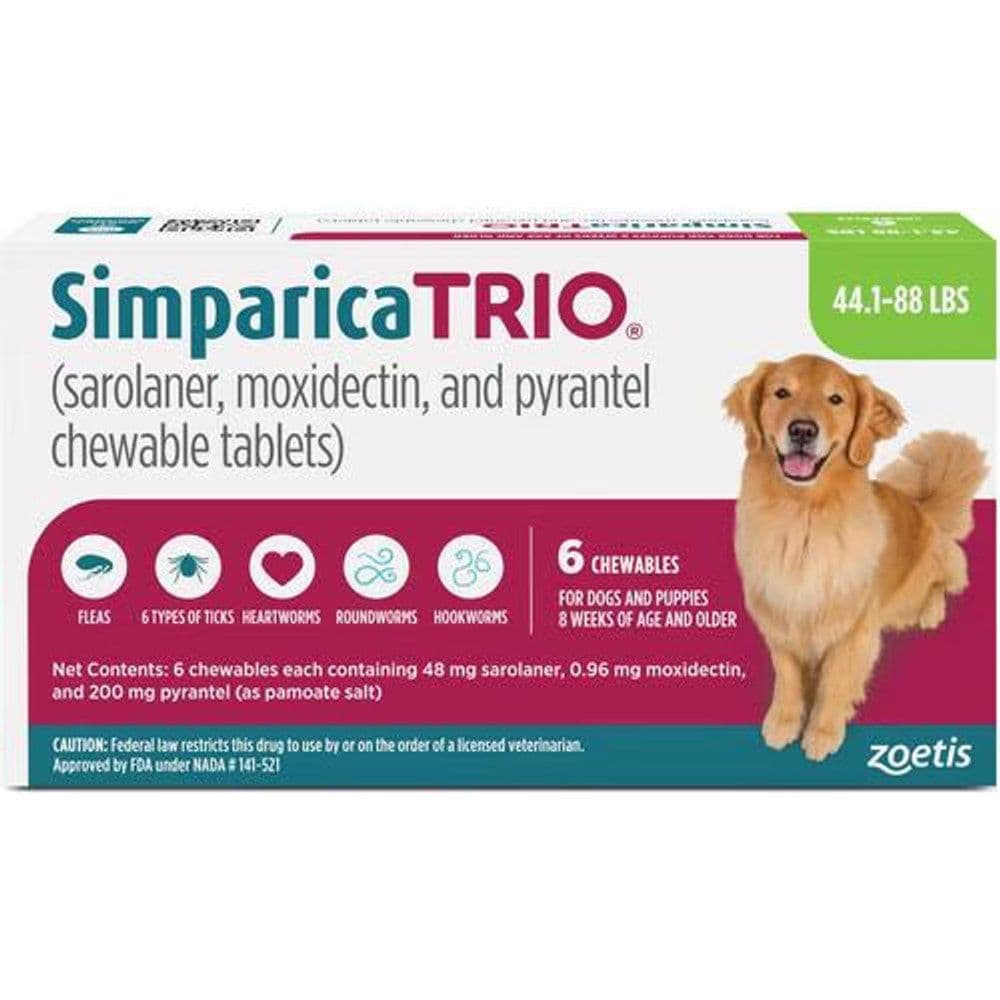
Monthly chew that protects dogs from fleas, six species of ticks, heartworm disease, roundworms, and hookworms.
Webvet may earn a commission when you click through to Chewy, at no extra cost to you.
Here is what each of those signs looks like in a real dog, rather than on a checklist:
- Mild persistent cough. A soft, dry, repeated hack that shows up after activity and does not resolve over a week or two.
- Exercise intolerance. The dog finishes less of the walk than it used to, or lies down partway through and needs a minute before it will get up.
- Lethargy. Sleeping more, meeting you at the door less, opting out of things it used to start.
- Decreased appetite. Picking at meals rather than refusing them outright, often for weeks before anyone connects it to anything.
- Weight loss. Muscle wasting over the spine and hips even when the dog is still eating.
- Labored breathing. Faster breathing at rest, more effort in the chest wall, or discomfort lying flat.
- Swollen belly. A round, heavy-looking abdomen caused by fluid, usually alongside a thin body everywhere else.
- Fainting or collapse. Brief episodes of weakness or loss of consciousness, most often after exertion or excitement.
None of these is unique to heartworm, and that is the trap. Every one of them has a more common explanation, which is covered further down. What makes this specific list worth taking seriously is the pattern: a cough plus a drop in stamina plus weight coming off, in a dog whose prevention has lapsed, is a combination that needs a test rather than a wait-and-see.
Why early heartworm disease is completely silent
Early heartworm disease is silent because the parasite spends months growing before it can do measurable harm. A mosquito deposits infective larvae onto the skin while feeding, the larvae enter through the bite wound, and they then migrate through tissue for months before reaching the heart and pulmonary arteries as adults. During that window a dog has no symptoms at all and looks entirely normal.
The clock matters more than almost anything else in this article. Here is what is happening at each point, and why it stays invisible:
- Day zero. A single mosquito bite transfers infective larvae. There is no bite reaction to see, no swelling and no itching. Our guide on how dogs get heartworm covers transmission in detail.
- Months one to five. The larvae migrate and molt through the tissues. The dog is infected but there is nothing to feel, nothing to hear through a stethoscope and, for most of this period, nothing a blood test can detect.
- Months five to six. Young adults reach the pulmonary arteries. This is roughly the earliest point at which a routine antigen test begins to detect the infection.
- Months six to seven. Worms reach full maturity at six to seven months, and mature females begin releasing microfilariae into the bloodstream. Most dogs still look completely healthy.
- Year one and beyond. Inflammation and scarring in the pulmonary arteries accumulate. Somewhere in here, the first soft cough finally shows up.
Prevention works inside that silent window, which is exactly why it works at all. A monthly prescription combination such as Simparica TRIO Chewable Tablets for Dogs kills the larval stages a dog picked up over the previous month, before they are old enough to reach the heart. That is also why a single skipped summer dose can matter: it leaves one month of larvae free to keep growing. Every heartworm preventive sold in the United States is a prescription product, and your veterinarian has to test and prescribe before you can buy one.
The first signs of heartworms in dogs
The first signs of heartworms in dogs are quiet ones: a soft dry cough that appears after exercise, a dog that lags on a walk it used to lead, and a general drop in energy that is easy to explain away. Owners almost always blame age, weather or weight before they think of a parasite.

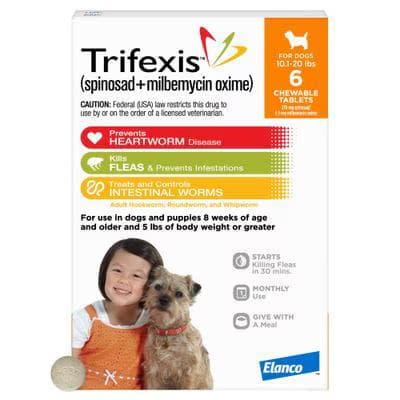
A monthly chew (spinosad and milbemycin oxime) that kills fleas, prevents heartworm, and treats intestinal worms. A non-isoxazoline oral option that starts killing fleas within 30 minutes.
Webvet may earn a commission when you click through to Chewy, at no extra cost to you.
The reason these signs get missed is that they look exactly like a dog getting older. The differences are subtle but real:
- Ageing is gradual over years. Early heartworm changes tend to show up over weeks to a few months.
- An older dog usually slows down evenly. A heartworm-affected dog often starts a walk with normal enthusiasm and then runs out of air partway through.
- Age does not cause a new cough. A cough that is genuinely new, and that keeps happening after exercise, is a finding rather than a quirk.
- Stiff, arthritic dogs are reluctant to get going. Dogs short of breath are willing to start and unable to continue.
A dog on uninterrupted prescription prevention has a much lower risk, which is why the medication history matters as much as the symptom. Monthly chews such as Interceptor Plus Chew for Dogs are prescription-only, and dogs 7 months or older generally need testing before starting or restarting them. Dogs that test positive may still receive this drug class as part of veterinarian-supervised treatment; dogs with circulating microfilariae may need pretreatment and observation. If your dog has been off prevention for a season, tell your veterinarian exactly when the gap occurred.
Webvet may earn a commission when you click through to Chewy, at no extra cost to you.
What a heartworm cough sounds like
A heartworm cough is a dry, soft, persistent cough, closer to a repeated hack than a dramatic honk, and it is worse after exercise or excitement. It comes in short bouts, produces little or nothing, and does not clear on its own the way an infectious cough does. Some dogs cough only after standing up or after a burst of play.

Owners describe it in forums far more often than they describe it to a veterinarian, so it is worth separating from the coughs it is confused with:
- Kennel cough. Loud, harsh and honking, often ending in a retch or gag, and typically appearing a few days after boarding, daycare, grooming or a dog park visit. It usually gets better over one to three weeks. Heartworm coughing does not follow an exposure event and does not resolve.
- Collapsing trachea. A dramatic goose-honk, most often in small and toy breeds, triggered by excitement, drinking, or pressure from a collar. It tends to come in episodes with normal breathing in between.
- Reverse sneezing. Not a cough at all. The dog stands still, extends its neck and pulls air in with a loud snorting sound for a few seconds, then acts completely normal.
- Congestive heart failure. A soft cough that is worse at night or when lying down, often with faster resting breathing. Our article on heart cough and congestive heart failure covers how that pattern differs.
If you are not sure which one you are listening to, that uncertainty is itself the answer: see your veterinarian rather than trying to match a sound to a description. A short exam plus a heartworm test settles in a single visit what a week of searching will not. Our guide to dog coughing and gagging is the right next stop if the pattern above points somewhere other than heartworm.
 $65 · no membership
Need flea, tick, or heartworm prevention for your dog?
A licensed vet can recommend and prescribe the right preventive for your dog online when it's appropriate.
 Talk to a vet
- Licensed vets
- All 50 states
- same-day Rx
Webvet may earn a commission if you book.
Heartworm symptoms in dogs: a stage-by-stage timeline
Veterinarians grade this disease from class 1 through class 4, and the class explains why two infected dogs can look so different. Class 1 heartworm disease means an infected dog with no clinical signs at all or only an occasional cough. Class 4, at the other end, is a dog in crisis.
The question owners ask most often is what stage 1 heartworm actually means for their dog. Class 1 heartworm disease is confirmed infection with minimal or no outward signs: the antigen test is positive, chest radiographs look normal or nearly normal, and the dog behaves like a healthy dog. It is the stage with the best outlook and the stage almost nobody reaches by watching for symptoms, because there are none to watch. Dogs found at class 1 are almost always found by a routine annual test.
The heartworm symptoms in dogs timeline below maps the class 1 through class 4 staging framework, which follows the American Heartworm Society approach to grading severity, onto what an owner would actually see:
| Class | What you would notice at home | What is happening inside | What a vet finds |
|---|---|---|---|
| Class 1 (mild) | Nothing, or an occasional dry cough after activity | Adult worms settling into the pulmonary arteries, early inflammation of the artery walls | Positive antigen test, normal or near-normal chest radiographs |
| Class 2 (moderate) | An occasional cough plus tiring on walks the dog used to finish easily | Growing worm burden, thickening artery walls, rising resistance to blood flow | Positive test, visible changes on chest radiographs, sometimes mild anemia |
| Class 3 (severe) | Persistent cough, exhaustion after mild activity, weight loss, labored breathing, fainting | Pulmonary hypertension, strain on the right side of the heart, fluid pooling in the abdomen | Marked radiographic changes, anemia, low platelets, changes on echocardiogram |
| Class 4 (caval syndrome) | Sudden collapse, pale gums, dark urine, severe breathing effort | A mass of worms obstructing blood flow at the tricuspid valve, red blood cells destroyed as they pass | Worms visible across the valve on ultrasound; surgical removal is the only option |
Class 2 heartworm disease is where most owners first suspect something, because the cough and the lost stamina finally overlap. Class 3 heartworm disease is the stage the article's late-stage section describes, with weight loss, breathing effort and the beginnings of right-sided heart failure. Class 4 heartworm disease is caval syndrome and is covered on its own below, because it is the only stage that changes what you should do in the next hour.
Combination products such as Trifexis Chewable Tablet for Dogs kill susceptible larvae acquired during the previous month and greatly reduce risk when given on schedule, but no preventive is 100% effective. Annual testing remains important even with perfect dosing. Dogs 7 months or older generally need testing before starting or restarting; younger puppies can usually begin without a pretest and follow a timed testing schedule.
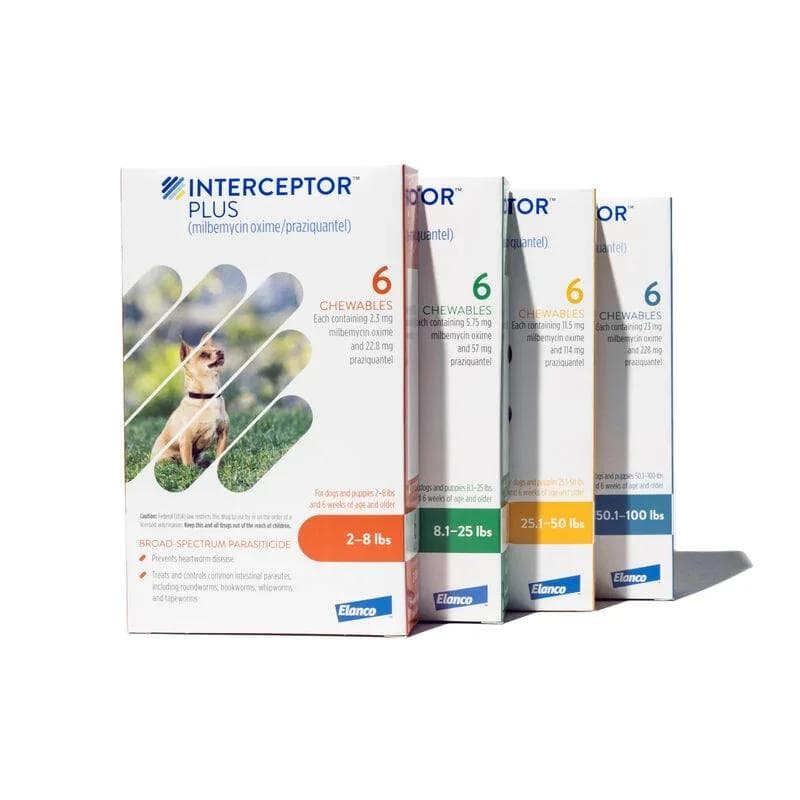
A monthly prescription chew that prevents heartworm and clears roundworm, hookworm, whipworm, and tapeworm. Since tapeworm is the usual reason a dog scoots, monthly cover is what stops it coming back.
Webvet may earn a commission when you click through to Chewy, at no extra cost to you.
Symptoms of late stage heartworms in dogs
The symptoms of late stage heartworms in dogs are weight loss with a swollen belly, a persistent cough, labored breathing after minimal effort, pale gums, and fainting or collapse. At this point the worms have been in place long enough to cause pulmonary hypertension and right-sided heart failure, and the outward signs reflect a heart that can no longer keep up.

The combination is what distinguishes advanced heartworm from most other illnesses. A dog losing muscle over the spine while its abdomen grows rounder is not simply gaining weight, and the two findings together point at fluid rather than fat:
- Ascites. Fluid collects in the abdomen when pressure backs up through the right side of the heart. The belly feels heavy and fluid-filled rather than firm and muscular.
- Effort at rest. Faster breathing while asleep, visible movement in the flanks, or a dog that will not settle lying on its side.
- Syncope. Fainting or collapse after excitement or exertion, sometimes lasting only a few seconds, is a sign of a heart that cannot raise output on demand.
- Exercise intolerance at its extreme. Stopping after a few minutes, or after crossing a room.
- Coughing up blood. Uncommon, and always an emergency when it happens.
Reaching this stage takes months to years of accumulated damage, and it changes the treatment conversation. Advanced disease has to be stabilised before adulticide treatment can start, and prevention alone is not a cure. Veterinarians do use macrocyclic-lactone preventives, including topical options such as Revolution Topical Solution for Dogs, in heartworm-positive dogs as part of a supervised treatment protocol. A dog with circulating microfilariae may need pretreatment and observation because a rapid die-off can cause a reaction.
Caval syndrome: the emergency you cannot wait on
Caval syndrome is the emergency endpoint of heartworm disease, and it comes on within hours rather than weeks. It happens when a large mass of worms physically blocks blood flow through the tricuspid valve and the vena cava, destroying red blood cells as they force past. These are the caval syndrome emergency signs that mean an emergency clinic right now:
- Sudden labored breathing in a dog that seemed acceptable yesterday.
- Pale or grey gums, instead of the healthy pink of normal gums.
- Weakness or collapse, including a dog that cannot stand or that goes down after minimal movement.
- Dark brown or coffee-colored urine, caused by destroyed red blood cells passing through the kidneys.
Surgical removal of the worms through the jugular vein is the only treatment that works once caval syndrome develops, and it has to happen quickly. Drug treatment cannot clear an obstruction fast enough. Survival depends almost entirely on how fast the dog reaches a hospital that can perform the procedure, which is why this is the one part of the article that asks you to stop reading and drive.
Can you see heartworms in your dog's poop?
No. Heartworms are never passed in your dog's stool, at any stage of the disease, and no amount of checking will reveal them. Adult heartworms live in the heart and pulmonary arteries, nowhere near the digestive tract, and their offspring are microscopic. Plenty of owners go looking for heartworm symptoms in dogs poop after reading a symptom list, and find nothing because there is nothing there to find.
The confusion comes from a genuine overlap in vocabulary. The difference between heartworms and intestinal worms is worth getting straight, because the two are diagnosed and treated in completely different ways:
- Heartworms are not intestinal worms. They are a blood-borne parasite spread by mosquitoes, and they are diagnosed with a blood test rather than a stool sample.
- The immature stage is different again: microfilariae circulate in the blood rather than the gut, which is how a mosquito picks them up in the first place.
- The worms owners actually see in stool or vomit are roundworms and tapeworms, which are intestinal parasites spread by soil, fleas, prey animals or nursing.
- Rice-like segments around the tail or in bedding are tapeworm segments and point at fleas, not at heartworm.
- A stool sample can find intestinal parasites and will never find heartworm; a heartworm antigen test finds heartworm and will never find roundworms.
If what you have found is a worm in the stool, our guide on how to deworm a dog is the right place to go next. It is a genuinely different problem with a genuinely different fix, and it does not tell you anything about your dog's heartworm status either way.
Symptoms that look like heartworm but usually are not
Most coughing, tiring dogs do not have heartworm. Every headline symptom in this article has more common explanations, and the only way to separate them is testing rather than reasoning. The conditions that mimic heartworm are common enough that a vet will often be working through this list while running the test.

| What you are seeing | More common explanations | What separates it from heartworm |
|---|---|---|
| Cough | Kennel cough, collapsing trachea, congestive heart failure, lungworm, pneumonia | Heartworm antigen test plus chest radiographs |
| Exercise intolerance | Arthritis, obesity, heat, hypothyroidism, primary heart disease, anemia | Bloodwork, orthopedic exam, heartworm test |
| Weight loss | Dental disease, kidney disease, intestinal parasites, cancer, diabetes | Bloodwork, urinalysis, fecal test |
| Swollen abdomen | Obesity, Cushing's disease, liver disease, bloat (an emergency) | Abdominal imaging, bloodwork |
| Fainting or collapse | Arrhythmia, low blood sugar, heat stroke, seizure disorder | ECG, echocardiogram, bloodwork |
| Labored breathing | Pneumonia, laryngeal paralysis, chest fluid, obesity | Chest radiographs, oxygen assessment |
Two of those overlap so heavily with heartworm that they deserve naming twice. Congestive heart failure produces the same soft cough, the same exercise intolerance and the same fluid-swollen abdomen, and an older dog can have both conditions at once. Lungworm produces a chronic cough that is easy to mistake for early heartworm and needs a different test to find.
This is the practical reason the article keeps pointing at a clinic rather than a checklist. A heartworm antigen test is quick and widely available, but a negative result lowers the likelihood of infection rather than ruling it out completely. Tests can miss an immature infection, a low worm burden, male-only infection, or antigen blocked in immune complexes. Veterinarians pair antigen testing with a microfilaria test and may repeat or add diagnostics when suspicion remains high.
Which dogs are most at risk
Every dog is at risk, everywhere. Heartworm has been diagnosed in all 50 states, and the American Heartworm Society's incidence surveys consistently find the heaviest burden along the Gulf Coast and the lower Mississippi River valley while still recording cases nationwide. Risk varies by region and by mosquito season, but no dog is exempt on the basis of lifestyle alone.
The risk factors that matter in practice are simpler than a map:
- Any lapse in prevention. A single missed season is the most common history behind a positive test.
- Indoor dogs. Mosquitoes get indoors, and an indoor-only dog with no preventive is not protected by staying inside.
- Rescue and transport dogs. Dogs relocated from high-incidence regions arrive with unknown histories, which is why shelters test on intake.
- Warm, wet local conditions. Standing water, long mosquito seasons and mild winters raise local infection pressure.
- Seasonal-only dosing. Mosquito activity does not respect a calendar, which is why year-round prevention is the standard recommendation rather than a summer-only schedule.
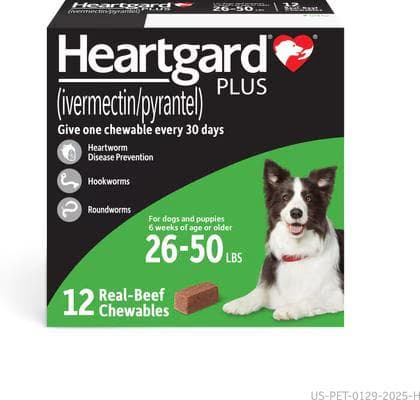
Because prevention is a prescription decision rather than a shopping decision, the right conversation is with your veterinarian about which format fits your dog. Oral options include Heartgard Plus and Sentinel Spectrum, topical options include Advantage Multi, and ProHeart 6 and ProHeart 12 are veterinarian-administered injections given in the clinic, covered in our guide to the heartworm injection for dogs. Owners comparing formats will find the trade-offs in our roundup of flea, tick and heartworm prevention for dogs, and puppy owners should start with heartworm prevention for puppies, since the start age is earlier than most people expect.
What happens if your dog tests positive
A positive test starts a sequence, and it does not start with the drug. Your veterinarian confirms the result, stages the disease with radiographs and bloodwork, stabilises any dog in class 3 or class 4, and only then begins the adulticide protocol with melarsomine injections. Exercise restriction after diagnosis begins on day one and continues throughout.
The full protocol, including timing, the doxycycline course and what recovery looks like, is covered in our guide to heartworm treatment for dogs. On cost, most owners are quoted somewhere in the range of several hundred to a couple of thousand dollars depending on the dog's size, the stage of disease and local pricing, and the detail lives in our breakdown of heartworm treatment cost for dogs.
Why annual testing beats watching for symptoms
By the time symptoms appear, adult worms have been living in the pulmonary arteries for months and the inflammation has already begun. That is the case against symptom-watching in a single sentence. An annual heartworm test finds the infection during the window when the dog looks completely healthy, which is also the window when treatment is simplest and the outlook is best.

Three facts sit behind that recommendation, and each one undermines the wait-for-a-sign approach:
- A dog can be infected for well over half a year and pass every visual check you can make at home, because there are no symptoms in the early stages.
- Permanent damage to the pulmonary arteries can persist after the worms are gone, so an infection cleared late is not the same outcome as an infection cleared early.
- A preventive is not a treatment. It protects against new larvae and does nothing about adult worms already present, which is why a current test is required before a prescription heartworm preventive is dispensed.
The practical version is a two-part routine that has not changed in years: an annual heartworm test at your dog's yearly visit, plus year-round prevention with no seasonal gaps. Our guide to the heartworm test for dogs explains what the test actually measures and when a second test is needed, and the full preventive strategy lives in our guide to heartworm prevention.
If your dog is coughing today, none of the above replaces an appointment. Book the exam, mention any gap in prevention, and let the test do what watching cannot.
Frequently Asked Questions
What is stage 1 heartworm in dogs?
Stage 1, or class 1 heartworm disease, is a confirmed infection with minimal or no outward signs. The antigen test is positive, chest radiographs look normal or nearly normal, and the dog behaves like a healthy dog. It carries the best outlook of any stage and is almost always found through routine annual testing rather than through anything an owner noticed at home.
What does a heartworm cough sound like?
It is a dry, soft, persistent cough rather than a harsh honk, and it is worse after exercise or excitement. It comes in short bouts, brings little or nothing up, and does not resolve on its own within a week or two. Kennel cough is louder and often ends in a gag, and a collapsing trachea produces a dramatic goose-honk instead.
Can dogs be cured of heartworm?
Yes. Most dogs can be cleared of heartworm using the adulticide protocol published by the American Heartworm Society, and the great majority of treated dogs survive. The honest caveat is that killing the worms does not undo the harm they caused, and scarring of the pulmonary arteries can be permanent, which is why an infection caught early has a better outcome than one caught late.
How long can a dog survive with heartworms?
Adult heartworms live roughly five to seven years in a dog according to the American Heartworm Society, and an untreated infection generally shortens a dog's life. There is no single survival figure that applies to every dog, because worm burden, how long the infection has gone unnoticed and the dog's disease class all change the picture substantially.
How long will a dog live with heartworms?
It depends almost entirely on how early the infection is found. A dog diagnosed at class 1 and treated promptly can go on to a normal life expectancy, while a dog that reaches class 3 or caval syndrome faces permanent damage and a much poorer outlook. That gap is the reason the annual test matters more than any symptom checklist.
What are the first signs of heartworms in dogs?
A soft dry cough after activity, reluctance to finish a normal walk, and a general drop in energy are the first signs most owners notice. They tend to appear a year or more after infection and are easy to blame on age or hot weather. If your dog has had any gap in prevention, tell your veterinarian and ask for a test.
How common is heartworm in dogs?
Heartworm is common enough that it has been diagnosed in all 50 states. The American Heartworm Society's periodic incidence surveys find the highest case numbers along the Gulf Coast and the lower Mississippi River valley, with cases still reported nationwide, including in regions once considered low risk. Local mosquito conditions and the number of untreated dogs nearby drive most of that variation.
How much does it cost to treat a dog for heartworms?
Most owners are quoted somewhere in the range of several hundred to a couple of thousand dollars, driven mainly by the dog's body weight, the stage of disease and regional pricing. Prevention costs a small fraction of that. Our breakdown of heartworm treatment cost for dogs has the itemised detail.
Sources
$65 · no membershipNeed flea, tick, or heartworm prevention for your dog?
A licensed vet can recommend and prescribe the right preventive for your dog online when it's appropriate.
Talk to a vet- Licensed vets
- All 50 states
- same-day Rx
Webvet may earn a commission if you book.

Editor
The Webvet Editorial Team is the in-house group of pet-care editors and writers behind Webvet, operated by Smart Pet Collective. The team researches, writes, and maintains Webvet's pet health, behavior, and medication content. Every article follows a defined editorial process: research from reputable veterinary and scientific sources, careful drafting, mandatory review of medical content by a credentialed veterinarian, and dated publication. Health and medication articles are medically reviewed by a licensed veterinary professional before they go live and are kept current over time.
Veterinarian · BVMS MRCVS
Dr. Pippa Elliott, BVMS, MRCVS, is a veterinarian with nearly 30 years of experience in companion animal practice. Dr. Elliott earned her Bachelor of Veterinary Medicine and Surgery from the University of Glasgow. She was also designated a Member of the Royal College of Veterinary Surgeons. Married with 2 grown-up kids, Dr. Elliott has a naughty Puggle named Poggle, 3 cats and a bearded dragon.


