Dog Coughing and Gagging: 8 Causes, Emergency Signs, and What to Do
A vet-reviewed guide to why your dog is coughing and gagging: how to tell a cough from a gag, the 8 most common causes, the emergency signs that mean go to the vet now, and safe at-home care while you wait.

BVMS MRCVS
Medically reviewed by Dr. Pippa Elliott, BVMS MRCVS · Last reviewed

This article contains affiliate links. Webvet may earn a commission when you buy through them, at no extra cost to you.
A dog coughing gagging episode can stop you cold, especially when it sounds like something is stuck in the throat. Sometimes it is harmless: a tickle, over-excitement, or a mild case of kennel cough. Other times it signals a serious airway or heart problem that needs a vet the same day. This vet-reviewed guide walks you through how to tell a cough from a gag, the eight most common causes, the emergency red flags that mean go to the vet now, and the safe at-home comfort measures you can use while you arrange care.

The single most important rule: at-home remedies are for comfort only while you get to a vet. They are never a substitute for a diagnosis, and you should never give human cough medicine without your veterinarian's specific instruction.
When dog coughing and gagging is an emergency: go to the vet NOW if you see these signs

Read this section first. If any of the following are happening, stop reading and seek emergency veterinary care immediately. A dog that won't stop coughing and gagging or is coughing and gagging constantly may be in respiratory or cardiac distress.
Get to an emergency animal hospital right away if your dog shows any of these:
- Labored, struggling, or noisy breathing, or wheezing between coughs.
- Blue, purple, or gray gums or tongue. This is cyanosis, a sign the body is not getting enough oxygen, and it is a true emergency.
- Visible choking, frantic pawing at the mouth, or heavy drooling, which can mean a foreign object is blocking the airway.
- Collapse, fainting, or sudden weakness.
- A hard, distended, or swollen belly with nonstop unproductive retching. A dog that retches without producing anything while the abdomen appears swollen or bloated can be showing gastric dilatation-volvulus (bloat), which is an immediate, life-threatening emergency that needs veterinary care within minutes to hours (VCA Animal Hospitals, Bloat - Gastric Dilatation and Volvulus in Dogs).
- Coughing up pink or white foam with breathing difficulty. Frothy fluid coughed up alongside labored breathing can signal fluid building up in the lungs (pulmonary edema). In left-sided congestive heart failure, fluid accumulates within the lungs and the dog may not get enough oxygen, so persistent coughing with difficulty breathing is a red flag that needs emergency care (Merck Veterinary Manual, Heart Failure in Dogs).
Even without those extreme signs, book a same-week vet visit if the cough persists for more than a couple of days, or if any cough comes with lethargy, loss of appetite, or discharge from the eyes or nose. When in doubt, call your vet or an emergency animal hospital and describe what you are seeing. It is always better to ask.
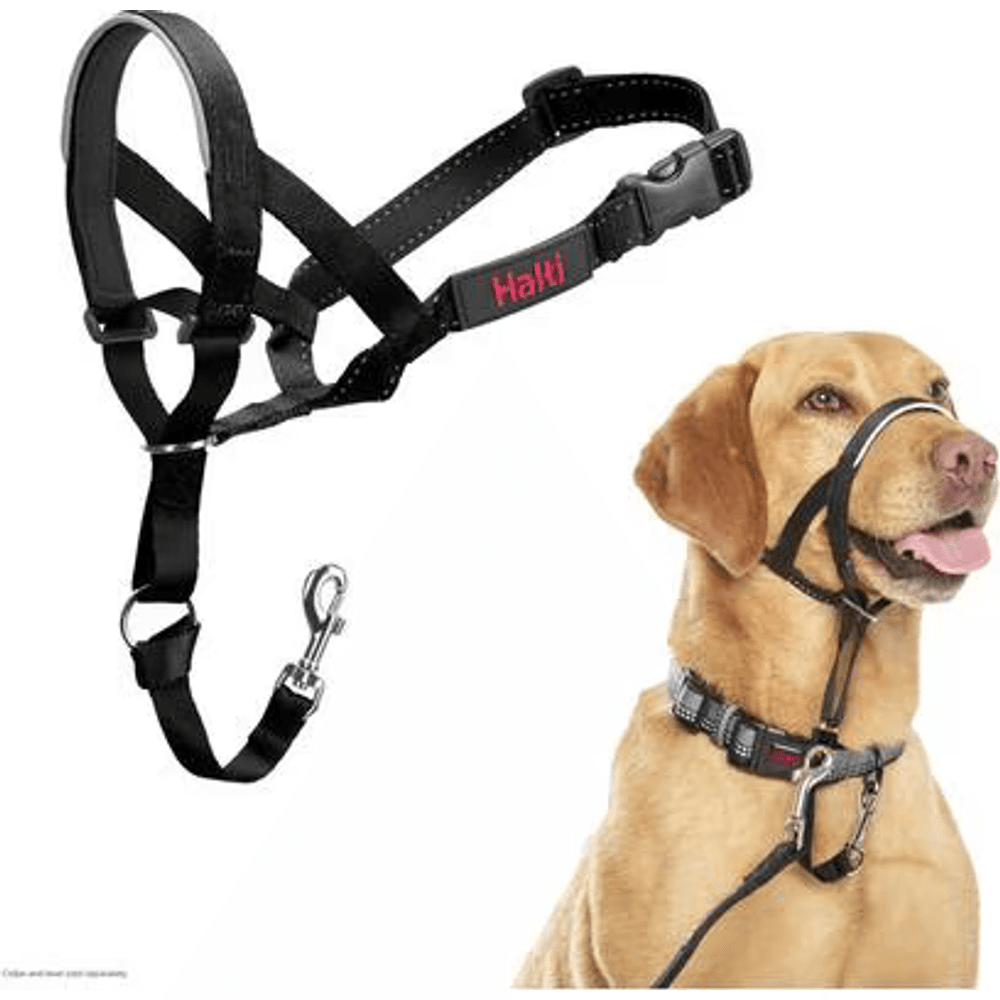
A padded head halter that gently steers a dog from the head, keeping all leash pressure off the neck and windpipe, a useful option for a dog whose cough or collapsing trachea flares when a collar tightens.
Webvet may earn a commission when you click through to Chewy, at no extra cost to you.
Is your dog coughing or gagging? How to tell the difference (and what it is NOT)

People often ask, "Is my dog coughing or gagging?" The answer matters because it changes the likely diagnosis. A cough and a gag come from different parts of the body, and confusing them can send you down the wrong path.
In simple terms, a cough is a forceful, noisy expulsion of air from the lower airways: the trachea (windpipe), bronchi, and lungs. It is usually set off by irritation or inflammation of the airway lining. Gagging and retching, by contrast, are throat-and-mouth efforts, a reflex to clear or expel something from the back of the throat or upper digestive tract. Vomiting is different again: it actively brings up stomach contents such as food or bile. Because a cough starts deep in the chest and a gag or retch starts high in the throat, telling them apart helps your vet zero in on the cause and decide which body system to work up first.
Here is how the common sounds and behaviors compare. Many dogs show a mix, such as a coughing then gagging or coughing hacking gagging sequence, where a bout of coughing ends in a gag or a terminal retch.
| Sign | What it looks and sounds like | Where it comes from | Common triggers |
|---|---|---|---|
| Cough | Forceful "huff" or hacking sound, chest and belly push air out | Lower airways (trachea, lungs) | Kennel cough, tracheal collapse, heart disease, allergies |
| Gag / retch | Throat-clearing, open-mouth heaving, may end a coughing fit | Throat and back of mouth | Irritation, mucus, foreign object, end of a cough bout |
| Reverse sneeze | Rapid, snorting "pig-like" inhales, head and neck extended, dog stands still | Nose and soft palate | Excitement, irritants, drinking; usually harmless and self-limiting |
| Dry heave / retch (nothing comes out) | Repeated heaving with no vomit | Throat or stomach | Nausea, irritation, or (if belly bloats) possible bloat emergency |
| Vomiting | Brings up food, bile, or fluid from the stomach | Stomach | Dietary upset, illness, many causes |
If your dog makes a rapid snorting sound with the neck extended and then acts completely normal, that is likely a reverse sneeze rather than a cough, and it is usually harmless. We cover the cough-versus-reverse-sneeze line briefly here; for a deep dive on reverse sneezing specifically, that is a separate topic from a true cough.
 $65 · no membership
Have a health question about your dog?
A licensed vet can assess your dog over video and prescribe online when it's appropriate.
 Talk to a vet
- Licensed vets
- All 50 states
- same-day Rx
Webvet may earn a commission if you book.
Why is my dog coughing and gagging? 8 causes, cause by cause
So why does my dog keep coughing and gagging? The causes of dog coughing and gagging range from minor throat irritation to serious heart and airway disease. Below are the eight most common causes. For several of these we summarize the essentials and link to a dedicated deep-dive so you can go further without wading through everything at once.
1. Kennel cough (infectious tracheobronchitis). This is a classic cause of a harsh, hacking cough that often ends in a gag or a "terminal retch," and it spreads in group settings like boarding, daycare, dog parks, and grooming. Infectious tracheobronchitis and other airway infections usually warrant a veterinary evaluation rather than home treatment (Merck Veterinary Manual, Lung and Airway Disorders of Dogs). For the full picture on symptoms, contagion, and recovery, see our guide to kennel cough in dogs.
2. Collapsing trachea. A collapsing (or collapsed) windpipe causes a distinctive dry, honking cough, sometimes described as a "goose honk," and it is most common in small and toy breeds (Merck Veterinary Manual, Tracheal Collapse in Dogs). The cough often worsens at night, with excitement, with pressure on the trachea such as from a collar, in hot or humid weather, or right after eating or drinking, and preventing overexcitement while using a harness rather than a collar is advised (VCA Animal Hospitals, Tracheal Collapse in Dogs). This is exactly why switching to a body harness and keeping walks calm can help. If your small dog has a goose-honk cough, read our dedicated guide to the honking cough and collapsed trachea. See WebVet’s guide to dog harness vs collar.
3. Heart disease and congestive heart failure (CHF). A cough can be a sign of heart trouble. In dogs, coughing along with difficulty breathing and exercise intolerance is among the most common signs of heart failure, and these signs can appear at rest or with exertion (Merck Veterinary Manual, Heart Failure in Dogs). The most common sign of CHF is a persistent cough with difficulty breathing, and other signs include coughing when at rest or sleeping, an increased resting breathing rate, and reduced stamina, all of which call for prompt veterinary diagnosis and management (VCA Animal Hospitals, Congestive Heart Failure in Dogs). For more on the heart-related cough, see our guide to the heart cough and congestive heart failure.
4. A lodged foreign object. Grass awns, a piece of stick, bone fragments, or a swallowed toy can irritate or partially block the throat or airway, producing sudden coughing, gagging, and pawing at the mouth. This looks like something is stuck because something may actually be stuck. Frantic pawing, drooling, and any breathing trouble make this an emergency.
5. Allergies and airway irritants. Environmental allergens (pollen, dust, mold) and irritants like smoke, aerosol sprays, or strong cleaners can inflame the airways and cause a dog coughing wheezing and gagging pattern. Removing the trigger and cleaning up the air often helps, but a persistent cough still needs a vet to rule out other causes.
6. Lower-airway and lung disease. Bronchitis, pneumonia, and other lung disorders can cause coughing that ends in a gag, and these need a diagnosis and treatment plan from your vet (Merck Veterinary Manual, Lung and Airway Disorders of Dogs).
7. Throat and post-nasal irritation. A simple throat tickle, mucus draining from the nose, or mild pharyngitis can trigger a cough-then-gag with nothing coming up. These are often milder but are diagnosed by exclusion, so do not assume it is "just a tickle" if it persists.
8. Nausea and gastrointestinal upset. Sometimes what looks like a cough-gag is really nausea and retching. If the heaving is unproductive and the belly is swelling or hard, treat it as a possible bloat emergency and go to the vet immediately.
Here is a quick summary you can scan.
| Cause | Typical cough or gag pattern | Who is most at risk | Urgency |
|---|---|---|---|
| Kennel cough | Harsh hacking cough ending in a gag/retch | Recently boarded, daycare, dog-park dogs | Vet visit; monitor closely |
| Collapsing trachea | Dry "goose-honk" cough, worse with excitement/collar | Small and toy breeds | Vet; harness helps |
| Heart disease / CHF | Persistent cough, at rest/sleeping or with exertion | Older, small-breed and predisposed dogs | Prompt vet; can be emergency |
| Foreign object | Sudden gagging, pawing at mouth, drooling | Any dog, chewers | Emergency if breathing affected |
| Allergies / irritants | Wheezy cough with gagging, seasonal | Any dog | Vet if persistent |
| Lung disease (bronchitis, pneumonia) | Wet or productive cough ending in a gag | Any dog; often unwell | Vet, sometimes urgent |
| Throat / post-nasal irritation | Mild cough-then-gag, nothing comes up | Any dog | Vet if it lasts more than a couple of days |
| Nausea / GI upset | Unproductive retching | Any dog | Emergency if belly bloats |
For the broader question of every reason a dog might cough (not just cough plus gag), see our parent guide, why is my dog coughing.
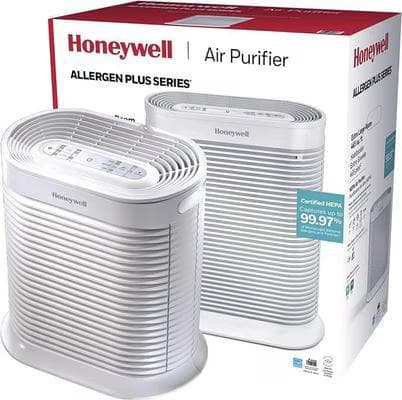
Certified True HEPA air purifier that captures 99.97% of airborne dust, dander, pollen, and smoke, reducing the airborne triggers behind feline asthma and respiratory irritation.
Webvet may earn a commission when you click through to Chewy, at no extra cost to you.
Coughing and gagging but nothing comes out (and not vomiting): what it means
A very common worry is a dog coughing and gagging but not throwing up, where nothing comes out. Owners often describe it as "my dog keeps coughing and gagging but nothing comes up" or "my dog is trying to throw up but nothing comes out."
Answer first: a dry coughing and gagging episode where nothing is produced is often airway irritation (kennel cough, a tickle, collapsing trachea, or allergies) rather than a stomach problem, because a true cough is a forceful expulsion of air from the lower airways and a gag or retch is a throat reflex, so neither one is the same as bringing up stomach contents. Many dogs finish a coughing fit with a gag or a small foam of saliva, and that alone is usually not vomiting.
The one exception you must never ignore: unproductive retching with a swelling, hard, or distended belly. A dog that retches without producing anything, paired with an abdomen that looks swollen or bloated (often most obvious on the left side), can be showing gastric dilatation-volvulus (bloat), which VCA describes as an immediate, life-threatening emergency needing veterinary help within minutes to a few hours (VCA Animal Hospitals, Bloat - Gastric Dilatation and Volvulus in Dogs). If you see that combination, go to the vet immediately.
So, dry cough-gag with a normal belly and a normal-acting dog? Note it, watch it, and book a vet visit if it persists for more than a couple of days. Dry heaving with a bloating belly? Emergency, right now.
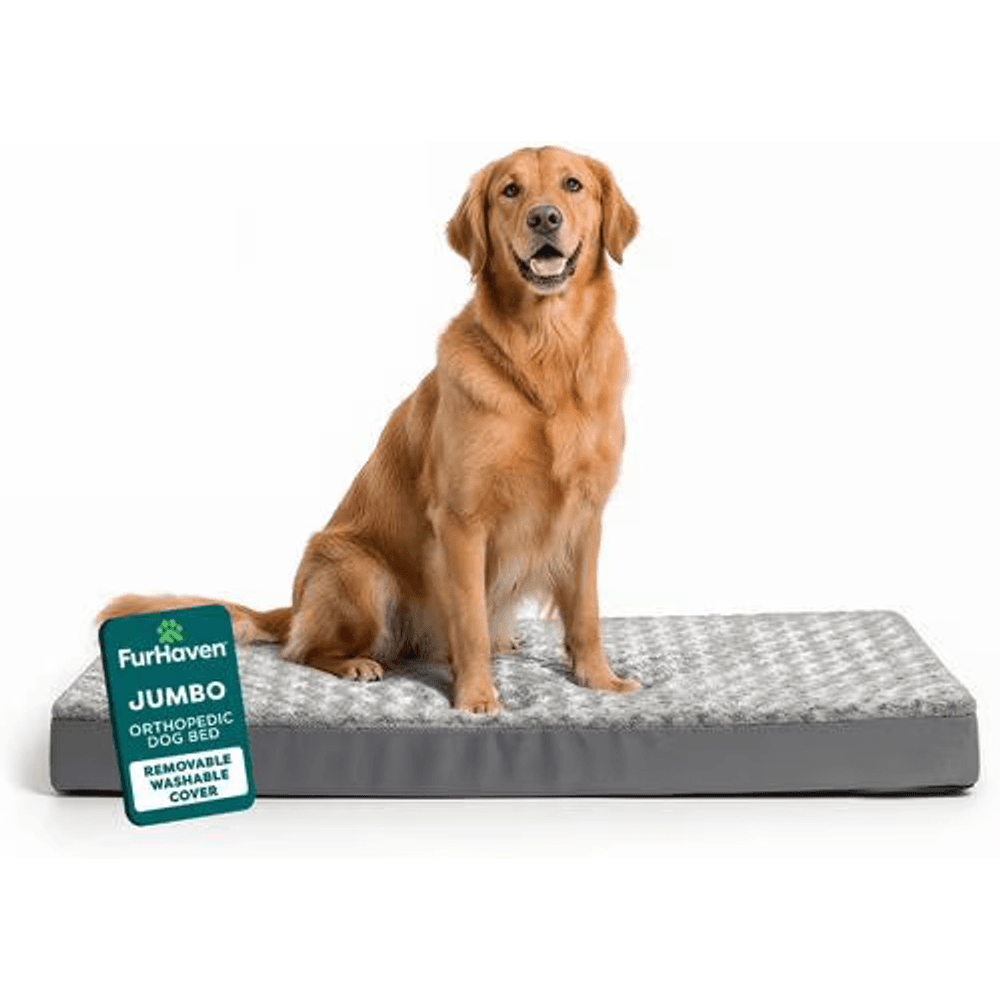
A plush orthopedic foam mattress that cushions aging joints and pressure points, giving a stiff or trembling senior dog warm, supportive rest.
Webvet may earn a commission when you click through to Chewy, at no extra cost to you.
Coughing and gagging but acting normal, or only when excited or after drinking
Many owners describe a dog coughing and gagging but acting normal the rest of the time, or a dog coughing and gagging when excited or after drinking water. This pattern is often (though not always) less alarming.
- When excited or during exercise: A dry, honking cough is a classic sign of a collapsing trachea, especially in small breeds (Merck Veterinary Manual, Tracheal Collapse in Dogs), and it commonly worsens with excitement or with pressure on the trachea from a collar (VCA Animal Hospitals, Tracheal Collapse in Dogs). Calm the dog, switch to a harness, and mention the pattern to your vet.
- After drinking water: A quick cough or gag right after gulping water can be simple throat irritation from drinking too fast. If it is occasional and the dog is otherwise well, it is usually minor. Frequent or worsening episodes still warrant a vet check.
- A dog suddenly coughing and gagging: Sudden onset with no other signs can be a tickle or a whiff of an irritant, but sudden severe coughing with pawing at the mouth points to a possible foreign object and needs urgent care.
"Acting normal" is reassuring but not a green light to skip the vet if the cough is frequent, worsening, or lasts more than a couple of days. Acting normal today does not rule out early heart or airway disease.
Which dogs are most at risk: small breeds, senior dogs, and night-time or foamy coughs
Some dogs and some cough patterns deserve extra caution.
- Small and toy breeds: A small dog coughing and gagging with a dry honking sound is the classic collapsing-trachea profile (Merck Veterinary Manual, Tracheal Collapse in Dogs).
- Senior and older dogs: A senior dog coughing and gagging (or an old dog coughing and gagging) warrants a careful heart and airway workup, because heart disease becomes more likely with age and can show up first as a persistent cough with difficulty breathing, which can appear at rest or with exertion (Merck Veterinary Manual, Heart Failure in Dogs). With congestive heart failure, dogs may cough even when at rest or sleeping (VCA Animal Hospitals, Congestive Heart Failure in Dogs).
- Night-time coughs: A cough that shows up at rest or during sleep can point toward heart involvement and should be evaluated, since dogs with congestive heart failure may cough when at rest or sleeping (VCA Animal Hospitals, Congestive Heart Failure in Dogs). Because the night pattern has its own nuances, we cover it fully in our guide to coughing at night.
- White or pink foam: A dog coughing gagging white foam may just be frothy saliva after a hard cough, but frothy fluid paired with breathing difficulty can mean fluid building up on the lungs (pulmonary edema), which in left-sided heart failure keeps the dog from getting enough oxygen and is an emergency (Merck Veterinary Manual, Heart Failure in Dogs). For more, see our guide to coughing up white foam.
If your dog is in a higher-risk group, lean toward calling the vet sooner rather than later.

360-degree Wi-Fi pet camera so you can watch your cat's resting breathing rate and behavior from your phone and catch worrying changes early.
Webvet may earn a commission when you click through to Chewy, at no extra cost to you.
What can I give my dog for coughing and gagging? Safe at-home care while you wait for the vet

The honest answer to "what can I give my dog for coughing and gagging?" is: comfort measures, not medicine. There is no safe over-the-counter cough drug you should hand out on your own, and human cough and cold products can be dangerous or toxic to dogs. Treat any home remedy for dog coughing and gagging as a way to keep your dog comfortable while you arrange a vet visit, not as a cure.
Safe, gentle steps you can take at home:
- Switch from a collar to a body harness. This takes pressure off the windpipe and is especially important for small breeds and any dog with an excitement-triggered honking cough. For dogs with a collapsing trachea, using a harness rather than a collar and preventing overexcitement is specifically advised (VCA Animal Hospitals, Tracheal Collapse in Dogs).
- Keep activity calm. Short, gentle leash walks and avoiding over-excitement reduce coughing fits.
- Clean up the air. Remove smoke, aerosols, dust, and strong cleaning fumes. Run an air filter and keep the environment low-irritant.
- Encourage hydration and use humidity. Fresh water and a humidifier (or a few minutes in a steamy bathroom) can soothe an irritated airway.
- Rest. Let your dog recover in a quiet, comfortable spot.
A small amount of plain honey is sometimes mentioned as a throat soother for adult dogs, but confirm with your vet first, avoid it in diabetic dogs and puppies, and never rely on it in place of a diagnosis.
Do not: give human cough syrup, antihistamines, or any medication without your vet's explicit dosing instructions; ignore a cough that persists for more than a couple of days; or wait out any of the emergency signs listed at the top of this article.
| At-home step | Why it helps | Important caution |
|---|---|---|
| Harness instead of collar | Takes pressure off the trachea | Especially for small breeds and honking coughs |
| Calm, short walks | Fewer excitement-triggered fits | Stop if breathing worsens |
| Clean, humid air | Soothes irritated airways | Not a fix for infection or heart disease |
| Fresh water / hydration | Loosens mucus, comforts throat | Frequent cough after drinking still needs a vet |
| Rest in a quiet space | Supports recovery | Watch closely for red flags |
How vets diagnose and treat a coughing, gagging dog
When you bring in a coughing dog, your vet works to find the cause before treating it, because the right dog coughing and gagging treatment depends entirely on what is driving the cough.
Typical diagnostic steps can include:
- A full history (when it started, the sound, the triggers, exposure to other dogs) and a physical exam, including listening to the heart and lungs.
- Chest X-rays to look at the heart, lungs, and windpipe.
- Bloodwork to check for infection and organ function.
- Additional tests when needed, such as an echocardiogram (heart ultrasound) for suspected heart disease, or airway sampling for stubborn lower-airway disease (Merck Veterinary Manual, Lung and Airway Disorders of Dogs).
Treatment is cause-specific. Kennel cough is often managed with rest and, when appropriate, medication from your vet. A collapsing trachea may be managed with weight control, cough suppressants, and in some cases surgery (Merck Veterinary Manual, Tracheal Collapse in Dogs), along with using a harness instead of a collar and limiting overexcitement (VCA Animal Hospitals, Tracheal Collapse in Dogs). Dog coughing and gagging from congestive heart failure is treated with heart medications and careful monitoring, and it requires prompt, ongoing veterinary care (VCA Animal Hospitals, Congestive Heart Failure in Dogs). Allergies and irritant-driven coughs are managed by removing triggers and, when needed, medication your vet prescribes.
The takeaway: a precise diagnosis is what makes treatment work. That is why every persistent cough and gag deserves a professional evaluation, and why at-home care is a bridge to the vet, not a substitute for one.
Frequently asked questions

Frequently Asked Questions
Why is my dog coughing like something is stuck in his throat randomly?
A cough that sounds like something is stuck, coming on randomly, is often airway irritation, kennel cough, or a collapsing trachea rather than an actual object, because a cough comes from the lower airways and can mimic a stuck feeling. That said, if it started suddenly with pawing at the mouth, drooling, or gagging, a real foreign object is possible and needs urgent care. If episodes keep happening or last more than a couple of days, see your vet.
Why is my dog coughing and gagging but not throwing up?
A dog coughing and gagging but not throwing up is usually airway-related, such as kennel cough, a throat tickle, allergies, or a collapsing trachea, because a cough is a forceful expulsion of air from the lower airways and a gag is a throat reflex, so neither one is the same as bringing up stomach contents. Many dogs end a coughing fit with a dry gag or a little foam, which is not vomiting. The one exception is unproductive retching with a swollen or bloated belly, which is an immediate, life-threatening bloat (GDV) emergency and needs the vet immediately.
What can I give my dog for coughing and gagging?
Give comfort measures, not medicine: switch to a harness, keep activity calm, provide clean humid air, and encourage hydration. Do not give human cough syrup, antihistamines, or any drug without your vet's specific dosing instructions, since many human products are unsafe for dogs. These steps are only a bridge while you arrange a vet visit, not a treatment for the underlying cause.
When should I worry about my dog coughing?
Worry and seek emergency care immediately for labored breathing, blue or gray gums, collapse, choking with pawing at the mouth, a bloating belly with dry retching, or pink or white foam with breathing trouble. Short of those, book a vet visit if the cough persists for more than a couple of days or comes with lethargy, appetite loss, or nasal or eye discharge. When unsure, call your vet or an emergency hospital and describe the signs.
What home remedy can I give my dog for coughing and gagging?
Safe home remedies are comfort-focused: a body harness instead of a collar, short calm walks, a humidifier or steamy bathroom, clean low-irritant air, rest, and plenty of fresh water. A small amount of plain honey may soothe an adult dog's throat, but confirm with your vet first and avoid it in puppies and diabetic dogs. No home remedy replaces a diagnosis, so still book a vet visit if the cough persists or worsens.
What are the signs of a mini stroke in dogs?
A mini stroke, more accurately a vestibular event or transient neurological episode, typically shows up as a sudden head tilt, loss of balance or stumbling, rapid darting eye movements, circling, disorientation, or collapse, not as coughing or gagging. Coughing and gagging are respiratory or throat signs, so they are not typical stroke symptoms. If you see sudden balance loss, a head tilt, or collapse, treat it as an emergency and get your dog to a vet right away.
Why does my dog keep coughing and gagging like something stuck in his throat?
Persistent coughing and gagging that feels like something stuck is most often kennel cough, a collapsing trachea, allergies, or airway irritation, because these inflame the throat and windpipe and produce that stuck sensation. In small breeds, a dry honking cough that worsens with excitement or with pressure on the trachea from a collar points to a collapsing trachea (VCA Animal Hospitals, Tracheal Collapse in Dogs). Because it keeps happening, have your vet examine your dog to pin down the cause and rule out a genuine foreign object.
What are the signs of a dog having a mini stroke?
Signs of a mini stroke or sudden neurological event in dogs include a sudden head tilt, wobbling or falling to one side, flicking or darting eyes, circling, confusion, and sometimes collapse or weakness. These are balance and brain signs, distinct from the airway signs of coughing and gagging. Any sudden neurological change is an emergency, so contact your vet or an emergency animal hospital immediately.
$65 · no membershipHave a health question about your dog?
A licensed vet can assess your dog over video and prescribe online when it's appropriate.
Talk to a vet- Licensed vets
- All 50 states
- same-day Rx
Webvet may earn a commission if you book.

Editor
The Webvet Editorial Team is the in-house group of pet-care editors and writers behind Webvet, operated by Smart Pet Collective. The team researches, writes, and maintains Webvet's pet health, behavior, and medication content. Every article follows a defined editorial process: research from reputable veterinary and scientific sources, careful drafting, mandatory review of medical content by a credentialed veterinarian, and dated publication. Health and medication articles are medically reviewed by a licensed veterinary professional before they go live and are kept current over time.
Veterinarian · BVMS MRCVS
Dr. Pippa Elliott, BVMS, MRCVS, is a veterinarian with nearly 30 years of experience in companion animal practice. Dr. Elliott earned her Bachelor of Veterinary Medicine and Surgery from the University of Glasgow. She was also designated a Member of the Royal College of Veterinary Surgeons. Married with 2 grown-up kids, Dr. Elliott has a naughty Puggle named Poggle, 3 cats and a bearded dragon.


