Why Is My Dog Coughing? A Vet-Reviewed Guide to Every Cause, Sound, and Red Flag
A vet-reviewed guide to why your dog is coughing: decode the sound, match it to likely causes, learn what is safe to give at home, and spot the emergency red flags that mean call the vet now.

BVMS MRCVS
Medically reviewed by Dr. Pippa Elliott, BVMS MRCVS · Last reviewed

This article contains affiliate links. Webvet may earn a commission when you buy through them, at no extra cost to you.
If you are asking why is my dog coughing, the short answer is that a cough is a protective reflex: it is your dog's way of clearing the airway of irritants, mucus, or foreign material. An occasional cough can be harmless, but coughing is also a common, nonspecific sign of respiratory disease in dogs, one that can point anywhere along the airway from the larynx to the lung, so a cough that is frequent, persistent, or paired with other symptoms points to an underlying problem that needs a diagnosis (Merck Veterinary Manual).

This guide is the master reference for the whole topic. It decodes what your dog's cough sound is telling you, walks through every common cause from kennel cough to heart disease, explains what is safe to give at home (and the human medicines that can be fatal), and lays out the emergency red flags that mean you should see a vet immediately. For a handful of causes we summarize the essentials here and link you to a dedicated deep-dive article.
Why is my dog coughing? (quick answer and when it is an emergency)
A cough happens when receptors in the airway are triggered by irritation, inflammation, mucus, pressure, or a foreign object, setting off a forceful burst of air to clear the passage. Because so many different problems irritate the airway, why is my dog coughing so much rarely has a single answer without an exam. Coughing is a common but nonspecific presenting sign of respiratory disease, meaning it flags a problem without pinpointing where, so vets reach a diagnosis by combining history and physical examination findings with the clinical signs, then adding chest radiographs (X-rays) and other targeted tests as needed (Merck Veterinary Manual).
Some coughs are benign. A single cough after your dog drinks water too fast, pulls on the leash, or gets a whiff of dust is usually nothing. What matters is the pattern and the company the cough keeps. Asking why is my dog coughing all of a sudden is reasonable, but the more useful questions are how long it has lasted, what it sounds like, and whether anything else is off.
What is a red flag in coughing? A red flag is any sign that the cough is affecting your dog's ability to breathe, oxygenate, eat, or stay conscious. The list in the callout above is your trigger to seek emergency care. Short of those, a cough that lasts more than a week, gets worse, or keeps coming back deserves a (non-emergency) vet visit even if your dog otherwise seems fine.
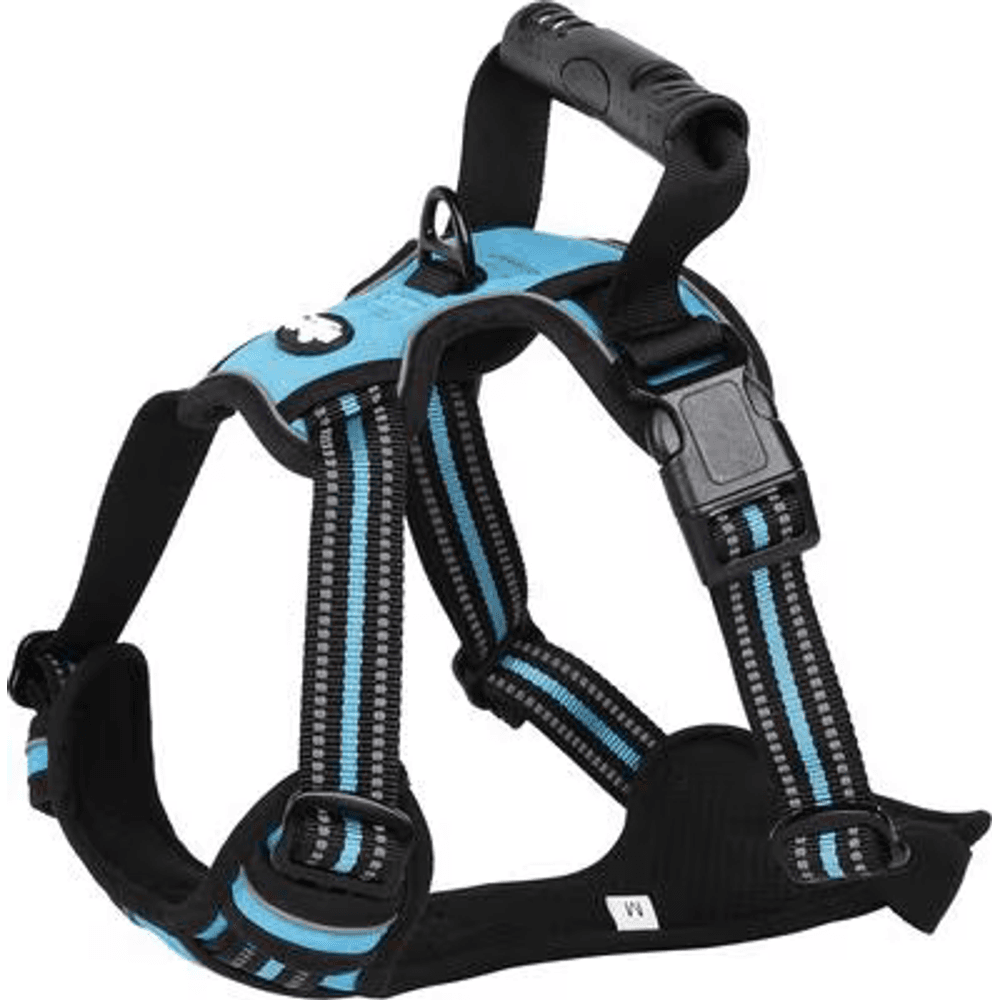
A padded, reflective no-pull harness that spreads leash pressure across the chest instead of the throat, the switch most vets recommend for a dog with a cough, a collapsing trachea, or any airway irritation so the leash never presses on...
Webvet may earn a commission when you click through to Chewy, at no extra cost to you.
Quick triage at a glance
| Situation | What to do |
|---|---|
| One-off cough, dog bright and normal, no other signs | Watch for 24 to 48 hours |
| Cough lasting more than 1 week or getting worse | Book a routine vet exam |
| Cough after boarding, grooming, daycare, or the dog park | Vet exam; likely contagious, isolate from other dogs |
| Wet or gurgling cough with fast breathing at rest | Emergency vet now |
| Labored breathing, blue gums, collapse, or coughing blood | Emergency vet now |
What your dog's cough SOUND is telling you (dry honk vs wet vs gag vs goose-honk)

The dog cough sound is one of the most useful clues you can give your vet. When people ask why is my dog making a coughing sound or why does it sound like my dog is coughing, describing the sound narrows the list of causes fast. Record a video on your phone if you can, since the cough often stops the moment you reach the clinic.
Use this decoder as a starting point, not a diagnosis. Only a vet exam can confirm the cause.
Cough sound decoder
| What it sounds like | Common associations | Typical urgency |
|---|---|---|
| Dry, hacking, honking (like a goose) | Kennel cough, collapsing trachea, airway irritation | Moderate; urgent if breathing is labored |
| Wet, gurgling, productive | Fluid in the lungs, pneumonia, possible heart failure | High; emergency if breathing is fast at rest |
| Cough that ends in a gag or retch (nothing or foam comes up) | Throat irritation, kennel cough, something caught, post-nasal drip | Moderate; urgent if a foreign object is suspected |
| Deep, moist cough with exercise or at night | Heart disease, chronic bronchitis | High in older dogs; vet exam soon |
| Loud snorting "reverse" sound while pulling air IN | Reverse sneezing (often not a true cough at all) | Usually low |
A kennel cough sound is classically a dry, forceful honk that often ends in a gag, and it frequently starts a few days after your dog was around other dogs. A goose-honk that gets triggered by excitement, pressure on the collar, or drinking is the signature of a collapsing trachea. A wet, bubbly cough is the one that should worry you most, because it can mean fluid where air belongs.
Dry, hacking, honking cough: kennel cough vs collapsing trachea

Two very different problems produce the classic dry honk, and telling them apart matters. If you are asking why is my dog dry coughing or why is my dog honking coughing, these are the two usual suspects.
Kennel cough (part of canine infectious respiratory disease complex, or CIRDC) is caused by inflammation of the trachea and upper airways. It is highly contagious, spreads where dogs congregate, and is usually a mild, self-limiting illness, though in puppies it can progress to bronchopneumonia (AVMA). The tell is timing: a dry, honking, gagging cough that shows up a few days after boarding, grooming, daycare, or the dog park. Kennel cough when to worry: if the cough lasts beyond about a week, your dog stops eating, runs a fever, breathes hard, or is a young puppy, see the vet. We cover this in depth in our guide to kennel cough in dogs.
Collapsing trachea is a mechanical problem, not an infection. The cartilage rings that hold the windpipe open weaken and the trachea flattens, producing a chronic, dry, honking ("goose-honk") cough and sometimes labored breathing; it most often affects small and toy breeds (Merck Veterinary Manual). It is also a common cause of chronic cough in middle-aged and older small-breed dogs, such as Yorkshire Terriers, Pomeranians, and Toy Poodles, and it develops when the cartilage rings that hold the windpipe open weaken and flatten, narrowing the airway (Cornell Riney Canine Health Center). The honk is often triggered by excitement, exercise, heat, or a tug on the collar. For the full picture, see dog honking cough and collapsed trachea.
Quick way to tell them apart: kennel cough usually appears suddenly after dog-to-dog contact and clears within a couple of weeks; a collapsing-trachea honk tends to be chronic, recurring over months, and closely tied to excitement or collar pressure. Either way, a switch to a harness instead of a collar is a simple, sensible step, and both deserve a vet's confirmation.
Coughing and gagging like something is stuck (retching, nothing comes up)

A cough that ends in a gag or retch, where nothing comes out, is one of the most common and most alarming patterns owners see. If you are wondering why is my dog coughing and gagging or why is my dog coughing like something is stuck in his throat, and your dog keeps hacking and gagging but nothing comes up, several things can be going on.
- Kennel cough is the top cause of the "hack then gag" pattern, especially after group exposure.
- Post-nasal drip or throat irritation from allergies or a mild infection can make a dog feel like clearing something.
- A genuine foreign object (grass awn, stick fragment, bone, toy piece) lodged in the throat is less common but is a true emergency if it obstructs the airway.
- Collapsing trachea can also end in a gag.
Many owners specifically ask about dog coughing and gagging but acting normal. Acting normal is reassuring, but a gagging cough that persists more than a few days still warrants a vet visit to rule out kennel cough or an early airway problem. For the full breakdown of causes and what to watch, see dog coughing and gagging.
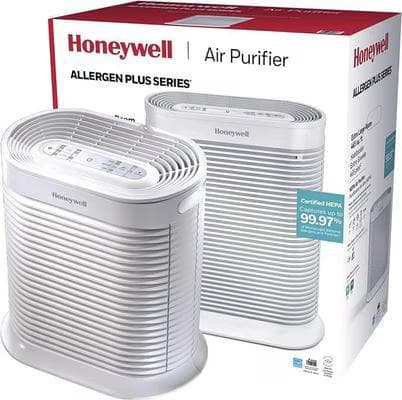
Certified True HEPA air purifier that captures 99.97% of airborne dust, dander, pollen, and smoke, reducing the airborne triggers behind feline asthma and respiratory irritation.
Webvet may earn a commission when you click through to Chewy, at no extra cost to you.
Wet cough: coughing up white foam, mucus, phlegm, or blood
A wet, productive cough means fluid or mucus is involved, and it sits higher on the worry scale than a dry cough. The color and what comes up are meaningful clues.
- White foam: Often froth from repeated coughing and throat irritation, and a common accompaniment to kennel cough. But white foam with fast or labored breathing at rest can signal fluid in the lungs (pulmonary edema), which is a heart-failure emergency.
- Clear or white mucus/phlegm: Frequently airway irritation, allergies, or early infection.
- Yellow or green phlegm: Suggests infection such as bronchitis or pneumonia and needs a vet.
- Blood (pink froth, streaks, or frank blood): Always a red flag. Causes include severe heart failure, pneumonia, trauma, clotting problems, and in some regions heartworm or lungworm. Coughing up blood means see a vet right away.
If you searched why is my dog coughing up white foam, the single most important thing to check is your dog's breathing. Comfortable breathing and an otherwise-normal dog points toward simple irritation; rapid, effortful, or open-mouthed breathing points toward an emergency. We go deeper into froth and foam in dog coughing up white foam.
Because coughing is a common but nonspecific sign of respiratory disease and overlapping causes look alike, a productive cough is best sorted out with a vet exam and chest X-rays rather than guesswork (Merck Veterinary Manual).
Heart-related cough: congestive heart failure and enlarged heart

In older dogs especially, a cough can come from the heart rather than the lungs. When owners ask why is my old dog coughing so much, heart disease is high on the list. As certain heart conditions progress, the heart enlarges and can press on the airways, and fluid can back up into the lungs (pulmonary edema), both of which drive a cough.
A dog heart cough is often soft and moist, tends to be worse at night or after lying down, and may worsen with exercise. Advanced heart disease can also cause fast breathing at rest, reduced stamina, restlessness, a distended belly, or fainting. A wet, gurgling cough with rapid breathing at rest is a hallmark of possible congestive heart failure and is an emergency.
Heart disease cannot be diagnosed or treated at home. It requires veterinary tests such as chest X-rays and an echocardiogram, plus prescription medication. Because coughing is a nonspecific sign that overlaps heavily between heart and lung disease, do not assume the heart is or is not the cause without imaging (Merck Veterinary Manual). For the full workup and what treatment looks like, read dog heart cough and congestive heart failure.
 $65 · no membership
Have a health question about your dog?
A licensed vet can assess your dog over video and prescribe online when it's appropriate.
 Talk to a vet
- Licensed vets
- All 50 states
- same-day Rx
Webvet may earn a commission if you book.
Coughing at night, in the morning, or triggered by excitement, water, or exercise
When your dog coughs is another clue worth telling your vet.
- Coughing at night or when lying down classically points toward heart disease in older dogs, and can also reflect chronic bronchitis or a collapsing trachea. A dog dry cough at night that is new or worsening in a senior dog deserves prompt attention. We cover nighttime patterns in dog coughing at night.
- Coughing in the morning is often airway mucus that has pooled overnight, common with bronchitis and airway irritation.
- Coughing when excited, after barking, or with a tug on the collar is a strong hint toward collapsing trachea, because those moments compress an already-weakened windpipe (Merck Veterinary Manual).
- Coughing after drinking water is usually harmless if it is a rare, single cough from drinking too fast. If it happens every time or is paired with gagging, mention it to your vet.
- Coughing after exercise or playing outside can be irritation, allergies, or, in an older or unfit dog, an early sign of heart or airway disease.
The takeaway: an occasional trigger-linked cough in a dog who is otherwise thriving is usually low-stakes, but a timing pattern that is new, frequent, or getting worse is a reason to be seen.
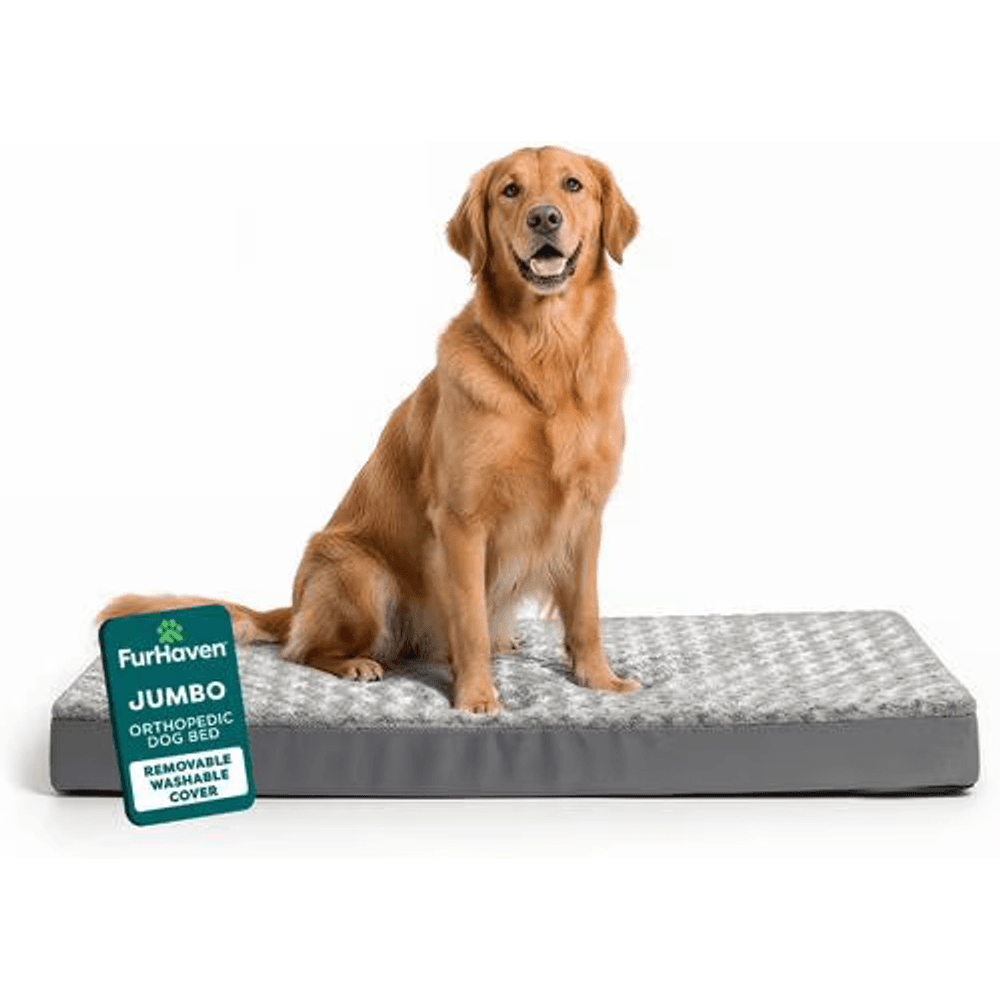
A plush orthopedic foam mattress that cushions aging joints and pressure points, giving a stiff or trembling senior dog warm, supportive rest.
Webvet may earn a commission when you click through to Chewy, at no extra cost to you.
Cough vs reverse sneezing: how to tell them apart

Owners frequently mistake reverse sneezing for a cough. They are genuinely different clinical signs, and telling them apart helps identify the real cause (Merck Veterinary Manual).
The simplest distinction is the direction of air: a cough forces air out in a burst; reverse sneezing rapidly pulls air in through the nose, producing a snorting, honking, pig-like sound. During a reverse sneeze the dog usually stands still with the neck extended and elbows out, and the episode ends abruptly with the dog completely normal afterward. Reverse sneezing is typically harmless and self-limiting, while a true cough is more likely to signal airway or lung disease.
| Feature | True cough | Reverse sneezing |
|---|---|---|
| Direction of air | Forced OUT | Pulled IN |
| Sound | Hack, honk, or wet burst | Rapid snorting/snorking |
| Posture | Head down, neck extended | Standing still, neck extended, elbows out |
| After the episode | May repeat, dog may seem off | Instantly back to normal |
| Usual significance | Can signal disease | Usually harmless |
If you searched why is my dog reverse coughing or why is my dog snort coughing, watch which way the air is moving. We keep this section to the distinction only; a dedicated reverse-sneezing guide is coming soon. If the "sneezing" is frequent, worsening, or paired with nasal discharge, have your vet take a look.
Is it serious if my dog is coughing but acting normal?
This is one of the most-asked questions, and the honest answer is usually not an emergency, but not automatically nothing either. If you are wondering why is my dog coughing but acting normal or noticing your dog coughing randomly, a dog who is eating, drinking, playing, and breathing comfortably is reassuring, and many minor coughs from mild irritation or early kennel cough resolve on their own.
Will a dog's cough go away on its own? Sometimes yes. Mild kennel cough is often self-limiting and clears within a week or two, and a cough from a passing irritant can vanish on its own (AVMA). But because coughing is a common, nonspecific sign of respiratory disease that can point anywhere along the airway, an "acting normal" cough that persists is still worth checking (Merck Veterinary Manual).
Book a vet exam even if your dog seems fine when:
- The cough lasts more than a week or keeps coming back.
- It started after boarding, grooming, daycare, or the dog park (likely contagious).
- Your dog is a puppy, senior, or has a known heart or airway condition.
- The cough is getting more frequent or louder over time.
"Acting normal" is a green light to skip the ER, not a reason to ignore a cough that lingers.
When to see a vet, and what NOT to give (xylitol and human cough meds warning)

When should I worry about my dog coughing? Worry, and seek emergency care, when the cough is affecting breathing or your dog's overall condition. Worry enough to book a regular vet visit when the cough persists, recurs, or follows a group-dog exposure.
What can I give my dog for coughing at home?

The safest honest answer is: not much on your own, and never human medicine. Supportive steps that will not hurt while you arrange a vet visit include keeping your dog calm and rested, switching from a collar to a harness to reduce airway pressure, running a humidifier or letting your dog breathe steam from a hot shower, and keeping air clean (no smoke, aerosols, or strong cleaners). These ease irritation but do not treat the underlying cause.
What home remedy can I give my dog for coughing / the fastest home remedy for a dry cough? There is no proven instant fix. The genuinely helpful moves are humidified air, rest, a harness, and removing irritants, plus getting a diagnosis so the real problem is treated. A small amount of plain honey is sometimes suggested to soothe an adult dog's throat, but it does not cure the cause, should never go to puppies or diabetic dogs, and is no substitute for a vet visit. Anything beyond simple comfort measures should come from your veterinarian.

360-degree Wi-Fi pet camera so you can watch your cat's resting breathing rate and behavior from your phone and catch worrying changes early.
Webvet may earn a commission when you click through to Chewy, at no extra cost to you.
How vets diagnose and treat a coughing dog


Because coughing is a common but nonspecific sign of respiratory disease and many causes look alike, a proper diagnosis matters. Vets typically start with a history (timing, sound, triggers, exposure to other dogs, travel, and vaccine status) and a physical exam, using those findings together with the clinical signs to localize the problem, then adding chest radiographs (X-rays) and additional tests as needed to find the cause (Merck Veterinary Manual).
Depending on what the exam suggests, the workup may add:
- Bloodwork to check for infection, inflammation, or systemic illness.
- Heartworm and infectious-disease testing where relevant.
- Echocardiogram (heart ultrasound) when heart disease is suspected.
- Fluoroscopy or airway scoping to confirm a collapsing trachea or airway collapse (Cornell Riney Canine Health Center).
- Airway sampling (tracheal wash or bronchoscopy) for chronic infections.
Treatment is aimed at the cause, not the cough itself. Kennel cough is often managed with rest and time, with medication reserved for more severe or complicated cases (AVMA). Collapsing trachea is managed with weight control, harnesses, cough suppressants, and sometimes surgery or stenting in advanced cases (Merck Veterinary Manual). Heart disease, pneumonia, and heartworm each require their own prescription treatment and cannot be handled at home. The point of a diagnosis is to match the treatment to the real problem, which is why guessing (and self-medicating) can do harm.
Cause-differentiation matrix
Use this to see how the common causes line up. It is an orientation tool, not a diagnosis.
| Cause | Typical cough | Common triggers/timing | Who is at higher risk | Urgency |
|---|---|---|---|---|
| Kennel cough (CIRDC) | Dry honk ending in a gag | Days after boarding, daycare, dog park | Any dog; worse in puppies | Moderate; ER if breathing struggles |
| Collapsing trachea | Dry "goose-honk" | Excitement, exercise, collar pressure, heat | Small/toy breeds, middle-aged to senior | Moderate; ER if severe breathing distress |
| Heart disease/CHF | Soft, moist; worse at night/lying down | Night, exertion; progressive | Older dogs, some breeds | High; ER with fast breathing at rest |
| Allergies/airway irritants | Dry or mild productive | Exposure to smoke, dust, pollen, cleaners | Any dog | Low to moderate |
| Pneumonia/bronchitis | Wet, may be yellow/green phlegm | Ongoing; often with fever/lethargy | Puppies, seniors, immunocompromised | High |
| Heartworm/lungworm | Chronic cough, may cough blood | Region-dependent; progressive | Unprotected dogs in endemic areas | High |
For kennel cough, coughing-and-gagging, collapsing trachea, heart cough, nighttime cough, and white-foam cough, follow the linked deep-dive articles above for full symptom lists, treatment detail, and recovery expectations.
Key takeaways
- 1Why is my dog coughing? A cough is a reflex to clear the airway, but it is also a common, nonspecific sign of respiratory disease, so persistent or symptomatic coughing needs a diagnosis.
- 2The sound is a clue: dry honk (kennel cough or collapsing trachea), wet gurgle (fluid/heart or pneumonia), gag-ending cough (throat irritation or something stuck).
- 3Emergency red flags: labored breathing, blue/pale gums, collapse, coughing blood, wet cough with fast breathing at rest, non-stop cough, or extreme lethargy. Go now.
- 4Never give human cough medicine or drops (xylitol and other ingredients can be fatal). Comfort measures only until a vet weighs in.
- 5See a vet for any cough lasting more than a week, worsening, or following contact with other dogs, even if your dog acts normal.
Frequently asked questions
How to describe your dog's cough to the vet
Because coughing is a nonspecific sign, the details you bring to the appointment often matter as much as the cough itself. Coughs are frustratingly good at disappearing the moment you walk into the clinic, so a clear, specific description from home helps your vet narrow the list of causes before any test is run.
Before the visit, jot down answers to the questions your vet will ask. The more concrete you are, the faster the workup can focus. Try to capture each of the following:
- How long it has lasted and how it started. Days or weeks, and whether it came on suddenly or built up gradually.
- What it sounds like. Dry and honking, wet and gurgling, or a hack that ends in a gag, using the sound decoder above as your vocabulary.
- When it happens. At night, after lying down, on waking, during excitement, with a tug on the collar, after drinking, or after exercise.
- What comes up, if anything. Nothing, white foam, clear or colored mucus, or blood, and roughly how often.
- Recent exposures and history. Boarding, grooming, daycare, or the dog park in the past two weeks, travel, your dog's age, and vaccine and heartworm-prevention status.
Record a short phone video, too. A ten-second clip of an actual coughing fit shows your vet the sound, the posture, and the effort far better than any description can, and it removes the guesswork if the cough stays quiet during the exam. Note any other changes as well: appetite, energy, weight, or how quickly your dog tires on walks.
Count your dog's breathing rate at rest
One of the most useful numbers you can bring your vet is your dog's resting or sleeping breathing rate. Coughing and difficulty breathing are the most common signs of left-sided congestive heart failure, and a vet may ask you to count the breaths your dog takes in one minute while sleeping or resting, then track that sleeping respiratory rate over time to catch early heart failure and judge how well treatment is working (Merck Veterinary Manual).
To measure it, wait until your dog is asleep or lying quietly and calm, not panting from heat, play, or stress. Watch the chest and count one breath each time it rises and falls, over a full minute. Do this on a few normal days so you know your dog's baseline, then again if the cough changes.
A resting rate that climbs well above your dog's usual baseline, or breathing that looks fast or labored while your dog is at rest, is a warning sign worth a same-day call to your vet, especially in a senior dog or one with known heart disease. Bring the numbers with you: a trend your vet can see is far more useful than a single reading.
- 1Write down how long the cough has lasted, what it sounds like, when it happens, what (if anything) comes up, and any recent boarding or dog-park exposure before the visit.
- 2A ten-second phone video of a coughing fit shows your vet the sound, posture, and effort better than words, and covers you if the cough goes quiet at the clinic.
- 3Count your dog's breaths per minute while it sleeps or rests to establish a baseline; a rate rising above that baseline, or fast or labored resting breathing, warrants a prompt vet call.
Frequently Asked Questions
When should I worry about my dog coughing?
Worry and seek emergency care if the cough comes with labored or difficult breathing, blue or pale gums, collapse, coughing up blood, a wet cough with fast breathing at rest, a non-stop cough, or extreme lethargy or refusal to eat. Short of those, book a regular vet visit for any cough that lasts more than a week, keeps getting worse, or started after your dog was around other dogs.
What can I give my dog for coughing?
Do not give human medicines. The only safe at-home steps are comfort measures: rest, a humidifier or steamy bathroom air, switching to a harness, and keeping the air free of smoke and irritants. Never give human cough syrup, cough drops, lozenges, acetaminophen, or decongestants, since many contain xylitol or other ingredients that are toxic or fatal to dogs. Any actual medication must come from your vet after a diagnosis.
Why is my dog coughing like something is stuck in his throat randomly?
A cough that sounds like something is stuck, followed by a gag with nothing coming up, is most often throat and airway irritation, frequently kennel cough, post-nasal drip, or a collapsing trachea. If your dog is breathing comfortably and acting normal, it is usually irritation rather than a true obstruction. But if your dog is pawing at the mouth, panicking, drooling heavily, or struggling to breathe, treat it as a possible choking emergency and get to a vet immediately.
What if my dog is coughing but acting normal?
A dog that is eating, playing, and breathing comfortably is reassuring, and many mild coughs (like early kennel cough or a passing irritant) resolve on their own. Still, because coughing is a common, nonspecific sign of respiratory disease that can point anywhere along the airway, book a vet exam if the cough lasts more than a week, keeps recurring, follows a boarding or dog-park visit, or your dog is a puppy or senior. Acting normal lets you skip the ER, not ignore a lingering cough.
Why is my dog randomly coughing but acting normal?
Occasional random coughing in an otherwise-normal dog is often mild airway irritation from dust, allergens, drinking too fast, or excitement, and it is usually low-stakes. It can also be early kennel cough or the start of a collapsing-trachea pattern in small breeds. Watch for how often it happens and whether it worsens; if the random cough becomes frequent, louder, or gains other symptoms, see your vet.
What is a red flag in coughing?
A red flag is any sign that the cough is compromising breathing, oxygen, eating, or consciousness. Specifically: difficulty or labored breathing, blue, purple, or pale gums, collapse or fainting, coughing up blood, a wet or gurgling cough with rapid breathing at rest, a non-stop cough, or coughing with extreme lethargy or refusal to eat. Any of these means go to an emergency vet immediately.
Will a dog's cough go away on its own?
Sometimes. Mild kennel cough is often self-limiting and can clear within a week or two, and a cough from a brief irritant may resolve without treatment. But many causes, including heart disease, pneumonia, heartworm, and collapsing trachea, will not resolve on their own and need veterinary care. If a cough persists beyond a week, worsens, or is paired with any red flag, do not wait for it to pass.
What is the fastest home remedy for a dry cough?
There is no proven instant remedy, and no home remedy replaces a diagnosis. The most helpful safe steps are humidified air (a humidifier or a steamy bathroom), rest, switching from a collar to a harness, and removing airway irritants like smoke and aerosols. Never use human cough medicine or drops. If a dry cough is persistent or your dog is in distress, the fastest real fix is a vet visit so the underlying cause gets treated.
$65 · no membershipHave a health question about your dog?
A licensed vet can assess your dog over video and prescribe online when it's appropriate.
Talk to a vet- Licensed vets
- All 50 states
- same-day Rx
Webvet may earn a commission if you book.

Editor
The Webvet Editorial Team is the in-house group of pet-care editors and writers behind Webvet, operated by Smart Pet Collective. The team researches, writes, and maintains Webvet's pet health, behavior, and medication content. Every article follows a defined editorial process: research from reputable veterinary and scientific sources, careful drafting, mandatory review of medical content by a credentialed veterinarian, and dated publication. Health and medication articles are medically reviewed by a licensed veterinary professional before they go live and are kept current over time.
Veterinarian · BVMS MRCVS
Dr. Pippa Elliott, BVMS, MRCVS, is a veterinarian with nearly 30 years of experience in companion animal practice. Dr. Elliott earned her Bachelor of Veterinary Medicine and Surgery from the University of Glasgow. She was also designated a Member of the Royal College of Veterinary Surgeons. Married with 2 grown-up kids, Dr. Elliott has a naughty Puggle named Poggle, 3 cats and a bearded dragon.


