Dog Honking Cough: Causes, the Collapsed Trachea Link, and When It's an Emergency
A dog honking cough that sounds like a goose usually points to the windpipe, most often a collapsing trachea in small breeds. Here is what the sound means, the emergency red flags, and how vets treat it.

BVMS MRCVS
Medically reviewed by Dr. Pippa Elliott, BVMS MRCVS · Last reviewed

This article contains affiliate links. Webvet may earn a commission when you buy through them, at no extra cost to you.
A dog honking cough is one of the most recognizable, and most alarming, sounds a pet owner can hear. It is a dry, forceful, goose-like honk that seems to come from deep in the throat, and it often stops owners in their tracks. In most small and toy-breed dogs, that distinctive dog honking cough points to the windpipe, and the single most common reason behind it is a collapsing trachea.
This guide explains exactly what the goose-honk sound means, why a collapsing trachea causes it, the four grades vets use to describe it, and, most importantly, the emergency red flags that mean you need a vet now. A honking cough is a symptom, not a diagnosis. Nothing here replaces a hands-on veterinary exam.

What a dog honking cough sounds like (and why it happens)
Owners describe the dog honking cough sound in remarkably consistent ways: a loud, dry honk, a dog cough that sounds like goose honking, or a dog cough that sounds like honking followed by a gag. If you have ever wondered why does my dog's cough sound like a goose honking, the answer lies in anatomy.
The trachea (windpipe) is normally a rigid, round tube held open by C-shaped rings of cartilage. When air rushes through a windpipe that has narrowed or lost its rigidity, the walls vibrate and flutter, producing that classic honking, brassy note instead of a soft, wet cough. That is what a honking cough means in a dog: the sound is being generated in the large upper airway (the trachea and upper bronchi), not deep in the lungs.
This is why a honking cough in a dog is so diagnostically useful. According to the Washington State University Veterinary Teaching Hospital, the character of a cough helps localize where the problem is. A goose-honk quality specifically implicates the trachea and upper airway, whereas soft, moist, or productive coughs more often come from the lower airways or lungs. That said, WSU is clear that coughing in dogs is a clinical sign that warrants a proper diagnostic work-up (listening to the chest, chest X-rays, and airway testing) rather than guesswork at home.
Key point: the goose-honk dog cough sound narrows the field to the windpipe, but only a vet can confirm the exact cause.
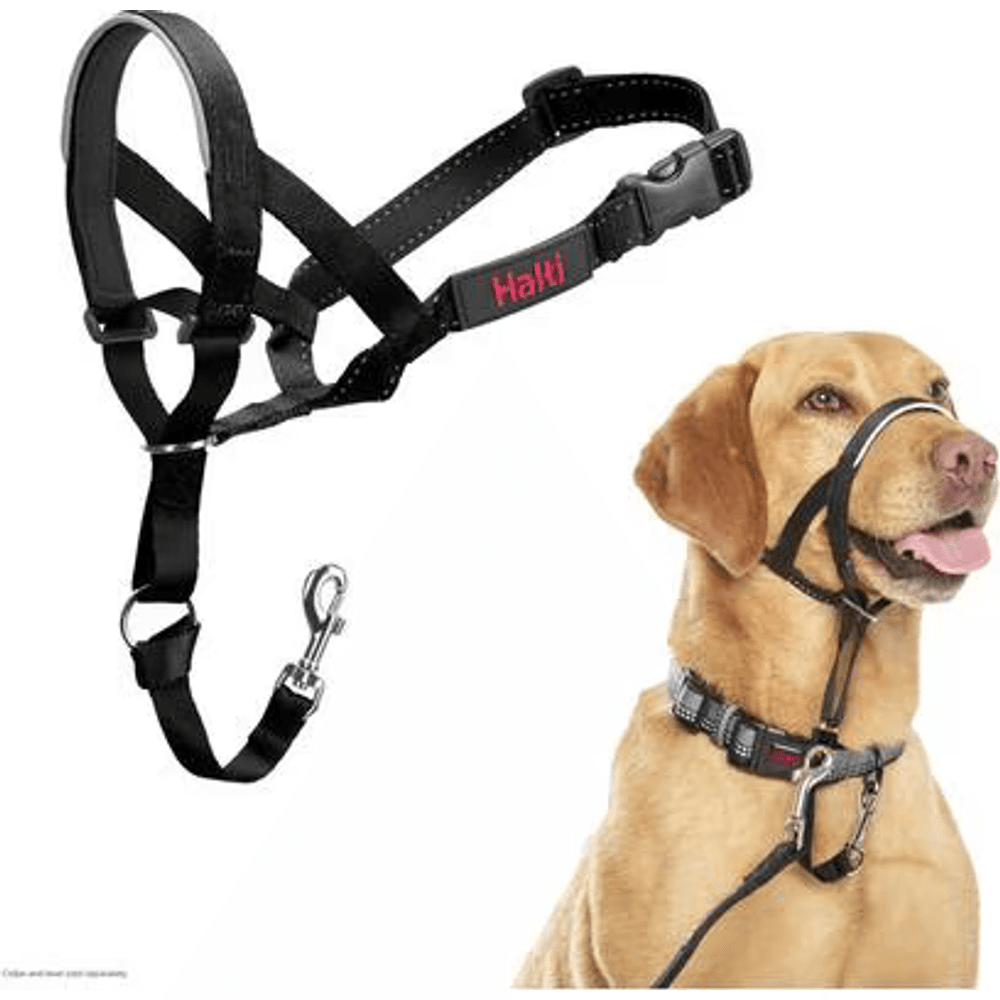
A padded head halter that gently steers a dog from the head, keeping all leash pressure off the neck and windpipe, a useful option for a dog whose cough or collapsing trachea flares when a collar tightens.
Webvet may earn a commission when you click through to Chewy, at no extra cost to you.
Why a collapsing trachea is the #1 cause of the goose-honk cough

If your dog is a small dog with a honking cough, a collapsing trachea should be at the top of the suspect list. Tracheal collapse is a progressive weakening of the cartilage rings that hold the windpipe open. As those rings soften and flatten, the trachea loses its round shape and partially collapses, especially when the dog inhales forcefully, gets excited, or pulls against a collar.
The Cornell University College of Veterinary Medicine describes tracheal collapse as a progressive weakening and flattening of the cartilage rings of the windpipe that produces a dry, honking (goose-honk) cough, most often in middle-aged toy and small-breed dogs. Cornell also notes that the chronic airway inflammation caused by ongoing coughing can predispose affected dogs to secondary lung infections, which is one reason the condition tends to worsen if it is ignored.
The breeds most at risk
The tracheal collapse dog sound turns up most often in the same handful of breeds:
- Yorkshire Terriers
- Pomeranians
- Chihuahuas
- Toy and Miniature Poodles
- Pugs and other flat-faced small breeds
- Other toy and small breeds, especially those carrying extra weight
This is a classic dry honking cough in these dogs: hacky, non-productive, and easy to trigger. The condition is usually not curable, but it is very often manageable, and early veterinary evaluation genuinely changes the trajectory (more on prognosis below).
The 4 grades of tracheal collapse in dogs

One of the most common questions is what are the four stages of collapsed trachea in dogs. Veterinarians grade tracheal collapse on a I to IV scale based on how much the tracheal opening (lumen) has narrowed. This is the widely used Tangner and Hobson grading framework: as documented in the veterinary literature, tracheal-collapse grades are assigned according to the degree of maximal collapse of the tracheal luminal diameter (roughly 25% at Grade I, 50% at Grade II, 75% at Grade III, and 100% at Grade IV), and any reduction in lumen diameter of about 25% or more counts as collapse (peer-reviewed fluoroscopic study, Tangner and Hobson criteria).
| Grade | Approximate airway narrowing | What it generally means |
|---|---|---|
| Grade I | ~25% narrowing | Cartilage slightly weakened; trachea still nearly round; mild, intermittent honking |
| Grade II | ~50% narrowing | More pronounced flattening; coughing easier to trigger |
| Grade III | ~75% narrowing | Trachea nearly flat; frequent, harder-to-control honking |
| Grade IV | ~100% narrowing | Tracheal walls touch; the lumen is essentially closed; most severe signs |
Grade descriptions summarize the Tangner and Hobson lumen-narrowing framework used in the veterinary literature, where grades track the maximal collapse of the tracheal lumen at roughly 25%, 50%, 75%, and 100% (peer-reviewed fluoroscopic study). Your veterinarian assigns the actual grade based on imaging.
How often will a dog cough with a collapsed trachea?
There is no single number. Frequency depends on the grade, the triggers present in the dog's environment, body weight, and whether the condition is being managed. A mild (Grade I) case might honk only occasionally when the dog gets excited or pulls on a leash, while a higher-grade collapse can produce repeated fits throughout the day. Because coughing frequency and severity track with the grade, worsening or more frequent honking is a reason to have your dog re-evaluated rather than to simply wait it out.
What triggers the honking cough: excitement, collars, water and night
A hallmark of the collapsing-trachea honk is that it is triggered rather than constant. Owners often notice a dog making a honking cough in very specific situations. Recognizing these patterns both supports the diagnosis and points directly at what to change at home.
- When excited or active: A dog honking cough when excited, during play, on greeting visitors, or while barking, is extremely typical. Excitement means faster, more forceful breathing through a floppy windpipe.
- Pulling on a collar: Pressure from a neck collar presses directly on the trachea. This is why the collar-to-harness swap (covered below) is one of the highest-value changes you can make.
- After drinking water or eating: A dog honking cough after drinking water is common, because swallowing and drinking briefly disturb the airway and can set off a fit in an already-sensitive trachea.
- At night or when lying down: A dog honking cough at night can happen as the dog settles and airway dynamics shift. Nighttime coughing has several possible causes, so if the honking is mainly nocturnal, our companion guide on why dogs cough after dark is worth a look, linked below.
Heat, humidity, excitement, obesity, and airborne irritants (smoke, dust, strong sprays) all tend to make episodes worse. Removing or reducing these triggers is a core part of management.
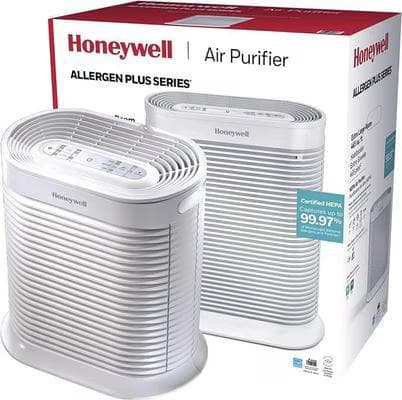
Certified True HEPA air purifier that captures 99.97% of airborne dust, dander, pollen, and smoke, reducing the airborne triggers behind feline asthma and respiratory irritation.
Webvet may earn a commission when you click through to Chewy, at no extra cost to you.
Honking cough vs. reverse sneezing vs. something stuck in the throat

Three very different events get confused with each other because they all involve dramatic noise coming from the neck. Sorting them out is central to understanding this exact sound, so here is a clear reverse sneeze vs cough and choking comparison.
| Feature | Honking cough (tracheal collapse) | Reverse sneezing | Something stuck in the throat |
|---|---|---|---|
| Airflow direction | Forceful air pushed out | Rapid air pulled in | Variable; often gagging/retching |
| Sound | Dry goose honk; dog cough sounds like a horn | Rapid snorting/gasping, pig-like | Gagging, retching, exaggerated swallowing |
| Posture | Neck may extend; coughing motion | Head/neck extended, elbows braced, standing still | Pawing at mouth, distress, repeated swallowing |
| Duration | Seconds to a fit; recurs | Usually seconds, self-resolves | Persists until object clears; can be an emergency |
| Owner concern level | Manage + vet exam | Usually benign | Can be urgent if airway is blocked |
If you have caught yourself thinking why is my dog coughing like something is stuck in his throat, the honking cough of tracheal collapse can genuinely feel that way to owners, because the dog may extend the neck and gag at the end of a fit. The important distinction: with tracheal collapse there is no actual object, whereas a true foreign body is a potential emergency (see red flags).
Reverse sneezing is a separate, usually harmless event where the dog rapidly pulls air in through the nose. It is not a cough at all. We cover the honk-versus-reverse-sneeze distinction here because it is core to identifying this specific sound, but reverse sneezing has its own dedicated territory, so we keep it to the differential here.
 $65 · no membership
Have a health question about your dog?
A licensed vet can assess your dog over video and prescribe online when it's appropriate.
 Talk to a vet
- Licensed vets
- All 50 states
- same-day Rx

Webvet may earn a commission if you book.
When the honk comes with gagging, white foam or vomiting
The honk rarely travels alone. A dog honking cough and gagging in sequence is one of the most common patterns owners report, and it usually goes like this: a burst of dry coughing irritates the throat, the dog gags or retches at the end, and sometimes brings up a little foam or fluid.
- Honking then gagging: A dog honking cough then gag is classic for tracheal irritation. The gag is the throat's response to the coughing fit, not necessarily a separate disease. Coughing and gagging together has a broad differential, so if gagging dominates the picture, see our dedicated guide linked below.
- White foam: A dog honking cough with white foam usually reflects saliva and airway mucus whipped up by forceful coughing. It is common and often not sinister on its own, but coughing up white foam can occasionally point to other issues, so we cover that specifically in a sibling article.
- Vomiting: A dog honking cough and vomiting can happen when a hard fit triggers the gag reflex and the dog brings up stomach contents. Frequent vomiting, or vomiting with lethargy, warrants a vet visit.
Why is my senior dog honking, coughing and gagging?
A senior dog honking, coughing and gagging deserves particular attention. Older small-breed dogs are prime candidates for tracheal collapse, but age also raises the odds of overlapping problems such as heart disease or chronic bronchitis, which can produce or worsen a cough. In older dogs, a heart cause has to be actively ruled out rather than assumed away, so a senior dog with a new or changing cough should be examined promptly. The trachea-versus-heart distinction is compared briefly in the diagnosis section, with a link to the dedicated heart-cough guide.
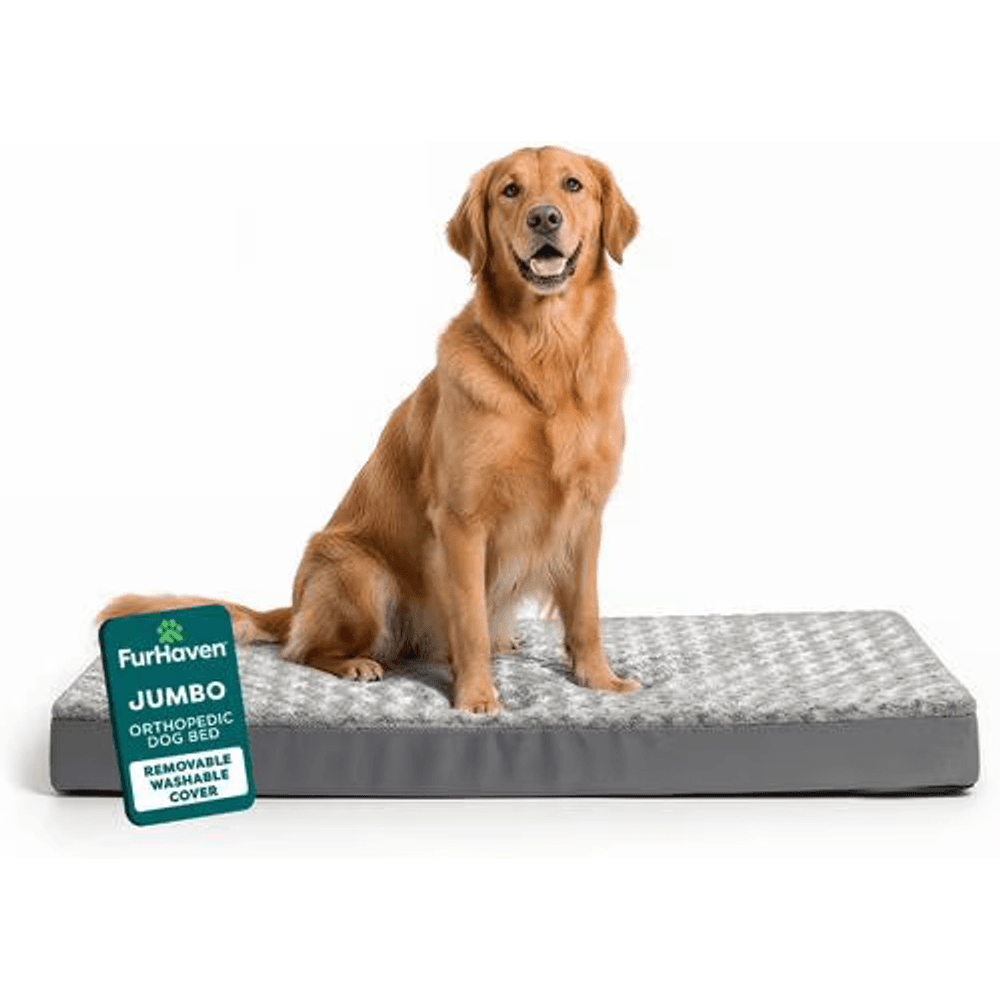
A plush orthopedic foam mattress that cushions aging joints and pressure points, giving a stiff or trembling senior dog warm, supportive rest.
Webvet may earn a commission when you click through to Chewy, at no extra cost to you.
Emergency signs: when a honking cough is a 911 (blue gums, collapse, fainting)

Most honking-cough episodes are distressing to watch but not immediately life-threatening. The job here is to recognize the moments when they cross into a genuine emergency. These thresholds are grounded in emergency-medicine standards: the Merck Veterinary Manual identifies a change in mucous-membrane color to gray or blue (cyanosis) as a sign of severe loss of lung function and impending respiratory arrest, and flags respiratory difficulty as a condition that warrants immediate treatment. Here is what to do if your dog is honking and coughing and things escalate.
That last point matters because owners sometimes worry about a stroke. If you are searching for the signs of a dog having a mini stroke, know that a stroke and a honking cough are unrelated events. Stroke-type signs in dogs include a sudden head tilt, loss of balance or circling, rapid flicking eye movements, and disorientation, not coughing. A dog that both coughs and shows those neurological signs needs urgent veterinary assessment regardless, because two separate problems may be in play. Do not try to diagnose a neurological emergency at home. See WebVet’s guide to dog stroke.
Do not give human cough medicines or over-the-counter drugs to a coughing dog without explicit veterinary direction. Many human products contain ingredients that are unsafe or wrongly dosed for dogs, and suppressing a cough that is actually protecting the airway can do harm. Never dose without dosing guidance from your vet.
How vets diagnose the cause of a honking cough
Because a honk can come from several sources, diagnosis is about localizing and confirming, not guessing. The Washington State University Veterinary Teaching Hospital frames coughing as a sign that calls for a structured work-up: history, listening to the heart and lungs (auscultation), thoracic (chest) radiographs, and airway testing as needed.
For suspected tracheal collapse specifically, the Cornell University College of Veterinary Medicine explains that confirming the diagnosis may take one or more tests: X-rays (which help but do not always catch the collapse), fluoroscopy (moving X-rays that show the trachea during inhalation and exhalation), and bronchoscopy or tracheoscopy (a fiber-optic camera passed into the trachea and airway under anesthesia). Fluoroscopy and airway endoscopy are also the images on which the I to IV grade is assigned, since the grade reflects how much the lumen narrows during breathing and coughing.
Trachea vs. heart: a critical distinction
Older small dogs can have both a collapsing trachea and heart disease, and the two produce similar-sounding coughs. Sorting them out changes the entire treatment plan.
| Clue | Points toward trachea | Points toward heart |
|---|---|---|
| Cough quality | Dry, honking, goose-like | Often softer or moist; may worsen with rest |
| Typical trigger | Excitement, collar pressure, drinking | Exertion; sometimes worse lying down at night |
| Signalment | Middle-aged/older toy breeds | Older dogs with a heart murmur |
| Confirmed by | Fluoroscopy, tracheoscopy | Chest X-ray, heart workup (echocardiogram) |
If your vet finds a heart murmur or suspects a cardiac cause, the honk-versus-heart question is explored in depth in our congestive heart failure cough guide, linked below.
Treatment and at-home management for a honking cough
Owners understandably want to know the dog honking cough treatment and what can I give my dog for a honking cough. The honest answer: the right treatment depends entirely on the cause and grade, which is why a diagnosis comes first. That said, veterinary management of tracheal collapse follows a well-established, medical-first approach.
According to the Merck Veterinary Manual, management is medical first, centered on:
- Weight loss in overweight dogs, which Merck calls critical (this alone can dramatically reduce coughing)
- Cough suppressants prescribed by the vet to break the cough-inflammation-cough cycle
- Antibiotics, bronchodilators, and corticosteroids as directed, to calm airway inflammation and treat any secondary infection
- Exercise restriction and reducing excitement and stress, which are common triggers
On top of the medical plan, the Cornell University College of Veterinary Medicine lists lifestyle adjustments as a core part of management: switching from a neck collar to a harness, avoiding respiratory irritants like cigarette smoke, and avoiding hot and humid environments. Cornell also notes that for dogs that do not respond to medical management, a surgical procedure placing a stent within the trachea may be considered to physically hold the windpipe open. These are specialist procedures reserved for advanced, refractory cases.

360-degree Wi-Fi pet camera so you can watch your cat's resting breathing rate and behavior from your phone and catch worrying changes early.
Webvet may earn a commission when you click through to Chewy, at no extra cost to you.
Dog honking cough treatment at home (as support, not a substitute)
There is no safe dog honking cough home remedy that replaces a diagnosis, and any goose-honking cough dog treatment should be run past your vet first. What you can do at home to support a diagnosed dog:
- Use a harness, never a neck collar, on walks
- Keep the dog at a healthy weight with vet guidance
- Reduce excitement triggers and avoid overexertion in heat and humidity
- Keep air clean: no smoke, minimal dust, no aerosol sprays near the dog
- Use a humidifier in dry indoor air and keep the dog calm and cool during a fit
- Give only vet-prescribed medications at the exact prescribed dose
Do not reach for human cough syrups, decongestants, or OTC medications. If you are asking what can I give my dog for a honking cough, the safest answer is: call your vet and ask what is appropriate for your specific dog.
Can a dog live a normal life with a collapsing trachea? (prognosis)
Yes, in most cases. Owners frequently ask can a dog live comfortably with a collapsing trachea, and the reassuring, accurate answer is that many dogs live full, comfortable lives with proper management. Tracheal collapse is best understood as progressive but manageable, not curable.
The Cornell University College of Veterinary Medicine frames it as a progressive condition, and Cornell notes that the chronic airway inflammation from ongoing coughing can set dogs up for secondary lung infections, which is exactly why early, consistent management matters. Dogs whose weight is controlled, whose triggers are minimized, and who are on an appropriate treatment plan often cough far less and stay comfortable for years. The trajectory is genuinely influenced by how early and how well the condition is addressed, so an early vet evaluation is one of the best things you can do for a long-term-comfortable dog.
How to prevent honking-cough episodes

You cannot reverse cartilage that has already weakened, but you can meaningfully reduce how often and how hard your dog honks. Prevention overlaps heavily with management.
- Swap the collar for a harness. A neck collar presses directly on the windpipe; a well-fitted chest harness distributes leash pressure across the chest instead. This is the single most important physical change for a small dog with a honking cough.
- Manage weight aggressively. Extra body weight increases the breathing effort and worsens coughing. The Merck Veterinary Manual lists weight loss as a first-line management step for a reason.
- Control the environment. Avoid smoke, strong scents, dust, and aerosols. Keep the home cool and consider a humidifier in dry seasons.
- Limit overexcitement and heat exposure. Calm greetings, shaded walks, and avoiding midday heat all reduce trigger episodes.
- Keep vaccinations current to reduce the odds of an infectious respiratory illness stacking on top of an already-sensitive airway.
Where this fits with other coughs
A honking cough is just one of several distinct coughing patterns in dogs. If your dog's cough does not match the dry goose-honk described here, these companion guides cover the neighboring causes:
- Not sure where the cough is coming from at all? Start with the overview at why is my dog coughing.
- A contagious, harsh cough after boarding, daycare, or the dog park may be kennel cough in dogs. The Merck Veterinary Manual confirms kennel cough (infectious tracheobronchitis) is a distinct, contagious cause of a harsh honking cough that must be told apart from tracheal collapse.
- Cough plus persistent gagging is covered in dog coughing and gagging.
- Cough that seems heart-related, especially in older dogs with a murmur, is covered in dog heart cough and congestive heart failure.
- A cough that flares mainly after dark is covered in dog coughing at night.
- Coughing that brings up white foam is covered in dog coughing up white foam.
The bottom line
A dog honking cough is a distinctive, dry, goose-like sound that almost always points to the windpipe, and in small and toy breeds the leading cause is a collapsing trachea. It is a symptom, not a diagnosis: only a veterinary exam, and usually imaging like fluoroscopy or tracheoscopy, can confirm the cause and grade. The good news is that most affected dogs live comfortably with medical management, weight control, and a switch from collar to harness. The non-negotiable part: if you ever see blue or grey gums, collapse, fainting, or genuine breathing distress, treat it as an emergency and get to a vet immediately.
- 1A dog honking cough is a dry, goose-like sound that points to the windpipe, and in small and toy breeds the leading cause is a collapsing trachea.
- 2It is a symptom, not a diagnosis; only a vet exam, usually with fluoroscopy or tracheoscopy, can confirm the cause and grade (I to IV).
- 3Common triggers include excitement, collar pressure, drinking water, heat, and lying down at night.
- 4Treat as an emergency and go to a vet now if you see blue, purple, or grey gums, collapse or fainting, or labored breathing.
- 5Most dogs live comfortably with medical management, weight control, and a switch from a neck collar to a harness.
Frequently Asked Questions
What to do if your dog is honking and coughing?
Stay calm, keep your dog quiet and cool, and remove any collar pressure by switching to a harness. Note when and how often the honking happens and book a veterinary exam, because a honking cough needs a diagnosis. Treat it as an emergency and go to a vet immediately if you also see blue or grey gums, collapse or fainting, or labored breathing.
How often will a dog cough with a collapsed trachea?
There is no single frequency. It depends on the grade of collapse, triggers in the environment, body weight, and whether the condition is being managed. A mild (Grade I) case may honk only occasionally with excitement or leash pulling, while a higher-grade collapse can cause repeated fits throughout the day. Coughing that becomes more frequent is a reason to have your dog re-evaluated.
Why does my dog have a dry honking cough?
A dry, honking (goose-honk) cough usually comes from the windpipe rather than the lungs, and in small and toy breeds the most common cause is a collapsing trachea, a progressive weakening of the cartilage rings that hold the windpipe open, as described by Cornell's veterinary college. Other causes include kennel cough, airway irritation, and heart disease. Only a vet exam can confirm which it is.
Why does my dog's cough sound like a horn?
A cough that sounds like a horn or a goose honk is produced when air rushes through a narrowed or floppy windpipe, making the walls vibrate. This brassy, honking note points to the trachea and upper airway, most often a collapsing trachea in small dogs. Because the sound has several possible causes, a veterinary exam is needed to confirm the source.
Why is my senior dog honking cough and gagging?
Older small-breed dogs are prime candidates for tracheal collapse, which causes a honking cough often followed by a gag. However, age also raises the odds of overlapping problems like heart disease or chronic bronchitis, so a heart cause must be actively ruled out rather than assumed. A senior dog with a new or changing cough and gag should be examined promptly.
What are the signs of a dog having a mini stroke?
A stroke and a honking cough are unrelated events. Stroke-type signs in dogs include a sudden head tilt, loss of balance or circling, rapid flicking eye movements, disorientation, and sometimes weakness, not coughing. If your dog shows these neurological signs, with or without a cough, seek urgent veterinary care, because it is an emergency that should not be diagnosed at home.
Can a dog live comfortably with a collapsing trachea?
Yes, most dogs can live comfortably with a collapsing trachea when it is properly managed, even though the condition is progressive and not curable. Weight control, switching from a collar to a harness, reducing triggers, and vet-prescribed medications often reduce coughing significantly. Cornell notes ongoing coughing can lead to secondary lung infections, which is why early, consistent management matters for long-term comfort.
What are the four stages of collapsed trachea in dogs?
Veterinarians grade tracheal collapse from I to IV based on how much the windpipe has narrowed. Using the widely cited Tangner and Hobson framework from the veterinary literature, this ranges from roughly 25% narrowing at Grade I to roughly 100% (essentially closed) at Grade IV, with Grades II and III at about 50% and 75%. The grade is assigned using imaging such as fluoroscopy or airway endoscopy and helps guide treatment.
$65 · no membershipHave a health question about your dog?
A licensed vet can assess your dog over video and prescribe online when it's appropriate.
Talk to a vet- Licensed vets
- All 50 states
- same-day Rx
Webvet may earn a commission if you book.

Editor
The Webvet Editorial Team is the in-house group of pet-care editors and writers behind Webvet, operated by Smart Pet Collective. The team researches, writes, and maintains Webvet's pet health, behavior, and medication content. Every article follows a defined editorial process: research from reputable veterinary and scientific sources, careful drafting, mandatory review of medical content by a credentialed veterinarian, and dated publication. Health and medication articles are medically reviewed by a licensed veterinary professional before they go live and are kept current over time.
Veterinarian · BVMS MRCVS
Dr. Pippa Elliott, BVMS, MRCVS, is a veterinarian with nearly 30 years of experience in companion animal practice. Dr. Elliott earned her Bachelor of Veterinary Medicine and Surgery from the University of Glasgow. She was also designated a Member of the Royal College of Veterinary Surgeons. Married with 2 grown-up kids, Dr. Elliott has a naughty Puggle named Poggle, 3 cats and a bearded dragon.


