Dog Coughing Heart Failure: What a Cardiac Cough Means and When It Is an Emergency
A vet-reviewed guide to the dog congestive heart failure cough: what it sounds like, why it happens, how vets tell it apart from a collapsing trachea or kennel cough, the resting-breathing rule you can track at home, treatment, prognosis, and the emergency red flags.

BVMS MRCVS
Medically reviewed by Dr. Pippa Elliott, BVMS MRCVS · Last reviewed

This article contains affiliate links. Webvet may earn a commission when you buy through them, at no extra cost to you.
If your dog is coughing and you are worried it could be heart failure, this guide will help you understand what a cardiac cough actually is, why it happens, and, most importantly, when it is an emergency. A dog coughing from heart failure is a serious sign, not a minor annoyance. Coughing tends to appear once heart disease has become advanced, so it should always prompt a call to your veterinarian.
This article is educational and does not replace an exam by a licensed veterinarian or a veterinary cardiologist. Only a vet with a physical exam and chest X-rays can confirm why your dog is coughing.
Does heart failure make dogs cough? The short answer
Yes, heart failure can make dogs cough, and coughing is one of the most common signs. In a dog with heart failure, coughing usually reflects one of two problems: fluid building up in the lungs, or an enlarged heart pressing on the airways. According to the Merck Veterinary Manual, coughing, difficulty breathing, and reduced tolerance for exercise are the most common signs of heart failure in dogs. For a broader view of the at-home patterns that can support veterinary care, see our guide to congestive heart failure in dogs.
Here is the crucial caveat. A cough is not proof of heart failure on its own. As the board-certified cardiologists at the Cardiac Education Group explain, in dogs a cough blamed on heart disease is frequently airway-related, from an enlarged heart compressing a main airway or from coexisting chronic bronchitis, rather than pure fluid in the lungs. That means a dog coughing with congestive heart failure needs chest X-rays to confirm the cause, because airway disease and heart disease often occur together, especially in small older dogs.
Bottom line: coughing is a red flag worth taking seriously, but the diagnosis belongs to your vet, not to a guess at home.
What a heart failure cough sounds like in a dog
Owners often ask what a heart failure cough sounds like in dogs. The classic description is a soft, moist, persistent cough that can sound like your dog is trying to clear something from deep in the chest. Some dogs make a wet, gurgly noise; others have a repetitive dry hack that gets worse at rest or overnight.
The sound of a dog coughing with congestive heart failure often includes these features:
- A soft or muffled quality rather than a loud honk
- A wet or "productive" tone, sometimes with a small amount of clear or foamy fluid
- Bouts that cluster at night, early morning, or when lying down
- Coughing that follows a period of excitement or exertion
Some dogs bring up small amounts of froth. A dog coughing up white foam with heart failure or a dog coughing up phlegm can be a sign that fluid is collecting in the airways. This is not routine. The Merck Veterinary Manual notes that in left-sided congestive heart failure fluid accumulates in the lungs (pulmonary edema), which drives both the cough and faster, harder breathing, and that dogs with severe left-sided failure and fluid in the lungs may not get enough oxygen. On its dedicated pulmonary edema page, Merck describes labored, fast, open-mouth breathing and the need for oxygen support and diuretics to pull the fluid off the lungs. A dog coughing up pink-tinged or blood-streaked foam, or a dog coughing up blood with heart failure, should be treated as an emergency and needs to be seen immediately, because as a general rule frothy, pink-tinged sputum is a hallmark of severe fluid overload in the lungs. Do not wait to see whether it clears on its own.
Do not try to distinguish a "safe" cough from a "dangerous" cough by sound alone. Pair the cough with the breathing rate described below, and if anything looks off, call your vet.
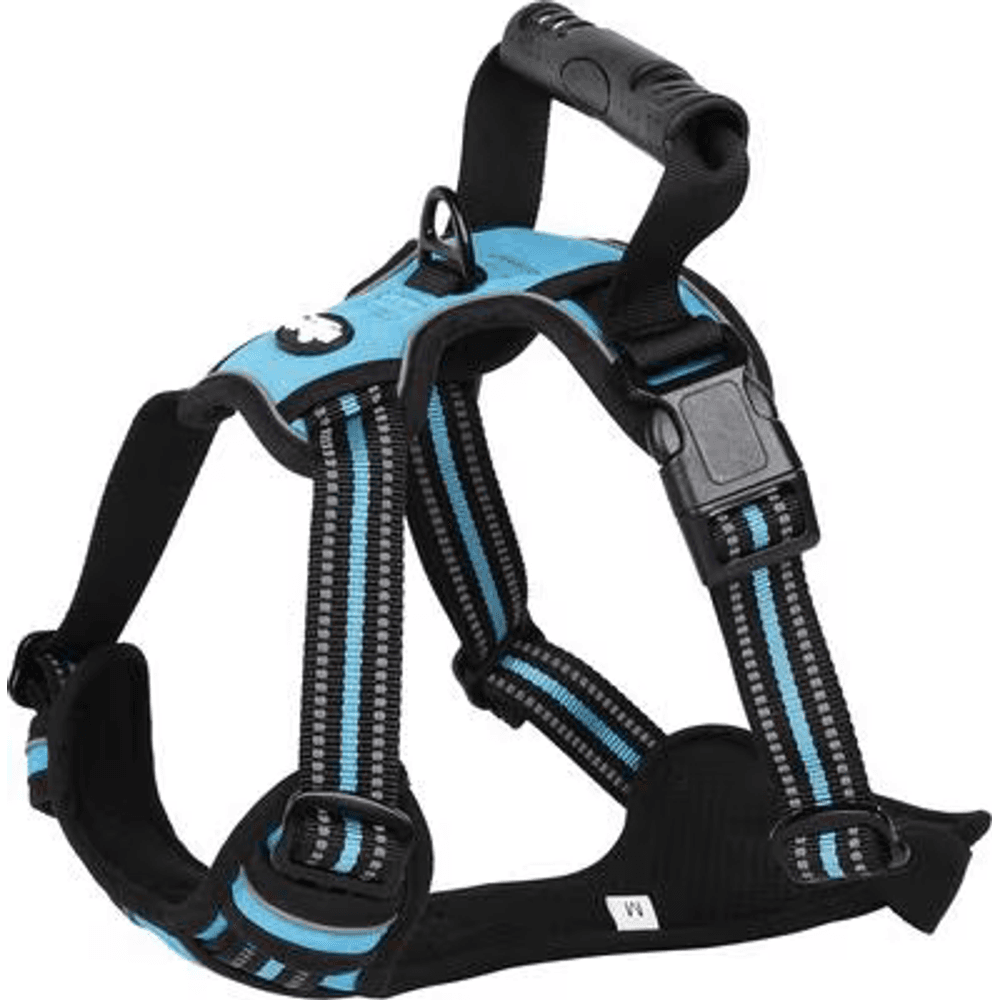
A padded, reflective no-pull harness that spreads leash pressure across the chest instead of the throat, the switch most vets recommend for a dog with a cough, a collapsing trachea, or any airway irritation so the leash never presses on...
Webvet may earn a commission when you click through to Chewy, at no extra cost to you.
Why heart disease causes coughing: pulmonary edema vs. airway compression

There are two main reasons a dog coughing from congestive heart failure happens, and they can occur separately or together.
1. Pulmonary edema (fluid in the lungs). In left-sided congestive heart failure, the left side of the heart cannot move blood forward efficiently, so pressure backs up into the lungs and fluid leaks into lung tissue. VCA Animal Hospitals describes persistent coughing with difficulty breathing as the most common clinical sign of congestive heart failure, driven mainly by this fluid buildup. Fluid in the lungs also forces the body to breathe faster, which is why the resting breathing rate is such a useful home warning sign.
2. Airway compression. As the heart enlarges, particularly the left atrium (the upper-left chamber that sits directly beneath the main airways), it can physically press on the airways above it. The Cardiac Education Group explains that in a mature dog a cough can stem from left main-stem bronchus compression, from concurrent chronic bronchitis, or from another airway disorder rather than from lung fluid alone, and that treating the heart with a diuretic and an ACE-inhibitor often eases such a cough because the heart gets smaller. This is why a dog can cough from an enlarged heart even before true congestive failure sets in.
The Tufts HeartSmart program frames coughing as a sign of severe heart disease or heart failure, most often from fluid buildup in or around the lungs, while also stressing that a cough does not by itself confirm a heart problem. Because these two mechanisms overlap and look similar from the outside, chest X-rays are needed to tell them apart and guide treatment.
Cardiac cough vs. collapsing trachea, kennel cough, and reverse sneezing

One of the hardest parts of a coughing dog is figuring out whether it is the heart or the airways. When owners ask about a dog coughing from the trachea or heart, they are usually trying to separate a cardiac cough from a mechanical airway problem. The table below covers the common look-alikes. It is a starting point, not a diagnosis.
| Feature | Heart failure (cardiac) cough | Collapsing trachea | Kennel cough | Reverse sneezing |
|---|---|---|---|---|
| Typical sound | Soft, moist, persistent | Dry, harsh "goose honk" | Loud, hacking honk, often with a gag | Rapid snorting inward, not a true cough |
| When it is worse | At night, lying down, at rest, after exertion | With excitement, pulling on a collar, drinking | Anytime, worse with activity or contagion exposure | Sudden episodes, then normal |
| Other signs | Faster resting breathing, tiring easily, possible foam | Otherwise bright and well between episodes | Recent boarding or dog-park contact, mild fever | No breathing distress, resolves on its own |
| Typical patient | Older small-breed or large-breed dogs with a heart murmur | Small toy breeds, middle-aged and up | Any dog after group exposure | Any dog, common in small breeds |
| Urgency | High if breathing is fast or labored | Usually not an emergency unless severe | Usually mild, worse in puppies or seniors | Rarely urgent |
A few practical notes:
- A dog coughing and gagging with congestive heart failure can look a lot like kennel cough, so recent boarding or a new heart murmur is an important clue to share with your vet.
- Collapsing trachea vs. heart disease cough can be tricky because both worsen with excitement, and a small older dog can genuinely have both at once.
- Dog cough vs. reverse sneeze is usually about direction: reverse sneezing pulls air rapidly inward and stops on its own, while a cough pushes air out.
- Kennel cough vs. heart cough often comes down to context and breathing rate, not sound alone.
Because these coughs share so much overlap, and because a single dog can have more than one at once, this is exactly why X-rays and an exam matter. For a broader walk-through of every cause, see our overview of why your dog is coughing. We also have dedicated guides on kennel cough in dogs, a dog coughing and gagging, and the honking cough of a collapsing trachea.
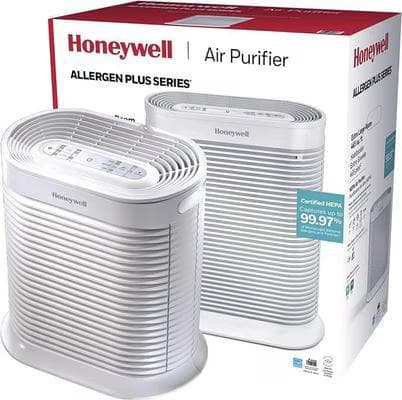
Certified True HEPA air purifier that captures 99.97% of airborne dust, dander, pollen, and smoke, reducing the airborne triggers behind feline asthma and respiratory irritation.
Webvet may earn a commission when you click through to Chewy, at no extra cost to you.
When the cough is worse: at night, lying down, and in senior dogs
A hallmark of a dog coughing at night from heart failure is timing. Cardiac coughs frequently intensify when a dog lies down or settles to sleep, because lying flat can shift fluid and make congested lungs work harder. If your dog is coughing more at night or wakes up to cough, that pattern is worth noting for your vet.
Age matters too. An old dog coughing with heart failure or a senior dog coughing from heart failure is a common scenario, because the most frequent underlying cause, degenerative valve disease, develops slowly over years and shows up in middle-aged and older dogs. If you notice a dog with congestive heart failure coughing more than it used to, or a dog with heart failure coughing more frequently or forcefully, treat that as a signal that the disease may be progressing and the treatment plan may need adjusting. For more context on this common valve condition, see our guide to mitral valve disease in dogs and the trends worth tracking between visits.
For more on the night-time pattern specifically, see our guide to a dog coughing at night, and for the foamy-cough question, our guide to a dog coughing up white foam.
 $65 · no membership
Have a health question about your dog?
A licensed vet can assess your dog over video and prescribe online when it's appropriate.
 Talk to a vet
- Licensed vets
- All 50 states
- same-day Rx
Webvet may earn a commission if you book.
What stage of heart failure causes coughing?
Owners frequently ask what stage of heart failure is coughing in dogs. Coughing driven by fluid in the lungs is a sign of more advanced, severe heart disease, not the earliest stage. Vets often use a staging system (Stages A through D) where clinical signs like coughing and breathing difficulty appear in the later stages, once the heart can no longer compensate and congestive heart failure has developed.
The Tufts HeartSmart team is clear that a cough of cardiac origin usually reflects severe heart disease or heart failure. That is why the appearance of a new cough in a dog with a known heart murmur is such an important trigger to have the heart re-evaluated promptly. If your dog has a murmur, our dog heart murmur monitoring guide explains what to record between veterinary visits.
People also search for stage 4 congestive heart failure in dogs and signs of end stage heart failure in dogs. In practical terms, advanced or end-stage failure often includes:
- A persistent cough that no longer settles
- A resting breathing rate that stays high (over about 30 breaths per minute)
- Labored breathing even at rest
- Marked fatigue, reluctance to move, and loss of appetite
- Fainting or collapse
- A swollen belly (a sign of right-sided fluid buildup)
The gap between staging and end-of-life planning is emotionally heavy. We cover the final-stage and comfort questions with more depth in the prognosis section below.
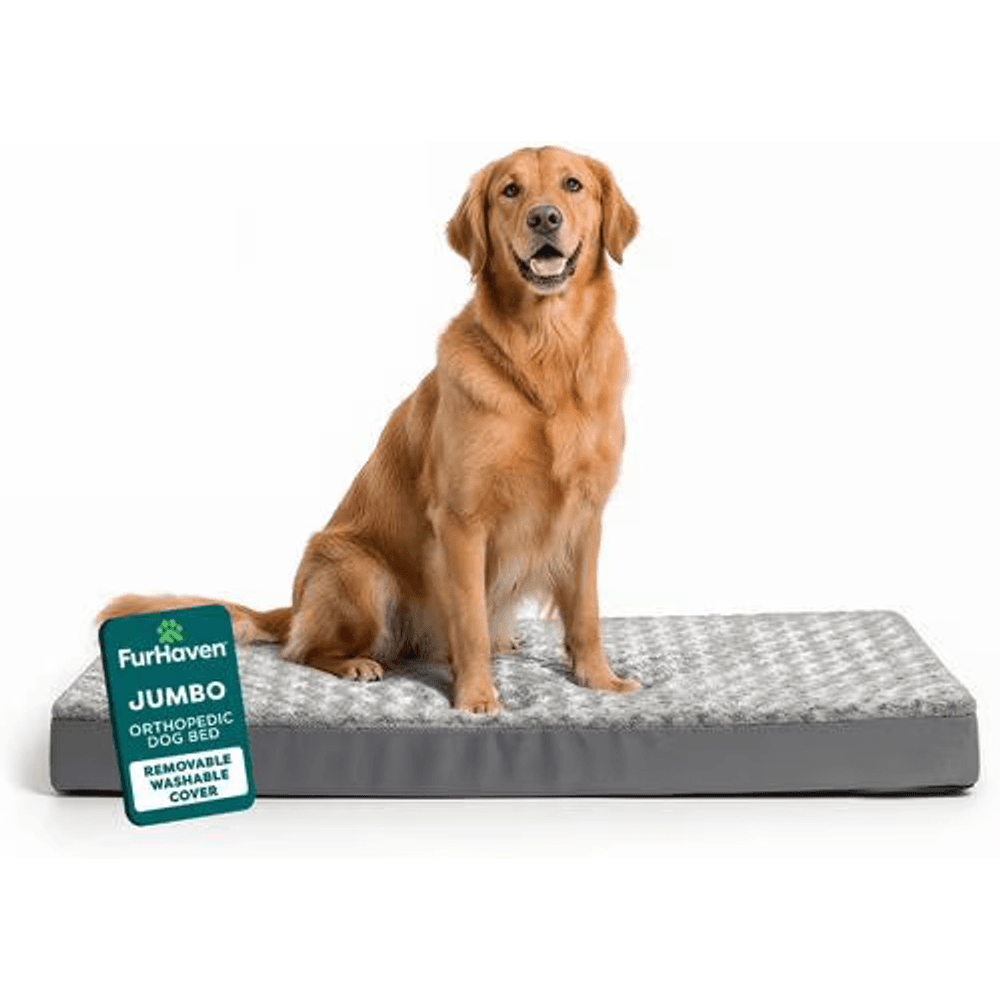
A plush orthopedic foam mattress that cushions aging joints and pressure points, giving a stiff or trembling senior dog warm, supportive rest.
Webvet may earn a commission when you click through to Chewy, at no extra cost to you.
How vets diagnose a heart-failure cough (and the resting respiratory rate you can track at home)

Diagnosis starts with a physical exam and listening for a heart murmur or fluid crackles in the lungs. From there, the two key tests are:
- Chest X-rays (thoracic radiographs): the single most important test to show whether the lungs actually contain fluid, whether the heart is enlarged, and whether the airways are being compressed. The Cardiac Education Group stresses that because a cough alone is not a reliable stand-alone indicator of congestive failure, radiographs are needed to confirm the cause.
- Echocardiogram (heart ultrasound): shows how the heart is functioning, which chambers are enlarged, and what specific disease is present. This is the x-ray and echocardiogram for the dog heart workup owners often see recommended.
Your vet may add blood pressure checks, an ECG, and a blood test called NT-proBNP that can help sort cardiac from respiratory causes.
The resting breathing rate you can track at home
The most useful number you can monitor yourself is your dog's resting respiratory rate, sometimes discussed as dog breaths per minute with heart failure. Both the Merck Veterinary Manual and VCA Animal Hospitals recommend counting breaths at rest and reporting any sustained increase, because dogs with fluid on the lungs breathe faster, and a rising trend is an early warning that congestion is worsening. VCA notes that even an increase within the normal range for a given dog should be reported to your veterinarian. For a step-by-step trend approach, see how to track a dog's respiratory rate over time. See WebVet’s guide to senior dog breathing and heart rate.
How to do it:
- Wait until your dog is sleeping or fully resting and calm (not panting from heat, exercise, or stress).
- Count each breath (one rise and fall of the chest equals one breath) for 30 seconds and multiply by two, or count for a full 60 seconds.
- Log the number daily so you can spot trends.
What number should worry you? VCA Animal Hospitals puts the normal resting or sleeping breathing rate at 15 to 30 breaths per minute and states that a rate consistently greater than 30 breaths per minute is increased and considered abnormal. Veterinary cardiologists commonly treat a sustained resting or sleeping rate above roughly 30 breaths per minute as the point to call your vet. A resting or sleeping breathing rate consistently over about 30 breaths per minute is a warning sign. A clear upward trend, or a jump above 30 to 35, warrants a same-day call to your vet even if your dog seems otherwise okay. First recount it a few times over the next hour or two to confirm the reading is consistent rather than a one-off. This simple habit can catch a flare of fluid on the lungs before it becomes a crisis.

360-degree Wi-Fi pet camera so you can watch your cat's resting breathing rate and behavior from your phone and catch worrying changes early.
Webvet may earn a commission when you click through to Chewy, at no extra cost to you.
Treatment and how to help a coughing dog with congestive heart failure
The most common question after diagnosis is how to help a dog coughing from congestive heart failure. The honest answer is that real treatment is medical and comes from your vet, but there is a lot you can do to support your dog. Dog congestive heart failure coughing treatment is aimed at the underlying disease, not just silencing the cough.
Typical vet-directed treatment may include:
- Diuretics to pull excess fluid out of the lungs (a mainstay for pulmonary edema)
- Medications that support heart function and lower the heart's workload
- Blood-pressure and rhythm medications when needed
- A veterinary-guided lower-sodium diet to reduce fluid retention
- Recheck X-rays and exams to fine-tune the doses
At home, here is how to comfort a dog with congestive heart failure:
- Keep exertion gentle and let your dog set the pace; avoid heat and humidity
- Keep the sleeping area cool, calm, and easy to reach so your dog is not straining
- Feed the exact diet and give the exact medications your vet prescribes, on schedule
- Count and log the resting breathing rate daily
- Reduce stress and excitement, which can trigger coughing bouts
Prognosis: how long can a dog live with a cardiac cough?
This is the question that weighs on every owner: how long can a dog live with a cardiac cough? There is no single number, because it depends heavily on the underlying disease, how early it was caught, how well it responds to medication, and how consistently the plan is followed. Many dogs live comfortably for a meaningful stretch of time on treatment, while others progress more quickly. Your veterinary cardiologist can give you the most realistic picture for your specific dog.
Owners also ask how long the final stage of congestive heart failure lasts. The final stage is variable and can range from days to weeks once a dog stops responding to medication and fluid can no longer be controlled, but this is exactly the point where your vet's guidance matters most, because quality of life, not just time, becomes the priority.
Recognizing the signs of a dog dying of heart failure helps you make loving decisions:
- Persistent labored breathing that does not ease with rest or medication
- A resting breathing rate that stays high despite treatment
- Severe fatigue, no interest in food or favorite activities
- Repeated fainting or collapse
- Restlessness and obvious distress that comfort cannot settle
Many owners also wonder will a dog with congestive heart failure die peacefully. The compassionate truth is that unmanaged end-stage heart failure can feel like drowning from within, and that is why humane euthanasia is often the kindest choice to prevent suffering. Working closely with your vet on comfort care means your dog does not have to reach a distressing crisis. If you are weighing when to euthanize a dog with heart failure, a quality-of-life discussion with your veterinarian, focused on breathing comfort, appetite, and good days versus hard days, is the right next step. You are not failing your dog by asking these questions early; you are protecting them.
When to call the vet vs. go to the ER (emergency red flags)
Because a heart-failure cough can escalate fast, knowing the difference between "call the vet today" and "go to the ER now" matters.

Call your vet soon (same day) if you notice:
- A new cough in a dog with a known heart murmur or heart disease
- A resting breathing rate creeping up toward or just over 30 breaths per minute
- A cough that is becoming more frequent or forceful
- Reduced energy or tiring on normal walks
These are the moments when minutes count. A dog with blue gums and breathing trouble from heart failure, or a dog coughing up blood with heart failure, is in a life-threatening crisis. Emergency vets can give oxygen and rapid-acting medications that pull fluid off the lungs and can turn the situation around, but only if your dog gets there in time.
When in doubt, call. No vet will fault you for bringing in a coughing dog whose breathing looked wrong. The risk of waiting is far greater than the cost of a precautionary visit.
Frequently asked questions

Frequently Asked Questions
What stage of heart failure is coughing in dogs?
Coughing from fluid in the lungs is a sign of more advanced, severe heart disease, not an early stage. In common staging systems, clinical signs like coughing and breathing difficulty appear in the later stages once congestive heart failure has developed. Because a new cough in a dog with a heart murmur signals progression, Tufts HeartSmart recommends prompt veterinary evaluation.
What are the final stages of heart failure in dogs?
The final stages of heart failure in dogs often involve persistent labored breathing, a resting breathing rate that stays high despite medication, a cough that no longer settles, severe fatigue, loss of appetite, fainting or collapse, and sometimes a swollen belly. At this point fluid can no longer be fully controlled with medication, and the focus shifts to comfort and quality of life. Your veterinarian is the best guide for what to expect and when to act.
What does a heart failure cough sound like in dogs?
A heart failure cough in dogs is typically a soft, moist, persistent cough that often worsens at night, when lying down, or after exertion, and it may bring up small amounts of clear or foamy fluid. It sounds different from the dry goose-honk of a collapsing trachea. The Merck Veterinary Manual notes that fluid in the lungs causes labored, fast, open-mouth breathing that needs prompt care, so coughing up pink-tinged or bloody foam should be treated as an emergency.
How long does the final stage of congestive heart failure last?
The final stage of congestive heart failure is variable and can range from days to a few weeks once a dog stops responding to medication and lung fluid can no longer be controlled. There is no fixed timeline, because it depends on the underlying disease and how the dog responds to care. A veterinarian can help you assess quality of life so your dog does not suffer through a breathing crisis.
How long can a dog live with a cardiac cough?
There is no single lifespan for a dog with a cardiac cough, because survival depends on the underlying heart disease, how early it was diagnosed, how well it responds to medication, and how consistently the treatment plan is followed. Many dogs live comfortably for a meaningful period on treatment, while others progress faster. A veterinary cardiologist can give the most realistic estimate for your specific dog.
What are the signs of end stage heart failure in dogs?
Signs of end stage heart failure in dogs include persistent labored breathing that does not ease with rest, a resting breathing rate that stays high despite medication, an unrelenting cough, extreme fatigue, refusal to eat, repeated fainting or collapse, and visible distress. Per VCA Animal Hospitals, worsening breathing effort is a key indicator, and it warrants urgent veterinary care.
How to help a dog coughing from congestive heart failure?
The most effective help is vet-directed treatment, usually diuretics to clear lung fluid plus medications that support heart function and a low-sodium diet, so contact your veterinarian first. At home, keep your dog calm and cool, avoid exertion and heat, give medications exactly as prescribed, and count the resting breathing rate daily. Never give human cough medicine, because the Merck Veterinary Manual warns that masking the cough can hide worsening lung fluid.
How to tell if a dog is in its last days?
A dog in its last days from heart failure often shows constant labored breathing that comfort and medication cannot ease, a persistently high resting breathing rate, no interest in food or favorite activities, repeated fainting or collapse, and restlessness or obvious distress. These signs mean it is time for an urgent, compassionate quality-of-life conversation with your veterinarian, who can guide you on comfort care and humane options so your dog does not suffer.
$65 · no membershipHave a health question about your dog?
A licensed vet can assess your dog over video and prescribe online when it's appropriate.
Talk to a vet- Licensed vets
- All 50 states
- same-day Rx
Webvet may earn a commission if you book.

Editor
The Webvet Editorial Team is the in-house group of pet-care editors and writers behind Webvet, operated by Smart Pet Collective. The team researches, writes, and maintains Webvet's pet health, behavior, and medication content. Every article follows a defined editorial process: research from reputable veterinary and scientific sources, careful drafting, mandatory review of medical content by a credentialed veterinarian, and dated publication. Health and medication articles are medically reviewed by a licensed veterinary professional before they go live and are kept current over time.
Veterinarian · BVMS MRCVS
Dr. Pippa Elliott, BVMS, MRCVS, is a veterinarian with nearly 30 years of experience in companion animal practice. Dr. Elliott earned her Bachelor of Veterinary Medicine and Surgery from the University of Glasgow. She was also designated a Member of the Royal College of Veterinary Surgeons. Married with 2 grown-up kids, Dr. Elliott has a naughty Puggle named Poggle, 3 cats and a bearded dragon.


