Heartworm Test for Dogs: Costs, Timing, and Accuracy
A heartworm test is a quick blood test, but a clean result only covers exposure from about seven months ago. Here is how the antigen and microfilaria tests differ, why the annual test matters even on year-round prevention, what to do after a missed dose, and what it costs.

BVMS MRCVS
Medically reviewed by Dr. Pippa Elliott, BVMS MRCVS · Last reviewed

This article contains affiliate links. Webvet may earn a commission when you buy through them, at no extra cost to you.
If your veterinarian will not refill your dog's prevention without a blood draw first, there is a reason. A heartworm test for dogs is the checkpoint that makes a preventive safe to give, and it is the only way to find an infection that has produced no symptoms yet.
Heartworm disease damages the heart and lungs and kills dogs when it goes untreated. By the time a dog is coughing, adult worms have usually been living in the chest for months, which is why the timing of the test matters as much as the test itself.
This guide covers what the test detects, how the antigen test and the microfilaria test differ, why a negative test is required before starting prevention, why annual heartworm testing still applies on year-round prevention, the six-month window, missed doses, and cost.
- 1Heartworm testing is a blood test, not an X-ray or a scan, and the standard in-clinic version is read while you wait.
- 2Two different tests exist: one hunts for protein produced by adult female worms, the other hunts for the microscopic larvae those worms release into the blood.
- 3Yearly testing is recommended even for dogs that never miss a dose, because doses get vomited, spat out, or skipped, and no product on the market is perfect.
- 4A clean result today tells you nothing about a mosquito bite from last month, which is why the timing of the test matters as much as the test itself.
- 5After any gap in prevention, the rule is to test straight away, keep dosing on schedule, and test again six months later.
- 6Expect a modest test fee plus a separate exam fee, with low-cost, shelter, and retail clinics sitting well below a full-service practice.
- 7A positive result is confirmed before any treatment starts, and the dog's activity has to be restricted from the day the diagnosis is made.
What Is a Heartworm Test for Dogs?
In plain terms, a heartworm test for dogs is a blood test run on a small blood sample drawn in the clinic. First, the antigen test detects protein shed by adult female heartworms. Second, a microscope check looks for larvae in the same blood, and results usually come back in about 10 to 15 minutes.
The parasite behind all of this is Dirofilaria immitis, a worm spread from dog to dog by mosquitoes. Adult worms live in the pulmonary arteries and the right side of the heart, where they cause inflammation and permanent vessel damage long before an owner notices anything.
Because every mosquito season brings fresh exposure, most dogs need one every year.
When your dog needs to be tested
- Every year for adult dogs, including dogs kept on year-round prevention with a perfect dosing record.
- At about seven months of age or older, before a first prescription preventive is dispensed.
- Immediately after any lapse in prevention, and again six months after that.
- At intake for a newly adopted or rescued dog whose history is unknown.
- Any time a dog develops a cough, exercise intolerance, or unexplained weight loss.
Every heartworm preventive sold in the United States is a prescription item, which is the practical reason the blood draw comes before the box. Combination products such as Simparica TRIO Chewable Tablets for Dogs fold heartworm prevention in with flea and tick control.
None of them can be dispensed without a veterinary relationship and, for a dog old enough to be infected, a negative test on file. Our heartworm prevention guide covers what happens after a clean result.
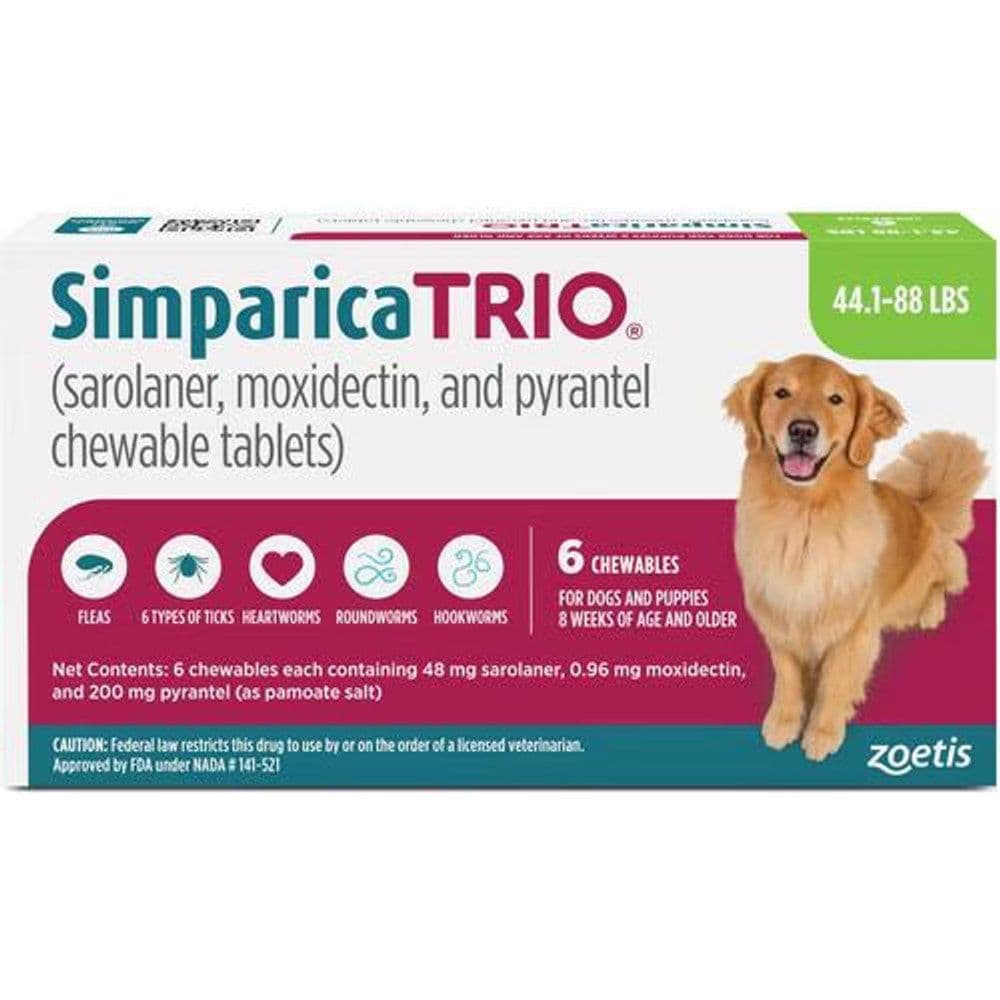
Monthly chew that protects dogs from fleas, six species of ticks, heartworm disease, roundworms, and hookworms.
Webvet may earn a commission when you click through to Chewy, at no extra cost to you.
The Two Main Heartworm Tests: Antigen and Microfilaria
There are two tests a clinic runs on your dog's blood, and they answer different questions. The antigen test asks whether adult female worms are present. The microfilaria test asks whether those worms are reproducing and releasing larvae into the blood. Most dogs get the first as a screen.

Second, the modified Knott's test looks for microfilariae under a microscope after the sample is concentrated, which is why it can pick up a light larval load that a plain blood smear would miss. A filter test does the same job a different way.
And a PCR test can confirm the species of microfilariae when the picture is unclear, because dogs also carry a harmless look-alike parasite that is easily mistaken for heartworm larvae on a slide.
| Test | What it detects | How soon it can turn positive | Where it is run | What a negative does not rule out |
|---|---|---|---|---|
| Antigen test (the standard screen) | Protein released by adult female heartworms | Usually around 7 months after infection, occasionally as early as 5 | In-clinic device or reference laboratory | An infection under about 6 months old, an all-male worm burden, or a very light burden |
| Microfilaria test (modified Knott's or filter) | Live larvae circulating in the blood | About 6 to 7 months after infection | In-clinic microscope or reference laboratory | Adult worms that are not reproducing, or a dog already on a preventive that suppresses larvae |
| Antibody test | Antibodies the immune system makes against heartworm | Not applicable to routine canine screening (it is a feline test) | Reference laboratory | Not used to clear or diagnose a dog |
| PCR test | Heartworm DNA in the sample | Only when larvae are present | Reference laboratory | An adult infection producing no larvae |
What "the best heartworm test" actually means
There is no single best heartworm test, because the two are not competing. The antigen test is more sensitive overall, since roughly one in five infected dogs or more carries no circulating larvae at all. The microfilaria check confirms whether the dog is a reservoir for further spread, which matters enormously before treatment starts.
How a Heartworm Test for Dogs Is Actually Done
Testing a dog for heartworms takes one small blood sample, usually drawn from a foreleg vein in under a minute. That sample goes onto an in-clinic antigen test, a cassette or snap device that gives results in about 10 to 15 minutes without the sample leaving the building.
When indicated, the same sample can be checked for microfilariae under a microscope while you wait.

What the visit looks like, step by step
- A technician clips or parts the hair over a vein on the front leg and holds off the vessel while the sample is drawn.
- A few drops of blood go into the antigen test device, mixed with the conjugate and buffer the kit supplies.
- The device sits for the manufacturer's stated run time, typically 8 to 15 minutes depending on the brand.
- If a microfilaria check is being run, a second portion of the sample is concentrated and read on a slide.
- The result is read against a built-in control spot, recorded in the file, and shared with you before you leave.
- Where a reference laboratory runs the test instead, results usually come back within one to three business days.
No fasting is needed, no sedation is needed, and the whole appointment usually takes less time than the paperwork. If your dog is anxious about handling, say so when you book, because the draw goes faster when the team plans for it.
Why Your Dog Must Be Tested Before Starting Prevention
A dog aged seven months or older needs a negative test before a first preventive is dispensed, and the reason is safety rather than paperwork. Monthly preventives kill the immature larvae a dog picked up in the previous month.
They do not kill the adult worms already living in the heart, so starting prevention on an infected dog hides the problem while the damage continues.
There is a second reason that matters more in dogs carrying a heavy larval load. Giving a macrocyclic lactone to a dog with large numbers of circulating microfilariae can kill those larvae quickly enough to trigger a shock-like reaction, which is why veterinarians want to know what is in the blood before the first dose goes in.
What a monthly preventive actually does
Interceptor Plus Chew for Dogs, for example, is a prescription monthly chewable that clears the previous month's heartworm larvae and also treats several intestinal worms, a useful pairing given how often owners confuse the two problems.
If that distinction is new to you, our guide to intestinal worms in dogs sorts it out. What no monthly product does is remove an established adult infection.
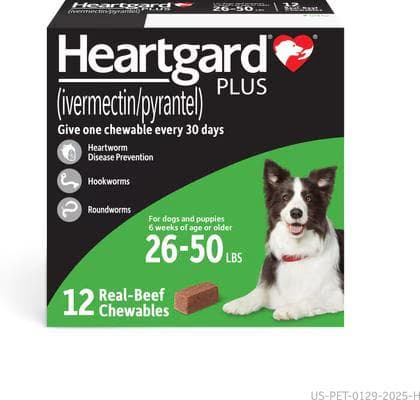
Webvet may earn a commission when you click through to Chewy, at no extra cost to you.
What the test protects you from
- Spending a year on prevention while an undiagnosed infection quietly scars the pulmonary arteries.
- A preventive reaction in a dog with a high microfilarial load.
- Losing a product's satisfaction guarantee, since most manufacturer guarantees require documented annual testing and continuous dosing.
- Discovering the infection at the point where it is already causing heart failure rather than at the point where treatment works best.
Why Annual Testing Still Matters on Year-Round Prevention
Yes, testing is necessary, and the American Heartworm Society recommends testing every year, even for dogs on year-round prevention with an unblemished dosing record. That recommendation is not a formality. It exists because no preventive is 100 percent effective, and because the ways monthly dosing quietly fails are almost invisible from the owner's side of the room.
The ways a perfect dosing record still fails
- The dose came back up. A chewable vomited within an hour or two of dosing may not have been absorbed, and most owners do not connect a small vomit that evening with a lost month of protection.
- The dose was never swallowed. Dogs are good at holding a chewable in a cheek and spitting it into the yard, and multi-dog households lose doses to the wrong dog entirely.
- The dose was late. A preventive given three weeks past due leaves a gap that larvae can survive.
- A topical was washed off. Bathing or swimming too soon after application can reduce absorption.
- The product underperformed. Documented lack-of-efficacy cases exist, which is why manufacturers and the FDA track them and why guarantees are conditional on testing.
That last point is the honest answer to the common suspicion that yearly testing is a revenue exercise. Testing is what makes any manufacturer guarantee enforceable in the first place.
More to the point, an infection caught on a routine screen is far cheaper and safer to treat than one caught after symptoms start, and our breakdown of what heartworm treatment costs makes that contrast concrete.
One tablet, one fewer chance to miss a dose
A combination product such as Trifexis Chewable Tablet for Dogs handles heartworm larvae and fleas in a single monthly tablet, which removes one source of missed doses by removing one product from the routine.
It is still prescription only, and a dog that brings the tablet back up an hour later is unprotected for that month. The annual test is what catches the month nobody noticed.
The Six-Month Window: Why a Test Can Miss a New Infection
The single most misunderstood thing about heartworm testing is that it looks backward, not forward. A negative result confirms your dog did not have detectable adult worms as of roughly seven months ago. It says nothing about this summer, because worms have to be about seven months old before a test can find them.
The timeline, in order
- An infected mosquito bites your dog and deposits infective larvae onto the skin.
- The larvae enter through the bite wound and spend roughly two to three months developing in tissue under the skin and in muscle.
- Around three to four months in, immature worms migrate through the bloodstream toward the heart and lungs.
- At about five to seven months, the worms mature, and adult females begin releasing the antigen the standard test looks for.
- At roughly six to seven months, reproducing pairs start releasing microfilariae into the blood.
Only at the end of that sequence does a blood test have anything to find, which means a test today reflects mosquito bites from roughly seven months ago.
Antigen can occasionally be detected around five months, but most infected dogs do not test positive until closer to seven, and there is no test that can detect an infection from last month. The mechanics are covered in how dogs get heartworm.

The practical consequence is simple. Test results are a snapshot of the past, so a negative result does not rule out a recent infection, and the only way to cover the gap is to keep the preventive going every single month between tests.
 $65 · no membership
Need flea, tick, or heartworm prevention for your dog?
A licensed vet can recommend and prescribe the right preventive for your dog online when it's appropriate.
 Talk to a vet
- Licensed vets
- All 50 states
- same-day Rx

Webvet may earn a commission if you book.
False Negatives: When a Clean Result Is Not the Whole Story
In testing terms, a false negative is a test that reads clean on a dog that is actually infected, and it happens often enough that veterinarians build their retest schedules around it. None of this makes the test unreliable. It makes the test one input among several, which is why history and physical exam findings still matter.
What antigen blocking means for your dog
Antigen blocking is the one most owners have never heard of. Antibodies bind the heartworm antigen and hide it from the test, so the sample reads negative despite adult worms being present.
When that is suspected, based on a suggestive cough, abnormal chest radiographs, or larvae on a slide with a negative antigen result, a laboratory can run heat treatment of the sample to unmask it and repeat the assay.
That is a laboratory step rather than something a clinic does on every routine screen, and it is not something an at-home kit can offer. It explains how a dog can test negative one year and be confirmed positive the next with nobody having done anything wrong.
When a negative result should be questioned
- The dog has a persistent soft cough or tires quickly on walks that used to be easy.
- Chest radiographs show changes in the pulmonary arteries.
- Microfilariae turn up on a slide while the antigen test reads negative.
- The dog spent a season in a high-prevalence region with no prevention on board.
- Prevention lapsed and the retest is still inside the six-month window.
If any of those apply, talk to your veterinarian about repeating the test at a reference laboratory rather than accepting the in-clinic screen as final.
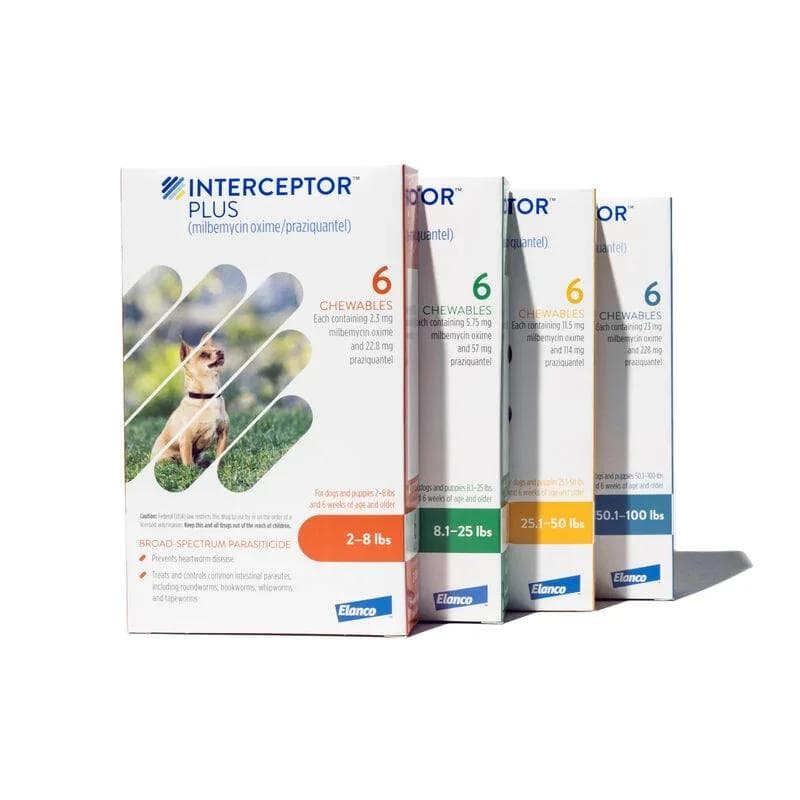
A monthly prescription chew that prevents heartworm and clears roundworm, hookworm, whipworm, and tapeworm. Since tapeworm is the usual reason a dog scoots, monthly cover is what stops it coming back.
Webvet may earn a commission when you click through to Chewy, at no extra cost to you.
Missed a Dose? The Six-Month Retest Rule
A missed dose is the most common reason a dog gets tested off schedule, and the response is the same whether the gap was one week or one season. Test now, so you have a baseline. Keep dosing. Test again six months later, because anything acquired during the gap will not be detectable before then.

If the dosing routine is the problem, change the routine
Owners who miss doses are rarely careless. They are usually fighting a dog that will not swallow a chewable, or a schedule with no reliable anchor. Both are fixable.
A topical option such as Revolution Topical Solution for Dogs removes the swallowing problem entirely by going onto the skin between the shoulder blades, and it remains a prescription product given on the same monthly rhythm.
For dogs whose owners travel or who live in households where dosing is genuinely unreliable, the veterinarian-administered injectable is worth a conversation, and we cover the schedule and pricing in our guide to the twelve-month heartworm injection.
Testing Puppies and Newly Adopted Dogs
Age changes the answer. Under current guidance, puppies under seven months can start prevention without a test, because a puppy that young cannot yet harbor worms old enough to detect.
What the puppy still needs is a test later, and that follow-up is the part that gets forgotten once the first year of vaccines is behind you.
Three common cases
- A puppy started on prevention at eight weeks can usually begin without a pretest. The American Heartworm Society schedule is to test about six months after prevention begins, test again six months later, and then test annually for life. Product timing and weight-based dosing for that first year are covered in heartworm prevention for puppies.
- A newly adopted adult with no paperwork. Assume nothing, because a newly adopted dog with no records should be tested at intake, started on prevention once the result is known, and retested six months later to cover anything acquired before you had him.
- A dog relocating to a high-prevalence region. Test before the move if the dog has not been tested in the past year, keep prevention continuous through the transition, and follow the local clinic's testing rhythm once you arrive, since mosquito seasons differ enormously by region.
Shelter and rescue dogs deserve one extra note. Many shelters do test at intake, but a test run on a dog surrendered three months earlier does not cover the exposure that happened before it arrived.
Ask for the actual test date rather than assuming the record on the adoption paperwork is current.
How Much Does a Heartworm Test for Dogs Cost?
In most of the country, the test itself usually runs about $35 to $75 as a standalone line item, and the office visit or wellness exam fee is charged separately, typically $50 to $100 at a full-service practice.
Those are ranges rather than quotes, because prices vary widely by region and clinic type. Bundled into an annual wellness package, the test often costs less on paper, since the exam is already priced in.
What moves the number
- Region. Urban and coastal metro pricing runs well above rural pricing for the identical test.
- Clinic type. A specialty or emergency hospital charges more than a general practice, and a general practice charges more than a vaccine clinic.
- What else is on the sample. A combined heartworm and tick-borne disease panel, which screens for Lyme, ehrlichiosis, and anaplasmosis on the same few drops of blood, usually runs $45 to $95 and is often the better value if your dog gets ticks. Our guide to what tick bites look like on dogs covers that exposure side.
- In-clinic versus reference laboratory. Sending the sample out can cost more and takes longer, but it is where confirmatory work and heat treatment happen.
- Whether a microfilaria check is added. Expect a modest additional charge when the microscope work is run alongside the antigen screen.
Set that against the alternative. Treating an established infection runs into four figures for most dogs, involves a series of injections into the back muscles, and requires months of strict activity restriction.
A yearly test is the cheapest line item in the entire heartworm story.
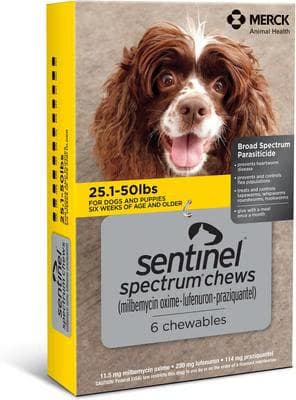
Webvet may earn a commission when you click through to Chewy, at no extra cost to you.
Where to Get a Heartworm Test, and What Each Option Costs
You have more options than your regular clinic, and they are not equivalent. Your own veterinary practice gives you the exam, the medical record, and the prescription in one visit.
Everything else trades some of that away for a lower price, and low-cost vaccine clinics and shelter clinics often run it for less than half of what a full-service hospital charges.
| Where you go | Typical cost of the test | Usually included | Usually not included |
|---|---|---|---|
| Your primary veterinary practice | $35 to $75 plus a $50 to $100 exam fee | Full physical exam, medical record, prescription written or refilled the same day | A discounted price, since you are paying for the full service |
| Low-cost vaccine clinic | $15 to $35 | The test and often vaccines at the same visit | A full physical exam, diagnostics, or follow-up if the result is positive |
| Shelter or humane society clinic | $10 to $30, sometimes bundled into an adoption fee | The test, and often prevention sold at cost | Eligibility is frequently income-limited or adopter-limited |
| In-store retail veterinary clinic | $30 to $60 | Convenience, walk-in or short-notice availability, prescription writing | Continuity of care and a relationship with one veterinarian who knows the dog |
Is a free heartworm test ever real?
Sometimes, with conditions. A genuinely free heartworm test usually appears in one of three places: bundled into an adoption from a shelter or rescue, offered at a grant-funded community clinic day, or included as a promotion when you buy a twelve-month supply of prevention.
None of those are scams, and all of them are worth asking about. To find one, check your state veterinary association or local humane society for clinic-day schedules rather than relying on a search listing that may be years out of date.
At-Home Heartworm Test Kits: What They Can and Cannot Do
You can test your dog at home, with real limits. In practice, an at-home heartworm test kit is a mail-in blood collection kit: you collect a small blood sample yourself, usually with a lancet, seal it into the supplied card, and mail it to a laboratory.
Results come back electronically in roughly one to two weeks, and they are genuine laboratory results, but it does not replace the annual test your veterinarian runs.
The three hard limits
- No exam comes with it. A positive finding immediately requires chest radiographs, bloodwork, and a staging conversation, none of which arrive in an envelope, so a positive result still means an appointment, usually a same-week one.
- Your veterinarian may not accept it. Most practices will not write or refill a preventive prescription off an outside result they cannot verify, and every heartworm preventive is a prescription product in the United States. That means an at-home negative often gets repeated in the clinic anyway.
- Sample quality is on you. A short draw, a clotted sample, or a card that sits in a hot mailbox for three days can produce an inconclusive result or a repeat request, and there is no consumer test that replaces a veterinary diagnosis.
There is one legitimate use case. If your dog is between annual visits and something has changed, whether a lapse in dosing, a move, or a new cough, a mail-in kit can give you information sooner than the next appointment slot allows.
Treat it as a supplementary check that prompts a phone call, never as a substitute for the yearly test and never as a way to avoid the clinic.
Reading Your Dog's Heartworm Test Result
In practice, reading your dog's test result is mostly about understanding two spots on a small plastic device. One spot is the control, which has to develop for the test to be valid at all. The second spot is the sample result.
If the sample spot develops any color, the test is reporting antigen, and even a faint line is treated as a positive until confirmed.

Negative, positive, and the grey area
- Negative. The control developed and the sample spot did not. Your dog had no detectable adult female heartworm antigen at the time of the draw, subject to the six-month window and the false-negative reasons above.
- Positive. The sample spot developed. In practice, a positive antigen test is usually confirmed with a second test, often a different manufacturer's assay or a reference laboratory run, plus a microfilaria check, before any treatment decision is made.
- Faint or equivocal. Read as positive and confirmed. A weak line can reflect a light worm burden rather than a testing error.
- Invalid. The control did not develop and the test is repeated. This is a device or sample problem, not a finding about your dog.
What comes next is a defined protocol, and it is covered in detail in our guide to heartworm treatment for dogs. The short version is that adult worms are killed with a series of injections given over several months, microfilariae are cleared separately, and activity stays restricted throughout.
Signs That Should Trigger a Test Right Now
The honest answer is that early heartworm infection usually shows no signs at all, which is the entire reason a screening test exists. Dogs look and act normal through the months when the worms are maturing.
When signs do appear, the first things owners notice are a soft persistent cough and tiring easily on walks that used to be routine.
Later signs worth a same-week appointment
- A cough that persists for more than a few days, especially after exercise.
- Reluctance to exercise, or lying down partway through a walk.
- Weight loss and a dull coat with no change in diet.
- Reduced appetite and a noticeably decreased tolerance for heat.
- A swollen belly from fluid accumulation, which indicates advanced disease.
Many of those signs have other explanations, and a cough in particular has a long differential list. Our guides to why a dog coughs and gags and to a cardiac cough in heart failure are worth reading alongside the full picture in signs of heartworm in dogs.
After a Negative Test: Choosing a Preventive
A negative test is a green light, not a finish line. It clears your veterinarian to dispense a prescription heartworm preventive, and the point of the whole exercise is that the dog then stays on it every month without a gap.
Prevention is far cheaper, far safer, and far less disruptive than treatment, which is why the entire testing schedule is built around keeping dogs on product.
The main categories
- Monthly oral chewables. Heartgard Plus, Interceptor Plus, Sentinel Spectrum, Trifexis, and Simparica TRIO cover heartworm larvae, with different combinations of intestinal, flea, and tick coverage layered on.
- Monthly topicals. Revolution and Advantage Multi are applied to the skin, which suits dogs who refuse tablets or have food sensitivities.
- Veterinarian-administered injectables. ProHeart 6 and ProHeart 12 provide six or twelve months of heartworm protection from a single moxidectin injection given in the clinic.
Every one of those is a prescription product, and the right choice depends on your dog's weight, existing medications, regional parasite pressure, and how reliable your household dosing genuinely is.
Our comparison of flea, tick, and heartworm prevention walks through the trade-offs, and the heartworm prevention hub covers the full year-round strategy.
Whatever you land on, talk to your veterinarian before switching products, because a gap during the changeover is exactly the kind of lapse the annual test is there to catch.
Frequently Asked Questions
How much does a heartworm test usually cost for a dog?
As a standalone item at a general practice, expect roughly $35 to $75 for the test, with the office visit or exam fee billed separately at around $50 to $100. Low-cost vaccine clinics commonly charge $15 to $35, and shelter clinics can be lower still or bundled into an adoption. A combined heartworm and tick-borne disease panel typically runs $45 to $95. Prices differ substantially by region, clinic type, and whether the test is folded into a prepaid wellness plan, so ask whether a quoted figure includes the exam.
How do you test your dog for heartworms?
A technician draws a small blood sample from a vein in the front leg, usually in under a minute and without sedation or fasting. A few drops go onto an in-clinic antigen device that detects protein from adult female worms and reads in roughly 10 to 15 minutes. When indicated, a second portion of the same sample is concentrated and examined under a microscope for microfilariae, the larvae adult worms release into the blood. Some practices send the sample to a reference laboratory instead, which takes one to three business days.
Is heartworm testing necessary for dogs?
Yes. The American Heartworm Society recommends annual testing for every dog, including dogs on year-round prevention with a perfect dosing record, because doses get vomited, spat out, or given late, and no product is completely effective in every dog. Testing also keeps manufacturer guarantees valid and catches infection at the stage where treatment is safest and cheapest. Skipping it does not save money in any meaningful sense, since an infection found after symptoms appear costs many times more to treat.
Can I test my dog at home for heartworm?
Sort of. Mail-in kits exist, and they use a real laboratory, but you still have to collect a blood sample yourself and wait one to two weeks for the result. The limits are significant: no physical exam comes with it, a positive result immediately requires imaging and bloodwork at a clinic, and most veterinarians will not write a preventive prescription off an outside result they cannot verify. Use one as a supplementary check between visits, never as a replacement for the yearly test.
What are the signs of heartworm in a dog?
Early infection typically produces nothing at all, which is precisely why screening exists. As worms mature and accumulate, the classic early signs are a soft persistent cough and getting tired unusually quickly on ordinary walks. Later signs include weight loss, a dull coat, reduced appetite, poor heat tolerance, and eventually fluid swelling in the abdomen. Sudden labored breathing, pale gums, collapse, or dark coffee-colored urine indicate caval syndrome and require emergency care immediately.
What is a heartworm test for dogs called?
Most clinics simply call it a heartworm test or a heartworm antigen test, and in-clinic devices are often referred to by brand shorthand such as a snap test. A combined version that screens for heartworm plus Lyme, ehrlichiosis, and anaplasmosis is usually called a 4Dx or a tick-borne disease panel. The microscope-based test for larvae is the modified Knott's test, and a filter test is a similar concentration method. Ask which one is on your invoice if the wording is unclear.
What do heartworm test results mean?
A negative antigen result means no detectable protein from adult female worms at the moment of the draw, which does not cover an infection acquired in the past six to seven months. A positive result means antigen was detected and is normally confirmed with a second test plus a microfilaria check before treatment begins. A faint line is read as positive. An invalid result, where the control spot fails to develop, is a device or sample problem and is simply repeated.
Sources
$65 · no membershipNeed flea, tick, or heartworm prevention for your dog?
A licensed vet can recommend and prescribe the right preventive for your dog online when it's appropriate.
Talk to a vet- Licensed vets
- All 50 states
- same-day Rx
Webvet may earn a commission if you book.

Editor
The Webvet Editorial Team is the in-house group of pet-care editors and writers behind Webvet, operated by Smart Pet Collective. The team researches, writes, and maintains Webvet's pet health, behavior, and medication content. Every article follows a defined editorial process: research from reputable veterinary and scientific sources, careful drafting, mandatory review of medical content by a credentialed veterinarian, and dated publication. Health and medication articles are medically reviewed by a licensed veterinary professional before they go live and are kept current over time.
Veterinarian · BVMS MRCVS
Dr. Pippa Elliott, BVMS, MRCVS, is a veterinarian with nearly 30 years of experience in companion animal practice. Dr. Elliott earned her Bachelor of Veterinary Medicine and Surgery from the University of Glasgow. She was also designated a Member of the Royal College of Veterinary Surgeons. Married with 2 grown-up kids, Dr. Elliott has a naughty Puggle named Poggle, 3 cats and a bearded dragon.


