Heartworm Injection for Dogs: ProHeart 6 vs 12
The heartworm injection for dogs is a prescription moxidectin shot given by a veterinarian. See how ProHeart 6 and ProHeart 12 differ, which dogs qualify, what the FDA label says about side effects, why the product was pulled in 2004, and what it costs.

BVMS MRCVS
Medically reviewed by Dr. Pippa Elliott, BVMS MRCVS · Last reviewed

This article contains affiliate links. Webvet may earn a commission when you buy through them, at no extra cost to you.
The heartworm injection for dogs is a prescription shot of moxidectin that a veterinarian gives under the skin to prevent heartworm infection for six or twelve months at a time. It is sold as ProHeart 6 and ProHeart 12, and it prevents infection rather than treating a dog that already has adult heartworms.
That last point is where search results keep going wrong. Two of the pages Google returns for this exact question are about melarsomine, a completely different injection used to kill adult worms in a dog that is already infected. If your vet offered you a once-a-year shot at a wellness visit, melarsomine is not the drug they were offering.
Heartworm has been diagnosed in dogs in all 50 states, which is why the American Heartworm Society recommends year-round heartworm prevention and annual testing for every dog regardless of climate.
- 1The injection is moxidectin, a prescription-only product that only a veterinarian can give. There is no at-home version.
- 2ProHeart 6 protects for six months and is labeled for dogs six months of age or older. ProHeart 12 protects for twelve months and is labeled for dogs 12 months of age or older.
- 3Your dog needs a negative heartworm test first. A heartworm-positive dog needs a treatment plan, not a preventive injection.
- 4The shot kills immature heartworm larvae. It does not kill adult heartworms, and it carries no flea or tick coverage.
- 5Published clinic price lists put ProHeart 6 around $40 to $70 and ProHeart 12 around $60 to $130, with the test and the office visit billed separately.
- 6ProHeart 6 was pulled from the US market in 2004 and returned to the market in 2008 under an FDA risk minimization program.
- 7Annual heartworm testing is still required even for a dog on the injection.
What is the heartworm injection for dogs?
The heartworm injection for dogs is a moxidectin sustained-release injection, sold as ProHeart 6 and ProHeart 12, given as a subcutaneous injection under the skin to prevent heartworm disease for six or twelve months. It is a prescription-only product, and your veterinarian administers the injection during an office visit. It prevents new infection and does not kill adult heartworms already established in the heart and lungs.
Everything about the product follows from that one job:
- It is given by injection, not by mouth, and not applied to the skin at home.
- One dose covers a defined block of time, so there is nothing to remember between visits.
- It works only on heartworm larvae, so it does nothing for a dog carrying adult heartworms in the heart and lungs.
- It is not a vaccine, and it does not make a dog immune. Protection ends when the dose runs out.
The familiar alternative is a monthly oral heartworm preventive you give at home, such as the prescription chew Simparica TRIO Chewable Tablets for Dogs, which combines heartworm prevention with flea and tick control in one monthly dose. Both routes are prescription items, and both require a heartworm test before your vet will dispense them.
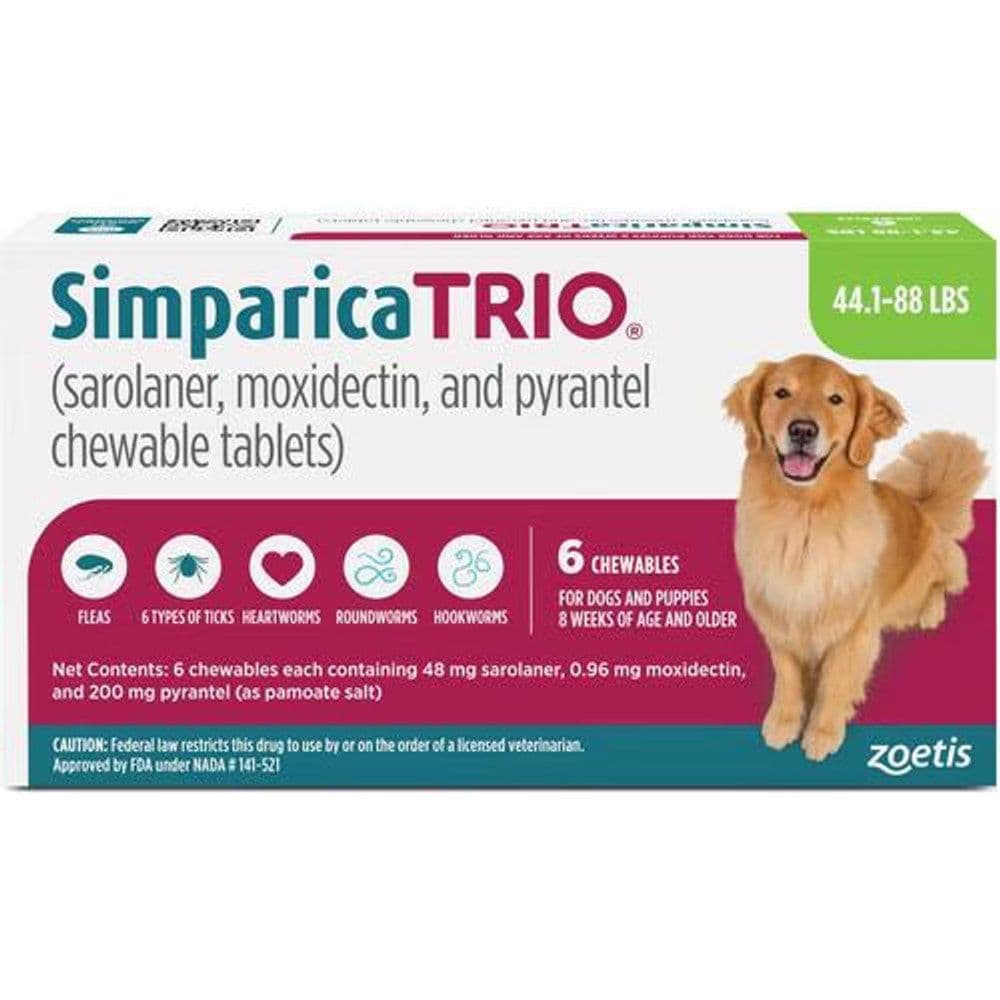
Monthly chew that protects dogs from fleas, six species of ticks, heartworm disease, roundworms, and hookworms.
Webvet may earn a commission when you click through to Chewy, at no extra cost to you.
How the moxidectin injection works in your dog's body
The drug is suspended in tiny microspheres that are injected under the skin, where they sit as a small reservoir and break down slowly over months, releasing a steady low level of moxidectin into the bloodstream. That circulating drug kills immature heartworm larvae deposited by a mosquito in roughly the previous 30 days, before those larvae can mature into adult heartworms in the heart and lungs.
Understanding how the moxidectin depot releases over time explains both sides of the product. The steady release is what removes the monthly reminder from your calendar, and it is also why the dose cannot be undone once injected.

Moxidectin belongs to the macrocyclic lactone family, the same drug class behind nearly every monthly heartworm product on the shelf. A monthly chew such as Interceptor Plus Chew for Dogs, which uses milbemycin oxime and adds coverage for roundworms, hookworms, whipworms, and tapeworms, works on the same principle: it clears the larvae acquired since the last dose. The injection simply stretches that same protective window from 30 days to six or twelve months.
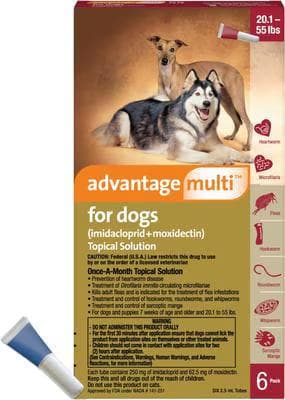
Webvet may earn a commission when you click through to Chewy, at no extra cost to you.
Heartworm is spread by mosquitoes, not by contact with other dogs, and a single bite is enough to start the cycle. If you want the full transmission picture, read how do dogs get heartworm for the life cycle from mosquito bite to adult worm, which is the framing the American Heartworm Society uses in its pet owner resources.
ProHeart 6 vs ProHeart 12: which shot fits which dog
ProHeart 6 is labeled for dogs six months of age or older and protects for six months. ProHeart 12 is labeled for dogs 12 months of age or older and protects for a full year. Both contain the same active ingredient, moxidectin, both are given by a veterinarian, and both require a negative heartworm test first. The minimum age for each injection comes straight from the FDA-approved product label, not from clinic preference.
Here is ProHeart 6 versus ProHeart 12 side by side.
| Label detail | ProHeart 6 | ProHeart 12 |
|---|---|---|
| Active ingredient | Moxidectin | Moxidectin |
| Duration of heartworm protection | 6 months | 12 months |
| Minimum age on the FDA-approved label | 6 months of age or older | 12 months of age or older |
| Who gives it | Veterinarian, in the clinic | Veterinarian, in the clinic |
| How it is given | One injection under the skin | One injection under the skin |
| Other parasite claim on the label | Treats and controls hookworms | Treats existing larval and adult hookworm infections |
| Flea and tick coverage | None | None |
| Heartworm test before the dose | Required | Required |
| Typical published clinic price | About $40 to $70 | About $60 to $130 |
Both ProHeart labels include hookworm claims. ProHeart 6 treats and controls hookworms (Ancylostoma caninum and Uncinaria stenocephala), while ProHeart 12 treats existing larval and adult infections by the same two species. Ask your veterinarian to confirm which label claims apply to the product they stock, and see how to deworm a dog for other intestinal worms the injections do not cover.

The second is the coverage the shot does not carry. There is no flea or tick protection in either product, so a dog on the injection still needs a separate parasite plan. Owners who want one product to handle several parasites at once usually move to a monthly combination chew instead, such as Trifexis Chewable Tablet for Dogs, which pairs heartworm prevention with flea control and several intestinal worms but does not cover ticks.
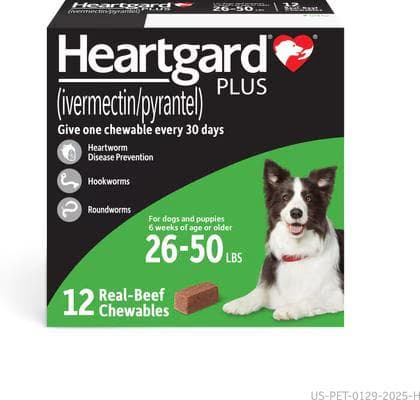
Webvet may earn a commission when you click through to Chewy, at no extra cost to you.
Who is a candidate, and who is not
A dog needs a negative heartworm test first, and the veterinarian then confirms age, weight, and overall health before giving the shot. What happens if the dog is heartworm positive is the part owners most need to hear plainly: that dog is not a candidate for a preventive injection at all, because a positive result means adult worms, and adult worms need a treatment plan built around a different drug.

Beyond the test result, your veterinarian is checking a short list of label cautions before reaching for the vial:
- Age. A dog under six months cannot receive either injection, and a dog under 12 months cannot receive the twelve-month product.
- Pregnant, nursing, or breeding dogs. These are label caution categories and the decision belongs to the veterinarian who knows the dog.
- Sick, debilitated, or underweight dogs. The label cautions against use in dogs that are not in good health.
- Previous reactions. A dog that has reacted badly to a moxidectin product before is usually moved to a different class of preventive.
- Dogs already treated for heartworm. Surviving an infection does not confer immunity, so year-round prevention still applies afterward.
A puppy who is too young for the shot still needs protection from the first month of life, which is covered in heartworm prevention for puppies. For a puppy, or for any dog whose vet decides the injection is not the right fit, a monthly product bridges the gap, including topicals such as Revolution Topical Solution for Dogs, a prescription liquid applied to the skin that covers heartworm along with fleas and several other parasites. If your dog has a cough, weight loss, or exercise intolerance already, read heartworm symptoms in dogs and book the test before anything else, and see heartworm test for dogs for what that appointment involves.
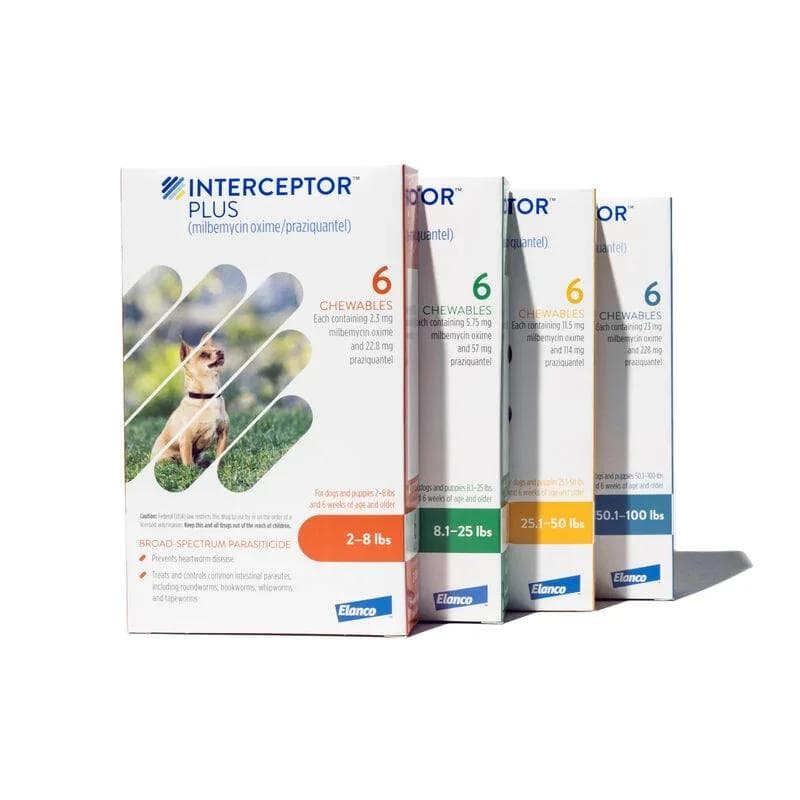
A monthly prescription chew that prevents heartworm and clears roundworm, hookworm, whipworm, and tapeworm. Since tapeworm is the usual reason a dog scoots, monthly cover is what stops it coming back.
Webvet may earn a commission when you click through to Chewy, at no extra cost to you.
 $65 · no membership
Need flea, tick, or heartworm prevention for your dog?
A licensed vet can recommend and prescribe the right preventive for your dog online when it's appropriate.
 Talk to a vet
- Licensed vets
- All 50 states
- same-day Rx

Webvet may earn a commission if you book.
Heartworm injection vs monthly pills: the compliance question
The injection removes the biggest real-world failure point in heartworm prevention, which is the dose an owner forgets: one office visit per year replaces twelve monthly doses. A monthly oral heartworm preventive keeps more flexibility, usually costs less per dose, and often bundles flea, tick, or intestinal worm coverage the injection does not have. Neither route is medically superior. They fail in different ways.

The missed-dose compliance gap is not theoretical. Missed or late doses are the most common reason a dog on prevention still turns up heartworm positive, because a chew given three weeks late leaves a window in which larvae acquired during the gap were never cleared. A dog on the injection cannot have that gap mid-cycle, though the same risk returns if the next injection is booked late.
| What you are comparing | Heartworm injection (moxidectin) | Monthly oral preventive |
|---|---|---|
| Doses per year | One or two, depending on the product | Twelve |
| Who gives it | Your veterinarian, in the clinic | You, at home |
| Effect of a missed dose | No mid-cycle gap, but a late re-dose reopens the risk | A protection gap in any month the dose is skipped or late |
| Can it be stopped partway | No, the dose cannot be undone once injected | Yes, simply do not give the next dose |
| Flea and tick coverage | None | Available on some combination products |
| Intestinal worm coverage | Hookworm treatment claims on both labels; ProHeart 6 also carries a control claim | Varies widely by product |
| Heartworm test | Required before each dosing cycle | Required annually |
For households that also fight fleas and ticks, the practical comparison is the injection plus a separate flea and tick product against a single monthly combination chew such as Heartgard Plus paired with a flea product, Sentinel Spectrum, or a monthly topical like Advantage Multi. Our guide to the best flea, tick, and heartworm prevention for dogs walks through what each combination actually covers.
Side effects of the heartworm injection
The FDA-approved product label lists reactions including lethargy, vomiting, and decreased appetite, and less commonly diarrhea, injection site swelling, weight loss, seizures, and allergic reaction including anaphylaxis. Serious reactions are uncommon, but they are real, and the honest trade-off is that the dose cannot be undone once injected the way a monthly chew can simply be stopped.
The side effects listed on the FDA label sort roughly into three tiers:
- Common and usually short-lived. Lethargy, a quieter day or two, vomiting, decreased appetite, or a small firm swelling at the injection site.
- Less common. Diarrhea, fever, weight loss, or ataxia (an unsteady, wobbly gait).
- Rare but serious. Seizures and anaphylactic or anaphylactoid reactions, which can develop within minutes to hours of the injection.
How long do heartworm medication side effects last? Mild reactions in most dogs settle within a day or two. The important asterisk is that the moxidectin sustained-release injection keeps releasing drug for months, so a dog with an ongoing problem cannot simply be taken off the product, and follow-up care runs through your veterinarian rather than through a decision made at home. Many clinics ask owners to stay in the waiting room for a short observation window after the shot for exactly this reason.
Why was ProHeart taken off the market?
ProHeart 6 was voluntarily withdrawn from the US market in September 2004 after reports of adverse events in dogs that had received it, and the FDA allowed it back in 2008 under a risk minimization program. That program requires participating veterinarians to be certified through manufacturer training and to give owners a client information sheet before the injection. The product has been available under that framework ever since, and the twelve-month product was approved years later.
Two things are worth being precise about here, because this is the trust question behind the whole product:
- Why ProHeart was pulled in 2004 is a regulatory event, not a verdict. The withdrawal was voluntary and prompted by post-approval adverse event reports. It was not a finding that the drug is unsafe, and it was not a recall of a defective batch.
- The certification requirement is why your paperwork looks different. If your vet hands you a signed sheet to read before the shot, that is the risk minimization program working as designed, not a warning that something is wrong.
What the heartworm injection costs
Clinics that publish their own price lists show roughly $40 to $70 for a ProHeart 6 injection and roughly $60 to $130 for ProHeart 12, and the required heartworm test and the office visit are billed separately. Those figures come from published veterinary practice price lists, not from a national average, and the only accurate number is the estimate your own clinic gives you for your dog's weight.

Expect a visit to include several separate lines rather than one number:
- The heartworm antigen test, commonly in the $25 to $60 range at general practices
- The office visit or exam fee
- The injection itself, priced by your dog's weight band
- Any additional parasite product you add for flea, tick, or intestinal worm coverage
The cost per year comparison is the number that actually matters, because the injection cost versus twelve monthly doses is not obvious at the counter. A year of monthly preventives commonly lands in the $150 to $300 range depending on the product and the dog's weight, while one twelve-month injection plus the required test typically lands in a similar band once the visit is included. Prevention at any of these prices is a fraction of what an infection costs to treat, which is laid out in heartworm treatment cost for dogs.
Do not confuse it with the heartworm treatment injection
The shot that treats heartworm disease is melarsomine (sold as Immiticide and Diroban), a different drug given as a series of deep injections into the muscles of the lower back at a veterinary hospital, usually alongside doxycycline, steroids, and strict exercise restriction. Melarsomine is a treatment injection and is never used as prevention, and the moxidectin prevention injection cannot clear adult worms from a dog that already has them.
| What differs | Moxidectin prevention injection | Melarsomine treatment injection |
|---|---|---|
| Purpose | Prevents new infection | Kills adult heartworms in an infected dog |
| Product names | ProHeart 6, ProHeart 12 | Immiticide, Diroban |
| Where it is injected | Under the skin, usually near the shoulders | Deep into the muscles of the lower back |
| How many injections | One, every six or twelve months | A series, usually two or three, at the hospital |
| Which dogs get it | Heartworm-negative dogs only | Heartworm-positive dogs only |
| Afterward | Normal activity | Strict exercise restriction for weeks |
| Given with | Nothing else required | Doxycycline, steroids, rechecks, and monitoring |
Setting prevention injection versus melarsomine treatment side by side also answers the question owners often ask next. How late is too late for heartworm treatment? Staging and your veterinarian's assessment decide, not a calendar, and dogs with advanced disease are often stabilized first rather than turned away. The full protocol is covered in heartworm treatment for dogs, and a persistent cough that sends a dog in for testing in the first place is covered in dog coughing and gagging.
How to get your dog started on the injection
Book a heartworm test, ask your veterinarian whether ProHeart 6 or ProHeart 12 fits your dog's age, weight, and health history, read the client information sheet before you consent, and put the next due date in your calendar the day the shot is given. That is the whole path, and none of it happens without the clinic.
Questions worth asking in the exam room:
- Is my dog old enough for the twelve-month product, or does she need the six-month one this year?
- Has my dog's heartworm test been run today, and what was the result?
- What should I watch for at home over the next 24 hours?
- Do I still need a separate flea and tick product, and which one do you recommend?
- What is the exact date the next injection is due, and will the clinic remind me?
Annual heartworm testing is still required even for a dog on the injection, because no preventive is perfect and an early positive result changes the plan immediately. That annual testing still required rule comes from American Heartworm Society guidance, which also calls for year-round heartworm prevention in every part of the country rather than seasonal dosing. The injection is one route inside that plan, and the wider picture, including which products fit which households, is covered in our guide to heartworm in dogs and how to prevent this silent killer.
Whichever route you choose, ask your veterinarian to make the call with your dog's records in front of them. Nothing on this page replaces that conversation.
Frequently Asked Questions
Is it worth getting a heartworm injection for dogs?
It is worth it for households where the monthly dose gets forgotten, because missed and late doses are the most common way a dog on prevention still becomes infected, and one office visit per year removes that risk entirely. It is less compelling for owners who reliably give a monthly product and also need flea, tick, or broad intestinal worm coverage, since the injection provides no flea or tick protection and a combination chew can cover several parasites at once. Cost is close enough between the two routes that convenience, memory, and your dog's other parasite needs usually decide it. Ask your veterinarian which fits your dog and your household.
How much does the ProHeart 12 injection cost?
Published clinic price lists put ProHeart 12 at roughly $60 to $130 for the injection itself, with the required heartworm test and the office visit billed as separate line items. Price varies by region, by clinic, and by your dog's weight, because the dose is weight based. A large dog can sit at the top of that range or above it. Treat any figure you find online as a starting point for the question rather than a quote, and ask your own clinic for an itemized estimate that includes the test and the exam.
Why was ProHeart taken off the market?
ProHeart 6 was voluntarily withdrawn from the US market in 2004 after post-approval reports of adverse events in dogs that had received it. The FDA allowed the product to return in 2008 under a risk minimization program, which requires the veterinarians who use it to complete manufacturer certification and to give every owner a client information sheet before the injection. That framework is still in place today, and it is the reason your clinic may hand you a signed sheet to read in the exam room. The withdrawal was a regulatory action, not a finding that the drug does not work.
What are the side effects of ProHeart?
The FDA-approved product label lists lethargy, vomiting, and decreased appetite among the more common reactions, along with diarrhea, injection site swelling, weight loss, fever, and an unsteady gait. Rare but serious reactions include seizures and allergic reaction including anaphylaxis, which can develop within minutes to hours of the shot. Facial swelling, hives, collapse, pale gums, repeated vomiting, or difficulty breathing are emergencies that need immediate veterinary care. Because the depot keeps releasing drug for months, a dog that reacts is managed with supportive care rather than by withdrawing the dose.
How late is too late for heartworm treatment?
There is no calendar cutoff. Staging and your veterinarian's assessment decide, based on the dog's clinical signs, chest imaging, bloodwork, and how much damage the worms have already done to the heart and lungs. Dogs with advanced disease are often stabilized first with doxycycline, steroids, and rest before melarsomine injections begin, rather than being turned away as too far gone. The dogs in the most urgent trouble are those with caval syndrome, which is a surgical emergency. If your dog has tested positive, the appointment to make is today's, not next month's.
Does the heartworm shot protect against fleas and ticks?
No. Neither ProHeart 6 nor ProHeart 12 has any flea or tick coverage, and a dog on the injection still needs a separate flea and tick product. Both ProHeart labels include hookworm treatment claims, and ProHeart 6 also carries a hookworm control claim, but those are intestinal parasites rather than external ones. Owners who want fewer products to manage often choose a monthly combination chew or topical instead, which can cover heartworm, fleas, ticks, and intestinal worms together. Your veterinarian can build the combination that fits your region and your dog.
Does my dog still need a heartworm test if he gets the injection?
Yes. Annual heartworm testing is still required for dogs on the injection, and a current negative test is also required before each dosing cycle. No preventive is completely foolproof, dogs occasionally do become infected while on a product, and catching that early changes the treatment plan and the outlook. The American Heartworm Society recommends annual testing for every dog alongside year-round prevention. The test is a quick blood draw, usually run in the clinic with a result in minutes.
Sources
$65 · no membershipNeed flea, tick, or heartworm prevention for your dog?
A licensed vet can recommend and prescribe the right preventive for your dog online when it's appropriate.
Talk to a vet- Licensed vets
- All 50 states
- same-day Rx
Webvet may earn a commission if you book.

Editor
The Webvet Editorial Team is the in-house group of pet-care editors and writers behind Webvet, operated by Smart Pet Collective. The team researches, writes, and maintains Webvet's pet health, behavior, and medication content. Every article follows a defined editorial process: research from reputable veterinary and scientific sources, careful drafting, mandatory review of medical content by a credentialed veterinarian, and dated publication. Health and medication articles are medically reviewed by a licensed veterinary professional before they go live and are kept current over time.
Veterinarian · BVMS MRCVS
Dr. Pippa Elliott, BVMS, MRCVS, is a veterinarian with nearly 30 years of experience in companion animal practice. Dr. Elliott earned her Bachelor of Veterinary Medicine and Surgery from the University of Glasgow. She was also designated a Member of the Royal College of Veterinary Surgeons. Married with 2 grown-up kids, Dr. Elliott has a naughty Puggle named Poggle, 3 cats and a bearded dragon.


