How Do Dogs Get Heartworm? The Mosquito Route, Explained
Heartworm reaches a dog through exactly one route, the bite of an infected mosquito, and never from another dog, a shared bowl, or stool. Here is the larval life cycle, why the six-month prepatent period makes a negative test misleading, and why indoor dogs are not exempt.

BVMS MRCVS
Medically reviewed by Dr. Pippa Elliott, BVMS MRCVS · Last reviewed

This article contains affiliate links. Webvet may earn a commission when you buy through them, at no extra cost to you.
How do dogs get heartworm? One way only: through the bite of an infected mosquito carrying Dirofilaria immitis larvae. The mosquito is an obligate vector, which means the parasite cannot reach its infective stage anywhere else. There is no dog-to-dog route, no stool route, and no soil route.
That one sentence corrects most of what owners arrive believing. If you have just been told your dog needs a heartworm test, or a rescue coordinator mentioned the word at an adoption, you are probably carrying at least one of four wrong assumptions: that an infected dog at the park can pass it to yours, that a dog who lives indoors is safe, that the monthly dewormer already covers it, or that winter ends the risk. None of those hold up, and the reason each one fails comes down to the same piece of biology. Break the mosquito link and you break the disease.
- 1Heartworm reaches a dog through exactly one route: the bite of a mosquito carrying infective Dirofilaria immitis larvae.
- 2Larvae must spend 10 to 14 days developing inside the mosquito, which is why direct dog-to-dog spread is biologically impossible.
- 3After the bite it takes about six months for larvae to mature into adult worms, so a recently infected dog can still test negative today.
- 4Indoor dogs are not exempt, because mosquitoes come through torn screens and propped doors and one short yard break is enough exposure.
- 5Heartworm has been reported in all 50 states, and coyotes and foxes keep local mosquito populations infected even where every pet dog is protected.
- 6Fleas, ticks, stool, shared bowls, and routine dewormers have nothing to do with heartworm transmission or heartworm prevention.
- 7Heartworm preventives sold in the United States are prescription-only. Dogs 7 months or older generally need testing before starting or restarting; younger puppies can usually start without a pretest and then follow a timed testing schedule.
How do dogs get heartworm?
Dogs get heartworm one way only: the bite of an infected mosquito carrying Dirofilaria immitis larvae. There is no dog-to-dog route, no shared-bowl route, and no route through soil, stool, or grooming. Break the mosquito link and you break the disease.
That is the whole mechanism, and the American Heartworm Society states it in the same absolute terms. A mosquito feeds on an animal already carrying heartworm, picks up immature worms with the blood meal, incubates them until they are infective, and then deposits them on the next animal it bites. Without that middle step, nothing happens. A heartworm larva that never enters a mosquito never becomes capable of infecting anything.
Heartworm infection and heartworm disease are not the same thing
There is a second question hiding inside the first one. How do dogs get heartworm disease, as opposed to heartworm infection, is a slightly different thing to ask. Infection is the moment larvae enter the body. Disease is the damage adult worms go on to cause in the heart and lungs months later. The route in is identical for both, but the gap between them is why a dog can be carrying heartworm for half a year and look entirely healthy.
Here is what does not transmit heartworm, no matter how often owners are told otherwise:
- Contact with an infected dog, including licking, wrestling, mating, or sleeping in the same bed
- Sharing a water bowl, a food bowl, a kennel run, a crate, or a yard
- Fleas, ticks, flies, or any biting insect other than a mosquito
- Stool, urine, or soil in a yard where an infected dog has lived
- Drinking standing water, even from a pond where mosquitoes are breeding
How does a dog get heartworm, step by step?
At the moment of the bite, the mosquito does not inject larvae the way a syringe would. Infective third-stage larvae travel down the mosquito's mouthparts and are left on the skin surface in a small droplet of the insect's own fluid. From there they crawl into the puncture the mosquito just made and enter the tissue underneath. It is a slower, messier handoff than most people picture, and it is the reason a single unnoticed bite is all it takes.
Because the mosquito is the only door in, prevention works by killing susceptible larvae after exposure rather than by keeping every mosquito off your dog. A combination chewable such as Simparica TRIO Chewable Tablets for Dogs pairs a heartworm preventive ingredient with flea and tick coverage in one dose. It is prescription-only; dogs 7 months or older generally need testing before starting or restarting, while younger puppies can usually begin without a pretest and follow a timed testing schedule.
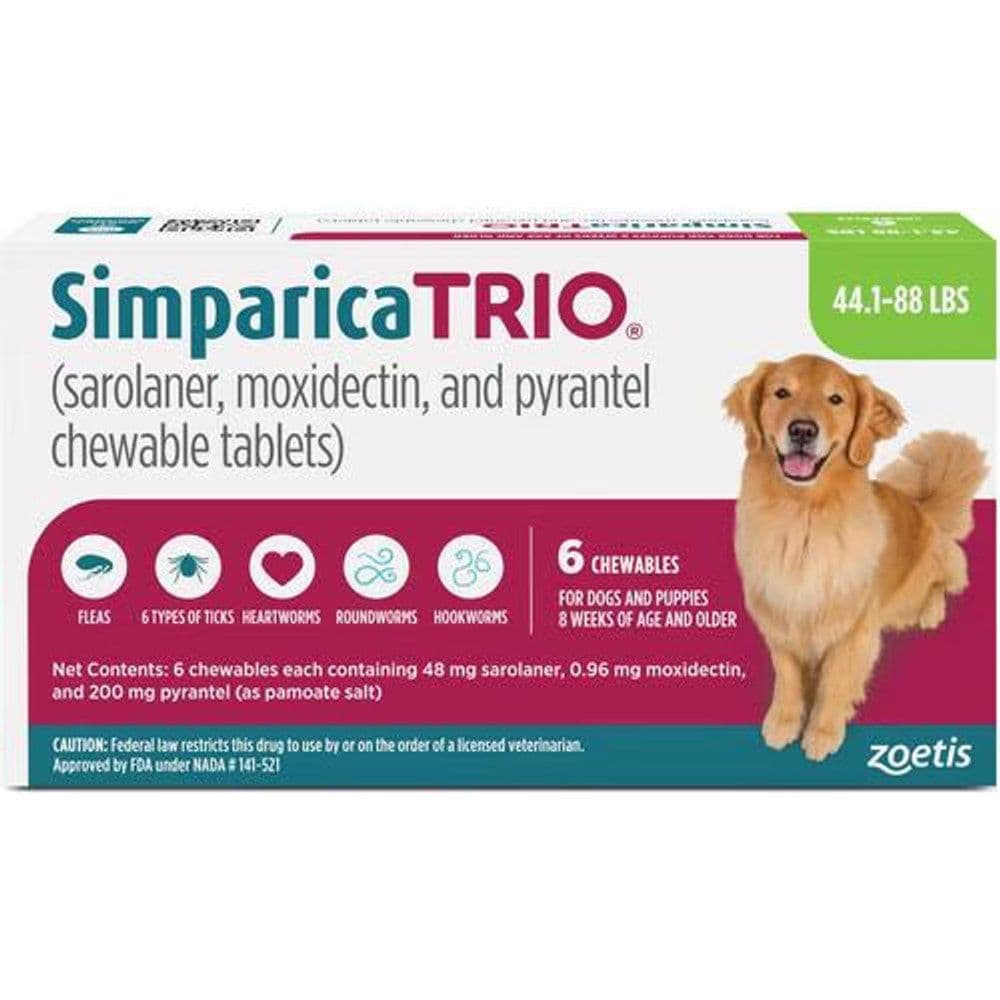
Monthly chew that protects dogs from fleas, six species of ticks, heartworm disease, roundworms, and hookworms.
Webvet may earn a commission when you click through to Chewy, at no extra cost to you.
The mosquito is the only way in
A mosquito is not a nuisance in this story, it is a required host. Heartworm larvae cannot become infective anywhere except inside a mosquito, which makes the mosquito an obligate vector rather than a passive carrier. Nothing else in your dog's environment can perform that step.
The distinction matters because owners tend to picture a mosquito as a flying needle that simply moves blood from one animal to another. It does not. The parasite has to change inside the insect, and that change takes time and warmth. The Merck Veterinary Manual reports that at least 70 mosquito species are capable of transmitting Dirofilaria immitis, which is part of why no region of the country has been able to opt out of the problem: this is not a single specialist mosquito that can be mapped and avoided.

What you can influence is how many mosquitoes are around your dog in the first place. That does not replace prevention, but it lowers the number of chances the parasite gets.
- Standing water is the whole ballgame. Mosquitoes breed in water that sits for about a week, which includes plant saucers, tarps, clogged gutters, wheelbarrows, tire swings, and a forgotten water bowl on the deck.
- Empty and scrub, do not just tip. Eggs stick to container walls, so rinsing matters more than emptying.
- Refresh the water your dog actually uses. Outdoor bowls and kiddie pools should be changed every couple of days in warm weather.
- Time outdoor play away from peak activity. Many species feed most heavily around dawn and dusk, though daytime-feeding species exist.
- Skip the folk remedies. Garlic, brewer's yeast, essential oil collars, and homeopathic drops have no proven effect on heartworm transmission.
The heartworm life cycle, stage by stage
The cycle runs in five steps across two hosts. Microfilariae are picked up from an infected animal, mature into infective third-stage larvae inside the mosquito over 10 to 14 days, are deposited on a new dog at the next bite, migrate through tissue for months, then reach the heart and lungs as adults.
Only the last of those five steps produces anything an owner can see or a vet can measure, which is exactly why heartworm is so often described as silent. Here is the sequence in full, with stage timings as published by the American Heartworm Society.
| Stage | Where it happens | How long it takes | What it means for your dog |
|---|---|---|---|
| 1. Microfilariae are picked up | The bloodstream of an infected dog, coyote, or fox, taken up during a blood meal | A single feeding | Any untreated infected animal nearby keeps the neighbourhood mosquito pool loaded |
| 2. Development to the infective stage | Inside the mosquito | 10 to 14 days inside the mosquito, and only in sustained warmth | This is the bottleneck in the whole cycle, and it is temperature dependent |
| 3. Deposit and entry | The skin surface, then the bite wound | Minutes | Infective third-stage larvae are left in a droplet of fluid and crawl in through the puncture |
| 4. Tissue migration | Under the skin, then through muscle and connective tissue | Roughly three to four months | Nothing is visible, nothing shows on a standard antigen test, and the dog looks completely well |
| 5. Arrival and maturity | The pulmonary arteries, then the right side of the heart | About six months from the bite | Adults pair up, release microfilariae in the bloodstream, and the test finally turns positive |
Once adults are established in the pulmonary arteries, the damage is mechanical as well as inflammatory. The worms physically obstruct blood flow and irritate the vessel lining, the lungs stiffen, and the right side of the heart works against rising resistance. Adult heartworms can live for years, which is why an untreated infection compounds instead of resolving: the American Heartworm Society puts adult lifespan at roughly five to seven years in dogs, while the Merck Veterinary Manual gives a three to five year figure. Either way, an infection is measured in years, not weeks, and heavily infected dogs have been documented carrying several hundred worms.
The first outward sign is often a soft, persistent cough that owners write off as kennel cough or age. If your dog has developed a new cough, our guides to coughing and gagging in dogs and heart-related cough in dogs explain how to tell the common causes apart, and the full picture is in our guide to heartworm symptoms in dogs.
Stage four is where a monthly preventive does its work. The drugs used for prevention kill the larvae still migrating through tissue, which is why a dose given today clears what a mosquito deposited over the previous month rather than protecting against the month ahead. A prescription monthly chewable such as Trifexis Chewable Tablet for Dogs is dosed on that same thirty-day rhythm, and missing a dose is not a delay so much as an unguarded window in the migration timeline.
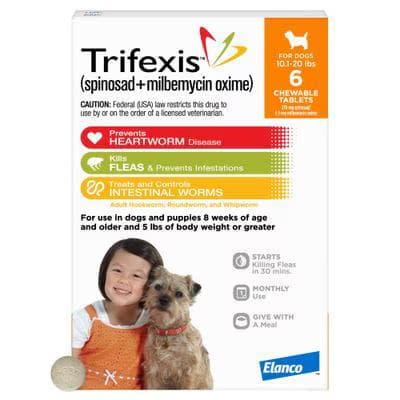
A monthly chew (spinosad and milbemycin oxime) that kills fleas, prevents heartworm, and treats intestinal worms. A non-isoxazoline oral option that starts killing fleas within 30 minutes.
Webvet may earn a commission when you click through to Chewy, at no extra cost to you.
Why it takes about six months (the prepatent period)
From the infecting bite, it takes about six months to mature into adult heartworms that a standard antigen test can detect. That gap is the prepatent period, and it is why a dog infected last month can still test negative today. A negative result tells you about exposure roughly six months ago, not about last week.
This is the single most useful thing an owner can understand about heartworm testing, and almost nobody explains it. The routine antigen test looks for a protein produced mainly by adult female worms. During tissue migration there are no adult females, so there is nothing for the test to find. A negative test after recent exposure is a true result about the past and a blank about the present.

Three practical consequences follow from that six-month window:
- A puppy under seven months usually does not need an antigen test before starting prevention, because there has not been time for adults to develop, but that puppy does need testing about six months later.
- If a dose is missed or late, call your veterinarian when you discover the gap. For an adult dog, the clinic may test promptly, restart prevention as directed, and retest about six months later because a new infection can still be too young to detect on the first test.
- The annual heartworm test exists precisely because prevention can fail quietly, through a spat-out chewable, a bath that stripped a topical, or a dose given three weeks late.
None of that means testing is optional or that timing is something to guess at. Our guide to the heartworm test for dogs covers what the antigen and microfilaria tests each detect, when to run them, and how to read an unexpected result.
 $65 · no membership
Need flea, tick, or heartworm prevention for your dog?
A licensed vet can recommend and prescribe the right preventive for your dog online when it's appropriate.
 Talk to a vet
- Licensed vets
- All 50 states
- same-day Rx

Webvet may earn a commission if you book.
Can dogs catch heartworm from other dogs?
No. A dog cannot catch heartworm directly from another dog, and no amount of contact changes that. Sharing a water bowl, a bed, a yard, a kennel run, or saliva transmits nothing, because the larvae must spend 10 to 14 days developing inside a mosquito first.
The confusion is understandable. Owners hear that a boarding facility or a shelter had a heartworm case and reasonably assume the same containment logic that applies to kennel cough or parvovirus applies here. It does not. Heartworm is not contagious in the everyday sense of the word, and isolating an infected dog from other dogs prevents nothing at all.
Why a positive dog on your street still matters
What an infected dog nearby does change is the local mosquito pool. Every mosquito that feeds on a microfilaria-positive dog can become an infective mosquito ten days later, and mosquitoes travel. So a positive dog on your street genuinely raises the risk to your dog, just not through any route involving the two animals meeting. That is why a good clinic treats a positive diagnosis as a household and neighbourhood conversation, and why every dog in a multi-dog home should be on prevention rather than only the one that tests positive.
That is also the practical case for a single monthly routine everyone in the house is on. A monthly chewable such as Interceptor Plus Chew for Dogs covers heartworm larvae alongside several intestinal parasites in one prescription dose, which removes the temptation to protect the dog that seems most at risk and skip the one that mostly stays inside.
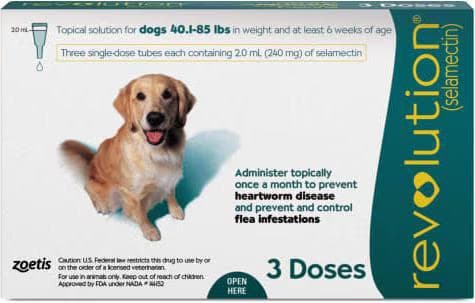
A monthly topical (selamectin) that prevents heartworm and controls fleas, and is well tolerated in herding breeds at the label dose. A prescription pick for dogs who need a non-isoxazoline option.
Webvet may earn a commission when you click through to Chewy, at no extra cost to you.
Do indoor dogs get heartworm?
Yes. Indoor dogs are not exempt, because mosquitoes are not stopped by a front door. Torn screens and open doors let them in, and a single bathroom break in the yard is enough exposure.
"My dog never goes outside" is one of the most common things owners say at this point, and it is worth taking seriously rather than waving away, because the person saying it is usually describing their home accurately. The problem is that the claim assumes mosquitoes stay outdoors. They do not. This is how indoor dogs get exposed in practice:

- Screens. A tear you would not notice, a gap at the frame, or a screen door that does not seal at the bottom.
- Doors held open. Groceries coming in, a dog let out for two minutes, a delivery, a smoke break on the porch.
- Attached garages. Mosquitoes rest in cool, dim, humid spaces and follow the interior door in.
- Drains, vents, and basements. Standing water in a sump, a floor drain, or a crawl space can support breeding inside the building envelope.
- Elevators and shared lobbies. Apartment dogs are not insulated. Mosquitoes ride up and rest in stairwells and corridors.
- The yard break itself. Two minutes at 8pm in July is more than enough time for one mosquito to feed.
Veterinary sources including VCA Animal Hospitals and the American Heartworm Society both state plainly that indoor pets are at risk. What they rarely do is name the entry points, which leaves owners with an assertion they can dismiss instead of a list they can walk around the house and check. Go and check yours. A screen repair kit costs a few dollars and it is a genuinely useful thing to do, even though it will never be a substitute for a preventive.
How easy is it for dogs to get heartworm?
One bite from one infected mosquito is enough. There is no minimum exposure, no safe number of bites, and no breed or coat type that blocks it. A dog does not need to be bitten repeatedly, and a heavy coat does not protect the thinner-haired areas around the muzzle, ears, groin, and belly.
What varies is not the mechanism but the odds. In a Gulf Coast summer, an unprotected dog is exposed to infected mosquitoes constantly. In an arid inland county in late winter, the odds in any given week may be very low. Neither situation changes what a single successful bite does, and nobody can tell you which week your dog will meet the wrong mosquito, which is the entire logic behind continuous prevention rather than seasonal guessing.
Age, breed, size, coat, and lifestyle do not confer immunity. Medium and large dogs aged roughly three to eight years are diagnosed most often, according to the Merck Veterinary Manual, but that reflects exposure patterns and how long infections take to declare themselves, not a protective factor in small or young dogs. Dogs who take an oral chewable badly are sometimes better served by a monthly topical, and a prescription option such as Revolution Topical Solution for Dogs is applied to the skin between the shoulder blades instead of swallowed. Which format suits your dog is a conversation for your veterinarian, who has to write the prescription either way.
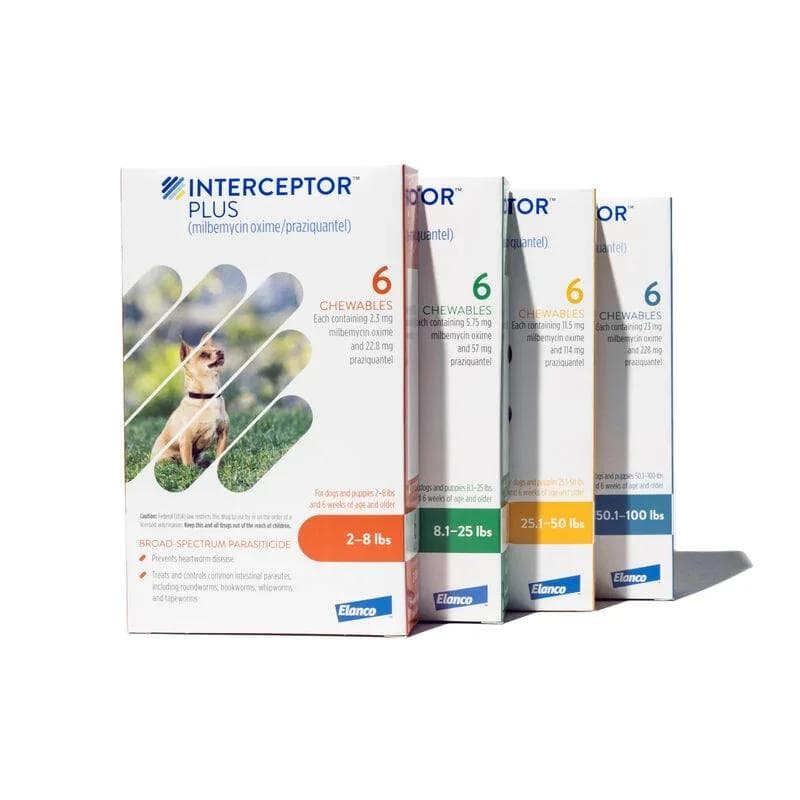
A monthly prescription chew that prevents heartworm and clears roundworm, hookworm, whipworm, and tapeworm. Since tapeworm is the usual reason a dog scoots, monthly cover is what stops it coming back.
Webvet may earn a commission when you click through to Chewy, at no extra cost to you.
Where and when is heartworm risk highest?
Heartworm has been reported in all 50 states, with the heaviest concentration along the Gulf Coast and the Mississippi River valley. Risk rises with mosquito activity, but it never falls to zero, which is why year-round prevention is the standard recommendation from the American Heartworm Society and the Companion Animal Parasite Council.
If you want a read on your own area, the American Heartworm Society publishes a national incidence map built from cases reported by veterinary clinics, and it is updated periodically rather than annually. Owners often search for a heartworm prevalence map by year, or for a heartworm prevalence by zip code lookup, and it is worth knowing that a truly zip-code-level number does not exist in any reliable public form. Your own clinic is the better source, because it knows how many positives it has diagnosed locally in the last twelve months.

Regional assumptions are where owners get caught out. How common is heartworm in dogs in Texas is a question with an unambiguous answer: Texas sits in the high-incidence band and has for as long as the map has existed. How common is heartworm in dogs in California is the more interesting one, because California is widely assumed to be low risk and is not uniformly so. Cases are reported there every year, including in inland valleys where irrigation supports mosquito populations that the dry climate reputation does not suggest.
Why the season is about temperature, not the calendar
Development inside the mosquito stalls when it gets cold. The American Heartworm Society ties larval development to sustained temperatures above roughly 57 degrees Fahrenheit, and that 57 degrees Fahrenheit threshold is the mechanism behind everything owners are told about mosquito season. Below it, larvae inside the mosquito simply do not finish the 10 to 14 day run to the infective stage. Above it, they do.
| Condition | What happens to transmission | What it means for prevention |
|---|---|---|
| Sustained day and night temperatures above 57 degrees Fahrenheit | Larvae can complete development inside the mosquito | Active transmission conditions |
| A warm spell in late winter or early spring | Enough for a full development window in some regions | Risk restarts earlier than most owners expect |
| The first frost | Adult mosquitoes die back, but some species overwinter in sheltered spots and indoors | Risk does not end at first frost |
| Deep winter in a northern state | Outdoor transmission largely stops | Larvae already inside your dog keep maturing regardless of the weather |
| Any month on the Gulf Coast or in the Mississippi River valley | Mosquito activity rarely stops for long | Year-round prevention is the standard recommendation |
| A heated house or apartment in any state | Mosquitoes survive and feed indoors through winter | Indoor dogs are not exempt in any season |
"We only have mosquitoes in summer" is the second belief this section exists to correct, and the table above is the reason it fails on two separate counts. Frost kills many adult mosquitoes but not all of them, and a dog infected in September is still carrying migrating larvae in January whether or not a mosquito has flown in months.
The wildlife reservoir nobody accounts for
Even a neighbourhood where every pet dog is faithfully dosed is not a closed system. Coyotes and foxes are susceptible to Dirofilaria immitis, they are not on prevention, and they are now established in suburban and urban areas across the country. That coyote and fox reservoir keeps a supply of microfilaria-positive animals in the landscape, which keeps a supply of infective mosquitoes in it too. The Companion Animal Parasite Council treats wild canids as a persistent driver of local risk for exactly this reason.
The other underappreciated driver is movement. Relocated rescue dogs carry infection across state lines every year when animals are transported out of high-incidence southern shelters to adopters in the north, and a dog that arrived last spring may have been infected before the transport van left. That is not an argument against adopting a transported dog. It is an argument for testing on intake and again about six months later, and for starting prevention on day one.
What heartworm is not: fleas, ticks, stool, and dewormers
Fleas do not transmit heartworm, ticks do not transmit heartworm, and heartworm is not passed in stool. It is also not covered by a routine dewormer, because intestinal wormers do not reach the heart and lungs. Every one of those beliefs is common, and every one of them leads an owner to skip the thing that actually works.
Take them in order, because each fails for its own reason.
- Fleas and ticks do not transmit heartworm. Only a mosquito can complete the larval development step. The confusion is understandable given that so many products cover fleas, ticks, and heartworm together, but that is a convenience of packaging, not a shared route of infection. Ticks transmit their own serious diseases, which is a separate reason to take them seriously, and our guide to tick bites on dogs covers what to look for.
- Heartworm is not passed in stool. Adult worms live in the pulmonary arteries and the right side of the heart, not the gut, so there is nothing to shed into feces. People do go looking for heartworm symptoms in dogs poop, and there is nothing there to find: a routine fecal exam does not screen for heartworm at all, and a clean fecal result says nothing whatsoever about heartworm status.
- A routine dewormer does not prevent heartworm. Over-the-counter intestinal wormers target roundworms, hookworms, whipworms, and tapeworms in the digestive tract. They do not contain a macrocyclic lactone at a heartworm-preventive dose and they will not stop a migrating larva. Our guide to deworming a dog explains what those products do cover.
- A dog cannot catch it from drinking pond water. Larvae in a mosquito are not larvae in a puddle. Swallowing water does not put an infective larva anywhere it can survive.
The reverse point is worth making too, because it is where the packaging confusion comes from. Many prescription heartworm preventives also cover intestinal parasites, so a dog on a monthly combination product may be getting roundworm and hookworm control at the same time. That is a real benefit of those products. It runs in one direction only: a heartworm preventive can cover intestinal worms, but an intestinal wormer never covers heartworm.
Can humans get heartworm from dogs?
No. You cannot catch heartworm from your dog. Human infection is rare, happens only through a mosquito bite, and stops there, because humans are dead-end hosts in which the larvae cannot mature or reproduce.
The concept that makes the whole question make sense is host specificity. A dog is the definitive host for Dirofilaria immitis, meaning the parasite completes its life cycle there: larvae mature into adults, adults reproduce, and microfilariae circulate where a mosquito can pick them up. That is the answer to why do dogs get heartworm and not humans in the same way. In a human, the immune system usually kills the migrating larva outright. If a larva does survive long enough to reach a lung vessel, it dies there and the body walls it off.
Understanding why humans are dead-end hosts also settles the family-safety question in one move. A parasite that cannot mature or reproduce in a person cannot build a population, cannot release microfilariae, and therefore cannot be passed on by that person to anyone or anything. There is no chain to break because no chain ever forms.
- Can humans get heartworm from mosquitoes? In principle yes, and cases are documented, but they are rare and the infection is self-limiting because it cannot progress.
- Can humans get heartworms from fleas? No. Fleas play no role in heartworm transmission for any species.
- Can you catch it from your dog directly? No. There is no route from a dog to a person, and there is no route from a person to a dog.
- Can humans get heartworm from cats? No, for the same reason. The mosquito requirement applies regardless of which animal the mosquito fed on first.
- How common is heartworm in humans? Rare enough that most physicians will never see a case. The AVMA and the American Heartworm Society describe the usual presentation as a single small nodule in the lung, often found by accident on a chest scan and sometimes mistaken for a tumour until it is biopsied. Symptoms are frequently absent altogether.
- What about heartworm in human eye tissue? A small number of published case reports do describe worms reaching the eye or the skin in people. These are exceptional, they are not a reason to change how you live with your dog, and they still require a mosquito bite rather than any contact with a pet.
Cats deserve one paragraph of their own here, because owners in multi-pet homes ask. Cats can get heartworm, and they get it the same way dogs do, from a mosquito bite. They are not ideal hosts, so worm burdens are small and often a single worm, but the disease behaves differently and can be severe or sudden in a species that small. There is no approved treatment to kill adult heartworms in cats, which makes prevention the only real tool. Ask your veterinarian about feline prevention if you have a cat, indoor or otherwise.
How to break the transmission chain
You cannot realistically stop every mosquito, so prevention works by killing susceptible larvae before they mature. Heartworm preventives are prescription-only in the United States. Dogs 7 months or older generally need testing before starting or restarting; younger puppies can usually begin without a pretest and then follow a timed testing schedule. There is no over-the-counter equivalent and no proven natural alternative.

The active ingredients almost all belong to one drug family, the macrocyclic lactones. Ivermectin appears in products such as Heartgard Plus, milbemycin oxime in products such as Sentinel Spectrum, moxidectin in the topical Advantage Multi and in the ProHeart 6 and ProHeart 12 injections, and selamectin in monthly topicals. They work retroactively, clearing the larvae deposited over the previous month rather than repelling mosquitoes, which is why a dose given late leaves a real gap rather than simply shifting the schedule.
Choosing between them is a conversation with your veterinarian, not a decision to make from an article. What that choice should account for is your dog's parasite risk beyond heartworm, whether an oral or a topical suits your household, and how reliably a monthly dose will actually get given.
- For the complete picture on protecting a dog, start with our guide to heartworm prevention for dogs.
- For products that handle parasites together, see flea, tick, and heartworm prevention for dogs.
- For puppies, timing matters more than product choice: see heartworm prevention for puppies.
- If remembering a monthly dose is the weak link, ask about the heartworm injection for dogs.
- To understand the testing schedule that sits alongside all of it, see the heartworm test for dogs.
Two searches deserve a direct answer here rather than a polite deflection. The first is natural heartworm prevention for dogs, and the American Heartworm Society's position on it is unambiguous: no herbal, homeopathic, dietary, or over-the-counter product has been shown to prevent heartworm infection, and using one in place of a prescription preventive leaves a dog unprotected. Garlic, food-grade diatomaceous earth, black walnut, and essential oil blends all appear in that search and none of them work.
The second is heartworm prevention for dogs without vet prescription, and the honest answer is that there is no legitimate version of it in the United States. Products sold that way are either not heartworm preventives at all, or they are being supplied outside the rules, which means nobody has confirmed your dog is heartworm-negative before the first dose. If cost is what is driving the search, say so to your clinic. Many practices can help with generic actives, larger-pack pricing, or a payment plan, and every one of those conversations ends better than an infection does. Talk to your veterinarian about what fits your dog and your budget.
Frequently asked questions
Can dogs be cured of heartworm?
Yes, in most cases. Heartworm disease in dogs is treatable with a veterinary protocol built around an adulticide injection given in a specific sequence, alongside supporting medication, strict exercise restriction, and follow-up testing to confirm the worms are gone. It is a demanding, months-long process rather than a course of tablets, and dogs with advanced disease carry more risk. The lung damage already done does not always reverse completely. Our guide to heartworm treatment for dogs walks through what the protocol involves.
What are the first signs of heartworm?
In the early stages, usually nothing at all, which is the core problem with this disease. When signs do appear they typically begin with a mild but persistent cough, reluctance to exercise, tiring quickly on walks, and reduced appetite or weight loss. Because the prepatent period runs about six months, a dog can be infected and completely normal for half a year. Any new cough in a dog deserves a veterinary exam rather than a wait-and-see. Our guide to heartworm symptoms in dogs covers the progression stage by stage.
Do dogs really need heartworm pills?
Yes, and veterinary consensus on this is not divided. The American Heartworm Society recommends year-round prevention for every dog in the United States, because heartworm has been reported in all 50 states, transmission tracks temperature rather than the calendar, and prevention is dramatically safer and cheaper than treatment. Every heartworm preventive sold in the United States is prescription-only and requires a veterinary relationship. Dogs 7 months or older generally need testing before starting or restarting; younger puppies can usually begin without a pretest and then follow a timed testing schedule. Product choice belongs with your veterinarian, and our guide to heartworm prevention for dogs explains the options.
How long will dogs live with heartworms?
There is no reliable single answer, and any specific survival figure should be treated with suspicion. What is documented is that adult heartworms can live for years in a dog, that damage to the pulmonary arteries and lungs accumulates the whole time, and that untreated infections tend to progress toward heart failure. Outcome depends heavily on worm burden, how long the infection went undetected, the dog's size and other health problems, and whether treatment is completed properly. Many treated dogs go on to live full lives. The honest version is that this is a question for the veterinarian who has examined and staged your dog.
How much does it cost to treat a dog for heartworms?
Treatment is expensive relative to prevention, and published estimates generally run from several hundred dollars into the low thousands for a full course once diagnostics, the injection series, hospital monitoring, supporting medication, and follow-up testing are all counted. The range is wide because cost scales with the dog's size, the stage of disease, and regional pricing. Ask your clinic for a written estimate covering the entire protocol rather than the first visit. Our breakdown of the cost of heartworm treatment goes through the line items.
Is there a heartworm vaccine for dogs?
No. There is no heartworm vaccine, and any product marketed as one is not what it claims to be. Prevention is achieved with a monthly oral or topical medication, or with a veterinarian-administered injection that lasts six or twelve months. All of those are prescription-only medication, and none of them work retroactively on adult worms already present, which is why the annual heartworm test sits alongside them rather than being replaced by them.
Can a dog get heartworm from drinking dirty water or eating a dead animal?
No. Neither route is possible, because heartworm larvae can only reach their infective stage inside a mosquito and can only enter a dog through a bite wound in the skin. Swallowing water, mud, or carrion does not expose a dog to heartworm. Those routes do transmit other parasites and pathogens worth avoiding, including intestinal worms and leptospirosis, so they are still worth discouraging. For heartworm specifically, the mosquito is the only way in.
Sources
$65 · no membershipNeed flea, tick, or heartworm prevention for your dog?
A licensed vet can recommend and prescribe the right preventive for your dog online when it's appropriate.
Talk to a vet- Licensed vets
- All 50 states
- same-day Rx
Webvet may earn a commission if you book.

Editor
The Webvet Editorial Team is the in-house group of pet-care editors and writers behind Webvet, operated by Smart Pet Collective. The team researches, writes, and maintains Webvet's pet health, behavior, and medication content. Every article follows a defined editorial process: research from reputable veterinary and scientific sources, careful drafting, mandatory review of medical content by a credentialed veterinarian, and dated publication. Health and medication articles are medically reviewed by a licensed veterinary professional before they go live and are kept current over time.
Veterinarian · BVMS MRCVS
Dr. Pippa Elliott, BVMS, MRCVS, is a veterinarian with nearly 30 years of experience in companion animal practice. Dr. Elliott earned her Bachelor of Veterinary Medicine and Surgery from the University of Glasgow. She was also designated a Member of the Royal College of Veterinary Surgeons. Married with 2 grown-up kids, Dr. Elliott has a naughty Puggle named Poggle, 3 cats and a bearded dragon.


