Heartworm Treatment Cost for Dogs: What to Expect
Heartworm treatment cost for dogs commonly runs $1,000 to $3,000 or more. Here is the honest stage-by-stage breakdown, what changes the price, how prevention compares, and where to find help paying the bill.

BVMS MRCVS
Medically reviewed by Dr. Pippa Elliott, BVMS MRCVS · Last reviewed

This article contains affiliate links. Webvet may earn a commission when you buy through them, at no extra cost to you.
If your dog just tested positive for heartworms, the estimate that follows can knock the wind out of you. The honest answer on heartworm treatment cost for dogs: a complete course of treatment at a private veterinary practice commonly runs about $1,000 to $3,000 or more, and advanced cases can climb well past that.
That number is real, and so are the reasons behind it. Heartworm treatment is a months-long, staged medical protocol, not a single shot. This guide itemizes the bill stage by stage, shows what moves the price up or down, compares treatment with prevention, and points you toward legitimate help if the total is out of reach. Only your veterinarian can price your dog's specific case. Every figure here is a planning range drawn from published veterinary sources, not a quote.
- 1A complete heartworm treatment course at a private practice commonly costs $1,000 to $3,000 or more, with advanced cases running higher.
- 2The bill covers testing, staging diagnostics, doxycycline and steroids, a melarsomine injection series with hospitalization, and recheck testing.
- 3Dog size, disease stage, your region, and clinic type change the price more than anything else.
- 4Nonprofit low cost clinics may treat owned dogs for a few hundred dollars to about $2,000, tiered by dog weight.
- 5A year of monthly heartworm prevention costs a small fraction of one treatment course, and every preventive is prescription-only.
- 6If you cannot afford treatment, ask your vet about payment plans and financing before trying anything on your own.
- 7Slow kill is not a recommended shortcut: the American Heartworm Society warns it leaves worms damaging the heart for months to years.
How much does heartworm treatment cost for dogs?
Expect roughly $1,000 to $3,000 or more for a complete melarsomine-based treatment course at a private veterinary practice. That range reflects figures published in veterinary cost guides and by nonprofit treatment programs, and it covers the full staged protocol rather than a single procedure. Subsidized nonprofit programs can charge a few hundred dollars to about $2,000, usually tiered by dog weight. Every case is ultimately priced by the treating veterinarian after staging the disease.
Most owners pay the full heartworm treatment cost for dogs without insurance help, because an infection diagnosed before a policy started is treated as a pre-existing condition (more on that below). For perspective on the other side of the ledger: a monthly combination preventive such as Simparica TRIO Chewable Tablets for Dogs, a prescription product your veterinarian must authorize after a negative heartworm test, typically costs less for an entire year than the single largest stage of treatment.
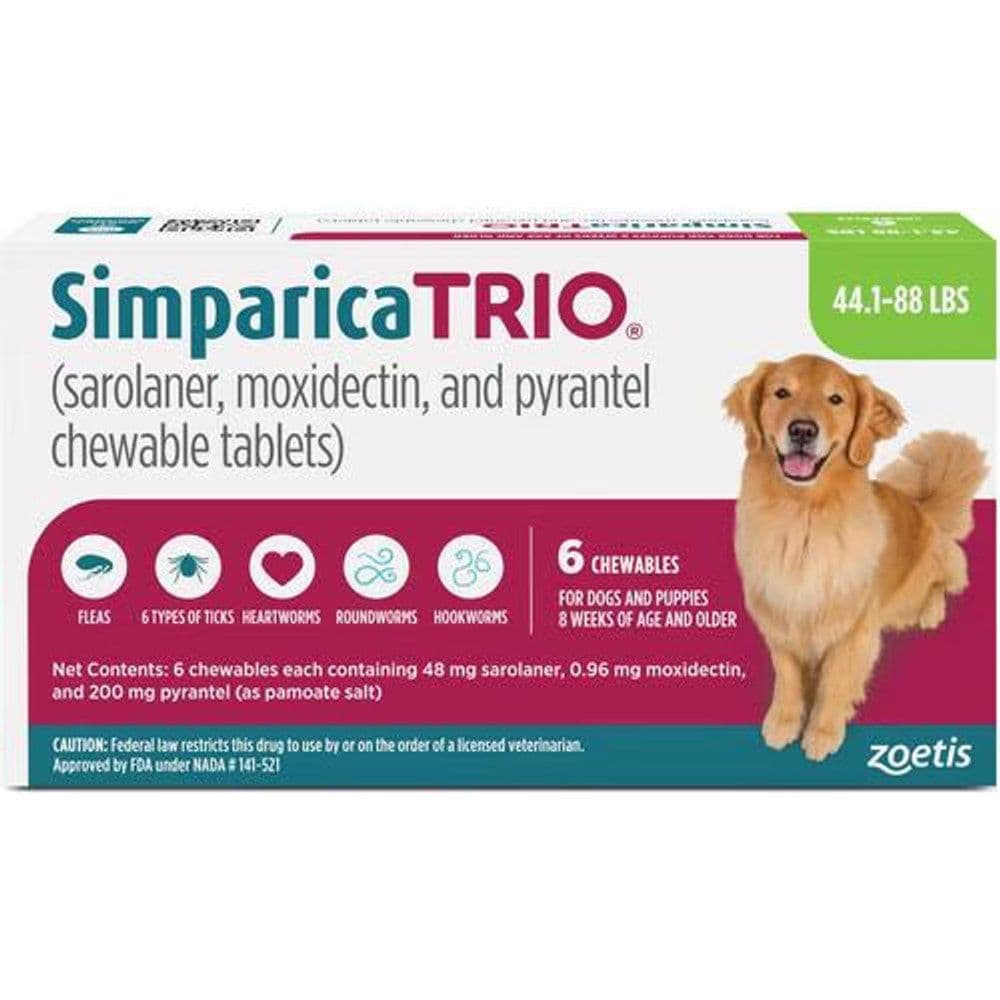
Monthly chew that protects dogs from fleas, six species of ticks, heartworm disease, roundworms, and hookworms.
Webvet may earn a commission when you click through to Chewy, at no extra cost to you.
| Where your dog is treated | Typical total cost | What is behind the number |
|---|---|---|
| --- | --- | --- |
| Nonprofit low cost clinic | About $225 to $2,000 | Subsidized pricing tiered by dog weight; waiting lists are common |
| Private veterinary practice | About $1,000 to $3,000 or more | Full staged protocol with diagnostics, medications, and hospitalization |
| Emergency or specialty hospital | Several thousand dollars | Advanced disease and stabilization; caval syndrome surgery alone can run $3,000 to $6,000 or more |
Why heartworm treatment costs so much
Why is heartworm treatment for dogs so expensive? Because the price buys months of staged veterinary care, not one injection. The protocol recommended by the American Heartworm Society includes staging diagnostics, about a month of antibiotics, an adulticide drug with no cheap substitute, hospitalization for observation on injection days, and recheck testing to confirm the worms are gone.
The workup often begins with something as ordinary as a persistent hack, which is one reason a coughing, gagging dog always deserves a vet visit. From there, four cost drivers stack the bill:

- Melarsomine (sold as Immiticide and Diroban) is the only FDA-approved drug that kills adult heartworms, and there is no generic bargain version of it.
- Staging the disease requires a heartworm antigen test, a microfilariae check, bloodwork, and chest x-rays before the first injection is ever given.
- Each injection day includes hospitalization for observation, because dying worms can trigger dangerous reactions in the hours after treatment.
- Care spans three months or more and ends with a recheck antigen test, so you are paying for sustained medical supervision, not an event.
None of those line items is padding. Dirofilaria immitis, the heartworm itself, is a foot-long parasite living inside the heart and pulmonary arteries. Killing it without harming the dog is genuinely delicate medicine, and the price reflects that reality.
Heartworm treatment cost breakdown by stage
The four-figure total is really five smaller bills. Breaking the cost by treatment stage shows exactly where the money goes: testing, staging diagnostics, medications, the melarsomine injection series with hospitalization, and recheck testing. Here is each stage with typical national ranges drawn from published veterinary cost guides; your clinic's numbers may sit anywhere inside or slightly outside them.
Webvet may earn a commission when you click through to Chewy, at no extra cost to you.
Testing and confirmatory testing
A heartworm antigen test typically costs about $35 to $75, and a positive result should always be confirmed with a second test method plus a microfilariae check, roughly $20 to $75 more. Confirmation matters because treatment is too serious, and too expensive, to start on a single result. Our guide to the heartworm test for dogs explains what each test actually detects.
Staging diagnostics
Staging the disease tells your veterinarian how much damage already exists and how risky treatment will be. Chest x-rays commonly run about $125 to $250 and bloodwork about $80 to $200. When advanced disease is suspected, an echocardiogram adds roughly $300 to $1,000. Skipping staging is not a savings: it is how avoidable complications happen.

Doxycycline and steroids
Before any injections, dogs take about four weeks of doxycycline, which weakens the worms by killing the Wolbachia bacteria they depend on. Expect roughly $30 to $150 depending on dog size, with anti-inflammatory steroids such as prednisone adding about $10 to $40.
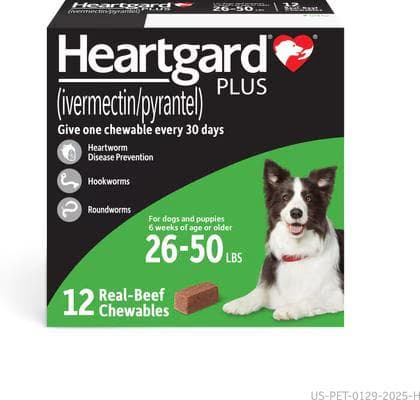
Your vet also starts a prescription monthly preventive at diagnosis, such as Interceptor Plus Chew for Dogs or Heartgard Plus, to clear juvenile larvae before they mature into new adults. Both are prescription-only products given under veterinary supervision during treatment, never something to source on your own.
The melarsomine injection series and hospitalization
The melarsomine injection series is the single biggest line item, commonly about $500 to $1,500 or more including hospitalization for observation. The American Heartworm Society protocol uses three injections: one, then two more given 24 hours apart about a month later. Each is injected deep into the muscles of the lower back, and each injection day means a day at the clinic under professional monitoring.

Recheck testing
Treatment is not finished until a recheck antigen test, usually about nine months after the final injection, comes back negative. Budget another $35 to $75, plus a microfilariae check. Skipping this step means you never actually confirm the treatment worked, which makes it the worst possible place to economize.
| Treatment stage | Typical cost range |
|---|---|
| --- | --- |
| Heartworm antigen test | $35-$75 |
| Confirmatory and microfilariae testing | $20-$75 |
| Staging diagnostics (chest x-rays, bloodwork) | $200-$450 |
| Echocardiogram (advanced cases only) | $300-$1,000 |
| Doxycycline and steroids | $40-$190 |
| Melarsomine injection series with hospitalization | $500-$1,500+ |
| Recheck antigen test | $35-$75 |
| Caval syndrome surgery (worst case) | $3,000-$6,000+ |
The worst-case row is real. In heavy infections, a mass of worms physically blocks blood flow through the right side of the heart. Caval syndrome surgery to extract them is an emergency procedure that can add $3,000 to $6,000 or more, and it usually happens because an infection went undetected or untreated too long.
What changes the price
Dog size, disease stage, your region, and the type of clinic move the number more than anything else. A small, early-stage dog treated at a nonprofit clinic and a large dog with advanced disease at an emergency hospital can be separated by thousands of dollars for the same diagnosis.
- Dog size. Melarsomine and doxycycline are dosed by weight, so owners asking how much is heartworm treatment for small dogs can usually expect the bottom of every range, often hundreds of dollars less than a giant breed would cost.
- Disease stage. The further the disease has progressed, the more diagnostics, stabilization, and monitoring the protocol requires. Catching it before obvious heartworm symptoms in dogs appear keeps both the risk and the bill down.
- Region and market. Urban and coastal veterinary prices run well above rural averages, though heartworm-endemic regions often have more nonprofit treatment capacity to offset that.
- Clinic type. Private practices, university teaching hospitals, and subsidized nonprofit programs can quote very different totals for the same American Heartworm Society protocol.
If you are searching for low cost heartworm treatment for dogs near me, start by calling area shelters and humane societies and asking which local programs treat owned pets. That search describes a real category of help, and the assistance section below maps it out.
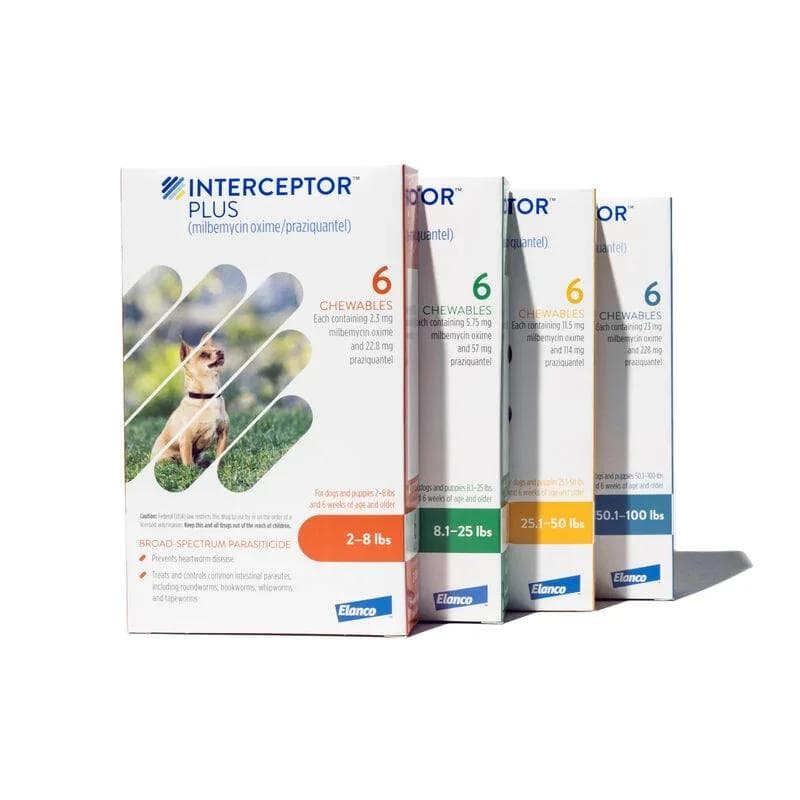
A monthly prescription chew that prevents heartworm and clears roundworm, hookworm, whipworm, and tapeworm. Since tapeworm is the usual reason a dog scoots, monthly cover is what stops it coming back.
Webvet may earn a commission when you click through to Chewy, at no extra cost to you.
 $65 · no membership
Need flea, tick, or heartworm prevention for your dog?
A licensed vet can recommend and prescribe the right preventive for your dog online when it's appropriate.
 Talk to a vet
- Licensed vets
- All 50 states
- same-day Rx

Webvet may earn a commission if you book.
Prevention vs. treatment: the cost contrast
The math is lopsided. Monthly heartworm prevention typically costs a few dollars to about $20 per month for heartworm-focused products, with combination parasite products running somewhat more, while a full treatment course runs $1,000 to $3,000 or more. A year of prevention is a small fraction of the cost of treating one infection, before you even count the damage treatment cannot undo.
Webvet may earn a commission when you click through to Chewy, at no extra cost to you.
- A year of monthly heartworm prevention: roughly $60 to $240 for heartworm-focused products, more for broad combination coverage
- ProHeart 12 injection: roughly $75 to $350 per year depending on dog size and clinic
- One complete treatment course: roughly $1,000 to $3,000 or more, plus months of strict rest
Every one of these options is a prescription item, and every one requires a current negative heartworm test, so an annual vet visit is part of the true cost of prevention. That visit is a feature, not a markup: it is how infections get caught while they are still cheap to manage. Our guide to preventing heartworm in dogs walks through the whole toolkit, and our overview of how dogs get heartworm explains why year-round protection matters even in cooler climates.
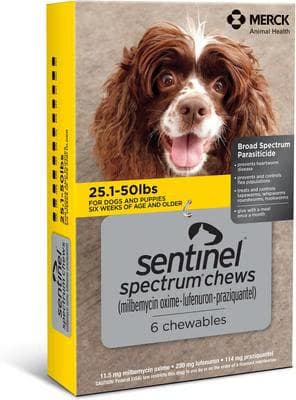
Prescription heartworm preventives come in several forms. Combination chewables such as Trifexis Chewable Tablet for Dogs pair monthly heartworm prevention with flea control, while Sentinel Spectrum adds tapeworm coverage. Dogs who refuse chews can use a topical such as Revolution Topical Solution for Dogs or Advantage Multi instead. If remembering a monthly dose is the obstacle, ask your vet about the heartworm injection for dogs: ProHeart 6 covers six months and ProHeart 12 covers a full year from a single in-clinic injection.

For dogs who need protection beyond heartworm, our comparison of flea, tick, and heartworm prevention for dogs covers the combination options. Whatever you choose, the point stands: skipping prevention to save a few dollars a month is exactly how four-figure treatment bills happen.
Help paying for heartworm treatment
If you cannot afford heartworm treatment, tell your veterinarian before you do anything else. Many practices offer payment plans and financing, including third-party medical credit such as CareCredit, and because the protocol naturally spans several months, costs often spread out across it. From there, work through the options in order:
- Ask your clinic about payment plans and financing. Spreading the melarsomine series over its natural multi-month timeline often means the bill arrives in installments anyway, and some clinics will formalize that in writing.
- Call nonprofit low cost clinics. Subsidized programs in many regions treat owned dogs at weight-tiered prices, sometimes for a few hundred dollars. Shelters and humane societies can usually tell you who operates near you.
- Look into financial assistance programs. Shelter medical funds, breed rescues, and regional veterinary charity funds exist specifically for treatable, life-threatening conditions like heartworm disease. Your vet's front desk often knows which ones actually pay out locally.
- Ask about veterinary teaching hospitals. University clinics sometimes price competitively and may have charitable-care funds of their own.
Does pet insurance cover heartworm treatment?
Usually not for a dog who is already positive. An infection diagnosed before enrollment is treated as a pre-existing condition, which is why most owners face this bill without insurance. A policy started while your dog is heartworm-negative may cover future treatment, and wellness add-ons often reimburse prevention and annual testing instead. Read the exclusions before you count on anything.
Why cheap slow-kill treatment is a false economy
The American Heartworm Society does not recommend the slow kill method, which relies on long-term monthly preventives instead of melarsomine, as a first-line treatment. The reason is simple: adult worms keep damaging the heart and lungs for the months to years they take to die, and the dog remains infected, and infectious to mosquitoes, that entire time.
On paper, slow kill heartworm treatment costs a fraction of the melarsomine protocol. In practice the savings erode fast: it still requires doxycycline, repeated antigen and microfilariae testing, regular vet visits, and continued strict exercise restriction, not for two months but potentially for years. Add the cost of managing permanent lung and heart changes later, and a false economy is exactly what it is.

There is also a wider cost. Leaning on preventives to kill adult worms is one of the pressures researchers link to drug-resistant heartworm strains, which is bad news for every dog, including yours.
Some veterinarians do deliberately choose a non-arsenical protocol for a specific patient, for example a dog who cannot medically tolerate melarsomine. That is a clinical decision made with staging data, monitoring, and a plan. It is not a money-saving shortcut to pick off a forum thread. If cost is the obstacle, the assistance options above are the safer path, and our guide to heartworm treatment for dogs explains exactly what the full protocol buys you.
FAQ
Can a dog completely be cured of heartworms?
Yes, most dogs are cured. The melarsomine protocol recommended by the American Heartworm Society eliminates adult worms in the large majority of treated dogs, confirmed by a negative recheck antigen test about nine months after the final injection. Damage already done to the heart and lungs may be permanent, though, which is why treating early matters so much.
What if you can't afford heartworm treatment?
Talk to your veterinarian first. Many practices offer payment plans and financing such as CareCredit, and the staged protocol naturally spreads costs over several months. Nonprofit low cost clinics, shelter medical funds, and financial assistance programs can close the rest of the gap. Do not delay care while you search, because the disease keeps progressing.
Why is heartworm treatment for dogs so expensive?
Because it is a staged, months-long protocol rather than a single shot. The bill covers diagnostic staging, about four weeks of doxycycline, a three-injection melarsomine series with hospitalization for observation on injection days, and recheck testing. Melarsomine itself is the only FDA-approved adulticide, so there is no cheap substitute for the core drug.
Is it worth getting a heartworm injection for dogs?
For prevention, often yes. ProHeart 6 and ProHeart 12 are prescription injections given at the vet clinic that remove the risk of forgotten monthly doses, with ProHeart 12 typically running about $75 to $350 per year depending on dog size. Compared with a four-figure treatment bill, reliable prevention in any form is worth it; your vet can confirm whether your dog is a good candidate.
What is the life expectancy of a dog with heartworms?
Untreated heartworm disease is progressive and often fatal, over a course that ranges from months to a few years depending on worm burden and activity level. Dogs treated successfully before major damage occurs usually go on to live a normal lifespan. Only a veterinarian who has staged the disease can give a meaningful prognosis for an individual dog.
How late is too late for heartworm treatment?
It is rarely too late to try, but risk and cost climb with every stage of disease. Even advanced cases can often be stabilized and treated, while caval syndrome, where worms physically obstruct blood flow, becomes a surgical emergency. The practical answer: the best day to start treatment is the day of diagnosis.
Sources
$65 · no membershipNeed flea, tick, or heartworm prevention for your dog?
A licensed vet can recommend and prescribe the right preventive for your dog online when it's appropriate.
Talk to a vet- Licensed vets
- All 50 states
- same-day Rx
Webvet may earn a commission if you book.

Editor
The Webvet Editorial Team is the in-house group of pet-care editors and writers behind Webvet, operated by Smart Pet Collective. The team researches, writes, and maintains Webvet's pet health, behavior, and medication content. Every article follows a defined editorial process: research from reputable veterinary and scientific sources, careful drafting, mandatory review of medical content by a credentialed veterinarian, and dated publication. Health and medication articles are medically reviewed by a licensed veterinary professional before they go live and are kept current over time.
Veterinarian · BVMS MRCVS
Dr. Pippa Elliott, BVMS, MRCVS, is a veterinarian with nearly 30 years of experience in companion animal practice. Dr. Elliott earned her Bachelor of Veterinary Medicine and Surgery from the University of Glasgow. She was also designated a Member of the Royal College of Veterinary Surgeons. Married with 2 grown-up kids, Dr. Elliott has a naughty Puggle named Poggle, 3 cats and a bearded dragon.


