New Puppy Checklist: Supplies, First-Week Plan, and Vet Visits
What to buy, what to put away, and what to book before your puppy comes home: supplies, puppy-proofing, the first 48 hours, the first vet visit, and the warning signs that mean call the vet.

BVMS MRCVS
Medically reviewed by Dr. Pippa Elliott, BVMS MRCVS · Last reviewed

This article contains affiliate links. Webvet may earn a commission when you buy through them, at no extra cost to you.
New puppy checklist: what to have ready before your puppy comes home
A new puppy checklist covers three jobs: the supplies to buy before day one, puppy-proofing each room, and booking a vet visit within the first few days. The core supplies are a crate or pen, a bed, bowls, puppy food, a collar or harness with an ID tag, a leash, safe chew toys, pee pads, and an enzymatic cleaner.
Everything else on this new puppy checklist can wait until you know your puppy's size, coat, and habits. The goal before pickup is a safe, quiet setup, a vet already chosen, and a household that agrees on who does what.
- 1Start with the supplies to buy before day one: crate or pen, bed, bowls, puppy food, collar or harness, ID tag, leash, chew toys, pee pads, and enzymatic cleaner.
- 2Finish puppy-proofing each room before pickup: cords, trash, medications, cleaning products, toxic foods, and toxic plants out of reach.
- 3Book the first vet visit within the first few days and bring any health records and a fresh stool sample.
- 4Plan the first night: crate near people, quiet house, and potty breaks about every 2 hours for a young puppy.
- 5Know the warning signs that mean call the vet today, such as lethargy, vomiting, diarrhea, or refusing food.
Before buying anything, pick your veterinarian. AAHA advises choosing a practice based on its approach to vaccination, how it supports new puppy owners, and whether it offers emergency services. AAHA also notes that pulling puppies from their mother before 8 weeks of age is not recommended, so ask the breeder or rescue what pickup age they plan.
AAHA also suggests lining up a qualified trainer before pickup. Because dog training is unregulated, AAHA advises looking for humane, evidence-based methods and a recognized certification such as:
- Certification Council for Professional Dog Trainers (CCPDT)
- Pet Professional Guild (PPG)
- International Association of Animal Behavior Consultants (IAABC)
Set expectations for the puppy's side of the move too. AAHA points out that a new puppy is not a tiny dog: it has just left its mother, its littermates, and its first home, so some crying and clinginess in the first days is normal.

The crate or pen is the one item that shapes the whole first week. VCA Animal Hospitals says a crate should let the puppy stand, lie down, and turn around, and should not match the puppy's adult size yet, because extra room invites the puppy to use one end as a bathroom.
A crate does more than hold the puppy overnight. VCA notes it can become a calm retreat during storms or a busy family party, and that crating a puppy when you are not home keeps it away from destructive chewing.
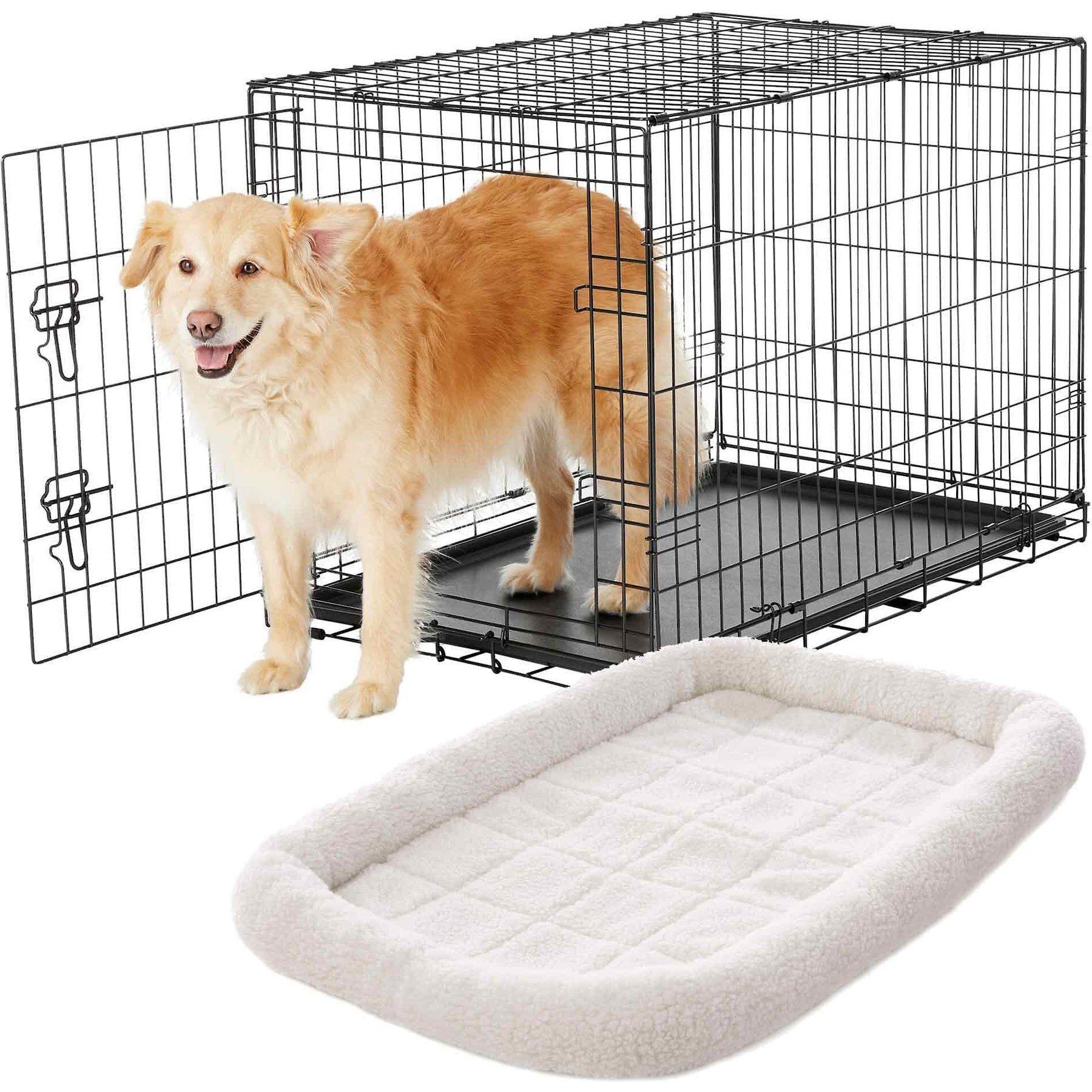
A folding wire crate with a quilted mat gives a puppy a safe place to sleep from the first night.
Webvet may earn a commission when you click through to Chewy, at no extra cost to you.
A Yorkie or Cavalier King Charles Spaniel needs a smaller crate, collar, and harness than a Lab or Goldendoodle. VCA adds that large and giant breeds need food made for large or giant breed puppies.
Talk through the house rules as a family before pickup. AAHA warns that the first 4 to 6 weeks will be demanding and recommends agreeing on these points in advance:
- Feeding times, potty breaks, play times, and bedtime
- Where the puppy sleeps and which furniture is off-limits
- Who covers night potty trips, so no one person is worn out
- Who supervises the puppy during each part of the day
Many new puppy owners like a printable version of this list. Print the takeaway above or save it as a note or PDF on your phone, then tick items off as you shop and prepare.
 Sponsored
Have a health question about your dog?
Talk to a licensed vet at Dutch over video or message, including nights and weekends.
Use code Pets60
Plans start at $12/month · covers up to 5 pets
- Licensed vets in most states
- Rx for 150+ conditions
- 4.7 on Trustpilot
New puppy supplies: the essentials for sleeping, eating, potty, walking, and chewing
| Item | Why it matters | Buy now or can wait |
|---|---|---|
| Crate or pen sized for the puppy now | Safe sleep and rest space and the base of house training | buy now |
| Washable bed and blankets without holes or strings | Comfort in the crate; puppies chew, so keep these affordable | buy now |
| Food and water bowls | Daily feeding from the first meal | buy now |
| Puppy food labeled for growth or all life stages | Keeps the diet steady through the move | buy now |
| Breakaway collar or harness and a standard leash | Safe car ride home and yard potty trips | buy now |
| ID tag with your phone number | Identification if the puppy slips out | buy now |
| Pee pads and an enzymatic cleaner | Accidents start on day one; odor draws the puppy back | buy now |
| Safe chew toys | Teething and boredom outlet away from your furniture | buy now |
| Poop bags | Cleanup on every outing | buy now |
| Baby gates or an exercise pen | Blocks unsafe rooms and creates a shared safe zone | buy now |
| Dog toothbrush and dog-safe dental paste | Early dental handling; never the human kind | can wait |
| Nail trimmers and brushes | Grooming habits start in the first weeks | can wait |
| Dog shampoo | Needed only when the first bath comes up | can wait |
| Treat pouch and training treats | Useful once training sessions begin | can wait |
| Latching food storage bin | Stops a puppy from raiding the food bag | can wait |
| Larger collar, harness, and adult bed | Your puppy will outgrow the first set | can wait |
The supplies table splits the shopping into buy now items, which you need on the first afternoon, and can wait items, which make sense once you know your puppy's size and coat. That split keeps the first trip short and stops you from paying twice for gear the puppy outgrows within weeks.
Potty. VCA lists potty pads as useful for lining a crate or for pad training, and says to have enzymatic cleaners ready before the first accident.
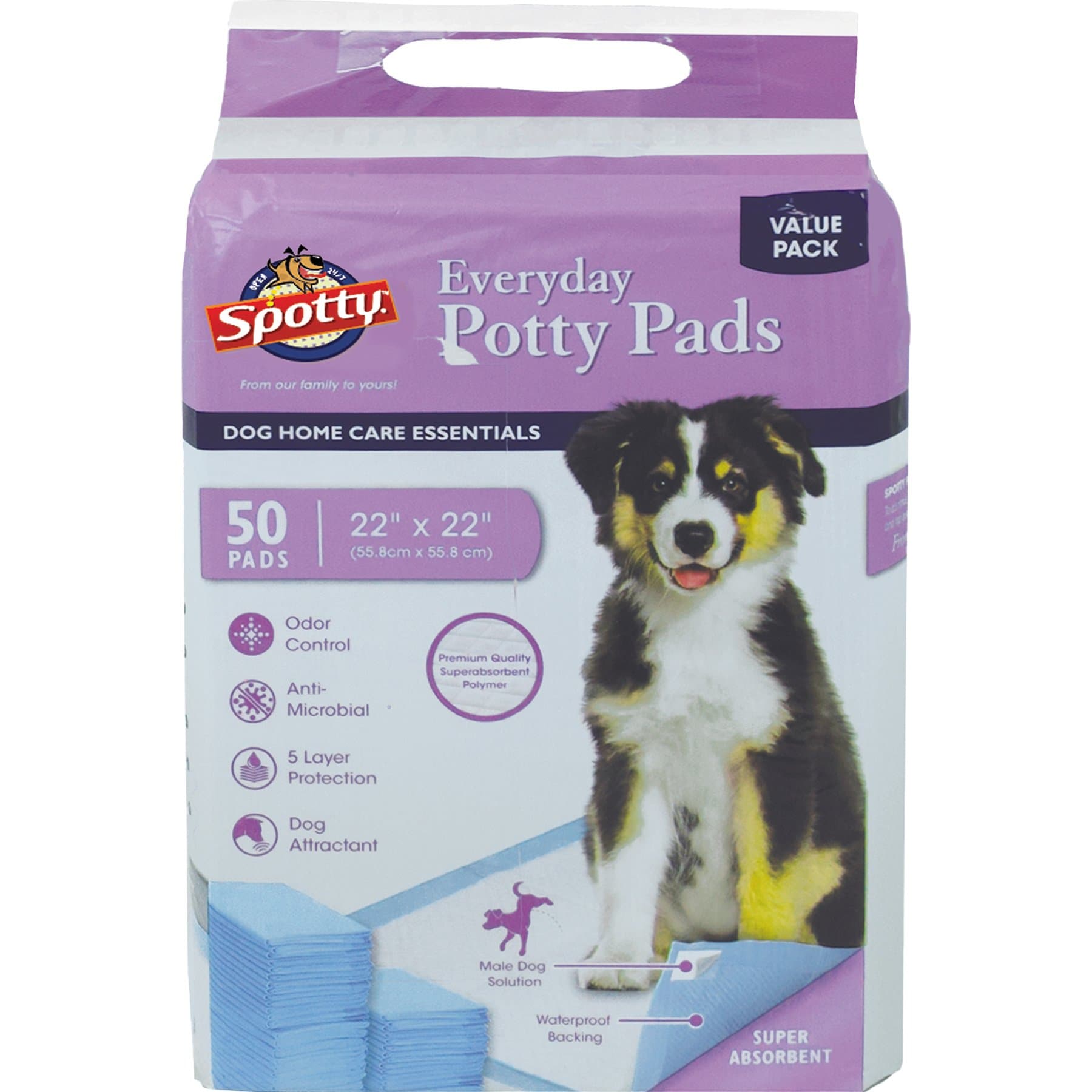
Absorbent pee pads line a crate or pen and catch overnight accidents while a puppy learns to hold it.
Webvet may earn a commission when you click through to Chewy, at no extra cost to you.
What does my new puppy need?
Your new puppy needs a correctly sized crate or pen and a washable bed, plus bowls and a puppy food labeled complete and balanced for growth. Add a breakaway collar or harness with an ID tag and a standard leash. Safe chew toys, pee pads, and an enzymatic cleaner complete it. Grooming tools and a bigger adult bed can wait a few weeks.
Sleeping. The best puppy crates roundup compares wire, plastic, and soft-sided options. Whichever style you choose, set it up this way:
- Size it so the puppy can stand, turn, and lie down, and plan to size up later
- Add an affordable, easy-to-clean bed, since VCA expects puppy beds to be chewed
- Use blankets without holes or loose strings that could tangle a puppy
- Place it in a room where people spend time, such as a kitchen or bedroom
Eating. VCA advises choosing a food that is AAFCO-approved for growing puppies or for all life stages, and keeping the current diet steady through the move. Washable bowls that resist tipping cut down on spills, and a latching bin keeps the puppy from getting into the food bag and gorging, as VCA suggests.
Grooming. VCA recommends starting nail care early to prevent fear later on, and using dog-safe dental products rather than human ones. Coat tools and bath supplies can come later.
Walking. VCA recommends a breakaway collar to reduce choking risk, a larger collar as the puppy grows, and avoiding retractable leashes. If your puppy pulls, a harness keeps pressure off the neck, and some harnesses double as car seatbelts. Round out the walking kit with:
- An ID tag with your name and phone number; the DOG iD Personalized Dog ID Tag, Slate, Small is one option for a collar or harness
- A microchip, which VCA calls the most widely recommended form of pet identification; it can be placed during any regular veterinary visit
- Poop bags on every outing; the Earth Rated Dog Poop Bag Holder with Dog Poop Bags, Unscented, 1 Dispenser & 15 Bags clips to a leash
Chewing. According to VCA Animal Hospitals, the best puppy toys are lightweight, pliable, and durable, with no small parts such as eyes that can be bitten off. VCA also advises avoiding hard rubber or plastic toys that can break teeth, avoiding bones that can splinter and block the intestine, and skipping any toy small enough to swallow.
A stuffable puppy toy, such as a puppy Kong, gives a puppy something to work on in the crate. VCA notes that chewing lasts until at least 6 to 7 months of age, while adult teeth come in. The safe dog chew toys guide covers which materials hold up.
Confinement. An exercise pen, often called an x-pen, is worth adding if anyone will be out of the house for longer stretches. VCA describes a pen or gated area that holds a resting spot such as a crate plus a toileting surface such as a pad.
How to puppy-proof your home before day one
Puppy-proofing means getting down to puppy height and removing whatever a curious mouth can reach. AAHA suggests baby gates to make smaller shared spaces with clear sightlines, so you can see the puppy at all times.

Work through the house room by room. Each step below removes a specific hazard named by VCA Animal Hospitals:
- Kitchen: cover trash and recycling bins, and keep chocolate, candy, vitamins, and anything sweetened with xylitol out of reach. Garbage can cause vomiting, diarrhea, blockages, or toxin exposure.
- Bathroom: store medications, cleaning products, and toothpaste or mouth rinse that may contain xylitol on high shelves, and keep hair ties off the floor.
- Bedroom: put away headphone cords, jewelry, drawstrings, and shoelaces, which can lodge in the digestive tract. Keep stuffed animals with eyes or ribbons off the floor.
- Living room: tie up dangling cords and keep remotes and phones high, because punctured batteries can cause severe ulcers in the gut. Remove lilies and sago palms, which can cause life-threatening reactions.
- Doors and windows: check that they latch properly, since VCA warns a puppy can push an unlatched door open and get hurt outside.
- Diffusers: keep essential oils out of reach; VCA warns that only a couple of licks or a small amount on the skin could be harmful.
- Laundry room: keep detergent, laundry pods, dryer sheets, and bleach on high shelves or in closed cupboards.
- Garage and yard: store rodent bait, insecticides, fertilizer, and weed killer well out of reach, and check for holes under the fence.
Electrical cords deserve a second look. VCA's puppy-proofing guide says to unplug loose cords or tuck them out of sight, because chewing them can cause an electric shock. It also warns that childproof lids do not stop a dog from chewing a pill bottle.
VCA's list of items to keep away from a puppy includes:
- Chocolate, caffeine, and alcohol
- Xylitol, found in sugar-free gum and other sugar-free foods
- Grapes and raisins
- Onions, garlic, chives, and leeks
- Macadamia nuts and raw yeast dough
- Cleaning supplies, including bleach
Xylitol is the one to watch most closely. VCA says it is extremely toxic to dogs, and even small amounts can cause low blood sugar, seizures, liver failure, or death. Check the labels on peanut butter and sugar-free snacks before sharing anything.
Mouthing gets more intense as baby teeth fall out, so the chewing hazards above matter for months, not days. The guide to when puppies start teething explains what to expect at each stage.
Finish by writing an emergency list and taping it inside a cupboard. VCA suggests including your clinic, the nearest emergency hospital, the Pet Poison Helpline (855-764-7661), and the ASPCA Animal Poison Control Center (888-426-4435).
 Sponsored
Vet care that's always there
Unlimited video calls and messaging with licensed vets for less than a typical vet visit. One membership covers up to five pets.
Use code Pets60
Plans start at $12/month · covers up to 5 pets
- Licensed vets in most states
- Rx for 150+ conditions
- 4.7 on Trustpilot
The first 48 hours: the ride home, the first day, and the first night
Bringing a new puppy home goes more smoothly with a short checklist for pickup day. Picking up in the morning or early afternoon leaves hours to explore the house and use the potty spot before bedtime.

For picking up a new puppy, pack these items:
- A crate or carrier, or a harness that works as a seatbelt
- A collar with the ID tag already attached and a leash
- Towels or a blanket that smells of the litter, if the breeder or shelter can spare one
- Pee pads, paper towels, and poop bags for the car
- A bottle of water and a little of the puppy's current food
- Any health records the breeder or shelter provides
Plan for future rides too. VCA suggests short practice trips to a pleasant place with a treat on arrival, and AVSAB encourages taking puppies on as many car trips as possible, so later vet visits feel routine.
The ride home matters for safety. VCA Animal Hospitals says a puppy should not roam freely in a moving vehicle, because an unrestrained puppy can distract the driver, fall, or be badly hurt in a crash. A carrier, crate, or seatbelt harness keeps the puppy in place.
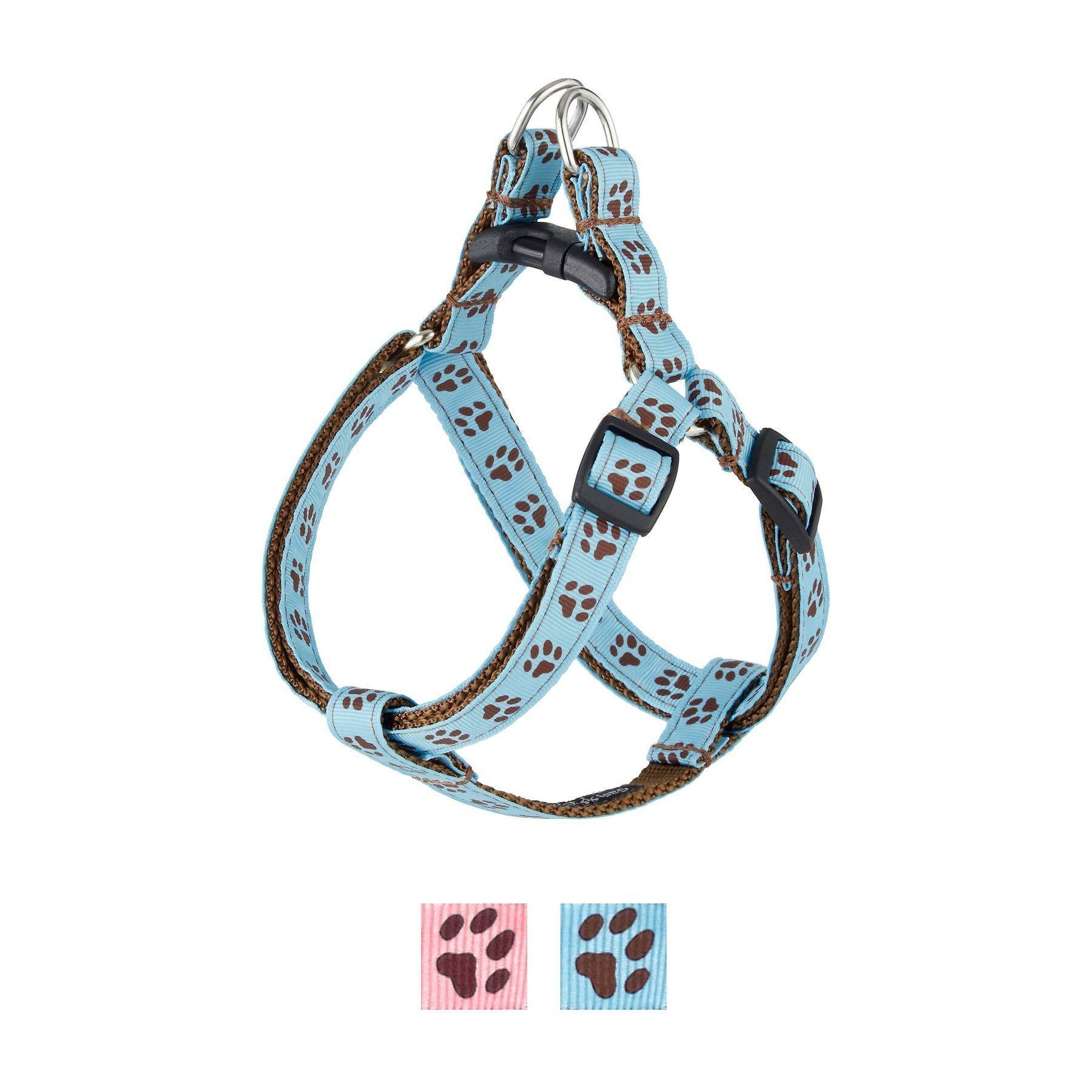
A small step-in harness for a puppy's ride home and early leash trips to the potty spot.
Webvet may earn a commission when you click through to Chewy, at no extra cost to you.
Once you are home, go straight to the potty spot before going inside. VCA advises keeping the household quiet on the first day and giving the puppy plenty of chances to use the chosen elimination spot. Hold off on visitors for now, and keep young children's time with the puppy supervised, as the CDC advises.
Expect a few accidents on day one. Clean each one with an enzymatic product rather than a regular household spray, so the scent does not pull the puppy back to the same spot.
Bringing a puppy home to another dog takes a plan. VCA recommends these steps:
- Hold the first meeting in a neutral location, not inside your home
- Let the dogs ride home in separate crates
- Walk them together on leash outside before going in
- Give each dog its own safe zone and toys indoors
- Feed them in separate areas to prevent resource guarding
- Exercise both dogs so they are a bit tired before they interact again
- Give the puppy its own toys, especially if your dog does not like sharing
Most puppies settle faster than owners expect. VCA notes that most puppies obtained before 12 weeks of age form attachments almost immediately to the people and pets in their new home.
Supervision is the main job on day one. VCA advises watching the puppy at all times until it learns what it may chew and where to eliminate, and suggests a 10-foot leash indoors to keep a curious puppy in sight.
If you have a cat, VCA recommends a calm, leashed introduction once the puppy has been exercised:
- Meet in neutral territory, not in either pet's safe zone
- Give the cat an escape route, such as an elevated platform
- Keep the puppy busy with a treat-filled toy and never force contact
- Reward calm behavior and stop if things go badly, then try another day
What should I do on my first night with a new puppy?
Put the crate in your bedroom or near where people sleep, not in a basement or laundry room, and line it with a soft, washable bed. Take the puppy out right before bed and again during the night: VCA says a 2-month-old should go out at least every 2 hours, even overnight.
The first night with a new puppy is mostly about quiet repetition. Carry or walk the puppy to the potty spot, wait a few minutes, praise quietly, and go straight back to the crate without play. VCA Animal Hospitals notes that a puppy may not stay comfortably in the crate all night until around 6 months old. A simple routine for night one:
- A last potty trip right before bed
- The crate beside your bed so you hear the puppy wake
- Night trips that go straight to the potty spot and back, with quiet praise
- Night duties split between adults, as AAHA suggests, so no one is exhausted
VCA also warns new owners to be prepared for some late-night accident cleanups. A washable bed and a pad at the crate floor make those quick, and an enzymatic cleaner deals with the odor.
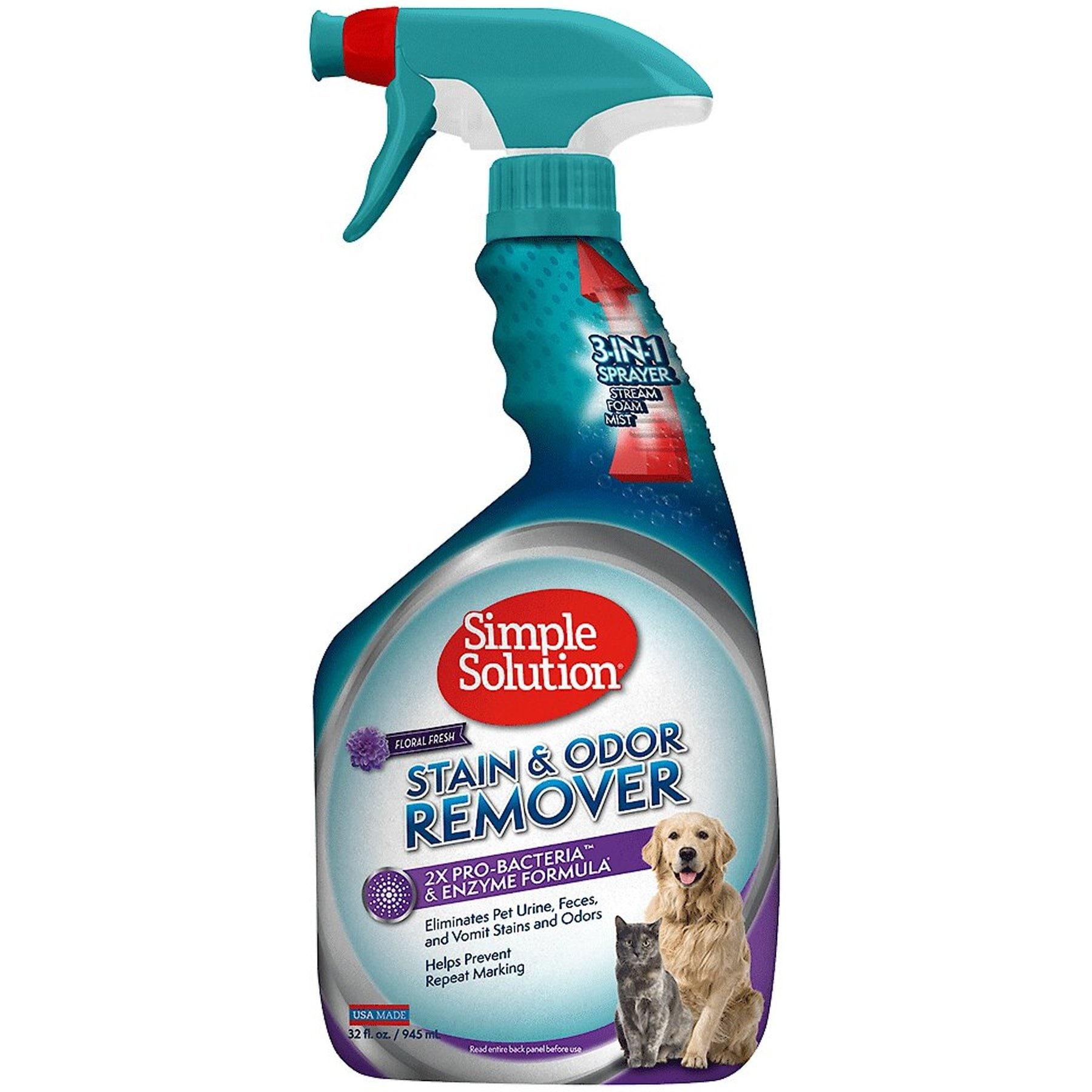
An enzyme stain and odor remover clears urine scent so a puppy is less likely to reuse the same spot.
Webvet may earn a commission when you click through to Chewy, at no extra cost to you.
Over the first 48 hours with a new puppy, start the crate habit gently: feed treats and meals near or inside the crate and never use it as punishment. The full method is in the guide on how to crate train a puppy. Short crate sessions while you are home, a few minutes at a time, make the first nights easier.
Your puppy's first vet visit: when to book it and what to bring
Book the first vet visit before pickup. The CDC advises taking a new dog or puppy to the veterinarian within a few days to a week after adoption. VCA goes further and suggests booking an exam for the same day you pick up the puppy, since many breeders and adoption groups allow a probationary period, often 72 hours.

That early exam does two jobs: it catches health problems while any return window is still open, and it starts the puppy vet visits schedule. Per VCA Animal Hospitals, most puppies should see the veterinarian at 6 to 8 weeks of age for a health exam and to begin vaccines and parasite preventives.
After that, VCA says puppies typically see the vet every 3 to 4 weeks until about 16 to 20 weeks old. Your own vet sets the exact shots and dates, and the puppy vaccine schedule page explains the series. No puppy is protected until that series is complete. Your new puppy vet checklist:
- All health records: vaccines given, deworming dates, and any flea, tick, or heartworm products
- A fresh stool sample in a sealed bag, collected on the walk before the visit
- The exact food brand and the amount fed, measured in cups
- Notes on appetite, stools, urination, sneezing, coughing, or scratching
- Your questions about microchipping, spay or neuter timing, and parasite prevention
- A leash, a few small treats, and a towel or blanket for the carrier
- A short walk right before the visit to burn off energy and collect the stool sample
VCA stresses being precise about food, since "one scoop" can mean one cup or five. During the physical exam, expect the vet to:
- Check the coat for dryness, bald spots, irritated areas, or parasites
- Look at the eyes and ear canals with magnifying instruments
- Open the mouth to assess teeth and gums
- Listen to the heart and lungs and feel the abdomen
- Check for hernias and soft spots on the skull
- Watch the puppy walk to spot any gait problems
Make the visit easier with handling practice at home. VCA suggests gently lifting the lips, opening the mouth, looking in the ears, flexing the legs, and touching the toes and belly. Keep each session positive and brief, with treats or cuddles when the puppy cooperates.
The fecal exam is the part owners most often forget. VCA recommends a microscopic stool check for all puppies, especially at the first few visits, because puppies can pick up intestinal worms before birth or through their mother's milk. Some of these parasites can spread to people, which is another reason to bring that sample.
Deworming is usually repeated. VCA explains that dewormers kill only adult worms, so treatment is repeated as larvae mature. The guide to puppy dewormer products covers why the schedule matters. More topics to raise before you leave:
- Flea products: VCA warns that many products safe for adult dogs are not safe for puppies younger than two or three months, so let your vet choose
- Tapeworms: tell the vet if you see small white segments like grains of rice in the stool; VCA notes tapeworms need an intermediate host such as fleas, so they do not pass directly from dog to dog
- Heartworm prevention: VCA explains that preventives are dosed by weight, so the dose rises as your puppy grows
- Spay or neuter: VCA says your veterinarian will talk with you about the best timing for your puppy
- The wider plan: AAHA says the first wellness visit is a good time to discuss socialization, microchipping options, and heartworm and parasite prevention
In the waiting room, keep the puppy on a short leash close to you and sit where other animals are not in its direct line of sight, as VCA suggests. After the physical exam, VCA says the veterinarian will discuss and give the needed vaccines, provide a schedule for follow-up boosters, and prescribe a heartworm preventive. The clinic staff will also remind you when to return. Add each booster date to a shared family calendar before you leave, so no visit in the series is missed.
After the visit, the CDC advises washing your hands after contact with dog saliva or poop, even if you use a bag, and notes that even a dog that looks healthy can spread germs to people and other animals.
New puppy warning signs that mean call the vet today
Most first-week hiccups are normal, but some signs in a young puppy need a same-day call. Young puppies have little reserve, and several serious illnesses start with vague signs.
Parvovirus is the main reason vets take these signs seriously in puppies. VCA describes it as a potentially fatal disease that mostly affects young or unvaccinated dogs, causing vomiting, diarrhea that is sometimes bloody, depression, and loss of appetite. Puppies under five months are usually the most severely affected and hardest to treat.
The early signs can be easy to miss. The Merck Veterinary Manual says parvo may begin with nonspecific lethargy, poor appetite, and fever, then progress to vomiting and bloody diarrhea within 24 to 48 hours. The virus also travels on shoes, clothes, and objects, so direct contact with a sick dog is not needed.
Other reasons to call the same day include:
- Vomiting along with fever, belly pain, diarrhea, dehydration, or blood in the vomit, which VCA lists as reasons to seek care immediately
- A suspected swallowed toy, sock, cord, or toxic food
- Any chance the puppy ate xylitol, since VCA says blood sugar can drop as soon as 30 minutes to two hours after a dog eats it
- Weakness, collapse, disorientation, tremors, or seizures, which VCA lists as typical signs of low blood sugar
- A puppy that stops eating or drinking, since poor appetite can be an early sign of illness such as parvovirus
If parvo is diagnosed, cleaning matters for other dogs in the home. VCA notes the virus resists many disinfectants, and a 1:30 bleach solution needs at least 10 minutes of contact time to destroy it.
Not every upset stomach is an emergency. VCA says many cases of sudden vomiting improve on their own within 24 hours, but a dog that seems well and keeps vomiting for more than one to two days still needs a vet. In a young puppy, call sooner rather than later.
Keep the clinic and emergency hospital numbers from your puppy-proofing list saved on your phone so you are not searching for them at night.
The first week: daily routine, potty breaks, and settling in
The first week with a new puppy runs on a schedule. VCA Animal Hospitals says house training should begin the day the puppy comes home, using the same door and the same potty spot every time.

Post the schedule where everyone in the house can see it so each person follows the same routine. A simple first week with a new puppy schedule for a puppy around 8 to 10 weeks old:
- Wake-up: straight outside to the potty spot, then breakfast
- Through the day: potty breaks every 1 to 2 hours while awake, after every meal, nap, and play session, and every half hour during high-energy play
- Meals: VCA's meal-feeding guidance is a measured amount four times a day for puppies 5 to 12 weeks old, removing food not eaten within 30 minutes
- Play and training: several short sessions spread through the day
- Naps: quiet crate or pen time after play and a potty break
- Bedtime: last potty trip, then the crate
- Night: VCA says puppies may need overnight outings until about 5 months of age; its potty training guide suggests every 2 hours at 6 to 8 weeks, adding about an hour per month of age
Can you toilet train a puppy in 7 days? Not fully, because housetraining takes months. VCA says puppies should be learning to ask to go out by around 4 months, and most are fully potty trained by about 6 months. What the first 7 days can do is set the routine that makes later progress fast.
VCA describes the signs that a puppy is about to go:
- Pausing what it is doing and quickly squatting
- Sniffing the floor or circling
- Restlessness, which often means a full bladder or bowels
Obedience training works the same way in the first week: aim for habits, not a finished dog. VCA advises starting training as soon as the puppy comes home, with short sessions several times a day on simple cues such as sit, stay, and lie down, using rewards rather than force.
Start on mouthiness early. When the puppy nips during play, VCA advises stopping the game and redirecting it to a chew toy. For other mischief, a clap or a calm "uh-uh" followed by a redirect and praise works better than punishment.
A few habits to avoid from day one:
- Never rub a puppy's nose in an accident or strike the puppy; VCA warns this can teach a puppy not to toilet near people
- Do not scold an accident you find after the fact; clean it and supervise more closely
- Do not send a young puppy into the yard alone to potty
- Do not use the crate as punishment
- Do not leave a young puppy loose and unsupervised in the house
- Do not take the puppy to dog parks or other places that cannot be sanitized until the vaccine series is complete
Keep accident cleanup consistent. VCA explains that the odor of urine or feces cues a dog to reuse the spot, so an enzymatic cleaner is part of housetraining. The Simple Solution Pet Stain & Odor Remover with Pro-Bacteria & Enzyme Formula, 32-fl oz bottle is one option, and Spotty Everyday Puppy Pee Pads, 22 x 22-in, 50 count can cover a pen floor overnight.
Housetraining keeps going well past the first week. VCA's next steps:
- Teach a signal, such as ringing a bell on the door, once the puppy can hold it consistently
- Allow more freedom only after about 8 to 12 weeks without accidents
- Ask your vet if a previously reliable puppy starts having accidents again
Socialization still starts now. The AVSAB position statement calls the first three months the most important socialization window and says puppies should get safe socialization before they are fully vaccinated. AVSAB adds that puppy classes can start at 7 to 8 weeks, after at least one set of vaccines given 7 days before the first class and a first deworming.
Good early exposures from VCA's puppy training schedule:
- Friendly people of different ages, including people wearing hats or using canes or wheelchairs
- Everyday sounds such as the vacuum, alarm clocks, storm noises, and music
- Short, positive car rides and new surfaces at home
- Gentle handling of paws, ears, and mouth, since AVSAB says puppies should learn to accept handling of all body parts
Use the puppy socialization checklist to plan safe new people, sounds, and surfaces each day. For questions about yards, sidewalks, and parvo risk before the series is done, see when puppies can go outside.
Can I leave my 8 week old puppy alone for 3 hours?
Three hours is the upper limit for an 8-week-old puppy. VCA says puppies left alone for no more than 3 hours can usually be crated, but at 6 to 8 weeks puppies need a potty trip about every 2 hours. For longer absences, arrange a sitter visit or a pen with a bed and a pee pad. AAHA also suggests practicing short departures so time alone builds gradually.
How often should I play with my puppy?
Play with your puppy several times a day in short sessions. VCA says stimulating play is especially important in the first week, and that running, chasing, and fetching are needed for normal muscle development. Mix in a few minutes of training, then a potty break and a nap so the puppy does not get overtired.
Am I supposed to entertain my puppy all day?
No. A puppy needs supervision whenever it is loose, but not nonstop entertainment. VCA says confinement time gives a puppy much-needed rest, and AAHA suggests coming and going briefly through the day so the puppy learns that short separations are normal. Chew toys and naps fill the gaps.
New puppy checklist questions
Frequently Asked Questions
When should I take my new puppy to the vet?
Schedule the first vet visit within a few days of bringing your puppy home. CDC guidance says within a few days to a week after adoption, while VCA suggests the same day as pickup so any problem is found inside a breeder or shelter return window. After that first exam, expect return visits every few weeks while the vaccine series is underway. If the puppy seems unwell before the appointment, with lethargy, vomiting, or diarrhea, call the clinic right away rather than waiting.
How much does a puppy's first vet visit cost?
The cost depends on your clinic, your region, and what the visit includes. A first visit usually combines an exam, a fecal test for intestinal worms, and often a first or booster vaccine and a dewormer, with a microchip as an optional add-on. Ask the clinic for an itemized estimate when you book. Some practices offer puppy wellness plans that spread the cost of first-year exams, vaccines, and dewormings across monthly payments, so ask about those too.
What should I bring when I pick up my new puppy?
Bring a crate or carrier, or a seatbelt harness, plus a collar with the ID tag attached and a leash. Pack towels or a blanket for the crate, pee pads and poop bags for accidents, water, and a little of the puppy's current food. Ask the breeder or shelter for every health record they have. Lay the towel in the crate for comfort, since VCA notes a familiar-smelling towel or blanket helps a nervous dog feel secure.
How do I bring a new puppy home to another dog?
Introduce the dogs on neutral ground, not inside your home, then walk them together on leash before going in. Keep every early interaction supervised, give each dog its own rest area and toys, and feed them apart. Let the puppy rest in its crate between short sessions so the older dog gets breaks too. VCA also suggests exercising both dogs first so they meet again a little tired and calm.
Do I need a playpen for a new puppy?
A playpen is not required, but it helps. VCA describes an escape-proof crate, a dog run, or a collapsible pen as safe confinement when no one can supervise. Many owners set the crate inside the playpen with a pee pad at the far end, giving the puppy a bed and a bathroom area for longer stretches. VCA describes this setup as an option when the puppy will be alone longer than it can hold it.

Editor
The Webvet Editorial Team is the in-house group of pet-care editors and writers behind Webvet, operated by Smart Pet Collective. The team researches, writes, and maintains Webvet's pet health, behavior, and medication content. Every article follows a defined editorial process: research from reputable veterinary and scientific sources, careful drafting, mandatory review of medical content by a credentialed veterinarian, and dated publication. Health and medication articles are medically reviewed by a licensed veterinary professional before they go live and are kept current over time.
Veterinarian · BVMS MRCVS
Dr. Pippa Elliott, BVMS, MRCVS, is a veterinarian with nearly 30 years of experience in companion animal practice. Dr. Elliott earned her Bachelor of Veterinary Medicine and Surgery from the University of Glasgow. She was also designated a Member of the Royal College of Veterinary Surgeons. Married with 2 grown-up kids, Dr. Elliott has a naughty Puggle named Poggle, 3 cats and a bearded dragon.
Related reading

When Do Puppies Start Teething? Timeline, Signs, and How to Help

When Can Puppies Go Outside? A Vet-Reviewed Timeline by Vaccine Stage

IMHA in Cats: Signs, Causes, Treatment, and Survival
