Puppy Socialization Checklist: Safe Experiences and a Practical Plan
Plan manageable puppy experiences with people, handling, sounds, surfaces, travel, and calm dogs. Track comfort and balance early learning with local infection precautions.

This article contains affiliate links. Webvet may earn a commission when you buy through them, at no extra cost to you.
A puppy socialization checklist should help you create manageable, positive experiences, not collect the largest possible number of greetings. Include people, gentle handling, sounds, surfaces, ordinary objects, travel, and calm animals. Record how the puppy responds, keep an easy way to retreat, and ask your veterinarian how to balance early learning with local infection risk before the vaccine series is complete.
 Sponsored
Want a vet's help with your dog's anxiety or behavior?
Talk to a licensed vet at Dutch over video, often the same day. They can recommend treatment and prescribe it when it's appropriate.
Use code Pets30
Plans start at $11/month · covers up to 5 pets
- Licensed vets in most states
- Rx for 150+ conditions
- 4.7 on Trustpilot
What puppy socialization means
Socialization, spelled socialisation in UK guidance, is the process of helping a puppy become comfortable with the people, animals, places, and events it will encounter. To socialize or socialise a puppy, offer manageable positive experiences rather than compulsory greetings. Watching a bicycle from a distance, hearing a quiet sound, or choosing a new surface can all count. A puppy does not have to greet everyone or play with every dog.
The quality of an experience matters more than checking a box. If the puppy is frightened, trapped, or overwhelmed, staying longer does not automatically make the lesson better. Begin at an intensity the puppy can manage, allow exploration without pressure, and repeat easy experiences. Familiarity develops through what the puppy learns about the event, not simply being physically present beside it.
- 1Use positive exposure at a comfortable distance, with room to decline contact.
- 2Balance early learning and infection precautions with your veterinarian’s advice.
- 3Track comfort signals and recovery, then adjust one part of the next experience.
Make the checklist fit the puppy’s future life
List ordinary situations the puppy will meet: visitors, a veterinary examination, grooming, travel, household appliances, and the surfaces around home. Add experiences relevant to your environment, such as lifts in an apartment building or traffic viewed from a safe distance. You do not need to manufacture encounters that will never be part of the dog’s life while neglecting the everyday ones.
Useful rewards can include food, play, praise, or access to something the puppy enjoys. Wellness Soft Puppy Bites Lamb & Salmon treats are one food-reward option to assess against the puppy’s age, diet, and tolerance. Offer small portions within the feeding plan. A reward should support an easy experience; do not use it to lure a worried puppy so close that it feels trapped.

Soft puppy treats for small, diet-appropriate rewards during comfortable introductions.
Webvet may earn a commission when you click through to Chewy, at no extra cost to you.
Timing, vaccination risk, and veterinary advice
The American Veterinary Society of Animal Behavior’s position statement identifies the first three months as an especially important sensitive period for socialization. It supports safe, appropriate experiences before puppies are fully vaccinated, rather than keeping them isolated throughout that early learning period. This is a balance of behavioral development and infection precautions, not permission for unrestricted exposure everywhere.
Ask your veterinarian about the puppy’s records, health, parasite control, and local disease pressure. Our puppy vaccine schedule explains why the timing of the series depends on more than counting injections. A vaccination appointment does not instantly make every public surface or unknown dog low risk. Keep following the individual vaccine plan while choosing controlled experiences.
When can puppies socialize with other dogs?
The puppy’s age, health, vaccination history, the other dog, and the setting all matter. Ask the veterinarian how to socialize before all shots are complete, including protection against parvo (parvovirus), and which controlled contacts are suitable. The early socialization window does not close like a door on one birthday, but waiting for full vaccination before every kind of learning can miss valuable early opportunities. Socialise through lower-risk experiences while following the individual health plan.
Choose settings where risk can be managed
At home, you can introduce handling, sounds, objects, and selected visitors without visiting a crowded dog area. For outside observation, discuss suitable options with the veterinarian, such as watching from a protected place without using a heavily trafficked dog-toileting surface. Avoid unknown animals and places with uncertain sanitation when the clinician advises against them. A carried outing still needs safe handling and a comfortable temperature.
Puppy classes and vaccination requirements
AVSAB describes the possibility of starting appropriate puppy classes at seven to eight weeks, with at least one vaccine set given at least seven days beforehand and a first deworming. Those are conditions in its guidance, not automatic clearance for your puppy. The veterinarian and class provider should confirm health requirements, ongoing vaccination, and local precautions before attendance.
Ask how the class manages sanitation, screening, group size, play, and puppies who are worried. Look for reward-based instruction and an option to observe or take a break. A class should not force every puppy into a group greeting. Avoid treating a busy dog park as a substitute: unknown dogs, uncontrolled contact, and heavily used surfaces create different risks from a managed class.
People and gentle handling experiences
Start with one calm person and a quiet setting. Let the puppy notice the person from a comfortable distance without being reached for immediately. The person can stand sideways, move gently, and allow the puppy to choose whether to approach. Reward comfortable observation as well as contact. A puppy who stays beside you and watches has still had an experience worth recording.

Vary one feature at a time as confidence develops. A familiar person wearing a hat is an easier step than a group of unfamiliar people in loud clothing reaching toward the puppy. Introduce changes in appearance, voice, movement, and location separately when needed. The checklist is a reminder to vary experiences thoughtfully, not an instruction to assemble a crowd.
Prepare a few rewards before a short outing or visitor session. The Frisco Green training treat pouch can keep portions accessible so you can respond promptly to comfortable behavior. Keep it secure and out of the puppy’s reach. Convenient reward delivery does not replace choosing an appropriate distance, clean environment, or suitable activity.
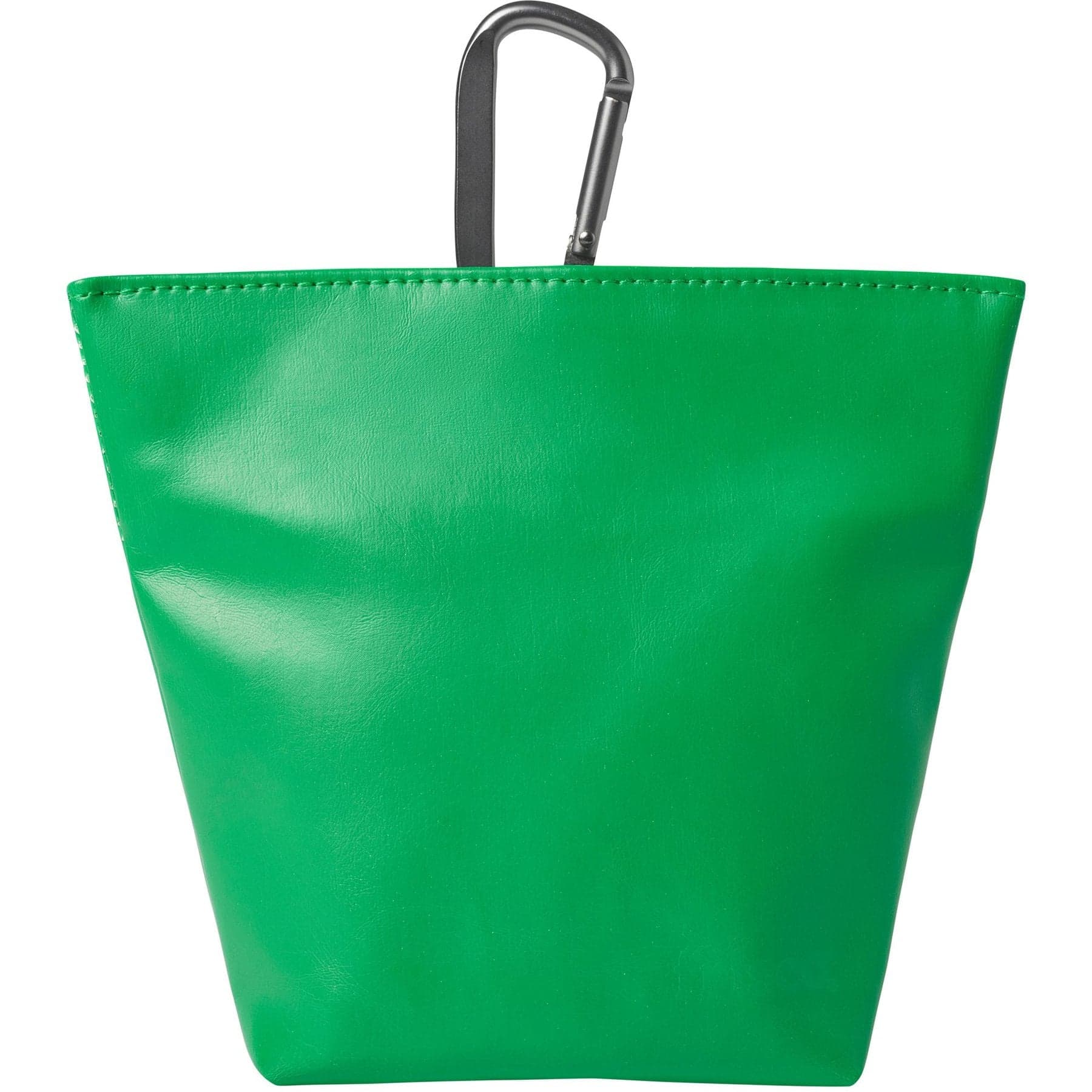
Keep pre-portioned rewards close during short, supervised practice.
Webvet may earn a commission when you click through to Chewy, at no extra cost to you.
People to include without requiring greetings
- Calm adults with different voices, clothing, and movement styles.
- People carrying ordinary objects such as a bag or folded umbrella.
- People using mobility aids, observed respectfully with their permission and at a suitable distance.
- Children who can follow adult instructions, with active supervision.
- Veterinary and grooming staff during an appropriate, low-pressure introduction.
Do not assume a puppy who likes one visitor is comfortable with every person. A fast-moving child, a person leaning over the puppy, and someone sitting quietly present different experiences. If the puppy retreats, make space rather than handing it to the visitor. People should not have to chase, corner, or restrain the puppy to complete a greeting.
Children need their own supervision plan
To socialize a puppy with kids, teach children to let it approach, avoid hugging or putting a face close to its face, and leave it alone while resting or eating. An adult should manage the interaction throughout. Begin with quiet observation if the child or puppy is excited. A successful first encounter can be a brief calm moment across the room rather than touching or play.
If the puppy becomes mouthy or the child becomes frightened, pause and separate calmly. Do not ask a child to prove confidence by continuing. Set up a simpler interaction another time, perhaps with the puppy farther away and the child seated quietly. The goal is a predictable experience for both, with neither participant forced to tolerate contact.
Introduce handling in small pieces
Practice a brief touch to the shoulder, then release and reward if the puppy remains comfortable. Over time, include paws, ears, the body, and other areas relevant to routine care. Support the puppy on a stable surface, keep pressure gentle, and stop before struggling begins. Handling practice should help the puppy understand that touch is manageable and ends predictably.
Do not hold a paw tightly until resistance stops or force the mouth open for a long inspection. Break the task into smaller parts: approach a hand, touch briefly, release, and reward. Veterinary and grooming procedures may eventually require specific positioning, but early practice can teach the component skills without pretending to perform a procedure at home.
Prepare for veterinary and grooming visits
Ask the clinic whether a brief friendly visit is appropriate under its current health precautions. At home, introduce a towel, a nonslip surface, a brush held still, or the sound of clippers at a distance before expecting the puppy to tolerate full grooming. An unfamiliar object can be present without touching the puppy. Record comfort with the object and handling separately.
Some puppies need slower steps around touch because of discomfort or previous experience. If handling causes a marked reaction, ask the veterinarian whether pain or another issue should be assessed. Do not label the puppy difficult and keep repeating the same approach. A comfortable body is part of making handling a positive lesson.
 Sponsored
Vet care that's always there
Unlimited video calls and messaging with licensed vets for less than a typical vet visit. One membership covers up to five pets.
Use code Pets30
Plans start at $11/month · covers up to 5 pets
- Licensed vets in most states
- Rx for 150+ conditions
- 4.7 on Trustpilot
Sounds, surfaces, objects, and environments
Use ordinary household experiences as a starting point. Let the puppy investigate a stable new surface or notice an object from a comfortable position. Keep an easy route back to familiar footing. Avoid unstable equipment, sharp edges, slippery challenges, or heights simply to make the checklist look varied. The useful lesson is confident exploration, not completing an obstacle course.

Introduce changes in texture, movement, sound, and location separately when possible. A rubber mat on a familiar floor is simpler than a moving platform in a noisy room. If the puppy stops at a threshold, let it inspect from where it feels secure. Reward an approach without pulling the lead or pushing from behind. It is acceptable to leave and revisit the task later.
Surface and object checklist
- Different safe indoor flooring, including a nonslip mat or a clean threshold.
- A stable towel or other mild texture placed flat on familiar ground.
- Ordinary bags, boxes, umbrellas, and household equipment at rest.
- Doorways and safe changes between rooms.
- Outdoor surfaces your veterinarian considers appropriate for the puppy’s health status.
Watch the puppy’s feet and posture as well as willingness to follow food. A puppy may stretch forward for a treat while keeping its back feet planted on familiar ground. That can mean the next step is too large. Move the reward back toward the comfortable position and allow investigation without requiring all four feet to cross immediately.
Introduce household sounds gradually
Begin with an appliance switched off and at a distance if its appearance is unfamiliar. Later, add a brief low-intensity sound while the puppy can remain comfortable and move away. You can reduce intensity by increasing distance, choosing a quieter setting, or shortening the exposure. Do not put a puppy next to a running vacuum and wait for it to stop reacting.

Everyday sounds might include a doorbell, television, kitchen activity, traffic heard from indoors, or a vacuum in another room. Keep volume low enough that the puppy can continue normal comfortable behavior. A recording is only one form of practice; it does not reproduce every vibration, movement, or context of the real event. Do not assume quiet playback proves readiness for a much louder experience.
Add movement after the stationary version is easy
A folded umbrella, a person slowly lifting it, and an open umbrella moving overhead are different challenges. The same applies to a bag carried past, a wheeled object, or a door opening. Introduce a small movement first and observe recovery. If the puppy startles, pause and make the next attempt easier rather than repeating the movement rapidly to force habituation.
You do not need to eliminate every normal startle. The useful question is whether the puppy can regain comfort and choose to investigate after an appropriately mild event. A brief look followed by normal activity differs from prolonged hiding or frantic escape. Record both the initial response and what happened afterward so the next exposure reflects the whole experience.
For supervised exploration in an appropriate controlled area, the Coachi Training Line may provide more distance than a short lead. Follow the manufacturer’s handling and fit guidance, keep the line clear of obstacles and other animals, and avoid roads or uncontrolled greetings. A long line is not a tether for leaving a puppy unattended and should not be used to pull it toward something frightening.
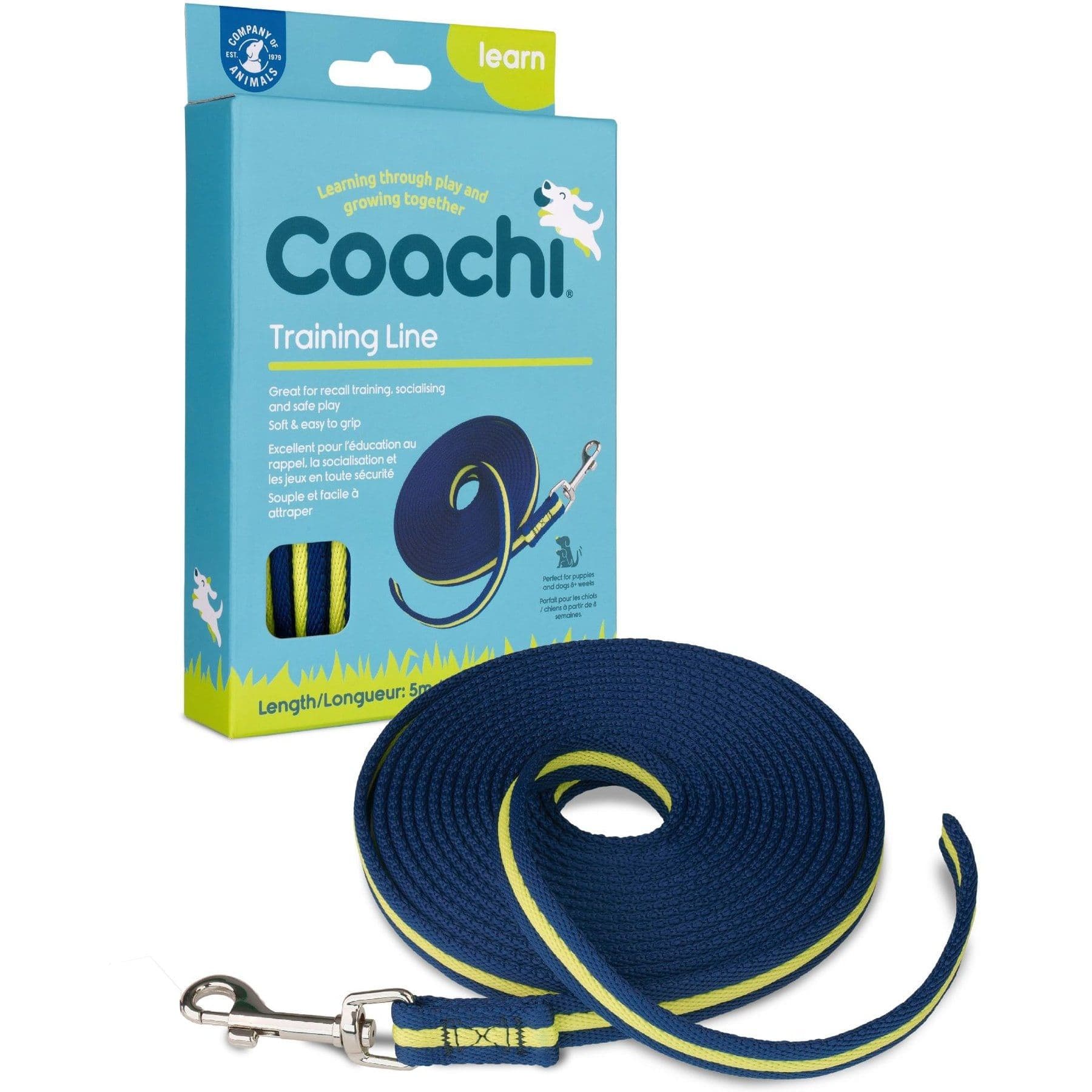
A training line for controlled exploration with an attentive handler.
Webvet may earn a commission when you click through to Chewy, at no extra cost to you.
Calm dogs, transport, and supervised public exposure
Socialization with other dogs begins with selection and supervision. Choose a healthy, appropriately vaccinated dog known to behave calmly around puppies, and discuss the setting with your veterinarian. Start with enough distance that both animals can remain comfortable. They can observe, walk separately, or share a quiet space without being required to greet nose to nose.
Choose the dog, not just the opportunity
When socializing puppies with older dogs, remember that a friendly adult is not automatically comfortable being jumped on or followed. Give the older dog a way to leave, separate rest areas, and breaks from interaction. If either animal stiffens, repeatedly avoids the other, or becomes overexcited, increase distance and pause. Do not leave an adult dog to “teach a lesson” through an encounter that frightens the puppy.
In a multi-dog household, introductions and rest can be managed separately. A puppy does not need constant access to every resident dog to become socialized. Protect food, toys, and sleeping spaces from competition. If a resident dog has a history of fear or aggression, obtain individual professional advice before arranging contact; a generic checklist cannot make that history irrelevant.
Public exposure can be observation
At a suitable location, the puppy might watch pedestrians, bicycles, or a quiet road from a comfortable distance beside you. Choose a time with little traffic and a clear exit. Reward calm observation and leave before the experience becomes too much. There is no requirement to walk into the busiest part of a park, shopping area, or street to make the outing count.
A city puppy can begin with a quieter doorway, protected viewing spot, or an appropriate carried outing before tackling crowded sidewalks. A puppy in a rural setting still benefits from manageable experiences with unfamiliar people and ordinary travel. Match the starting point to what is new for that puppy. Geography changes the examples, not the need for choice, supervision, and a safe setting.
Travel is a sequence of experiences
Introduce the chosen travel equipment before a necessary long trip. Practice comfortable approaches and brief time in the stationary setup, then plan short appropriate journeys as the puppy is ready. Use equipment suitable for the vehicle and the puppy’s size, and follow installation instructions. A home crate’s portability does not establish crash protection or airline acceptance.
Watch for discomfort during travel and discuss repeated nausea, distress, or difficulty settling with the veterinarian. Do not assume a puppy will learn to enjoy car rides through repeated unpleasant trips. Plan destinations and timing so travel is not always followed by an overwhelming event. When possible, keep the journey and the destination individually manageable before combining larger challenges.
Questions before choosing an organized experience
Before booking a puppy class or supervised session, explain the puppy’s age, vaccination history, and current comfort with people and dogs. Ask what participation actually involves. A well-organized experience should let you understand the setting, anticipate the next activity, and take a break when the puppy needs one. A promise to socialize every puppy quickly is less useful than a clear process for keeping individual experiences manageable.
- What health records and parasite precautions are required before attendance?
- How are surfaces cleaned, and how are unwell puppies kept out of group sessions?
- Can a worried puppy observe from a greater distance instead of joining contact play?
- How does the instructor interrupt overexcited interaction and provide rest?
- Are handlers taught to recognize avoidance and reduce intensity without punishment?
- What happens if the puppy is not ready for the planned group activity?
Use the answers to compare the experience with your veterinarian’s advice and your puppy’s record. If a provider expects every puppy to tolerate the same activity, ask whether an individual introduction is possible. You can postpone one kind of group contact while continuing suitable experiences elsewhere. Choosing a different format is a management decision, not proof that the puppy has failed socialization.
After the session, record what the puppy actually managed and how it recovered. A tired puppy is not necessarily a comfortable puppy, so include observations from the activity itself. If the puppy became worried, identify the point where intensity changed and discuss a simpler next visit. That follow-up turns attendance into useful information rather than another completed box.
A familiar resting place can make breaks easier. The MidWest iCrate 36-inch double-door crate is one home-use option with a compatible divider. Check the puppy’s actual fit and introduce it positively before expecting it to serve as a retreat. Its 41-to-70-pound size label does not establish suitability for a small puppy, and the crate is not presented here as a crash-tested vehicle restraint.
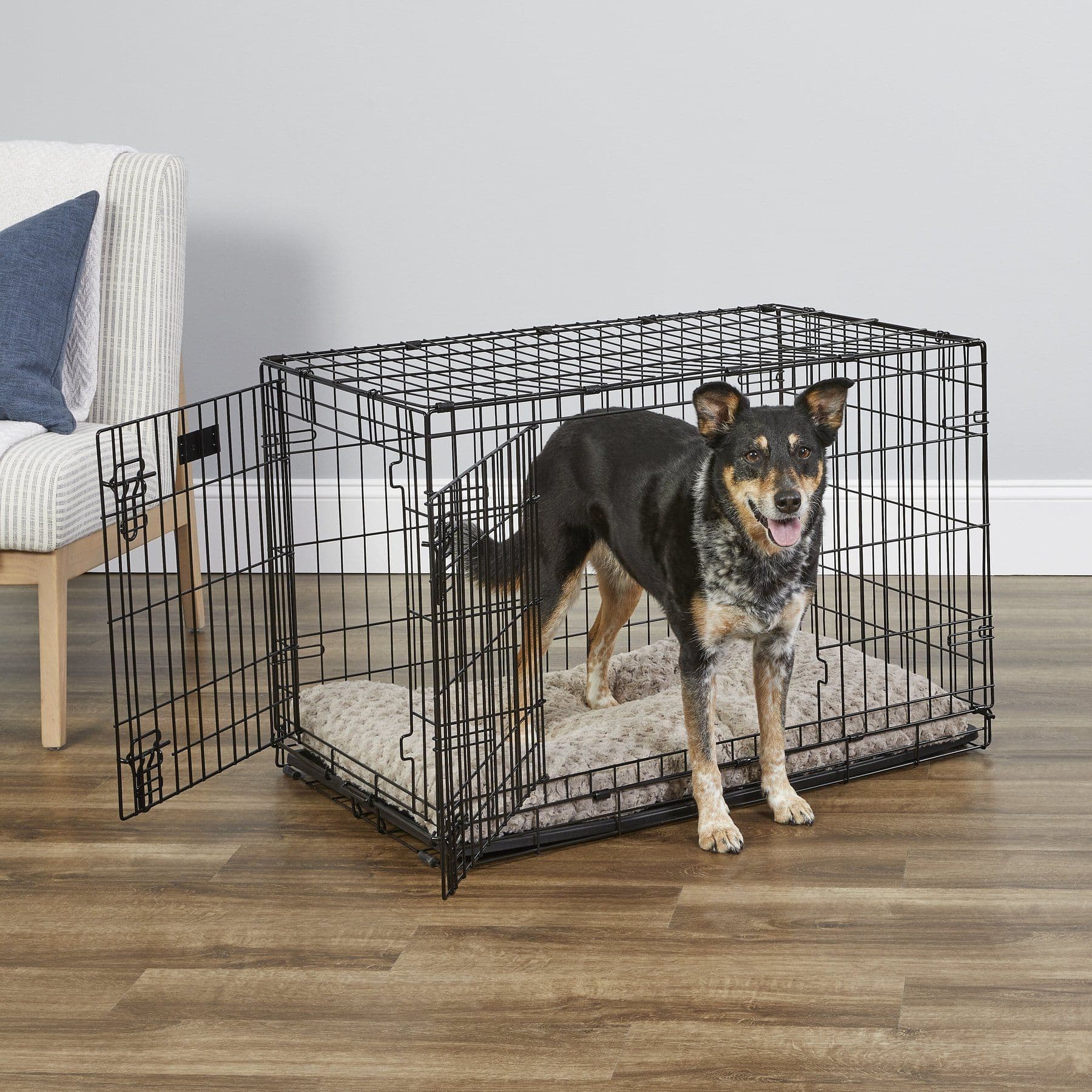
A home resting crate with a divider; check the individual puppy’s fit.
Webvet may earn a commission when you click through to Chewy, at no extra cost to you.
Weather, illness precautions, and restricted outings
In winter, extreme heat, or bad weather, use indoor experiences and brief suitable outings rather than trying to finish an outdoor list regardless of conditions. Floors, handling, visitors, household objects, and quiet sounds can all provide useful learning. Do not expose a puppy to uncomfortable temperatures simply because a checklist includes outdoor surfaces.
If illness, parasite treatment, quarantine advice, or household restrictions limit outings, ask the veterinarian what contact is currently appropriate. An unwell puppy needs care and rest; socialization goals do not override isolation instructions. You can preserve gentle, comfortable experiences that fit those instructions and resume broader activity when cleared. Historical lockdown-era checklists should not be treated as current local public-health rules.
Advice written for socializing a puppy during COVID, pandemic restrictions, or social distancing is best separated into enduring principles and dated local rules. The enduring principle is to use suitable home experiences and controlled observation when contact is restricted. For a puppy with giardia or another infection, follow veterinary isolation and treatment advice instead of using a socialization calendar to decide when group contact can resume.
Choose a protected observation spot
A stroller or carried position may let a puppy observe without walking on a public surface, but comfort, secure containment, temperature, and local health advice still matter. A dog-friendly store, including a location such as Home Depot, is not automatically an appropriate puppy outing. Check current permission and conditions, and choose a quieter alternative when the environment cannot be managed safely.
Track comfort and respond to fear
Use the checklist to record what happened, not just whether the puppy was exposed. Include the setting, distance or intensity, the puppy’s body language and response, recovery, and the next small step. A checkmark beside “children” is less useful than a note that the puppy watched one seated child calmly but retreated when the child stood up. The latter tells you how to plan the next experience.
| Experience-and-comfort checklist | Low-intensity exposure to begin with | Comfort signals and calm recovery | Next step and precautions |
|---|---|---|---|
| New person | Watch one calm person from a comfortable distance | Loose posture, ordinary exploration, ability to turn away | Change one feature, such as clothing or gentle movement |
| Child | Observe a quiet seated child with adult supervision | Puppy can remain comfortable without approaching | Keep interaction brief; no chasing, hugging, or forced contact |
| Handling | Brief gentle touch, then release | Puppy remains willing to participate | Add a small component; assess pain if touch causes concern |
| Surface | Investigate a stable texture beside familiar flooring | Voluntary approach and easy retreat | Increase the area only when the puppy chooses it |
| Household sound | Quiet sound at a distance | Normal activity resumes after noticing it | Adjust volume, distance, or duration one at a time |
| Calm dog | Observe a selected healthy dog with space | Both animals can disengage and recover | Supervise; follow health precautions and avoid unknown dogs |
| Transport | Explore appropriate stationary travel equipment | Puppy remains comfortable in the setup | Add a short suitable journey; use proper restraint |
| Public environment | Watch a quiet scene from a suitable protected place | Puppy can observe without freezing or trying to flee | Follow local infection advice and keep an easy exit |
A practical weekly rhythm
Choose a small variety of easy experiences around the puppy’s normal routine. For example, one day might include a brief handling exercise and a quiet new object at home; another might include a suitable visitor or an observed outdoor scene. Repeat familiar successes alongside new experiences. The plan should leave time for sleep, play, feeding, toileting, and ordinary calm life.
Do not increase every category each week merely because the calendar changed. Review which experiences were comfortable and which need a smaller step. A puppy who managed a surface at home may need an easier introduction to a similar surface elsewhere. Progress is better shown by relaxed behavior in useful situations than by a growing count of increasingly intense encounters.
Use the checklist as a printable record
You can print the table or save this page as a PDF through your browser’s print menu, then add notes beside each category. Record the date, setting, response, and one proposed next step. Keep the record with the puppy’s care information so other caregivers know what has been comfortable and what still needs caution. Do not treat an empty box as a reason to rush an experience today.
If you prefer a notebook, use the same four fields: experience, starting intensity, response and recovery, next step. A phone note works too. The value comes from making observations specific enough to guide the next session, not from using a particular branded chart or reaching a preset score. Share concerning patterns with the veterinarian or behavior professional.
Adapt the plan by age without turning it into a deadline
At eight or nine weeks, focus on manageable experiences that fit the puppy’s health plan and new household. Familiar rooms, gentle handling, ordinary quiet sounds, and carefully chosen people can provide variety without a busy outing. Keep sessions brief enough that the puppy remains interested and comfortable. A young puppy’s need for rest and toileting continues throughout the day, even when there are many experiences you hope to introduce.
At twelve weeks or around three months, review the record instead of assuming every category is complete. Which situations have been easy in more than one setting? Which still lead to withdrawal? Continue the veterinarian’s vaccination plan and adjust exposure choices accordingly. A confident experience with one adult dog does not establish comfort with several dogs, and comfortable handling at home does not automatically transfer to a busy clinic.
At fourteen or sixteen weeks and around four months, keep repeating useful successes while adding appropriate variety. The passage of the early socialization window does not mean you should stop introducing ordinary experiences. It also does not justify making every remaining exposure intense. If something is unfamiliar, start from the puppy’s response today, not from the level you think a puppy that age should have reached.
- Early introduction: prioritize safe, manageable experiences and predictable recovery.
- Growing familiarity: repeat easy tasks in slightly different settings or with one changed feature.
- New or difficult experience: return to a low-intensity starting point regardless of age.
- Persistent fear: seek individual guidance instead of increasing pressure to catch up.
At five, six, or eight months, an older puppy can still learn. If earlier opportunities were limited, first identify the situations that affect daily life most, such as handling, necessary travel, or passing people at a comfortable distance. Work on those in small pieces rather than trying to complete an entire early-puppy list in a weekend. A professional can help prioritize when several ordinary experiences cause fear.
There is no universal week-by-week socialization schedule that fits every puppy. Age helps identify developmental context, while the individual’s history, health, and current response determine the next task. A checklist divided into stages can organize your thinking, but its categories should not become a pass-or-fail test. Record the actual experience and plan the next manageable step, even when that means repeating an earlier stage.
Puppies with limited early experience
A puppy raised with fewer varied experiences may need a gentler starting point, but a history label does not tell you exactly what it can manage. A singleton puppy, a foster puppy, or a puppy-mill rescue can have different individual strengths and concerns. Ask about early care from birth onward, including gentle age-appropriate handling, ordinary sounds, travel, and contact with other animals. A feral or markedly fearful puppy needs an individual professional plan.
Use that information to avoid surprises and unnecessary repetition. A puppy may already be comfortable with household appliances but find unfamiliar people difficult, or enjoy calm visitors while resisting paw handling. Start with what you observe rather than assuming that every category is equally unfamiliar. If the history includes severe deprivation, trauma, or marked fear, an individualized veterinary and behavior plan is more appropriate than escalating a generic checklist.
Keep breed expectations separate from the record
Breed can shape the questions you ask about future size and management, but it does not replace observing the puppy. A German Shepherd, Doberman, Staffy, pit bull-type puppy, or mixed-breed puppy still needs comfortable, controlled experiences and the ability to retreat. Do not force greetings to counter a stereotype or assume that a supposedly sociable breed needs no planning. The useful evidence is how this puppy responds in this situation.
The same applies to a puppy who is naturally quieter than another. Calm observation may be a perfectly useful experience; being the most outgoing puppy in a class is not the goal. Distinguish a puppy choosing to watch comfortably from one who is frozen, hiding, or unable to recover. That distinction helps you reward an appropriate individual response without demanding a particular personality.
Turn one difficult encounter into a better next plan
Suppose the puppy watched a visitor calmly until the visitor stood and walked toward it. Record the change in movement and distance, then begin the next session with the visitor seated farther away. A later step might be the visitor standing without approaching. This breaks one overwhelming event into parts the puppy can learn about separately, rather than repeating the complete encounter and hoping for a different reaction.
Similarly, if a puppy managed a quiet threshold but backed away when a door moved, the next session can separate the surface from the door. If it watched one calm dog but struggled when a second arrived, return to the simpler arrangement. These examples show how the record leads to a decision. They are not a promise that every fearful response can be resolved without professional help.

The same principle applies to dog encounters. Two dogs may appear calm in one moment, but you still need to watch their responses as distance, movement, and duration change. Give both animals space to disengage. Do not use a photograph, a breed label, or one successful greeting as proof that future contact requires no supervision.
What to do when the puppy is afraid
Increase distance or stop the exposure, and let the puppy recover in a familiar comfortable setting. Do not drag it closer, hold it in place while strangers touch it, or punish avoidance. Once calm, consider which part was too difficult and make the next attempt smaller. If fear is marked, repeated, or worsening, seek veterinary guidance before continuing to test the same trigger.
Leave room for rest and brief independence
Socialization is not constant stimulation. Puppies also need quiet rest and opportunities to engage comfortably with suitable activities without continuous human attention. Introduce those periods gradually and meet toileting needs. A puppy who is overtired or overwhelmed may struggle with an experience it could otherwise manage, so plan recovery time between activities.
For questions about leaving an eight-week-old puppy alone for three hours, use the individual puppy’s needs and demonstrated comfort rather than an age formula. Our puppy crate-training guide explains gradual absence practice and toileting-based care. Socialization does not remove the need for help when a young puppy cannot manage the household’s planned absence.
Socialization questions
Frequently Asked Questions
What is the 7 7 7 rule for puppies?
The phrase is used for numerical socialization checklists, but versions differ and the number is not a veterinary guarantee of adequate learning. Use it, if at all, as a reminder to vary manageable experiences. Positive exposure, individual needs, and recovery matter more than completing seven items in every category or forcing contact to reach a target.
Is 20 weeks too late to socialize a puppy?
No. Early experiences are especially important, but learning continues beyond the first three months. AVSAB encourages owners of older puppies to continue appropriate socialization and seek veterinary guidance for fear. Start from the puppy’s current comfort, use positive experience that meets individual needs, and increase difficulty gradually. Missing an early opportunity does not make future improvement hopeless.
What are signs of a dog being poorly socialized?
Fear, avoidance, difficulty recovering around unfamiliar situations, or defensive behavior can raise concern, but they do not prove one cause or a particular history. Pain, temperament, and other experiences may also matter. Describe the actual responses to the veterinarian and plan around individual needs. A positive experience begins at a level the puppy can manage, not with forcing it to behave sociably.

Editor
The Webvet Editorial Team is the in-house group of pet-care editors and writers behind Webvet, operated by Smart Pet Collective. The team researches, writes, and maintains Webvet's pet health, behavior, and medication content. Every article follows a defined editorial process: research from reputable veterinary and scientific sources, careful drafting, mandatory review of medical content by a credentialed veterinarian, and dated publication. Health and medication articles are medically reviewed by a licensed veterinary professional before they go live and are kept current over time.


