Dog Microchip Cost: Implantation, Registration, and Ongoing Fees
Compare named microchip price examples, separate implantation from registration and optional plans, and ask the questions that reveal the full cost of useful identification.

BVMS MRCVS
Medically reviewed by Dr. Pippa Elliott, BVMS MRCVS · Last reviewed

This article contains affiliate links. Webvet may earn a commission when you buy through them, at no extra cost to you.
Dog microchip cost depends on what the quoted price includes. Implantation, a clinic examination, registry enrollment, and optional paid services may be separate charges. Two California humane societies list a $25 microchipping service with lifetime registration, but those local examples are not a national average. Ask for the complete price and confirm that your current contact details will be registered.
 Sponsored
Talk to a vet for less than a typical clinic visit
Unlimited video calls and messaging with licensed vets, with prescriptions when it's appropriate. One membership covers up to five pets.
Use code Pets60
Plans start at $12/month · covers up to 5 pets
- Licensed vets in most states
- Rx for 150+ conditions
- 4.7 on Trustpilot
What dog microchip cost includes
A microchip is permanent identification placed under the skin, typically between the shoulder blades, by a trained professional. It is a small electronic device rather than a tracker that broadcasts your dog’s location. The appointment may be a stand-alone identification service, an addition to a veterinary visit, or part of an adoption package. Those different arrangements explain why two advertised prices may cover different things. Imperial County’s humane society describes the implant as slightly larger than a grain of rice.
Before paying, separate the implantation fee from the cost of the visit and the registry service. Ask whether the clinic completes enrollment or gives you instructions to finish it. A chip inserted into a dog and a usable registration record are two different parts of the job. Keep both the identification number and the enrollment confirmation with your dog’s records.
- 1Request a written quote showing implantation, the clinic visit, and included services.
- 2Confirm basic registration and distinguish it from optional paid membership.
- 3Keep contact details current; a microchip is identification, not GPS tracking.
Optional GPS tracking and its separate ongoing costs
If you also want location tracking, budget for that separately. The Tractive Smart Dog GPS Tracker in Mint is a collar attachment for dogs weighing at least 9 pounds. It requires charging, suitable cellular coverage, and a separate subscription. Its purchase and service fees are not part of implanting or registering a passive microchip, and it does not replace either task.
If you are weighing a tracker as well as a chip, our best dog GPS trackers guide compares live GPS, Bluetooth tags, and GPS fence collars with their subscription costs.
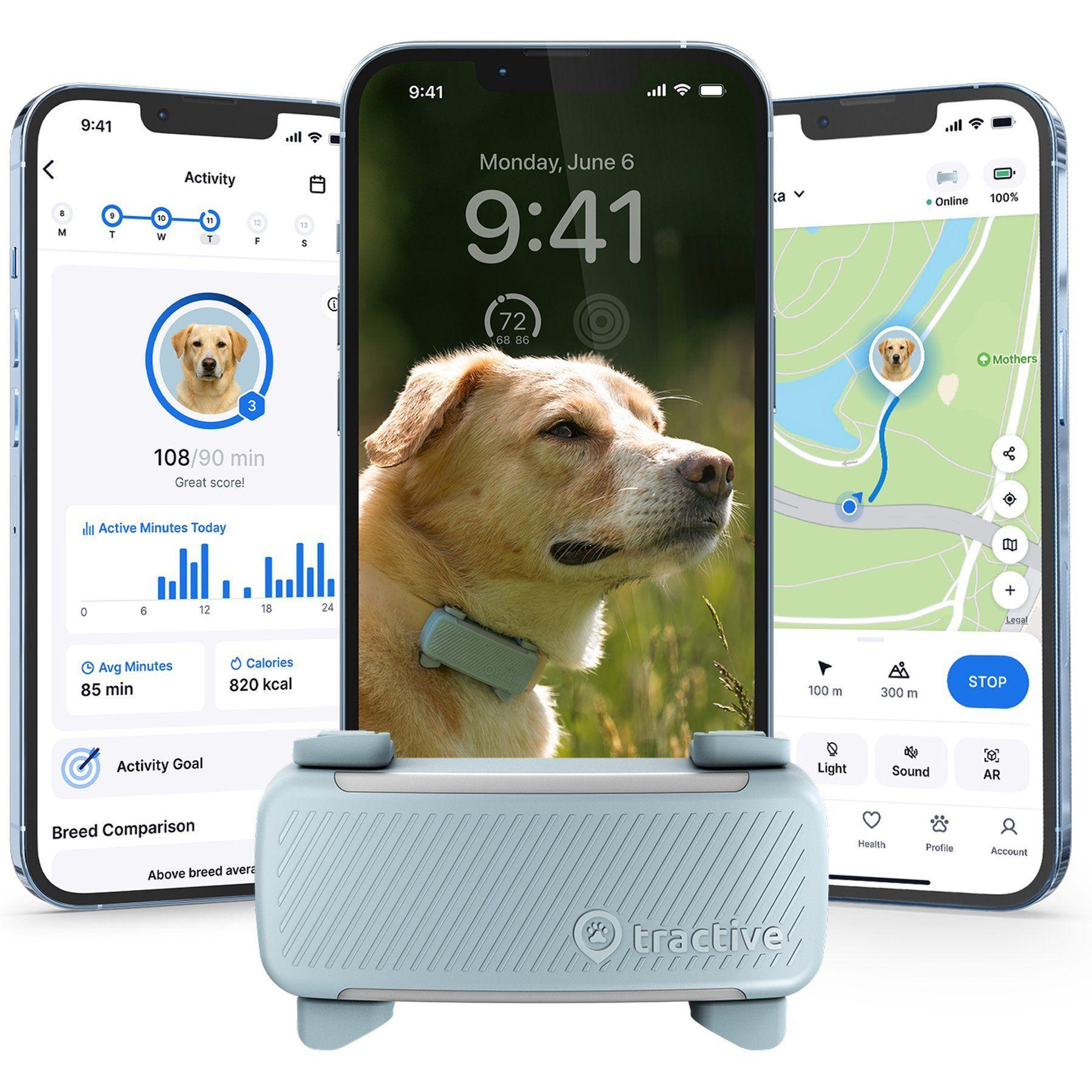
Optional collar-mounted GPS needs charging, cellular coverage and a separate subscription and is for dogs weighing at least 9pounds. It does not replace a passive microchip.
Webvet may earn a commission when you click through to Chewy, at no extra cost to you.
How much does it typically cost to microchip a dog?
There is no single price that applies to every dog or clinic. The verified examples below are $25 services with registration included. A full-service veterinary appointment may add an examination or other requested care. Compare the complete quote for your dog instead of assuming an advertised implant price covers the visit, enrollment, and future account services.
How much does it cost to implant a chip in a dog?
Ask whether the implantation charge includes the chip itself, insertion, a scan confirming the number, and registration. A puppy microchipping price may be bundled with other preventive care, while a shelter may offer a dedicated low-cost appointment. An adopted dog might already have a chip. Have it scanned and check the records before paying for another implant.
Where the microchip is put and located
A dog’s microchip is implanted just beneath the skin, usually between the shoulder blades. Ask your veterinarian when to get a puppy or adult dog microchipped, considering existing records, health, and adoption or travel requirements. Placement usually does not require anesthesia. A breeder or rescue may arrange implantation before transfer, but a sales claim is not confirmation: request the number and a scan. Implantation should be performed by, or under the supervision of, a veterinarian. AVMA
Visible identification alongside a microchip
A readable tag lets someone who finds your dog see a contact number without first locating a scanner. A Frisco Nylon Reflective Dog Collar, Black, Medium can carry that identification. Measure your dog’s neck and check this exact size’s fit before buying. A collar can be lost or removed, so visible identification and an implanted chip serve complementary purposes.
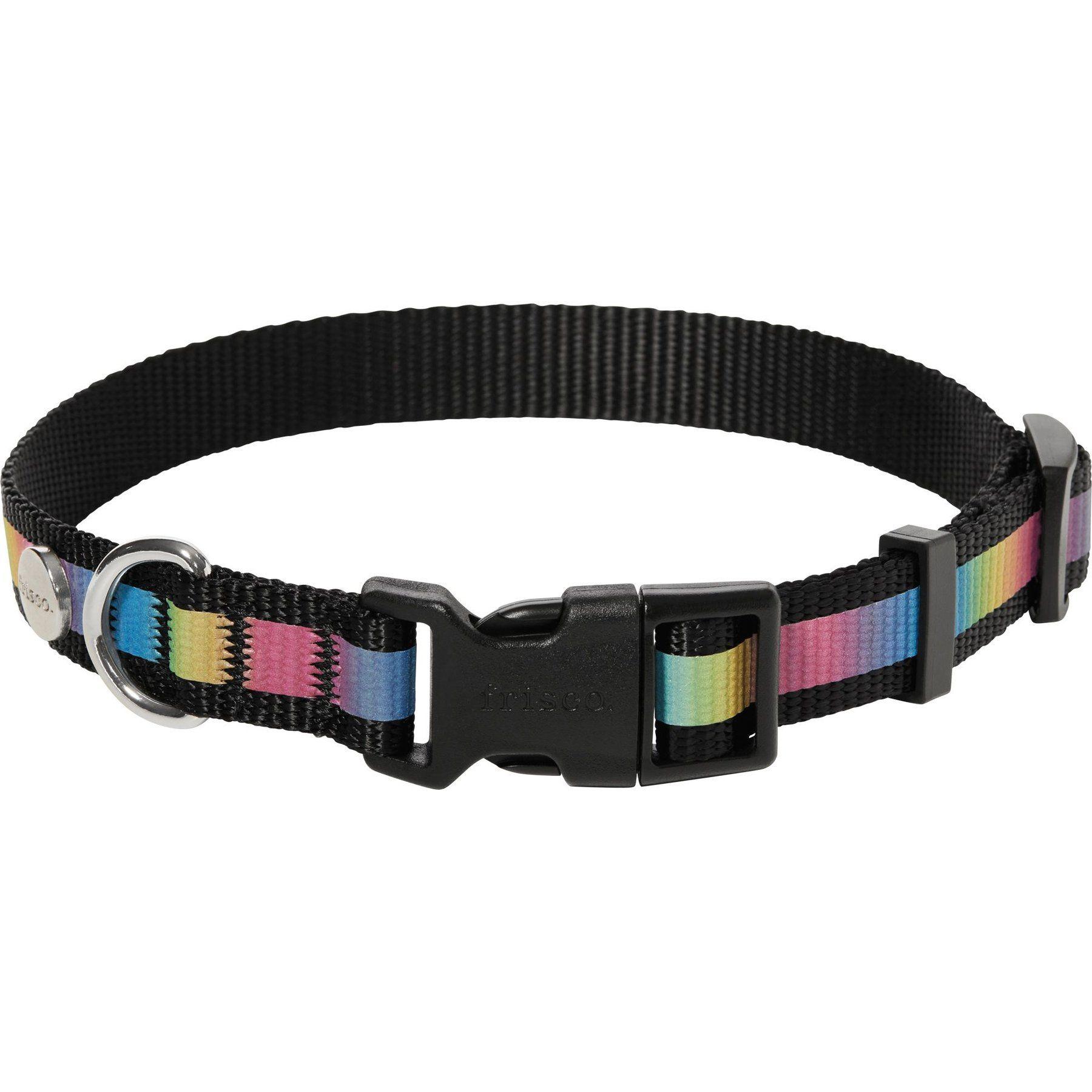
A reflective collar can carry visible identification; check neck measurements for this Medium size.
Webvet may earn a commission when you click through to Chewy, at no extra cost to you.
Published provider examples and local price differences

These are named US provider prices observed on October 2, 2026, Pacific time. They illustrate different service arrangements; they do not establish an average, cheapest national option, or guaranteed future appointment price. Confirm the current amount, eligibility, location, and booking instructions directly before traveling.
- The Humane Society of Imperial County, California, lists microchipping for US$25, including premium lifetime registration without monthly or annual fees.
- The Humane Society of Ventura County, in Ojai, California, lists US$25 for implantation and lifetime registration with 24Petwatch. Its page describes appointment-based service.
- A separately purchased collar or ID tag is a different expense. Neither example establishes what another organization includes in its package.
Compare the same service before comparing totals
A $25 community appointment and a veterinary examination with microchipping are not necessarily equivalent purchases. The examination may address health concerns beyond identification. Ask what is required for your dog and what is optional. Our veterinary visit cost guide explains how examination and additional service charges can be separated.
When comparing quotes, give each provider the same information: whether the dog is already a patient, whether an existing chip has been found, and whether another appointment is planned. Ask about taxes or administrative charges if applicable. Keep the written estimate so you can check the invoice against what you agreed to purchase.
 Sponsored
Vet care that's always there
Unlimited video calls and messaging with licensed vets for less than a typical vet visit. One membership covers up to five pets.
Use code Pets60
Plans start at $12/month · covers up to 5 pets
- Licensed vets in most states
- Rx for 150+ conditions
- 4.7 on Trustpilot
Implantation, registration, and optional membership
Basic registration connects the chip’s identification number with a recovery service’s contact record. Optional membership may add other benefits, but the terms differ among providers. Do not assume a renewal notice means the implanted chip has stopped working. Ask the registry exactly which service requires payment and whether basic identification and contact updates remain available without the extra plan.
| Itemized microchip estimate | What to confirm before paying | Why it matters |
|---|---|---|
| Implantation fee | Chip, insertion, and confirming scan included? | A headline price may describe only one part of the appointment |
| Clinic visit | Separate examination required or already included? | Avoid comparing a full visit with an implant-only service |
| Basic registration | Who enrolls the number and confirms your details? | An implant alone does not create a current contact record |
| Optional membership | Which extra services require a recurring payment? | A subscription is not the same as powering the chip |
| Contact updates or ownership transfer | Any fee, identity check, or transfer paperwork? | Moving or adopting a dog may require account changes |
| Visible identification | Collar and readable tag already available? | These are separate purchases, not hidden implant requirements |
Can I register a microchip without paying?
Some services include registration in the implantation price, as both examples above do. Other registries have different free and paid options. Contact the registry associated with your dog’s chip and ask what basic enrollment includes before purchasing a membership. An advertisement for a free database should not be assumed to replace every existing registration or appear in every lookup system.
What happens if I don't register my pet's microchip?
If you find a dog with an unregistered microchip, ask the scanning clinic or shelter to help identify the associated registry and follow local found-animal procedures. A scanner can reveal the identification number, but an absent or outdated registry record makes it harder to reach the owner. Do not assume the shelter, breeder, or previous owner completed the transfer. Ask for confirmation that the chip number matches your dog and that the recovery service has the phone number and other contact details you intend to use.
Choosing visible contact identification
The Quick-Tag Personalized Reflective Dog ID Tag is one hanging-tag option for current contact information. Check the engraving choices and read the finished tag before attaching it. A tag that merely says the dog is microchipped still leaves the finder needing a scanner; a usable telephone number provides another way to contact you.
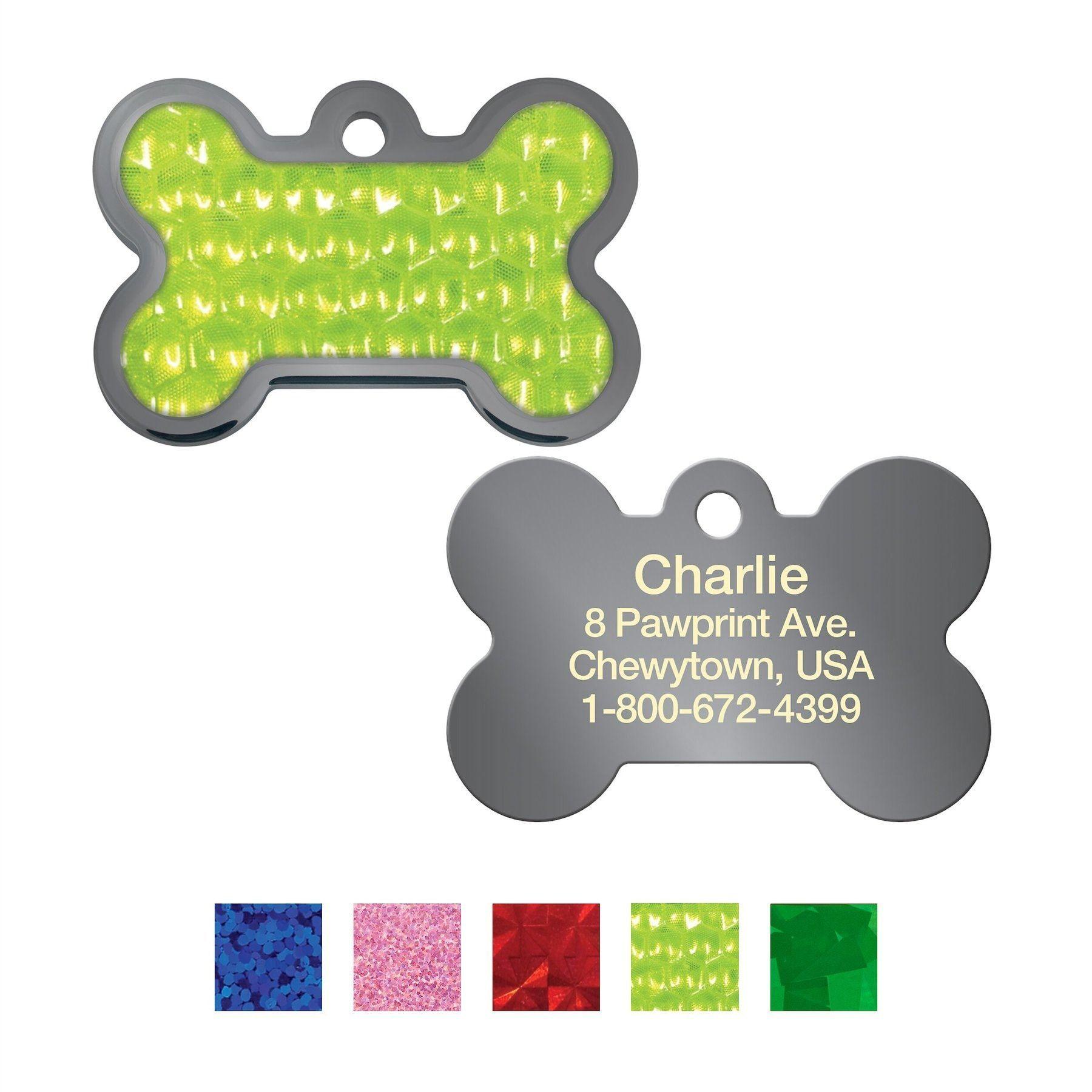
A hanging personalized contact tag is one identification option. Keep its details current.
Webvet may earn a commission when you click through to Chewy, at no extra cost to you.
Keep the printed or emailed chip certificate separately from the tag. The number on a tag can be useful as a reference, but it is not proof that the registry account is correct. Recheck both when a phone number changes. Replacing a worn tag and updating a registration are separate tasks, and neither automatically completes the other.
Low-cost clinics and how to request a complete quote
Ask local humane organizations, shelters, and veterinary practices about current microchipping appointments or events. Some programs have residency, appointment, health, or funding limits. “Free” and “low cost” are program-specific descriptions, not promises that every dog will qualify. Confirm whether registration is included and whether you need identification, adoption records, or proof of a previous examination.
Use this short telephone checklist:
- Is this appointment for implantation, a scan of an existing chip, or both?
- What is the total price, including any required visit and enrollment?
- Which registry will hold the record, and who completes registration?
- Are future contact updates free, and which services are optional?
- What should I bring, and are there health or eligibility restrictions?
Veterinary clinics, animal shelters, and animal control agencies are places to ask where to get a dog’s microchip scanned. For implantation, ask a veterinary practice or a humane organization operating a professional microchipping clinic. If the dog may already be chipped, start with scanning and record recovery. Do not purchase a kit or attempt implantation yourself to reduce the bill. Professional placement and a usable record matter more than obtaining the hardware alone. Ask the clinic about safe handling and any preparation needed for your particular dog.
A flat-tag alternative
If a hanging tag is unsuitable, the DOG iD Personalized Dog ID Tag, Graphite, Small attaches with elastic bands. Check this Small size against the collar’s width and inspect the attachment regularly. Choose the format that remains readable and securely attached on your dog; buying multiple tag styles is not necessary for a microchip to work.
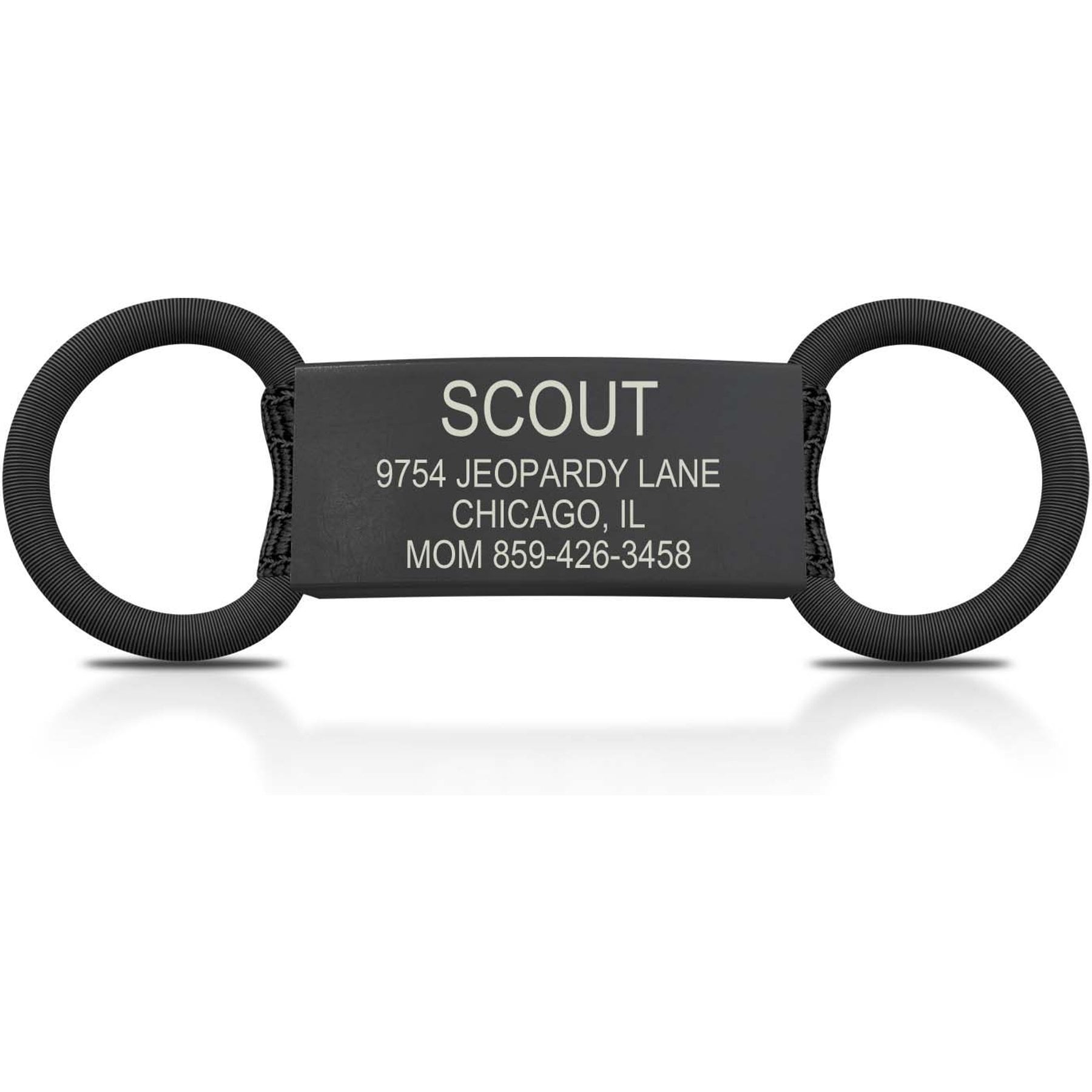
A flat tag attached by elastic bands is an alternative to a hanging tag. Check this Small size against collar width.
Webvet may earn a commission when you click through to Chewy, at no extra cost to you.
How scanning and contact updates work
A scanner reads the chip’s identification number. The number is then used to identify the relevant registry and contact record; it is not a public display of your address stored under the dog’s skin. AAHA’s microchip lookup guidance explains that its tool identifies participating registries. AAHA itself does not maintain or edit your dog’s registration account.

Finding the number and the correct registry
If you have forgotten the number, check veterinary, adoption, or registration records and ask a veterinary practice or shelter to scan the dog. Use the recovered number to locate the registry, then contact that service about access or transfer. A phone app cannot replace a compatible microchip scanner simply because it can read other kinds of electronic tags. ISO microchip numbers have 15 digits; copy the complete identifier from the scan or certificate.
When buying a dog already microchipped, or adopting a rescue dog, follow the registry’s ownership-transfer process. Breeders may arrange microchipping, but ask for the actual scan and paperwork rather than assuming every puppy is chipped. The previous owner’s record may still be attached to the number. Keep adoption or transfer paperwork, and ask what confirmation is required to change the owner’s name and contact record. Do not treat a microchip database entry as a complete legal determination of ownership in a dispute.
Will a vet scan a microchip for free?
Many organizations help scan found animals, but you should ask the specific clinic about its policy. The Humane Society of Imperial County explicitly offers free scanning of lost or stray pets during its business hours. That does not establish a free examination or a universal veterinary pricing rule. Call ahead about safe handling if the animal is unfamiliar or distressed.
If a microchipped dog is lost or stolen
Report a microchipped dog missing to the registry and follow its lost-pet process, while also contacting local shelters and appropriate authorities. Verify that your telephone number is reachable. A chip cannot show the dog’s live location, so searching a chip number does not track movement on a map. If you find a dog, arrange safe scanning and follow local found-animal procedures rather than assuming a lookup reveals the owner publicly.
Microchip limitations and identification backup
Microchips are passive identification: they do not need a GPS subscription or a battery recharge. They still depend on someone finding the dog, scanning it successfully, and reaching a current contact record. Not all dog microchips use the same standard; compatible scanners and correct use matter. Ask whether an ISO microchip is required for the trip rather than assuming a chip number’s prefix establishes travel eligibility. If international travel is planned, ask the veterinarian about the chip standard and the destination’s actual documentation requirements before making arrangements.
How long does a microchip in a dog last?
Microchips are intended for long-term identification rather than scheduled replacement like a battery. Have the veterinarian check that the existing chip can be read instead of buying another because several years have passed. If it cannot be detected, the clinician can investigate the number, position, scanner compatibility, and appropriate next step. Do not remove or reimplant a chip yourself.
Do pet microchips expire?
Distinguish the implanted device from a registry membership or optional recovery-service subscription. A renewal date on an account does not by itself mean the chip has expired. Ask what happens to basic contact records if a paid plan ends. Keep the registration current and have the chip checked rather than assuming a payment notice proves replacement is necessary.
What are two disadvantages of microchipping?
When weighing the pros and cons of getting your dog microchipped, two practical limitations are that a microchip cannot track location and that an outdated registration can prevent successful contact. It also requires scanning equipment. Visible identification provides another route to you, but neither method guarantees reunion. Use the chip, current records, a suitable tag, secure handling, and ordinary escape prevention together.
Is there a downside to microchipping dogs?
Possible side effects include brief insertion discomfort and uncommon complications such as infection or migration from the original site. AAHA’s microchipping FAQ describes these risks as uncommon. If you think a chip has come out, have the veterinarian scan the dog and examine the insertion site; do not insert it again yourself. Tell the clinic about swelling, pain, a lump, or a chip that seems to have moved. A microchip may feel like a small firm object under the skin in some dogs, but a lump cannot be identified reliably by touch. Feeling under the skin is not a substitute for scanning. If two chips are found, ask the veterinarian and registries how to document both numbers and avoid conflicting contact records.
Is inserting a microchip painful for dogs?
The implant is delivered through a needle, so a dog may feel discomfort. AAHA notes that surgery or anesthesia is not normally required. Tell the clinician if handling or injections are difficult for your dog, and follow the clinic’s aftercare instructions, including any advice about the insertion site or bathing. The procedure should be performed by an appropriately trained professional.
Microchip questions
Frequently Asked Questions
Is microchipping your dog worth it?
A microchip provides identification if a collar is lost or removed. Its value depends on current registration, accurate contact details, successful scanning, and someone finding the dog. It complements a readable tag rather than replacing one. Compare the complete local service price and ask how enrollment is confirmed so you are paying for a usable identification system.
What is the best age to microchip a dog?
Ask for veterinary advice based on individual health, size, handling needs, and any adoption or travel requirements. A puppy may already be chipped before coming home, so check records and arrange scanning first. There is no reason to assume every dog needs a new implant at a particular birthday or that age alone makes a second chip appropriate.
What is the penalty for not microchipping a dog?
Requirements and penalties depend on the jurisdiction and circumstances. Ask the local authority about applicable rules for ordinary ownership, adoption, reclaiming a lost dog, or travel. Do not apply a rule from another country or a headline about human microchipping to your dog. Keep any required registration and ownership documents with the veterinary records.

Editor
The Webvet Editorial Team is the in-house group of pet-care editors and writers behind Webvet, operated by Smart Pet Collective. The team researches, writes, and maintains Webvet's pet health, behavior, and medication content. Every article follows a defined editorial process: research from reputable veterinary and scientific sources, careful drafting, mandatory review of medical content by a credentialed veterinarian, and dated publication. Health and medication articles are medically reviewed by a licensed veterinary professional before they go live and are kept current over time.
Veterinarian · BVMS MRCVS
Dr. Pippa Elliott, BVMS, MRCVS, is a veterinarian with nearly 30 years of experience in companion animal practice. Dr. Elliott earned her Bachelor of Veterinary Medicine and Surgery from the University of Glasgow. She was also designated a Member of the Royal College of Veterinary Surgeons. Married with 2 grown-up kids, Dr. Elliott has a naughty Puggle named Poggle, 3 cats and a bearded dragon.
Related reading

IMHA in Cats: Signs, Causes, Treatment, and Survival

Aspergillosis in Dogs: Nasal and Systemic Forms, Signs, and Treatment

Cryptococcosis in Cats: Nose Swelling, Diagnosis, and Treatment
