Cat symptom
Dehydration in cats
Reviewed by the Webvet Veterinarian Team · Last reviewed June 22, 2026
Too little body water, usually from not drinking enough or losing fluids through vomiting, diarrhea, or heat. It can worsen quickly — especially in small, young, or sick pets.
Common causes of dehydration in cats
- Vomiting, diarrhea, or fever
- Not drinking enough (illness, pain, nausea)
- Heat exposure or overexertion
- Underlying disease (kidney disease, diabetes)
Who's most at risk
- Puppies, kittens, and small or senior pets
- Pets with vomiting or diarrhea
- Hot weather and active dogs
- Pets with kidney disease or diabetes
What you can do at home
- Offer fresh water and, if advised, a pet electrolyte solution
- Check the gums — sticky or dry gums suggest dehydration
- Address the cause (e.g., cool a hot pet) and call your vet
When to see a vet
- Sunken eyes, very sticky/dry gums, or skin that stays 'tented' when lifted
- Ongoing vomiting or diarrhea, or they can't keep water down
- Weakness, collapse, or a young, small, or senior pet
- Known kidney disease or diabetes
When it's more serious
- Severe dehydration is dangerous — they likely need IV fluids now.
- Continued fluid loss outpaces home care — see a vet today.
- Those signs mean meaningful dehydration — get them checked promptly.
What your vet may do
- Assess hydration; check gums, heart rate, and weight
- Give fluids under the skin or IV
- Bloodwork to find the cause and check the kidneys
- Treat the underlying problem
Questions to ask your vet
- How dehydrated is my pet?
- Do they need IV fluids and hospitalization?
- What's causing the fluid loss?
- How do I keep them hydrated at home?

Frequently asked questions
What causes dehydration in cats?
Too little body water, usually from not drinking enough or losing fluids through vomiting, diarrhea, or heat. It can worsen quickly — especially in small, young, or sick pets. Common causes include: Vomiting, diarrhea, or fever; Not drinking enough (illness, pain, nausea); Heat exposure or overexertion; Underlying disease (kidney disease, diabetes).
Is dehydration in cats an emergency?
See a vet today. See a vet right away if: Sunken eyes, very sticky/dry gums, or skin that stays 'tented' when lifted; Ongoing vomiting or diarrhea, or they can't keep water down; Weakness, collapse, or a young, small, or senior pet; Known kidney disease or diabetes.
What can I do at home for a cat with dehydration?
Offer fresh water and, if advised, a pet electrolyte solution. Check the gums — sticky or dry gums suggest dehydration. Address the cause (e.g., cool a hot pet) and call your vet.
A closer look at dehydration in cats
Dehydration means your cat's body has lost more water than it has taken in, and it can slide from a mild worry into a genuine emergency faster than most owners expect. Because cats descend from desert hunters, they carry a low thirst drive and often will not drink enough to fix the problem on their own. The single most important thing to understand is this: dehydration is almost always a symptom of something else, so the goal is not just to get water into your cat but to find out why the fluid balance tipped in the first place. If your cat is also vomiting, refusing food, or acting weak, that combination turns an urgent situation into one that needs a veterinarian promptly.
- 1Dehydration in cats is usually a sign of an underlying problem, not a standalone condition.
- 2Cats have a naturally weak thirst drive, so those on dry-only diets often run mildly dehydrated.
- 3Two quick home checks: gently tent the skin over the shoulders and feel the gums for a dry, tacky texture.
- 4Chronic dehydration is a hallmark of kidney disease, common in senior cats.
- 5Marked dehydration plus not eating, vomiting, or weakness means your cat needs veterinary fluids now, not tomorrow.
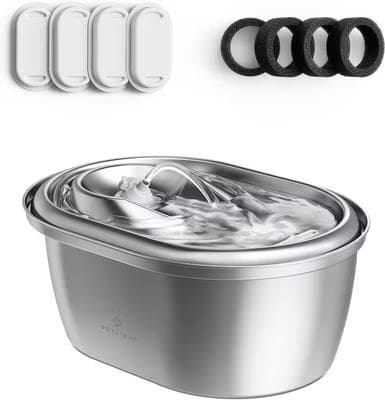
Cats have a weak thirst drive and many drink far more from moving water. Good prevention, but not a treatment for a cat who is already dry.
Webvet may earn a commission when you click through to Chewy, at no extra cost to you.
What dehydration actually does to a cat's body
Water is the medium every cell in your cat's body works in. It carries nutrients, cushions organs, regulates temperature, and lets the kidneys flush waste out in urine. When fluid levels drop, the blood itself becomes thicker and more concentrated, so the heart has to work harder to push it around and less oxygen reaches the tissues. At the same time, dehydration rarely travels alone: the body loses electrolytes such as sodium and potassium right alongside the water, and those minerals control how nerves fire and muscles contract. That is why a dehydrated cat often looks flat and lethargic rather than obviously thirsty.

The kidneys feel the pinch first and worst. To conserve water they concentrate the urine, which is part of why cat urine smells so strong, but there is a limit to how long they can compensate. Push past it and waste products build up in the bloodstream, appetite fades, and nausea sets in, which makes the cat drink even less. This is the loop that makes dehydration dangerous: fluid loss reduces appetite and thirst, and reduced intake deepens the fluid loss. Small kittens, seniors, and cats with an existing illness fall into that spiral quickest because they have less reserve to draw on.
Why cats dehydrate so easily
Cats evolved from desert-dwelling ancestors who got most of their moisture from the prey they ate, not from a water source. As a result the domestic cat inherited a famously weak thirst drive and simply does not feel the urge to drink the way a dog does. In the wild that worked, because a mouse is roughly seventy percent water. A bowl of dry kibble, by contrast, holds only about ten percent moisture, so a cat eating a dry-only diet has to make up an enormous gap by drinking, and many never quite do. This is why so many otherwise healthy indoor cats run in a state of mild, chronic, low-grade dehydration without their owners ever noticing.
On top of that baseline, plenty of everyday problems drive water out faster than a cat can replace it. Vomiting and diarrhea are the classic culprits, stripping both fluid and electrolytes in a hurry. Fever, hot weather, and stress can all suppress drinking or increase loss. Dental pain can make lapping water uncomfortable enough that a cat quietly gives it up. And several chronic diseases, chiefly kidney disease, diabetes, and an overactive thyroid, cause the body to pass far more urine than normal, so the cat loses water around the clock no matter how much it drinks.
How to check your cat for dehydration at home
You do not need any equipment to get a rough read on your cat's hydration. The best known test is the skin tent: gently lift the loose skin over the shoulders or the back of the neck, then let go. In a well-hydrated cat it snaps back instantly. If it sinks back slowly or stays tented for a moment, that loss of elasticity points to dehydration. Bear in mind the test is less reliable in very thin, very old, or overweight cats, so treat it as one clue rather than proof.

The gums are the other quick window. Lift your cat's lip and touch the gum above a tooth. Healthy gums are slippery and moist; dry or sticky, tacky gums suggest the fluid tank is running low. While you are there, press a fingertip against the gum until it blanches white, then release: the pink color should flood back in under two seconds. Sunken, dull-looking eyes, a dry nose, thick drool, and a generally listless, hunched posture round out the picture. None of these signs alone is a diagnosis, but two or three together mean it is time to call your vet.
| Sign you notice | What it usually means | How urgent |
|---|---|---|
| Skin snaps back slowly when tented | Mild to moderate fluid loss | Call your vet today |
| Dry, tacky, or sticky gums | Meaningful dehydration | Same-day vet visit |
| Sunken eyes plus refusing food | Dehydration with an active illness | Urgent, see a vet now |
| Weakness, wobbliness, or collapse | Severe, possibly life-threatening | Emergency, go immediately |
| Drinking and urinating far more than usual | Possible kidney disease or diabetes | Book a vet exam and bloodwork |
Chronic dehydration and kidney disease
In middle-aged and senior cats, ongoing dehydration is one of the most important warning flags of chronic kidney disease, the condition often called the silent killer of cats. As the kidneys lose their ability to concentrate urine, the cat passes large volumes of dilute urine and cannot hold onto water. Owners typically notice heavier clumps in the litter box and a cat that seems to be drinking more than it used to, yet is still visibly dehydrated. Because the disease progresses slowly and cats hide illness so well, the early signs are easy to miss until a fair amount of kidney function is already gone.
This is why a cat that is both drinking more and losing weight, or one that keeps looking dehydrated despite plenty of available water, deserves a proper veterinary workup rather than a home fix. A simple blood and urine panel can flag kidney disease, diabetes, or hyperthyroidism long before the cat becomes critically ill, and early diagnosis genuinely changes the outlook. It is also worth watching appetite closely, because a cat that stops eating for even a couple of days can develop a dangerous liver complication called hepatic lipidosis on top of the dehydration, which raises the stakes considerably.
What to expect at the vet visit
Your veterinarian starts by confirming how dehydrated your cat really is, using the same skin and gum checks you can do at home plus heart rate, and often body weight compared to recent records. From there the focus splits in two directions: correcting the fluid deficit and hunting down the cause. For mild cases the vet may give fluids under the skin, a quick procedure that leaves a small, soft pocket of fluid the body absorbs over several hours. More serious dehydration usually calls for an intravenous drip and a short hospital stay so the team can rebalance fluids and electrolytes steadily and safely.

Alongside the fluids, expect bloodwork and a urine test to check the kidneys and screen for diabetes, thyroid disease, and infection. If vomiting or diarrhea is driving the loss, your vet may add anti-nausea medication and treat the underlying gut problem so the cat can hold water down again. Recovery from a straightforward, well-treated case is often quick once the cause is under control, sometimes within a day or two. When a chronic disease is behind it, treatment shifts toward long-term management, which may include diet changes, medication, and periodic fluids to keep your cat comfortable and stable at home.
How to keep your cat hydrated
The most effective single change is moisture in the diet. Feeding wet food, either alone or mixed with kibble, delivers a large share of your cat's daily water through the meal itself, which sidesteps the weak thirst drive entirely. Beyond that, work with your cat's instincts about water. Many cats prefer moving water, so a pet drinking fountain often tempts them to drink far more than a still bowl does. Offer several water stations around the home, away from the litter box and food, since some cats dislike drinking right next to either.
Little details matter to a fussy drinker. Keep bowls clean and topped up with fresh water daily, and experiment with wide, shallow ceramic or glass bowls, which many cats prefer to narrow plastic ones that touch their whiskers. Some cats drink more when a little water is added to their wet food or a splash of the water from a can of plain tuna makes it enticing. In warm weather, make sure your cat has cool shade and never gets shut in a hot room or car, because overheating and dehydration go hand in hand and can escalate fast. If you have a kitten, a senior, or a cat with a known chronic illness, watch water intake and litter box output a little more closely, since these are the cats with the least margin for error.

The bottom line for cat owners
Mild dehydration caught early and paired with a vet call is very manageable, and small changes at home can keep it from coming back. What you should not do is dismiss it, because in cats a dry, sticky mouth and a slow skin tent are often the first outward sign of a disease that has been building quietly underneath. Trust the pattern more than any single test: a cat that is dehydrated and also off its food, vomiting, weak, or clearly drinking and urinating more than normal needs a veterinarian, and the sooner the better. When you are unsure how serious it is, a phone call to your clinic costs you nothing and can spare your cat a much harder day later on.

Lickable bisque treats sneak real moisture into a cat that rarely drinks enough on its own.
Webvet may earn a commission when you click through to Chewy, at no extra cost to you.
Sources
Reviewed by the Webvet Veterinarian Team
This guide is general information, not a diagnosis, and does not replace an exam by your veterinarian. If your pet is in distress, contact your vet or an emergency clinic right away.