Cat symptom
Drinking & urinating more in cats
Reviewed by the Webvet Veterinarian Team · Last reviewed June 22, 2026
Noticeably increased thirst and urination together is an important sign that should always be investigated — it points to several treatable diseases.
Common causes of drinking & urinating more in cats
- Kidney disease
- Diabetes
- In cats, an overactive thyroid; in dogs, Cushing's disease
- Certain medications, urinary tract infection, or a uterine infection in an intact female
Who's most at risk
- Middle-aged and senior pets
- Overweight pets
- Cats (kidney disease, hyperthyroidism)
- Pets on steroids or certain medications
What you can do at home
- Always keep fresh water available — never restrict water to reduce urination
- Try to measure how much they drink in a day to tell your vet
- Watch for weight loss, appetite changes, or accidents in the house
When to see a vet
- Thirst and urination are clearly increased for more than a few days
- Also losing weight, eating more or less, or low on energy
- Vomiting, weakness, a painful belly, or a sick intact female with vaginal discharge
- A urine sample (and bloodwork) is the way to find the cause — book a visit
When it's more serious
- Thirst plus weight or appetite changes strongly suggests a treatable disease — get bloodwork.
- These with increased thirst can mean kidney disease or diabetes — see a vet promptly.
- Persistent increases warrant a urine test and bloodwork to find the cause.
What your vet may do
- Confirm increased drinking/urination and rule out infection
- Bloodwork and urinalysis to check kidneys, blood sugar, and thyroid
- Imaging or further tests based on results
- Treat the specific disease found
Questions to ask your vet
- What's driving the extra thirst — kidneys, diabetes, thyroid?
- Which tests do we start with?
- Is this manageable, and what's the plan?
- What should I monitor at home?

Frequently asked questions
What causes drinking & urinating more in cats?
Noticeably increased thirst and urination together is an important sign that should always be investigated — it points to several treatable diseases. Common causes include: Kidney disease; Diabetes; In cats, an overactive thyroid; in dogs, Cushing's disease; Certain medications, urinary tract infection, or a uterine infection in an intact female.
Is drinking & urinating more in cats an emergency?
See a vet today. See a vet right away if: Thirst and urination are clearly increased for more than a few days; Also losing weight, eating more or less, or low on energy; Vomiting, weakness, a painful belly, or a sick intact female with vaginal discharge; A urine sample (and bloodwork) is the way to find the cause — book a visit.
What can I do at home for a cat with drinking & urinating more?
Always keep fresh water available — never restrict water to reduce urination. Try to measure how much they drink in a day to tell your vet. Watch for weight loss, appetite changes, or accidents in the house.
A closer look at increased drinking and urination in cats
A cat who is suddenly drinking and peeing noticeably more is one of the most important early warnings in feline medicine, and it should never be brushed off as your cat simply being thirsty. In the vast majority of cases this pairing, which vets call polyuria and polydipsia, is the first outward sign of a treatable internal disease rather than a passing quirk. Because cats are experts at hiding illness, this change in the water bowl and litter box is often the only clue you get before other symptoms appear, so the single most important thing you can do is book a veterinary visit with a urine sample and bloodwork rather than waiting to see if it settles.
- 1Drinking and urinating more together is a red-flag symptom in cats, not a normal habit, and warrants a vet visit even if your cat otherwise seems fine.
- 2The three most common causes in middle-aged and senior cats are chronic kidney disease, hyperthyroidism, and diabetes.
- 3Increased thirst is frequently the first visible sign owners notice, and it is easy to miss with covered bowls or multiple water sources.
- 4Never restrict your cat's water to reduce urination; that can cause dangerous dehydration.
- 5A urine test plus bloodwork is how vets pinpoint the cause, and most of these diseases are very manageable when caught early.
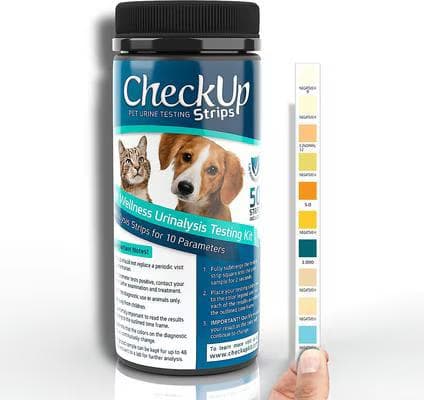
Increased thirst in an older cat points at kidneys, thyroid, or diabetes. Home strips give your vet a head start, but the diagnosis needs bloodwork.
Webvet may earn a commission when you click through to Chewy, at no extra cost to you.
What is actually happening inside your cat
Healthy kidneys work like a finely tuned filter, pulling waste out of the blood while conserving water so your cat can stay hydrated on a small amount of drinking. When something disrupts that balance, the body starts to lose more water into the urine than it should. The urine becomes dilute and plentiful, your cat gets mildly dehydrated, and the brain responds by triggering thirst so the cat drinks more to keep up. That is the polyuria and polydipsia cycle, and it usually starts with the extra urination, with the increased drinking following to compensate. In other words, most cats are not drinking more and then flushing it out; they are losing water first and drinking to catch up.

Different diseases break the balance in different ways. In chronic kidney disease the filter loses its ability to concentrate urine, so water pours out. In diabetes, excess sugar spills into the urine and drags water with it. In hyperthyroidism, an overactive thyroid speeds up the entire metabolism and blood flow to the kidneys, increasing urine production. A urinary tract infection, a uterine infection in an unspayed female, or medications such as steroids can also drive the same pattern. This is exactly why the symptom alone cannot tell you the cause, and why your vet needs to test rather than guess.
The most likely causes in cats, and how they differ
For a middle-aged or senior cat, three conditions sit at the top of nearly every vet's list, and they overlap enough in early signs that only testing can separate them. The table below is a plain-language guide to what else you might notice, but it is not a substitute for a diagnosis; several of these can even occur together in an older cat.
| Likely cause | Other signs you might notice | How urgent |
|---|---|---|
| Chronic kidney disease | Weight loss, poor appetite, bad breath, dull coat, sometimes vomiting | See a vet promptly; early treatment slows it |
| Diabetes | Increased appetite yet losing weight, sweet-smelling breath, weakness in the back legs | See a vet promptly; can become an emergency if untreated |
| Hyperthyroidism | Ravenous appetite with weight loss, restlessness, a fast heartbeat, unkempt coat | See a vet promptly; very treatable |
| Urinary tract infection | Straining, blood in urine, frequent small trips, licking the rear | See a vet; can worsen if ignored |
| Uterine infection (unspayed female) | Vaginal discharge, fever, lethargy, a sick cat | Emergency; go now |
Notice how many of these share a background of unexplained weight loss and changes in appetite. That is why your vet will always look at the whole picture rather than a single symptom. If your cat is drinking more and also dropping weight, that combination pushes the concern up a level and makes early testing especially worthwhile.

How vets pinpoint the cause
The reassuring part of this symptom is that the path to an answer is well established and usually quick. Your vet will start by confirming that the drinking and urination really are increased, then feel the abdomen, check the thyroid gland in the neck, and assess hydration and body condition. The two cornerstone tests are a urinalysis and bloodwork. The urine sample tells your vet how well the kidneys are concentrating urine and whether sugar, protein, or signs of infection are present, while the blood panel measures kidney values, blood sugar, and thyroid hormone all at once. Because a dilute urine sample is so central to the answer, your clinic may ask you to collect one at home using non-absorbent litter, or they may take one at the visit.
Depending on those first results, your vet may add blood pressure measurement, which matters greatly in kidney and thyroid disease, or imaging such as an ultrasound to look at the kidneys, bladder, and other organs. In some cats a single visit gives a clear diagnosis; in others the vet may recheck a value in a few weeks to catch a disease in its earliest stage. Bringing a note of roughly how much your cat drinks in a day, and when the change started, genuinely helps your vet interpret the numbers.
What to expect after a diagnosis
Most owners are relieved to learn that the leading causes of this symptom are manageable, especially when caught early. Chronic kidney disease is not curable, but a therapeutic kidney diet, good hydration, and medications your vet may prescribe can keep many cats comfortable and stable for years. Hyperthyroidism is one of the most treatable diseases in cats, with options ranging from a daily medication to a special diet or a curative radioactive iodine treatment. Feline diabetes is controlled with insulin and diet, and some cats even go into remission when treatment starts promptly. If your vet does prescribe a medication, you can read more about many common feline drugs in the Webvet Rx Database. The common thread is that every one of these conditions responds far better to early, consistent care than to a wait-and-see approach.
Treatment for these long-term conditions usually settles into a rhythm of a stable home routine and periodic rechecks so your vet can adjust as needed. That might mean switching to a prescription food, giving a tablet once or twice a day, or learning to give insulin, which is far less daunting than most owners fear. Your vet will also teach you what to monitor at home, such as water intake, litter box output, appetite, and weight, because you are the person best placed to notice when something shifts.

How to help at home safely
Before and after the vet visit, the most valuable thing you can do is gather good information without changing anything that could harm your cat. Keep fresh water available at all times, and if anything, make it easier to drink by offering several bowls or a pet water fountain, since many cats prefer moving water. Try to get a rough sense of how much your cat drinks in a day by measuring what you put in the bowl and what is left, and note whether the litter box is heavier or needs changing more often. Keep an eye on appetite, energy, and body shape, and watch for accidents outside the box, which can be an early sign your cat cannot make it in time.
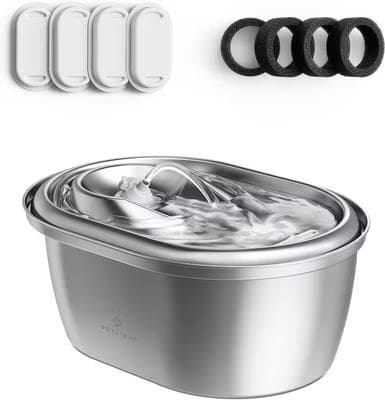
Never restrict a thirsty cat's water. A fountain keeps intake easy while the diagnosis happens.
Webvet may earn a commission when you click through to Chewy, at no extra cost to you.
Can you lower the risk
You cannot prevent every cause of increased thirst, because kidney disease and hyperthyroidism are largely age-related and partly out of your control. What you can do is stack the odds in your cat's favor and catch problems early. Keeping your cat at a healthy weight lowers the risk of diabetes, and feeding a good-quality diet with plenty of moisture supports urinary health. Regular wellness visits matter enormously, and for cats over about seven years old, a yearly or twice-yearly checkup with routine bloodwork and a urine test can flag kidney, thyroid, or blood sugar changes before you ever see a symptom. If your cat has already had bladder trouble or litter box accidents, staying on top of those follow-ups is doubly important.

When it becomes an emergency
Most cases of increased drinking and urination are urgent rather than immediately life-threatening, meaning you should get to your vet within days, not that you need the emergency room tonight. But there are exceptions worth knowing. If your cat becomes very weak, collapses, vomits repeatedly, stops eating entirely, or seems disoriented, treat it as an emergency, because untreated diabetes and advanced kidney disease can tip into a crisis. It is also important not to confuse drinking and peeing more with the opposite emergency of straining to urinate and passing little or nothing, which is a true blockage emergency, especially in male cats. When in doubt about which situation you are seeing, call your vet or an emergency clinic and describe exactly what is coming out of the litter box.
The bottom line is simple and hopeful. A cat who is drinking and urinating more is telling you something early, at a stage when the underlying disease is most treatable. The worst outcome comes from assuming it is nothing and letting weeks slip by. Book the visit, bring what you have noticed, let the urine test and bloodwork do their job, and lean on your veterinarian to build a plan. For most cats, that one decision to investigate promptly is what turns a scary symptom into a well-managed, manageable diagnosis.
Sources
Reviewed by the Webvet Veterinarian Team
This guide is general information, not a diagnosis, and does not replace an exam by your veterinarian. If your pet is in distress, contact your vet or an emergency clinic right away.
Related symptoms
- Straining to urinate or can't pee in cats
- Urinating in the house in cats
- Ate something toxic in cats
- Collapse or fainting in cats
- Dehydration in cats
- Lethargy or low energy in cats
- Not eating or loss of appetite in cats
- Overheating or heatstroke in cats
- Restlessness or pacing in cats
- Seizure or tremors in cats
- Sudden behavior change in cats
- Weight loss in cats