Cat symptom
Vomiting in cats
Reviewed by the Webvet Veterinarian Team · Last reviewed June 22, 2026
Bringing up stomach contents. A single episode in an otherwise bright pet may be minor. But repeated vomiting can cause dehydration, and vomiting with pain, bloating, blood, possible toxin exposure, or a suspected swallowed object needs prompt veterinary care.
Common causes of vomiting in cats
- Dietary indiscretion (eating garbage, table scraps, or a sudden food change)
- Intestinal parasites or a viral/bacterial infection
- Swallowed object causing a blockage
- Eating something toxic (plants, human food, chemicals, medications)
- Underlying illness such as pancreatitis, kidney or liver disease, or (in cats) hyperthyroidism
Who's most at risk
- Puppies and kittens — they dehydrate and crash quickly
- Dogs that scavenge, raid bins, or get table scraps
- Pets with a sensitive stomach, pancreatitis, or chronic illness
- Unvaccinated young dogs (parvovirus risk)
What you can do at home
- If your adult pet vomited once and is otherwise bright, pause food briefly and offer small amounts of water often
- If vomiting stops, reintroduce small amounts of a bland, pet-safe diet and transition back slowly
- Do not fast puppies, kittens, diabetic pets, or cats that have already missed more than one meal without veterinary guidance
- Do not give human nausea, pain, or stomach medicines unless your veterinarian tells you to
When to see a vet
- Repeated or projectile vomiting, or it lasts more than 24 hours
- Blood in the vomit, or it looks like coffee grounds
- Also lethargic, painful, bloated, not drinking, or unable to keep water down
- You think they ate something toxic or a foreign object
When it's more serious
- Blood or coffee-ground vomit can signal bleeding, an ulcer, or a serious toxin — see a vet now.
- A swollen belly with unproductive retching can be bloat (GDV), a life-threatening emergency — go now.
- Possible poisoning or a swallowed object needs immediate care.
- Repeated or projectile vomiting risks dehydration and can mean a blockage — get them seen today.
- Vomiting plus lethargy or no water intake points to something more serious — see a vet today.
What your vet may do
- Physical exam plus a check for dehydration and belly pain
- Bloodwork, and often a fecal test, to look for a cause
- X-rays or ultrasound if a blockage or organ disease is suspected
- Anti-nausea medication, fluids, and a bland or prescription diet
Questions to ask your vet
- Could this be a blockage — does my pet need imaging?
- Is my pet dehydrated, and do they need fluids?
- What can I safely feed while the stomach settles?
- Which warning signs mean I should come straight back?

Frequently asked questions
What causes vomiting in cats?
Bringing up stomach contents. A single episode in an otherwise bright pet may be minor. But repeated vomiting can cause dehydration, and vomiting with pain, bloating, blood, possible toxin exposure, or a suspected swallowed object needs prompt veterinary care. Common causes include: Dietary indiscretion (eating garbage, table scraps, or a sudden food change); Intestinal parasites or a viral/bacterial infection; Swallowed object causing a blockage; Eating something toxic (plants, human food, chemicals, medications); Underlying illness such as pancreatitis, kidney or liver disease, or (in cats) hyperthyroidism.
Is vomiting in cats an emergency?
See a vet today. See a vet right away if: Repeated or projectile vomiting, or it lasts more than 24 hours; Blood in the vomit, or it looks like coffee grounds; Also lethargic, painful, bloated, not drinking, or unable to keep water down; You think they ate something toxic or a foreign object.
What can I do at home for a cat with vomiting?
If your adult pet vomited once and is otherwise bright, pause food briefly and offer small amounts of water often. If vomiting stops, reintroduce small amounts of a bland, pet-safe diet and transition back slowly. Do not fast puppies, kittens, diabetic pets, or cats that have already missed more than one meal without veterinary guidance. Do not give human nausea, pain, or stomach medicines unless your veterinarian tells you to.
A closer look at vomiting in cats
Vomiting in cats is the forceful bringing up of food or fluid from the stomach, and while a single episode in a bright, playful cat is often minor, repeated vomiting is a genuine warning sign that should not be waved off as a normal cat quirk. The most important thing to know is that cats hide illness extremely well, so a cat who vomits more than once or twice a month, or who vomits alongside any change in energy, appetite, or weight, deserves a veterinary look sooner rather than later. Because cats dehydrate quickly and can mask serious disease, this is a symptom where acting early protects your cat.
- 1A true vomit involves heaving and belly effort; a hairball or regurgitation slides up with little effort. That difference tells your vet a lot.
- 2Occasional vomiting is common, but frequent or chronic vomiting is not normal and usually points to a treatable underlying condition.
- 3Blood, coffee-ground material, a bloated belly with unproductive retching, or possible poisoning are emergencies. Do not wait.
- 4Cats can crash fast once they stop eating, so pair vomiting with a skipped meal or two and call your vet the same day.
- 5Most causes are very manageable when caught early, which is exactly why a pattern of vomiting is worth investigating.

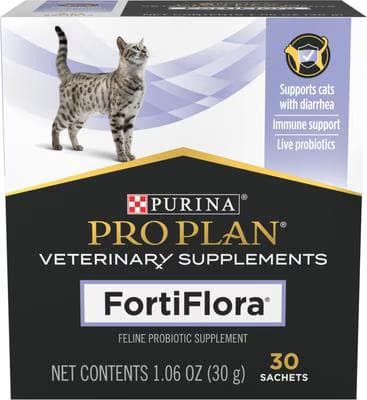
For a cat whose vet has ruled out the serious causes, a probiotic supports the gut while they settle back onto food.
Webvet may earn a commission when you click through to Chewy, at no extra cost to you.
Hairball or true vomiting? Telling them apart
One of the most common mix-ups cat owners face is confusing a hairball, regurgitation, and true vomiting, yet each points your veterinarian in a different direction. A hairball is a cigar-shaped plug of swallowed fur that a cat brings up with a distinctive gagging and hacking sound, usually with a little food or foam. Regurgitation is passive: undigested food or water simply reappears, often right after eating, with almost no effort and no heaving. True vomiting is an active, whole-body event. You will typically see your cat crouch, brace, and contract the belly muscles, often with drooling or lip-licking beforehand, before bringing up partially digested food or bile.
The old belief that a cat throwing up hairballs every week or two is simply part of owning a cat has been firmly retired by feline specialists. An occasional hairball can happen in a heavy-shedding or long-haired cat, but bringing one up more than about once a month suggests the gut is not moving hair and food through the way it should, and that is worth a conversation with your vet.
What is actually happening inside your cat
Vomiting is a protective reflex. Nerve signals from the stomach, intestines, bloodstream, or even the balance center in the inner ear converge on a vomiting center in the brain, which then coordinates the muscular event that empties the stomach. That is why the list of possible triggers is so long: it can be something as simple as eating too fast or a diet change, or as involved as inflammation, an obstruction, an infection, a toxin circulating in the blood, or an organ that is not filtering waste properly.
In practical terms, this means the color or content of the vomit alone rarely gives a diagnosis. Yellow foam often means an empty stomach and bile; white foam can accompany nausea or an empty belly; undigested food thrown up soon after eating frequently points to eating too quickly or a food that does not agree with your cat. These clues help, but they are pieces of a bigger picture your veterinarian assembles from the whole cat, not a verdict on their own.

How often is too often? Why chronic vomiting is never normal
If there is one message feline veterinarians repeat, it is that there is no healthy amount of regular vomiting. A cat who vomits more than once or twice a month on an ongoing basis is showing a clinical sign, not a personality trait. Chronic vomiting in cats is commonly linked to inflammatory bowel disease, food intolerance, an overactive thyroid gland (hyperthyroidism, most often in middle-aged and older cats), chronic kidney disease, diabetes, and, importantly, intestinal lymphoma. Several of these conditions are very manageable when they are caught early, which is the whole reason a pattern is worth chasing down rather than tolerating.
Weight that slips off quietly, an appetite that comes and goes, a duller coat, or vomiting that arrives alongside diarrhea can all be early flags of the same underlying problem. Because cats are masters at masking illness, these subtle shifts are often the only warning you get, so tracking them and mentioning them at your vet visit genuinely changes outcomes. If your cat is also slimming down without a diet change, our guide on unexplained weight loss in cats walks through what that can mean.
| Possible cause | Other signs you might notice | How urgent |
|---|---|---|
| Hairballs or eating too fast | Hacking before bringing up fur or undigested food, otherwise bright and well | Routine; mention if it happens often |
| Dietary indiscretion or a diet change | Recent new food or scavenging, mild one-off upset | Monitor at home; vet if it repeats or lasts over 24 hours |
| Hyperthyroidism, kidney disease, or IBD | Weight loss, appetite change, drinking or urinating more, ongoing pattern | See your vet soon for testing |
| Toxin, foreign object, or blockage | Repeated or projectile vomiting, retching with nothing up, pain, bloated belly | Emergency; go now |
| Not eating for more than a day | Refusing food, hiding, low energy | Same-day care; cats risk liver complications fast |
How vets pinpoint the cause in cats
Your veterinarian starts with the story you tell and a hands-on exam. Expect questions about how often your cat vomits, what it looks like, the timing relative to meals, and any changes in appetite, weight, thirst, or litter box habits. During the exam the vet checks hydration, feels the belly for pain, masses, or a foreign object, listens to the chest, and, in older cats, feels the neck for the enlarged thyroid that hints at hyperthyroidism.
From there, testing is chosen to match the picture. Bloodwork and a urine test screen the kidneys, liver, thyroid, and blood sugar. A fecal test looks for parasites. X-rays or an ultrasound come into play when a blockage, a swallowed object, or organ disease is suspected. This stepwise approach exists precisely because so many different problems share the single sign of vomiting, and imaging or bloodwork is how your vet separates a passing upset from something that needs treatment.
What to expect at the vet visit and beyond
For a cat who is bright and only mildly affected, treatment is often straightforward: anti-nausea medication, fluids to correct or prevent dehydration, and a bland or easily digestible diet for a few days. Cats who are dehydrated, cannot keep water down, or are seriously ill may stay for fluids given under the skin or into a vein and closer monitoring. If a specific cause turns up, such as hyperthyroidism, kidney disease, or inflammatory bowel disease, your vet will build a longer-term plan around it, which may include a prescription diet, medication, or follow-up testing.

Recovery for a simple stomach upset is usually quick, often within a day or two once the trigger passes and the stomach settles. Chronic conditions are more of a management journey than a one-time fix, but many cats live full, comfortable lives once the underlying issue is identified and controlled. Costs vary widely with how much diagnostic work is needed, so it is always fair to ask your vet what each recommended test will add and what it will cost.
Helping your cat at home safely
For a healthy adult cat who has vomited once and is otherwise acting normal, you can briefly pause food, offer small amounts of water often, and then reintroduce a small portion of a bland, cat-safe diet before transitioning back to normal food slowly. What you should never do is fast a kitten, a diabetic cat, or a cat who has already skipped more than one meal, because withholding food from a cat that is not eating can trigger a dangerous liver condition. If your cat is refusing food, our page on a cat that will not eat explains why this needs prompt attention.
Just as important is what to avoid. Never give human nausea, pain, or stomach medicines, because many common human drugs are toxic to cats even in small doses. Do not try to force food or water into a cat who is actively vomiting, and keep tempting hazards such as string, hair ties, and toxic foods out of reach. If you are ever unsure whether a food is safe, check first; our guide on whether cats can eat chocolate is a reminder that some everyday human foods are genuinely dangerous.
Lowering the risk over the long term
You cannot prevent every episode, but you can shift the odds. Feed a consistent, high-quality diet and make any food changes gradually over about a week to avoid stomach upset. For a cat who bolts food and then brings it back up, smaller and more frequent meals or a slow-feeder bowl often solves the problem. Regular grooming and, if your vet agrees, a hairball-control diet or supplement can cut down on fur-related vomiting in long-haired and heavy-shedding cats.


If hairballs are behind the vomiting, a palatable lubricant gel helps them pass instead of coming up.
Webvet may earn a commission when you click through to Chewy, at no extra cost to you.
Keep up with routine parasite prevention and wellness visits, since bloodwork on an apparently healthy senior cat is often how hyperthyroidism or early kidney disease is caught before it causes obvious illness. And keep string, ribbon, rubber bands, houseplants, and human medications well out of reach, because a swallowed object or a toxin is one of the fastest ways a healthy cat ends up in an emergency room.
When vomiting becomes an emergency
Most cats who vomit once and bounce back are fine, but certain situations are true emergencies where minutes matter. Go to a veterinarian or emergency clinic right away if your cat vomits blood or coffee-ground material, retches repeatedly without producing anything, has a swollen or painful belly, becomes weak or collapses, or may have swallowed something toxic or a foreign object. Kittens, senior cats, and cats with existing health conditions have less reserve, so err on the side of caution with them.
The reassuring reality is that the vast majority of vomiting causes are treatable, and cats do far better when problems are caught early rather than tolerated for weeks. Trust your read on your own cat. If something feels off, even without a dramatic symptom, a timely call to your veterinarian is always the right move.
Sources
Reviewed by the Webvet Veterinarian Team
This guide is general information, not a diagnosis, and does not replace an exam by your veterinarian. If your pet is in distress, contact your vet or an emergency clinic right away.