Cat symptom
Blood in stool in cats
Reviewed by the Webvet Veterinarian Team · Last reviewed June 22, 2026
Red streaks, jelly-like mucus with blood, or black tarry stool. A little fresh blood from straining can be minor, but a lot of blood, ongoing blood, or black tarry stool needs prompt care.
Common causes of blood in stool in cats
- Colitis from diet, stress, or parasites
- Intestinal infections (including parvovirus in young dogs)
- A swallowed foreign object, or ulcers
- Anal gland or rectal problems
Who's most at risk
- Puppies and kittens (parvovirus, parasites)
- Pets overdue for parasite prevention
- High-stress events
- Scavengers prone to dietary indiscretion
What you can do at home
- Offer water to prevent dehydration; note the stool's color and amount
- Collect a fresh sample to bring to your vet
- Do not give human anti-diarrheal or pain medicines
When to see a vet
- Black, tarry stool (can mean bleeding higher in the gut)
- A lot of blood, or it keeps happening
- Also vomiting, weak, pale, or a young/unvaccinated pet
- A painful or bloated belly
When it's more serious
- Blood in stool with weakness, or in a young pet (possible parvovirus) — seek care now.
- Black, tarry stool can mean bleeding higher in the gut — see a vet today.
- Blood plus vomiting risks rapid dehydration — get them seen today.
What your vet may do
- Exam, hydration check, and a fecal test
- Bloodwork and possibly parvovirus testing in young dogs
- Imaging if an object or mass is suspected
- Treat the cause; fluids and gut protectants as needed
Questions to ask your vet
- Is the blood from the lower gut or higher up?
- Should we test for parvo or parasites?
- Is my pet dehydrated?
- What diet helps the gut recover?

Frequently asked questions
What causes blood in stool in cats?
Red streaks, jelly-like mucus with blood, or black tarry stool. A little fresh blood from straining can be minor, but a lot of blood, ongoing blood, or black tarry stool needs prompt care. Common causes include: Colitis from diet, stress, or parasites; Intestinal infections (including parvovirus in young dogs); A swallowed foreign object, or ulcers; Anal gland or rectal problems.
Is blood in stool in cats an emergency?
See a vet today. See a vet right away if: Black, tarry stool (can mean bleeding higher in the gut); A lot of blood, or it keeps happening; Also vomiting, weak, pale, or a young/unvaccinated pet; A painful or bloated belly.
What can I do at home for a cat with blood in stool?
Offer water to prevent dehydration; note the stool's color and amount. Collect a fresh sample to bring to your vet. Do not give human anti-diarrheal or pain medicines.
A closer look at blood in the stool in cats
Seeing blood in your cat's litter box is alarming, and it deserves prompt attention rather than a wait-and-see week. A few streaks of fresh red blood after a hard, straining poop can be minor, but a lot of blood, blood that keeps coming back, or black tarry stool is a signal to call your veterinarian, and blood paired with vomiting, hiding, weakness, or a refusal to eat means your cat should be seen the same day. Cats are experts at masking how unwell they feel, so the blood you can see is often the clearest warning you will get.
- 1Bright red blood (hematochezia) usually comes from the lower gut, colon, or rectum; black, tarry stool (melena) points higher up the digestive tract and is more concerning.
- 2Common feline causes include intestinal parasites, diet changes or food intolerance, colitis and inflammatory bowel disease, straining from constipation, and stress.
- 3In young or unvaccinated kittens, bloody diarrhea can mean panleukopenia, a life-threatening infection that needs emergency care.
- 4Blood plus not eating, vomiting, lethargy, pale gums, or a painful belly is urgent, because cats hide illness until they are quite sick.
- 5Never give human anti-diarrheal or pain medicines; many are toxic to cats and can worsen the bleeding.

Intestinal parasites are a frequent cause in cats. Worth treating once a fecal test confirms it, rather than guessing.
Webvet may earn a commission when you click through to Chewy, at no extra cost to you.
What the color of the blood is telling you
The single most useful thing you can notice before you even reach the clinic is the color of the blood, because it tells your vet roughly where in the digestive tract the trouble sits. Bright red blood, sometimes streaked on the surface of the stool or mixed with jelly-like mucus, is called hematochezia. It has not been digested, so it is coming from low down, in the colon or rectum, which is exactly the territory of colitis, straining, and anal gland problems. This is the pattern owners most often see, and while it still needs veterinary attention, it is usually the less ominous of the two.
Black, tarry, sticky stool is a different and more serious story. Called melena, it is blood that has been partly digested on its long journey from the stomach or small intestine, which turns it dark. Melena can point to ulcers, a bleeding mass, a swallowed foreign object, or a clotting problem, and it should never be dismissed as ordinary dark stool. If you are ever unsure whether a stool is truly black, smear a little on a white paper towel; a rusty, dark brown to black stain leans toward melena and is worth a same-day call.

| What you see | What it often points to | How urgent |
|---|---|---|
| A few bright red streaks after straining | Constipation, mild colitis, or an anal gland issue in an otherwise bright cat | Call your vet; usually a prompt but not emergency visit |
| Bright red blood with mucus and repeated soft stool | Colitis, parasites, food intolerance, or stress affecting the colon | Vet visit soon, ideally with a fresh stool sample |
| Black, tarry, sticky stool | Bleeding higher up: ulcers, a mass, or a foreign object | See a vet today |
| Blood plus vomiting, weakness, or pale gums | Serious infection, blood loss, or a whole-body illness | Same-day or emergency care |
| Bloody diarrhea in a kitten or unvaccinated cat | Panleukopenia, parvovirus-type infection, or heavy parasites | Emergency; kittens fade fast |
Why cats get blood in the stool
The most common reason is an irritated, inflamed colon, and there is a long list of things that can inflame it. Intestinal parasites like hookworms, whipworms, and single-celled bugs such as giardia and tritrichomonas are frequent culprits, and even a strictly indoor cat can pick them up from soil on shoes, shared water, or a newly adopted kitten. Diet plays a huge role too: an abrupt food switch, a rich new treat, or a genuine food intolerance can inflame the gut lining and leave streaks of blood in an otherwise loose or soft stool. Stress is a surprisingly powerful trigger in cats, and a house move, a new pet, boarding, or even rearranged furniture can set off stress colitis with visible blood.
Beyond inflammation, structural and mechanical problems bleed too. A cat who is constipated and straining hard against dry, packed stool can rupture tiny blood vessels near the rectum, leaving fresh red streaks on a firm poop. Full or infected anal glands, a swallowed foreign object, and in older cats a polyp or tumor can all cause bleeding. Chronic inflammatory bowel disease is a common driver of on-and-off blood and mucus in middle-aged and senior cats. And in young or unvaccinated cats, an infection such as feline panleukopenia can cause severe, foul, bloody diarrhea; it is a true emergency that needs care within hours, not days.
Why a cat that seems fine can still be in trouble
One of the most searched questions is why a cat can be pooping blood yet still acting completely normal. It happens because cats evolved as both predator and prey, and hiding weakness is a survival instinct that runs deep. A cat can feel unwell and keep grooming, purring, and greeting you at the door long after a dog would have visibly crashed. That is exactly why owners cannot rely on how the cat is acting to judge severity, and why a change you can measure, such as a drop in appetite, is so important. If your cat has blood in the stool and is also eating less, hiding more, or seems even slightly flat, treat it as more urgent, not less. The blood plus a quiet cat is a combination vets take seriously.
What to expect at the vet visit

Vets work in layers, starting simple and reaching for bigger tests only when the picture calls for it. The visit usually begins with your description of the blood, its color, and how often it is happening, followed by a physical exam that feels the belly for pain, gas, or thickened intestinal loops and checks hydration through the gums and skin. A fecal test for parasites and giardia is often the first real diagnostic, because these causes are common, treatable, and easy to miss without a microscope, which is why bringing a fresh stool sample is so genuinely helpful.
When the bleeding is heavy, persistent, or paired with vomiting, weight loss, or a poor appetite, the workup widens. Bloodwork can reveal blood loss, infection, or organ disease, and in young cats your vet may run a panleukopenia test. X-rays or ultrasound help rule out a foreign object, a blockage, or a mass, and a thickened bowel wall can hint at inflammatory bowel disease. Treatment then follows the cause: deworming for parasites, a gentle, easily digestible or hypoallergenic diet for colitis, fluids for dehydration, gut protectants, and in stubborn cases a food trial or intestinal biopsy. Most colitis-type cases recover well over a few days, while more serious causes are treated in step with what the tests reveal.
Helping your cat at home, safely
For a bright, well-hydrated adult cat with just a streak or two of fresh red blood and no other worrying signs, gentle home support while you arrange a vet call is reasonable. Keep fresh water available at all times, since even mild ongoing losses add up quickly in a small animal. Many vets suggest small, frequent portions of a bland, easily digestible food such as plain boiled chicken or a veterinary intestinal diet, and a spoonful of plain canned pumpkin or a cat-specific probiotic can help settle a mildly irritated colon. Note the color and amount of blood each time, and try to collect a fresh sample in a clean, sealed bag to bring in.
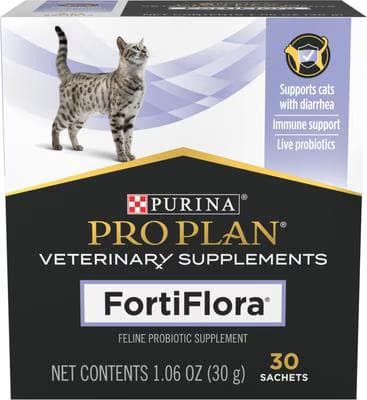
After the vet visit, a daily probiotic sachet supports the irritated gut while it settles.
Webvet may earn a commission when you click through to Chewy, at no extra cost to you.
When blood in the stool becomes an emergency
Some situations should not wait for a routine appointment. Seek care immediately if the stool is black and tarry, if there is a large amount of blood or it keeps recurring, or if the blood comes with repeated vomiting, weakness, pale or white gums, collapse, or a tense, painful belly. Kittens, senior cats, and cats with existing health conditions have far less reserve and can slide into dangerous dehydration or shock quickly, so their threshold for a call is much lower. When in doubt, a phone call to your clinic costs nothing, and with blood in the stool it is always safer to check a day early than a day late.

Lowering the risk of it happening again
You cannot prevent every episode, but a few habits stack the odds in your cat's favor. Change foods gradually over five to seven days so the gut has time to adjust, keep treats and table scraps modest, and store trash, plants, string, and human food where a curious cat cannot reach them. Staying current on routine parasite prevention and deworming closes off one of the most common and preventable causes of a bloody, irritated colon, even for indoor-only cats, and keeping core vaccines up to date protects against panleukopenia.
Managing stress and constipation matters more than most owners expect. Keep feeding times, litter boxes, and daily routines predictable, provide quiet retreats and vertical space, and introduce new pets, people, or environments slowly. Encourage water intake with fresh sources or wet food to keep stool soft and reduce straining, and for a cat with a truly sensitive gut or diagnosed inflammatory bowel disease, your vet can help you land on a consistent diet that keeps the colon calm long term. The reassuring bottom line is that many cases of blood in a cat's stool come from treatable colitis and clear up with the right care, while the serious causes tend to reveal themselves through the rest of the cat, so watching the whole animal and looping in your vet early is your most reliable tool.
Sources
Reviewed by the Webvet Veterinarian Team
This guide is general information, not a diagnosis, and does not replace an exam by your veterinarian. If your pet is in distress, contact your vet or an emergency clinic right away.