Diabetes in Cats: Symptoms, Treatment, and Remission
Recognize feline diabetes signs, understand insulin and carefully selected oral medicines, and build a practical feeding and monitoring plan with realistic remission expectations.

BVMS MRCVS
Medically reviewed by Dr. Pippa Elliott, BVMS MRCVS · Last reviewed

This article contains affiliate links. Webvet may earn a commission when you buy through them, at no extra cost to you.
Diabetes in cats can cause increased thirst, larger urine clumps, and weight loss even when the cat seems hungry. Some cats also develop weakness in the hind legs. These changes need veterinary investigation; appearance and behavior alone cannot establish the diagnosis.
Treatment may involve insulin or, for carefully selected cats, an oral medicine. Both paths require monitoring and a plan for illness. Some cats achieve remission, but that means a veterinarian has confirmed a change in treatment needs, not that the condition has been permanently cured.
 Sponsored
Have a health question about your cat?
Talk to a licensed vet at Dutch over video or message, including nights and weekends.
Use code Pets30
Plans start at $11/month · covers up to 5 pets
- Licensed vets in most states
- Rx for 150+ conditions
- 4.7 on Trustpilot
Early signs of diabetes in cats
Increased thirst and urination, weight loss, and hindlimb weakness need veterinary evaluation. A diabetic cat that stops eating, vomits, becomes weak, or has trouble breathing needs prompt help. A reassuring glucose reading does not make an unwell cat safe.
| Observable signs and limits | What an owner may notice | Why an examination matters |
|---|---|---|
| Increased thirst and urination | More bowl refills, larger clumps, or accidents | Kidney disease and other disorders can produce similar changes |
| Weight or appetite change | Weight loss despite hunger, or reduced appetite during illness | Eating well does not rule out diabetes; poor intake may signal deterioration |
| Lowered hocks | Hind ankles closer to the floor, a changed stance, or difficulty jumping | Neuropathy is one possibility, but appearance alone does not identify the cause |
| Behavior and coat changes | Less activity, hiding, or poorer grooming | These are nonspecific illness signs, not a photographic diabetes test |

What are the first signs of feline diabetes?
Owners commonly notice increased drinking and urination or weight loss despite a good appetite. A cat may suddenly become ravenous or unusually hungry, need more litter-box cleaning, or start urinating outside the box. Arrange an examination rather than assuming the cat is simply getting older or misbehaving.
Diabetes mellitus involves difficulty producing enough insulin or responding to it effectively. Glucose stays in the blood instead of being used normally; glucose entering the urine draws extra water with it. A cat can still appear alert during the early part of the disease. Type 2 diabetes, involving insulin resistance, is the more common form in cats; type 1 describes inadequate insulin production. Cats and dogs can share thirst, increased urine, and weight loss, but canine diabetes more commonly requires lifelong insulin replacement. Those shared symptoms do not justify sharing treatment.
Once diabetes is confirmed, the veterinarian may teach home glucose testing. The AlphaTrak 3 blood glucose monitoring kit supports that prescribed monitoring plan when the caregiver has learned the device, sampling technique, and response instructions. A meter does not diagnose diabetes by itself or authorize insulin changes.
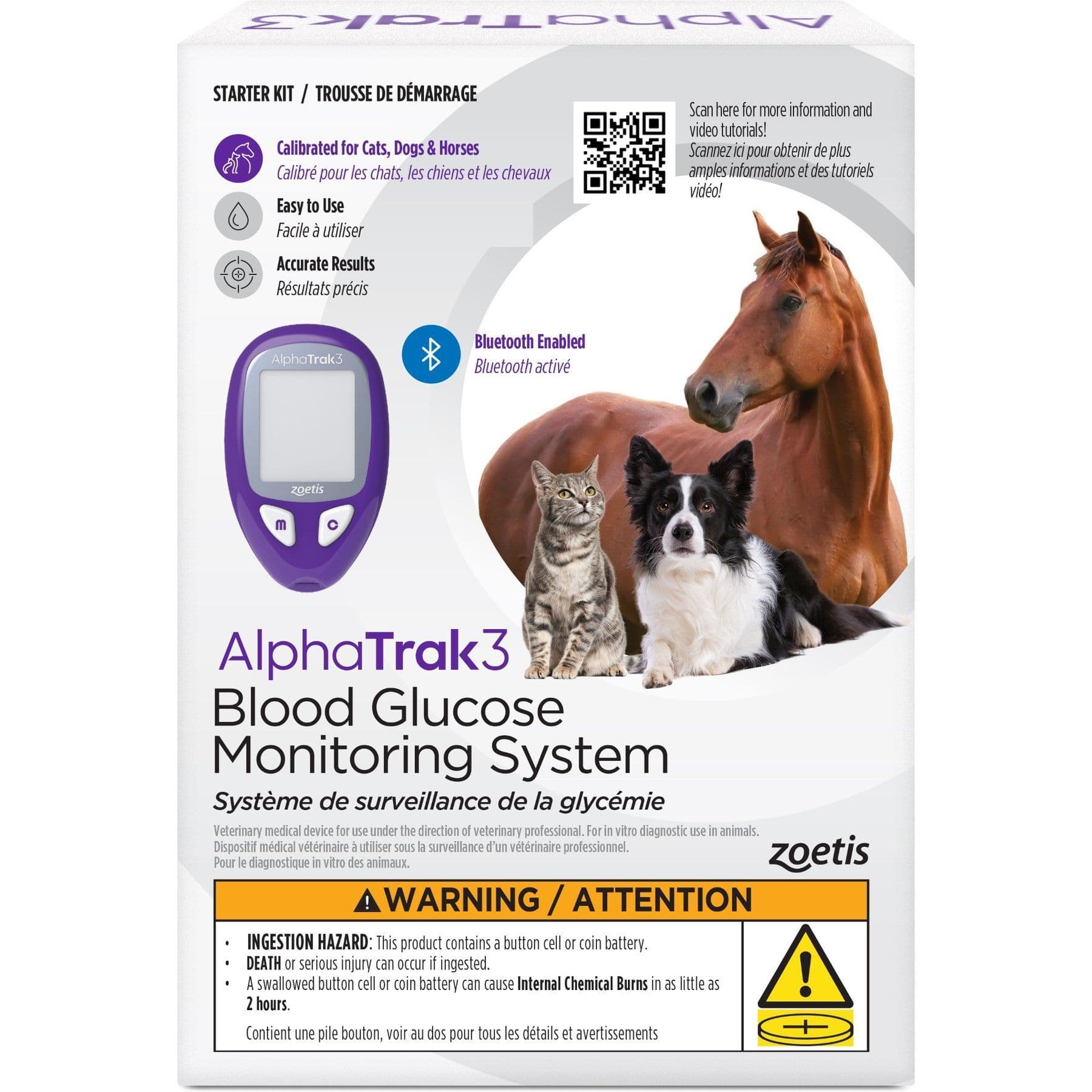
A veterinary glucose kit supports clinic-taught monitoring without self-directed treatment changes.
Webvet may earn a commission when you click through to Chewy, at no extra cost to you.
What does diabetes look like in a cat?
There is no single diabetic appearance. Some affected cats are overweight, some lose muscle and become thin, and others have subtle changes. A dull or unkempt coat, tiredness, or a changed appetite needs evaluation but cannot identify diabetes from a photograph.
Diabetic neuropathy can cause a plantigrade stance: the hind hocks are lowered toward the ground rather than the cat standing normally on its toes. Describe unusual walking, hind-leg weakness, and difficulty jumping to the veterinarian. Other neurologic, orthopedic, and metabolic problems can also impair movement. Do not make a weak cat walk repeatedly for a video; sudden inability to stand needs urgent assessment.
Older age, excess body weight, male sex, inactivity, and some medication histories increase concern. Diabetes in kittens is less typical, but young cats, female cats, and lean cats are not automatically excluded. Symptoms in a male cat are not a separate diagnostic test. Burmese cats have a reported predisposition in some populations. Breed labels alone cannot establish risk for an individual cat or rule out disease in a Persian, Ragdoll, Siamese, or mixed-breed cat.
Changes that are not specific to diabetes
Hyperglycemia means high blood glucose. Its familiar diabetes symptoms include thirst, increased urine, and weight loss; uncontrolled disease cannot be graded from appearance alone. Other observations need a separate explanation:
- Dilated pupils, a visible third eyelid, watery or cloudy eyes, or temporary blindness need an eye assessment; do not assume every eye change is diabetic.
- Hot ears, a runny nose, a swollen paw, a wound, or a gurgling or distended belly does not identify diabetes. Describe the location, onset, and associated illness.
- Sleeping a lot, meowing at night, or sniffing unusually may reflect discomfort or another problem. Sudden disorientation or inability to walk needs prompt help.
Confirming diabetes and checking for complications
The workup combines history, examination, and blood and urine findings. Stress hyperglycemia can complicate diagnosis; persistent findings and the clinical context matter. A frightened cat can have temporarily elevated glucose during a veterinary visit, so one abnormal result does not always settle the question.
The Cornell feline diabetes overview describes the role of persistent glucose abnormalities and fructosamine when results are uncertain. Fructosamine helps assess a broader period of glucose exposure; it does not show every high or low during a day. For a newly diagnosed diabetic cat, ask what each proposed test will clarify. A normal blood-glucose range is not the same as an individual treatment target, and a “pre-diabetes” label or borderline result needs follow-up rather than a home diagnosis.
Separate meals in a multicat home
Prepare for monitoring actual intake if cats currently share bowls. The Closer Pets MiBowl microchip feeder may help limit food sharing after the cat is trained and its identification method and fit are checked. It does not prove that the intended cat ate the whole portion, and a timid cat may need a different arrangement.

A microchip feeder may limit food sharing after fit and training checks; caregivers still verify actual intake.
Webvet may earn a commission when you click through to Chewy, at no extra cost to you.
Other conditions and misleading clues
Increased thirst and weight loss can also occur with kidney disease or hyperthyroidism. Urinary infection, dental disease, and pancreatitis may complicate the picture. A cat losing teeth needs dental assessment; tooth loss is not a diabetes test. The vet may recommend additional testing or a urine culture rather than attributing every sign to glucose.
Diabetes insipidus is a different water-balance disorder. It is not ordinary diabetes mellitus and is not diagnosed from a watery-looking urine sample. Likewise, blood in the urine, painful urination, repeated small attempts, or inability to pass urine needs assessment. Never restrict drinking water to see whether the problem improves.
Steroid-induced diabetes is one concern because glucocorticoids can increase insulin resistance. Tell the clinic about all oral medicines, injections, and supplements; do not abruptly stop prescribed treatment. Difficult regulation may lead to investigation for concurrent endocrine disorders or other disease. Include hormone medicines such as megestrol acetate in the history. Diabetes associated with pregnancy or reproductive status cannot be assumed to follow the same course as human gestational diabetes. A home urine strip, litter product, or online symptom quiz is not a substitute for this workup.
Interpret abnormalities together
Ketones in a diabetic cat's urine can indicate a need for urgent assessment, especially with illness. Anemia, low potassium, or elevated liver enzymes also need interpretation in the full clinical context. They are not interchangeable diabetes stages, and electrolyte or vitamin supplements should not be started from a single reported result.
Insulin and oral medicines: different treatment paths
| Insulin and oral therapy | Patient selection and eligibility | Monitoring and urgent concerns |
|---|---|---|
| Prescribed insulin | Replaces insulin the cat needs; product, device, and regimen are individualized | Observe intake and symptoms, follow the glucose plan, and recognize hypoglycemia |
| Veterinarian-selected SGLT2 medicine | Requires careful screening; prior insulin treatment and insulin dependence prevent casual switching | Monitor health and ketones as directed; euglycemic ketoacidosis can occur despite lower glucose |
| Remission monitoring | The veterinarian confirms whether insulin is no longer needed | Continue observation and scheduled testing because relapse remains possible |
Insulin is a central treatment for feline diabetes. Different products have different concentrations and durations, so the exact syringe or pen must match the prescription. Ask for demonstrations of handling, storage, injections, and missed-dose instructions. Do not transfer a dose from another cat or from a different insulin product.
Who can receive an oral diabetes medicine?
Bexacat and Senvelgo are not insulin and require strict patient selection. These SGLT2 inhibitor medicines lower glucose through urinary excretion and are options only for eligible cats. A cat that needs insulin must not be switched casually to a tablet or liquid for convenience. Prior insulin treatment is an important exclusion, not a reason to try an oral drug when injections become difficult.
The FDA's owner guidance explains why screening and continued monitoring are essential. Poor appetite, dehydration, lethargy, ketoacidosis, and important concurrent disease affect eligibility. A medicine approved for selected cats should not be borrowed for a diabetic dog.
What if injections or regulation are difficult?
Tell the team what is going wrong: handling the cat, seeing syringe markings, timing meals, paying for supplies, or uncertainty that a dose entered. A demonstration, a different prescribed device, or a revised practical plan may help. Do not hide missed treatments or repeatedly give an extra injection after a suspected “fur shot.”
Insulin resistance or unstable readings can reflect the treatment process, food intake, or another medical problem. More insulin is not automatically the answer.
Natural remedies and additional medicines
A holistic approach can support nutrition, activity, and comfortable care, but treating diabetes naturally does not remove the need for effective medication. Human medicines such as metformin, herbal remedies, CBD, and supplements must not replace the prescribed plan. Coconut oil, colloidal silver, milk thistle, digestive enzymes, and products marketed for blood sugar balance such as Primalix are not established substitutes for insulin or appropriate oral therapy. There is no universal best vitamin for a diabetic cat; ask whether a supplement has a specific indication. B12 or methylcobalamin may be discussed for a particular indication, but a supplement alone does not establish control of diabetic neuropathy.
SponsoredVet care that's always there
Unlimited video calls and messaging with licensed vets for less than a typical vet visit. One membership covers up to five pets.
Use code Pets30
Plans start at $11/month · covers up to 5 pets
- Licensed vets in most states
- Rx for 150+ conditions
- 4.7 on Trustpilot
Feeding a diabetic cat consistently

What is the best food to give a diabetic cat?
Choose a complete feline diet with the veterinarian, considering carbohydrate content, calories, weight, appetite, and other illness. A complete low-carbohydrate wet food is often a practical starting point to discuss, but the whole formula matters. Diabetes with kidney disease or renal failure, or an underweight cat, requires different nutritional priorities from an otherwise healthy overweight cat.
A small Durapet stainless-steel bowl can help serve a measured portion and inspect leftovers. Check that its size and shape suit the cat. Weigh or measure the food according to the plan, keep it fresh, and record intake; the bowl itself does not establish whether the food is nutritionally appropriate.

A small washable bowl supports measured portions and observation of leftovers.
Webvet may earn a commission when you click through to Chewy, at no extra cost to you.
Compare actual formulas and portions
Prescription diets and suitable nonprescription foods may both have a role. Brand names such as Royal Canin, Hill's, Purina, Fancy Feast, Friskies, Tiki Cat, or Young Again do not identify one universal best diabetic food. The specific recipe, nutrient information, calories, and the cat's medical needs must be compared. Apply that same formula-level comparison to Iams, Blue Buffalo, 9 Lives pâté, Wellness Core, Wysong Epigen, and Vet Life; a carbohydrate calculator based on incomplete label data cannot establish medical suitability.
Dry food is not automatically forbidden, and a wet label does not guarantee low carbohydrates. “Grain-free,” “high protein,” and “weight loss” are also incomplete descriptions. Ask the clinic which affordable products meet the plan and how to change food without making intake unpredictable. Do not abruptly switch a regulated cat's diet while leaving the treatment plan unreviewed.
Homemade, raw, or meat-only diets need particular care. An internet chicken, fish, or turkey recipe may lack essential feline nutrients even if it contains little carbohydrate. A veterinary nutritionist can formulate an appropriate homemade diet when that is the chosen route. Adding vitamins afterward does not reliably fix an unbalanced recipe.
What not to feed a cat with diabetes?
Avoid an unbalanced ration, unlimited extras, and unapproved supplements. Tuna, chicken, eggs, treats, table food, milk, broth, or toppings must not displace the complete diet. Cat grass is not a diabetes treatment or a nutritionally complete meal. There is no single “enemy food” that explains all feline diabetes, and dry food alone does not establish why a particular cat developed it.
Discuss treat portions, pill-giving foods, and any product used to improve appetite. A cat refusing its prescribed food needs advice rather than a prolonged contest over a preferred brand. An underweight cat needs a plan to restore condition; an overweight cat needs gradual supervised weight loss, not crash dieting or fasting.
How should I care for my diabetic cat?
Use the current written treatment plan, check actual food intake, keep water and an accessible litter box available, and record changes in activity and urination. Agree on who gives each medicine and make the entry immediately afterward.
Regular play can support an appropriate activity and weight plan, but do not force exercise during weakness or illness. In a multicat home, separate feeding areas may be more practical than a shared bowl. Litter-box accidents can reflect increased urine production, pain, mobility problems, or another disease; they should not be punished or managed by withholding water.
Shared food and litter-box problems
If a diabetic dog ate the cat's food, record what and how much it ate and contact its clinic for advice; do not add insulin to compensate. Keep species-specific diets and treatment instructions separate. The same applies when a diabetic cat ate sugar or an unexpected meal.
A diabetic cat that pees a lot or starts peeing everywhere, including on carpets or beds, needs reassessment of control and possible urinary illness. Add accessible clean litter boxes and record urine changes; do not punish accidents or restrict water. Pooping on the floor, constipation, or a cat that will not poop can have another cause. Ask before giving a stool softener. Black poop, visible blood, or marked illness needs prompt assessment.
Home monitoring and urgent warning signs
Monitoring includes the cat's condition as well as numbers. Ask which signs, readings, or ketone results need an immediate call. A glucose curve, veterinary meter, continuous sensor, and fructosamine each answer different questions. Do not change insulin because one measurement is high or stop treatment because the cat seems better.
An appropriately sized Frisco carrier makes repeat visits easier to organize. Check that the cat can rest comfortably, secure the carrier during transport, and bring the current care record and medication details. A carrier should be ready before an emergency, not introduced only when the cat becomes ill.

An appropriately sized carrier supports repeat visits with the cat's current care record and medication details.
Webvet may earn a commission when you click through to Chewy, at no extra cost to you.
Know the readings and the cat
- Record appetite, water intake, urine output, body weight when requested, and behavior.
- Use the clinic's sampling instructions and agreed glucometer or test kit; ask how to confirm an unexpected sensor value.
- Record medicine actually given, including any missed or uncertain treatment.
- Keep follow-up appointments even when the cat appears comfortable.
Home testing can reduce the effect of clinic stress, but it still requires training. Ask the team to demonstrate where to prick for a sample and how to avoid repeated unsuccessful attempts. AlphaTrak 2 and AlphaTrak 3 systems require their own compatible supplies and instructions. A meter or sensor reading is not a universal dose calculator. Urine glucose, ketones, and litter appearance are different kinds of information; a normal-looking litter clump does not establish safe glucose control. Sweet pee smell, a strong urine odor, or a sticky sample cannot diagnose diabetes. Report the change rather than using smell as a glucose test.
Avoid internet dosing protocols
Terms such as tight regulation, rebound hyperglycemia, or “bouncing” describe issues that need interpretation from actual glucose trends and treatment history. A high reading alone does not establish its cause. Do not use a feline tight-regulation protocol found online to increase insulin without your clinic's direction.
Poor appetite or vomiting during treatment
If an insulin-treated cat becomes a fussy eater, will not eat, vomits food or bile, or becomes lethargic, use the clinic's specific sick-day instructions and contact it promptly. Do not automatically repeat an injection after vomiting or assume that food refusal is merely a preference. The appropriate action depends on the insulin, timing, intake, and the cat's condition. A newly diagnosed diabetic cat that is not eating also needs prompt assessment; do not wait for the first scheduled recheck.
For a cat taking Bexacat or Senvelgo, the FDA instructs owners to stop the drug and contact the veterinarian immediately for reduced intake or activity, vomiting or diarrhea, weakness, or difficulty walking. This is a medication-specific illness warning, not a general rule to stop every diabetic cat's insulin. Tell the team the exact medicine and last dose.
Low glucose and ketoacidosis are different emergencies
Low blood sugar, or hypoglycemia, can cause weakness, unusual sleepiness, trembling, poor coordination, seizures, or coma. A cat may be unsteady on its feet, walk in circles, or act disoriented. The term “diabetic shock” does not identify the cause at home. Follow the written emergency plan and seek immediate veterinary help. Do not force food, liquids, or fingers into a poorly responsive or convulsing cat's mouth. Ask the clinic in advance about its emergency sugar instructions, including whether Karo corn syrup or another product is appropriate and how to use it. Do not improvise an amount of maple syrup or substitute Pedialyte for emergency care. Even apparent improvement needs clinical direction about the cause and subsequent treatment.
Diabetic ketoacidosis, or DKA, involves excess ketones and a serious metabolic disturbance and may involve dehydration, poor appetite, vomiting, weakness, or abnormal breathing. SGLT2-associated euglycemic ketoacidosis is especially misleading because glucose may be lower than expected. Clinical assessment is needed even if a home reading seems reassuring.
Throwing up blood, a bloody nose or nose bleed, pale gums, heavy panting, foaming at the mouth, or marked collapse needs urgent veterinary assessment. These signs are not safely explained by diabetes alone. A cat that smells sweet and is unwell also needs prompt care; the absence of that smell is not reassuring.
What remission means and how it is confirmed

| Observation | What it may mean | What must continue |
|---|---|---|
| Less thirst and stable weight | Treatment may be improving clinical signs | Prescribed treatment and the monitoring plan |
| Falling insulin requirements | The cat needs reassessment; remission is one possibility | Veterinary confirmation before insulin is reduced or stopped |
| Confirmed remission | The cat maintains control without insulin under veterinary supervision | Continued monitoring, appropriate nutrition, and follow-up |
| Thirst, weight loss, or glucose changes return | Relapse or another illness is possible | Prompt contact and repeat evaluation |
Diabetic remission is a veterinarian-confirmed period in which the cat no longer needs insulin to maintain glucose control. Not every cat reaches remission, and it is not a cure. 'Reversed diabetes' sometimes refers to remission, but relapse remains possible. Brighter behavior alone does not confirm remission.
Insulin needs may fall as glucose control improves or another contributing condition is addressed. Possible symptoms suggesting remission, such as less thirst and falling insulin requirements, can also occur as treatment improves control without full remission. The veterinarian uses clinical signs and appropriate testing to decide whether treatment can be reduced or stopped; an owner should not run a trial without insulin independently.
Diabetic neuropathy may improve with diabetes treatment, but a weak gait should still be assessed for other causes. Walking on the wrists or apparent carpal hyperextension is not the same observation as lowered hind hocks. The veterinarian should identify the problem before predicting whether it is reversible.
What to expect after remission
To help keep a cat in diabetic remission, continue the agreed diet, weight plan, observation record, and checks. Increased thirst, larger urine clumps, weight loss, appetite change, or new illness can mean relapse or another problem. Remission does not make poor appetite, ketoacidosis risk, or future steroid treatment safe to manage without the vet.
Ask for the signs and testing schedule that apply to your cat, and tell a new clinic about the diabetes history even when medication is no longer needed. Prior insulin treatment also remains relevant to future oral-drug eligibility; remission does not erase that history.
Living with diabetes: follow-up, costs, and outlook
Long-term care can be manageable when the household and veterinary team agree on realistic responsibilities. Before a vacation, a cat sitter or boarding facility must be able to observe intake, give the exact treatment, keep the shared record, and recognize urgent signs. Leave a written owner handout, contact details, and enough supplies, with the proper storage instructions. People can adopt diabetic cats when they can maintain the care plan; arrange a veterinary handoff of the actual records and current treatment.
What will care cost?
Ask for separate estimates for diagnosis, initial regulation, and continuing care. The recurring budget can include medicine, syringes or other delivery supplies, glucose and ketone monitoring, laboratory tests, and follow-up visits. Emergency hospitalization and treatment of concurrent disease add different costs.
Current local quotes are more useful than an unsupported average for the US, UK, Canada, or Australia. If finances or handling difficulties threaten treatment, say so early. The team can discuss feasible alternatives, training, and assistance without assuming that every cat qualifies for a cheaper oral option. Do not ration treatment or skip essential checks without discussing the consequences.
Untreated disease and quality-of-life decisions
Untreated diabetes can cause dehydration, weight loss, serious metabolic illness, and death. Discuss the pros and cons of treatment with the veterinarian; choosing not to treat is a welfare decision, not an alternative diet plan. Late-stage or end-stage feline diabetes has no reliable life-expectancy countdown based on age, thinness, or one glucose reading. A cat that requires insulin cannot safely live without it by switching to diet alone. DKA prognosis depends on severity and response to hospital treatment, not a fixed home countdown.
Cats with diabetes can live a long life with effective treatment and a good quality of life. Older age alone does not decide whether treatment is worthwhile. Consider comfort, appetite, mobility, other illness, the cat's tolerance of care, and what support is realistically available. If suffering cannot be relieved or adequate treatment cannot be maintained, the veterinarian can help discuss humane options. When it is time to euthanize, or put down, a diabetic cat depends on suffering and feasible treatment, not the diagnosis alone.
Long-term effects and complications need reassessment rather than being dismissed as inevitable side effects. Pain is not required for a diabetes diagnosis, but painful concurrent conditions and severe illness can occur. Difficulty walking, hiding, poor grooming, or appetite loss should not be dismissed because a particular diabetic complication is sometimes described as painless. The cat's current comfort needs its own assessment.
Feline diabetes questions
Frequently Asked Questions
How long can a cat survive with diabetes?
Some cats live for years with effective treatment and a good quality of life, but an individual survival time cannot be predicted from the diagnosis alone. Concurrent illness, complications, response to treatment, and ongoing care matter. Untreated diabetes can become life-threatening; discuss prognosis after the cat has been assessed and stabilized.
Is canned tuna good for diabetic cats?
Canned tuna intended for people is not a complete feline diet and should not replace the prescribed food. Whether a small amount can be used as an occasional topper depends on the cat's nutritional and medical needs and the product's ingredients. Ask the clinic about a suitable amount rather than treating low carbohydrate content as proof of a balanced meal.
How many times a day should a diabetic cat eat?
Meal timing, including how many times a diabetic cat should eat each day, depends on treatment, appetite, and food choice. Two meals around twice-daily insulin is one common plan; some cats can instead have an agreed low-carbohydrate grazing schedule. Obtain specific instructions for normal meals, poor intake, fasting, and treatment timing.
What is the best wet food for a diabetic cat?
Choose a complete wet food that meets the cat's individual needs and is eaten reliably. Carbohydrate content, calories, body condition, kidney or pancreatic disease, and affordability all matter. Ask the veterinarian to compare exact formulas rather than relying on a brand name or changing a regulated cat's food abruptly.
Veterinarian · BVMS MRCVS
Dr. Pippa Elliott, BVMS, MRCVS, is a veterinarian with nearly 30 years of experience in companion animal practice. Dr. Elliott earned her Bachelor of Veterinary Medicine and Surgery from the University of Glasgow. She was also designated a Member of the Royal College of Veterinary Surgeons. Married with 2 grown-up kids, Dr. Elliott has a naughty Puggle named Poggle, 3 cats and a bearded dragon.
Related reading

Salivary Mucocele in Dogs: Symptoms, Surgery, and Recovery

Diabetes in Dogs: Early Signs, Diagnosis, and Daily Management

Addison's Disease in Dogs: Symptoms, Testing, and Long-Term Care
