Best Senior Cat Food: Vet-Reviewed Picks for Aging Cats
Senior cat food is not one recipe: some older cats need fewer calories, many need more protein and more moisture, and weight loss in an older cat is often a medical sign. When to switch, how to choose, and vet-reviewed picks.

BVMS MRCVS

This article contains affiliate links. Webvet may earn a commission when you buy through them, at no extra cost to you.
The best senior cat food is a complete and balanced diet matched to your older cat's body condition, muscle, teeth, and hydration, not just the age printed on the bag. Most cats count as senior after about 10 years, and many do best on a food with plenty of animal protein and extra moisture.
There is no official senior cat food standard, so two bags with the same "senior" label can differ a lot in calories. Before you switch, a vet check matters most when an older cat is losing weight, eating less, or eating more but getting thinner, because those changes often point to illness rather than a food problem.
Best senior cat food: when a cat counts as senior, and what changes in its diet
The 2021 AAHA/AAFP Feline Life Stage Guidelines define a senior cat as one over 10 years of age. The companion AAFP Feline Senior Care Guidelines add that some cats are better described as senior from about 8 years, especially breeds with inherited health risks.
| Product | Form | Labeled age | Best for |
|---|---|---|---|
| Hill's Science Diet Senior Adult 11+ Chicken Recipe Dry Cat Food, 7-lb bag | Dry kibble | 11+ | Healthy older seniors that eat dry food well |
| Royal Canin Feline Health Nutrition Aging 11+ Ultra Soft Mousse in Sauce Senior Wet Cat Food, 5.1-oz can, case of 24 | Wet mousse in sauce | 11+ | Seniors with sore mouths or missing teeth |
| Purina Pro Plan 11+ Classic Chicken & Beef Canned Cat Food, 3oz, 24 ct | Wet pate | 11+ | Older seniors needing more moisture |
| Purina Pro Plan Complete Essentials 7+ Chicken & Rice Natural Senior Dry Cat Food, 7-lb bag | Dry kibble | 7+ | Younger seniors at a healthy weight |
| Iams Proactive Health Healthy Senior Chicken Recipe Dry Cat Food, 7-lb bag | Dry kibble | Senior | Budget-minded dry feeding |
| Fancy Feast Chicken Feast Pate Senior 7+ Canned Cat Food, 3-oz can, case of 24 | Wet pate | 7+ | Budget wet feeding and picky eaters |
- 1Most guidelines agree on when a cat counts as senior: over 10 years, and some cats from about 8.
- 2There is no AAFCO senior nutrient profile, so judge a senior food by its label, calories, and your cat's body condition.
- 3Healthy seniors should not be protein restricted, and more protein for older cats losing muscle often helps more than less.
- 4Wet or soft food adds water and helps cats with dental pain.
- 5Weight loss, appetite change, or a diagnosed illness needs a vet check before a food change.
According to VCA Animal Hospitals, there are no established nutrient requirements for senior cats. Pet food makers have no standard checklist for a senior formula, so a food labeled for AAFCO adult maintenance can suit a healthy older cat as well as a bag with "senior" on the front.
What does change with age is the cat. The guideline task force and VCA describe several shifts that affect feeding:
- Protein and muscle: aging cats should get diets higher in protein to avoid losing lean muscle, and healthy senior cats should not be protein restricted.
- Sarcopenia: the AAFP describes sarcopenia as muscle loss linked to aging itself, separate from illness.
- Calories: needs fall in the mature years and then rise again in the oldest cats, as some lose the ability to digest fat and protein efficiently.
- Thirst: aging blunts a cat's already low thirst drive, which raises the risk of dehydration.
- Disease risk: chronic kidney disease and hyperthyroidism become more common.
VCA also advises a physical exam, blood tests, and a urine test before you switch an older cat to a senior formula. That visit tells you whether you are feeding a healthy aging cat or one with an early medical problem.
What age is considered old for a cat?
A cat is considered old, or senior, once it is over 10 years of age, according to the 2021 AAHA/AAFP Feline Life Stage Guidelines. Cats from 7 to 10 years are mature adults. Some cats age earlier, and the AAFP notes that certain cats are better treated as seniors from about 8 years.
Owners often ask whether a thin senior cat can eat kitten food to gain weight. Kitten food is built for growth, with more calories, protein, calcium, and phosphorus than adult food, so it is not a default fix for a thin older cat. A senior that is losing weight needs a vet visit first, then a food chosen for the reason it is losing weight.
The reverse question comes up in multi-cat homes: can younger cats eat senior cat food? A healthy adult cat can usually share a senior food if the label states it is complete and balanced for adult maintenance, but calories differ between senior recipes, so watch the younger cat's weight.

Our picks: the best senior cat food
The best senior cat foods below are complete and balanced recipes labeled for older cats, from Hill's Science Diet, Royal Canin, Purina Pro Plan, Iams, and Fancy Feast, each judged on its label, its form, and who it suits. None replaces a veterinary diet for a cat with diagnosed kidney disease, diabetes, or hyperthyroidism.
The difference between senior cat food and regular adult cat food is smaller than the label suggests. Tufts Petfoodology found no differences in protein, fat, or minerals between senior and regular adult diets; the senior recipes had more fiber, and calories varied widely, so compare each pick's calorie content rather than the age on the bag.
Hill's Science Diet Senior Adult 11+ Chicken Recipe Dry Cat Food: best overall senior dry food
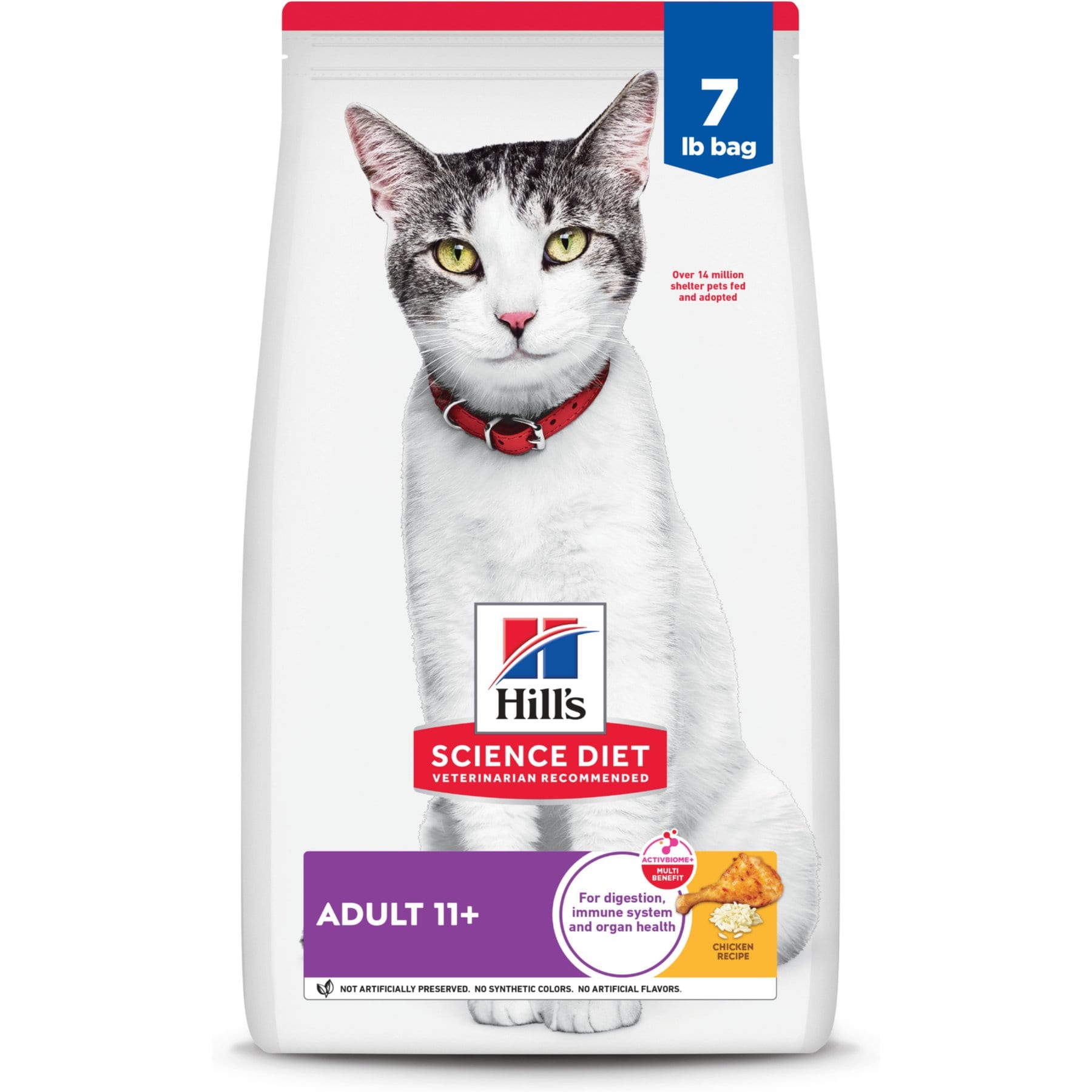
A chicken-first dry food for healthy cats 11 and older that still chew kibble comfortably.
Webvet may earn a commission when you click through to Chewy, at no extra cost to you.
Hill's lists chicken as the first ingredient and states that AAFCO feeding tests substantiate the recipe as complete and balanced for adult maintenance in cats 11 and older. The Hill's product page gives 504 kcal per cup, which is calorie dense, so measured portions matter. It was listed at $34.97 on Chewy when checked in November 2026.
- Suits: healthy cats over 11 at a steady weight that still chew dry food without trouble.
- Skip it if: your cat is overweight, has dental pain, or has a diagnosed illness that calls for a veterinary diet.
Royal Canin Feline Health Nutrition Aging 11+ Ultra Soft Mousse in Sauce Senior Wet Cat Food: best soft food for senior cats with bad teeth
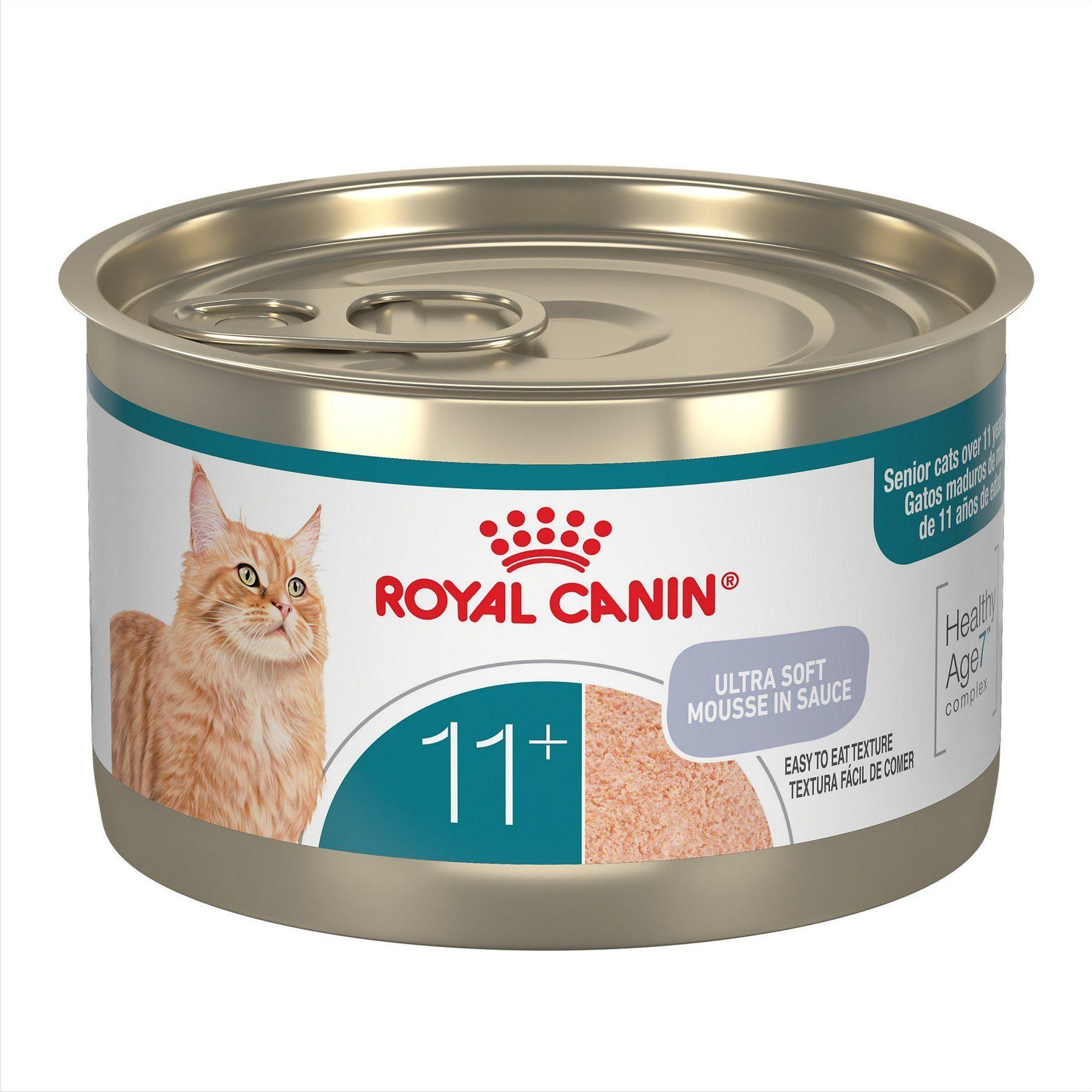
A very soft mousse in sauce for cats over 11 that find chewing hard.
Webvet may earn a commission when you click through to Chewy, at no extra cost to you.
Royal Canin describes this as an easy-to-chew texture for senior cats over 11 and states it is formulated to meet AAFCO cat food nutrient profiles for maintenance. Each 5.1-oz can provides 125 kcal and up to 82 percent moisture. It was listed at $74.16 on Chewy when checked in November 2026.
- Suits: older cats with missing teeth or a sore mouth, and cats that need more water in their diet.
- Skip it if: your cat has not had a dental exam; soft food eases eating but does not treat the painful tooth.
Purina Pro Plan 11+ Classic Chicken & Beef Canned Cat Food: best senior wet food
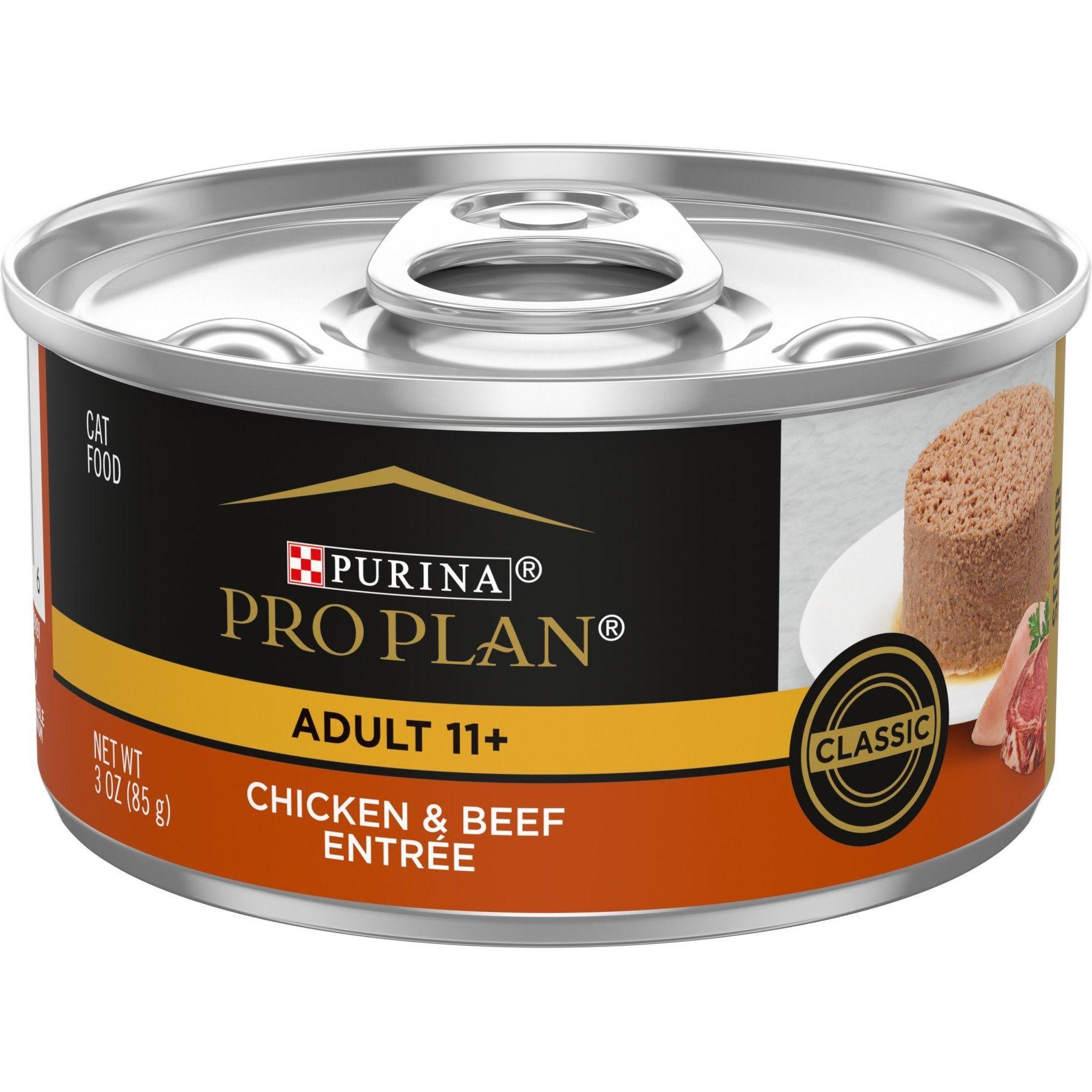
A chicken and beef pate made for cats 11 and older that need extra moisture.
Webvet may earn a commission when you click through to Chewy, at no extra cost to you.
The Chewy listing describes this Purina Pro Plan senior cat food as a high-protein pate made for cats age 11 and up, with real chicken and beef. Small 3-oz cans make it easy to serve fresh portions several times a day. It was listed at $47.04 on Chewy when checked in November 2026.
- Suits: older seniors that drink little water, and cats that do better on smaller, more frequent meals.
- Skip it if: your cat has diagnosed kidney disease and your vet has prescribed a kidney diet.
Purina Pro Plan Complete Essentials 7+ Chicken & Rice Natural Senior Dry Cat Food: best dry food for younger seniors
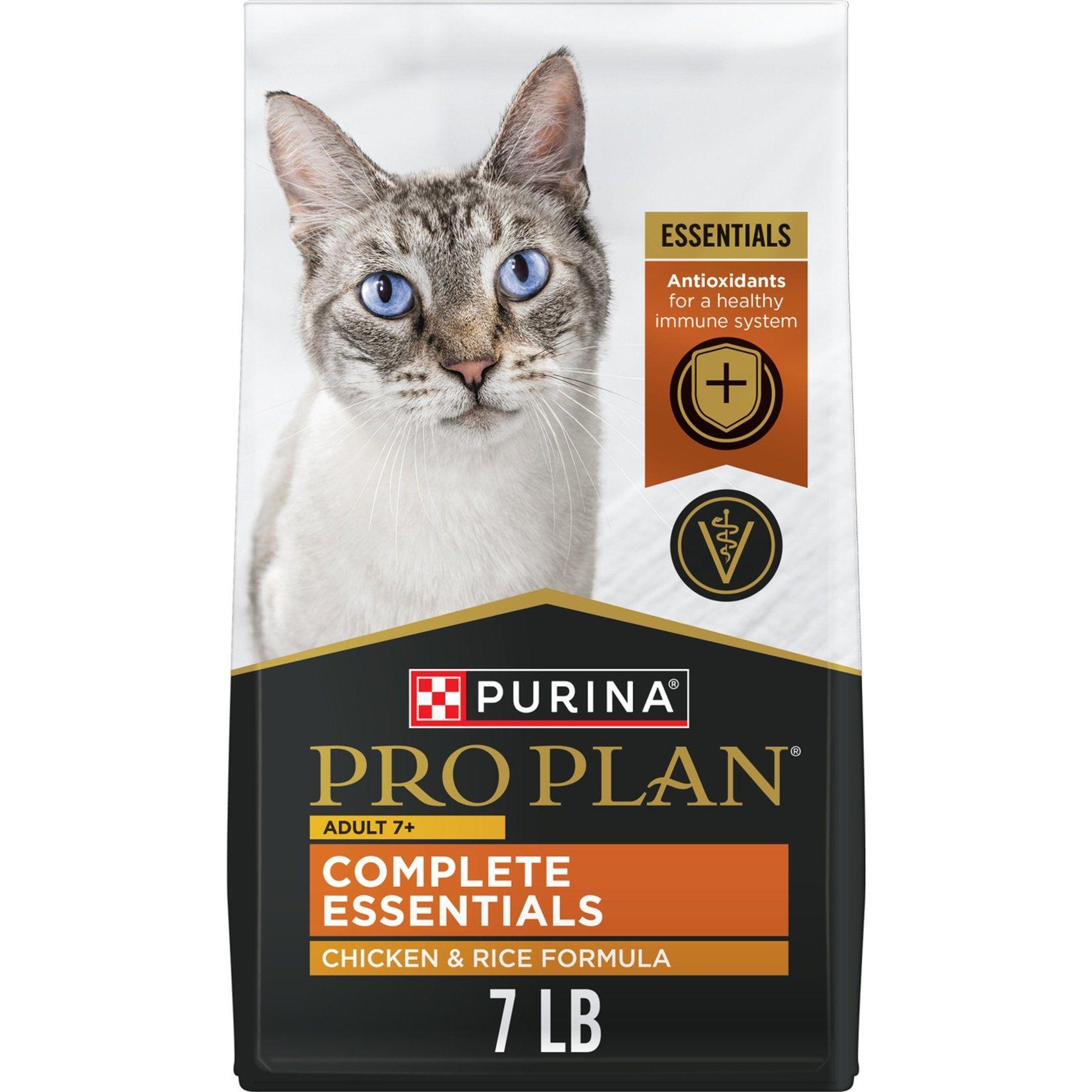
A chicken-first dry food for cats 7 and older at a healthy weight.
Webvet may earn a commission when you click through to Chewy, at no extra cost to you.
The Chewy listing describes this Pro Plan senior cat food as high protein, with real chicken as the first ingredient and added live probiotics. It is labeled for cats 7 and older, the mature stage when many cats need fewer calories rather than more. It was listed at $27.08 on Chewy when checked in November 2026.
- Suits: cats from about 7 to 10 years that keep a healthy body condition on dry food.
- Skip it if: your cat is very old and losing weight, or needs a softer texture.
Iams Proactive Health Healthy Senior Chicken Recipe Dry Cat Food: best budget senior dry food
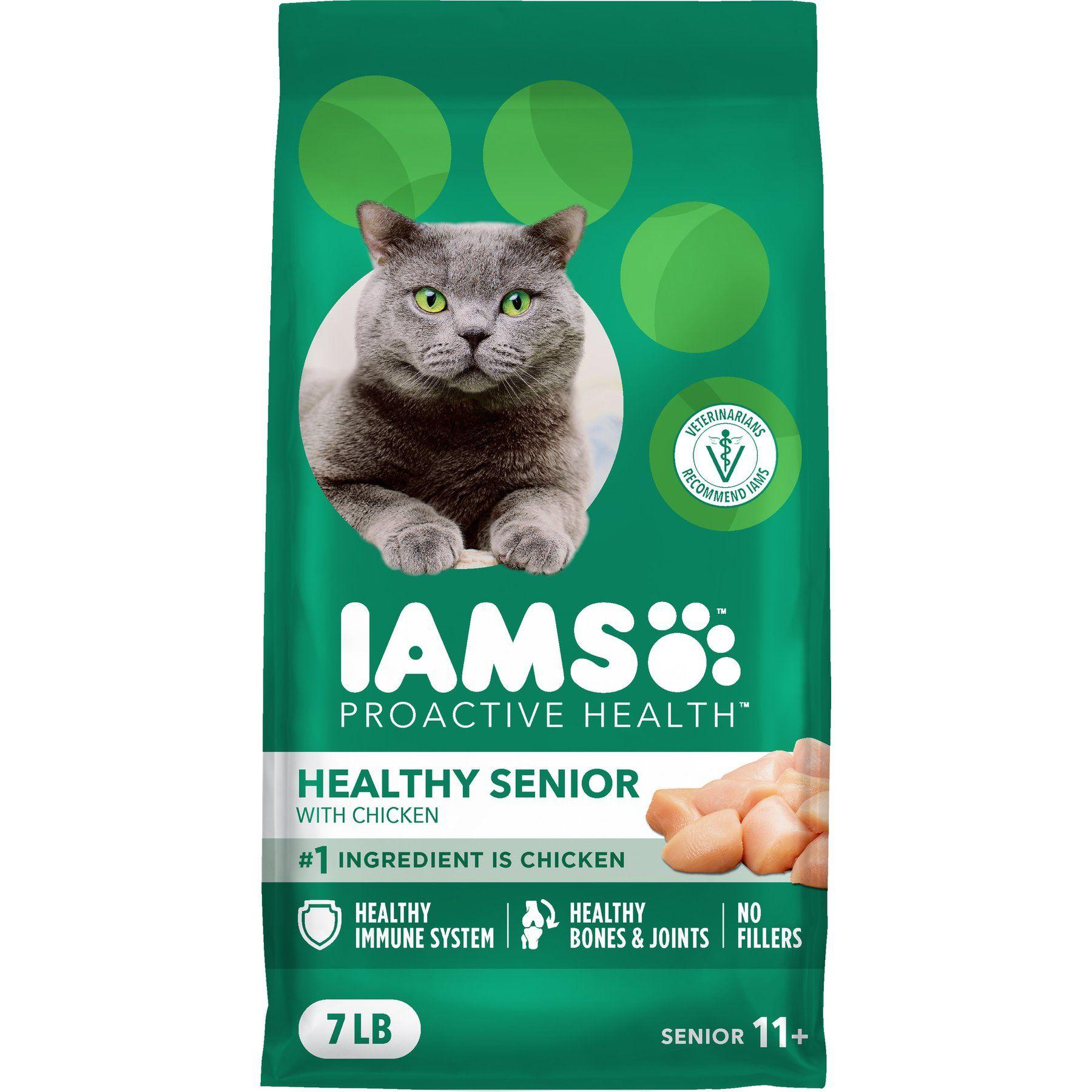
A low-cost chicken recipe dry food labeled complete and balanced for senior cats.
Webvet may earn a commission when you click through to Chewy, at no extra cost to you.
Iams describes this recipe as 100 percent complete and balanced for senior adult cats, made with real chicken and added potassium and calcium. It was listed at $15.27 on Chewy when checked in November 2026, the lowest price among these picks.
- Suits: healthy seniors on a budget, and homes feeding dry food alongside wet meals.
- Skip it if: your cat has dental pain, struggles to stay hydrated, or has a diagnosed illness.
Fancy Feast Chicken Feast Pate Senior 7+ Canned Cat Food: best budget senior wet food
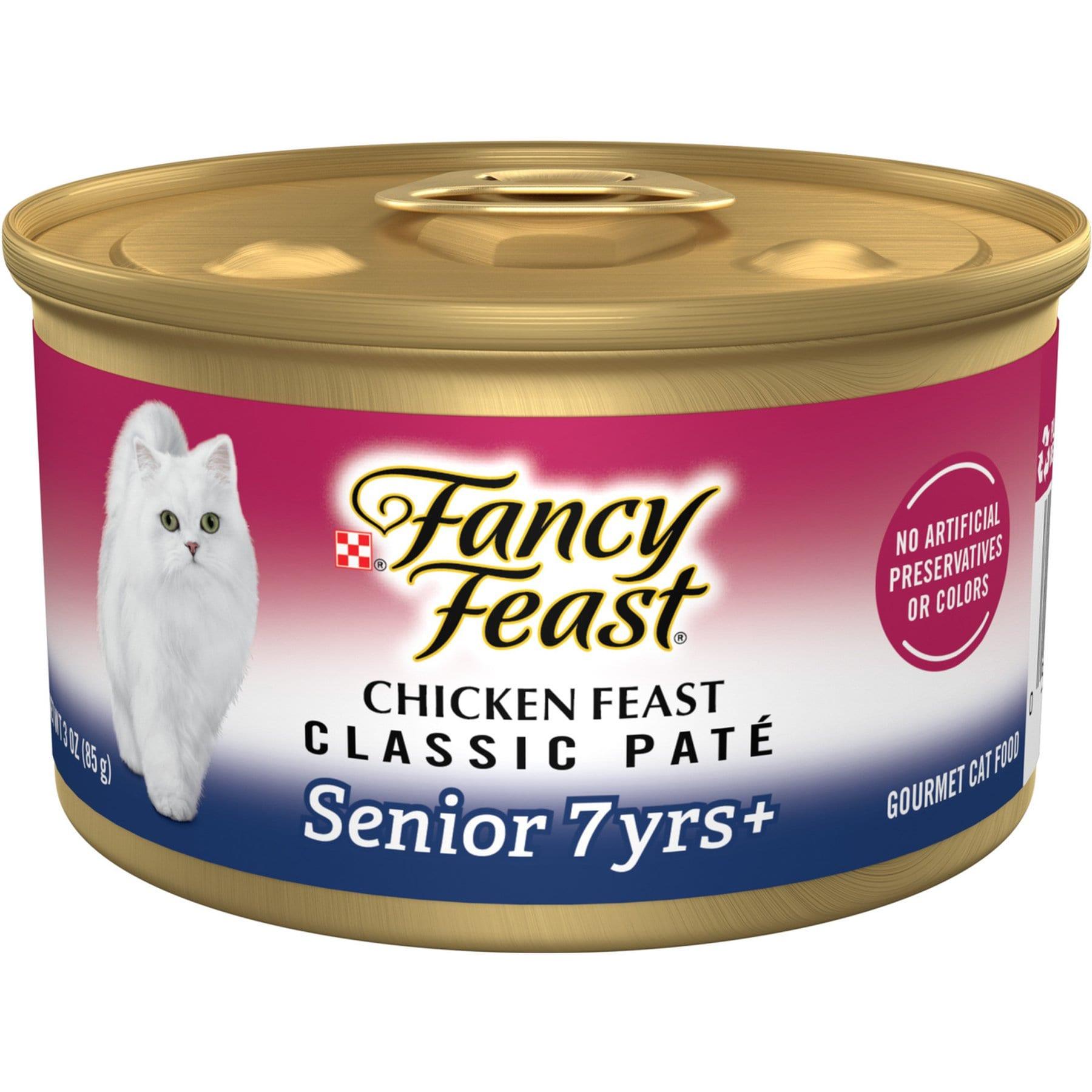
A low-cost chicken pate for cats 7 and older that prefer wet food.
Webvet may earn a commission when you click through to Chewy, at no extra cost to you.
The Chewy listing describes this Purina Fancy Feast senior cat food as a complete and balanced chicken pate developed for cats age seven and up, rich in protein. The smooth pate texture suits many older cats. It was listed at $23.25 on Chewy when checked in November 2026.
- Suits: picky older eaters and owners who want to add wet meals affordably.
- Skip it if: your vet has prescribed a therapeutic diet for a diagnosed condition.
How to choose a senior cat food: calories, protein, moisture, and the label
| Senior cat situation | What to look for | Food type | Texture | When to see the vet |
|---|---|---|---|---|
| Overweight senior, often 7 to 11 years | Body condition score of 6 or 7 out of 9, ribs hard to feel | Lower calorie complete food, measured portions | Wet, or wet plus measured dry | Before starting any weight-loss plan |
| Lean senior losing muscle | Weight or muscle dropping, muscle condition score below normal | Higher protein, more calorie dense food | Wet or soft, small frequent meals | Now, to rule out illness before adding calories |
| Picky or slower eater | Walks away from food, eats less than before | Aromatic wet food, warmed slightly | Pate or mousse | Promptly if the cat stops eating |
| Dental pain or missing teeth | Reluctant to eat, suddenly prefers soft food | Complete wet food | Mousse, pate, or puree | Book a dental exam; soft food does not treat pain |
| Eating more but losing weight | Larger appetite, more thirst, thinner body condition | Do not change food yet | Keep current food | Soon, for blood tests including thyroid |
| Healthy senior at steady weight | Body condition score 5 out of 9, normal muscle | Complete adult maintenance or senior food | Any the cat eats well, with some wet | Routine senior checkups |
| Diagnosed kidney disease, diabetes, or hyperthyroidism | Diagnosis and lab results from your vet | Veterinary diet chosen by your vet | As prescribed | Follow your vet's plan |
To choose a senior cat food, start with your cat's body condition and muscle, then compare calories, protein, moisture, and the label. The AAFP Feline Senior Care Guidelines stress that body composition can change while weight stays the same, so your vet scores body condition and muscle condition together. The WSAVA Global Nutrition Committee describes body condition as a measure of fat stores, and its muscle condition score as a check of muscle that disease or aging can affect.
On the 9-point body condition score, the 2021 Life Stage Guidelines treat 6 or 7 out of 9 as overweight and 8 or more as obese. A cat weight chart gives a rough range, but a body condition score from your vet tells you more for an individual cat.

Then look at calories, because needs rise or fall with age:
- Ages 7 to 11: the AAFP guidelines say these cats usually need fewer calories.
- Age 12 and older: the same guidelines say daily energy needs increase.
- The turning point: VCA places it around 11 years; both sources agree the oldest cats often need more food energy, not less.
Tufts Petfoodology summarized a study of 31 senior cat diets and 59 adult cat diets. It found no differences in protein, fat, or minerals between them; the only difference was higher fiber in the senior diets. Calories were higher in foods labeled 11+ than in those labeled 7+, which fits the shift in energy needs.
Protein deserves special attention. The Life Stage Guidelines say healthy mature and senior cats should not be protein restricted. A high protein senior cat food can be wet or dry, as long as the label says complete and balanced.
A short label checklist:
- Nutritional adequacy statement: the Merck Veterinary Manual lists the AAFCO categories as growth, maintenance, gestation/lactation, and all life stages. For an older cat, look for adult maintenance.
- Calorie content: listed per cup or can; compare it with your cat's needs, not the bag's age label.
- Guaranteed analysis: compare wet and dry foods on a dry-matter or calorie basis, as Merck advises, because water skews the raw percentages.
- The maker: WSAVA suggests asking whether the company employs a qualified nutritionist, who formulates the diet, and what quality control it runs.
Healthy aging foods that fit these checks include the Hill's Science Diet Adult 7+ Senior Vitality Chicken Recipe Dry Cat Food, 6-lb bag, listed at $39.99 on Chewy when checked in November 2026, for cats 7 and older at a healthy weight. The Iams Proactive Health Healthy Senior recipe is a lower-cost dry option labeled complete and balanced for senior adult cats.
What is the number one healthiest cat food?
No single cat food is the healthiest for every cat. Tufts Petfoodology calls senior labels marketing designations not based on data or regulations, and advises choosing by the individual cat's needs. The healthiest choice is a complete and balanced food that keeps your cat's body condition and muscle in range.
Is Fancy Feast considered a high quality cat food?
Fancy Feast's senior pate is a complete and balanced option, which is the baseline any main diet should meet; "high quality" itself is not a regulated label term. The Fancy Feast Chicken Feast Pate Senior 7+ Canned Cat Food, 3-oz can, case of 24, listed at $23.25 on Chewy when checked in November 2026, is labeled for cats seven and older and built on chicken.
The WSAVA Guidelines on Selecting Pet Foods treat words like "premium" and "holistic" as unregulated terms of little practical value. Judge any brand, however highly rated, by its adequacy statement, its calorie content, and how your own cat does on it.
A vet recommended senior cat food is simply the food your own vet recommends for your cat after an exam, whether that cat is an indoor senior on a lower calorie plan or a thin 15-year-old that needs more energy.
What is the best food for senior cats?
The best food for a senior cat is a complete and balanced diet that keeps its body condition and muscle in a healthy range and that it eats reliably. For most healthy older cats that means plenty of animal protein, enough moisture, and a calorie density matched to whether the cat is gaining or losing weight.
Is there a dry cat food for senior cats?
Yes. Several dry foods are labeled for senior cats, including the Purina Pro Plan Complete Essentials 7+ Chicken & Rice Natural Senior Dry Cat Food, 7-lb bag for younger seniors and the Iams Proactive Health Healthy Senior Chicken Recipe Dry Cat Food, 7-lb bag for budget feeding. Pair dry food with wet meals and fresh water, and see the best dry cat food roundup for more.
Any other senior cat food brand can be judged by the same checks: an AAFCO adult maintenance statement, a listed calorie content, an animal protein first, and a texture your cat can manage. For an indoor senior that moves less, check the calorie line closely, because Tufts notes calories vary widely between senior recipes.
Feeding senior cats well also includes the extras:
- Senior cat treats: VCA notes that low-calorie treats, typically under 4 calories per piece, suit cats of any age, so keep treats a small part of the day.
- A senior cat eating a lot: if it is also losing weight, it needs a vet visit, not a bigger bowl.
- Puzzle feeders: ask your vet whether one suits a senior cat with stiff joints or sore teeth, since some find them frustrating.
Wet vs dry food for senior cats, and soft food for bad teeth
For most older cats, wet food has the edge because it adds water. The Cornell Feline Health Center puts canned food at 75 percent moisture or more and dry food at 6 to 10 percent. VCA notes that aging dulls a cat's thirst, and the AAFP guidelines say canned diets help hydration.
Dry food still has a place. It is convenient, and Cornell notes that some cats simply prefer dry food while others like a combination. A mix of wet meals with a measured amount of dry works well for many households, and the best wet cat food for senior cats is the complete one your cat eats reliably.
Good wet senior cat food choices for different needs:
- Extra moisture: the Weruva Senior Grain-Free Chicken Formula in Hydrating Puree Wet Cat Food, 5.5-oz can, case of 8, listed at $21.52 on Chewy when checked in November 2026, is a chicken breast puree formulated for aging cats.
- Softest texture: the Royal Canin Feline Health Nutrition Aging 11+ Ultra Soft Mousse in Sauce Senior Wet Cat Food, 5.1-oz can, case of 24 is a mousse that needs almost no chewing.
- Higher protein canned food: the Purina Pro Plan 11+ Classic Chicken & Beef Canned Cat Food, 3oz, 24 ct is a pate for cats 11 and older.
If your senior cat only eats wet food, that is fine as long as the food is complete and balanced and the calories fit. A thin cat that needs more energy may do better on a higher calorie wet food, once your vet has checked why it is thin.
Any other canned senior cat food can be compared with the same label checks. More choices are in the best wet cat food roundup.
What cat wet food to avoid?
Avoid feeding a wet food as your cat's main diet if its label says it is for "intermittent," "supplemental," or "complementary" feeding. WSAVA says those products should make up only a small part of the diet, 10 percent or less. Also be cautious with any brand that will not answer basic questions about its nutritionist and quality control.
Teeth often decide the texture. Cornell reports that 50 to 90 percent of cats older than four have some form of dental disease, that dental disease can make a cat stop eating, and that tooth resorption can be painful enough that cats become reluctant or unwilling to eat. Some cats with gingivitis start preferring soft food.

Soft food for a senior cat with bad teeth means a mousse, pate, or puree. It should still be complete and balanced, and a cat with no teeth usually does best on a smooth wet food.
Dry food is a compromise for a senior cat with no teeth or sore gums. If your cat refuses anything but kibble, raise it at the dental exam.
Soft food makes eating easier, but it does not treat a painful mouth. The 2021 Life Stage Guidelines link painful dental disease with an inability to eat and a lower quality of life, so a cat that becomes reluctant to eat or suddenly prefers soft food needs a dental exam.
Weight loss or appetite changes in an older cat: when it is a medical problem
The AAFP Feline Senior Care Guidelines separate two kinds of loss. Sarcopenia is muscle loss from aging itself, while cachexia is weight loss caused by underlying disease. Both look similar at home, which is why a vet exam comes first. The same guidelines note that body condition scores below 5 or at 9 out of 9 are linked to shorter survival.
Why is my senior cat losing weight but still eating? A bigger appetite with weight loss is a classic sign of disease. Cornell lists weight loss, increased appetite, and increased thirst as the most common signs of hyperthyroidism, which mostly affects middle-aged and older cats. Diabetes can look similar.
Other changes that need a vet visit rather than a new food:
- Weight loss with a normal or larger appetite.
- Eating less, walking away from food, or eating only treats.
- Drinking more than usual.
- Repeated vomiting; see old cat throwing up for the warning signs.
- Reluctance to eat dry food, or a sudden preference for soft food.
The AAFP guidelines add that weight loss may be the only sign of digestive disease in cats, and VCA notes that a reduced or absent appetite can signal an underlying medical problem. If your older cat has stopped eating, the guide to an old cat not eating explains what to do next.

Hepatic lipidosis is the reason a cat that stops eating is urgent. The Cornell Feline Health Center says it is almost always preceded or accompanied by loss of appetite, and the University of Illinois College of Veterinary Medicine notes that overweight cats are at higher risk and advises prompt veterinary care when a cat stops eating.
Once your vet has ruled out illness, here is how to get a senior cat to gain weight safely:
- More energy per bite: the AAFP guidelines describe calorie-dense diets with highly digestible proteins for cats over 10. Ask your vet whether a higher calorie food suits yours.
- Smaller, more frequent meals: several small portions a day are easier for a frail cat.
- Warmth and smell: the AAFP notes that warmed or aromatic foods can encourage eating, since smell declines with age.
- Track it: weigh your cat regularly and report changes to your vet.
Is senior cat food high in calories? Not always. Senior recipes range from lower calorie mature formulas to calorie-dense 11+ foods, so check the calorie content per can or cup. For an underweight senior cat, the best food for weight gain is a complete wet or dry food with a higher calorie content that your vet has agreed to. High calorie treats can tempt a thin cat, but complete food should still supply most of its calories.
Kidney disease, diabetes, and thyroid disease: when a vet diet replaces senior food
Once your vet diagnoses a medical condition, a veterinary diet usually replaces over-the-counter senior food. These therapeutic diets include Hill's Prescription Diet, Royal Canin Veterinary Diet, and Purina Pro Plan Veterinary Diets. They need a veterinarian's authorization, which Chewy asks for at checkout, and WSAVA advises feeding them under veterinary supervision. Three conditions come up often in older cats:
- Chronic kidney disease: the AAFP Senior Care Guidelines say kidney disease is common in older cats and often begins in mature adults. VCA explains that once kidney disease is diagnosed, a kidney support diet with modified phosphorus may slow its progression. Tufts found senior diets were no lower in phosphorus than adult foods. The low phosphorus cat food guide covers kidney diets in detail; never start one without a diagnosis.
- Hyperthyroidism: the AAFP reports that hyperthyroidism affects 10 percent of cats over 10. Cornell lists an iodine-restricted diet as one treatment option, with research ongoing. Your vet weighs it against other treatments; the hyperthyroidism in cats guide explains the choices.
- Diabetes: Cornell says a low-carbohydrate diet has been shown to improve blood sugar regulation in diabetic cats. Any diet change for a cat on insulin must be made with your vet, because the insulin dose may need to change. Cornell warns that insulin can drop blood sugar to dangerously low levels, and lists weakness, lethargy, vomiting, lack of coordination, seizures, and coma as signs of low blood sugar.
Many diabetic or hyperthyroid cats drink and urinate more. A cat straining in the litter box and passing little or no urine is different: Cornell calls a urethral obstruction an absolute emergency needing immediate veterinary treatment.
What about an older cat with a sensitive stomach? Ongoing vomiting, diarrhea, or weight loss in an older cat points to digestive problems a vet should check first. The guide to senior cat digestive problems and how to help covers common causes. A food for a sensitive stomach comes after that exam.
How to switch a senior cat to a new food
Older cats often resist new food, so switching an older cat gently protects both appetite and digestion. The 2021 Life Stage Guidelines recommend making diet changes at home and transitioning gradually over 7 to 10 days.
A simple 7 to 10 day schedule:
- Days 1 to 3: mix about one quarter new food with three quarters of the current food.
- Days 4 to 6: offer half new and half current food.
- Days 7 to 9: offer about three quarters new food.
- Day 10 onward: feed the new food alone if your cat eats well and its stool stays normal.
Go slower if your cat hesitates, and never let it skip meals to force the change. A cat that refuses to eat needs a vet promptly.

Portion the new food into meals instead of leaving it out all day. VCA suggests dividing the daily amount into two, three, or four small meals so you can see whether your cat eats, and warns that label feeding charts can overestimate how much to feed. Ask your vet for a target amount and weigh your cat every few weeks.
If you are moving from a 7+ formula to an 11+ dry food such as the Hill's Science Diet Senior Adult 11+ Chicken Recipe Dry Cat Food, 7-lb bag, remember that it lists 504 kcal per cup. Measure portions rather than matching the old scoop size, and recheck weight after the switch.
Whatever the new food, Cornell describes cats as obligate carnivores that rely on nutrients found only in animal products, so keep an animal protein at the center of the diet. Comfort matters too: many older cats eat best when food is fresh, at room temperature, and easy to reach. If stiff joints make your cat hesitate to reach its bowl, the guide to cat mobility in senior cats explains what is normal. For an overweight senior, the weight management cat food guide covers slow, vet-guided weight loss.
Senior cat food questions
Frequently Asked Questions
At what age should a cat switch to senior food?
There is no fixed birthday. Guidelines call cats senior after 10 years, and some from about 8, but the switch should follow your cat's body condition, muscle, and health, not the calendar. A healthy cat that keeps a good body condition on its adult maintenance food can stay on it; a checkup tells you when a change helps.
Can a senior cat eat kitten food?
A healthy senior can eat a little kitten food without harm, but it is not a good long-term diet without your vet's advice. VCA notes kitten food packs more calories into less food, plus more protein, calcium, and phosphorus, built for growth. That calorie load can add unwanted weight, and the extra phosphorus is a concern for cats with kidney disease.
What should a senior cat with bad teeth eat?
A complete and balanced soft food, such as a mousse, pate, or puree, is usually easiest for a cat with dental pain. Soft food helps the cat eat, but it does not fix the problem, so book a dental exam. A veterinarian can manage the pain, and a badly affected tooth may need to come out.
How can I help my senior cat gain weight?
Start with a veterinarian, because weight loss in an older cat is often caused by illness such as hyperthyroidism, diabetes, kidney disease, or dental pain. Once those are ruled out or treated, your vet may suggest a more calorie-dense food, smaller and more frequent meals, and warming wet food to boost its smell.
Can younger cats eat senior cat food?
Usually yes, if the label says it is complete and balanced for adult maintenance. Senior food is not a separate AAFCO life stage, so a healthy adult cat can eat it. Kittens are the exception: they need a food made for growth, one of the AAFCO categories the Merck Veterinary Manual lists alongside adult maintenance.
Veterinarian · BVMS MRCVS
Dr. Pippa Elliott, BVMS, MRCVS, is a veterinarian with nearly 30 years of experience in companion animal practice. Dr. Elliott earned her Bachelor of Veterinary Medicine and Surgery from the University of Glasgow. She was also designated a Member of the Royal College of Veterinary Surgeons. Married with 2 grown-up kids, Dr. Elliott has a naughty Puggle named Poggle, 3 cats and a bearded dragon.


