Best Dry Cat Food: Vet-Reviewed Picks and How to Choose
The best dry cat food is a complete and balanced kibble for your cat's life stage, fed in measured meals, with enough water in the day. How a vet reads the bag, which kibble suits indoor, picky, and multi-cat homes, and our picks across price tiers.

BVMS MRCVS

This article contains affiliate links. Webvet may earn a commission when you buy through them, at no extra cost to you.
Best dry cat food: what makes a good kibble and how vets judge the bag
The best dry cat food is a kibble labeled complete and balanced for your cat's life stage, made by a company that can answer the nutrition and quality questions vets ask, and fed in measured portions with fresh water always available. Many vets also suggest adding some wet food for moisture.
No single bag is the best dry cat food for every cat. A low-activity indoor cat, a picky eater, and a multi-cat home on a budget each need something different, so the picks below are matched to the cat in front of you, judged on the label and the maker rather than on taste.
| Product | Best for | Life stage on label | Price |
|---|---|---|---|
| Purina Pro Plan Savor Adult Salmon & Rice Dry Cat Food, 7-lb bag | Everyday adult kibble | Adult | Listed at $27.08 on Chewy when checked in November 2026 |
| Hill's Science Diet Adult Indoor Chicken Recipe Dry Cat Food, 7-lb bag | Indoor cats | Adult maintenance | Listed at $34.99 on Chewy when checked in November 2026 |
| Royal Canin Fussy Adult Dry Cat Food, 7-lb bag | Picky eaters | Adult maintenance | Listed at $36.99 on Chewy when checked in November 2026 |
| Purina ONE Tender Selects Blend with Real Chicken Dry Cat Food, 7-lb | Tight budgets | Adult | Listed at $17.46 on Chewy when checked in November 2026 |
| ACANA Indoor Cat Highest Protein Dry Cat Food, 4-lb bag | Meat-first premium kibble | Adult maintenance | Listed at $29.99 on Chewy when checked in November 2026 |
| Iams ProActive Health Healthy Original with Chicken Cat Food, 16-lb | Multi-cat homes | Adult | Listed at $33.98 on Chewy when checked in November 2026 |
- 1Start with the complete-and-balanced statement on the bag and make sure it names your cat's life stage.
- 2Compare calories per cup, not bag size, because two kibbles can differ by 100 calories or more in the same scoop.
- 3Ask whether the maker employs a qualified nutritionist and runs quality control, the questions WSAVA tells vets to ask.
- 4Keep fresh water out at all times and consider adding some wet food, especially for a cat that drinks little.
- 5See your vet first if your cat is losing weight, drinking more, or eating less before you change foods.
AAFCO calls the nutritional adequacy statement perhaps the most important part of a pet food label. It tells you whether the food is a complete diet, which life stage it covers, and whether that claim rests on a feeding trial or on formulation to the AAFCO nutrient profiles.
The WSAVA Global Nutrition Committee puts the core rule plainly: feed a complete and balanced diet for the species and life stage from a reputable company, and treat your veterinarian as the best person to ask about the best diet for your cat.
Kibble suits cats well when it is chosen this way. The Cornell Feline Health Center notes that cats are obligate carnivores that rely on nutrients found only in animal products, that dry food is relatively inexpensive, and that it holds only six to 10 percent water.

That low moisture is the main trade-off with dry food. Cornell also says cats should have access to clean, fresh water at all times, which matters more for a kibble-fed cat than for one eating mostly canned food.
How vets judge the bag comes down to a short list:
- A nutritional adequacy statement that says complete and balanced for adult maintenance, growth, or all life stages
- A calorie content line in kilocalories per cup, so portions can be measured
- A maker that can name its nutritionist, explain its quality control, and share a typical nutrient analysis
- A food your cat will actually eat at a healthy body weight
If the manufacturer cannot or will not provide that information, WSAVA's guidelines on selecting pet foods say vets and owners should be cautious about feeding that brand.
Our picks: the best dry cat food
No single ranking fits every cat, so each pick below matches one common situation. All six are adult cat foods; check the nutritional adequacy statement on the bag you buy, since recipes change.
Each comes from a large brand (Purina, Hill's, Royal Canin, Iams, or ACANA). Owner reviews and star ratings tell you what other people's cats liked; the label tells you what the food is.
Purina Pro Plan Savor Adult Salmon & Rice Dry Cat Food: best overall dry cat food
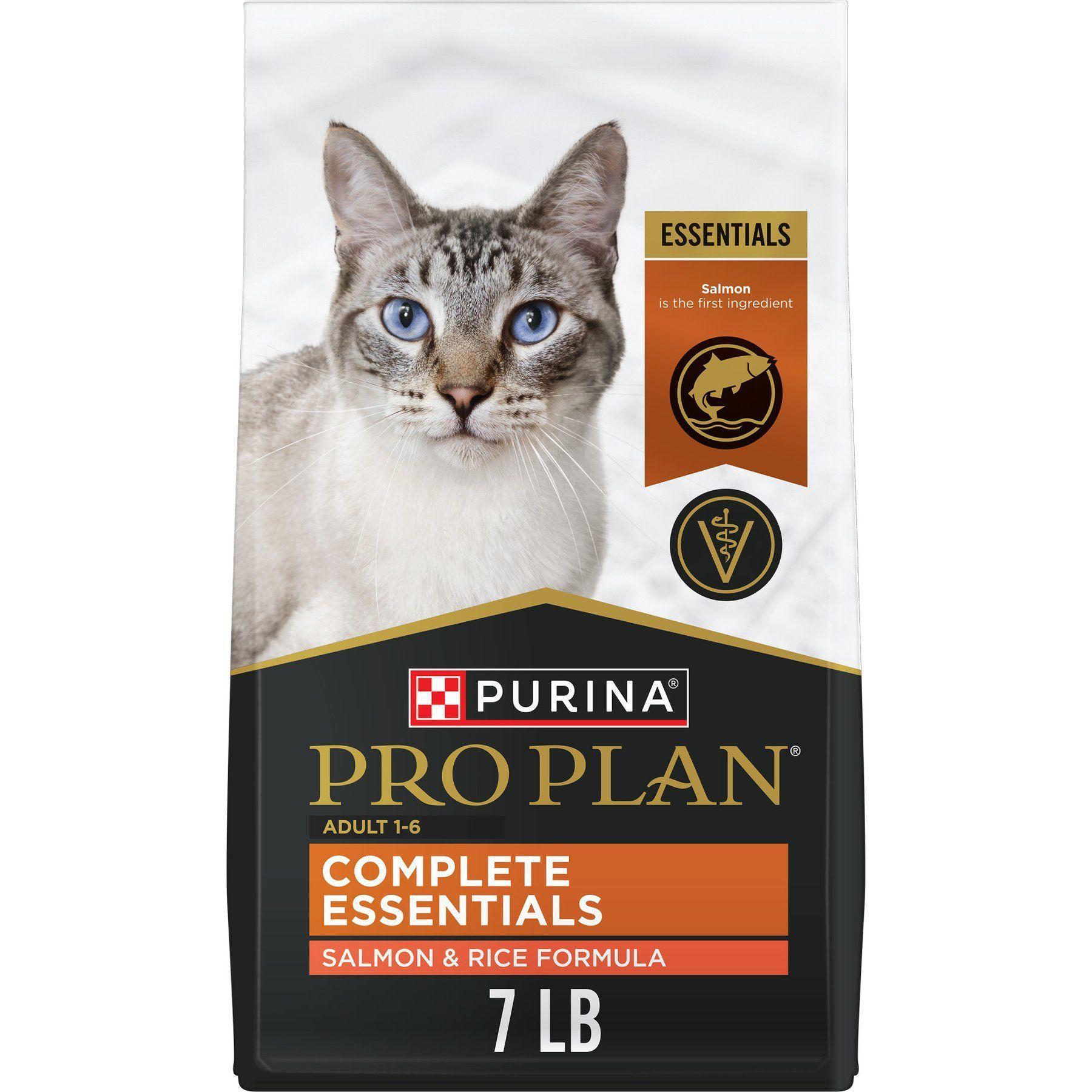
A salmon-first adult kibble for healthy adult cats that eat dry food every day.
Webvet may earn a commission when you click through to Chewy, at no extra cost to you.
This Purina dry cat food is the everyday pick for a healthy adult cat. The Chewy listing describes the recipe as the Pro Plan Complete Essentials Salmon and Rice formula, with real salmon as the first ingredient, live probiotics, antioxidants, taurine, vitamin A, and omega fatty acids.
It suits most adult cats with no special diet needs whose owners want a widely available salmon recipe. It is listed at $27.08 on Chewy when checked in November 2026 for a 7-lb bag, which sits in the middle price tier.
- Who should skip it: kittens (it is an adult food), cats that need a fish-free food, and any cat on a diet your vet prescribed
- Calories: the Calorie Content line on the bag gives the kilocalories per cup to measure against
Hill's Science Diet Adult Indoor Chicken Recipe Dry Cat Food: best dry food for indoor cats
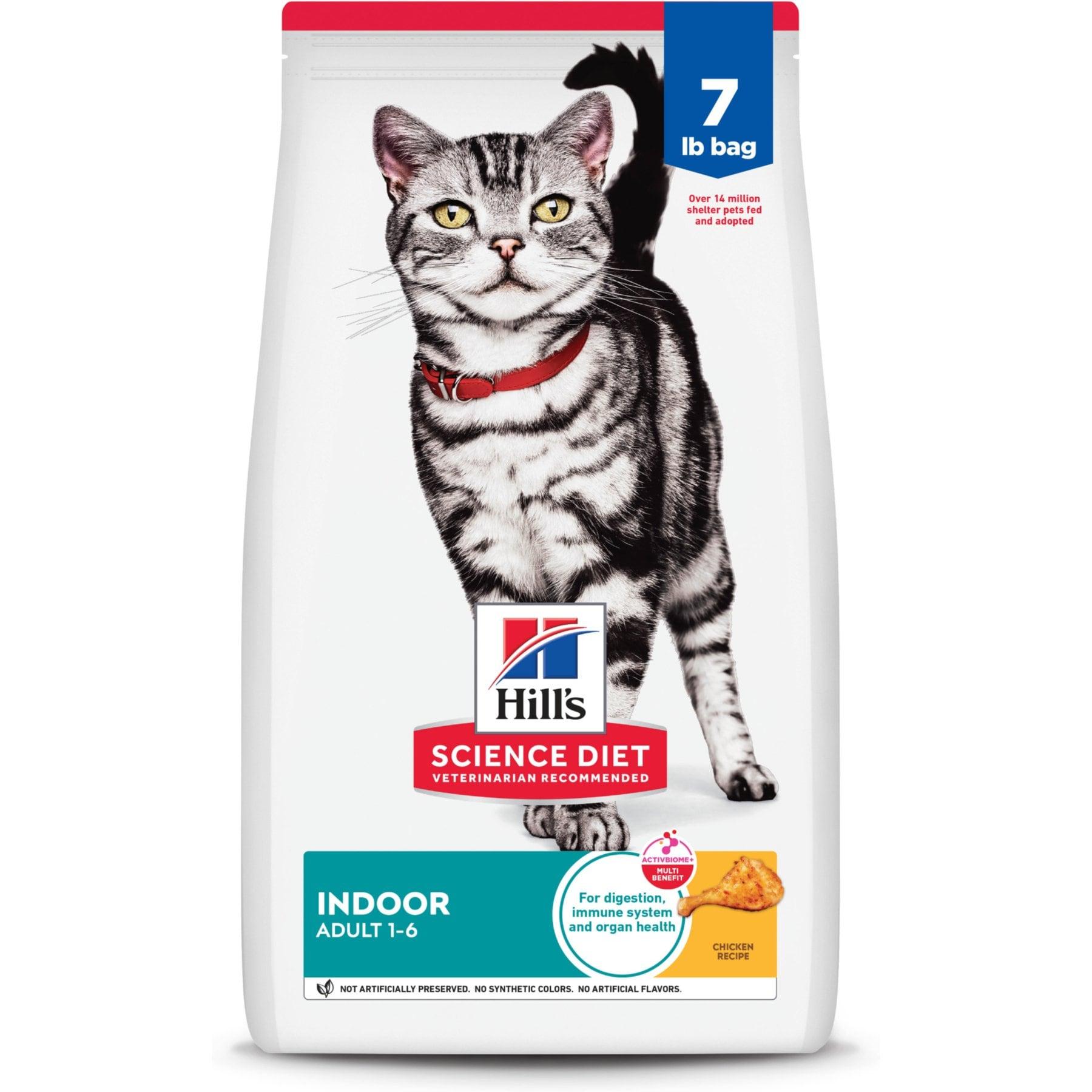
A chicken-first adult indoor kibble for less active house cats that need measured portions.
Webvet may earn a commission when you click through to Chewy, at no extra cost to you.
This Hill's recipe is the pick for a less active house cat. Hill's lists chicken, whole grain wheat, corn protein meal, powdered cellulose, and chicken fat as the first five ingredients, and states that feeding tests using AAFCO procedures substantiate complete and balanced nutrition for maintenance of adult cats.
Hill's gives the calorie content as 327 kcal per cup, one of the lower figures among these picks, which makes portion control easier for a cat that naps most of the day. It is listed at $34.99 on Chewy when checked in November 2026 for a 7-lb bag.
- Suits: adult indoor cats at a healthy weight, and cats in homes where portions are measured
- Skip it if: your cat is a kitten, needs a grain-free or corn-free recipe for a reason your vet has confirmed, or is on a prescription diet
Royal Canin Fussy Adult Dry Cat Food: best dry food for picky eaters
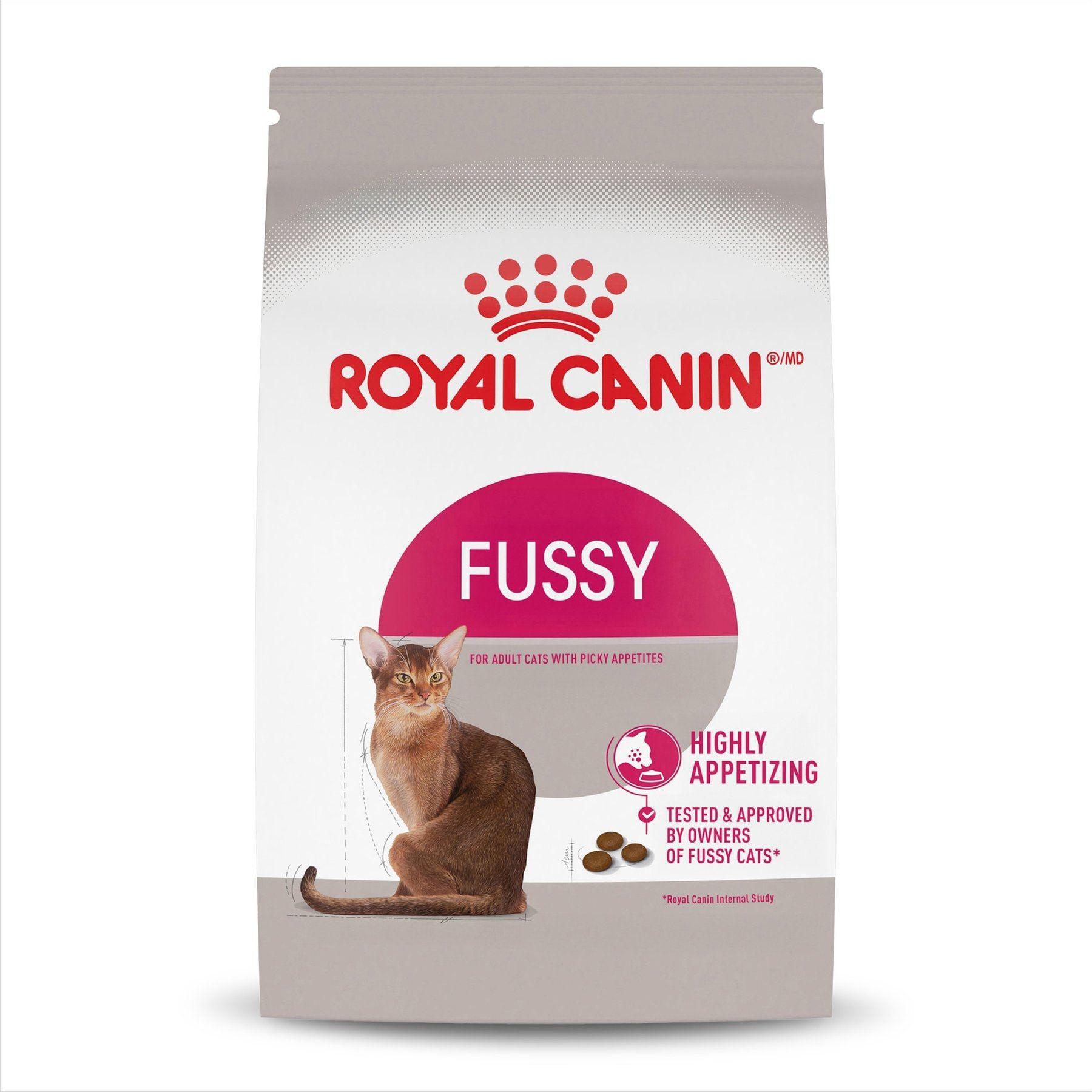
A poultry-based adult kibble made for selective cats that leave meals unfinished.
Webvet may earn a commission when you click through to Chewy, at no extra cost to you.
This Royal Canin dry cat food is built for the cat that sniffs the bowl and walks away. Royal Canin lists chicken by-product meal, corn flour, chicken fat, and wheat gluten as the first ingredients and says the recipe is formulated to meet the AAFCO Cat Food Nutrient Profiles for maintenance.
The guaranteed analysis shows crude protein of 38.0% minimum, crude fat of 15.5% minimum, and moisture of 7.5% maximum, at 388 kcal per cup. That calorie density means a selective cat that eats small amounts still gets its energy, but it also means portions need measuring.
- Suits: healthy adult cats that are choosy about food
- Skip it if: your cat has suddenly lost interest in food (that is a vet visit, not a food switch), or needs a corn-free diet
- Price: listed at $36.99 on Chewy when checked in November 2026 for a 7-lb bag
Purina ONE Tender Selects Blend with Real Chicken Dry Cat Food: best budget dry food
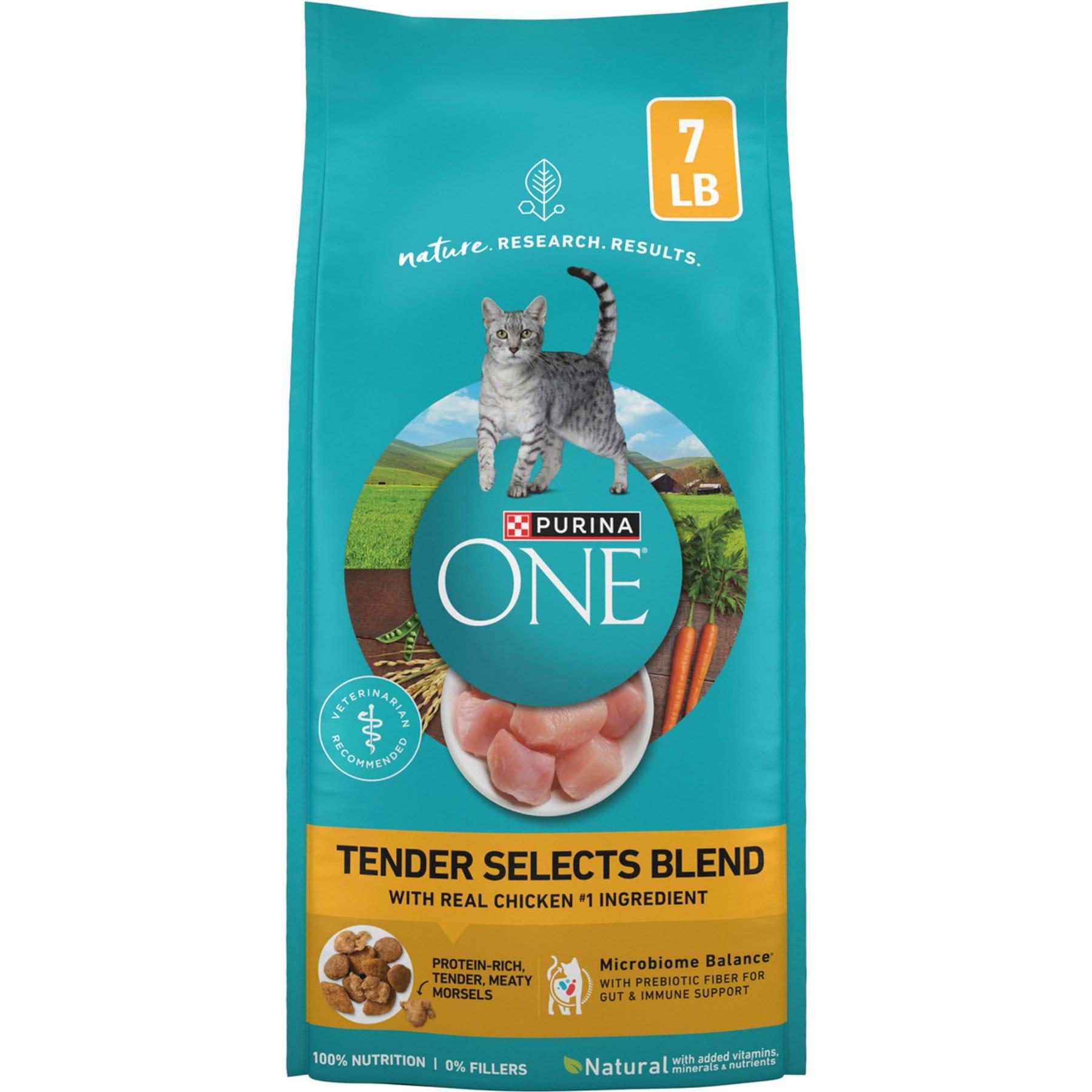
A lower-cost adult kibble that mixes crunchy pieces with softer meaty morsels.
Webvet may earn a commission when you click through to Chewy, at no extra cost to you.
This is the budget pick, listed at $17.46 on Chewy when checked in November 2026 for a 7-lb bag, the lowest price among these picks. The Chewy listing describes real chicken as the first ingredient and a mix of crunchy bites and softer meaty morsels.
That texture mix makes it a reasonable option for owners asking about a softer dry food. Purina ONE also sells other lines, such as Purina ONE +Plus and Indoor Advantage, and the same label checks apply to each.
- Suits: adult cats in budget-conscious homes, and cats that like a blend of textures
- Skip it if: your cat is a kitten or needs a chicken-free recipe
- Calories: read the kilocalories per cup on the bag before setting portions
ACANA Indoor Cat Highest Protein Dry Cat Food: best premium meat-first kibble
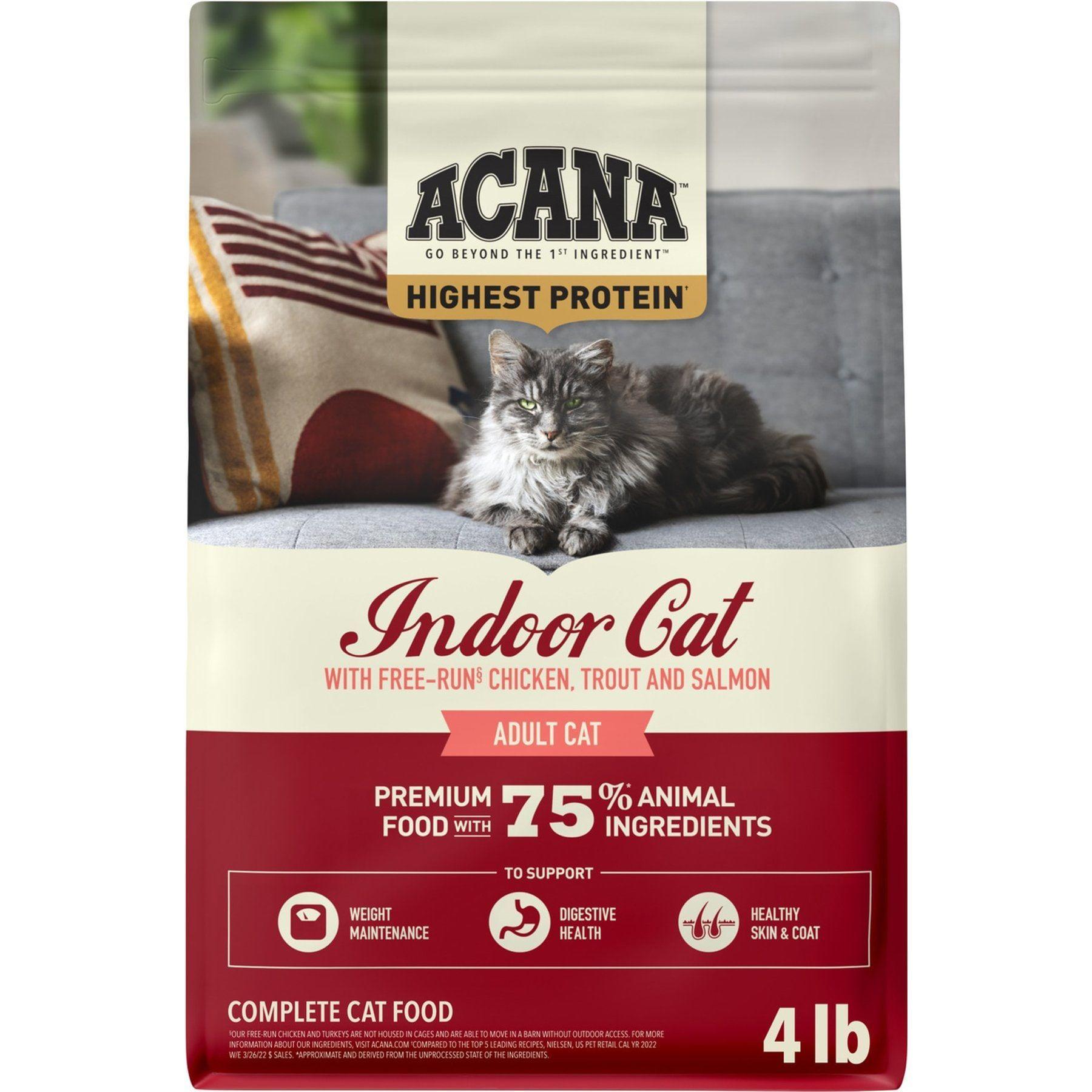
A grain-free, meat-first adult kibble for owners who want animal ingredients to lead the label.
Webvet may earn a commission when you click through to Chewy, at no extra cost to you.
This ACANA dry cat food is the premium pick for owners who want animal ingredients at the top of the list. ACANA lists chicken, turkey, salmon, chicken meal, and salmon meal first, about 75% animal ingredients, no grains, and a formulation to the AAFCO profiles for adult maintenance.
The guaranteed analysis shows crude protein of 38% minimum, fat of 15% minimum, and moisture of 10% maximum. The maker's page gives two calorie figures, 428 and 497 kcal per cup in different sections, so check the bag you buy. Read more on higher-protein options in our guide to high protein cat food.
- Suits: healthy adult indoor cats whose owners prefer a meat-first recipe
- Skip it if: your cat needs a fish-free food (it contains salmon), or the higher price does not fit
- Price: listed at $29.99 on Chewy when checked in November 2026 for a 4-lb bag, the highest cost per pound here
ACANA sells other recipes, such as Meadowland, and each has its own label to read.
Iams ProActive Health Healthy Original with Chicken Cat Food: best value for multi-cat homes
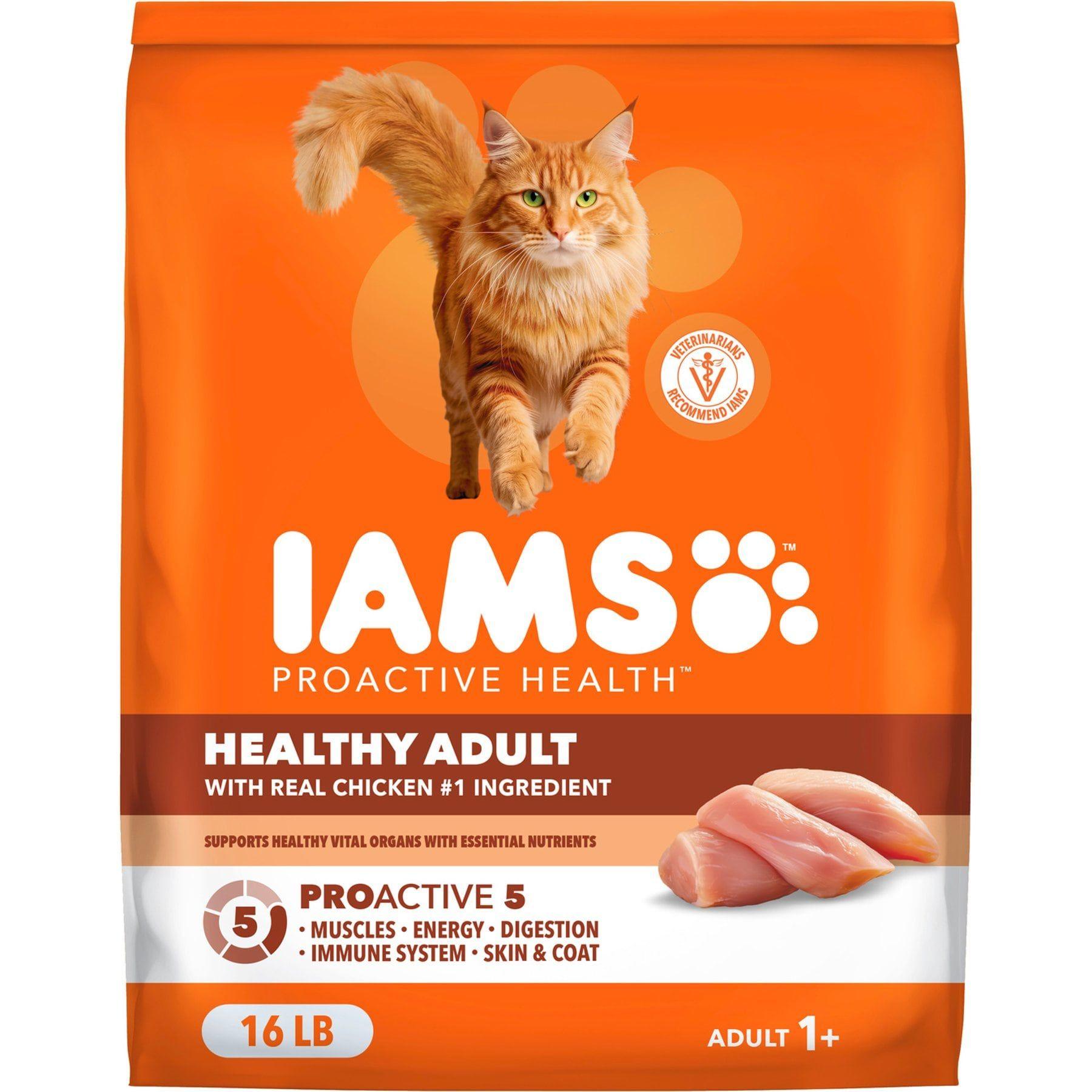
A large-bag adult chicken kibble that keeps cost per pound down in homes with several cats.
Webvet may earn a commission when you click through to Chewy, at no extra cost to you.
This Iams dry cat food is the large-bag value pick. It is listed at $33.98 on Chewy when checked in November 2026 for a 16-lb bag, the lowest cost per pound among these picks, which matters when several cats share the bowl.
The Chewy listing says real chicken comes first and that the recipe focuses on digestion, skin and coat, vital organs, the immune system, and energy.
- Suits: multi-cat homes feeding healthy adult cats on one food
- Skip it if: you cannot use a 16-lb bag within the two to three months Tufts suggests after opening
- Calories: printed in the Calorie Content line on the bag
How to choose a dry cat food: complete and balanced, life stage, calories per cup, and protein
| Cat situation | Pick | Label calories per cup | Price tier | When to add wet food |
|---|---|---|---|---|
| Healthy adult, average activity | Purina Pro Plan Savor Adult Salmon & Rice | On the bag's Calorie Content line | Mid | Optional; add wet food if the cat drinks little |
| Low-activity indoor cat | Hill's Science Diet Adult Indoor Chicken | 327 kcal (Hill's) | Mid to high | Add wet food for moisture and fullness if weight creeps up |
| Picky eater | Royal Canin Fussy Adult | 388 kcal (Royal Canin) | High | A spoon of wet food on top can tempt a choosy cat |
| Tight budget | Purina ONE Tender Selects Blend Chicken | On the bag's Calorie Content line | Budget | Add water to kibble at low cost |
| Owner wants meat-first | ACANA Indoor Cat Highest Protein | 428 or 497 kcal (ACANA page lists both) | Premium | Optional; still keep water out |
| Multi-cat home | Iams ProActive Health Original Chicken | On the bag's Calorie Content line | Value, large bag | Add wet food at set meals so each cat's intake can be seen |
| Cat that drinks little | Any adult kibble above | Check the bag | Any | Add wet food daily and offer a fountain |
Good quality dry cat food is less about marketing words and more about four label lines. The WSAVA guidelines note that terms such as holistic or premium are unregulated and of little practical value for judging nutrition, so words like natural or clean on the front of the bag tell you little.

Read the back of the bag in this order:
- Nutritional adequacy statement: says complete and balanced for a life stage, based on a feeding trial or formulation to AAFCO nutrient profiles
- Calorie content: kilocalories per kilogram and kilocalories per cup, which AAFCO requires under a Calorie Content heading
- Guaranteed analysis: crude protein and fat minimums, fiber and moisture maximums
- Ingredient list: listed in descending order by weight
- Maker contact: a phone number or email so you can ask the WSAVA questions
The FDA explains that a food meeting an AAFCO nutrient profile must contain every listed nutrient at the recommended level. AAFCO has one profile for growth and reproduction and one for adult maintenance, and the FDA calls a feeding-trial claim more reliable. Start by matching that statement to your cat's life stage.
Life stage matters most at the ends of life. WSAVA notes that diets labeled for all life stages are formulated for growth and reproduction, which is right for a kitten (see our best kitten food guide) but more than a sedentary adult needs.
Dry cat food calories vary widely, so the same scoop gives different energy:
- Royal Canin Fussy Adult Dry Cat Food, 7-lb bag: 388 kcal per cup, per Royal Canin
- Hill's Science Diet Adult Indoor: 327 kcal per cup, per Hill's
- ACANA Indoor Cat Highest Protein Dry Cat Food, 4-lb bag: 428 or 497 kcal per cup, as ACANA's page lists both
- Iams and Purina ONE: use the kilocalories per cup printed in each bag's Calorie Content line, not a guess
Protein needs a careful read. ACANA lists 38% minimum crude protein, but WSAVA says almost all complete diets already provide protein well above minimum needs and that very high protein diets have no proven health benefit. A meat-first recipe is a fine preference, not a requirement.
Which is the healthiest cat food brand?
No brand is the healthiest for every cat. The healthiest dry cat food for your cat is complete and balanced for its life stage, keeps it at a lean body weight, and comes from a maker that answers the WSAVA questions on nutritionists and quality control. WSAVA warns that most websites ranking cat foods rely on opinion.
The same goes for star ratings and worst-food lists. A food a vet would recommend is judged on nutrition science and quality control, which a star rating cannot show, and the brands worth trusting are the ones that share that information.
What ingredients should I avoid in dry cat food?
For a healthy cat, there is no single ingredient vets say to avoid; avoid foods without a complete and balanced statement instead. WSAVA says nothing in pet food is truly filler, since cereal grains supply energy, fatty acids, vitamins, minerals, and fiber. By-products such as liver and kidney are nutrient-rich, and the name does not reflect quality.
Tufts Petfoodology adds that some makers list by-product organs as liver or heart to avoid the stigma, and that ingredient quality cannot be judged from the label. So a food with no by-products, no fillers, or no corn is a preference, not a health upgrade.
The ingredient list does matter when a vet has confirmed a reason. If your cat must avoid chicken, read the whole list, since chicken fat or chicken meal can appear well below the first ingredient. Dry cat foods to avoid are the ones missing the basics:
- No complete and balanced statement for your cat's life stage
- No calorie content line
- No phone number or email to reach the maker with the WSAVA questions
What dry cat food do most vets recommend?
Most vets recommend a dry cat food by its label and its maker, not by one brand name. The WSAVA guidelines ask whether the company employs a nutritionist with a PhD in animal nutrition or board certification, who formulates the diet, and what quality control it runs. A vet recommended food passes those checks and suits your cat.
Which brand of dry food is best for cats?
No single brand is best for every cat. The best brand is one whose food is complete and balanced for your cat's life stage, lists calories per cup, and answers the WSAVA questions. Purina, Hill's, Royal Canin, Iams, and ACANA all publish label data; which suits your cat depends on activity, appetite, budget, and health.
Veterinary diets are a separate group. Hill's Prescription Diet (for example, Hill's i/d), Royal Canin Veterinary Diet (for example, Gastrointestinal Fiber Response), and Purina Pro Plan Veterinary Diets need a veterinarian's authorization. They are not over-the-counter picks and are not listed above.
Dry food and water: when to add water or wet food
Dry cat food is good for many cats, as long as it is complete and balanced and the cat gets enough water. The WSAVA FAQ says canned food gives a less concentrated urine and can be more filling, but many cats eat mainly dry foods and still live long and healthy lives. Is dry cat food bad for cats? Only when water and portions are ignored.
The Cornell Feline Health Center explains that cats eating dry food usually take more of their daily water in by drinking, while wet food can contain up to 80% water. Cornell says feeding wet food, adding water to food, or both is a good way to increase water intake. For daily targets, see how much water should a cat drink.
So what's better, wet or dry cat food? Neither wins outright. Dry is cheaper and easier to leave out; wet adds water and may help some cats feel full. Many owners settle on a mix of wet and dry food, and our best wet cat food guide covers the canned side.

Mixing wet and dry cat food works best when the total calories are counted together. A low-cost complete and balanced pate such as Fancy Feast Classic Pate Chicken Feast Grain-Free Pate Canned Cat Food, 3-oz can, case of 24 can serve as a dry cat food topper, listed at $22.86 on Chewy when checked in November 2026 for 24 cans.
Ways to add moisture to a kibble diet:
- Spoon a little wet food over or beside the kibble at set meals
- Moisten dry cat food with a splash of warm water just before serving
- Offer several water stations in different rooms, which WSAVA suggests
- Try a fountain, since Cornell notes some cats drink more from one (see our best cat water fountains roundup)
Adding water to kibble or soaking it turns it into a short-life food. Serve soaked kibble promptly and throw out what is left, the same way you would handle opened wet food.
Moistening dry cat food is also an option for a cat that finds hard kibble difficult to chew; ask your vet about the cause, and see our cat teeth cleaning guide for dental care.
There is no true high moisture dry cat food. Kibble stays at six to 10 percent water, so anything with more moisture is really a wet or semi-moist food. For a budget kibble that pairs well with added water, Purina ONE Tender Selects Blend with Real Chicken Dry Cat Food, 7-lb keeps the cost of both down.
Dry food for indoor cats, picky eaters, and tight budgets
The best dry cat food for indoor cats has a moderate calorie count per cup and is fed in measured meals. Indoor cats tend to be less active, and the Association for Pet Obesity Prevention reported that 61% of cats were classified as overweight or obese in its 2022 survey.

What is the best cat food for indoor cats?
The best food for an indoor cat is a complete and balanced adult food with a moderate calorie count, fed in measured portions. Hill's Science Diet Adult Indoor Chicken Recipe Dry Cat Food, 7-lb bag lists 327 kcal per cup, a moderate figure for a less active cat.
Royal Canin Feline Health Nutrition Indoor Adult Dry Cat Food, 7-lb bag lists 325 kcal per cup. Royal Canin's indoor adult recipe is formulated for indoor cats aged 1 to 7, starts with chicken meal, corn, and brewers rice, has crude protein of 27.0% minimum, and meets AAFCO maintenance profiles.
Other indoor lines to compare by label and calories per cup:
- Royal Canin Indoor Long Hair
- Purina ONE Indoor Advantage
- Iams indoor recipes
- ACANA Indoor Entree
The right one is the food whose label fits your cat and whose calories per cup you can portion.
For a vet-guided portion, ask your vet for a target body weight and daily calories, then divide by the kcal per cup. The WSAVA calorie chart puts an average 8.8-lb (4.0 kg) adult cat in ideal condition at about 225 to 250 kcal a day.
WSAVA adds that individual cats can vary up to 50% above or below that starting point, so weigh your cat and adjust every two weeks at first. Our weight management cat food guide covers cats that need to lose weight.
Picky eaters and multi-cat homes
The best dry cat food for picky eaters is complete and balanced, energy-dense enough that small meals count, and introduced slowly. Royal Canin Fussy is built on that idea. Taste is individual: a kibble one cat loves is ignored by the next.
Ways to help a selective cat:
- Offer fresh kibble from a bag that has not gone stale
- Rotate between two or three complete foods, since Cornell says this gives flavor variety
- Add a spoon of wet food on top
- Keep treats under about 10% of daily calories, as WSAVA advises, so they do not replace meals
If your cat prefers softer food, look at texture. Is there a soft dry cat food? Not truly soft, but blends such as Purina ONE Tender Selects mix crunchy kibble with tender morsels.
Multi-cat homes face a different problem: free feeding. WSAVA says leaving food out is only okay for cats that keep an ideal weight on their own, and should not be done in cats prone to obesity. Multiple measured meals or food dispenser toys are its alternatives.
For a large household, Iams ProActive Health Healthy Original with Chicken Cat Food, 16-lb keeps cost per pound down, but feed it in separate measured bowls so you can see who eats what. How often to feed is covered in our guide on how much to feed a cat, which also explains the number of meals per day.
What is a good quality inexpensive cat food?
A good quality inexpensive cat food is any complete and balanced adult food from a maker that answers the WSAVA questions, fed at the calories per cup your cat needs. Purina ONE Tender Selects, listed at $17.46 on Chewy when checked in November 2026 for 7 lb, and the 16-lb Iams bag are the lower-cost picks here.
The cheapest bag is not always the cheapest food per day. A lower-calorie kibble needs more cups, so compare cost per day, not just cost per bag.
Outdoor and community cats need the same label checks. The best dry food for an outdoor or feral cat is a complete and balanced adult kibble; there is no separate outdoor category. Active cats may need more calories, and their food should stay dry.
When to see the vet before changing your cat's food
A new food should never be the first answer to a change in your cat. Weight loss, eating less, drinking more, vomiting, diarrhea, or itching can all signal disease, and a food switch can hide the problem while it gets worse.
The Cornell Feline Health Center says hepatic lipidosis is almost always accompanied or preceded by anorexia, and is much more common in obese cats. The Merck Veterinary Manual calls it the most common acquired and potentially lethal feline liver disease, set up by food refusal in overconditioned cats.
This is why a picky cat that refuses a new food should never be left to go hungry until it gives in. If your cat will not eat the new kibble, go back to the old food and talk to your vet.
See your vet first in these situations:
- Weight change you cannot explain; compare with our cat weight chart
- Increased thirst or urination, or signs of dehydration such as lethargy, weakness, or poor appetite, which Cornell says need prompt veterinary contact
- Ongoing vomiting or diarrhea
- Year-round itching with skin or ear problems
- An older cat starting to eat or drink differently (our senior cat food guide covers diet for older cats)
Urination problems are also urgent. Cornell describes urethral obstruction as an absolute emergency requiring immediate veterinary treatment; an obstructed cat may strain, try often, and produce little if any urine. Male cats are at greater risk.
Food allergy is a vet diagnosis, not a food-aisle one. VCA Animal Hospitals says allergic cats often itch year-round and may vomit or have diarrhea, and that an elimination diet trial of at least eight weeks is the only reliable test. Our guide to allergies in cats covers the signs.
How to switch dry foods and keep kibble fresh
Switch dry foods gradually. Tufts Petfoodology recommends at least one week, starting at about 90% old food and 10% new. The WSAVA FAQ gives a faster schedule of at least 3 days for healthy pets, and longer for pets with disease.

Both sources agree on the cat-specific detail. WSAVA says to offer the new food in a separate bowl because many cats refuse mixed diets, and Tufts says some cats do better with old and new foods side by side. Tufts adds that an untouched new food can be removed after an hour.
A simple plan for most healthy adult cats:
- Days 1 to 2: mostly the old food, with a small amount of new food in a separate bowl
- Days 3 to 4: about half and half
- Days 5 to 6: mostly the new food
- Day 7 onward: the new food alone, if stools and appetite stay normal
If the new food causes mild loose stool, Tufts suggests staying at the last ratio that worked for another day or two. Continued vomiting, liquid diarrhea, pain, or lethargy means a call to your vet.
How long dry food stays fresh
An opened bag of dry cat food stays fresh for about 2 to 3 months; after that it goes stale and can go bad. Tufts Petfoodology recommends using an opened bag within 2 to 3 months, and buying smaller bags if yours last longer. Heat and humidity can make the fats rancid and break down nutrients.
An unopened bag keeps until the best by date printed on it; Tufts says unopened food should be used before that date. Is expired dry cat food safe? It may have lost nutrients or gone rancid, so throw it out.
Kibble left out in the bowl all day also loses freshness. Dry cat food left out does not spoil the way wet food does, but it can get stale if left out for long, so offer measured meals and top up with fresh food.
The best way to store dry cat food
The best way to keep dry cat food fresh is the original bag inside an airtight container. Keeping an open bag fresh comes down to keeping out air, heat, and humidity, so leave the kibble in its bag and seal the whole bag in that container. Tufts recommends exactly that storage, and the FDA explains that the bag keeps the UPC code, lot number, and best by date to hand in case of a recall.
What to look for in a dry cat food storage container:
- Big enough to hold the whole bag, so you do not pour kibble loose
- A lid that fits snugly, which the FDA says keeps food fresh and pets out
- Washed and dried between bags to remove fat and crumbs, as the FDA advises
- Kept indoors, off the floor, below 80 F, in a dry spot
Bugs in dry cat food are a real risk. Tufts says dry food can become contaminated with storage mites through air exposure or faulty bag seals, and that insects and rodents can get into food, so keep the bag sealed and off the floor.
Can I freeze dry cat food? Freezing is not part of the Tufts or FDA storage advice, and Tufts warns against storing pet food outdoors where freezing temperatures are possible.
The safer plan than a freezer, garage, or shed is a cool indoor cupboard and a bag size you finish in time.
Best dry cat food questions
Frequently Asked Questions
Is dry cat food bad for cats?
No. A complete and balanced dry food is a healthy diet for many cats, and WSAVA notes that many cats eat mainly kibble and live long, healthy lives. The weak point is water intake, since kibble is low in moisture, so keep fresh water out and consider adding some wet food.
Does dry cat food go bad once the bag is open?
Yes, over time. Keep the kibble in its original bag, close the bag tightly, and place the whole bag in an airtight container. Tufts suggests finishing an opened bag within 2 to 3 months, and food that smells off or has pests should be thrown away.
Should you add water to dry cat food?
It can help. Cornell says adding water to food is one way to raise a cat's moisture intake. Add it just before the meal, and throw out leftovers rather than leaving soaked kibble in the bowl, the same way the FDA advises handling leftover wet food.
Is it okay to mix wet and dry cat food?
Yes. Feeding both is common and gives a cat moisture from the wet food and convenience from the dry. Count the calories from both, cutting the kibble as you add wet food, so your cat does not gain weight. Some cats prefer the two in separate bowls.
Is there a soft dry cat food?
Not a fully soft one, since kibble is dry by nature. Some blends mix crunchy kibble with softer meaty pieces for a varied texture. For a cat that needs soft food, moisten kibble just before serving or feed a wet food, and ask your vet if chewing seems painful.
Veterinarian · BVMS MRCVS
Dr. Pippa Elliott, BVMS, MRCVS, is a veterinarian with nearly 30 years of experience in companion animal practice. Dr. Elliott earned her Bachelor of Veterinary Medicine and Surgery from the University of Glasgow. She was also designated a Member of the Royal College of Veterinary Surgeons. Married with 2 grown-up kids, Dr. Elliott has a naughty Puggle named Poggle, 3 cats and a bearded dragon.
Related reading

Hydrolyzed Protein Cat Food: How It Works and the Best Options

Limited Ingredient Cat Food: Best Picks and When It Helps

Best Wet Cat Food: Vet-Reviewed Picks and How to Choose
