Turkey Tail Mushroom for Dogs: What the Evidence Says, Dosing, and Risks
Turkey tail is a medicinal mushroom sold as an immune supplement for dogs, and one small study in dogs with cancer gets cited everywhere. Here is what that evidence shows, the safety questions to raise, and how a vet approaches dosing.

BVMS MRCVS

This article contains affiliate links. Webvet may earn a commission when you buy through them, at no extra cost to you.
Turkey tail mushroom for dogs: what it is, what the evidence shows, and whether to ask your vet first
Turkey tail mushroom for dogs is a medicinal mushroom supplement, sold mainly for immune support, made from the bracket fungus Trametes versicolor. The main dog evidence is one small University of Pennsylvania study in dogs with hemangiosarcoma. It is not a cancer treatment or a lump remover.
If you are weighing turkey tail mushroom for dogs, the short answer is this: it appears well tolerated, the dog research is thin, and any dog on chemotherapy or other medication should have the vet or oncologist approve it first. That conversation matters most for dogs with a lump, a diagnosis, or a long medication list.
- 1What turkey tail is: a bracket mushroom, Trametes versicolor, sold for dogs as an immune supplement in powders, liquid extracts, capsules, and chews.
- 2What the one dog study found: in 15 dogs with splenic hemangiosarcoma, the highest dose group had the longest median survival, but survival did not differ significantly between doses and the study had no untreated comparison group.
- 3A larger 2022 trial found that adding a turkey tail extract to chemotherapy did not improve survival.
- 4Turkey tail does not shrink lipomas or other lumps, and it does not replace surgery or chemotherapy.
- 5Clear it with your vet first, especially if your dog takes blood thinners, NSAIDs, insulin, or cancer drugs.
Most dogs meet turkey tail through the supplement aisle. Owners usually arrive at the question for one of three reasons: a new lump, a cancer diagnosis, or a wish to support an older dog's immune health. Each of those situations calls for a slightly different conversation with the vet.

Turkey tail supplements for dogs come in several forms. VCA Animal Hospitals lists capsules, powders, chewable tablets, and liquid extracts for medicinal mushrooms in general, and the shelf for turkey tail follows the same pattern. Liquid extracts are the easiest form to measure into food in small amounts.
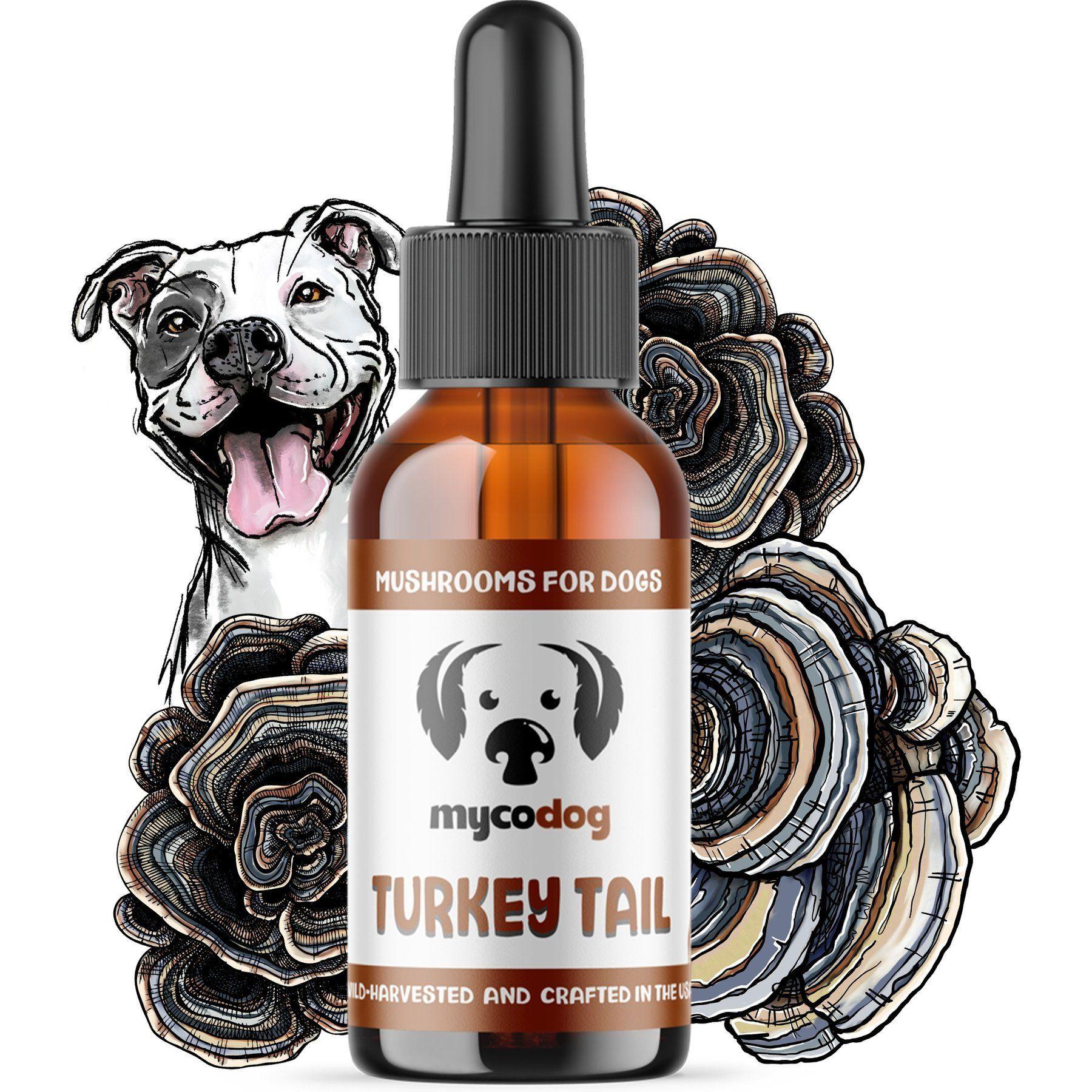
A single-species liquid turkey tail extract for owners whose vet has approved an immune supplement.
Webvet may earn a commission when you click through to Chewy, at no extra cost to you.
A turkey tail supplement is regulated very differently from a medicine. VCA notes that the FDA does not review non-drug pet supplements for safety or effectiveness before they are sold, and labels must say the product is not intended to diagnose, treat, cure, or prevent any disease.
Do vets recommend turkey tails?
Some vets, especially those practicing integrative medicine or oncology, discuss turkey tail with owners, but there is no blanket veterinary recommendation. VCA Animal Hospitals advises against using medicinal mushrooms without veterinary monitoring. A vet decides case by case, based on the diagnosis, other medications, and the owner's goals for treatment.
VCA also points out that a natural supplement is not automatically a safe one, and that few supplements and herbs have been through rigorous trials. Your veterinarian is the best source of advice on whether a particular product is safe for your dog, given everything else in the treatment plan.
What turkey tail is and what it is claimed to do for dogs
Turkey tail is a woody bracket fungus that grows on dead logs worldwide, according to the National Cancer Institute. It gets its name from its fan of striped, brown and tan bands. It has also been called Coriolus versicolor, a name that still appears in research papers and on some labels.
The compounds researchers care about are polysaccharides and protein-bound polysaccharides. The two best known are PSK and polysaccharopeptide (PSP), both extracts of the fungus. The NCI notes that the two differ somewhat in sugar composition and that PSK is a hot water extract made from cultivated mycelium.
Both are built around beta-glucans, long sugar chains that make up the backbone of these glycoprotein molecules. Beta-glucans are the reason turkey tail is grouped with other immune-focused mushrooms. VCA Animal Hospitals lists polysaccharides, proteins, and glycoproteins as the active ingredients in medicinal mushrooms.

Turkey tail has a longer track record in people than in dogs. The NCI notes that PSK is an approved cancer product in Japan and has been used alongside cancer treatment in thousands of patients since the mid-1970s, usually together with chemotherapy in trials. Human use is often cited on dog product pages, but it does not show benefit in dogs.
Is mushroom good for dogs?
It depends entirely on the mushroom. VCA Animal Hospitals warns that many wild mushrooms are toxic and can cause serious or even life-threatening illness, so any mushroom a dog finds outdoors should be treated as poisonous. A turkey tail supplement is a processed, labeled product, which is a different question from a dog eating a mushroom in the yard.
Never harvest turkey tail from a log for a dog. Identifying wild mushrooms takes expertise, and VCA advises assuming any mushroom you find could be a poisonous one. If your dog eats an unknown mushroom on a walk, call your vet right away and say when it happened.
What does turkey tail mushroom do for a dog?
Labels and brand sites say turkey tail supports immunity, gut health, and healthy cells in dogs. The honest summary of what it does is narrower. Lab work suggests its polysaccharides affect immune cells, and VCA notes that much of the research on medicinal mushrooms comes from rodent studies rather than dogs.
The claims you will see most often are:
- Immunity support: the main selling point, based largely on lab and human research, with no controlled immune study in healthy dogs.
- Cancer support: based on one small dog pilot and a larger trial that did not confirm a survival benefit.
- Gut health: PSP acted as a prebiotic in a small human trial; there is no comparable dog trial.
- Allergy relief: no published dog evidence supports this claim.
Turkey tail mushroom benefits for dogs, then, rest on far less dog data than the packaging suggests. For a healthy dog, a vet may see it as low risk with uncertain value. For a dog with cancer, the bigger question is how it fits around proven treatment, which the next sections cover.
Turkey tail is not a probiotic, since it contains no live bacteria. In the Gut Microbes trial of 24 healthy human volunteers, which compared PSP with an antibiotic and with no treatment, PSP behaved like a prebiotic, a fiber that feeds existing gut bacteria. Some owners pair turkey tail with a probiotic for that reason, though no dog trial has tested the combination.
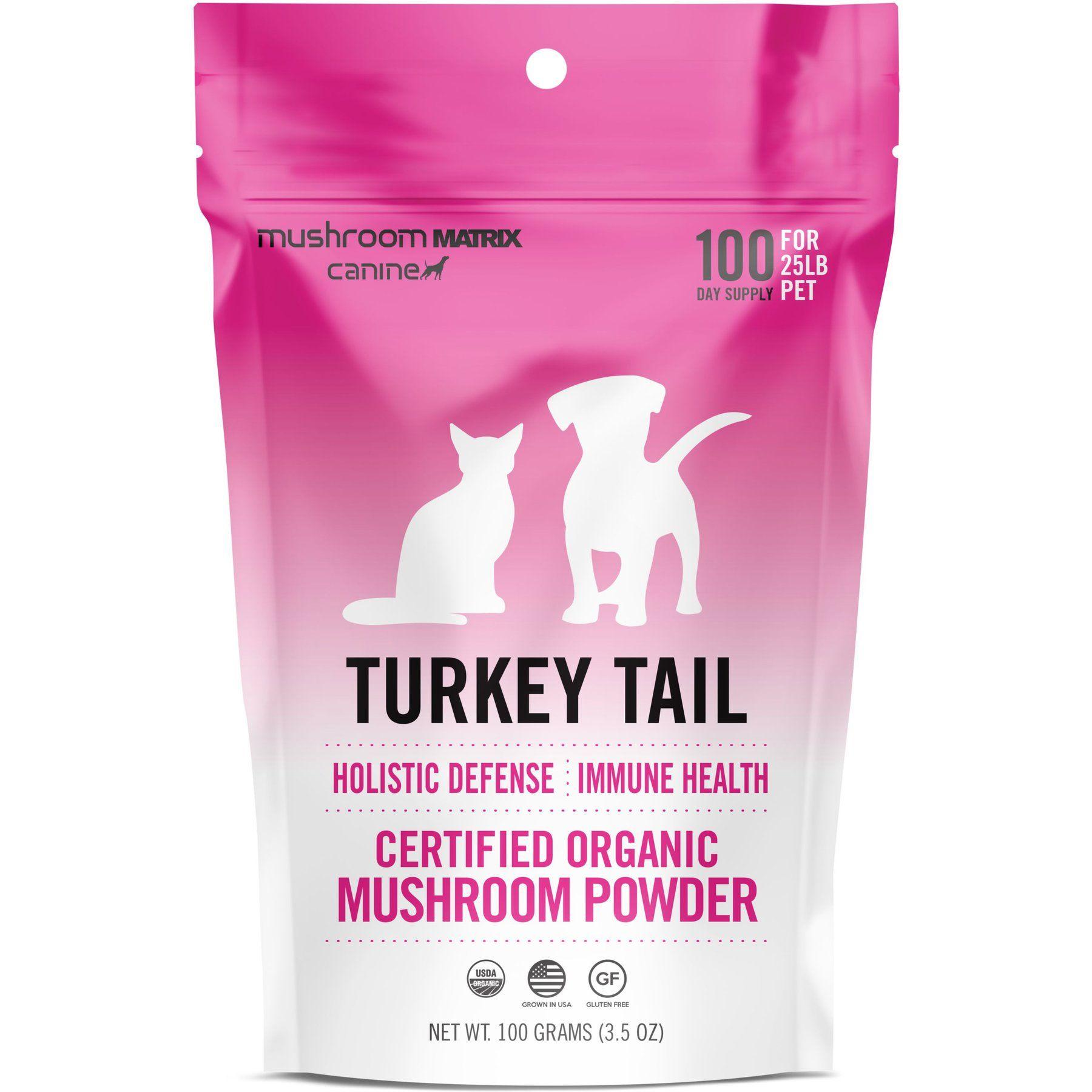
An organic turkey tail powder sold as a daily immune supplement, to use only with your vet's approval.
Webvet may earn a commission when you click through to Chewy, at no extra cost to you.
Is turkey tail mushroom good for dogs with allergies? Because allergies involve an overactive immune response, it is not obvious that an immune-stimulating supplement would help, and no dog study has looked. Allergy relief should come from a plan your vet builds around the actual trigger, not from a mushroom label.
What the evidence shows: the hemangiosarcoma study and its limits
| Claim | Evidence in dogs | Evidence level | Risk of relying on it |
|---|---|---|---|
| Supports a healthy dog's immune system | No controlled dog study; lab and human research only | Very low | Low risk if your vet approves, but value is unproven |
| Helps dogs with hemangiosarcoma live longer | One 15-dog pilot without an untreated control; a 101-dog trial found no added benefit with chemotherapy | Low and conflicting | High if it replaces surgery or chemotherapy |
| Slows the spread of cancer | One pilot showed slower spread at the highest dose versus the lowest dose | Very low | High if it delays proven treatment |
| Shrinks lipomas or fatty lumps | No dog study | None | High if a lump is never tested and turns out to be cancer |
| Treats lymphoma or mast cell tumors | No dog study | None | High, because it can delay standard treatment |
| Relieves allergies | No dog study | None | Moderate, because the itch and its cause go untreated |
| Supports gut health as a prebiotic | One small human trial; no dog trial | Very low | Low |
Every turkey tail claim in that list has a different evidence level, and the gap between label wording and dog research is widest for lumps and cancer. Almost all of the dog research on turkey tail traces back to two studies in one cancer, both in dogs whose spleen had already been removed after a tumor was found.
The 2012 University of Pennsylvania pilot study
The study most often cited for turkey tail mushroom for dogs comes from the University of Pennsylvania School of Veterinary Medicine. Dorothy Cimino Brown and Jennifer Reetz published it in 2012 in Evidence-Based Complementary and Alternative Medicine. They described it as a double-blind, randomized, multidose pilot study.
The study design, according to the full text, was:
- Dogs: 15 dogs with naturally occurring hemangiosarcoma of the spleen, after the spleen had been removed.
- Groups: three groups of five dogs, each given a different daily dose of PSP: 25, 50, or 100 mg/kg per day.
- Product: a polysaccharopeptide extract from turkey tail mycelium (I'm-Yunity) in identical capsules, so neither owners nor investigators knew the dose.
- Other treatment: none. Only dogs whose owners had declined chemotherapy after spleen removal were enrolled.
- Duration: daily capsules from the start of the study until each dog's death.
The choice of dogs was deliberate. The authors wrote that doxorubicin-based chemotherapy protocols report median survival of 141 to 179 days, and that because chemotherapy is costly, time intensive, and does not raise 12-month survival above surgery alone, most owners do not opt for it. They described those dogs as the ideal group for testing a single agent.
What the turkey tail cancer study in dogs found
Dogs on the highest dose took a median of 112 days to show spread or progression of abdominal tumors, compared with 30 days on the lowest dose, a statistically significant difference. The middle dose group had a median of 35 days, which was not significantly different from either of the other groups. Median survival was 117 days at 50 mg/kg per day and 199 days at 100 mg/kg per day.
The authors compared those numbers with 86 days, the top of the 19 to 86 day range of median survival they cited from earlier reports of dogs treated with spleen removal alone. Penn Today reported that the researchers found no evidence of adverse effects, and the full text notes no significant bloodwork changes in any group.
The limits of the hemangiosarcoma pilot
Those headline numbers come with real limits that turkey tail marketing rarely mentions:
- Tiny groups: five dogs per dose is far too few to draw firm conclusions.
- No untreated control group: every dog got PSP. The 86-day comparison came from older studies of different dogs, not a placebo group in this trial.
- No significant survival difference between doses: the study itself found no statistically significant difference in survival curves across the three groups.
- Industry funding: Penn Today reports the study was funded by a grant from Chinese Medicine Holdings.
- One cancer only: the study looked only at splenic hemangiosarcoma, so its results say nothing about lipomas, lymphoma, or other tumors.
- A surprisingly large effect: the authors themselves called the size of the positive outcomes unexpected in such a small group.
- A specific extract: the dogs received one mycelium-derived PSP product at a weight-based dose, not a retail powder.
The authors were open about this. They wrote that a negative control group would be needed to support some of their conclusions, and they framed the study as pilot data to design a larger trial. Penn Today reported that the team planned further trials to confirm and refine the results.
The larger 2022 trial
That larger trial arrived in 2022. Gedney and colleagues published it in Veterinary and Comparative Oncology, enrolling 101 dogs with splenic hemangiosarcoma after spleen removal. The aim, the authors wrote, was to compare PSP alone or with doxorubicin against dogs given surgery and doxorubicin plus a placebo. Owners chose PSP alone or doxorubicin chemotherapy, and dogs in the chemotherapy arm were blindly randomized to PSP or a placebo. Dogs were examined weekly for 15 weeks, then monthly until death.

The results did not repeat the pilot's promise:
- 51 dogs received PSP alone, 25 received doxorubicin plus placebo, and 25 received doxorubicin plus PSP.
- Adding PSP to doxorubicin did not improve survival.
- Female dogs given PSP alone had significantly shorter survival than females given doxorubicin with placebo.
- Anemia and stage III disease remained linked to shorter survival regardless of treatment.
One caution applies to the female finding. Owners, not a randomization process, chose between PSP alone and chemotherapy, so that comparison is less controlled than the blinded PSP versus placebo comparison within the chemotherapy group. Even so, neither comparison showed turkey tail adding survival time.
For owners of a dog with hemangiosarcoma, this is the most important finding. The best available evidence says a turkey tail extract did not add survival time to chemotherapy, and choosing it instead of chemotherapy was associated with worse outcomes in female dogs.
The polysaccharide in the studies versus what is on the shelf
Both trials used one specific turkey tail polysaccharide: PSP, dosed by body weight, with a pharmacy matching each capsule to the dog's weight in the pilot. Retail products differ. Some are whole mushroom powders, some are liquid extracts, and labels vary in whether they state an extract ratio or beta-glucan content.
Human research adds little certainty. In the 2012 paper, the authors noted that randomized trials of PSP in people show effects on immune markers but lack clear evidence of antitumor activity or longer survival.
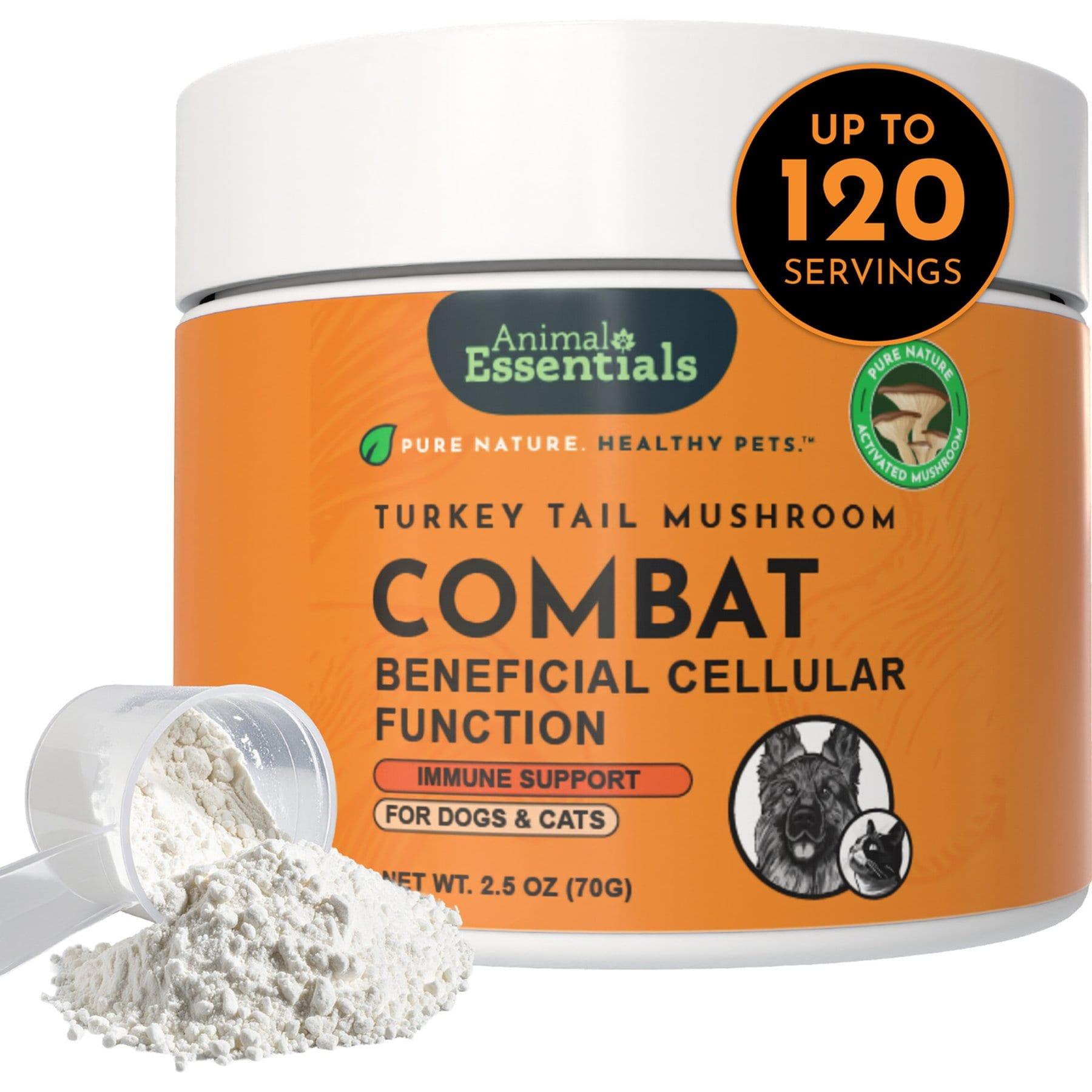
A turkey tail supplement for cats and dogs sold for immune support, for use only after your vet approves it.
Webvet may earn a commission when you click through to Chewy, at no extra cost to you.
The gap between study extract and retail product matters when reading the dog studies. A dose that seemed to help in a pilot study of one PSP extract cannot be copied onto a jar of whole mushroom powder, because the amount of active polysaccharide per scoop is usually unknown. This is one reason vets prefer products with clear labeling.
Lab research explains why scientists became interested in the first place. In cell culture, the 2012 authors note, PSP causes cancer cells to stop dividing and increases programmed cell death. They add that whether findings like these from cell and mouse studies have relevance in patient care is uncertain, which is exactly why dog trials matter.
Label details owners compare, none of them tested against outcomes in dogs:
- Organic certification
- Country or region of sourcing
- Fruiting body versus mycelium
- A stated extract ratio or beta-glucan content
These are quality signals rather than proof of effect.
In the United States, the National Cancer Institute states that the FDA has not approved medicinal mushrooms as a treatment for cancer or any other medical condition. Animal supplements fall outside the human supplement law as well: the National Animal Supplement Council quotes the FDA's view that this law does not apply to animals.
The research picture, put simply: one encouraging pilot, one larger trial that did not confirm it, and no dog studies at all for most of the other claims on the label. Most of what owners read on labels and in reviews, from immune claims to lump claims, sits in that last group, so product quality is the main thing an owner can actually compare.
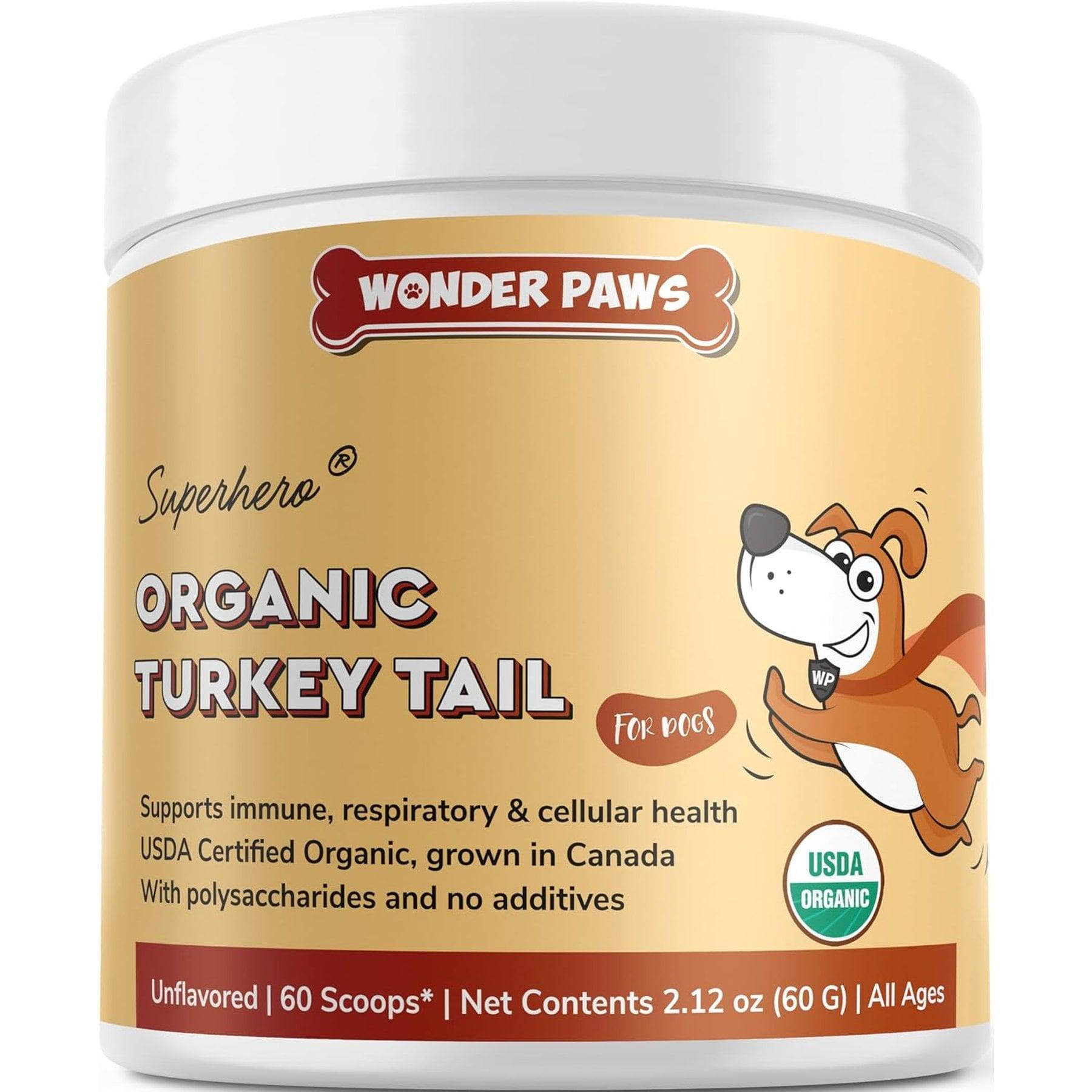
An organic turkey tail powder for dogs and cats, sold as an immune supplement to discuss with your vet first.
Webvet may earn a commission when you click through to Chewy, at no extra cost to you.
Turkey tail for lumps, lipomas, and cancer support: what it can and cannot do
Many owners who ask about turkey tail have found a soft lump under the skin. The Merck Veterinary Manual describes lipomas as common benign tumors of fat, seen most often in older, obese female dogs on the trunk and upper legs. Merck names Doberman Pinschers, Labrador Retrievers, Miniature Schnauzers, and mixed-breed dogs as the breeds at highest risk.
The catch is that a lump cannot be identified by touch or appearance. Merck states that a fine needle aspirate is necessary to exclude other tumors that can mimic lipomas, and that mast cell tumors in particular can look like lipomas. Giving a supplement to an untested lump risks missing a cancer that needs early treatment.

Does turkey tail shrink fatty lumps in dogs?
No study shows that turkey tail shrinks fatty lumps or lipomas in dogs. The only dog research looked at hemangiosarcoma, a blood vessel cancer, not lipomas. The Merck Veterinary Manual states that surgical removal is the cure for a lipoma.
So does turkey tail help with lipomas in dogs? The available evidence says no. Claims about fatty lumps appear in reviews and brand copy, but a lump that seems smaller may simply have been mismeasured, or the dog may have lost weight. Merck notes that a weight-loss diet before surgery can help the surgeon find the lump's edges, which is different from shrinking it.
What does shrink or remove a fatty lump? Surgical removal is the main option, and many benign lipomas are simply measured and watched. The full set of options, including when removal makes sense, is covered in this guide to lipoma in dogs.
Turkey tail for canine cancer
For cancer in dogs, the evidence is limited to the two hemangiosarcoma trials. Turkey tail is best described as an unproven complementary supplement, not a treatment. It has not been shown to shrink tumors, cure cancer, or replace surgery, chemotherapy, or radiation in any dog study.
The pattern is the same for other cancers. There is no published study of turkey tail in dogs with lymphoma. Lymphoma in dogs has its own established treatment options, and outlook depends on the type of lymphoma and the treatment chosen, as explained in this guide to dog lymphoma life expectancy.
What turkey tail can reasonably do in cancer care is narrower:
- Serve as a supplement some oncologists accept alongside standard treatment, once they have checked it against the protocol.
- Give owners something low risk to do, as long as it never delays diagnosis or treatment.
- Fit into a broader plan that also covers diet, pain control, and quality of life.
Owners of dogs with cancer often read reviews claiming a lump disappeared. Reviews cannot separate the supplement from surgery, chemotherapy, a misdiagnosed lump, or natural variation. Reviews alone cannot make any product the right choice for a dog with a lump or cancer.
Turkey tail safety, side effects, and drug interactions
Is turkey tail mushroom safe for dogs? The available data is reassuring but limited. In the Penn Vet pilot, dogs took PSP daily until death with no significant bloodwork changes and no adverse effects reported by the researchers. That is 15 dogs, though, so rare problems would not have shown up.
General guidance on medicinal mushrooms comes from VCA Animal Hospitals, which lists these possible side effects:
- Diarrhea
- Nausea
- Dizziness
- Skin rash
VCA advises stopping the supplement and calling the vet immediately for diarrhea, increased drinking, lack of appetite, seizures, severe vomiting, yellowing of the skin or eyes, or weakness. It also warns that sensitivities can develop over time, so a dog that tolerated the first doses can still react later.
For a dog with a lump, the possible side effects are the same as for any other dog. The bigger risk is that the lump goes untested while the owner waits to see whether the supplement works.
VCA advises against medicinal mushrooms in dogs allergic to any mushroom, and caution in dogs with:
- Bleeding disorders
- Low blood pressure
- Liver or kidney disease
- Immune-mediated disorders
- Pregnancy or nursing
Is turkey tail hard on the liver?
No liver injury was reported in the Penn Vet pilot, where bloodwork stayed stable through daily PSP. Still, VCA lists liver disease as a reason for caution, notes that effects can last longer in pets with liver disease, and names yellowing of the skin or eyes as a stop sign. Dogs with liver disease need a vet's go-ahead first.
If a dog has liver concerns, the vet will usually want baseline bloodwork before any new supplement and recheck values over time. The same caution applies to other liver supplements owners consider, such as milk thistle for dogs, which should also be cleared with the vet before it is added.
What not to mix with turkey tail?
VCA advises caution when combining medicinal mushrooms with anticoagulants (blood thinners), anti-inflammatories such as NSAIDs, immune modulators, and insulin or other diabetes medications. Tell your vet about every medicine, vitamin, and supplement your dog takes, including chemotherapy, before adding turkey tail.
Drug interactions to raise with the vet include:
- Blood thinners: relevant because VCA also flags bleeding disorders as a caution.
- NSAIDs: common in older dogs with arthritis, the same dogs often given supplements.
- Immune-suppressing drugs: a supplement marketed to stimulate immunity may work against them.
- Insulin and diabetes drugs: a diabetic dog needs closer glucose monitoring after any change.
- Chemotherapy: the oncologist should review the full supplement list before each protocol.
When a lump or a cancer diagnosis needs a vet, not a supplement
Some situations need prompt veterinary care no matter what supplement is in the cupboard. A new lump of any size deserves an exam and usually a needle sample. A lump that grows quickly, changes texture, becomes red, or bleeds should be checked soon rather than watched.
Hemangiosarcoma is the clearest example of why. The Cornell Riney Canine Health Center describes it as a highly malignant cancer of blood vessels, most often of the spleen or heart. These tumors can rupture and bleed internally, causing collapse, severe weakness, and pale gums.

Treatment time is meaningful with this cancer. Cornell reports average survival of about two months with surgery alone, and a median of four to six months when chemotherapy is added. That gap is why the 2022 finding, that PSP alone did worse than chemotherapy in female dogs, matters for owners deciding between them.
Owners of dogs with hemangiosarcoma also ask about other remedies, such as Yunnan Baiyao for dogs. The same rule applies: any remedy should be discussed with the oncologist as part of the full plan, never used in place of emergency care for internal bleeding.
Questions worth bringing to the appointment:
- What is this lump, and does it need a needle sample or biopsy?
- What are the standard treatment options, and what outcome can I expect with each?
- Is turkey tail safe alongside my dog's current medicines and planned treatment?
- Which other supplements, such as omega-3 fatty acids for dogs, would you want to review at the same time?
How a vet decides on a dose and how to choose a turkey tail product
There is no established turkey tail dosage for dogs. The only tested doses come from the Penn Vet pilot, which gave 25, 50, or 100 mg/kg per day of one PSP extract. Those numbers describe a specific extract in a study, not a recommended dose for home use.
When a vet decides on a dose, the usual inputs are:
- The product itself: whether it is a purified extract, a standardized extract, or a whole mushroom powder.
- Body weight: the research dosed by kilograms, and vets scale any supplement to the individual dog.
- The reason for use: general immune support versus a dog in active cancer treatment.
- Other medicines: especially anything on the interaction list above.
- Liver and kidney health: which affects how long a supplement's effects last.
Dosage charts on turkey tail labels, including per-pound amounts, are each manufacturer's guidance for its own product and have not been tested against outcomes in dogs. Treat the label as a starting point and let your vet set the amount, including how much powder suits your dog's size.
VCA notes that medicinal mushroom doses can be given with or without food, and that giving the dose with food or a treat helps if a dog vomits on an empty stomach. Giving it at the same time each day keeps things consistent.

What are some good mushroom supplements for dogs?
A good mushroom supplement for a dog is one your vet has approved for that dog. For turkey tail specifically, look for a single-species product that names Trametes versicolor, states whether it is an extract or a whole powder, and comes from a company with a quality audit. Fewer ingredients make interactions easier for the vet to judge.
Choosing among turkey tail products comes down to form, labeling, and quality signals rather than star ratings. The forms most owners compare:
- Liquid extracts and tinctures: a tincture measures easily into food. MycoDog Turkey Tail Mushroom Extract Supplement for Dogs, 1-fl oz bottle is a US-made liquid of turkey tail extract in organic vegetable glycerin, listed at $29.99 on Chewy when checked in November 2026.
- Organic powders: an organic powder mixes into meals. Canine Matrix Turkey Tail Immune Support Mushroom Powder Supplement for Dogs & Cats, 3.5-oz is an organic powder grown and processed in Carlsbad, California, listed at $23.99 on Chewy when checked in November 2026.
- Another organic powder: Wonder Paws Organic Turkey Tail Mushroom Powder for Dogs & Cats, 2.12-oz jar is made with organic ingredients sourced in Canada, listed at $19.95 on Chewy when checked in November 2026.
- Cat and dog supplements: Animal Essentials Combat Turkey Tail Mushroom Cat & Dog Vitamin Supplement, 70-gm jar is sold for both species, listed at $27.99 on Chewy when checked in November 2026.
- Chews, treats, and capsules: turkey tail chews and treats are convenient but often carry extra ingredients, and capsules need to be opened over food or pilled.
Is turkey tail mushroom powder good for dogs compared with an extract? A whole powder contains the full mushroom, while an extract concentrates the polysaccharides. The research used a specific mycelium extract, so neither retail form exactly matches it. Organic status is a sourcing choice and says nothing about potency.
Questions to ask when comparing brands:
- Does the label name Trametes versicolor and list it as the only mushroom?
- Does it say whether it is fruiting body, mycelium, extract, or whole powder?
- Does the company carry the seal of the National Animal Supplement Council, which signals an independent facility audit, an adverse event reporting system, and label guidelines?
- Is there a lot number and an expiration date?
Star ratings and turkey tail reviews mostly reflect taste, ease of use, and shipping. They cannot show whether a supplement changed a health outcome, so the most useful review is still your vet's.
Turkey tail mushroom for dogs questions
Frequently Asked Questions
Is there a turkey tail dosage chart for dogs?
There is no research-based chart. Labels that list amounts by body weight are set by each manufacturer for its own product. The only dog trial doses were for one specific extract, so a veterinarian should set the amount for your dog and adjust it based on health and other medicines.
Can turkey tail help a dog with allergies?
There is no dog study showing turkey tail helps allergies. Allergies stem from an overactive immune response, and turkey tail is marketed to stimulate immune activity, so the logic is unclear. A vet-led plan that finds and manages the allergy trigger is the reliable route to relief.
Can turkey tail be given with a probiotic?
No study has tested the combination in dogs, so ask your vet before pairing them. Turkey tail is not a probiotic itself. In a small human trial published in Gut Microbes, its PSP extract acted as a prebiotic, feeding existing gut bacteria. No equivalent trial has been done in dogs.
Does turkey tail help dogs with hemangiosarcoma?
A 15-dog pilot reported the longest median survival at the highest dose, though survival did not differ significantly between doses, and it lacked an untreated comparison group. A 101-dog trial in 2022 found that adding the extract to chemotherapy did not improve survival, and females on the extract alone fared worse than those given chemotherapy. It is not a hemangiosarcoma treatment.
Is turkey tail powder or extract better for dogs?
Neither has been compared head to head in dogs. An extract concentrates the polysaccharides, while a powder contains the whole ground mushroom with an unknown amount of active compounds per scoop. The dog trials used a specific extract, which is why some vets lean toward clearly labeled extract products.
Does turkey tail interact with any medications?
Interaction data specific to turkey tail is limited, but VCA flags blood thinners, NSAIDs, immune-modulating drugs, and insulin or diabetes medications for medicinal mushrooms. Any possible drug interaction is worth checking with your vet before the first dose, and dogs on chemotherapy need the oncologist's approval.
Veterinarian · BVMS MRCVS
Dr. Pippa Elliott, BVMS, MRCVS, is a veterinarian with nearly 30 years of experience in companion animal practice. Dr. Elliott earned her Bachelor of Veterinary Medicine and Surgery from the University of Glasgow. She was also designated a Member of the Royal College of Veterinary Surgeons. Married with 2 grown-up kids, Dr. Elliott has a naughty Puggle named Poggle, 3 cats and a bearded dragon.
Related reading

Dog Food for Weight Gain: How to Choose One and Add Weight Safely

Best Taurine Supplement for Cats: Vet-Reviewed Picks and How to Choose

Taurine for Cats: How Much They Need, Food Sources, and When to Supplement
