Lymphoma in Dogs: Symptoms, Stages, and Treatment Options
Lymphoma is one of the most common and most treatable cancers in dogs. Learn where to feel for swollen lymph nodes, how the four types and five stages differ, what each treatment path costs, and what remission really means.

BVMS MRCVS
Medically reviewed by Dr. Pippa Elliott, BVMS MRCVS · Last reviewed

This article contains affiliate links. Webvet may earn a commission when you buy through them, at no extra cost to you.
Lymphoma in dogs usually announces itself quietly: a firm, painless lump under the jaw that wasn't there last week. It is one of the most common cancers veterinarians diagnose, and it is also one of the most treatable into remission. This guide walks you through what lymphoma is, exactly where to feel for swollen lymph nodes on your own dog, the four types, the five stages, how vets diagnose it, what each treatment path costs, and what remission really means.
- 1Lymphoma is a cancer of lymphocytes (immune cells) and one of the most common cancers in dogs.
- 2The classic first sign is firm, painless, swollen lymph nodes, most often under the jaw.
- 3Diagnosis usually starts with a quick needle test (fine needle aspiration), not surgery.
- 4Most dogs treated with multi-agent chemotherapy (CHOP) achieve remission, and dogs tolerate chemo far better than people do.
- 5Remission is not cure, but it typically means months to more than a year of good quality of life.

 Sponsored
Have a health question about your dog?
Talk to a licensed vet at Dutch over video or message, including nights and weekends.
Use code Pets30
Plans start at $11/month · covers up to 5 pets
- Licensed vets in most states
- Rx for 150+ conditions
- 4.7 on Trustpilot
What Is Lymphoma in Dogs?
Lymphoma (also called lymphosarcoma) is a cancer of lymphocytes, the white blood cells that patrol the body as part of the immune system. Because lymphocytes travel everywhere, lymphoma can appear almost anywhere, but it most often shows up first in the lymph nodes.
According to the Merck Veterinary Manual, lymphoma accounts for roughly 7% to 24% of all canine cancers, making it one of the most common cancers a veterinarian will ever diagnose in dogs. Most affected dogs are middle-aged to older, typically 6 to 9 years old at diagnosis.
What Causes Lymphoma in Dogs?
No one can point to a single cause in an individual dog. Research has explored genetics, environmental chemical exposures such as lawn herbicides, proximity to industrial areas, and immune system dysfunction, but no single factor has been proven to cause lymphoma in any specific dog. For most families the honest answer is that nothing you did caused it, and nothing you could have done would reliably have prevented it.
Genetics is the clearest signal we have. The strong breed patterns suggest inherited susceptibility, and some breeds carry notably higher risk, including:
- Golden Retrievers
- Boxers
- Bullmastiffs
- Basset Hounds
- Scottish Terriers
- Rottweilers

Sponsored Lemonade pet insurance link. Webvet may earn a commission.
If you have found a new lump and don't yet know what it is, start with our lump on your dog triage guide. Many lumps are benign, and the triage steps there will help you decide how urgently to book a vet visit.
Early Signs: Where to Feel for Swollen Lymph Nodes
The single most useful thing you can do tonight is learn the swollen lymph node map: the five node locations an owner can feel with their own hands. Most veterinary pages list "enlarged lymph nodes" as a sign without giving you a physical map of where to feel for swollen lymph nodes, so owners are left guessing what an enlarged node even means. The photograph below shows an owner checking one of the five palpable node sites on a real dog, and the full physical map is simple: under the jaw, in front of the shoulders (the prescapular nodes), in the armpits, in the groin, and behind the knees. Work through those five spots and you can check your dog tonight in under two minutes instead of guessing.

Run your fingertips gently over these five lymph node locations on both sides of the body:
- Under the jaw (submandibular): in the soft angle where the jaw meets the neck. The most common site owners find first.
- In front of the shoulders (prescapular): just ahead of the shoulder blade, low on the side of the neck.
- In the armpits (axillary): deep in the armpit where the front leg meets the chest.
- In the groin (inguinal): inside the back leg where it meets the belly.
- Behind the knees (popliteal): on the back of the hind leg, directly behind the knee joint. Easy to feel even on fluffy dogs.

A collar-mounted sensor and app for activity, rest, sleep, respiratory rate, heart-rate trends, itch behaviors, and more.
- Builds a personalized baseline over time
- Tracks trends between veterinary visits
- Generates a month-long shareable report
Health monitoring for dogs and cats
Webvet may earn a commission when you click through to Maven Pet, at no extra cost to you.
In a healthy dog, most of these nodes are small, soft, and hard to find at all. A lymphoma node feels distinctly different: firm, rubbery, movable under the skin, usually painless, and often the size of a grape or larger. Frequently the same node is enlarged on both sides of the body.
Swollen nodes are the headline sign, but they are not the only one. Watch for these early signs of cancer in dogs, which overlap heavily with early lymphoma: unexplained lethargy or a drop in normal energy, decreased appetite or gradual weight loss, increased thirst and urination, intermittent vomiting or soft stool, and a dull coat or slow-healing skin. Any one of these alone can have a dozen innocent explanations. Paired with a firm new node, they earn a vet appointment this week, not this month.
The Four Types of Canine Lymphoma
Veterinary oncologists group canine lymphoma into four anatomic types based on where the cancer starts, and this section puts the four types in one owner-readable table: multicentric, alimentary, mediastinal, and extranodal, crossing where each starts, its signature signs, and how common it is. One table makes it far easier to match your dog's presentation to the type it suggests, which shapes the tests your vet orders and the realistic treatment expectations.
| Type | Where it starts | Signature signs | How common |
|---|---|---|---|
| Multicentric | Multiple external lymph nodes | Firm, painless swollen nodes (jaw, shoulders, knees), often with lethargy | By far the most common, roughly 80-85% of cases |
| Alimentary (gastrointestinal) | Stomach and intestines | Vomiting, diarrhea, weight loss, appetite loss | Second most common, under 10% |
| Mediastinal | Lymph nodes and thymus inside the chest | Coughing, labored breathing, exercise intolerance, sometimes increased thirst | Uncommon |
| Extranodal | A single organ outside the nodes: skin, eyes, kidneys, nervous system | Depends on the organ; skin form causes scaly, red, thickened patches | Least common |
Multicentric lymphoma dominates the caseload, but the other three earn their own vocabulary. Alimentary disease is what your vet may call gastrointestinal lymphoma in dogs, GI lymphoma, intestinal lymphoma, or gastric lymphoma when it centers on the stomach; whatever the label, lymphoma in a dog's intestines tends to announce itself through vomiting, diarrhea, and weight loss rather than swollen nodes. Mediastinal lymphoma grows inside the chest, and extranodal lymphoma claims a single organ such as the skin, kidneys, or nervous system, which is why your vet will name the type explicitly at diagnosis.
Two lab distinctions cut across all four types. First, immunophenotype: lymphoma arises from either B-cells or T-cells, and B-cell disease generally responds better to chemotherapy. Oncologists teach it as "B is better, T is terrible," which overstates it, but the direction is right. Second, cell size: large cell lymphoma is aggressive and fast-moving, while small cell and indolent variants such as T zone lymphoma progress slowly, sometimes over years.
Lymphoma That Shows Up on the Skin
The extranodal skin form behaves differently enough that we cover it separately. Cutaneous lymphoma in dogs, also called skin lymphoma in dogs, appears as scaly, reddened, thickened, or ulcerated skin rather than swollen nodes, and it often masquerades as allergies for months. If that matches your dog, read our dedicated guide to cutaneous (skin) lymphoma in dogs, which covers epitheliotropic lymphoma in dogs, the most common skin form, and what its progression looks like.
 Sponsored
Vet care that's always there
Unlimited video calls and messaging with licensed vets for less than a typical vet visit. One membership covers up to five pets.
Use code Pets30
Plans start at $11/month · covers up to 5 pets
- Licensed vets in most states
- Rx for 150+ conditions
- 4.7 on Trustpilot
Diagnosis and the Five Stages of Lymphoma
Diagnosis almost always starts with fine needle aspiration (FNA): your vet slides a thin needle into the swollen node, draws out cells, and examines them under a microscope (cytology). It takes seconds, rarely needs sedation, and is no more invasive than a vaccine injection. Diagnosis follows a set order: FNA cytology first to confirm lymphoma, then immunophenotyping to sort B-cell from T-cell disease, the single detail that most changes the treatment conversation. For most dogs with multicentric lymphoma, that first quick test gives the diagnosis.

After cytology confirms lymphoma, your vet or a veterinary oncologist will usually recommend follow-up testing to characterize and stage the disease:
- Immunophenotyping (flow cytometry or PARR): determines B-cell vs T-cell, the single most important prognostic detail.
- Bloodwork and urinalysis: checks organ function, calcium level (high calcium suggests T-cell disease), and fitness for chemotherapy.
- Chest X-rays and abdominal ultrasound: look for disease inside the chest and in the liver and spleen.
- Bone marrow aspirate (sometimes): checks whether cancerous cells have reached the marrow.

Webvet may earn a commission when you click through to Chewy, at no extra cost to you.
Staging follows the World Health Organization system, the standard framework for lymphoma cancer in dogs stages, which describes how far the lymphoma has spread. Higher stage numbers sound frightening, but with lymphoma the stage matters less than the type, immunophenotype, and how sick the dog feels. Many dogs are diagnosed at stage 3 or higher and still respond very well to treatment.
| Stage | What it means |
|---|---|
| Stage 1 | A single lymph node is involved |
| Stage 2 | Several nodes in one region of the body |
| Stage 3 | Generalized: nodes on both sides of the body, front and back |
| Stage 4 | Liver and/or spleen involved (with or without node disease) |
| Stage 5 | Blood, bone marrow, or an organ outside the lymphatic system involved |
Each stage also carries a substage letter. Substage a means the dog feels well, is eating, and shows no illness beyond the swollen nodes. Substage b means the dog is showing systemic signs such as lethargy, vomiting, or appetite loss. Substage a dogs consistently respond better to treatment, which is one more reason early detection with the node map above genuinely changes outcomes. That is the whole staging system in plain language: stages 1 through 5 for how far the disease has spread, plus substage a or b for how your dog feels.
Because early lymphoma often looks like ordinary slowing down, it hides easily in senior dogs. If your older dog seems suddenly weaker, shaky, or flat, our guides to old dog trembling and dog energy levels by age walk through when age-related change crosses into see-the-vet territory.
Treatment Paths and What They Cost
Lymphoma is considered one of the most chemotherapy-responsive cancers in veterinary medicine, so treating lymphoma in dogs almost always means chemo for lymphoma in dogs in some form. Surgery and radiation play only niche roles because the disease is systemic; chemotherapy is the backbone. In practice, owners choose among three realistic paths, and the honest differences are cost, time commitment, and how long remission typically lasts. This section lays out the treatment paths with costs in one table: CHOP multi-agent chemotherapy, single-agent doxorubicin, and prednisone-only, compared on cost, visit burden, and typical remission expectation, because most pages treat cost as a single vague sentence when it deserves a treatment-path cost table you can actually plan around.
The figures below are planning estimates, not quotes. Veterinary oncology pricing varies widely by region and hospital: published owner-facing ranges from veterinary schools and oncology practices (including NC State and CSU's Flint Animal Cancer Center) generally put a full multi-agent protocol in the mid four figures to low five figures in the United States. Ask your oncologist for an itemized estimate before you commit.
| Treatment path | Typical total cost (US planning estimate) | Visit burden | Typical remission expectation |
|---|---|---|---|
| CHOP multi-agent chemotherapy (cyclophosphamide, doxorubicin, vincristine, prednisone) | $5,000-$10,000+ over the protocol | Weekly to biweekly visits for 16-25 weeks | 80-90% of dogs achieve remission, commonly lasting 8-14 months for B-cell disease |
| Single-agent doxorubicin | $2,000-$4,500 | One visit every 3 weeks, usually 5 treatments | Most dogs respond; remissions are typically shorter than CHOP |
| Prednisone only (palliative) | $50-$200 per month plus rechecks | Oral medication at home | Improves comfort for roughly 1-3 months; not a remission path |
A few practical notes on choosing a path:
- The CHOP protocol is the gold standard when budget and schedule allow. It produces the highest remission rates and the longest remissions.
- Single-agent doxorubicin is the most common middle path: meaningfully cheaper, far fewer visits, still real remission potential.
- Prednisone alone is a legitimate comfort-focused choice, not a failure. One important caveat: starting prednisone before seeing an oncologist can make lymphoma temporarily resistant to later chemotherapy, so talk through all options before the first pill if you can.
- Pet insurance matters here. Lymphoma treatment is exactly the scenario accident-and-illness policies exist for, though it must be in place before diagnosis; pre-existing conditions are excluded.
Before you commit to any path, get the full picture from the oncologist in one conversation. Useful questions to bring:
- Is this B-cell or T-cell, and how does that change the plan?
- What is the itemized estimate for the full protocol, including rechecks and rescue options?
- What happens if we start prednisone-only now and want chemotherapy later?
- How will we know treatment is working, and what does relapse monitoring look like?
- What side effects would make you adjust the protocol?
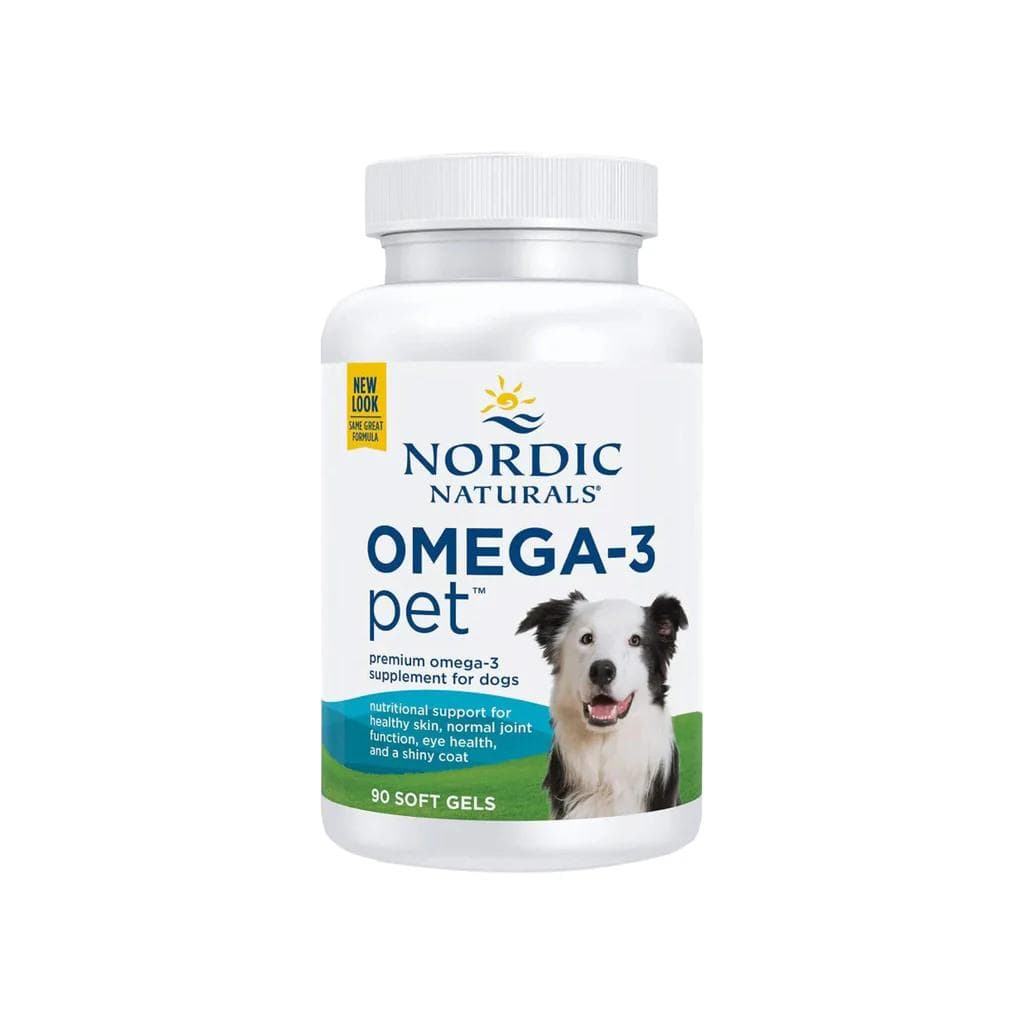
Third-party-tested omega-3 softgels (EPA and DHA) that support skin, coat, and joint health in dogs. Fish oil is one of the first things many vets suggest for a dull, dry, or flaky coat.
Webvet may earn a commission when you click through to Chewy, at no extra cost to you.
If you are budgeting for the diagnostic visits themselves, our guide to how much a vet visit costs breaks down exam, bloodwork, and imaging fees so the staging workup doesn't blindside you.
Remission: What the Numbers Really Mean
Remission means the cancer has shrunk below detectable levels: the nodes return to normal size, your dog feels like themselves again, and repeat exams find no disease. Complete remission is the goal of chemotherapy, and with CHOP the large majority of dogs get there, most within the first few weeks of treatment.
Remission is not cure. Microscopic cancer cells almost always survive treatment, and in most dogs the lymphoma eventually returns. When it does, many dogs achieve a second remission with a rescue protocol, though second remissions are usually shorter than the first. True cure, meaning the lymphoma never returns, happens in only a small minority of dogs.
Two remission terms are worth knowing before your recheck visits, because they frame every conversation with the oncologist:
- Complete remission: no detectable disease on exam; nodes are normal size. This is the target and the point at which most dogs feel entirely normal.
- Partial remission: nodes have shrunk by at least half but haven't normalized. Still a real response, and protocols are often adjusted to push further.
That distinction sounds bleak on paper, but it reads differently in a living room. What remission buys is time in which your dog is genuinely well: eating, playing, hiking, being fully themselves, not merely surviving. For a disease that is typically fatal within weeks untreated, months to more than a year of good days is exactly what most families are choosing when they treat.
Owners understandably ask the blunt versions of the question. Is lymphoma treatable in dogs? Yes: it is one of the most treatment-responsive cancers a dog can get, and most treated dogs reach remission. Is lymphoma curable in dogs? Almost never, and that gap between treatable and curable is where honesty matters most. Few pages cover substage a and b at all, and almost none explains remission versus cure as an owner decision concept: you are not buying a cure for lymphoma in dogs, you are buying good months, and only you can decide whether that trade is right for your dog, your family, and your budget.
Prognosis Snapshot: Life Expectancy With and Without Treatment
The broad strokes: untreated multicentric lymphoma typically progresses within about 4 to 6 weeks; prednisone alone usually buys 1 to 3 comfortable months; CHOP chemotherapy commonly delivers roughly 8 to 14 months for B-cell disease, with a meaningful minority of dogs living beyond two years, while T-cell disease runs shorter. Exact numbers depend on type, immunophenotype, stage, and substage. For the full survival tables by treatment path and cell type, plus the quality-of-life framework families use for end-stage decisions, including when euthanasia becomes the kind choice, see our dedicated guide to dog lymphoma life expectancy with and without treatment. That page owns the detailed numbers; the snapshot here is only orientation.
For a focused medication reference, see WebVet’s vet-reviewed Prednisone for Dogs: Side Effects, Dosage, and Tapering guide, including the dosage, side effects, and safety questions to confirm with your veterinarian.
Caring for Your Dog During Chemo
Here is the part most owners are most afraid of, and it is where dogs deliver the best news in this entire article: dogs tolerate chemotherapy far better than people do. Veterinary protocols deliberately use lower, quality-of-life-first dosing because the goal is good months, not maximal cell kill at any cost. Most dogs sail through treatment with minimal side effects; oncology practices commonly counsel that fewer than one in four dogs experiences side effects needing a call to the clinic, and serious reactions requiring hospitalization are uncommon.
For a focused medication reference, see WebVet’s vet-reviewed Mirtazapine for Dogs and Cats: Dosage Chart, Side Effects, and Cost guide, including the dosage, side effects, and safety questions to confirm with your veterinarian.

What chemo care actually looks like at home:
- Expect mostly normal days. Appetite dips, mild nausea, or a soft stool for a day or two after treatment are the most common effects. Your oncologist will send home anti-nausea medication (such as maropitant) to use at the first sign. Many owners keep a veterinary probiotic like Purina FortiFlora and a can of plain pumpkin on hand for those days; both are gentle supports most oncologists approve.
- Dogs rarely go bald. Unlike people, most dogs don't lose their coat. Continuously-growing-coat breeds like Poodles and some terriers may thin out, and shaved patches regrow slowly.
- Watch the temperature. The one true emergency is fever (103.5 F or higher) or profound lethargy 3 to 5 days after treatment, when white blood cell counts bottom out. Call the clinic immediately; don't wait until morning.
- Handle waste with gloves for 48-72 hours after each treatment, since drug residues pass in urine and stool. Pregnant household members should skip cleanup entirely.
- Keep life normal. Walks, play, couch time, and regular food are all encouraged. Treatment days aside, the goal is for your dog not to know they are a cancer patient.
When to See a Vet
Lymphoma moves fast, and the window where treatment works best is early, while your dog still feels well (substage a). Book a prompt appointment if you find a firm, painless node at any of the five map locations, if a known lump is growing week over week, or if swollen nodes come with lethargy, appetite loss, weight loss, vomiting, breathing changes, or increased thirst. And go the same day if your dog is struggling to breathe, refusing all food, or collapsing. That advice to see a vet stays constant throughout this guide because acting early, while your dog still feels well, is the one factor entirely in your control.
The needle test that answers the question is quick, low-stress, and inexpensive relative to the anxiety of waiting. Whatever the result, you'll be deciding from facts instead of fear. If lymphoma is confirmed, ask for a referral to a board-certified veterinary oncologist the same week: treatment started in substage a, while your dog still feels well, gives every path on the table its best odds.
Lymphoma in Dogs FAQs
For the wider picture beyond lymphoma, our sister site Petful's overview of dog cancer signs, diagnosis, and treatment options is a solid companion read.
Frequently Asked Questions
Is lymphoma in dogs painful?
Usually not, especially early. The hallmark swollen nodes are classically painless, and most substage a dogs feel well. Discomfort appears when disease burden grows: very large nodes can press on the throat, gastrointestinal lymphoma can cause nausea and cramping, and substage b dogs feel genuinely ill. Effective treatment typically relieves these signs quickly, and comfort-focused care (including prednisone) can ease them when full chemotherapy isn't chosen.
Is lymphoma in dogs contagious?
No. Lymphoma is not contagious to other dogs and not transmissible to people. It arises from mutations in your dog's own lymphocytes, not from an infectious agent, so there is no need to separate household pets, restrict contact with children, or change how you live with your dog. Multiple pets in one home developing cancer reflects shared age and environment, not transmission.

Editor
The Webvet Editorial Team is the in-house group of pet-care editors and writers behind Webvet, operated by Smart Pet Collective. The team researches, writes, and maintains Webvet's pet health, behavior, and medication content. Every article follows a defined editorial process: research from reputable veterinary and scientific sources, careful drafting, mandatory review of medical content by a credentialed veterinarian, and dated publication. Health and medication articles are medically reviewed by a licensed veterinary professional before they go live and are kept current over time.
Veterinarian · BVMS MRCVS
Dr. Pippa Elliott, BVMS, MRCVS, is a veterinarian with nearly 30 years of experience in companion animal practice. Dr. Elliott earned her Bachelor of Veterinary Medicine and Surgery from the University of Glasgow. She was also designated a Member of the Royal College of Veterinary Surgeons. Married with 2 grown-up kids, Dr. Elliott has a naughty Puggle named Poggle, 3 cats and a bearded dragon.
Related reading

Salivary Mucocele in Dogs: Symptoms, Surgery, and Recovery

Diabetes in Cats: Symptoms, Treatment, and Remission

Diabetes in Dogs: Early Signs, Diagnosis, and Daily Management
