Best Taurine Supplement for Cats: Vet-Reviewed Picks and How to Choose
Most cats eating a complete and balanced commercial food get enough taurine, so a supplement fits only when a vet advises it or the diet is homemade. When to add taurine, which form to choose, and the picks worth buying.

BVMS MRCVS

This article contains affiliate links. Webvet may earn a commission when you buy through them, at no extra cost to you.
Does your cat need a taurine supplement? What a vet weighs first
Before you shop for the best taurine supplement for cats, check the food label. A cat eating a complete and balanced commercial cat food usually gets enough taurine already, because commercial cat foods are required to contain it. A supplement fits when your vet advises one or when the diet is homemade or raw.
When a supplement does make sense, the best taurine supplement for cats is the one your cat will reliably eat in the amount your vet sets. That means choosing between a chewable tablet, a measured powder, and a flavored option, and reading the milligrams per serving on the label.
| Product | Form | Size | Best fit |
|---|---|---|---|
| PetAg Taurine Daily Chewable Tablet Supplement for Cats, 100 count | Chewable tablet | 100 count | Cats that take a treat-style tablet |
| InClover Heart+ Taurine Powder Supplement for Dogs & Cats, 100-gm jar | Powder blend | 100 g jar | Mixing a measured scoop into food |
| Lots of Love Pet Products Felo Taurine Vision Powder Supplement for Cats, 16-oz jar | Powder | 16 oz jar | Households preparing homemade food |
| AstroPet Pulsar Taurine Heart Care Flavored Supplement for Cats, 17.63-oz | Flavored supplement | 17.63 oz | Picky cats that refuse plain powder |
- 1Taurine is an essential nutrient cats must get from food, and a lack of it can cause dilated cardiomyopathy and central retinal degeneration.
- 2Why most commercial diets already cover taurine: complete and balanced cat foods must meet the AAFCO nutrient profile, taurine included.
- 3When a cat needs a taurine supplement: a homemade or raw diet, a vegetarian diet, or a specific instruction from your vet.
- 4Your vet sets the amount and may monitor whole blood taurine levels.
- 5Choose the form your cat accepts: a chewable tablet, a measured powder, or a flavored option.
Merck Veterinary Manual explains that, unlike dogs, cats need a dietary source of taurine, and that a deficiency can cause dilated cardiomyopathy (a weakened, enlarged heart) and central retinal degeneration. For a full look at what taurine does in the body, see the WebVet guide to taurine for cats.
The good news is that this problem is uncommon today. The Merck Veterinary Manual pet owner guide states that all commercially prepared cat foods are now required to contain sufficient taurine, and that deficiency is rarely seen in pet cats fed a good-quality commercial diet formulated for cats.

A vet usually weighs these points before suggesting taurine:
- What the cat eats: a commercial food labeled complete and balanced, a homemade recipe, a raw diet, or a vegetarian diet
- Whether most of the diet is treats, toppers, or human food, which are not designed as a sole diet
- Any heart, eye, or breathing signs that need a workup first
- Other health conditions and medications
- Whether a blood test makes sense before starting
Should I give my cat taurine supplements?
Only if your vet recommends it or your cat eats a homemade, raw, or vegetarian diet that may fall short. The FDA Center for Veterinary Medicine explains that a complete and balanced food must contain every nutrient in its AAFCO profile at the recommended level. If that statement is on your cat's food, extra taurine is usually unnecessary.
If you suspect your cat is already short on taurine, the WebVet guide to taurine deficiency in cats covers the signs, causes, and testing.
What is the best taurine supplement for cats?
The best taurine supplement for cats is the product your vet approves, in a form your cat will eat every day, with a clear milligram amount per serving. Tablet takers do well with a chewable. Cats that refuse tablets usually accept a measured powder in wet food. For homemade diets, a larger powder jar keeps batches consistent.
Our picks: the best taurine supplements for cats
Most cats do not need an extra taurine supplement, so these picks are for a cat whose vet has advised taurine, or for a home that prepares cat food. Feral cats get taurine from prey, since animal tissue supplies it and plant protein does not. A homemade diet has to copy that on purpose.
No single product is the vet recommended taurine supplement for cats, and there is no one best brand. If you are asking which taurine for my cat makes sense, compare the milligrams per serving, a form the cat accepts, and a short ingredient list. The question owners ask most, "how much taurine does my cat need?", is one your vet answers based on diet and health.
A few points help when comparing products and reading taurine supplement for cats reviews:
- Organic or natural labels do not tell you the taurine dose. Merck notes a diet can be supplemented with synthetic taurine, so the milligram count is the useful number.
- Owner reviews describe taste and ease of giving, not whether a cat needed taurine at all.
- Vomiting: cats occasionally vomit after taurine. VCA Animal Hospitals lists mild vomiting as a side effect and suggests giving future doses with food if it happens on an empty stomach.
- Blends with added ingredients are worth showing to your vet before you buy.
PetAg Taurine Daily Chewable Tablet Supplement for Cats: best chewable tablet
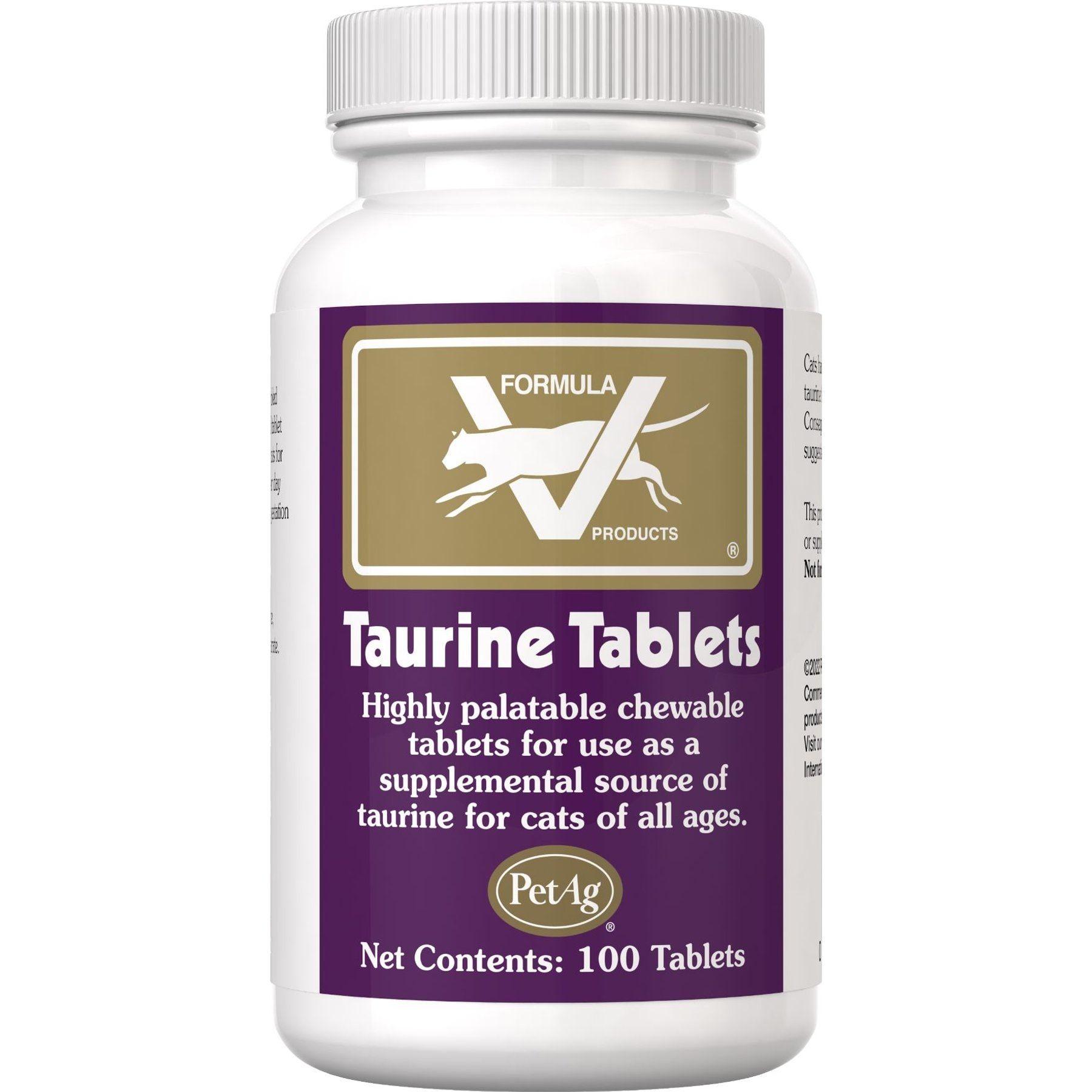
A daily chewable taurine tablet for a cat on a homemade diet or a vet-advised taurine plan.
Webvet may earn a commission when you click through to Chewy, at no extra cost to you.
This chewable tablet comes in a 100-count bottle and is listed at $25.49 on Chewy when checked in November 2026. The PetAg label states a minimum of 250 mg of taurine per tablet, which makes it straightforward for a vet to translate a planned amount into whole or half tablets.
The label lists dried whey, brewer's dried yeast, and hydrolyzed soy protein alongside taurine. Mention that to your vet if your cat has a known food sensitivity. A tablet suits cats that take treats from the hand; it is not a treatment for heart disease.
InClover Heart+ Taurine Powder Supplement for Dogs & Cats: best measured powder
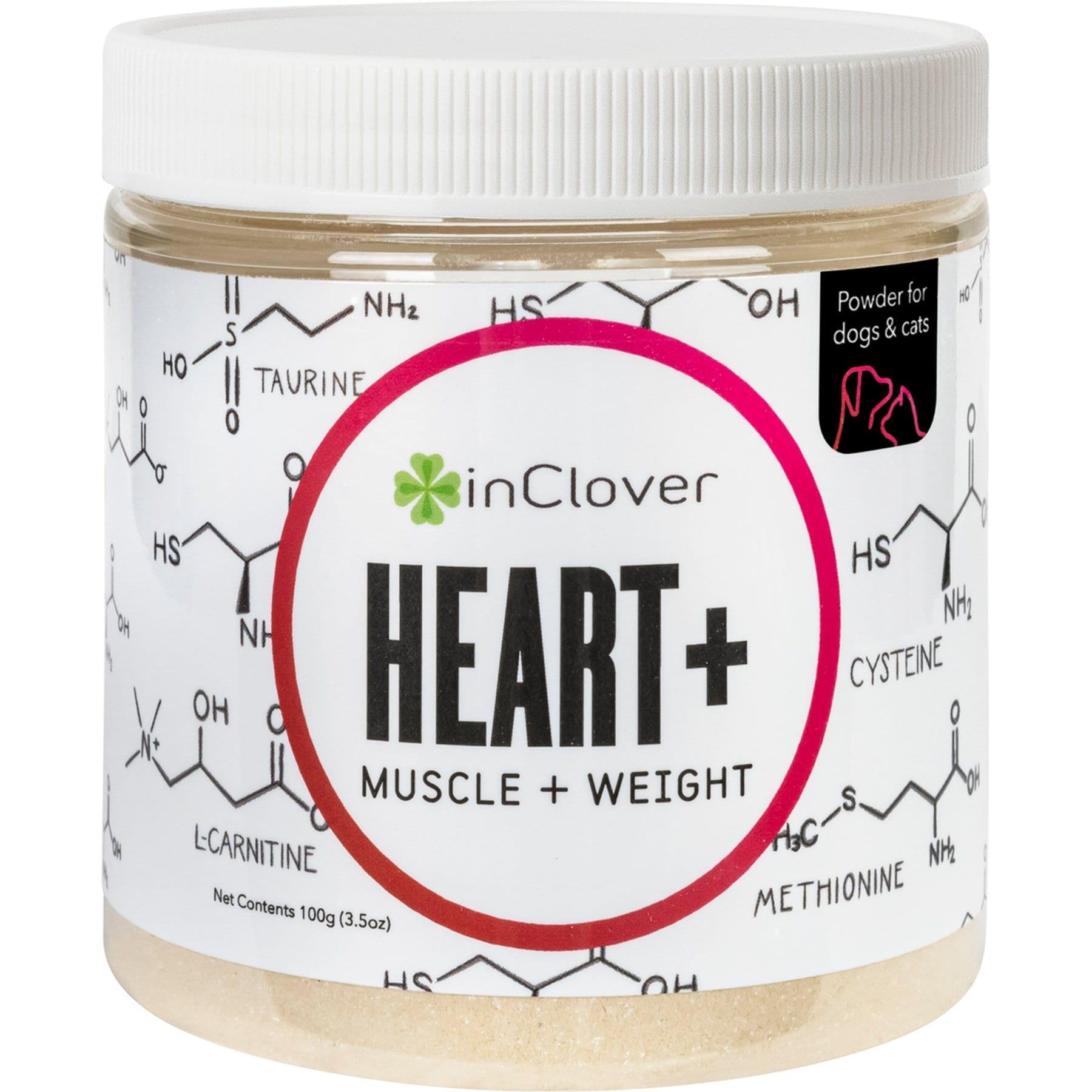
A taurine powder blend you can measure into wet food when your vet has set a daily taurine amount.
Webvet may earn a commission when you click through to Chewy, at no extra cost to you.
This powder comes in a 100-gram jar and is listed at $25.99 on Chewy when checked in November 2026. It combines taurine with L-carnitine and L-cysteine, and it is made for both dogs and cats, so check the cat serving on the label.
Because it is a blend rather than taurine alone, show the label to your vet before starting. A powder mixes easily into wet food, which helps when a cat will not take a tablet.
Lots of Love Pet Products Felo Taurine Vision Powder Supplement for Cats: best large jar for homemade diets
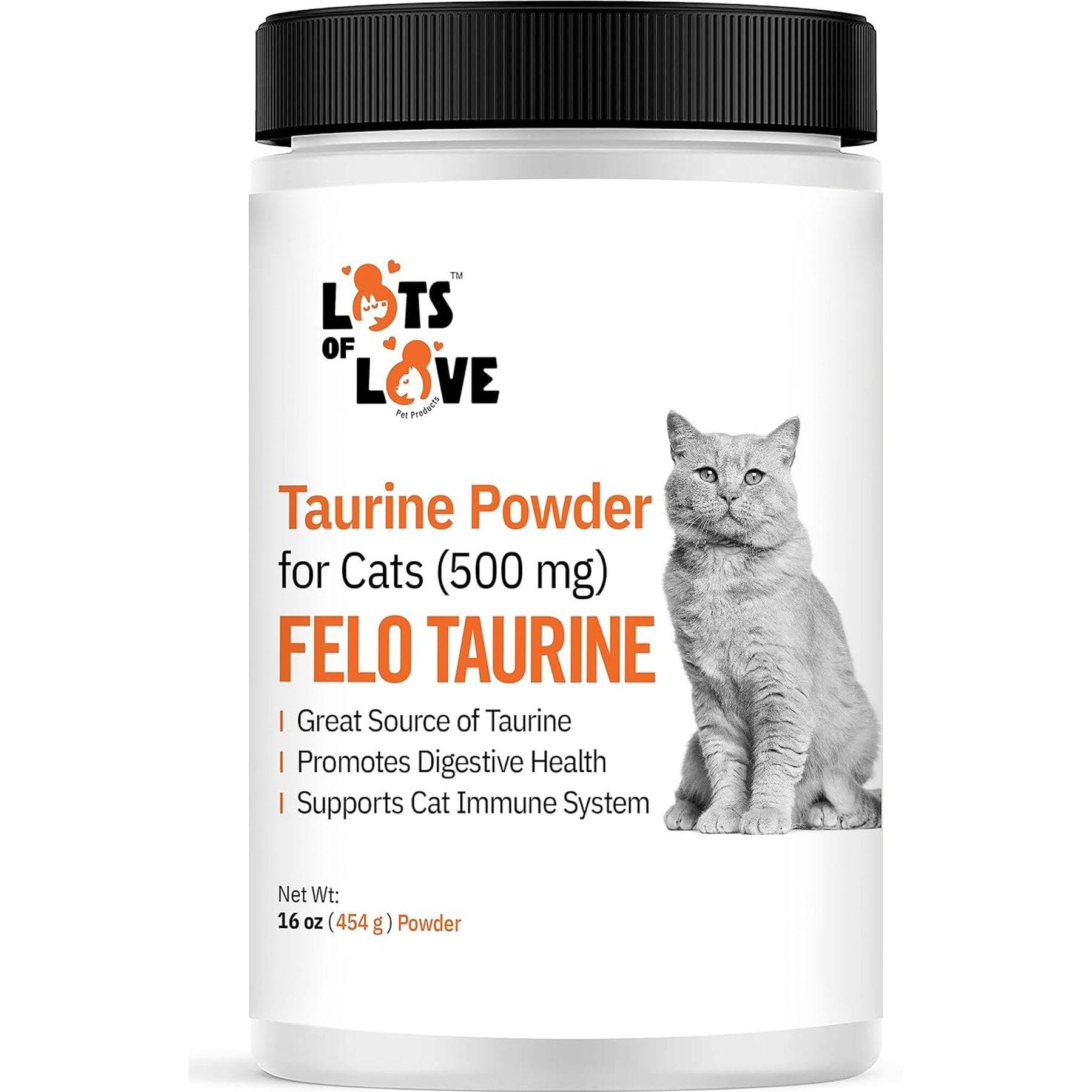
A large jar of water-soluble taurine powder for a household that prepares homemade cat food.
Webvet may earn a commission when you click through to Chewy, at no extra cost to you.
This water-soluble taurine powder comes in a 16-ounce jar and is listed at $28.99 on Chewy when checked in November 2026. The larger size suits homes that add taurine to every batch of homemade food rather than dosing one meal at a time.
The vision wording on the label refers to taurine's normal role in the retina. It does not mean the powder repairs existing eye damage. Follow the amount in your vet-approved recipe rather than the jar alone.
AstroPet Pulsar Taurine Heart Care Flavored Supplement for Cats: best flavored option for picky cats
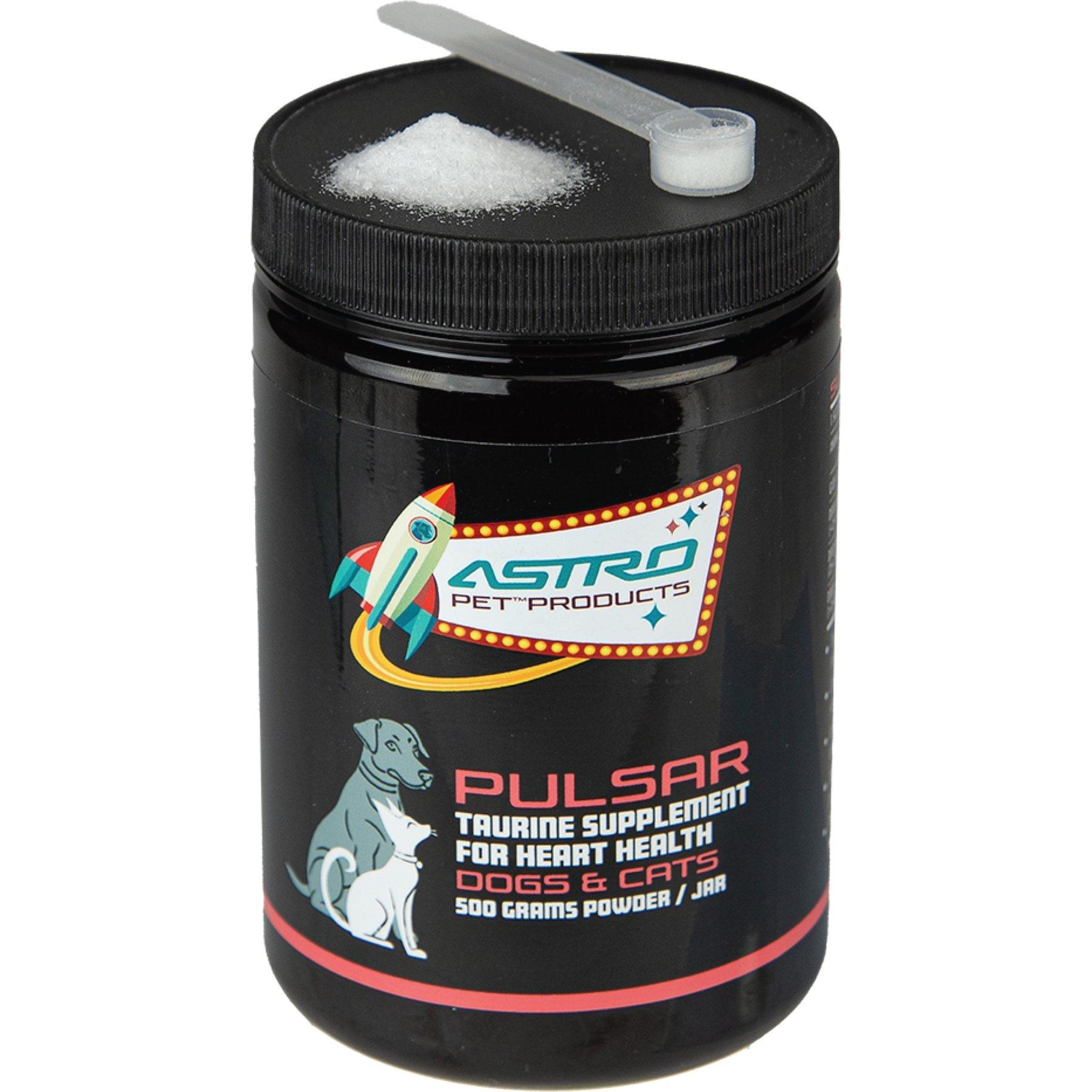
A flavored taurine supplement for picky cats who refuse plain powder in their food.
Webvet may earn a commission when you click through to Chewy, at no extra cost to you.
This flavored supplement comes in a 17.63-ounce container and is listed at $27.95 on Chewy when checked in November 2026. A flavored product can help with cats that eat around an unflavored powder.
The heart care name describes taurine's normal role in heart muscle; it is not a treatment for heart disease. Check the label for the taurine amount per serving so your vet can match it to the plan.
What the evidence shows about taurine supplements for cats
| Common claim | Evidence level | Risk or what it means for you |
|---|---|---|
| Taurine corrects heart failure caused by taurine deficiency | Strong: 1987 and 1992 studies in cats with dilated cardiomyopathy | Applies to deficient cats; most current feline dilated cardiomyopathy is not taurine related |
| Taurine treats heart disease in any cat | Weak: most current dilated cardiomyopathy cases are not taurine deficient | Relying on a supplement can delay cardiology care |
| Taurine protects vision | Strong for preventing central retinal degeneration on a deficient diet | Existing retinal damage is not reversed |
| A cat on complete and balanced commercial food needs extra taurine | Low: commercial cat foods must contain enough | Added cost with no shown benefit |
| A homemade diet needs added taurine | Strong for homemade diets overall: none of the 94 analyzable recipes in a 2019 study of 114 met every nutrient recommendation | Deficiency if the recipe is not formulated by a nutrition expert |
| Vegetarian or vegan diets can supply taurine | Mixed: one vegan food fell short; a small blood study found most cats in range | Deficiency risk without testing and vet oversight |
| Boiling meat reduces taurine | Moderate: laboratory food analysis | A cooked homemade diet can lose taurine in the cooking water |
The strongest evidence for taurine comes from cats that were deficient. In 1987, Pion and colleagues reported in Science that cats with low plasma taurine had heart muscle failure, and that oral taurine raised their levels and was associated with normal heart function returning. Those were observations in affected cats, not a placebo-controlled trial.
A follow-up study in the Journal of the American Veterinary Medical Association evaluated 37 cats with dilated cardiomyopathy given 500 or 1,000 mg of taurine per day alongside standard heart treatment. Twenty-two cats (59%) had marked improvement and survived longer than 240 days. Those doses were chosen by researchers for sick cats, not for healthy pets.
The picture is different now. In proceedings hosted by the Veterinary Information Network, veterinary nutritionist Lisa Freeman notes a dramatic drop in feline dilated cardiomyopathy since commercial foods began adding taurine in the late 1980s, and states that most current cases are not taurine deficient. Cats on poor-quality, homemade, vegetarian, or unbalanced diets remain the ones at risk.

Vision is the other well-documented area. A review in the Canadian Veterinary Journal notes that the central retinal lesion from taurine deficiency is not reversed by supplementation, though the rest of the retina may be saved from further damage. Prevention through diet matters more than rescue.
Vegetarian diets show mixed results. An analysis in PLoS One found a commercial vegan cat food did not meet the minimum recommended taurine. A JAVMA survey of cats fed vegetarian diets found 14 of 17 tested cats had blood taurine in range, too small a sample to show these diets are safe unmonitored.
Powder, chewable, or topper: choosing a taurine form and reading the label

Choosing a powder, chewable, or topper comes down to what your cat accepts and how precisely your vet needs the amount measured. The best quality taurine for cats is the product with a clear taurine amount per serving and an ingredient list you and your vet understand.
Here is how the main forms compare:
- Chewable tablets: easy to count and split. PetAg Taurine Daily Chewable Tablet Supplement for Cats, 100 count states a minimum of 250 mg of taurine per tablet on its label, and PetAg taurine tablets for cats suit owners whose cats take treats by hand. Other chewables, such as Formula V taurine tablets for cats, get the same check: milligrams per tablet and the full ingredient list.
- Powders: mix into wet food and scale for homemade batches, so when comparing the best taurine powder supplement for cats, check whether it is a blend or pure taurine. InClover Heart+ Taurine Powder Supplement for Dogs & Cats, 100-gm jar blends taurine with other amino acids, while a pure taurine supplement for cats contains taurine alone.
- Liquids: a liquid can be given by syringe or mixed into food. Concentrations vary between products, including Dyna-Taurine liquid for cats, so ask your vet to confirm the milligrams per milliliter before choosing the best liquid taurine supplement for cats.
- Toppers and treats: Dr. Tim's Beef Taurine Supplement Freeze-Dried Dog & Cat Food Topper, 12-oz bag is freeze-dried beef, salmon oil, and taurine, listed at $36.99 on Chewy when checked in November 2026. It is a food topper, not a measured supplement.
- Lickable treats: Just Try Taurine Lickable Cat Treats, 8.47-oz are purees with added taurine and goat milk, listed at $9.99 on Chewy when checked in November 2026. Treat them as a treat with taurine added, not as a dose.
When reading any label, look for:
- Taurine in milligrams per tablet, scoop, or serving
- Whether the product contains taurine alone or a blend
- Other ingredients, such as whey, yeast, soy, or flavorings, that matter for cats with food sensitivities
- Serving directions for cats specifically, since some products are made for dogs and cats
- Where it was made, if a taurine supplement for cats made in USA matters to you, though a USA-made product still needs a clear milligram amount
Supplements are not designed to be a sole diet, as the FDA points out about treats and supplements, so a topper or treat never replaces a balanced food.
What's the best way to give taurine to cats?
The best way is the one your cat accepts daily without stress. Many cats eat a chewable tablet as a treat or take powder stirred into a small portion of wet food. VCA notes taurine can be given with or without food; if it causes vomiting on an empty stomach, give it with a meal.
Homemade, raw, and vegetarian diets: when a taurine supplement is not optional
A homemade diet is where taurine stops being optional. Researchers at UC Davis collected 114 home-prepared cat diet recipes from books and online sources, and the JAVMA study found nutritional adequacy problems in every recipe it evaluated; none of the 94 with enough detail for nutrient analysis met every recommendation. The authors note that formulating these diets takes specialized nutrition knowledge and software.
Recipes written by veterinarians had fewer deficiencies, and the researchers advise owners who want to feed homemade food to consult a board-certified veterinary nutritionist. The same applies to homemade raw diets, which carry the same recipe risk as cooked ones. A commercial raw food labeled complete and balanced is a different case.
Cooking changes the numbers too. A feed-ingredient study in the Journal of Animal Physiology and Animal Nutrition found that boiling or basting lost more taurine, while baking or frying, which keep water in the food, retained more.

If you prepare food at home, these steps keep taurine on track:
- Use a recipe formulated by a board-certified veterinary nutritionist
- Add taurine at the amount the recipe specifies, every batch
- Avoid boiling meat and discarding the water unless the recipe accounts for it
- Portion meals to your cat's calorie needs; WebVet's guide on how much to feed a cat helps with that
- Ask your vet about a taurine blood test after the diet has been fed for a while
For a household mixing several batches a week, a larger jar such as Lots of Love Pet Products Felo Taurine Vision Powder Supplement for Cats, 16-oz jar keeps the added amount consistent from batch to batch.
What is the best source of taurine for cats?
Animal tissue is the natural source. Merck Veterinary Manual notes that plant protein contains no taurine, so cats need animal protein in the diet, or synthetic taurine added. For most cats, a complete and balanced commercial food is the simplest reliable source.
What food is highest in taurine?
Animal muscle, especially from marine animals, is highest, according to the Spitze feed-ingredient study, while plant foods contain little or none. Measured raw fish values reported in European Food Research and Technology include plaice at 146, cod at 108, mackerel at 78, and farmed salmon at 60 mg per 100 grams.
Taurine safety, interactions, and when to see a vet
Taurine is generally well tolerated. VCA Animal Hospitals describes serious reactions as rare, with mild vomiting as the main side effect. An allergic reaction, such as facial swelling, rash, or irregular breathing, is possible and needs a call to your vet.
Safety in cats with other conditions deserves a conversation first. VCA notes that taurine's effects may last longer in pets with liver or kidney disease. If your cat has kidney disease, heart disease, or takes daily medication, ask your vet before adding any supplement.
Most dilated cardiomyopathy in cats today appears to be unrelated to taurine, as the case report in Clinician's Brief notes. That is why an exam comes before any supplement for a cat with heart or breathing changes.
What not to mix with taurine?
VCA lists no documented drug interactions for taurine, but advises telling your vet about every medication and supplement your cat takes. Blended products add other ingredients, such as L-carnitine or L-cysteine, and some tablets contain whey, yeast, or soy, so review the full label with your vet.
What are the downsides of taurine?
The main downsides are mild vomiting in some cats, a rare allergic reaction, and longer-lasting effects in cats with liver or kidney disease, according to VCA. The bigger risk is false reassurance: giving taurine for heart or eye signs can delay an exam that finds the real cause.
How a vet decides the amount and checks taurine levels
How a vet sets the amount depends on why the cat needs taurine. A healthy cat on a vet-formulated homemade diet gets the amount built into the recipe. A cat with suspected deficiency may need a higher, short-term amount with blood tests. Giving taurine to cats without that context risks the wrong amount.
For reference, the PetAg label states that one-half of its 250 mg tablet daily meets a cat's maintenance and growth needs. For cats with dilated cardiomyopathy, MSPCA-Angell lists 250 mg once or twice daily as its recommended dose. The first is the maker's label statement and the second is a clinical dose for diagnosed heart disease; neither is an instruction to dose at home, and your vet sets the amount.

Your vet will usually consider:
- The reason for supplementing: homemade diet, vegetarian diet, or suspected deficiency
- Body weight, using tools like WebVet's cat weight chart as a starting point
- Heart and eye findings on exam
- Other conditions, such as kidney or liver disease
- Blood taurine results, when testing is done
Testing usually means a whole blood taurine level, sometimes with plasma. The UC Davis Amino Acid Laboratory lists a cat reference range of 300 to 600 nmol/ml for whole blood, with values above 200 showing no known deficiency risk, and 80 to 120 nmol/ml for plasma.
A UC Davis study in Amino Acids found that plasma taurine falls fastest when a cat is deprived, while whole blood better reflects muscle stores, and recommended interpreting both. VCA notes a vet may monitor whole blood levels, and that full effects of supplementation can take a few weeks.
How much taurine does a cat need on a daily basis?
A cat on complete and balanced commercial food usually needs no added taurine. For homemade diets, the amount comes from a nutritionist-formulated recipe. When a vet confirms a deficiency or diagnoses taurine-responsive heart disease, the vet sets the dose and rechecks blood levels; the 250 mg once or twice daily that MSPCA-Angell lists is a clinical reference for cats with dilated cardiomyopathy, not a home dose.
Taurine supplement for cats questions
Frequently Asked Questions
Can you give a cat too much taurine?
Serious problems from taurine are rare, and VCA lists mild vomiting as the usual side effect. Still, excess taurine has no shown benefit for a cat already eating a complete and balanced diet, and effects may last longer in cats with liver or kidney disease. Let your vet set the amount.
Is a taurine powder or a chewable easier to give a cat?
It depends on the cat. A chewable suits cats that take treats by hand and is simple to count. A powder suits cats that refuse tablets, since it disappears into wet food, and it scales well for homemade batches. Flavored versions help picky eaters.
Do cats on commercial food need extra taurine?
Usually not. Commercial cat foods labeled complete and balanced must meet the AAFCO nutrient profile, which includes taurine, and the Merck Veterinary Manual describes deficiency as rare in cats fed a good-quality commercial diet. Extra taurine makes sense only if your vet finds a specific reason.
Are taurine supplements safe for cats with health problems?
Often, but ask first. VCA notes taurine's effects may last longer in cats with liver or kidney disease, and blended products contain other ingredients. A cat with kidney disease, heart disease, or daily medication should start any supplement only after the vet reviews the label.
How do I add taurine to homemade cat food?
Follow a recipe formulated by a board-certified veterinary nutritionist and add taurine at the amount the recipe specifies in every batch. A UC Davis study found problems in all evaluated homemade cat recipes from books and websites, so an unverified recipe plus a guessed scoop is not enough.

Editor
The Webvet Editorial Team is the in-house group of pet-care editors and writers behind Webvet, operated by Smart Pet Collective. The team researches, writes, and maintains Webvet's pet health, behavior, and medication content. Every article follows a defined editorial process: research from reputable veterinary and scientific sources, careful drafting, mandatory review of medical content by a credentialed veterinarian, and dated publication. Health and medication articles are medically reviewed by a licensed veterinary professional before they go live and are kept current over time.
Veterinarian · BVMS MRCVS
Dr. Pippa Elliott, BVMS, MRCVS, is a veterinarian with nearly 30 years of experience in companion animal practice. Dr. Elliott earned her Bachelor of Veterinary Medicine and Surgery from the University of Glasgow. She was also designated a Member of the Royal College of Veterinary Surgeons. Married with 2 grown-up kids, Dr. Elliott has a naughty Puggle named Poggle, 3 cats and a bearded dragon.
Related reading

Dog Food for Weight Gain: How to Choose One and Add Weight Safely

Taurine for Cats: How Much They Need, Food Sources, and When to Supplement

Best Dog Food for Goldendoodles: Choosing Food by Size and Life Stage
