Vet-Recommended Diets for Dogs With Pancreatitis
Understand how veterinarians assess food for pancreatitis, what current JFFD Digestive Care information establishes, and how to organize portions, approved treats, and follow-up feeding instructions.

BVMS MRCVS

This article contains affiliate links. Webvet may earn a commission when you buy through them, at no extra cost to you.
Sponsored by JustFoodForDogs. This article analyzes published veterinary and product information. WebVet may earn a commission through links in this article.
Diets for dogs with pancreatitis should support an individual veterinary treatment plan. The right choice depends on more than a “low fat” label: veterinarians consider the food's nutrient analysis, the dog's calorie needs, other medical conditions, and whether the dog can eat the prescribed meals.
For owners considering JustFoodForDogs, Digestive Care offers a veterinary recipe to discuss with the treating clinician. This guide explains what its current information establishes and how to organize the daily feeding routine after a diagnosis. No hands-on feeding test or clinical outcome assessment was performed for this article.
What a Pancreatitis Diet Needs to Do
The best foods to feed a dog with pancreatitis provide appropriate nourishment while meeting the restrictions selected for that patient. Controlled fat intake is often part of the plan, but adequate calories and appropriate nutritional adequacy also matter. Choosing the smallest fat percentage on a package does not complete the decision.
An individual veterinary plan should identify the exact food, how much to offer, and the intended feeding duration. The recommendation may differ during recovery and longer-term management. Dogs with additional conditions may need a formulation that accommodates several requirements together.
- 1Use typical analysis and the veterinarian's fat target to assess the exact recipe.
- 2Obtain a daily calorie target and measured meal instructions.
- 3Include approved treats and other extras in the same feeding plan.
JFFD Digestive Care is positioned by its manufacturer for fat intolerance and gastrointestinal concerns. That makes its current recipe information relevant to a veterinary discussion; it does not establish that every dog with pancreatitis should receive it.
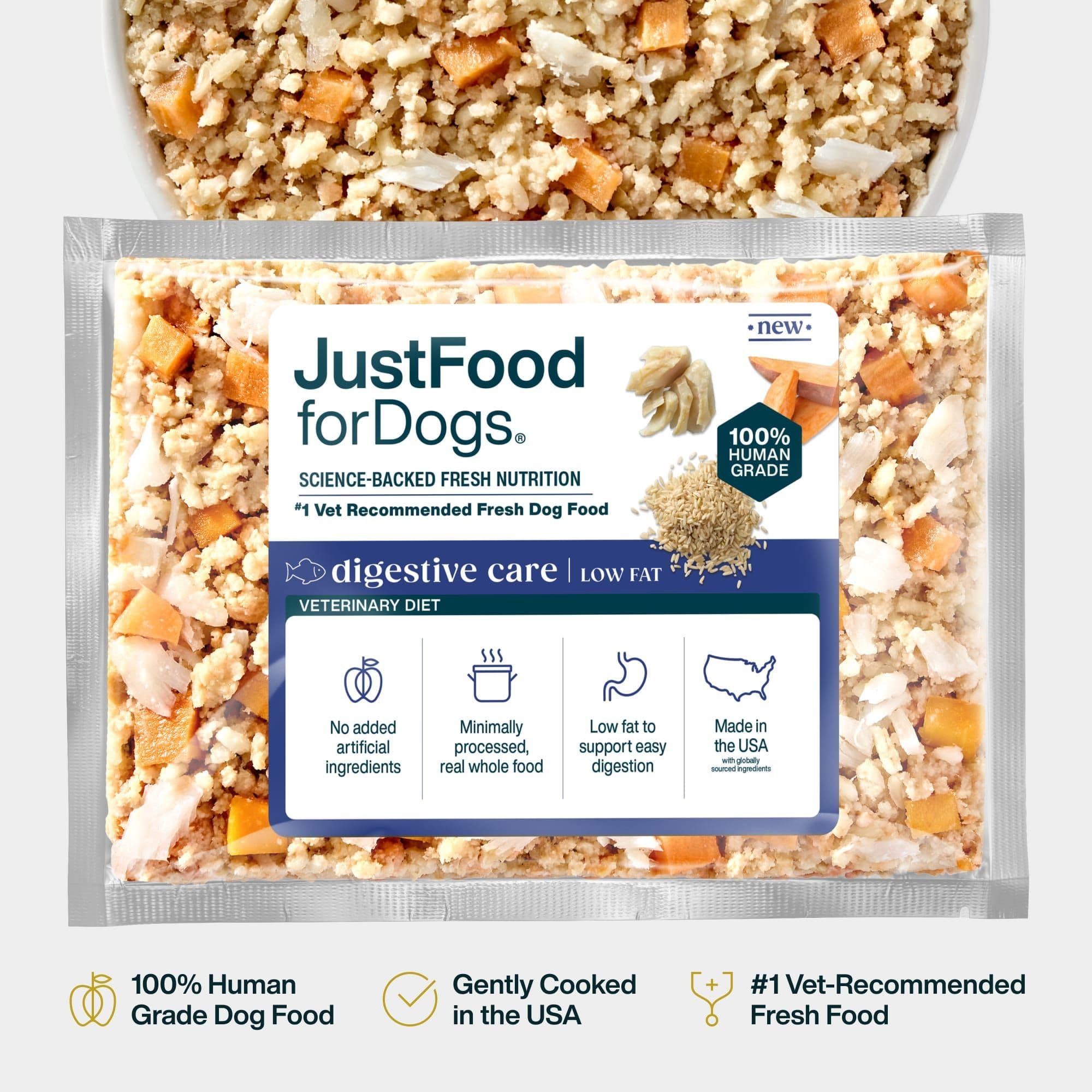
Bring Digestive Care's current recipe information to your veterinarian to assess whether it fits the prescribed pancreatitis feeding plan.
Webvet may earn a commission when you click through to JustFoodForDogs, at no extra cost to you.
A recommendation is most useful when it connects the food to a specific nutritional goal. Ask what the clinician wants to control, what the food needs to provide, and how the response will be assessed. Our guide to pancreatitis in dogs explains the condition and medical-care decisions that accompany food selection.
How Vets Compare Fat Levels in Dog Food
The kind of dog food best suited to pancreatitis is determined by its composition and the patient's needs. Fresh, canned, and dry foods can have very different moisture levels, so their package percentages are not directly comparable. Format alone does not establish suitability.
For a meaningful comparison, veterinarians can use fat grams per 1000 kcal. This expresses how much fat accompanies the same amount of food energy. The Merck Veterinary Manual gives below 20 grams per 1000 kcal as low-fat guidance for canine pancreatitis. Your veterinarian determines the target appropriate to your dog.

A guaranteed fat minimum is not the food's average fat content. For example, a minimum of 1% says the food meets that minimum; it does not mean each serving contains exactly 1%. A listed maximum adds a different limit but still does not supply the typical value.
Tufts recommends using typical nutrient analysis for meaningful nutrient comparisons. To express typical fat on an energy basis, you also need the food's calorie density. Without both pieces of information, a precise comparison would rest on assumptions.
Ask for Digestive Care's current typical analysis and calorie density so your veterinarian can evaluate its fat content.
Webvet may earn a commission when you click through to JustFoodForDogs, at no extra cost to you.
Petful’s guide to low fat dog food explains how much fat counts as low and how to compare fresh, wet, and dry labels.
Ask for:
- Typical fat content and the units used.
- Calories per kilogram of the finished food.
- Any maximum fat specification needed for the prescription.
- The nutritional adequacy statement and intended use.
- Confirmation that the analysis applies to the current recipe.
The calculation, when those data are available, is as-fed fat percentage multiplied by 10,000, divided by kcal/kg. Use the manufacturer's typical analysis for a representative comparison, and let the veterinarian interpret it. A small-looking percentage is not a substitute for this check.
Where JustFoodForDogs Veterinary Recipes May Fit
The current Digestive Care recipe includes white fish, brown rice, and sweet potatoes. Check with your veterinarian before ordering Digestive Care. Its product information lists crude fat at a minimum of 1% and maximum of 4%, alongside minimum protein of 7.5%, maximum fiber of 1%, and maximum moisture of 78%.
The current evidence leaves several questions for the prescribing veterinarian: Digestive Care's kcal/kg, typical fat analysis, and precise nutritional adequacy wording were not established by the product information reviewed here. Its veterinary positioning and published fat limits do not fill those gaps. Obtain the missing analysis before calculating fat per calorie or deciding whether the recipe fits the intended feeding duration.
The distinction is practical: the label can tell you the published fat limits, while the prescribing clinician determines whether the complete nutritional profile matches the patient. Check the current Digestive Care information when requesting the additional analysis, so everyone is discussing the same product.
What to confirm before ordering
- Does this exact formula meet the prescribed fat target?
- Is its nutritional adequacy appropriate for the planned use?
- Does another condition affect the recipe choice?
- What daily quantity should be supplied?
- When should the feeding plan be reassessed?
A dog with diabetes, kidney disease, liver disease, or a diagnosed food allergy may have additional requirements that change the selection. These combined needs cannot be settled from the ingredient list alone. A fish-based recipe, for instance, is not automatically an appropriate allergy diet.
Other JFFD products have their own formulations and feeding statements. Hepatic Support is a different veterinary recipe and currently carries an intermittent or supplemental feeding statement. Its name and fat limits do not make it an ordinary complete pancreatitis food or an automatic substitute for Digestive Care.
Likewise, recurring digestive upset is not synonymous with pancreatitis. Our dog food for sensitive stomachs guide discusses that broader concern. Once pancreatitis is diagnosed, use the clinician's requirements to narrow the food choice.
What about nonprescription or homemade food?
Buying dog food without a vet prescription does not establish that it suits pancreatitis. Ask the veterinarian whether an available nonprescription recipe meets the same fat target, calorie needs, and nutritional requirements. Check with your veterinarian before ordering Digestive Care.
A vet-approved homemade low-fat diet needs an appropriately formulated recipe, including its required ingredients and supplements. Plain meat and rice do not establish complete nutrition. Grain-free low-fat food also needs the same nutrient assessment; removing grains does not demonstrate suitability for pancreatitis.
Feeding During Recovery and After Discharge
What helps a dog settle after pancreatitis is appropriate medical management together with a prescribed feeding routine. Treatment may address problems such as nausea, pain, and hydration while nutrition supplies needed energy. Repeatedly offering different foods is unlikely to resolve the underlying reason a dog feels unwell.
Ask the clinic for specific instructions before bringing the dog home. Those instructions should explain when to offer food, how much to give at each meal, and what to do if the dog eats only part of the serving. The plan may change as appetite and tolerance improve.

Current veterinary guidance does not recommend routine prolonged fasting once vomiting is controlled. However, that does not mean every ill dog should immediately receive a normal-sized meal at home. The treating team decides when feeding can begin and whether additional nutritional support is needed.
If Digestive Care is prescribed at discharge, follow the clinic's instructions for when to feed it and how much to offer.
Webvet may earn a commission when you click through to JustFoodForDogs, at no extra cost to you.
For a small dog with pancreatitis, the best dry dog food is one that meets the prescribed nutrient targets and can be eaten comfortably in the required amount. Small kibble size alone does not establish suitability. Ask the veterinarian to confirm the exact dry formula, its fat per calorie, and the measured daily portion; the same diagnosis-based assessment applies to a fresh recipe.
For the household routine:
- Measure the planned daily amount before dividing it into meals.
- Record how much is offered and how much is actually eaten.
- Keep approved extras within the same daily allocation.
- Follow the clinic's instructions for introducing or changing food.
- Give all caregivers the same written directions.
Can I speed up my dog's pancreatitis recovery?
You can support recovery by following the prescribed medical and feeding plan, but no food or home routine can promise a particular recovery speed. Monitor appetite and vomiting, give medications as directed, and keep scheduled follow-ups. Share changes promptly so the clinician can decide whether the plan needs adjustment.
A short record is more useful than a general impression that the dog is “eating better.” Note the amount eaten, whether vomiting occurred, and any difficulty giving the prescribed treatment. Do not compensate for several missed meals by offering a much larger portion unless the clinic directs you to do so.
When Digestive Care is the prescribed main food, keep its portions and permitted extras within the same veterinary feeding plan.
Webvet may earn a commission when you click through to JustFoodForDogs, at no extra cost to you.
Treats and Foods to Discuss or Avoid
The daily diet includes more than the food in the main bowl. Chews, training rewards, table scraps, and food used to conceal tablets all contribute calories and nutrients. Planning these details in advance makes the restrictions easier to follow without removing every enjoyable interaction around food.
Which foods should a dog with pancreatitis avoid?
Do not feed a dog with pancreatitis unapproved fatty extras or table scraps that may exceed the prescribed fat and calorie allowance. Count the entire day's food, including small additions from different people. A measured main meal cannot account for extras that are omitted from the feeding record.
Ask specifically about:
- Fatty meat scraps, skin, and cooking drippings.
- Chews and packaged treats.
- Cheese, spreads, or other foods used for medication.
- Oils and toppers added to encourage eating.
The clinic can identify which items should be excluded and which, if any, can fit in measured amounts. A food being plain, homemade, or marketed as natural does not establish that it suits the prescribed plan.
Can a fatty meal trigger pancreatitis?
Fatty foods are a possible risk context when a dog develops pancreatitis, but a particular meal cannot be identified as the trigger in every case. Most cases are idiopathic, meaning the cause is not identified. The relationship between dietary fat and pancreatitis is more complex than a rule that one ingredient always causes disease.
A history of illness after a brand change does not prove the brand caused pancreatitis. Owner testimonials can describe timing and experience, but they do not establish causation. Give the veterinarian a factual history of foods, quantities, changes, and symptoms without assuming the explanation in advance.
Which snacks can fit a pancreatitis feeding plan?
Use veterinarian-approved choices within the fat and calorie allowance. There is no reliable universal ranking of the best snacks for every dog with pancreatitis. The useful recommendation specifies the actual food and quantity for this patient.
You can ask whether a portion of the prescribed daily food may be reserved for rewards. If a separate treat is approved, record its allowance and whether meal portions need adjustment. This is especially helpful for small dogs, whose rewards can represent a substantial share of their daily calories.
When Eating Problems Need Prompt Veterinary Care
Food refusal or signs of intolerance require the treating clinician's attention. Record what was offered, how much the dog ate, and any vomiting or other changes so the clinician can monitor tolerance and reassess treatment. Reduced intake should not automatically be treated as pickiness or managed by repeatedly replacing the prescribed food.
Ongoing or repeated vomiting, inability to keep water down, marked weakness, or obvious distress warrant prompt veterinary attention. Follow any more specific return instructions supplied at discharge. If your regular clinic is unavailable and the dog is seriously unwell, seek urgent veterinary care.
Have useful details ready when you call:
- The last meal offered and the amount eaten.
- When vomiting occurred and whether water stayed down.
- The prescribed food and any extras given.
- Medications administered or missed.
- Changes in activity, comfort, or behavior.
These observations help the clinician assess the situation. They do not diagnose the cause at home. Stool appearance, a single good meal, or temporary interest in a favorite treat cannot by itself show that pancreatitis has resolved.
Agree on a contact plan before a problem occurs, including who to call outside regular hours. This turns an uncertain feeding setback into a clear next step and helps avoid a cycle of unplanned food changes.
Planning the Prescribed Food Routine
A useful feeding plan is specific enough that another household member can follow it. Record the exact recipe, daily calorie target, measured quantity, and meal schedule together. Put the approved treats beside the meal instructions so they are counted consistently.
Once the veterinarian has selected JFFD Digestive Care, confirm that any needed product analysis and prescription information have been supplied. Resolve the feeding amount before using a box size or general feeding suggestion to plan daily portions.

| Feeding-plan item | What to record or confirm |
|---|---|
| Daily calorie target | The clinician's prescribed total and how much comes from the main food |
| Fat target and basis | The required value, units, and typical analysis used to assess the recipe |
| Exact recipe | Full product name, current formulation, and nutritional adequacy for the planned use |
| Measured daily amount | Grams or the clinic's specified measure, based on verified calorie information |
| Meal schedule | Number of meals, timing, and instructions for partial or missed meals |
| Approved extras | Named treats, medication foods, and their measured allowances |
| Storage and ordering | Product-specific handling instructions and enough food until the next order |
| Recheck | Planned appointment, observations to track, and reasons to contact the clinic sooner |
Our JustFoodForDogs feeding guide explains general portioning principles. For a medical diet, apply them using the clinician's prescribed target and the exact food's verified calories. Do not borrow the calorie density of another JFFD recipe to fill a missing number.
Affordability also depends on the prescribed daily quantity. Compare recurring package cost with the number of feeding days it actually supplies, then include delivery and potential unused food. Without verified portion information, a box price alone does not tell you the cost per day.
Before changing an established diet because of price, availability, or storage, ask the clinic about suitable alternatives. Keep the current instructions, product details, and recheck date together so any change can be assessed against the same requirements.
Frequently Asked Questions
Are scrambled eggs good for a dog with pancreatitis?
There is no blanket recommendation. Yolk and added cooking fat contribute to the meal's fat content, and an egg is not a complete diet. Obtain treating veterinarian approval for the specific preparation and amount before offering it, including when you are trying to encourage a reluctant dog to eat.
Should I stop feeding my dog during a pancreatitis flare?
Ask the treating veterinarian for instructions. Current guidance supports no routine prolonged fasting once vomiting is controlled, but active vomiting or serious illness needs clinical assessment. Do not independently impose a multi-day fast or force a meal into a vomiting dog.
What soothes pancreatitis?
Food is not a cure. Medical care addresses the illness and its complications, while nutrition supports recovery and the ongoing management plan. A particular ingredient cannot replace treatment or guarantee relief. The most useful diet is one selected for the dog's needs and fed according to the prescribed instructions.
What should I do if my dog refuses the prescribed food?
Contact the treating veterinarian, particularly if there is ongoing vomiting, reduced drinking, or worsening discomfort. Explain what was offered and how much was eaten. The clinician can reassess tolerance and treatment rather than having you add fatty temptations or repeatedly substitute different meals.
Are Hepatic Support and Digestive Care interchangeable?
No. They have different indications and formulations. Hepatic Support currently carries an intermittent or supplemental feeding statement under veterinary supervision. A similar product category or low-looking fat percentage does not establish equivalence. Any substitution should be assessed by the veterinarian against the dog's complete feeding requirements.
Veterinarian · BVMS MRCVS
Dr. Pippa Elliott, BVMS, MRCVS, is a veterinarian with nearly 30 years of experience in companion animal practice. Dr. Elliott earned her Bachelor of Veterinary Medicine and Surgery from the University of Glasgow. She was also designated a Member of the Royal College of Veterinary Surgeons. Married with 2 grown-up kids, Dr. Elliott has a naughty Puggle named Poggle, 3 cats and a bearded dragon.
Related reading

Best Dog Food for Goldendoodles: Choosing Food by Size and Life Stage

Fish Dog Food: Benefits, Fish Types, and How to Choose a Complete Recipe

How Much Does Fresh Dog Food Cost for a Small Dog? Price per Day and per Pound Compared
